
19 Glacier National Park Tips From Someone Who Wasted Day One Making Every Mistake
19 Glacier National Park Tips That Make Day One Your Best Day
Arrive at Glacier National Park on a July Saturday without a vehicle reservation, without bear spray, and with a vague plan to "just drive Going-to-the-Sun Road," and the park will hand you a three-hour parking queue, a closed Logan Pass window, and possibly a grizzly at 30 meters while the only thing in your pocket is a granola bar.
Plan it properly and the same Saturday delivers turquoise lakes, mountain goats on a boardwalk, and a glacier you can walk to. Here's how.
Before You Arrive
1. Vehicle Reservations Are Mandatory — Book in March
From late May to mid-September, you need a timed-entry vehicle reservation ($2) to drive Going-to-the-Sun Road between 6AM and 3PM. These sell out in minutes when released in batches on recreation.gov — March and late April are your windows. Without one, arrive before 6AM or after 3PM.
2. Book Lodges 6-12 Months Ahead
Many Glacier Hotel, Lake McDonald Lodge, and Glacier Park Lodge sell out absurdly early. If you miss them, try campgrounds ($10-23/night, some first-come-first-served), Whitefish lodging (40 min drive, from $120/night), or Columbia Falls motels near the West entrance.
3. Going-to-the-Sun Road Opens Late
Despite summer starting in June, the full road typically doesn't open until mid-July due to snowplowing at higher elevations. If you're visiting early summer, lower areas (Apgar, Two Medicine, Many Glacier) are accessible and far less crowded — an underrated way to see the park.
4. The Park Is Huge — Plan Your Bases
Glacier spans 4,100 sq km. Driving from West Glacier to Many Glacier takes 2.5+ hours (there's no direct through-road). Base west side for Lake McDonald and Going-to-the-Sun Road. Base east side for Grinnell Glacier and wildlife. Ideally give yourself 3-5 days.
Bear Country
5. Carry Bear Spray on Every Hike
Glacier has one of the highest grizzly bear densities in the Lower 48. Rent bear spray ($10-12 at park stores) if you don't own it. Carry it accessible on your belt, not buried in your pack — the moment you need it, you'll have about two seconds to reach it. Most visitors who have a close encounter never take it off their hip again.
6. Hike in Groups of Three or More
Solo hiking in grizzly country is statistically riskier. Three or more people making noise reduces encounters significantly. If you're solo, talk loudly, clap on blind corners, and carry a bell.
7. Store Food in Bear Boxes
At campsites, everything scented goes in the bear box — food, toothpaste, sunscreen, lip balm. Bears will investigate a tent that smells like coconut shampoo.
On the Road
8. Drive Going-to-the-Sun Road Early or Late
Logan Pass parking fills by 9AM in peak season. The free park shuttle (July through Labor Day) is an alternative but also fills up. Best strategy: hit the West Entrance by 6AM, drive eastbound, and reach Logan Pass by 7:30AM with the light still low on the peaks.
9. Stop at These Specific Viewpoints
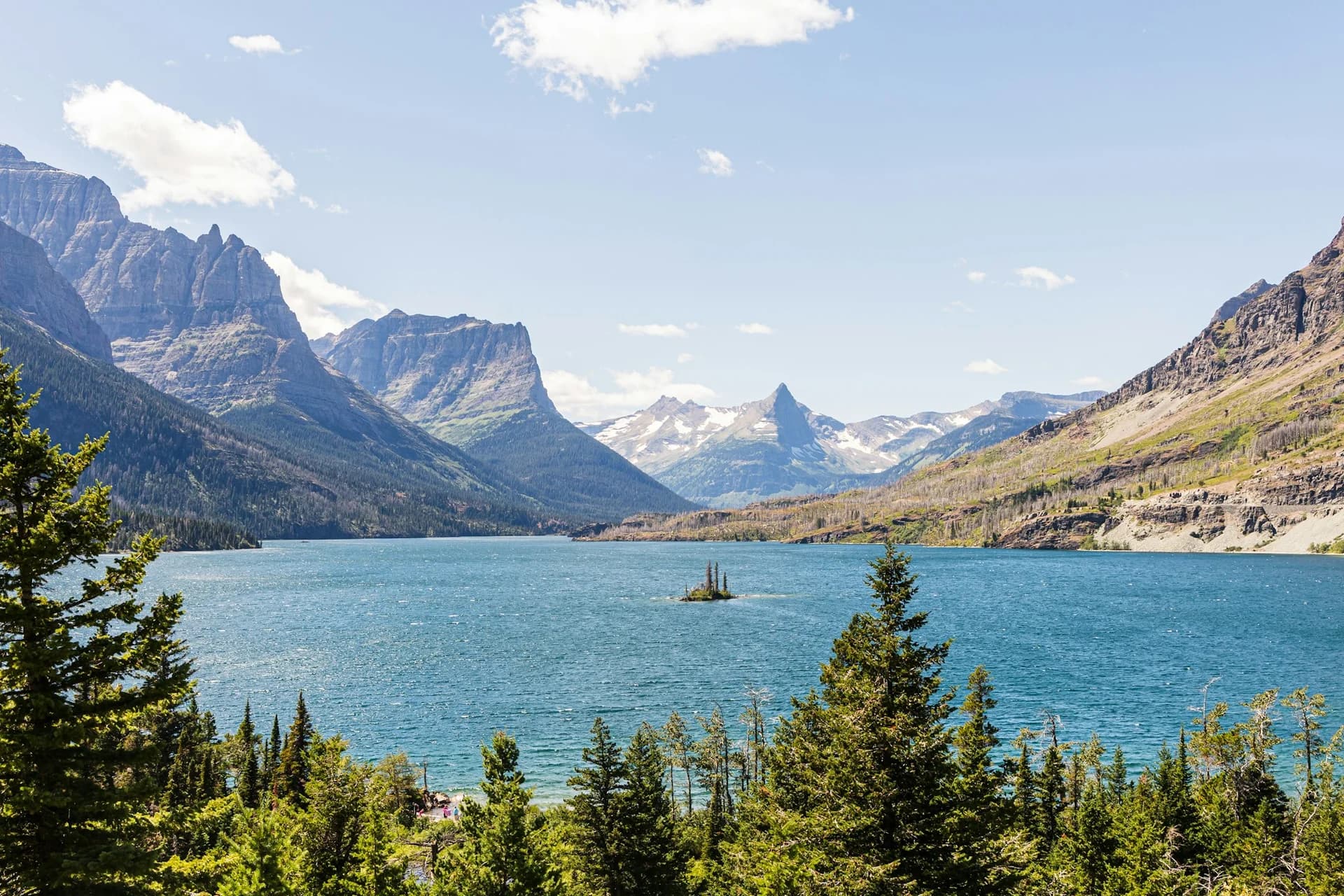
Most people blow straight to Logan Pass and miss the mid-road gems: The Loop (great mountain views), Bird Woman Falls overlook (roadside waterfall), and Wild Goose Island viewpoint on St. Mary Lake (the most photographed spot in the park).
10. No RVs Over 21 Feet on the Road
The road has tight switchbacks and low overhangs. Vehicles over 21 feet (including trailers) are prohibited between Avalanche Creek and Rising Sun.
Hiking
11. Grinnell Glacier Is the Must-Do Hike
The park's most accessible glacier, 11.2km round trip from Many Glacier Hotel. Strenuous, 490m elevation gain, 6-8 hours. You pass four turquoise lakes and reach one of the 25 remaining glaciers (down from 150 in 1850). Bring layers — it's cold near the ice even in August.
12. Hidden Lake Overlook Is the Easy Win
4.5km round trip boardwalk from Logan Pass Visitor Center. Moderate difficulty. Panoramic views of Hidden Lake and Bearhat Mountain. Mountain goats are frequently spotted right on the boardwalk. 2 hours. Arrive before 9AM for parking.
13. The Highline Trail Starts With a Cable
The first kilometer of this 18.8km trail has cable handholds along a sheer cliff face. Not for vertigo sufferers. Past that opening act, it settles into moderate difficulty through wildflower meadows and bighorn sheep territory. It ends at The Loop — take the free shuttle back.
14. Two Medicine Valley for Solitude
The park's quietest area, sacred to the Blackfeet Nation. Boat tours on Two Medicine Lake ($15, 45 min) connect to the Twin Falls trail. Running Eagle Falls is a unique "trick falls" where water flows both over and through the cliff.
Budget & Logistics
15. The Park Entrance Fee Is $35 Per Vehicle
Valid for 7 days. The annual pass ($80) pays for itself in three visits. Buy the America the Beautiful pass if you're visiting multiple national parks.
16. Lake McDonald's Colorful Rocks Are Real
The famously photogenic colored pebbles at Lake McDonald's shore are genuine — no filter needed. Best seen at Apgar Village at sunrise, when the water is mirror-calm and the mountain reflections land perfectly.
17. Waterton-Glacier International Peace Park
If you're combining with Canada's Waterton Lakes National Park, the Chief Mountain border crossing is the direct seasonal route (June-September). You'll need proper documentation for both countries.
18. Weather Windows Are Everything
Even in summer, afternoon thunderstorms roll through. Morning is for high-elevation hikes. Afternoon is for lakeside activities. Evening is for wildlife viewing — dusk is prime time for moose and bears.
19. Leave No Trace Isn't a Suggestion
Glacier's 25 remaining glaciers are melting. The park's ecosystem is fragile and changing. Stay on trails. Pack out everything. These aren't just rules — they're obligations.
The park is magnificent, and it's generous to anyone who shows up ready. Glacier rewards the prepared and humbles the wing-it crowd, so book the reservation, rent the spray, and set the 5AM alarm. Day one is worth doing right.
For more US wilderness, explore Yellowstone or Yosemite.


