
The Night You Get Lost in Guanajuato — and Stop Wanting the Map Back
The Night You Get Lost in Guanajuato — and Stop Wanting the Map Back
Most cities give you a skyline. Guanajuato gives you a tunnel.
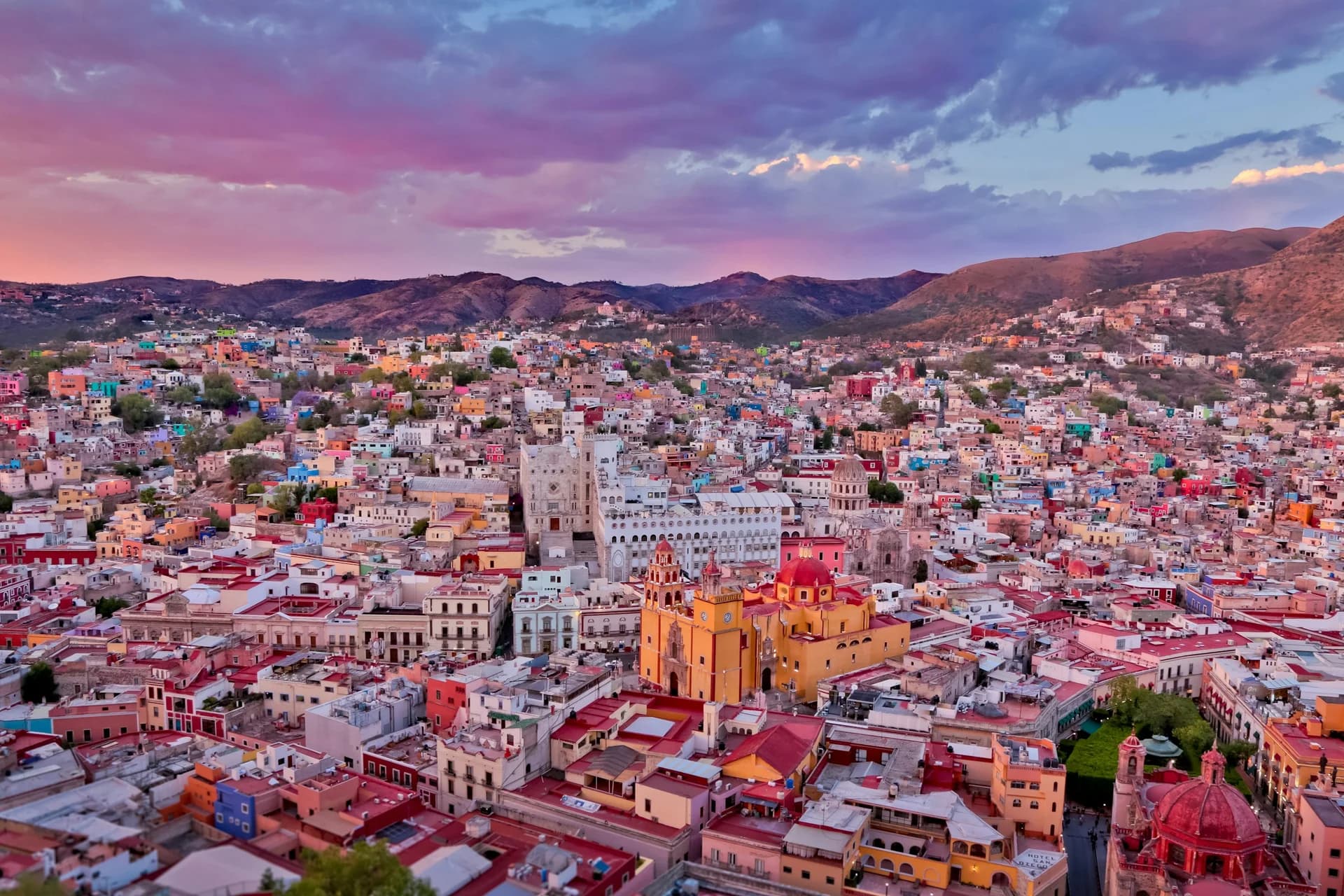
You arrive through the belly of it — headlights on wet stone, the smell of cool rock and diesel, a road that used to be a river until the floods got bad enough that the city simply roofed the water over and, generations later, sent cars through where the current ran. Your taxi surfaces somewhere near the center. And the first thing you understand, standing there with your bag, is that there is no grid. None. Houses in mango, cobalt, and coral climb the ravine walls like paint poured from the top and left to set.
Give yourself that first evening to be completely, cheerfully lost. You're going to be anyway.
The Getting-Lost Is the Point
Google Maps has opinions about Guanajuato. Most of them are wrong.
It'll send you up a callejón — an alley — that becomes a staircase, then a narrower staircase, then what is unmistakably someone's front step and a dog who has seen your type before. The blue dot spins in confused circles. You'll pass the yellow Basílica de Nuestra Señora de Guanajuato, that butter-colored church on Plaza de la Paz, three separate times from three directions and become genuinely convinced it is following you.
Here's the shift that changes the whole trip: stop fighting it.
The underground tunnels — the túneles — are half the reason your bearings are gone, and they're not designed to help. People here don't navigate by north and south. They navigate by landmark, by the café on the corner, by which staircase their grandmother lived up. So do what they do. Pick a high point you can always find — the Pípila statue on the ridge, lit up after dark — and treat everything else as a place you'll stumble into rather than plan.
And you'll stumble into good things. A courtyard café you'd never have found on purpose — the kind of accidental find that Antigua Guatemala's ruined-convent courtyards reward too. Café Truco 7, tucked on Calle de Truco just off the basilica, where a café de olla and a plate of enchiladas mineras — the local miner's enchiladas, stained red with guajillo and topped with carrots and potatoes — runs about 90 pesos (roughly $5). Or Santo Café, built across a tiny bridge over an alley, where you sit and watch the whole city funnel past below you.
When hunger hits between meals, do what the students do and find a guacamaya — a crusty bolillo roll split and filled with chicharrón, salsa, and lime, sold from carts for around 25 pesos ($1.40). It is not elegant. It is perfect.
Then, Around Nine, You Hear the Mandolins
You'll be somewhere in the alleys when it reaches you: a mandolin, a guitar, a whole cluster of voices moving through stone.
This is a callejoneada, and it's the thing that turns Guanajuato from a pretty town into a night you retell for years. A troupe of university students — estudiantinas, dressed in velvet doublets and ruffled collars like they walked out of the 1600s — gathers most evenings near the Jardín de la Unión and the columns of Teatro Juárez. They collect a crowd. Then they lead it, singing and joking and passing around a porrón of wine, through the narrowest lanes in the city.
Buy in. Tickets run about 120–150 pesos ($7–8) from the performers near the theater, usually starting around 8 or 9 PM. Don't overthink whether it's touristy — half the crowd singing along are locals and Mexican students on their own weekend away.
The route almost always squeezes through the Callejón del Beso, the Alley of the Kiss, where two balconies lean so close they nearly touch — 68 centimeters apart, the guides will tell you, close enough for a doomed colonial couple to meet across the gap.
"Kiss on the third step," a troubadour will announce, deadpan, to whichever couple he's singled out, "and you get seven years of happiness. Skip it, and — well, seven years of something else."
The whole crowd laughs. Someone always kisses. The song starts again and the alley moves on.
Go Up to El Pípila Before the Light Goes
Save one evening for the climb — and time it for dusk.
El Pípila is the giant sandstone figure standing guard on the ridge above the city, arm raised, torch in hand. You can walk up through the callejones behind Teatro Juárez (steep, free, about fifteen sweaty minutes) or take the funicular that runs up the hillside for around 35 pesos ($2) round trip. Either way, aim to be up top about half an hour before sunset.
The statue is José de los Reyes Martínez, nicknamed El Pípila, a young miner who, during the 1810 fight for independence, is said to have tied a stone slab to his back as a shield, crawled to the wooden doors of the Alhóndiga de Granaditas — the grain warehouse where Spanish forces had barricaded themselves — and set them alight so the insurgents could break through. The city won its first real victory of the war right down there in the streets below you. The Alhóndiga is a museum now, and worth an hour the next morning.
But this is the moment. As the sun drops, the entire bowl of the city starts to switch on beneath you — thousands of colored houses catching gold, then amber, then that pinprick electric glow that fills the ravine like water. You can trace the whole day you spent getting lost: the yellow basilica, the university's grand staircase, the dark seams where the tunnels swallow the roads.
From up here, for the first time, it all makes sense.
Give It Two Days. Three If You Can.
Guanajuato rewards the traveler who surrenders — much the way the balconied lanes of Cartagena do. There's no efficient way to "do" it — no checklist route that beats simply walking until a plaza opens up or a song finds you. Two days is enough to fall for it. Three lets you stop performing tourism and start living the rhythm: café in the morning, museum when the sun is high, alleys and mandolins after dark.
Bring shoes with grip (those cobbles are polished slick by a few centuries of feet), keep some cash in small bills for cart food and callejoneada tickets, and let your phone lead you wrong at least once. That wrong turn is where the city keeps its best moments.
You came for a colonial town built into a canyon — not the packaged resort strip of Cancún a country away. You'll leave having spent a night singing through its alleys with a hundred strangers, none of you entirely sure where you are — and none of you wanting the map back.


