Valencia vs Barcelona: Which Spanish City Is Right for Your 2026 Trip?
Most first-time visitors to Spain's Mediterranean coast default to Barcelona. It's the famous one — Gaudí, the name, the Instagram shorthand for a Spanish city break. But two hours south sits Valencia, and a growing number of travelers come away convinced they picked the wrong city the first time around. So here's the honest comparison, category by category, to help you choose the one that fits your trip.
Why Compare These Two
They're natural rivals. Both are major Mediterranean port cities with golden beaches, world-class food, dazzling architecture, and easy weather — the same seaboard that hands Italy the Amalfi Coast further east. Both sit on Spain's east coast within a couple of hours of each other by high-speed train. The difference is in scale and temperament — Barcelona is a global heavyweight that knows it, and Valencia is the laid-back third city that quietly out-delivers on the things that actually make a trip good.
Architecture and Sights
Barcelona is hard to beat on icons. The Sagrada Família, Park Güell, Casa Batlló — Gaudí's modernisme is genuinely singular, and there's a density of must-see landmarks that Valencia doesn't match in sheer fame.
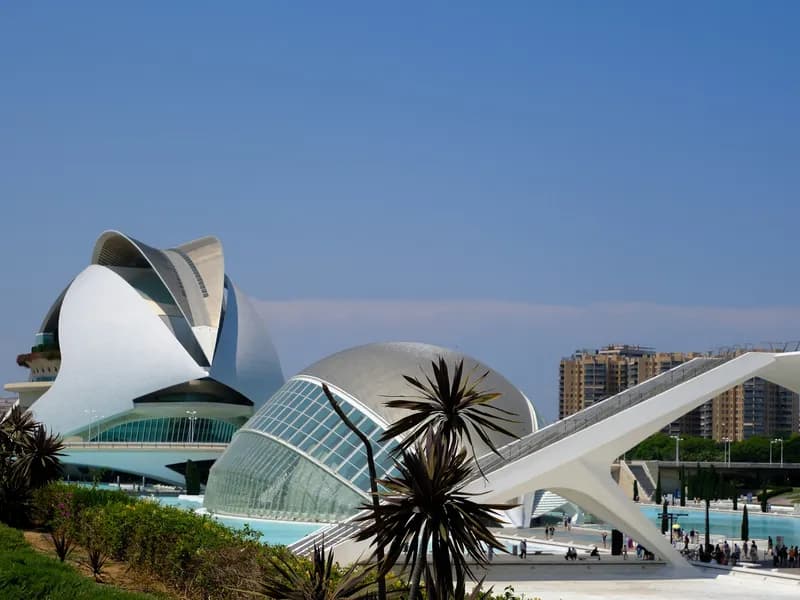
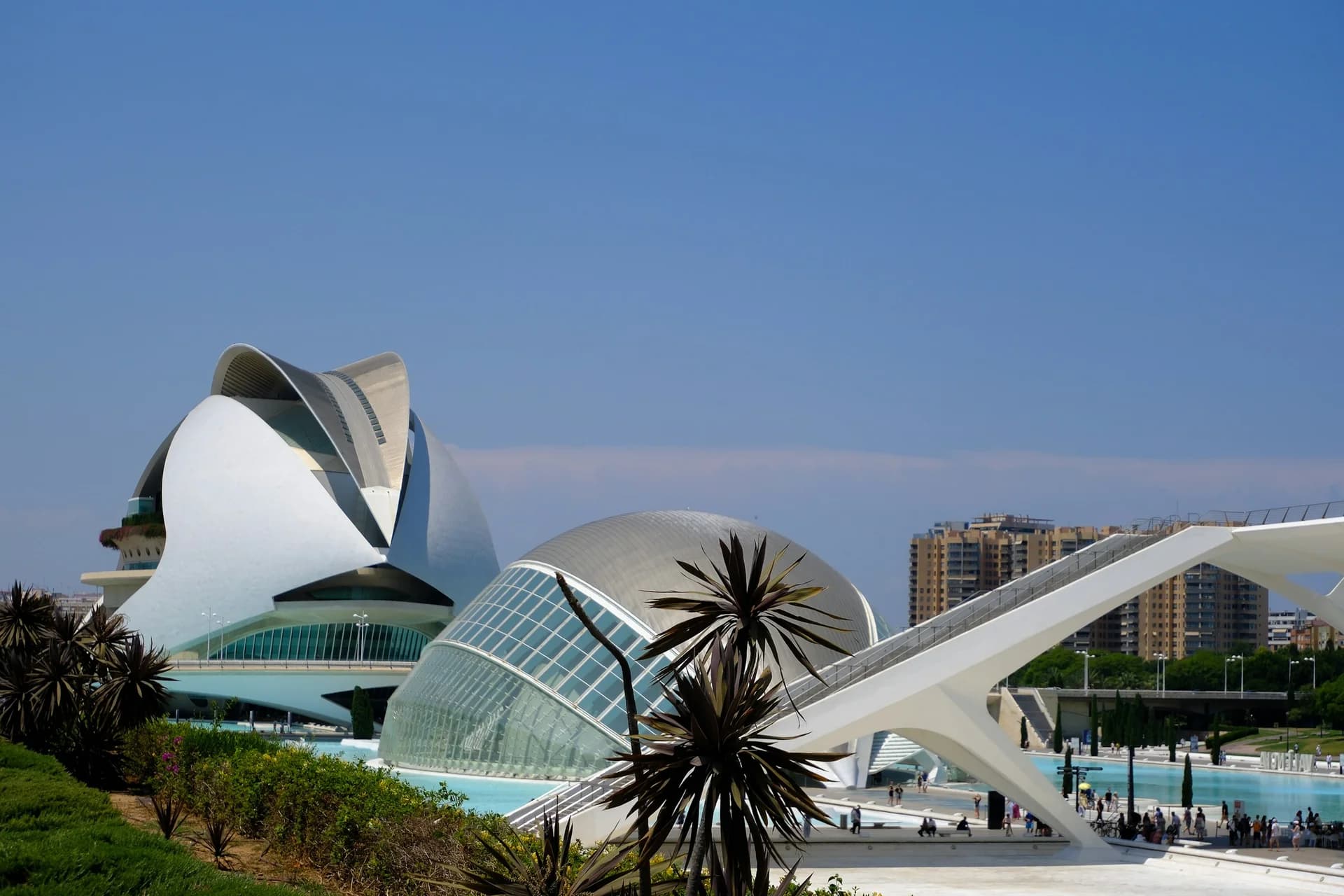
But Valencia counters with range and originality. Santiago Calatrava's City of Arts and Sciences is a futuristic white complex rising from reflecting pools — the Hemisfèric IMAX 'eye,' the whale-skeleton science museum, the Oceanogràfic aquarium (around €35), all of it pure 21st-century spectacle. Then it pivots medieval: the UNESCO-listed La Lonja de la Seda silk exchange (around €2, free Sundays) with its spiralling palm-column Gothic hall, the 1928 Modernista Mercado Central, and the cathedral that claims to hold the Holy Grail, with the 207-step Miguelete bell tower (around €2) above it.
Edge: Barcelona for famous landmarks, Valencia for variety without the crush.
Food
Here's where Valencia plants its flag. Paella was invented here — in the rice paddies of La Albufera, just south of the city. Eat it at lunch around 2 PM (never dinner — that's the local rule) at Casa Carmela in El Cabanyal, cooked over an orange-wood fire for about €22 per person, or out in El Palmar where the dish was born. Add horchata and fartons (€4) at the historic Horchatería Santa Catalina, and the soft-egg bocadillo at Ricard Camarena's Central Bar inside the Mercado Central.
Barcelona's food scene is broader and more international, with Catalan classics and a deeper bench of high-end restaurants. But for tradition with provenance — for eating the original of something legendary, where it actually comes from — Valencia wins.
Edge: Valencia, decisively, on signature cuisine.
Beaches
Barcelona's Barceloneta is convenient and lively, but it's also packed, narrow, and not the city's strong suit. Valencia's Malvarrosa is wide, golden, and backed by a palm-lined promenade of paella restaurants, a 20-minute tram ride from the center — and for a pure beach holiday, the Canary Islands are a short flight south. Right behind it sits El Cabanyal, the old fishermen's quarter of colorful tiled houses turning hip. You get more sand and fewer elbows.
Edge: Valencia.
Cost
No contest. Valencia is meaningfully cheaper across the board — hotels, restaurants, attractions, transit. A paella lunch, a horchata, a museum, and a metro day pass cost a fraction of what the equivalent runs in Barcelona. The Valencia Tourist Card starts around €15 for 24 hours and covers all transit including the airport line. Your money simply stretches further here.
Edge: Valencia.
Crowds and Pace
Barcelona is one of Europe's most visited cities, and on the famous days it feels like it — long queues, packed Ramblas, a city that's started pushing back on overtourism. Valencia is calmer, more livable, and lets you breathe. You'll wait less, jostle less, and find the recently pedestrianized old-town squares around Plaza de la Reina genuinely pleasant rather than a scrum.
Edge: Valencia for ease, Barcelona for energy if that's what you're after.
Nightlife and Buzz
Barcelona is a global nightlife destination, full stop — bigger clubs, a deeper scene, a later, harder party. Valencia holds its own with the medieval lanes of Barrio del Carmen, the trendy Ruzafa barrio (think Canalla Bistro, specialty coffee, design shops), and beachfront chiringuitos pouring agua de Valencia at sunset. It's lively without being overwhelming.
Edge: Barcelona for scale, Valencia for charm.
Getting There and Around
Both have international airports. Valencia's VLC is just 8 km out, a 20-minute, €4.90 metro ride to the center — exceptionally easy. Both cities are walkable at their cores, but Valencia's secret weapon is the Turia Gardens, a flat, traffic-free 9 km park along the old riverbed that you can bike end to end (about €10/day).
Edge: Even, with Valencia's airport and park giving it a slight nod.
Which Is Right for You
Choose Barcelona if you want the bucket-list icons — Gaudí is a genuine reason to travel — plus a bigger nightlife scene and the energy of a global city, and you don't mind paying more and sharing it with crowds.
Choose Valencia if you want the original paella where it was born, better-value everything, wider and quieter beaches, futuristic and medieval architecture without the queues, and a city that moves at a pace you can actually enjoy — start with our Valencia tips guide.
For first-timers to Spain who want the headline sights, Barcelona makes sense. For repeat visitors, food lovers, families, and anyone burned out on overtourism, skip the obvious choice and go to Valencia — you'll eat better, spend less, and come home wondering why it isn't more famous.
And the best answer of all? They're two hours apart by high-speed train. Do both, lead with Valencia — our Valencia travel FAQ sorts the logistics — and let Barcelona be the encore.
Side-by-Side
| Category | Barcelona | Valencia |
|---|---|---|
| Famous landmarks | Gaudí, Sagrada Família | City of Arts, La Lonja |
| Signature food | Broad, international | Original paella, horchata |
| Beaches | Barceloneta (packed) | Malvarrosa (wide, calmer) |
| Cost | Higher | Notably cheaper |
| Crowds | Heavy | Manageable |
| Nightlife | Bigger scene | Lively, charming |
| Airport transfer | Longer | 20 min, €4.90 metro |
| Best for | Icons, big-city energy | Value, food, ease |
Related Articles
 Travel Guides
10 Things to Do in the Maasai Mara That Aren't Just the River Crossing
 Travel Guides
12 Best Things to Do in Luxor: A Both-Banks Hit List for Ancient Thebes
 Travel Guides