
Valencia
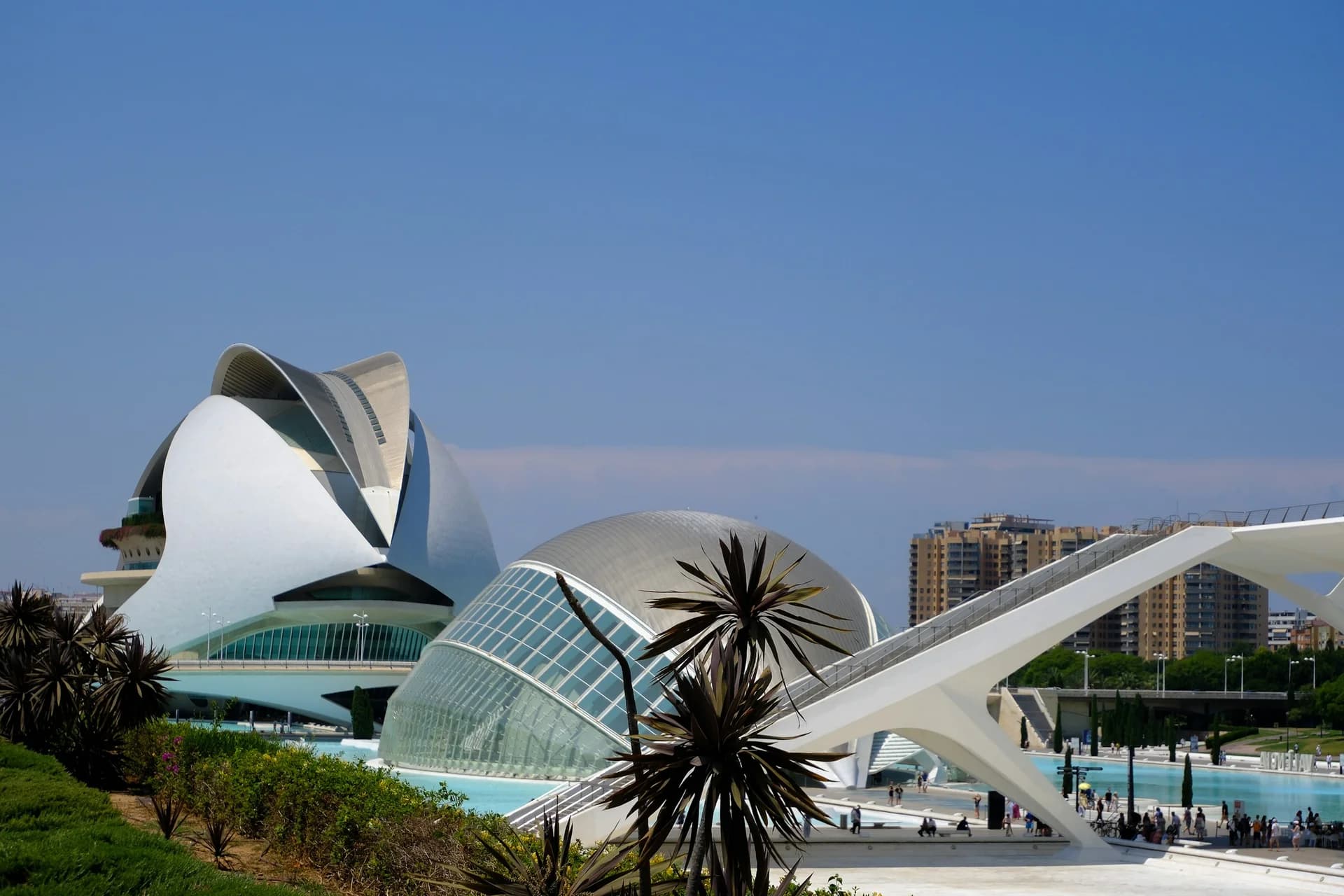
Photo: Raúl Mermans García / Unsplash
Key Facts
Best Time to Visit
March to June and September to October for warm, dry weather; mid-March for the Las Fallas festival
Language
Spanish (Castilian) and Valencian (a variant of Catalan); English common in tourist areas
Currency
Euro (EUR)
Time Zone
CET (UTC+1), CEST (UTC+2) in summer
Airport
Valencia (VLC), 8 km west of the center, around 20 minutes by metro lines 3 and 5
Population
Approx. 800,000 (city proper), 1.6 million (metro area)
Climate
Mediterranean, around 300 sunny days a year; hot summers (28-32°C), mild winters (10-17°C)
Safety Rating
Generally Safe (Level 1) — one of Spain's safest big cities; mind bags on the beach and metro
Signature Dish
Paella Valenciana, the original rice dish, traditionally with chicken, rabbit, and beans
Top Highlights

City of Arts and Sciences
Santiago Calatrava's gleaming white complex of futuristic buildings is Valencia's icon, set in long reflecting pools. The Oceanogràfic aquarium (around €35), Hemisfèric IMAX, and Príncipe Felipe science museum each ticket separately; combo passes save money. Allow a full day for the whole site.

Turia Gardens
After a 1957 flood, the Turia river was diverted and its 9 km bed became a sunken green park threading the whole city — perfect for jogging, cycling, and picnics. Free and open all hours. Rent a bike (about €10/day) to ride from the old town to the City of Arts. Allow 1-2 hours.

Mercado Central
One of Europe's largest covered food markets, a 1928 Modernista hall of stained glass and tilework with nearly 1,000 stalls of jamón, seafood, and produce. Free entry, open Mon-Sat roughly 7:30AM-3PM. Grab a wine and tapas at the Central Bar counter inside. Allow 1 hour.
La Lonja de la Seda
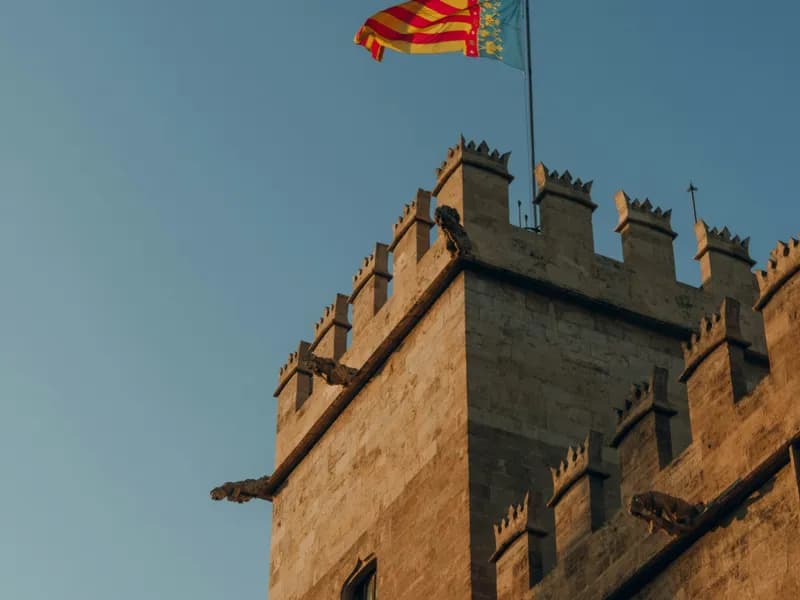
A UNESCO-listed 15th-century Gothic silk exchange whose Hall of Columns has spiralling palm-like pillars — a masterpiece of civil Gothic architecture. Entry is around €2 (free on Sundays). Open daily; allow 45 minutes. It sits directly across from the Mercado Central.
Valencia Cathedral & El Miguelete
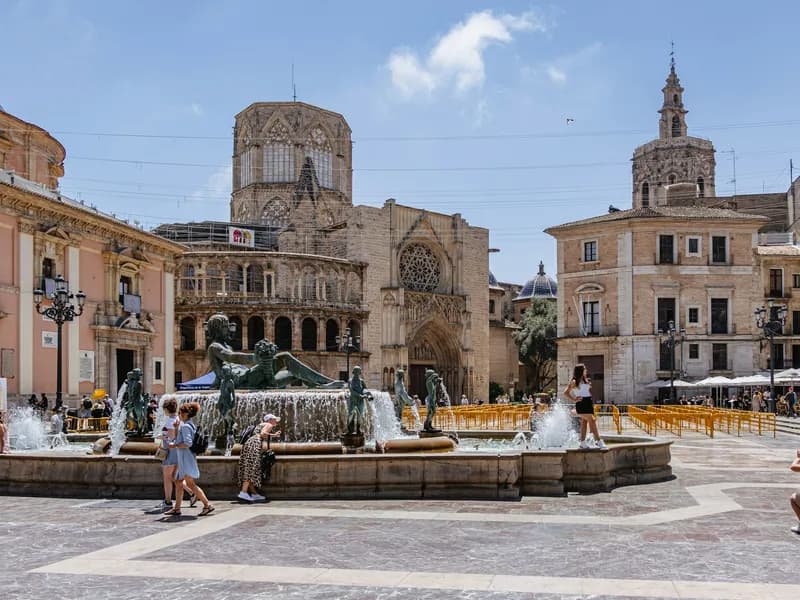
The cathedral claims to hold the Holy Grail in a side chapel. Climb the 207 steps of the octagonal Miguelete bell tower (about €2) for sweeping old-town views. Cathedral entry with audioguide around €9. Open daily with shorter Sunday hours. Allow 1.5 hours.
Barrio del Carmen
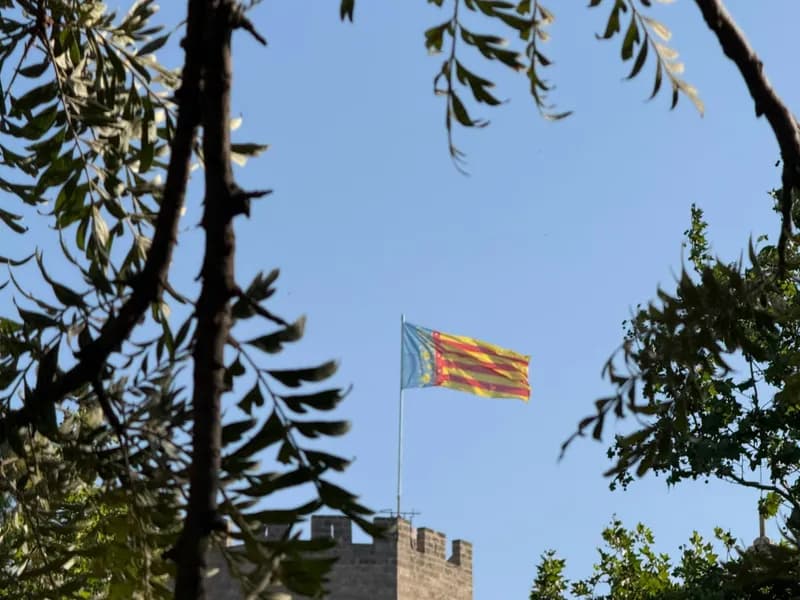
The atmospheric medieval quarter of narrow lanes, street art, and the ancient Torres de Serranos and Torres de Quart city gates (about €2 to climb, free Sundays). By night it's Valencia's nightlife heart. Wander freely; allow 1-2 hours plus a horchata stop.

Malvarrosa Beach & El Cabanyal
A wide golden city beach backed by a palm-lined promenade of paella restaurants, reachable in 20 minutes by tram or metro. The neighbouring El Cabanyal fishermen's quarter has colourful tiled houses and seafood eateries. Free; allow a half day with lunch by the sea.
Planned Itinerary
7-Day Valencia Itinerary
Arrival & Ciutat Vella Orientation
Land at Valencia Airport (VLC), 8 km west of the center. Take metro line 3 or 5 to Xàtiva or Colón (~20 min, €4.90 single, or buy a 24h Valencia Tourist Card from ~€15 that covers this ride). Check in around the old town and ease into Spanish hours with a gentle first evening.
Airport transfer to the old town(30 minutes)
Metro lines 3/5 from VLC to Xàtiva or Àngel Guimerà; tap the Tourist Card or pay €4.90. A taxi is a flat ~€20-25.
Hotel check-in near Plaza del Ayuntamiento or El Carmen(45 minutes)
Base yourself in Ciutat Vella for walkability — most sights are 10-15 min on foot from here.
Orientation stroll through Plaza de la Reina and Plaza de la Virgen(1.5 hours)
Loop the two cathedral-side squares (recently pedestrianized), get your bearings, and admire the Turia fountain on Plaza de la Virgen.
First tapas dinner at Bar Cremaet or Tasca Ángel(1.5 hours)
Ease into late Spanish dining (~9PM). Tasca Ángel near the market does famous grilled sardines; budget €20-30pp with wine.
Old Town: Cathedral, Lonja & Mercado Central
A full day in Ciutat Vella, all on foot. Hit the major monuments in the cooler morning, break for a long market lunch, then keep the afternoon light with the Lonja and a horchata stop.
Valencia Cathedral & the Holy Grail chapel(1 hour)
Entry with audioguide ~€9. See the agate chalice said to be the Holy Grail.
Climb El Miguelete bell tower(45 minutes)
207 spiral steps, ~€2, for the best 360° view over the terracotta rooftops of the old town.
Mercado Central and lunch at Central Bar(1.5 hours)
Wander the 1928 Modernista hall of ~1,000 stalls (free, open till ~3PM Mon-Sat), then queue for a bocadillo at Ricard Camarena's Central Bar counter — the soft-egg sandwich is the move (~€10-15).
La Lonja de la Seda (silk exchange)(45 minutes)
UNESCO Gothic masterpiece directly across from the market. ~€2 (free Sundays). Don't miss the spiralling palm-column Hall and the orange-tree courtyard.
Horchata and fartons at Horchatería Santa Catalina(45 minutes)
The historic tiled spot off Plaza de la Reina. Cold chufa horchata with finger pastries for dipping, ~€4.
City of Arts and Sciences
Dedicate a full day to Calatrava's white futuristic complex at the eastern end of the Turia. Reach it on foot through the gardens or by bus 95 / metro to Alameda then a 15-min walk. Buy tickets online to skip lines.
Oceanogràfic aquarium(3 hours)
Europe's largest aquarium with a walk-through ocean tunnel, belugas, and a sphere-domed restaurant. ~€35; combo passes with the science museum save money. Go at opening to beat school groups.
Lunch in the City of Arts plaza or nearby Ruzafa edge(1 hour)
Quick, lighter lunch — the area's options are touristy, so consider grabbing a menú del día for ~€14 rather than a full sit-down paella.
Príncipe Felipe Science Museum(1.5 hours)
Hands-on, family-friendly exhibits inside the whale-skeleton building. ~€8, or use a combo ticket.
Hemisfèric reflecting pools at golden hour(1 hour)
The IMAX 'eye' building mirrored in the long pools is Valencia's signature photo. Walk the perimeter as the light softens.
Dinner back in Ruzafa(1.5 hours)
Tram/walk to the buzzy Ruzafa barrio for dinner at Canalla Bistro or Copenhagen (veggie). Lively, modern, ~€25-35pp.
Turia Gardens by Bike & Bioparc
Use the 9 km sunken riverbed park as your spine today. Rent a Valenbisi or shop bike (~€10/day) and roll the length of the city, ending at the Bioparc near the western end. Mostly flat, shaded, traffic-free.
Cycle the Turia Gardens end to end(1.5 hours)
Grab a Valenbisi (first 30 min ~free with a short-term pass) or a day rental. Ride past the Palau de la Música, the giant Gulliver playground, and 18 bridges spanning the old riverbed.
Gulliver Park stop(30 minutes)
A 70m reclining Gulliver sculpture you climb and slide down — fun even for adults, free.
Bioparc Valencia(2.5 hours)
Immersive cageless African-savanna zoo at the park's western mouth, ~€24. Gorillas, lemurs, and a recreated Madagascar — moated landscaping replaces bars.
Lunch near Torres de Quart(1.5 hours)
Cycle back toward the old town and eat near the medieval Quart gate. Try a long lazy lunch — leave the afternoon for a siesta.
Free afternoon / siesta(2 hours)
Rest period: nap, café-sit, or wander El Carmen's lanes at your own pace before dinner.
Beach Day: Malvarrosa & El Cabanyal Paella Lunch
Trade monuments for the Mediterranean. Tram line 4/6 or metro to the coast (~20 min) to spend a half-day on the sand and a long Valencian paella lunch — eaten at midday, the way locals insist.
Morning on Malvarrosa Beach(2.5 hours)
Wide golden city beach with a palm-lined promenade. Swim, rent a sun lounger (~€5), and walk the paseo. Mind your bag on the sand.
Wander El Cabanyal fishermen's quarter(1 hour)
Colourful tiled Modernista houses and old fishing streets just inland from the beach — atmospheric and increasingly hip with galleries and bars.
Classic paella lunch at Casa Carmela or La Pepica(2 hours)
Casa Carmela in El Cabanyal cooks true Valencian paella over orange-wood fire (~€22pp, book ahead); La Pepica on the Malvarrosa seafront is the historic Hemingway haunt. Order a minimum of two portions, served ~2PM.
Sunset drink on the promenade(1 hour)
An agua de Valencia (cava-and-orange cocktail) at a beachfront chiringuito as the day winds down, ~€6-8.
Barrio del Carmen, City Gates & Albufera Sunset
Morning in the medieval El Carmen quarter with its towers and street art, then an afternoon escape to La Albufera lagoon — Valencia's rice-paddy wetland and the true home of paella — for a boat trip and a famous sunset.
Climb the Torres de Serranos(45 minutes)
The grand 14th-century gate guarding El Carmen, ~€2 (free Sundays). Climb for views over the old town and Turia. The Torres de Quart is its twin to the west.
El Carmen street-art and lanes walk(1 hour)
Self-guided wander of murals, the IVAM modern-art museum exterior, and tucked-away plazas. Coffee stop at Café de las Horas, an opulent Belle Époque bar.
Bus 25 to El Palmar in La Albufera(45 minutes)
From the center to the lakeside village of El Palmar (~€1.50), birthplace of paella, set among rice paddies.
Albufera lagoon boat trip at sunset(1 hour)
A traditional albufera boat ride among the reeds (~€4-6pp) is unforgettable as the sun sinks over the largest freshwater lagoon in Spain.
Dinner at a rice house in El Palmar(1.5 hours)
Restaurants like Nou Racó or Bon Aire serve arròs a banda and paella where it was invented. Budget €25-35pp.
Last Markets, Shopping & Departure
A relaxed final morning for souvenirs and one last horchata before transferring back to VLC. Keep luggage logistics in mind — checkout is usually noon, so store bags if your flight is later.
Souvenir shopping on Calle Colón and around the Mercado de Colón(1.5 hours)
The Modernista Mercado de Colón is a stylish glass hall for coffee and design shops; nearby streets stock turrón, saffron, and Lladró porcelain.
Final horchata or coffee at Mercado de Colón(45 minutes)
Daniel's horchata stand inside the market is a beloved last sip before you go.
Hotel checkout and bag storage(30 minutes)
Most hotels store bags free; allow ~75 min total to reach VLC before your flight.
Transfer to Valencia Airport (VLC)(30 minutes)
Metro line 3 or 5 from the center (~20 min, €4.90) or taxi (~€20-25). Be at the gate 2 hours before for non-Schengen flights.
14-Day Valencia Itinerary
Arrival & Ciutat Vella Orientation
Land at Valencia Airport (VLC), 8 km west of the center, and ride metro line 3 or 5 to Xàtiva/Colón (~20 min, €4.90, or a Valencia Tourist Card from ~€15). Settle into the old town and ease into late Spanish dining.
Airport transfer to the old town(30 minutes)
Metro 3/5 from VLC to Xàtiva or Àngel Guimerà, or a flat-rate taxi (~€20-25).
Hotel check-in in Ciutat Vella(45 minutes)
A central base near Plaza de la Reina keeps almost everything within a 15-min walk.
Orientation walk: Plaza de la Reina & Plaza de la Virgen(1.5 hours)
Loop the cathedral squares and the Turia fountain to get oriented before dark.
Welcome tapas at Tasca Ángel(1.5 hours)
A tiny, decades-old bar by the market famed for grilled sardines; ~€20-30pp with wine, dinner from ~9PM.
Old Town Monuments: Cathedral, Lonja & Market
A full walking day through Ciutat Vella's headline sights, with a long market lunch in the middle and a horchata break to honor the local rhythm.
Valencia Cathedral & Holy Grail chapel(1 hour)
Audioguide entry ~€9; see the agate chalice claimed as the Holy Grail.
Climb El Miguelete bell tower(45 minutes)
207 steps, ~€2, for sweeping old-town rooftop views.
Mercado Central + lunch at Central Bar(1.5 hours)
Browse the 1928 Modernista hall (free, till ~3PM), then the famous soft-egg bocadillo at Ricard Camarena's counter (~€10-15).
La Lonja de la Seda(45 minutes)
UNESCO Gothic silk exchange across from the market; ~€2 (free Sundays). Palm-column hall and orange courtyard.
Horchata at Horchatería Santa Catalina(45 minutes)
Cold chufa horchata and fartons, ~€4, at the historic tiled spot off Plaza de la Reina.
City of Arts and Sciences
Full day at Calatrava's gleaming complex at the east end of the Turia. Walk through the gardens or take bus 95; book tickets online to skip queues.
Oceanogràfic aquarium(3 hours)
Europe's largest aquarium with an ocean tunnel and belugas, ~€35. Arrive at opening; combo passes save money.
Light lunch at the complex(1 hour)
Keep it simple — a menú del día (~€14) rather than a heavy meal mid-sightseeing.
Príncipe Felipe Science Museum(1.5 hours)
Interactive exhibits in the whale-skeleton hall, ~€8 or via combo.
Hemisfèric reflecting pools at golden hour(1 hour)
The IMAX 'eye' mirrored in the pools — Valencia's signature shot.
Dinner in Ruzafa(1.5 hours)
Modern, lively barrio: Canalla Bistro or Copenhagen, ~€25-35pp.
Turia Gardens, Bioparc & a Slow Afternoon
Make the sunken riverbed park your route today. Rent a bike (~€10/day or Valenbisi), ride the green spine, visit the Bioparc, then deliberately keep the afternoon free for a siesta.
Cycle the Turia Gardens(1.5 hours)
Roll past the Palau de la Música and 18 historic bridges; mostly flat and shaded.
Gulliver Park stop(30 minutes)
A giant climbable Gulliver sculpture with slides, free.
Bioparc Valencia(2.5 hours)
Cageless African-savanna zoo at the park's west end, ~€24, with gorillas and lemurs.
Free afternoon / siesta(2.5 hours)
Rest period: nap, café-sit, or drift through El Carmen's lanes at your own pace.
Hands-On Paella Cooking Class
Learn to make the city's defining dish today — most classes start with a guided morning market shop, then cook a paella Valenciana over the proper wide pan. A relaxed, social, hands-on day mostly in the old town.
Market shopping for the class(1 hour)
Many schools (e.g. Escuela de Arroces y Paella, or My First Paella) start at the Mercado Central, selecting chicken, rabbit, garrofó beans, and bomba rice.
Cook and eat your own paella Valenciana(3 hours)
Guided class building the sofrito, rice, and prized socarrat crust over the burner; you eat what you cook with wine. Typically ~€65-85pp.
Afternoon free in El Carmen(2 hours)
Walk off lunch among the murals and tucked plazas; coffee at the ornate Café de las Horas.
Casual evening drinks(1.5 hours)
Light vermouth-and-tapas crawl around Plaza del Tossal — no need for a heavy dinner after the class.
El Carmen Gates & La Albufera Sunset
Medieval old-town towers in the morning, then an afternoon escape south to the La Albufera lagoon and rice paddies — the cradle of paella — for a boat trip and famous sunset.
Climb the Torres de Serranos(45 minutes)
The grand 14th-century gate, ~€2 (free Sundays), with views over El Carmen and the Turia.
El Carmen street-art walk(1 hour)
Self-guided loop of murals and IVAM, ending near the Torres de Quart.
Bus 25 to El Palmar, La Albufera(45 minutes)
~€1.50 to the lakeside village among the rice fields.
Albufera lagoon sunset boat trip(1 hour)
Traditional reed-boat ride (~€4-6pp) as the sun sets over Spain's largest freshwater lagoon.
Rice-house dinner in El Palmar(1.5 hours)
Arròs a banda at Nou Racó or Bon Aire, ~€25-35pp, where paella was born.
Beach Day & El Cabanyal Paella Lunch
A deliberately easy day at the Mediterranean. Tram line 4/6 to the coast (~20 min) for a half-day on the sand and a long midday Valencian paella by the sea.
Morning on Malvarrosa Beach(2.5 hours)
Wide golden sand and palm promenade; loungers ~€5. Keep bags zipped.
Wander El Cabanyal(1 hour)
Colourful tiled fishermen's houses and hip galleries just inland.
Paella lunch at Casa Carmela or La Pepica(2 hours)
Casa Carmela cooks over orange-wood fire (~€22pp, book ahead); La Pepica is the historic seafront classic. Served ~2PM.
Sunset agua de Valencia on the paseo(1 hour)
The cava-and-orange cocktail at a beachfront chiringuito, ~€6-8.
Day Trip: Sagunto Castle & Roman Theatre
Train north (~30 min, Cercanías C6, ~€4) to Sagunto, a layered town of Roman, Iberian, and medieval ruins on a long hilltop above the coast. A half-day of history with a seaside option in the afternoon.
Train to Sagunto(35 minutes)
Cercanías line C6 from Valencia Nord, ~€4 each way; trains roughly hourly.
Roman Theatre and Iberian-Roman acropolis(1.5 hours)
Walk up through the old Jewish quarter to the restored Roman theatre and the sprawling hilltop castle (mostly free), with views to the sea and Sierra Calderona.
Lunch in the historic quarter(1.5 hours)
Menú del día at a local tasca in the centro histórico, ~€14-18.
Optional Sagunto beach or return to Valencia(2 hours)
Detour to Port de Sagunt's beach, or head back early for a restful evening in the city.
Rest Day: Ruzafa & Modernista Valencia
A slow recovery day in the trendy Ruzafa neighborhood — brunch, boutiques, and a couple of Modernista gems — with no fixed schedule. Recharge before the next round of excursions.
Brunch in Ruzafa(1.5 hours)
Bluebell Coffee or Dulce de Leche for specialty coffee and pastries in the city's most creative barrio.
Ruzafa market and boutique browsing(1.5 hours)
The neighborhood food market plus independent design shops along Calle Cuba and Calle Sueca.
Mercado de Colón coffee and architecture(1 hour)
A restored Modernista glass-and-iron hall; sip a horchata at Daniel's, ~€4.
Free afternoon / siesta(2.5 hours)
Rest period: pool, park bench, or nap — keep this one unscheduled.
Day Trip: Xàtiva Castle
Train inland (~40 min) to Xàtiva, birthplace of two Borgia popes, crowned by a dramatic double castle along a ridge. A scenic half-day of hilltop walking, returning for a relaxed Valencia evening.
Train to Xàtiva(40 minutes)
Cercanías C2 from Valencia Nord, ~€5 each way; frequent service.
Climb the Castell de Xàtiva(2.5 hours)
A twin castle (Castell Menor and Major) strung along the ridge, ~€6, with sweeping views over the fertile plain. A tourist train can save the steep walk up.
Lunch in the old town(1.5 hours)
Traditional Valencian fare in Xàtiva's historic center; try arròs al forn (baked rice), ~€15-20.
Return and easy evening in Valencia(1.5 hours)
Back by late afternoon for tapas near Plaza del Tossal.
Wine Day Trip: Utiel-Requena
Head inland (~50 min by train) to the Utiel-Requena wine region, famous for Bobal reds and cava. A leisurely day of bodega tours, tastings, and Requena's underground cellars — go easy on the rest of the schedule.
Train to Requena(50 minutes)
Renfe regional from Valencia Nord, ~€7 each way (the high-speed AVE is faster but check fares).
Bodega tour and Bobal tasting(2 hours)
Visit a winery such as Bodegas Coviñas or Pago de Tharsys for a tour and tasting flight, ~€15-25pp; book ahead.
Requena old town and underground cellars(1.5 hours)
Explore La Villa, the medieval core honeycombed with Cuevas de la Villa wine caves.
Long regional lunch(1.5 hours)
Hearty inland dishes — embutidos and morteruelo — paired with local wine, ~€20-30.
Day Trip: Peñíscola Sea Castle
A longer coastal excursion north (~1.5 hrs) to Peñíscola, the walled 'City in the Sea' crowned by the Knights Templar castle of Papa Luna. A full day of dramatic coastline; consider a rental car or organized tour for ease.
Travel to Peñíscola(1.5 hours)
Easiest by car (~1h45) or a bus/train to Benicarló-Peñíscola then local bus. Organized day tours from Valencia also run.
Peñíscola Castle (Castillo del Papa Luna)(1.5 hours)
The Templar-built sea fortress on its rocky promontory, ~€5; filmed in Game of Thrones. Wander the whitewashed walled old town below.
Seafront lunch(1.5 hours)
Fresh fideuà or seafood rice at a harbour restaurant, ~€20-30.
Beach time and promenade(2 hours)
Relax on Peñíscola's broad sweep of sand before the drive back.
Free Day: Beach or Old-Town Loose Ends
A flexible buffer day. Return to Malvarrosa for a beach morning, revisit a favorite museum, or shop — whatever you missed. Keep it gentle ahead of departure.
Beach morning or Albufera birdwatching (your choice)(2.5 hours)
Either lounge at Malvarrosa, or take an early Albufera nature walk for flamingos and herons in the wetland reserve.
Mercat de Colón or El Corte Inglés shopping(1.5 hours)
Pick up turrón, saffron, Lladró, or a Lladró-area ceramic; the Mercado de Colón is the prettiest spot for a coffee break.
Free afternoon / siesta(2 hours)
Rest period: pack at your leisure and rest before a final dinner out.
Farewell dinner(2 hours)
Splurge at El Poblet (Quique Dacosta's Michelin-starred spot) or a relaxed final paella — your call.
Last Markets, Shopping & Departure
A relaxed final morning for souvenirs and a last horchata before transferring to VLC. Checkout is usually noon — store bags if your flight is later.
Souvenir shopping around Mercado de Colón(1.5 hours)
Turrón, saffron, ceramics, and design shops near Calle Colón.
Final horchata or coffee(45 minutes)
One last chufa horchata at Daniel's inside Mercado de Colón.
Checkout and bag storage(30 minutes)
Most hotels hold bags free; allow ~75 min to reach the airport.
Transfer to Valencia Airport (VLC)(30 minutes)
Metro line 3/5 (~20 min, €4.90) or taxi (~€20-25). Arrive 2 hours early for non-Schengen flights.
21-Day Valencia Itinerary
Arrival & Ciutat Vella Orientation
Land at Valencia Airport (VLC), 8 km west of the center, and take metro line 3 or 5 to Xàtiva/Colón (~20 min, €4.90, or a Valencia Tourist Card from ~€15). Settle into the old town and ease into late Spanish hours.
Airport transfer to the old town(30 minutes)
Metro 3/5 from VLC to Xàtiva or Àngel Guimerà, or a flat-rate taxi (~€20-25).
Hotel check-in in Ciutat Vella(45 minutes)
A central base near Plaza de la Reina puts most sights within a 15-min walk.
Orientation walk: Plaza de la Reina & Plaza de la Virgen(1.5 hours)
Loop the cathedral squares and the Turia fountain to get your bearings.
Welcome tapas at Tasca Ángel(1.5 hours)
Tiny old bar by the market famed for grilled sardines, ~€20-30pp, dinner from ~9PM.
Old Town Monuments: Cathedral, Lonja & Market
A full walking day through Ciutat Vella's headline sights, with a long market lunch and a horchata break to match the local rhythm.
Valencia Cathedral & Holy Grail chapel(1 hour)
Audioguide entry ~€9; the agate chalice claimed as the Holy Grail.
Climb El Miguelete bell tower(45 minutes)
207 steps, ~€2, for rooftop views over the old town.
Mercado Central + Central Bar lunch(1.5 hours)
Browse the 1928 Modernista hall (free, till ~3PM), then Ricard Camarena's soft-egg bocadillo (~€10-15).
La Lonja de la Seda(45 minutes)
UNESCO Gothic silk exchange across from the market, ~€2 (free Sundays).
Horchata at Horchatería Santa Catalina(45 minutes)
Cold chufa horchata and fartons, ~€4, at the historic tiled bar off Plaza de la Reina.
City of Arts and Sciences
Full day at Calatrava's white complex at the east end of the Turia. Walk through the gardens or take bus 95; pre-book tickets online.
Oceanogràfic aquarium(3 hours)
Europe's largest aquarium, ocean tunnel and belugas, ~€35. Arrive at opening; combos save money.
Light lunch at the complex(1 hour)
A menú del día (~€14) keeps the midday gentle.
Príncipe Felipe Science Museum(1.5 hours)
Hands-on exhibits in the whale-skeleton hall, ~€8 or via combo.
Hemisfèric reflecting pools at golden hour(1 hour)
The IMAX 'eye' mirrored in the long pools — the signature Valencia photo.
Dinner in Ruzafa(1.5 hours)
Canalla Bistro or Copenhagen in the lively barrio, ~€25-35pp.
Turia Gardens, Bioparc & Slow Afternoon
Use the sunken riverbed park as today's route. Rent a bike (~€10/day or Valenbisi), ride the green spine, see the Bioparc, then keep the afternoon free.
Cycle the Turia Gardens(1.5 hours)
Past the Palau de la Música and 18 historic bridges; flat and shaded.
Gulliver Park stop(30 minutes)
Giant climbable Gulliver with slides, free.
Bioparc Valencia(2.5 hours)
Cageless African-savanna zoo at the west end, ~€24.
Free afternoon / siesta(2.5 hours)
Rest period: nap, café-sit, or drift through El Carmen.
Hands-On Paella Cooking Class
Learn the city's defining dish today with a market-to-table cooking class, then a loose afternoon. Mostly centered in the old town.
Market shop for the class(1 hour)
Schools like Escuela de Arroces y Paella start at the Mercado Central, choosing chicken, rabbit, garrofó beans, and bomba rice.
Cook and eat paella Valenciana(3 hours)
Build the sofrito, rice, and socarrat crust; eat with wine. ~€65-85pp.
Afternoon free in El Carmen(2 hours)
Walk off lunch among murals; coffee at Café de las Horas.
Casual vermouth and tapas(1.5 hours)
Light evening crawl around Plaza del Tossal — no heavy dinner needed.
El Carmen Gates & La Albufera Sunset
Medieval towers in the morning, then an afternoon south to the La Albufera lagoon and rice paddies — paella's cradle — for a boat trip and sunset.
Climb the Torres de Serranos(45 minutes)
14th-century gate, ~€2 (free Sundays), with old-town and Turia views.
El Carmen street-art walk(1 hour)
Murals and IVAM, ending near the Torres de Quart.
Bus 25 to El Palmar, La Albufera(45 minutes)
~€1.50 to the lakeside village among the rice fields.
Albufera sunset boat trip(1 hour)
Reed-boat ride (~€4-6pp) as the sun sets over Spain's largest freshwater lagoon.
Rice-house dinner in El Palmar(1.5 hours)
Arròs a banda at Nou Racó or Bon Aire, ~€25-35pp.
Beach Day & El Cabanyal Paella Lunch
An easy Mediterranean day. Tram line 4/6 to the coast (~20 min) for a half-day on the sand and a long midday paella by the sea.
Morning on Malvarrosa Beach(2.5 hours)
Wide golden sand and palm promenade; loungers ~€5. Mind your bag.
Wander El Cabanyal(1 hour)
Colourful tiled fishermen's houses and hip galleries.
Paella lunch at Casa Carmela or La Pepica(2 hours)
Casa Carmela cooks over orange-wood fire (~€22pp, book ahead); La Pepica is the seafront classic. Served ~2PM.
Sunset agua de Valencia(1 hour)
Cava-and-orange cocktail at a beach chiringuito, ~€6-8.
Rest Day: Ruzafa & Modernista Valencia
A slow recovery day in trendy Ruzafa — brunch, boutiques, and Modernista gems, no fixed schedule, to recharge before the regional excursions begin.
Brunch in Ruzafa(1.5 hours)
Bluebell Coffee or Dulce de Leche for coffee and pastries.
Ruzafa market and boutique browsing(1.5 hours)
Neighborhood food market plus design shops on Calle Cuba and Sueca.
Mercado de Colón coffee(1 hour)
Restored Modernista glass hall; horchata at Daniel's, ~€4.
Free afternoon / siesta(2.5 hours)
Rest period: keep this one fully unscheduled.
Day Trip: Sagunto Castle & Roman Theatre
Train north (~35 min, Cercanías C6, ~€4) to Sagunto, a layered hilltop of Roman, Iberian, and medieval ruins above the coast.
Train to Sagunto(35 minutes)
Cercanías C6 from Valencia Nord, ~€4 each way, roughly hourly.
Roman Theatre and hilltop castle(1.5 hours)
Walk up through the old Jewish quarter to the restored theatre and sprawling castle (mostly free), with sea views.
Lunch in the historic quarter(1.5 hours)
Menú del día at a local tasca, ~€14-18.
Optional Sagunto beach or early return(2 hours)
Detour to Port de Sagunt's sand or head back for a restful evening.
Day Trip: Xàtiva Castle
Train inland (~40 min) to Xàtiva, birthplace of two Borgia popes, crowned by a dramatic double castle along a ridge.
Train to Xàtiva(40 minutes)
Cercanías C2 from Valencia Nord, ~€5 each way, frequent.
Climb the Castell de Xàtiva(2.5 hours)
Twin castle along the ridge, ~€6, with views over the plain. A tourist train spares the steep climb.
Lunch in the old town(1.5 hours)
Arròs al forn (baked rice), ~€15-20.
Return and easy Valencia evening(1.5 hours)
Back by late afternoon for tapas near Plaza del Tossal.
Wine Day Trip: Utiel-Requena
Inland (~50 min) to the Utiel-Requena wine region, famed for Bobal reds and cava. A relaxed day of bodega tours, tastings, and underground cellars.
Train to Requena(50 minutes)
Renfe regional from Valencia Nord, ~€7 each way.
Bodega tour and Bobal tasting(2 hours)
Bodegas Coviñas or Pago de Tharsys for tour and flight, ~€15-25pp; book ahead.
Requena old town and cellars(1.5 hours)
La Villa medieval core and the Cuevas de la Villa wine caves.
Long regional lunch(1.5 hours)
Embutidos and inland fare with local wine, ~€20-30.
Rest Day & Niche Valencia
A buffer day between excursions — sleep in, see a museum, and pick a low-key niche experience. No long travel today.
Museo de Bellas Artes or Fallas Museum(1.5 hours)
The fine-arts museum (free, with Goya and Sorolla) by the Turia, or the Museu Faller for spared Fallas figures, ~€2.
Lunch near the Turia(1.5 hours)
A relaxed menú del día near the riverbed park.
Free afternoon / siesta(2.5 hours)
Rest period: spa, pool, or park — keep it open.
Evening flamenco or jazz(2 hours)
Optional: a flamenco show at Café del Duende in El Carmen (~€20) or live jazz at Jimmy Glass.
Costa Blanca Begins: Travel to Alicante
Begin a 3-night coastal side trip south. Fast AVE/Euromed train to Alicante (~1h40, ~€20-35) for a change of scene — palm-lined seafront, a hilltop castle, and tapas in the casco antiguo. Check into an Alicante hotel.
Train to Alicante(1.5 hours)
Renfe Euromed/AVE from Valencia Joaquín Sorolla to Alicante, ~€20-35; book ahead for the best fares.
Alicante hotel check-in and Explanada stroll(1 hour)
Settle in, then walk the wavy-tiled Explanada de España palm promenade by the marina.
Castillo de Santa Bárbara(1.5 hours)
Hilltop Moorish fortress reached by a lift cut through the rock (~€2.70); panoramic views over the bay.
Tapas in the casco antiguo(1.5 hours)
Old-town bars around Calle Labradores for classic Alicante tapas, ~€20-30pp.
Costa Blanca: Tabarca Island or Beach Day
A slow coastal day from your Alicante base. Boat to the tiny island of Tabarca for crystal water and a relaxed seafood lunch, or simply enjoy Alicante's Postiguet and San Juan beaches.
Boat to Tabarca Island(1 hour)
Ferry from Alicante marina (~€20 return, ~1h each way) to a walled fishing islet and marine reserve.
Swim and snorkel in the reserve(2 hours)
Clear protected waters off the only inhabited island in the Valencian Community.
Caldero seafood-rice lunch on Tabarca(1.5 hours)
Caldero, the island's traditional rice-and-fish dish, ~€20-25.
Return and easy Alicante evening(1.5 hours)
Back to the mainland for a sunset drink on the marina.
Costa Blanca: Guadalest, Algar Falls & Return
A scenic inland morning behind the Costa Blanca before returning to Valencia by evening train. The mountain village of Guadalest and the Algar waterfalls make a memorable last coastal day (a rental car or tour helps here).
Guadalest mountain village(1.5 hours)
A cliff-top white village with a castle reached through a rock tunnel, dramatic reservoir views below. Best by car or organized tour from Alicante.
Algar Waterfalls (Les Fonts de l'Algar)(1.5 hours)
Turquoise river pools and falls for a refreshing swim, ~€5 entry.
Lunch en route(1 hour)
Mountain-village restaurant with valley views, ~€15-20.
Train back to Valencia(1.5 hours)
Euromed/AVE from Alicante to Valencia in the evening; re-check into your Valencia hotel.
Rest Day: Recover in the City
A deliberate down day after the coastal trip. Sleep in, do laundry, café-sit, and reacquaint yourself with Valencia at a crawl.
Late breakfast and slow café morning(1.5 hours)
Specialty coffee at Bluebell or Federal Café; no agenda.
Mercado de Colón and gentle browsing(1 hour)
Modernista hall for a horchata and a wander, ~€4.
Free afternoon / siesta(3 hours)
Rest period: pool, park, or nap — fully open.
Neighborhood dinner(1.5 hours)
Whatever local spot you've come to love, kept casual.
Overnight Side Trip: Morella (Maestrazgo)
Set off on a 2-day mountain side trip to Morella, a walled medieval hilltop town in the rugged Maestrazgo of northern Castellón. A car is best (~2 hours); check into a Morella hotel within the walls.
Drive to Morella(2 hours)
Inland through the mountains of Els Ports; a dramatic approach to the fully walled town crowned by its castle.
Walk Morella's medieval walls and lanes(1.5 hours)
Cobbled arcaded streets, the Basílica de Santa María, and the ring of 14th-century ramparts (free to walk).
Morella hotel check-in within the walls(45 minutes)
Sleeping inside the walls lets you enjoy the town after the day-trippers leave.
Dinner of mountain cuisine(1.5 hours)
Croquetas de Morella, truffle dishes, and hearty stews, ~€25-35.
Morella Castle & Return to Valencia
Climb to the castle for far-reaching views, then drive back to Valencia in the afternoon for a final stretch in the city.
Castillo de Morella(1.5 hours)
Steep climb to the rock-top fortress, ~€5, with views across the entire Maestrazgo range.
Morning coffee and last walls walk(1 hour)
A final loop of the ramparts and the Gothic aqueduct on the way out.
Drive back to Valencia(2 hours)
Return through Els Ports; re-check into your Valencia hotel by late afternoon.
Relaxed welcome-back dinner(1.5 hours)
Tapas in El Carmen to round off the mountain detour.
Slow Valencia: Albufera Birdwatching & Día de Mercado
A niche, gentle day blending the wetland reserve and a real market morning. Early start for birdlife, then a leisurely market and lunch — no rushing.
Albufera Natural Park birdwatching(2.5 hours)
Early bus 25 or a guided tour to the wetland reserve for flamingos, herons, and migratory flocks among the rice paddies; spring and autumn are best.
Día de mercado at Mercado de Ruzafa or Cabanyal(1 hour)
Browse a working neighborhood market for produce, cheeses, and the rhythm of local shopping.
Long lunch with arroces(2 hours)
Try arròs negre or arròs del senyoret at a respected rice house like La Riuà (old town), ~€25-35pp.
Free afternoon / siesta(2 hours)
Rest period: digest and rest before the final days.
Final Free Day: Loose Ends & Favorites
Your last full day — flexible by design. Revisit a favorite beach, museum, or barrio, finish shopping, and have a memorable farewell meal.
Beach morning or revisit a favorite sight(2.5 hours)
Back to Malvarrosa, or re-climb the Miguelete, or return to the City of Arts for a building you skipped.
Souvenir shopping(1.5 hours)
Turrón, saffron, Lladró porcelain, and ceramics around Calle Colón and the Mercado de Colón.
Free afternoon / siesta(2 hours)
Rest period: pack at leisure ahead of departure.
Farewell dinner(2 hours)
Splurge at El Poblet (Quique Dacosta, Michelin-starred) or a final paella at a beloved spot.
Last Markets, Shopping & Departure
A relaxed final morning for a last horchata and any remaining souvenirs before transferring to VLC. Checkout is usually noon — store bags if your flight is later.
Final stroll and shopping around Mercado de Colón(1.5 hours)
Last-minute turrón, saffron, and ceramics; coffee in the Modernista hall.
Final horchata at Daniel's(45 minutes)
One last chufa horchata before you leave, ~€4.
Checkout and bag storage(30 minutes)
Most hotels hold bags free; allow ~75 min to reach the airport.
Transfer to Valencia Airport (VLC)(30 minutes)
Metro line 3/5 (~20 min, €4.90) or taxi (~€20-25). Arrive 2 hours early for non-Schengen flights.
Travel Tips
Visa & Entry
Schengen Zone Entry
Spain is in the Schengen area, so US, UK, Canadian, and Australian travelers enter visa-free for 90 days in any 180-day window. The ETIAS authorization (around €7) becomes required for visa-exempt visitors from 2025 — register online before departure.
Local Customs
Eat Paella at Lunch, Not Dinner
Authentic Valencian paella is a midday dish, cooked fresh and served around 2PM — locals never eat it for dinner. Order it at a restaurant in El Palmar or on the Malvarrosa seafront, expect to share a minimum of two portions, and avoid touristy places with pre-made photo menus.
transport
Get the Valencia Tourist Card
The Valencia Tourist Card (from around €15 for 24 hours) covers unlimited metro, tram, and bus plus the airport line and discounts at major sights. The metro from the airport to the center is about €4.90 one way, so the card pays off fast if you'll sightsee.
Budget
Try Horchata and Fartons
Valencia's signature drink is horchata, a sweet, milky chufa-tiger-nut beverage served cold with finger-shaped fartons pastries for dipping (about €4). The historic Horchatería Santa Catalina in the old town is a classic spot. It's a refreshing, cheap afternoon treat.
Safety
Las Fallas Is Loud and Crowded
If you visit during Las Fallas (March 15-19), expect huge crowds, giant satirical sculptures, and deafening daily mascletà firecracker displays at 2PM in the Plaza del Ayuntamiento. Book hotels months ahead, wear ear protection, and keep valuables zipped away in the packed streets.
Related Articles
Travel GuidesValencia vs Barcelona: Which Spanish City Is Right for Your 2026 Trip?
Barcelona has Gaudí and the name recognition. Valencia has the original paella, cheaper everything, and beaches you don't fight a crowd for. A category-by-category breakdown to settle which Mediterranean city deserves your trip.
Travel GuidesValencia, Spain: Your Questions Answered Before You Visit in 2026
How many days do you need? Is it cheaper than Barcelona? When does paella actually get served? The most common Valencia questions, answered straight, with a quick-reference table to settle the logistics.
TipsValencia Travel Tips: 18 Things to Know Before You Go in 2026
Eat paella at lunch, never dinner. Climb the Miguelete first thing. Ride the metro from the airport for less than €5. Here's the practical playbook that turns a good Valencia trip into a great one.