Warsaw Travel Tips for 2026: 18 Things to Know Before You Go
Warsaw Travel Tips for 2026: 18 Things to Know Before You Go
Warsaw is easy to travel — safe, cheap, well-connected, and increasingly English-friendly. But a handful of small things trip up first-timers every week: the currency trap at card terminals, the fake taxis, the milk bars that only take cash, the museum that's closed exactly on the day you show up — the very traps Varsovians quietly warn newcomers about. Sort these before you land and the city gets even smoother.
Here are 18 practical tips, grouped so you can skim to what you need.
Money and cards
1. It's złoty, not euro. Poland is in the EU but uses the Polish złoty (PLN). Roughly 4 PLN to $1, so mental math is easy: divide by four. Don't expect euros to be accepted.
2. Always pay in złoty on card machines. When a terminal offers to charge you in dollars or pounds, decline. That "dynamic currency conversion" uses a lousy rate. Choosing PLN and letting your own bank convert is always cheaper.
3. Cards are king, but keep small cash. You can tap for almost everything, including market stalls. The exception is the milk bars (bar mleczny), some of which still prefer cash — carry PLN 50 or so in small notes for those.
4. Use bank ATMs, skip Euronet. The bright-blue Euronet machines all over the tourist center push bad rates and DCC. Withdraw from an actual bank's ATM instead, and again, decline conversion.
Transport and the metro
5. Get a 24-hour transit pass. A single ticket is about PLN 4.40 ($1.10); a 24-hour pass is roughly PLN 15 ($3.75) and covers metro, trams, and buses. Two or three rides and it's paid for.
6. Download Jakdojade. It's the app locals use to route door to door across every transit mode, and you can buy tickets in it (or in mobiWAW). Google Maps works fine for walking; Jakdojade is sharper for trams and buses.
7. Validate paper tickets immediately. If you buy a paper ticket, punch it in the machine the moment you board. Inspectors do check, and an unvalidated ticket counts as fare-dodging.
8. From the airport, take the train or bus 175. From Chopin Airport (WAW), the S2/S3 train reaches the center (Warszawa Śródmieście) in about 20 minutes for one PLN 4.40 ticket; bus 175 does it too. A Bolt is roughly PLN 40–55. Flying budget into Modlin (WMI)? You'll need the dedicated Modlinbus, not the city train.
9. Never take the taxi rank at the station or Old Town. Unmarked "mafia taxis" overcharge tourists badly. Use Bolt (cheapest here), Uber, or FREE NOW, or an official cab with a company name and visible rate card.
Food and milk bars
10. Eat at least one meal in a milk bar. A bar mleczny serves pierogi and żurek (sour rye soup) for under PLN 30 ($7.50). Bar Prasowy (Marszałkowska 10/16) and Bar Bambino (Krucza 21) are the classics. Order at the counter; point if needed.
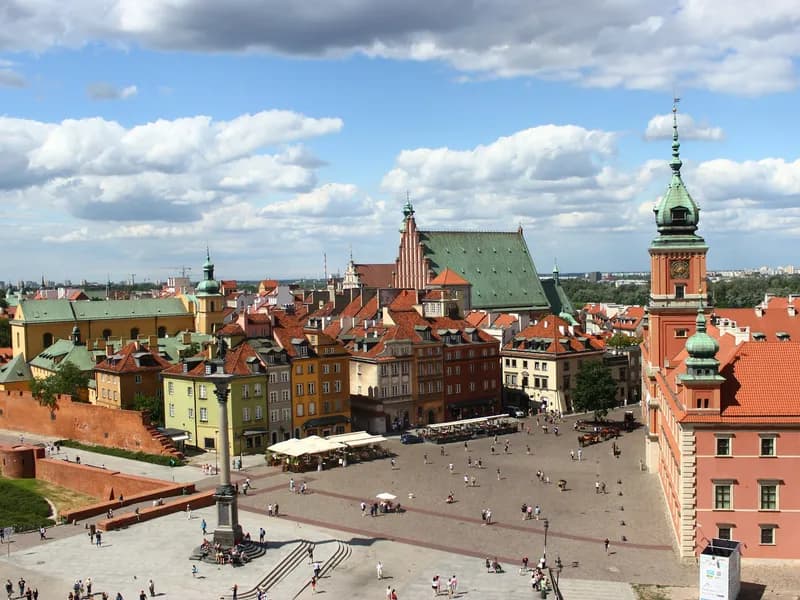
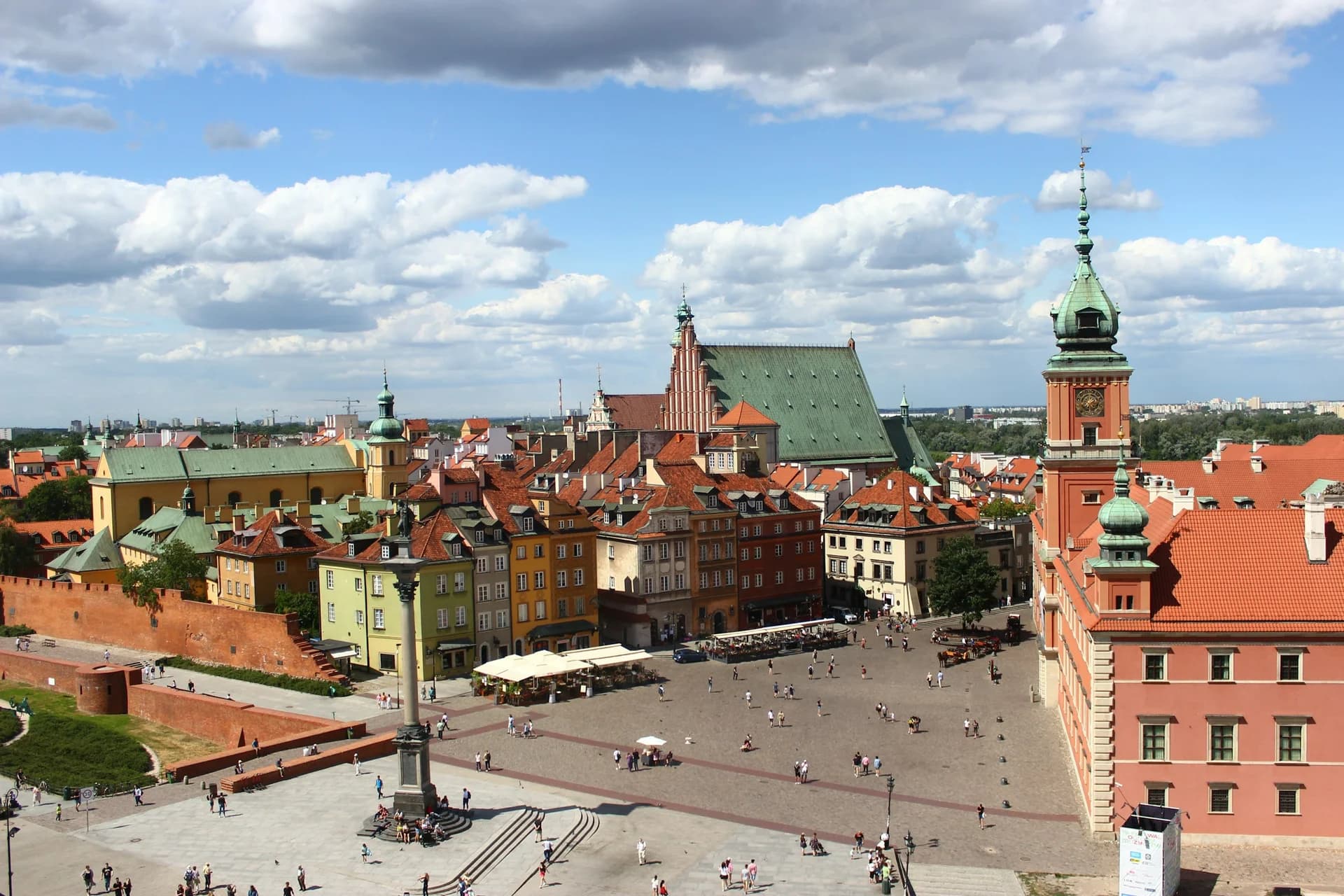
11. Skip the Old Town square restaurants. They're priced for tourists. Walk two streets off the square, or hit a milk bar, and you'll eat better for a third of the price.
12. Save room for pączki. The rose-jam doughnuts at A. Blikle (Nowy Świat 33, ~PLN 8) are the famous ones; Cukiernia Pawłowicz on Chmielna 13 is the local favorite.
Tipping
13. Ten percent in restaurants, and know the trap. Tipping isn't obligatory but 10% for good service is standard in sit-down spots. Important: if you say "thank you" (dziękuję) when handing over cash or your card, some servers take it to mean "keep the change." Say the number you want to pay instead. Milk bars and counters don't expect a tip.
Safety, language, and admin
14. Warsaw is very safe — act city-smart anyway. It rates Level 1. The main risks are the taxi scam and ordinary pickpocketing in crowds. No special precautions beyond common sense.
15. Learn five Polish words. English is widely spoken by younger people and in tourism, but dzień dobry (good day), dziękuję (thank you), proszę (please/you're welcome), przepraszam (excuse me), and na zdrowie (cheers) go a long way.
16. Check ETIAS and your Schengen days. Poland is in the Schengen area, so many travelers get 90 visa-free days per 180. The EU's ETIAS pre-authorization (around €7) is rolling out — confirm whether it's required for your nationality before booking.
Seasons and timing
17. Match the season to what you want. May to September is warm (summers around 24°C) and best for the riverside beach bars and free Sunday Chopin concerts in Łazienki Park. December brings Christmas markets and lights, but winters are cold and often below 0°C with snow — pack accordingly.
18. Mind the closed days. POLIN is closed Tuesdays. The Royal Castle and several others close Mondays. But the Uprising Museum is free Mondays and the Royal Castle is free Wednesdays — plan around both to save money and avoid a wasted trip.
Packing essentials
- Comfortable walking shoes. The Old Town is cobblestone and the sights are spread out; you'll clock serious steps.
- A contactless card plus a little cash for the milk bars.
- Layers, always. Even summer evenings by the Vistula cool off; winter demands a proper coat, hat, and gloves.
- A reusable water bottle. Warsaw tap water is safe to drink, so skip buying plastic.
- A power adapter for the European Type E plug (230V).
- An eSIM or local SIM if you want cheap data for Bolt and Jakdojade the moment you land.
What travelers wish they'd known
Most people underestimate Warsaw and over-plan Kraków. The single most common regret is giving the capital one rushed day and missing the two things it does better than almost anywhere: the history museums and the milk-bar food culture. The second most common: not booking POLIN or the Copernicus Science Centre ahead — both sell timed tickets and both fill up, especially on weekends.
So here's the smart move. Book POLIN and the Royal Castle online before you arrive, keep PLN 50 in small notes for the milk bars, put Bolt and Jakdojade on your phone, and give the city two nights — the same verdict we reach in our head-to-head on the two Polish capitals. Do that and Warsaw goes from "the grey stopover" to the trip you didn't see coming.