A Week in Ladakh: High Passes, Monastery Mornings, and Learning to Breathe Again
A Week in Ladakh: High Passes, Monastery Mornings, and Learning to Breathe Again
Day 1: Arrival and the Art of Doing Nothing
The Delhi flight lands at 10AM, and Leh-Ladakh greets you with thin air and clear skies. The airplane door opens and the air hits — thin, dry, clean in a way Delhi air hasn't been in decades. Temperature: 22°C. Altitude: 3,500 meters. Expect a blood-oxygen reading around 83% on day one.
The drive from the airport to Old Town runs about 10 minutes. Leh is small — 36,000 people, one main bazaar, and a medieval palace on a hill. A guesthouse room runs roughly 1,500 INR ($18) per night, with walls two feet thick: traditional Ladakhi mud-brick construction that keeps rooms cool in summer and warm in winter.
The guesthouse owner will likely hand you butter tea and clear instructions: no walking today, no stairs, sit, drink water, sleep. Take it seriously — it's the same patient, altitude-first hospitality that a Karakol guesthouse owner presses on trekkers across the mountains in Kyrgyzstan.
Sit on the terrace, look at mountains, drink three liters of water. The headache tends to arrive around 4PM — a dull pressure behind the eyes. Diamox (acetazolamide) helps, and there's no prize for skipping it — it's the same slow-acclimatization discipline that trekkers respect on the way to Everest Base Camp. A bowl of thukpa (Tibetan noodle soup, 100 INR / $1.20) and an 8PM bedtime are exactly the right ambition for day one.
Day 2: Leh Palace and Finding Your Lungs
Wake at 6AM to the sound of nothing. Actual nothing. No traffic, no construction, no roosters. Just wind.
Climb to Leh Palace — 9 stories, 17th century, modeled after the Potala Palace in Lhasa. Entry: 100 INR ($1.20). The climb takes about 35 minutes at altitude pace. At the top, the Indus Valley spreads out below — brown mountains, green patches of irrigated barley, the white thread of the Indus River catching morning light.
Spend the afternoon walking the Main Bazaar, a 500-meter stretch of shops selling pashmina shawls (real ones from Changthang nomads start at 5,000 INR / $60 — the 500 INR versions are acrylic), Tibetan prayer beads, and apricot products (Ladakh's apricot oil and jam are genuinely excellent). Find momos at a tiny shop near the mosque — 60 INR ($0.72) for 8 steamed dumplings with chili sauce.
Save sunset for Shanti Stupa. 500 steps, about 25 minutes. At the top, the stupa's white dome turns pink in the last light. Prayer flags snap. Mountains stand in every direction. It's the kind of view that makes you understand why monks chose these places — the same instinct that put a monastery on the cliff above Paro.
Day 3: Monastery Day — Thiksey and Hemis
Hire a shared taxi with a few other travelers to Thiksey (19km) and Hemis (45km). The full day runs 1,500 INR ($18), split four ways — 375 INR ($4.50) each.
Reach Thiksey Gompa by 6:30AM for morning prayers. The prayer hall smells of butter lamps and old wood. Monks chant in bass tones that seem to rise from the stone walls themselves. A boy monk, maybe nine years old, sits at the end of the row with his eyes closed, lips moving; an older monk leans over and gently adjusts the boy's prayer beads. It's a quiet, unhurried world that carries on whether or not you're watching — the same living Tibetan Buddhism you'll hear in the temples above McLeod Ganj.
After prayers, climb to the rooftop. Thiksey is built vertically on a hilltop — the view of the Indus Valley from the top floor is the most photographed scene in Ladakh. Entry: 50 INR ($0.60).
Hemis Monastery, 45 minutes east, is larger and wealthier. The courtyard that hosts the annual Hemis Festival is impressive — high walls, faded murals of wrathful deities, and a sense of contained power. Entry: 50 INR ($0.60). The museum's copper-gilt statue of Padmasambhava is worth the trip on its own.
Lunch at a dhaba (roadside restaurant) near Karu: rajma chawal (kidney bean curry with rice) for 100 INR ($1.20). Simple, filling, exactly right.
Day 4: Khardung La and Nubra Valley
The day everything goes vertical.
Start at 4:30AM. The road to Khardung La (5,359 meters / 17,582 feet) climbs 1,800 meters across 40km of switchbacks. A good driver will play Ladakhi folk music and stop at every curve where the altitude catches up with you.
Khardung La at 7AM: cold. Genuinely, bitterly cold — around -5°C with wind chill. The signboard reads "Highest Motorable Pass in the World" (debatable, but impressive regardless). Prayer flags everywhere. A tea stall sells chai for 30 INR ($0.36), and your fingers may be too numb to hold the cup properly.
Ten minutes at the top is plenty before the altitude headache returns with enthusiasm. Descend the other side into Nubra Valley — 3,000 meters, noticeably more oxygen. The valley opens up: green strips along the Shyok River, sand dunes in the distance, and the improbable sight of double-humped Bactrian camels crossing a desert at 10,000 feet. It's the same high-cold-desert paradox that defines Spiti, across the ranges to the south.
In Hunder village, take a camel ride on the dunes (500 INR / $6 for 30 minutes). These camels descend from Silk Road caravans — massive, hairy, and completely indifferent to human existence, and nothing like the single-humped dromedaries at Pushkar's camel fair down in Rajasthan.
Diskit Monastery crowns the day with a 32-meter Maitreya Buddha overlooking the valley. The statue faces the Siachen glacier, the world's highest battlefield — a peace-seeking Buddha gazing toward a war zone. Ladakh doesn't do subtlety.
Stay overnight at a family guesthouse in Hunder: 1,200 INR ($14.40) with dinner and breakfast. Dinner is dal, rice, sabzi, and chapati cooked by the owner's wife. Simple. Perfect. Bed by 8:30PM.
Day 5: Nubra to Leh
Start with a morning walk along the Nubra River. The air runs clear enough to pick out individual rocks on mountain faces 20km away — the same dawn clarity that gets people out of bed in Pokhara to watch the Annapurnas appear. Cross Khardung La again in afternoon light — a different character than dawn, warmer, the mountains showing colors (purple, rust, gold) that morning light conceals.
Back in Leh by 3PM. A shower — the first hot one in two days. Treat yourself to a proper dinner near Fort Road: grilled trout from a Ladakhi fish farm, 350 INR ($4.20). Walk the bazaar as shops close, prayer wheels spinning in the evening breeze.
Day 6: Pangong Lake — The Main Event
Another 4:30AM start. The drive to Pangong Tso takes 5-6 hours via Chang La pass (5,360 meters — somehow it feels worse than Khardung La, perhaps because it's your fourth day at altitude).
The road after Chang La is as rough as any in the region. Not dangerous — just brutal. Rocks, potholes, river crossings, and a full workout for your kidneys.
And then — Pangong.
The lake appears over a ridge, and it's worth asking your driver to stop. You'll need a minute.
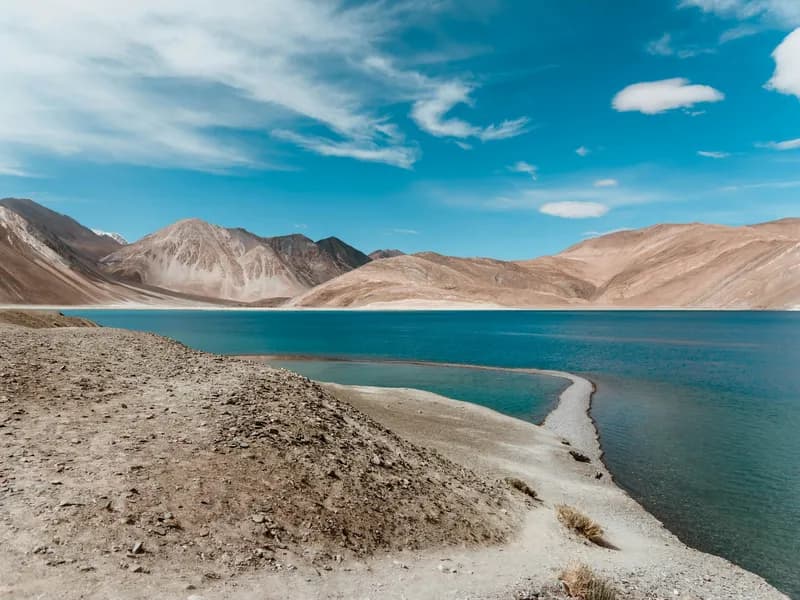
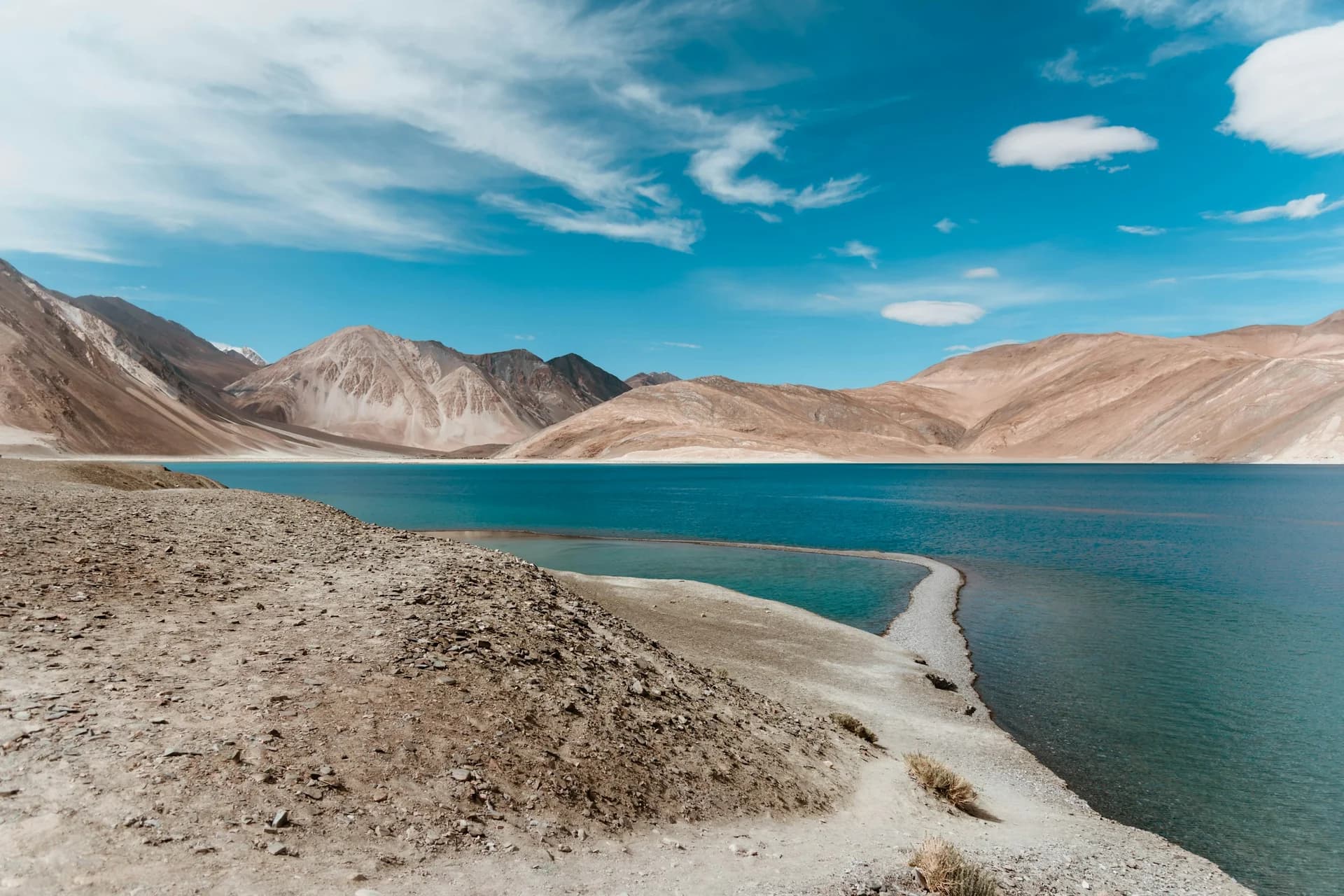
The color is turquoise. Not blue, not green — turquoise. The kind of color that looks artificial in photos. It isn't. It comes from the salt content (the lake is saline despite being landlocked) and the way sunlight plays across the dissolved minerals at 4,350 meters — the same improbable blue that Lake Titicaca holds at altitude in the Andes.
The lake stretches 134km long and reaches into China. The mountains around it are treeless — just brown rock, snow on the peaks, and the water. The scale makes distance impossible to judge: a mountain that looks close is 15km away.
Walk to the shore and put a hand in. Cold enough to hurt. Salt crust on the gravel. No sound.
The silence at Pangong is different from other silences. It isn't quiet — quiet implies the absence of normal sounds. This is the absence of any sound at all. No insects. No leaves. No machinery. Just the occasional lap of water on gravel, so faint you're not sure you heard it.
A tent camp on the lakeshore runs 2,500 INR ($30). Basic — mattress, blankets, no running water, a generator for a few hours of electricity. Dinner is maggi noodles and dal. The tent walls do little against the cold.
Around 3AM, frozen feet may pull you awake. Step outside to adjust blankets and look up.
The Milky Way.
You may have seen "the Milky Way" before — what you thought was the Milky Way. But Pangong at 4,350 meters, with zero light pollution for 50km in any direction, shows the real thing: a thick, luminous band across the entire sky. Individual nebulae visible. Shooting stars every few minutes. It's the kind of high-altitude, bone-dry sky that stargazers chase all the way to the Atacama Desert.
Stand outside for 20 minutes in -3°C wearing everything you own. Your teeth will chatter. You won't care.
Day 7: Return to Earth
Drive back to Leh — six hours. Check back into the guesthouse. The mountains tend to change everyone, and the butter tea arrives whether or not you asked for it.
A final dinner at the bazaar: thukpa, momos, and a Kingfisher beer (250 INR / $3 — expensive for India, but everything is hauled up the mountain road). Then the guesthouse terrace, and stars over Leh Palace.
Would You Go Back?
Most travelers are already planning the next trip before they leave. The frozen Chadar Trek in winter. The Zanskar Valley. Tso Moriri — Pangong's lesser-known neighbor.
Ladakh isn't comfortable. The altitude is punishing. The roads are destructive. The cold is extreme. The food is limited. The toilets are character tests.
But standing at Pangong at 3AM, watching the Milky Way with nothing between you and the sky, you understand what all the discomfort was for.
A 7-day budget lands around 22,000 INR ($264), including accommodation, food, transport, and permits. That's $38 per day for one of the most extraordinary landscapes on the planet.
For a different Rajasthani desert experience, consider Jaisalmer and its golden fort.
India's other-worldly white desert lies further west — the complete Rann of Kutch guide covers when to go and what to expect.
Or head south to Kerala for tropical contrast.