
Arequipa

Photo: Megan Kotlus / Unsplash
Key Facts
Best Time to Visit
May to November (dry season); Arequipa enjoys sunshine most of the year
Language
Spanish; Quechua and Aymara spoken in surrounding highlands
Currency
Peruvian Sol (PEN)
Time Zone
PET (UTC-5)
Airport
Rodríguez Ballón International (AQP), ~8 km northwest, ~20 min by taxi
Population
About 1.1 million (metropolitan area); Peru's second-largest city
Climate
High-desert: warm dry days (18-24°C), cool nights (5-10°C), very sunny, thin air
Safety Rating
Generally Safe (Level 1-2) — standard urban precautions; use registered taxis
Elevation
2,335 m (7,661 ft) — mild altitude; acclimatize before Colca Canyon
Top Highlights

Santa Catalina Monastery
A 20,000 m² 16th-century convent that functions as a walled city-within-a-city, with cobbled lanes painted in cobalt and ochre. Entry ~45 PEN; guided tour extra (~20 PEN). Open daily ~9AM-5PM, with atmospheric evening hours some nights. Allow 2-3 hours to wander its cloisters and courtyards.

Plaza de Armas & Basilica Cathedral
One of South America's most graceful colonial squares, arcaded on three sides in white sillar and dominated by the vast Basilica Cathedral. The plaza is free; the cathedral rooftop and museum tour costs ~15 PEN and gives close-up volcano views. Allow 1-1.5 hours. Loveliest at dusk when the stone glows.
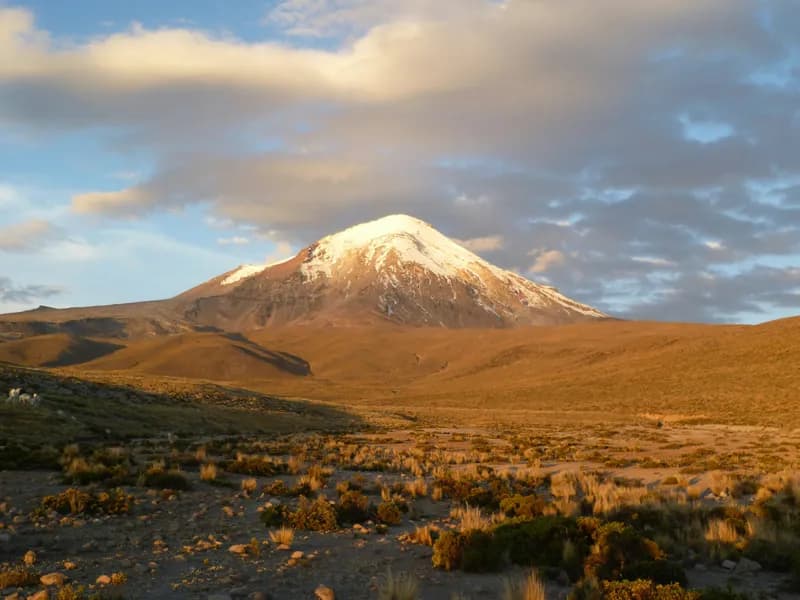
Museo Santuarios Andinos (Juanita the Ice Maiden)
Home to 'Juanita', a remarkably preserved Inca girl sacrificed on Mount Ampato ~1450 and frozen for five centuries. Entry ~40 PEN including a mandatory guided tour. Open Mon-Sat (Sun mornings); allow 1 hour. She is displayed in a freezer case for part of the year — a haunting, unmissable stop.

Yanahuara Viewpoint
A picturesque neighborhood ~15 min from the center with a photogenic sillar archway framing El Misti volcano and a leafy plaza. Free. Best in clear morning light before clouds gather on the peak. Combine with a stop for local rocoto relleno at a nearby picantería — a hidden-gem lunch.
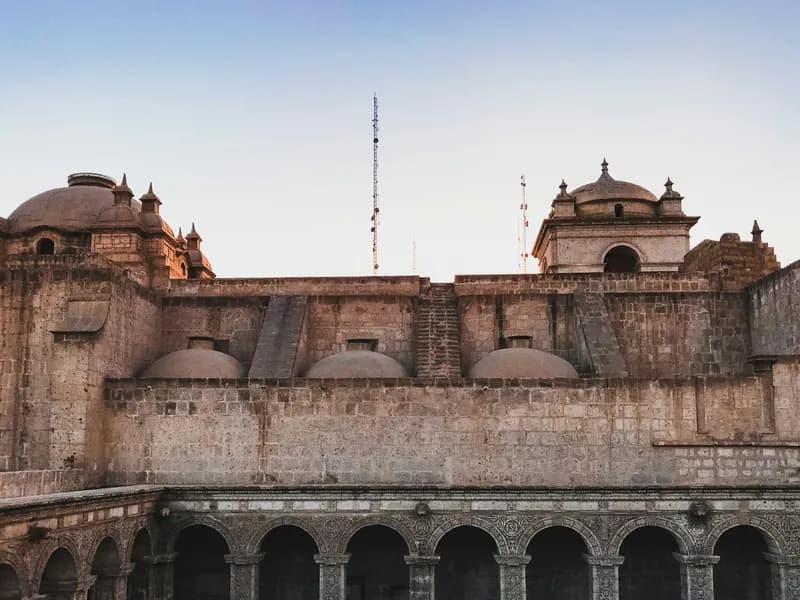
Ruta del Sillar (Sillar Quarries)
The white volcanic quarries that built Arequipa, ~30 min from town, where you can watch stonecutters at work and see carved reliefs in the Culebrillas canyon. Guided half-day tours ~40-60 PEN. An offbeat gem showing where the 'White City' literally comes from — bring sun protection, there's no shade.

El Misti Volcano
The perfect 5,822 m cone looming over the city is a strenuous 2-day guided climb (no technical skills, but high altitude and scree). Guided ascents ~USD 120-180 including gear and camp. Only attempt after acclimatizing. Even non-climbers get a full-frame view from the Yanahuara and Carmen Alto miradors.
Planned Itinerary
7-Day Arequipa Itinerary
Arrival in the White City
Land at Rodríguez Ballón, settle into the historic centre, and take it slow — Arequipa sits at 2,335 m, so today is deliberately gentle to let your body adjust to the thin, sunny high-desert air before any excursions.
Transfer from Rodríguez Ballón Airport (AQP)(25 minutes)
Take a hotel-arranged car or an Uber/InDriver rather than a street hail; the ride into the centre runs about S/25-35 (~USD 8). Airport is only ~8 km northwest.
Check in near Plaza de Armas(45 minutes)
Base yourself in the walkable core — Katari Hotel on the plaza or Tierra Viva a block away. Drop bags and settle in.
Rest and mate de coca(1.5 hours)
Sip coca tea (offered free at most hotels), hydrate, and rest to ease altitude adjustment. Avoid alcohol on day one.
Gentle stroll around Plaza de Armas(1 hour)
Wander the sillar arcades and the vast Basilica Cathedral facade at dusk when the white stone glows gold. The plaza itself is free.
Light dinner at Crepisimo(1 hour)
Inside the Alianza Francesa on Calle Santa Catalina — savoury and sweet crepes S/20-35, a mellow first meal that won't overtax you at altitude.
Colonial Core: Santa Catalina & Juanita
A full day inside the UNESCO historic centre, all within a few walkable blocks: the monastery-city of Santa Catalina in the morning, the Cathedral rooftop at midday, and the haunting Ice Maiden museum in the afternoon.
Santa Catalina Monastery(2.5 hours)
Arrive at the 9AM opening to beat crowds. Entry ~S/45; add a guide (~S/20) to make sense of the cobalt-and-ochre lanes of this 20,000 m² walled convent-city. Cool cloisters, so bring a light layer.
Lunch at Chicha por Gastón Acurio(1.5 hours)
On Calle Santa Catalina 210, a refined take on Arequipeño classics; mains S/50-80. Try the rocoto relleno or chupe de camarones.
Basilica Cathedral rooftop tour(1 hour)
The museum-and-rooftop tour (~S/15) gives close volcano views over the plaza and access to the towers and organ. Loveliest in early-afternoon light.
Museo Santuarios Andinos (Juanita the Ice Maiden)(1 hour)
On Calle La Merced; entry ~S/40 includes a mandatory guide. See the remarkably preserved Inca girl frozen on Mount Ampato ~1450. Closed Sunday afternoons — go in the afternoon slot.
Dinner at Zig Zag Restaurant(1.5 hours)
In the atmospheric San Lázaro barrio (Calle Zela 210); ostrich, alpaca and beef on volcanic-stone plates, mains S/45-70. Reserve ahead.
Miradores, Picantería & Peña
Cross the river to the leafy Yanahuara and Cayma neighborhoods for classic El Misti viewpoints, a long picantería lunch, then loop back to Mercado San Camilo before an evening of folk music.
Yanahuara Viewpoint(1 hour)
A 10-min taxi (~S/10) to the sillar archways that frame El Misti, best in clear morning light before clouds gather on the peak. Free. Peek into the Iglesia San Juan Bautista on the plaza.
Carmen Alto mirador, Cayma(45 minutes)
A short hop uphill to terraced farmland views of the Chili valley with all three volcanoes — Misti, Chachani, Pichu Pichu — on a clear day.
Picantería lunch at La Nueva Palomino(2 hours)
The legendary institution in Yanahuara; go early (opens ~noon, busy by 1PM) as it serves mainly midday. Cash only, mains S/35-60. Order rocoto relleno and chupe de camarones.
Mercado San Camilo & Iglesia de la Compañía(1.5 hours)
The 1880s iron-framed market for fruit, cheese and juice stalls, then the ornate Jesuit church with its San Ignacio chapel (~S/10). Carry small soles for the market.
Evening peña folklórica(2 hours)
Live Andean music and dance at a peña near Calle Santa Catalina (cover ~S/20-30). A convivial end to the day; dinner served alongside.
Into the Colca Canyon
Leave the city for the two-day Colca excursion. The road climbs over the 4,910 m Patapampa pass through the Salinas y Aguada Blanca reserve — expect vicuñas — before dropping to Chivay for hot springs. Altitude peaks high today, so go slow and hydrate.
Bus from Terminal Terrestre to Chivay(6 hours)
Early departure with 4M Express or Reyna (~S/20-30). The route crosses the Patapampa pass at 4,910 m — the Mirador de los Volcanes — with vicuña and viscacha sightings en route.
Colca tourist ticket (boleto turístico)(10 minutes)
Foreign visitors pay ~S/70 at the control; it covers Cruz del Cóndor and valley viewpoints. Keep the ticket for tomorrow.
Lunch in Chivay(1 hour)
A simple set-menu almuerzo in town runs S/15-25. Ease into the 3,650 m altitude — light meal, plenty of water.
La Calera hot springs(1.5 hours)
Thermal pools just outside Chivay (~S/15-20); the warm mineral water is ideal after the high pass. Bring a swimsuit and towel.
Overnight in Yanque or Chivay(Evening)
Stay in the colonial village of Yanque or in Chivay. Turn in early — the condor lookout means a pre-dawn start tomorrow.
Condors at Cruz del Cóndor
The signature Colca morning: giant Andean condors riding the thermals at Cruz del Cóndor, then a scenic return to Arequipa past colonial churches and canyon viewpoints.
Cruz del Cóndor at dawn(1.5 hours)
Arrive by ~8-9AM when condors rise on the morning thermals over one of the world's deepest canyons. Covered by yesterday's ticket. Dress warm; mornings are cold.
Maca village and Antahuilque viewpoint(1 hour)
Stop at Maca's whitewashed colonial church and the pre-Inca terraces at the Choquetico / Antahuilque miradors on the drive back toward Chivay.
Return bus to Arequipa(6 hours)
Afternoon service back over the reserve (~S/20-30). You descend from ~3,600 m to 2,335 m — most travelers feel noticeably better on arrival.
Easy dinner at Crepisimo or Los Leños(1 hour)
Keep it light after the long travel day; a savoury crepe or wood-fired pizza (S/25-40) near the plaza.
Countryside Campiña & Rest
A deliberately slow recovery day. Sleep in, then a gentle loop through the rural campiña — a colonial mill and country mansion — with plenty of downtime before your last night.
Slow morning and spa time(2 hours)
Sleep in and recover after Colca. Many centre hotels have a small spa or sun terrace — an easy start with no fixed schedule.
Molino de Sabandía & Mansión del Fundador(3 hours)
A ~20-min taxi (~S/25 each way) to the restored 1621 stone water mill at Sabandía and the nearby Mansión del Fundador country estate (entries ~S/15-20 each), set among green fields under El Misti.
Coffee at Café Valenzuela(45 minutes)
A historic Arequipeño coffee house on Calle Morán 114 — locally roasted coffee and pastries, a relaxed afternoon pause.
Farewell dinner at El Tío Darío(1.5 hours)
Garden dining in Yanahuara with river shrimp and ceviche (mains S/40-70) — a memorable last supper away from the tourist bustle.
Alpaca Shopping & Departure
A final morning for keepsakes and one last look at the volcanoes before your transfer to Rodríguez Ballón for onward travel.
Alpaca shopping at Mundo Alpaca(1.5 hours)
Free-entry Michell alpaca centre on Juan de la Torre 101 (San Lázaro) with baby-alpacas, a weaving demo, and a quality shop. For softer prices browse Kuna or the San Camilo stalls — carry small soles.
Last stroll on Plaza de Armas(45 minutes)
A final espresso under the arcades and photos of the Cathedral against Misti before you leave.
Hotel checkout(30 minutes)
Standard checkout is ~11AM; ask the front desk to store bags if your flight is later and to book a registered airport taxi.
Transfer to Rodríguez Ballón Airport (AQP)(30 minutes)
Allow extra buffer for midday traffic; the metered/agreed fare is about S/30 (~USD 8). Arrive ~2 hours before a domestic flight.
14-Day Arequipa Itinerary
Arrival in the White City
Land at Rodríguez Ballón and ease into the historic centre. Arequipa's 2,335 m altitude is mild but real — today is intentionally light so you acclimatize before the higher excursions to come.
Transfer from Rodríguez Ballón Airport (AQP)(25 minutes)
Use a hotel car or Uber/InDriver rather than a street hail; ~S/25-35 (~USD 8) for the ~8 km ride into the centre.
Check in near Plaza de Armas(45 minutes)
Stay in the walkable core — Casa Andina Premium or La Casa de Melgar are a short stroll from the square.
Rest and mate de coca(1.5 hours)
Coca tea, water, and a slow start help your body adjust. Skip alcohol tonight.
Sunset stroll on Plaza de Armas(1 hour)
Watch the sillar arcades and Cathedral glow at dusk. The plaza is free; grab a bench and people-watch.
Light dinner at Crepisimo(1 hour)
Crepes S/20-35 inside the Alianza Francesa on Calle Santa Catalina — an easy first meal at altitude.
Colonial Core: Santa Catalina & Juanita
The essential historic centre in one walkable day: the monastery-city of Santa Catalina, the Cathedral rooftop, and the Ice Maiden museum.
Santa Catalina Monastery(2.5 hours)
Arrive at the 9AM opening; entry ~S/45 plus a guide (~S/20) to interpret the cobalt-and-ochre lanes of this 20,000 m² convent-city. Bring a light layer for the cool cloisters.
Lunch at Chicha por Gastón Acurio(1.5 hours)
Calle Santa Catalina 210; elevated Arequipeño cooking, mains S/50-80. Order rocoto relleno and chupe de camarones.
Basilica Cathedral rooftop tour(1 hour)
Museum-and-rooftop tour ~S/15 with close volcano views over the plaza and the towers and Belgian organ.
Museo Santuarios Andinos (Juanita)(1 hour)
Calle La Merced; ~S/40 with a mandatory guide to see the frozen Inca girl from Mount Ampato. Closed Sunday afternoons.
Dinner at Zig Zag Restaurant(1.5 hours)
San Lázaro barrio (Calle Zela 210); meats on volcanic-stone plates, mains S/45-70. Reserve ahead.
Deeper into the Centre
The centre's quieter treasures — a Jesuit church, colonial mansions, a literary house-museum — plus the great iron market, all within easy walking distance.
Iglesia de la Compañía & San Ignacio chapel(1 hour)
The finest mestizo-baroque carved facade in the city; the polychrome San Ignacio side chapel costs ~S/10 to enter. Just off the plaza.
Casa del Moral & Casa Museo Mario Vargas Llosa(1.5 hours)
A 1730s sillar mansion (~S/10) with carved portals, and the interactive museum in the Nobel laureate's birth-house (~S/30). Both a short walk apart.
Lunch at La Trattoria del Monasterio(1.5 hours)
Beside Santa Catalina's walls; Italian-Arequipeño fare designed by Gastón Acurio, mains S/40-60.
Monasterio de Santa Teresa museum(1.5 hours)
A working Carmelite convent with a superb viceregal art collection and rooftop volcano views; guided entry ~S/20-30.
Mercado San Camilo at golden hour(1 hour)
The 1880s Eiffel-influenced market — fresh juices, cheeses, and cheap eats. Carry small soles; vendors rarely change big bills.
Miradores, Picantería & Peña
A relaxed day across the river in Yanahuara and Cayma for the postcard volcano views, a long lunch in Arequipa's culinary heartland, and folk music after dark. Keep the afternoon unhurried — a soft rest window before the busier days ahead.
Yanahuara Viewpoint(1 hour)
A 10-min taxi (~S/10); the sillar archways frame El Misti best in clear morning light. Free. Visit the Iglesia San Juan Bautista on the little plaza.
Carmen Alto mirador, Cayma(45 minutes)
Terraced-farmland views over the Chili valley with all three volcanoes on a clear morning.
Picantería lunch at La Nueva Palomino(2 hours)
The legendary Yanahuara institution; arrive by noon (busy by 1PM), cash only, mains S/35-60. Rocoto relleno, chupe de camarones, and chicha de guiñapo.
Free afternoon / San Lázaro stroll(2 hours)
Wander the oldest barrio's narrow alleys, or simply rest. A gentle buffer with no fixed plans.
Evening peña folklórica(2 hours)
Live Andean music near Calle Santa Catalina, cover ~S/20-30, with dinner alongside.
Ruta del Sillar & the Campiña
Discover where the White City literally comes from — the volcanic sillar quarries — then a green countryside loop to a colonial mill and country mansion.
Ruta del Sillar half-day tour(3.5 hours)
A ~30-min drive to the Añashuayco and Culebrillas quarries where stonecutters carve the white rock; see carved canyon reliefs. Guided ~S/40-60. No shade — bring sun protection and water.
Lunch at a Sachaca picantería (La Lucila)(1.5 hours)
Country-style picantería in Sachaca; hearty Arequipeño plates S/35-55 in a rustic garden setting.
Molino de Sabandía & Mansión del Fundador(2.5 hours)
The restored 1621 stone water mill and the nearby 17th-century country estate (entries ~S/15-20 each), framed by fields and El Misti.
Torre de Sachaca mirador(45 minutes)
Climb the little tower for a 360° panorama of the campiña, city, and volcano ring at day's end (~S/5).
Cooking Class & Relaxation
A hands-on morning in the kitchen learning the city's signature dishes, then a deliberately restful afternoon — a light rest day to bank energy before Colca.
Arequipeño cooking class(3.5 hours)
Learn rocoto relleno and chupe de camarones, often starting with a market visit for ingredients; classes run ~S/120-180 (~USD 35-50) and you eat what you cook.
Afternoon spa or café rest(2 hours)
Unwind at a centre spa, or read over coffee at Café Casona Forum. No fixed agenda.
Optional Mundo Alpaca visit(1 hour)
Free entry on Juan de la Torre 101; baby alpacas, a live weaving demonstration, and a browse of the shop.
Casual dinner at El Buda Profano(1 hour)
A relaxed vegetarian/vegan spot in San Lázaro, plates S/25-35 — a lighter evening.
Free Day & Salinas Reserve Option
An open day to acclimatize fully before the high Colca passes. Slow-travel in the city, or take an optional half-day into the altiplano reserve for vicuñas and flamingos.
Slow morning in the centre(2 hours)
Sleep in, linger over breakfast, revisit a favorite plaza or church at your own pace.
Optional Salinas y Aguada Blanca reserve(4 hours)
Half-day tour into the high altiplano (~4,000 m) for wild vicuñas and, seasonally, flamingos on Salinas lagoon. A gentle altitude taster for Colca; ~S/80-120.
Convento de la Recoleta(1 hour)
A Franciscan monastery-museum west of the river with Amazonian artifacts and a fine library; entry ~S/20.
Early night and packing(1 hour)
Pack a small overnight bag for Colca (warm layers, swimsuit, sun gear) — tomorrow starts early.
Into the Colca Canyon
The two-day Colca excursion begins. The road climbs over the 4,910 m Patapampa pass through vicuña country before dropping to Chivay's hot springs. Altitude is highest today — go slow and drink water.
Bus from Terminal Terrestre to Chivay(6 hours)
Early 4M Express or Reyna service (~S/20-30) over the Patapampa pass at 4,910 m — the Mirador de los Volcanes — with vicuña and viscacha sightings.
Colca tourist ticket (boleto turístico)(10 minutes)
~S/70 for foreign visitors at the control; covers Cruz del Cóndor and valley viewpoints. Keep it for tomorrow.
Lunch in Chivay(1 hour)
Simple set almuerzo S/15-25. Ease into the 3,650 m altitude with a light meal.
La Calera hot springs(1.5 hours)
Thermal pools just outside Chivay (~S/15-20), perfect after the high pass. Bring swimsuit and towel.
Overnight in Yanque(Evening)
Stay in the colonial village of Yanque; some lodges host evening folk-dance in the plaza. Sleep early for the condors.
Condors & Return
The classic Colca dawn at Cruz del Cóndor, then a scenic drive back to Arequipa via colonial villages and pre-Inca terraces.
Cruz del Cóndor at dawn(1.5 hours)
Arrive ~8-9AM as condors ride the thermals above the canyon. Covered by yesterday's ticket; dress warm for the cold morning.
Maca church & Choquetico viewpoints(1 hour)
The whitewashed colonial church at Maca and the pre-Inca agricultural terraces at the Antahuilque / Choquetico miradors on the way back.
Return bus to Arequipa(6 hours)
Afternoon service over the reserve (~S/20-30); you descend to 2,335 m and should feel markedly better on arrival.
Easy dinner near the plaza(1 hour)
Keep it light — a crepe or wood-fired pizza at Los Leños (S/25-40) after the long travel day.
Recovery & Slow City Day
A genuine rest day to recharge after Colca — spa, cafés, and only the gentlest sightseeing, all on foot.
Sleep in and spa morning(2.5 hours)
No alarm. Book a massage or simply enjoy the hotel terrace and sun.
Leisurely lunch at Chicha or La Trattoria(1.5 hours)
Return to a favorite for an unhurried midday meal, mains S/40-80.
Café afternoon at Café Valenzuela(1 hour)
Historic coffee house on Calle Morán 114; locally roasted coffee and pastries. Read, journal, do nothing.
Gentle evening on Plaza de Armas(1 hour)
An easy dusk stroll and a pisco sour under the arcades — nothing scheduled.
Toro Muerto Petroglyphs
A long but rewarding day trip into the desert to one of the world's largest petroglyph fields, scattered across white volcanic boulders near Corire.
Drive to Toro Muerto via Corire(3 hours)
Head northwest into the Majes valley (~160 km); guided full-day tours run ~S/120-160, or self-drive. Long, scenic desert road.
Explore the Toro Muerto petroglyph field(2.5 hours)
Over 2,000 carved boulders with pre-Columbian designs across an open volcanic plateau (entry ~S/10-15). Full sun and no shade — hat, water, sunscreen essential.
Lunch in the Majes valley(1 hour)
River-shrimp (camarones) is the local specialty here; a valley restaurant runs S/30-50.
Return to Arequipa(3 hours)
Back to the city by early evening. A quiet dinner near the hotel to close the day.
Campiña Villages & Weaving
A slower rural day through the southern countryside villages, blending viewpoints, an alpaca-textile experience, and a classic country picantería.
Tiabaya & Tingo campiña drive(1.5 hours)
A gentle loop through the green terraced villages south of the city under El Misti — a taxi tour runs ~S/40-60 per hour.
Alpaca weaving experience at Mundo Alpaca(1.5 hours)
Watch the fibre journey from animal to loom and try the backstrap-weaving demo; free entry, quality goods for sale.
Picantería lunch at Sol de Mayo(2 hours)
A Yanahuara classic since 1897 with a garden courtyard; mains S/35-55, live music some afternoons.
Free afternoon(2 hours)
Rest or browse the boutiques along Calle Mercaderes and Santa Catalina at your own pace.
Farewell City Day & Shopping
A final full day to revisit favorites, gather alpaca keepsakes, and toast the trip with a standout dinner.
Carmen Alto mirador at sunrise(1 hour)
An early taxi to Cayma for soft morning light on the volcano ring before clouds build — one of the best photo hours in the city.
Alpaca and souvenir shopping(2 hours)
Browse Kuna and Sol Alpaca for baby-alpaca knits, or the San Camilo and Fundo El Fierro artisan stalls for lower prices. Carry small soles.
Lunch at a picantería of choice(1.5 hours)
Return to La Nueva Palomino or Tradición Arequipeña for a last midday feast, mains S/35-60.
Farewell dinner at Zig Zag or Chicha(2 hours)
A memorable final dinner in the historic centre; reserve a window table for the plaza or barrio ambiance.
Departure from the White City
A last morning under the volcanoes before your transfer to Rodríguez Ballón for onward travel.
Last stroll and espresso on Plaza de Armas(1 hour)
A final coffee under the arcades and a photo of the Cathedral against Misti.
Hotel checkout(30 minutes)
Checkout is ~11AM; ask the desk to store bags and book a registered airport taxi if your flight is later.
Transfer to Rodríguez Ballón Airport (AQP)(30 minutes)
Agree the fare (~S/30, USD 8) or use an app; arrive ~2 hours before a domestic flight, 3 for international connections.
21-Day Arequipa Itinerary
Arrival in the White City
Land at Rodríguez Ballón and settle into the historic centre. At 2,335 m the altitude is mild but real, so today is deliberately gentle — this is the first step of a slow, well-paced acclimatization arc that will build toward a Colca trek and, if you wish, a volcano summit.
Transfer from Rodríguez Ballón Airport (AQP)(25 minutes)
Use a hotel car or Uber/InDriver rather than a street hail; ~S/25-35 (~USD 8) for the ~8 km ride into the centre.
Check in near Plaza de Armas(45 minutes)
Base in the walkable core — Casa Andina Premium, Katari on the plaza, or La Casa de Melgar.
Rest and mate de coca(1.5 hours)
Coca tea, hydration, and a slow start. No alcohol on day one.
Sunset stroll on Plaza de Armas(1 hour)
The sillar arcades and Cathedral glow at dusk. Plaza is free.
Light dinner at Crepisimo(1 hour)
Crepes S/20-35 at the Alianza Francesa on Calle Santa Catalina — an easy first meal.
Colonial Core: Santa Catalina & Juanita
The essential historic centre in one walkable day: the monastery-city, the Cathedral rooftop, and the Ice Maiden museum.
Santa Catalina Monastery(2.5 hours)
Arrive at 9AM opening; entry ~S/45 plus a guide (~S/20) for the cobalt-and-ochre lanes of the 20,000 m² convent-city. Bring a layer for the cool cloisters.
Lunch at Chicha por Gastón Acurio(1.5 hours)
Calle Santa Catalina 210; refined Arequipeño cooking, mains S/50-80.
Basilica Cathedral rooftop tour(1 hour)
Museum-and-rooftop tour ~S/15 with close volcano views over the plaza.
Museo Santuarios Andinos (Juanita)(1 hour)
Calle La Merced; ~S/40 with a mandatory guide to see the frozen Inca girl from Mount Ampato. Closed Sunday afternoons.
Dinner at Zig Zag Restaurant(1.5 hours)
San Lázaro barrio (Calle Zela 210); meats on volcanic-stone plates, mains S/45-70. Reserve ahead.
Deeper into the Centre
The centre's quieter treasures and the great iron market, all on foot within a few blocks.
Iglesia de la Compañía & San Ignacio chapel(1 hour)
Mestizo-baroque carved facade; the polychrome San Ignacio side chapel is ~S/10.
Casa del Moral & Casa Museo Mario Vargas Llosa(1.5 hours)
A 1730s sillar mansion (~S/10) and the interactive museum in the Nobel laureate's birth-house (~S/30).
Lunch at La Trattoria del Monasterio(1.5 hours)
Beside Santa Catalina's walls; Italian-Arequipeño fare, mains S/40-60.
Monasterio de Santa Teresa museum(1.5 hours)
Working Carmelite convent with viceregal art and rooftop volcano views; guided entry ~S/20-30.
Mercado San Camilo at golden hour(1 hour)
The 1880s iron-framed market — juices, cheeses, cheap eats. Carry small soles.
Miradores, Picantería & Peña
Across the river to Yanahuara and Cayma for postcard volcano views, a long lunch in the city's culinary heartland, and folk music at night. Keep the afternoon unhurried — a soft rest window.
Yanahuara Viewpoint(1 hour)
A 10-min taxi (~S/10); sillar archways frame El Misti best in clear morning light. Free. See the Iglesia San Juan Bautista.
Carmen Alto mirador, Cayma(45 minutes)
Terraced-farmland views over the Chili valley with all three volcanoes on a clear morning.
Picantería lunch at La Nueva Palomino(2 hours)
The legendary Yanahuara institution; arrive by noon (busy by 1PM), cash only, mains S/35-60. Rocoto relleno and chupe de camarones.
Free afternoon / San Lázaro stroll(2 hours)
Wander the oldest barrio's alleys or simply rest — a gentle buffer.
Evening peña folklórica(2 hours)
Live Andean music near Calle Santa Catalina, cover ~S/20-30, with dinner alongside.
Ruta del Sillar & the Campiña
Where the White City comes from — the volcanic quarries — then a green countryside loop to a colonial mill and country estate.
Ruta del Sillar half-day tour(3.5 hours)
A ~30-min drive to the Añashuayco and Culebrillas quarries where stonecutters carve the white rock; carved canyon reliefs. Guided ~S/40-60. No shade — bring sun protection.
Lunch at a Sachaca picantería (La Lucila)(1.5 hours)
Country picantería in Sachaca; hearty plates S/35-55 in a rustic garden.
Molino de Sabandía & Mansión del Fundador(2.5 hours)
The restored 1621 water mill and the 17th-century country estate (entries ~S/15-20 each) under El Misti.
Torre de Sachaca mirador(45 minutes)
Climb for a 360° panorama of campiña, city, and volcanoes at day's end (~S/5).
Cooking Class & Relaxation
A hands-on morning in the kitchen, then a restful afternoon — a light rest day to bank energy for the excursions ahead.
Arequipeño cooking class(3.5 hours)
Learn rocoto relleno and chupe de camarones, usually with a market visit first; ~S/120-180 (~USD 35-50), and you eat what you cook.
Afternoon spa or café rest(2 hours)
A centre spa or coffee at Café Casona Forum. No fixed agenda.
Optional Mundo Alpaca visit(1 hour)
Free entry on Juan de la Torre 101; baby alpacas and a live weaving demo.
Casual dinner at El Buda Profano(1 hour)
Relaxed vegetarian spot in San Lázaro, plates S/25-35.
Free Day & Salinas Reserve Option
An open day to acclimatize before the high Colca trek. Slow-travel in the city, or head into the altiplano reserve for vicuñas and flamingos.
Slow morning in the centre(2 hours)
Sleep in, linger over breakfast, revisit a favorite church at your own pace.
Optional Salinas y Aguada Blanca reserve(4 hours)
Half-day tour into the ~4,000 m altiplano for wild vicuñas and seasonal flamingos on Salinas lagoon — a gentle altitude taster; ~S/80-120.
Convento de la Recoleta(1 hour)
Franciscan monastery-museum with Amazonian artifacts and a fine old library; entry ~S/20.
Pack for the Colca trek(1 hour)
Prepare a light trekking pack: warm layers, sun gear, headlamp, swimsuit, and cash for the canyon. Early night.
Colca Trek Day 1 — Descent from Cabanaconde
The three-day canyon trek begins. Bus to Cabanaconde on the canyon rim, watch condors at Cruz del Cóndor, then descend the switchbacks to a village deep inside one of the world's deepest gorges.
Bus from Terminal Terrestre to Cabanaconde(6 hours)
Early service (4M Express or the direct Cabanaconde bus, ~S/25) over the Patapampa pass at 4,910 m through vicuña country. Buy the Colca tourist ticket (~S/70) en route.
Cruz del Cóndor viewpoint(1 hour)
The condor lookout before Cabanaconde; giant Andean condors ride the thermals over the canyon. Covered by the Colca ticket.
Trek descent to San Juan de Chuccho(3.5 hours)
From Cabanaconde (3,290 m) a guided ~1,200 m descent to the river and up to the hamlet of San Juan de Chuccho. Trekking poles and plenty of water advised.
Overnight in a canyon-village lodge(Evening)
Simple family-run lodgings with a home-cooked dinner. Off-grid quiet under a brilliant star field.
Colca Trek Day 2 — To the Sangalle Oasis
Traverse the canyon's terraced villages and drop to the palm-fringed Sangalle oasis at the bottom of the gorge — a green pocket with spring-fed pools.
Trek through Cosñirhua & Malata(3 hours)
A guided contour walk between hanging villages with pre-Inca terraces and a small ethnographic chapel-museum in Malata.
Descent to Sangalle (the Oasis)(1.5 hours)
A steep drop to the canyon floor (~2,200 m) where palm groves and swimming pools cluster by the river.
Swim and rest at the oasis(2 hours)
Cool off in the spring-fed pools and nap in a hammock — the reward for two days of trekking.
Overnight at an oasis bungalow(Evening)
Basic palm-roof cabañas with a candlelit dinner (little electricity); an unforgettable night at the bottom of the canyon.
Colca Trek Day 3 — Ascent & Chivay Springs
The hardest, most rewarding morning: a pre-dawn climb out of the canyon to Cabanaconde, then a transfer to Chivay for a well-earned soak in the thermal springs.
Pre-dawn ascent to Cabanaconde(3 hours)
Start ~4:30-5AM to beat the sun on the ~1,100 m climb back to the rim; mules can carry packs or riders for ~S/70-100 if needed. Steady pace, water, snacks.
Breakfast and rest in Cabanaconde(1.5 hours)
Recover with a big breakfast in town before transferring on.
Transfer to Chivay & La Calera hot springs(2.5 hours)
Drive along the canyon rim to Chivay; soak tired muscles in the La Calera thermal pools (~S/15-20).
Overnight in Yanque or Chivay(Evening)
A comfortable valley hotel and an early night at ~3,650 m.
Return to Arequipa & Rest
A scenic drive back over the altiplano to the city, then a restful afternoon to recover from the trek.
Drive back via Patapampa pass(6 hours)
Return over the 4,910 m Mirador de los Volcanes and through the Salinas reserve; you descend to 2,335 m and will feel the extra oxygen.
Late lunch near the plaza(1.5 hours)
An easy, hearty meal back in the centre, mains S/35-60.
Rest afternoon and spa(2.5 hours)
Nothing scheduled — a massage, a long shower, and downtime after three days of trekking.
Recovery & Slow City Day
A genuine rest day. Sleep in, wander at your own pace, and let the legs recover before the next side trip.
Sleep in and slow breakfast(2 hours)
No alarm; a long breakfast on a sunny terrace.
Leisurely lunch at a favorite picantería(1.5 hours)
Return to Sol de Mayo or Tradición Arequipeña, mains S/35-55.
Café afternoon at Café Valenzuela(1 hour)
Historic coffee house on Calle Morán 114; read and do nothing.
Gentle evening on Plaza de Armas(1 hour)
A dusk stroll and a pisco sour under the arcades.
Toro Muerto Petroglyphs
A desert day trip to one of the world's largest petroglyph fields, scattered across white volcanic boulders near Corire.
Drive to Toro Muerto via Corire(3 hours)
Northwest into the Majes valley (~160 km); guided full-day tours ~S/120-160.
Explore the petroglyph field(2.5 hours)
Over 2,000 carved boulders with pre-Columbian designs on an open plateau (entry ~S/10-15). Full sun, no shade — hat, water, sunscreen.
Lunch in the Majes valley(1 hour)
River-shrimp (camarones) is the specialty; a valley restaurant runs S/30-50.
Return to Arequipa(3 hours)
Back by early evening for a quiet dinner near the hotel.
Journey to Lake Titicaca (Puno)
Begin a three-day side trip toward the world's highest navigable lake. A scenic bus climbs onto the altiplano to Puno on the shores of Lake Titicaca — arrive gently, as Puno sits at 3,827 m.
Bus from Arequipa to Puno(6 hours)
Comfortable service with Julsa or Transzela (~S/40-70) across the high plains past Lagunillas lagoon; watch for alpaca and flamingos.
Check in and rest in Puno(1.5 hours)
Take it easy at 3,827 m — your Colca acclimatization helps, but hydrate and go slow this afternoon.
Lakefront stroll and mirador(1 hour)
Walk the malecón or ride up to the Mirador Kuntur Wasi (condor statue) for a sweeping view of Titicaca at sunset.
Dinner of trucha (lake trout)(1 hour)
Fresh Titicaca trout is the regional dish; a lakeside restaurant runs S/30-50.
Uros Floating Islands & Taquile
A full day on the lake: the reed-built Uros islands and the terraced, textile-famous island of Taquile, a UNESCO-listed weaving culture.
Boat to the Uros floating islands(2 hours)
From Puno harbour; the Uros people build and live on islands of totora reeds. Community boat tours ~S/60-90 plus small landing fees.
Sail to Taquile Island(2.5 hours)
Cross to Taquile, whose men are renowned knitters and whose textiles are UNESCO-recognized; a walk up to the plaza rewards with lake-and-Bolivia views.
Community lunch on Taquile(1.5 hours)
A simple set meal (quinoa soup, grilled trout) hosted by an island family, ~S/25-35.
Return boat to Puno(3 hours)
An unhurried sail back across the lake to Puno for the night.
Sillustani Towers & Back to Arequipa
See the dramatic pre-Inca funerary towers above Lake Umayo, then the long, scenic return to Arequipa.
Sillustani chullpas(2 hours)
A ~45-min drive from Puno to the towering stone chullpas of the Colla people on a peninsula above Lake Umayo (entry ~S/15). Windy and exposed — bring a layer.
Lunch in Puno(1 hour)
A final altiplano meal before the road south, S/25-40.
Bus back to Arequipa(6 hours)
Afternoon service across the plains (~S/40-70); descend from 3,827 m to 2,335 m by evening.
Easy dinner near the hotel(1 hour)
Keep it light after the travel day — a crepe or pizza near the plaza.
Rest & Slow-Travel Day
A full recovery day back in Arequipa before the trip's final adventure. No schedule — just the city at your own rhythm.
Sleep in and spa morning(2.5 hours)
Massage, sauna, or simply the sun terrace. Recharge.
Leisurely lunch at Chicha or La Trattoria(1.5 hours)
An unhurried midday meal, mains S/40-80.
San Lázaro barrio wander(1.5 hours)
Amble the oldest neighborhood's flower-hung alleys and tiny plazas; stop for coffee wherever appeals.
Quiet dinner(1 hour)
A relaxed meal and an early night — decide whether tomorrow's volcano is on.
Weaving Workshop & Campiña Villages
A cultural day around Andean textiles and the southern countryside — hands-on weaving, an alpaca-fibre journey, and a classic country picantería.
Alpaca & weaving experience at Mundo Alpaca(2 hours)
Follow the fibre from animal to loom and try a backstrap-weaving lesson with the on-site artisans; free entry, quality goods for sale on Juan de la Torre 101.
Campiña drive through Tiabaya & Tingo(1.5 hours)
A gentle loop through green terraced villages south of the city under El Misti; taxi tour ~S/40-60/hour.
Picantería lunch at Sol de Mayo(2 hours)
Yanahuara classic since 1897 with a garden courtyard, mains S/35-55; live music some afternoons.
Souvenir and alpaca shopping(1.5 hours)
Browse Kuna, Sol Alpaca, and the Fundo El Fierro artisan courtyard for baby-alpaca knits and textiles. Carry small soles.
Chachani Summit Attempt — Day 1 (Optional)
For strong, well-acclimatized travelers, an optional guided two-day summit of Chachani (6,057 m), one of the more accessible 6,000 m peaks. Today: drive to high camp and rest. Non-climbers can instead take a relaxed campiña-and-spa day.
Gear check and briefing(1 hour)
Meet the guide, fit crampons, boots, and warm gear; guided 2-day ascents run ~USD 150-200 (~S/560-750) including transport, gear, and camp. Only attempt with solid acclimatization.
Drive to Chachani base camp(2.5 hours)
A 4x4 climbs the rough track to base camp at ~5,200 m on the volcano's flank.
Acclimatization and early camp(3 hours)
A short acclimatization walk, an early dinner, and rest — the summit push starts around 1-2AM.
Alternative: campiña & spa day(Full day)
Prefer not to climb? Spend the day on a countryside drive to Sabandía and a long spa afternoon in the city instead.
Chachani Summit & Return (Optional)
A pre-dawn push to the 6,057 m summit for a sunrise over the volcano ring, then the long descent and drive back to Arequipa to rest. (Non-climbers: an open leisure day in the city.)
Pre-dawn summit push(6 hours)
Start ~1-2AM by headlamp up scree and snowfields to the 6,057 m summit for sunrise over Misti, Pichu Pichu, and Ampato. Cold, thin air — pace with the guide.
Descent to base camp(3 hours)
Down the same route to base camp; the descent is fast but hard on the knees — poles help.
Drive back to Arequipa(2.5 hours)
4x4 back to the city by afternoon; a hot shower and rest are more than earned.
Celebratory dinner at Zig Zag(1.5 hours)
Toast the summit (or a relaxed final full day) with a fine dinner in San Lázaro, mains S/45-70. Reserve ahead.
Departure from the White City
A final easy morning for last keepsakes and a look at the volcanoes before your transfer to Rodríguez Ballón for onward travel.
Last alpaca shopping and espresso(1.5 hours)
A final browse for baby-alpaca goods at Mundo Alpaca or the San Camilo stalls, and coffee under the plaza arcades. Carry small soles.
Hotel checkout(30 minutes)
Checkout is ~11AM; ask the desk to store bags and book a registered airport taxi if your flight is later.
Transfer to Rodríguez Ballón Airport (AQP)(30 minutes)
Agree the fare (~S/30, USD 8) or use an app; arrive ~2 hours before a domestic flight, 3 for international connections.
Travel Tips
Visa & Entry
Visa-Free Tourist Entry
US, UK, EU, Canadian, and Australian citizens enter Peru visa-free for up to 90-183 days (the officer sets the length — ask for enough days). Immigration is now digital; keep your entry stamp or digital record. Passport should be valid 6+ months. Overstaying incurs a per-day fine payable on exit.
Safety
Use Arequipa to Acclimatize
At 2,335 m Arequipa is a perfect stepping stone before the Colca Canyon (Patapampa pass tops 4,910 m) or Cusco. Spend 1-2 nights here, take it easy on arrival, drink coca tea (mate de coca), and stay hydrated. Rushing straight from the coast to high altitude is the classic route to altitude sickness.
Local Customs
Eat at a Picantería
Arequipa is Peru's culinary capital — don't leave without lunch at a traditional picantería (they serve mainly at midday). Try rocoto relleno (stuffed spicy pepper), chupe de camarones (river-shrimp chowder), and adobo on weekend mornings. La Nueva Palomino is the legendary institution; go early or reserve.
transport
Book Registered Taxis, Not Street Hails
Use hotel-called cabs or apps like Uber/InDriver rather than flagging unmarked cars, especially at night or from the airport — 'express kidnapping' scams, though uncommon, do occur. Agree the fare before getting in with metered-free street taxis. The historic center is compact and best explored on foot by day.
Budget
Carry Small Soles in Cash
Cards work in hotels and better restaurants, but markets, picanterías, museums, and taxis often want cash — and small notes, as vendors rarely have change for 100 or 200 sol bills. Withdraw from bank ATMs inside branches (BCP, Interbank) and avoid the high-fee airport machines. Tip ~10% in restaurants.
Related Articles
Travel GuidesThe Complete Arequipa Guide: Peru's White City, Volcanoes, and the Gateway to Colca
Everything you need for Arequipa in one place — best time to go, getting there, where to stay, Santa Catalina, the volcanoes, picantería food, budgets, safety, and the Spanish phrases that make a difference.
Travel GuidesEating Your Way Through Arequipa: A Food Lover's Guide to Peru's Culinary Capital
Lima gets the Michelin headlines, but Arequipa is where Peru's soul food lives. A specialist's guide to picanterías, rocoto relleno, chupe de camarones, and the midday feasts worth planning a trip around.
Travel GuidesArequipa Travel Questions Answered: An Expert Q&A for Peru's White City
How bad is the altitude? Is two days enough? Where's the rocoto relleno worth flying for? Straight answers to the questions every traveler asks about Arequipa, grouped by topic and priced in soles.