
Avignon

Key Facts
Best Time to Visit
April to June and September to October — July brings the Festival d'Avignon and tripled room rates
Language
French (English spoken in tourist establishments)
Currency
Euro (EUR)
Time Zone
CET (UTC+1), CEST (UTC+2) in summer
Airport
Marseille Provence (MRS), 85 km south; Avignon-Provence (AVN), 8 km, limited seasonal routes
Population
93,000 (city proper), ~530,000 (greater Avignon urban area)
Climate
Mediterranean — hot dry summers (30-35°C), mild winters (5-12°C), frequent Mistral wind
Safety Rating
Generally Safe (Level 1)
UNESCO Status
Papal Palace, episcopal ensemble and Pont d'Avignon inscribed since 1995
Top Highlights

Palais des Papes
The largest Gothic palace on earth — 15,000 m² of it — seat of nine popes when the papacy left Rome for Avignon (1309-1377). Entry ~€12, or ~€17.50 combined with the Pont. Open daily from 9AM. Allow 2h. The included Histopad AR tablet rebuilds the stripped rooms around you, which matters: the revolution sold off almost every furnishing.

Pont Saint-Bénézet (Pont d'Avignon)
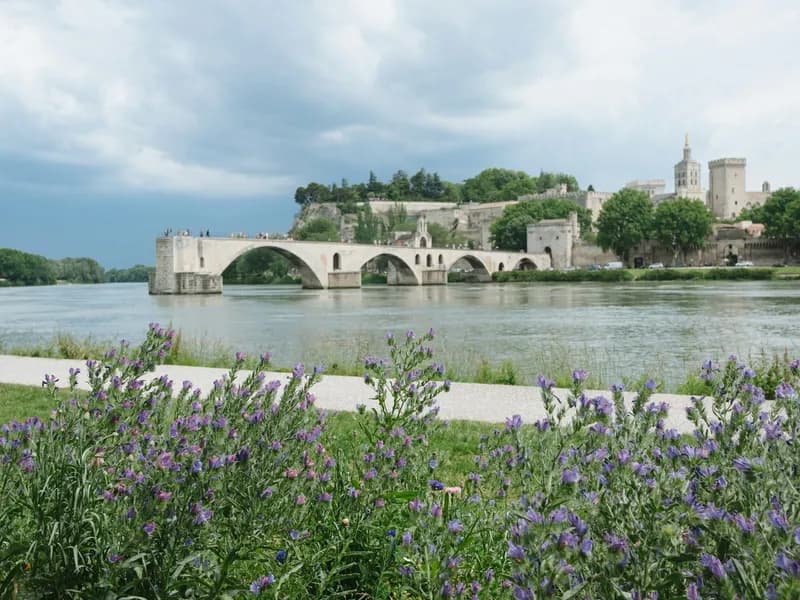
The bridge of the nursery rhyme, begun in 1177. Four of its 22 arches survive — the Rhône took the rest, repeatedly, until the city gave up rebuilding it in the 1600s. Entry ~€5 or bundled with the Palais. Allow 30-45 min. The song has people dancing 'sur le pont'; the dancing actually happened on the island below it.
Rocher des Doms
A clifftop garden directly above the palace with a full sweep over the Rhône, the broken bridge and Villeneuve on the far bank. Free, open daily from 7:30AM. Allow 30 min. The single best sunset spot in the city and almost entirely locals with dogs and prams.

Les Halles d'Avignon
The covered market behind a 600 m² living green wall of 15,000 plants. Tue-Sun 6AM-1:30PM, closed Mondays. Free to enter. Allow 1h. On Saturdays at 11AM a local chef cooks a free demonstration at the front — 'La Petite Cuisine des Halles'. Come hungry and eat oysters at the counter.
Cathédrale Notre-Dame des Doms
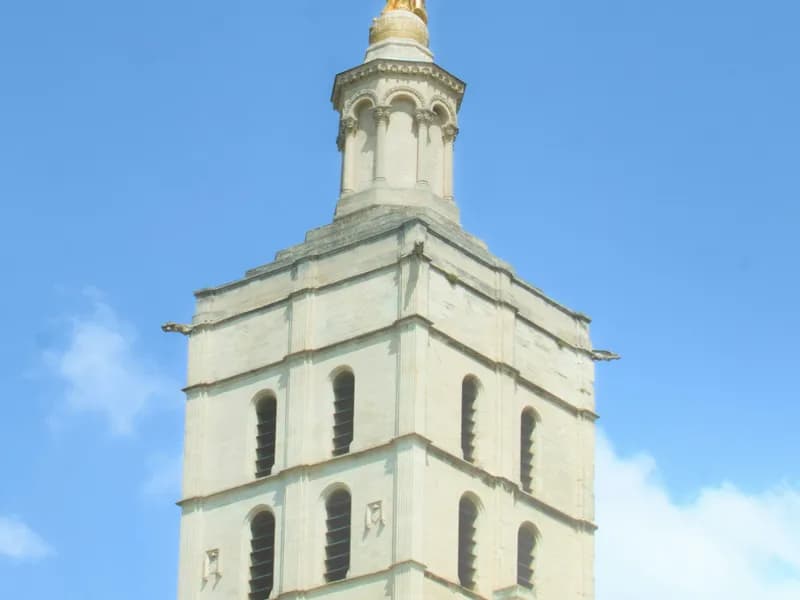
The Romanesque cathedral wedged beside the palace, topped since 1859 by a gilded Virgin visible from everywhere in the city. Free entry. Allow 30 min. Pope John XXII's carved Gothic tomb is inside.

Pont du Gard
A three-tier Roman aqueduct bridge 25 km west — 49m tall, the highest the Romans ever built, assembled without mortar around 50 AD. Entry ~€9.50 including parking and museum. Allow half a day. Swim in the Gardon beneath it in summer; the water is cold and the view upward is the point.
Villeneuve-lès-Avignon
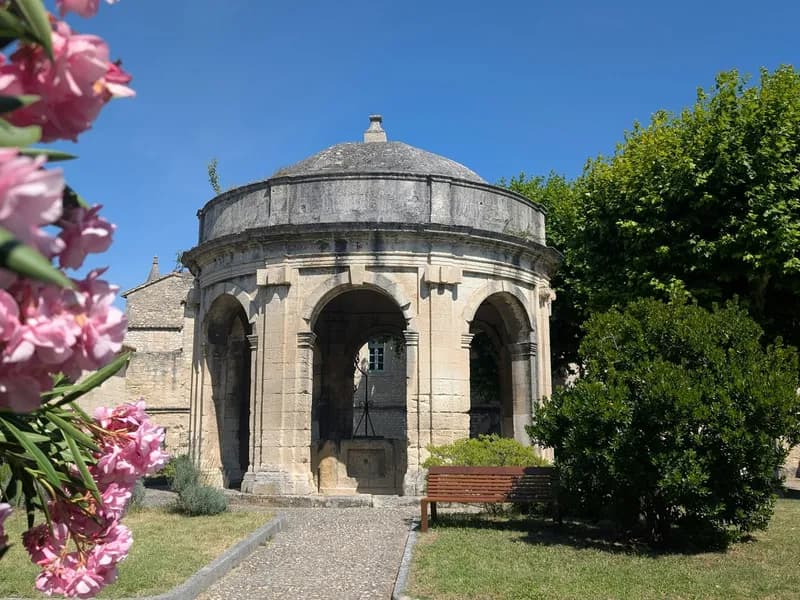
The 'city of cardinals' across the Rhône, where papal officials built themselves villas outside the pope's jurisdiction. Fort Saint-André and the Tour Philippe-le-Bel run ~€6 each. Allow half a day. The tower gives the best view back at Avignon's walls, and almost nobody crosses the river.
Planned Itinerary
7-Day Avignon Itinerary
Arrival Intra-Muros & Sunset on the Rocher des Doms
Land at Marseille Provence (MRS) and get to Avignon, or arrive by TGV from Paris in 2h40. Critical detail: TGVs stop at Avignon TGV, 4 km south of the walls, NOT at Avignon Centre. Take the Virgule shuttle train (5 minutes, ~EUR 1.90, timed to TGV arrivals) rather than walking — there is no pleasant route. Base yourself intra-muros, inside the 4.3 km of papal ramparts; everything in this itinerary that is in Avignon is then a walk. Keep today soft and climb the rock for sunset.
MRS airport to Avignon(1 to 1.5 hours)
Airport navette to Vitrolles-Aeroport TER station, then TER to Avignon Centre (~55 min, ~EUR 15). A taxi for the 85 km runs EUR 150-180 and is rarely worth it. Arriving by TGV instead? Virgule shuttle, EUR 1.90, or a taxi hop for ~EUR 15.
Check in intra-muros(1 hour)
Stay inside the walls. Rue Joseph Vernet and Place Crillon are the polished end (Hotel d'Europe has been putting up travellers since 1799); Place Pie near Les Halles is convenient and noisier; the Teinturiers quarter is the bohemian one. If you are here in July for the Festival, you booked six months ago — if you did not, base in Nimes or Arles and commute 30 minutes by train.
Orientation loop to Place de l'Horloge(45 minutes)
Walk up Rue de la Republique to the main square with the town hall, the opera and a 19th-century carousel. Insider note: this is the one square in Avignon where locals do not eat. Look, photograph the carousel, then leave.
Sunset from the Rocher des Doms(1 hour)
Free, open from 7:30AM daily. The clifftop garden sits directly above the Palais with a full sweep over the Rhone, the broken bridge and Villeneuve on the far bank. It is almost entirely locals with dogs and prams. Best sunset spot in the city, and you have not paid for anything yet.
Dinner on Place des Corps-Saints(2 hours)
The plane-tree square where Avignon actually eats. L'Agape does a serious modern Provencal menu around EUR 35-45; Ginette et Marcel next door is the cheap-and-charming option, tartines and a pastis for under EUR 20.
The Palais des Papes, the Cathedral & the Bridge That Stops
The papal day. Nine popes ruled from here between 1309 and 1377 and built the largest Gothic palace on earth — 15,000 square metres of it. Buy the combined Palais + Pont Saint-Benezet ticket (~EUR 17.50) rather than the two separately (~EUR 12 and ~EUR 5). Go at opening; the palace absorbs crowds badly in the Grand Tinel.
Palais des Papes at opening(2 hours)
Doors at 9AM. Take the included Histopad AR tablet and actually use it — the Revolution sold off nearly every furnishing, so the rooms are stripped stone and the tablet is the only thing that rebuilds them around you. Do not skip the Chambre du Cerf, the pope's private study, painted with hunting and fishing scenes that are startlingly secular for a papal bedroom.
Cathedrale Notre-Dame des Doms(30 minutes)
Free, wedged against the palace. The gilded Virgin on top has been visible from everywhere in the city since 1859. Inside, find Pope John XXII's carved Gothic tomb — it was smashed in the Revolution and reassembled, which is why the figure looks slightly wrong.
Lunch off the forecourt(1 hour)
Walk two minutes off the Palais square to escape the tourist pricing. La Manutention, tucked behind the palace on Rue des Escaliers Sainte-Anne, is the old munitions building turned bar-cinema-restaurant; plats around EUR 16 and a courtyard under plane trees.
Pont Saint-Benezet(45 minutes)
~EUR 5, or included in your combined ticket. Four of the original 22 arches survive; the Rhone took the rest, repeatedly, until the city gave up rebuilding in the 1600s. The nursery rhyme has people dancing sur le pont — the dancing actually happened on the island below it, which you can see from the deck. The audio guide is short and worth the 20 minutes.
Musee du Petit Palais(1 hour)
~EUR 6, closed Tuesdays, at the far end of the Palais square. The largest collection of Italian primitives outside Italy plus an early Botticelli Virgin and Child, and it is reliably empty while 800 people queue 100 metres away.
Rhone wines at Le Carre du Palais(1.5 hours)
A grand old bank building on Place de l'Horloge turned Rhone Valley wine school and bar. Flights from ~EUR 12. Ask for a Chateauneuf next to a Gigondas — you will taste the day trip you are taking later in the week.
Les Halles, the Free Museums & the Dyers' Quarter
A market morning, a deliberately free afternoon, and an evening in the one quarter of Avignon that feels like it belongs to its residents. Les Halles is closed Mondays — if today is Monday, swap with tomorrow.
Les Halles d'Avignon(1.5 hours)
Tue-Sun 6AM-1:30PM, free entry, behind a 600 sq m living green wall of 15,000 plants. Go by 9AM. Eat oysters standing at the seafood counter with a glass of Cotes du Rhone before 10AM like the market porters do — around EUR 12 the half-dozen. Aux Delices du Luberon has the tapenade worth carrying home. If it is Saturday, be at the front at 11AM for La Petite Cuisine des Halles: a local chef cooks a free demonstration and you taste it.
Musee Calvet(1 hour)
Rue Joseph Vernet, closed Tuesdays. Free permanent collection — genuinely unusual in France, and a tip worth exploiting. An 18th-century hotel particulier with a courtyard of plane trees, Vernet seascapes and a Soutine. Musee Requien, natural history, is next door and also free if you have children to burn 30 minutes on.
Musee Lapidaire(45 minutes)
Rue de la Republique, free, closed Tuesdays. A Jesuit chapel full of Roman and Gallic stone — the Tarasque of Noves, a Celtic monster clutching severed heads, is the reason to come. Ten minutes if you are efficient, and worth it for that one object.
Free afternoon(3 hours)
Deliberate. Nap through the 30-35C heat like the city does, or take a Vellopop bike (~EUR 1 day subscription, first 30 min free) and ride the outside of the ramparts. Note that unlike Carcassonne you cannot walk along the top of Avignon's walls — the loop is at ground level.
Rue des Teinturiers at dusk(2 hours)
The dyers' street: cobbles, plane trees and four surviving waterwheels turning in a branch of the Sorgue that once powered the cloth trade. In July this is the beating heart of the Festival OFF and its 1,500 fringe shows; the rest of the year it is bars, students and no coaches. Check what is on at Cinema Utopia in the old school building — arthouse, unsubtitled and subtitled, ~EUR 7.
Dinner at La Fourchette(2 hours)
17 Rue Racine. The Hiely family bistro, walls covered in forks, doing the old Avignon repertoire — daube, brandade, meringue glacee — for around EUR 35. Closed weekends, book a day ahead.
Pont du Gard & the Arcades of Uzes
West into the Gard. The aqueduct is 25 km away and Uzes is another 20 km beyond it on the same road, which makes them one clean day rather than two half ones. Without a car, the Lio bus A15 runs Avignon to Pont du Gard (~45 min) and continues to Uzes for about EUR 2 a leg — check the timetable the night before, there are only a handful of services.
Pont du Gard(3 hours)
~EUR 9.50 including parking and museum. Three tiers, 49 m tall — the highest bridge the Romans ever built, assembled around 50 AD without a drop of mortar. Park on the Rive Gauche side and walk across; almost everyone stops at the first viewpoint, so continue up the marked path on the Rive Droite for the shot looking down the length of it. In summer, swim in the Gardon underneath: the water is cold, the view upward is the entire point.
The museum and the Memoires de Garrigue trail(1 hour)
The underground museum explains how they held a 1-in-3000 gradient over 50 km with no instruments, which is the actually astonishing part. The 1.4 km garrigue trail behind it is empty and smells of thyme and holm oak.
Drive to Uzes(25 minutes)
20 km northwest through vineyards and stone. If you are on the A15 bus, it continues here.
Place aux Herbes, Uzes(1.5 hours)
A perfectly arcaded square under plane trees, and one of the loveliest in the south. Saturday morning is the full market and it is enormous — if your day 4 can land on a Saturday, move it. Lunch under the arcades; the Tour Fenestrelle, the only round Romanesque bell tower in France, is a two-minute walk.
Musee du Bonbon Haribo(1 hour)
~EUR 8, on the edge of town. Yes, really — Haribo has made sweets here since the 1860s and the museum ends in a tasting room. It is unashamedly silly and it is the thing every French family in Uzes is actually doing.
Return to Avignon(45 minutes)
45 km. Dinner back inside the walls — Le Vin Devant Soi on Rue de la Balance pours 40-odd Rhone wines by the glass off enomatic machines with a charcuterie board, which is exactly the right amount of effort after a Roman day.
Villeneuve-lès-Avignon & a Slow Afternoon on the Barthelasse
Cross the Rhone to the city of cardinals — where papal officials built themselves villas deliberately outside the pope's jurisdiction — then come back for a genuinely lazy afternoon on the river island. This is your rest day dressed as a sightseeing day.
Bus 5 to Villeneuve-lès-Avignon(20 minutes)
Orizo line 5 from Avignon, ~EUR 1.40. Almost nobody crosses the river, which is the whole reason to.
Tour Philippe-le-Bel(45 minutes)
~EUR 6. Climb the 14th-century tower that guarded the French end of the Pont Saint-Benezet. From the top you get the best view that exists of Avignon's walls, the palace and the broken bridge from the outside — the picture you have been trying to take for four days is taken from here.
Fort Saint-Andre(1 hour)
~EUR 6. Twin drum towers and a rampart walk over the Rhone plain. The abbey gardens inside (separate small fee) are terraced, half-ruined and usually contain about four people.
Chartreuse du Val de Benediction(1 hour)
~EUR 8. One of the largest Carthusian monasteries in France, three cloisters deep, and a Festival d'Avignon venue in July. Wander the monks' individual garden cells; the silence in the Cloitre du Cimetiere is the point.
Lunch in Villeneuve(1 hour)
The village centre round Rue de la Republique has proper unhurried French lunch at village prices — about a third off what the same plate costs across the river.
Navette fluviale to Ile de la Barthelasse(3 hours)
Back in Avignon, take the free ferry from Porte de l'Oulle (5-minute crossing, roughly 10AM-6PM, later in summer) to the largest river island in Europe. Walk the Chemin de la Barthelasse along the bank: the postcard of the Palais and the bridge together is shot from this side. Then do nothing under a poplar until the light goes.
Dinner back inside the walls(2 hours)
Le Petit Chaudron on Rue des Trois Faucons — tiny, market-driven, roughly EUR 30, and you must book. Or push the boat out at Pollen (Rue Petite Calade), Avignon's Michelin star, tasting menus from ~EUR 75, book two weeks ahead.
Châteauneuf-du-Pape & the Popes' Vineyards
The popes planted it, the mistral dries it, and it pours in every bar in Avignon — 18 km north. There is no useful train, so either rent a car for the day (~EUR 50 from Avignon TGV, but then someone is not tasting) or take a half-day minibus tour from the tourist office on Cours Jean Jaures, around EUR 65-90 with a driver and three or four domaine visits booked for you. Take the tour.
The galets roules in the vineyards(30 minutes)
Stop at any roadside parcel before the village and pick one up. These fist-to-melon-sized rounded stones were dumped by an ancient Rhone; they store the day's heat and radiate it back into the vines at night. It is why the wine is 14.5 percent and why you can barely walk between the rows.
Domaine visit and tasting(1.5 hours)
Book ahead — Domaine de Beaurenard (organic, family-run since 1695) and Chateau La Nerthe (the oldest estate in the appellation, arrived by an avenue of cypress) both take visitors properly. Ask which of the 13 permitted grape varieties they actually use; most growers lean on Grenache and will tell you exactly why.
Musee du Vin Brotte(45 minutes)
Free, at the village entrance. A small, unpretentious walk through how the appellation was invented in 1923 — the first controlled appellation in France, created because people were faking it. Tasting at the end.
Lunch at Le Verger des Papes(1.5 hours)
Terrace built into the rock beneath the ruined papal chateau, looking out over the Rhone valley to Avignon and Mont Ventoux. Plats around EUR 25-30 and a wine list that is basically the village. Book.
Chateau des Papes ruins(30 minutes)
Free, at the top of the village. Barely a wall and a keep survive — the Wehrmacht blew up half of it in 1944 and the rest fell down over 600 years. Come for the 360-degree view, not the masonry.
Vinadea, Maison des Vins(45 minutes)
Rue Marechal Foch. Around 100 of the village's producers under one roof at cellar-door prices, and they ship. If you are only buying once, buy here — you can compare six growers in 20 minutes, which no single domaine will let you do.
Last Market Morning & Departure
One more slow lap of the walled city, a market shop that will actually survive the flight, and the Virgule back to the TGV. Note that Les Halles is shut on Mondays — if you are leaving on a Monday, do your buying on day 6.
Last look from the Rocher des Doms(45 minutes)
Free from 7:30AM. Empty at this hour except for the dog walkers and the duck pond. Come up the ramp behind the cathedral and take the river view once more before the coaches arrive at the palace below.
Shopping at Les Halles(1 hour)
Tue-Sun 6AM-1:30PM. Buy the things that travel: tapenade and olive oil from Aux Delices du Luberon, vacuum-sealed saucisson, lavender honey, a jar of Provencal herbs that will humiliate the supermarket one at home. Check your airline's liquid rules before the olive oil.
Coffee on Place Pie or a last tart at Simple Simon(45 minutes)
Simple Simon on Rue Petite Fusterie has been serving improbably good English tea and tarts in the middle of Provence for decades, which is a very Avignon kind of joke.
Checkout and Virgule to Avignon TGV(45 minutes)
Shuttle train, 5 minutes, ~EUR 1.90, timed to the TGVs — or ~EUR 15 by taxi. Give yourself a buffer; the Virgule is reliable but infrequent. Heading to MRS instead? Allow 2 hours door to gate via Vitrolles-Aeroport.
14-Day Avignon Itinerary
Arrival Intra-Muros & Sunset on the Rocher des Doms
Land at Marseille Provence (MRS), 85 km south, or arrive by TGV from Paris in 2h40. The trap: TGVs stop at Avignon TGV, 4 km outside the walls, not at Avignon Centre. Take the Virgule shuttle (5 min, ~EUR 1.90, timed to TGV arrivals) — do not walk it, there is no pleasant route. Base intra-muros for the full fortnight; you will use Avignon as a Provence hub, not just a city break.
MRS airport to Avignon(1 to 1.5 hours)
Airport navette to Vitrolles-Aeroport TER station, then TER to Avignon Centre (~55 min, ~EUR 15). Taxi for the 85 km is EUR 150-180.
Check in intra-muros(1 hour)
Two weeks means picking your quarter carefully. Rue Joseph Vernet and Place Crillon for boutiques and quiet; Place Pie for Les Halles at your feet; the Teinturiers quarter for evenings. If this is July, the Festival d'Avignon has doubled the city's population and tripled your room rate — you either booked in January or you are commuting from Nimes.
Walk Rue de la Republique to Place de l'Horloge(45 minutes)
The town hall, the opera, a 19th-century carousel and the one square in Avignon where locals never eat. Photograph it and move on.
Sunset from the Rocher des Doms(1 hour)
Free, open from 7:30AM. Clifftop garden above the palace with the Rhone, the broken bridge and Villeneuve laid out below. Locals with dogs and prams, a duck pond, and the best free thing in the city.
Dinner on Place des Corps-Saints(2 hours)
Where Avignon actually eats, under plane trees. L'Agape for modern Provencal at EUR 35-45; Ginette et Marcel for tartines and a pastis under EUR 20.
The Palais des Papes, the Cathedral & the Broken Bridge
The papal day, done at opening. Nine popes ruled from Avignon between 1309 and 1377 and left the largest Gothic palace on earth — 15,000 sq m. Buy the combined Palais + Pont ticket (~EUR 17.50); the two bought separately (~EUR 12 and ~EUR 5) cost more.
Palais des Papes at 9AM(2 hours)
Take the included Histopad AR tablet and genuinely use it: the Revolution auctioned off nearly every furnishing, so what you walk through is stripped stone and the tablet is the only thing that puts the frescoes, tapestries and tiled floors back. Do not miss the Chambre du Cerf — the pope's study, painted floor to ceiling with hunting and fishing, not a saint in sight.
Cathedrale Notre-Dame des Doms(30 minutes)
Free. The gilded Virgin has crowned it since 1859 and is your compass from anywhere in the city. John XXII's Gothic tomb inside was smashed in the Revolution and reassembled slightly wrong, which is why the effigy looks off.
Lunch at La Manutention(1 hour)
Behind the palace on Rue des Escaliers Sainte-Anne — the old munitions store, now bar, cinema and restaurant round a plane-tree courtyard. Plats ~EUR 16, and two minutes off the forecourt buys you a 40 percent discount on the same food.
Pont Saint-Benezet(45 minutes)
Four of 22 arches left; the Rhone took the rest so persistently that the city stopped rebuilding in the 1600s. From the deck you can see the island below where the dancing in the song actually happened — nobody danced sur le pont, it is too narrow.
Musee du Petit Palais(1 hour)
~EUR 6, closed Tuesdays, at the end of the Palais square. Largest holding of Italian primitives outside Italy plus an early Botticelli, and reliably deserted while hundreds queue next door.
Rhone tasting at Le Carre du Palais(1.5 hours)
A 19th-century bank on Place de l'Horloge, now the Rhone Valley's wine school. Flights from ~EUR 12. Line up a Chateauneuf against a Gigondas — you are visiting both villages this fortnight.
Les Halles, the Free Museums & the Dyers' Quarter
Market morning, free museums, a deliberately empty afternoon and an evening in the only quarter that still belongs to its residents. Les Halles closes Mondays — swap with day 4 if you have to.
Les Halles d'Avignon(1.5 hours)
Tue-Sun 6AM-1:30PM, free, behind Patrick Blanc's 600 sq m green wall of 15,000 living plants. Arrive by 9AM. Eat oysters standing at the seafood counter with a glass of white before 10AM the way the porters do, ~EUR 12 the half-dozen. Saturday at 11AM: La Petite Cuisine des Halles, a free chef demonstration at the front, and you taste it.
Musee Calvet(1 hour)
Rue Joseph Vernet, free permanent collection, closed Tuesdays — free municipal museums are genuinely rare in France and Avignon has three. An 18th-century mansion with a plane-tree courtyard, Vernet seascapes and a Soutine.
Musee Lapidaire(45 minutes)
Rue de la Republique, free, closed Tuesdays. A Jesuit chapel stacked with Roman and Gallic stone. Go for one object: the Tarasque of Noves, a Celtic monster with severed human heads under its paws and an arm in its mouth.
Free afternoon(3 hours)
Sleep through the heat like the city does. Or take a Vellopop bike (~EUR 1 day subscription, first 30 min free) around the outside of the ramparts — 4.3 km, papal-built 1355-1370, and note you cannot walk along the top of them the way you can at Carcassonne.
Rue des Teinturiers at dusk(2 hours)
The dyers' street — cobbles, plane trees, four surviving waterwheels still turning in a channel of the Sorgue that once drove the cloth mills. In July it is the artery of the Festival OFF and its 1,500-plus fringe shows. Check the board at Cinema Utopia in the old school building, ~EUR 7.
Dinner at La Fourchette(2 hours)
17 Rue Racine. The Hiely family bistro, walls hung with forks, cooking the old Avignon repertoire — daube, brandade, meringue glacee — around EUR 35. Closed weekends. Book.
Pont du Gard & the Arcades of Uzès
West into the Gard. The aqueduct is 25 km out and Uzes 20 km further along the same road — one clean day, not two halves. Car-free: the Lio bus A15 runs Avignon to Pont du Gard (~45 min, ~EUR 2) and continues to Uzes, but there are only a handful of services, so check tonight.
Pont du Gard(3 hours)
~EUR 9.50 with parking and museum. Three tiers, 49 m — the tallest bridge the Romans ever built, laid up around 50 AD without mortar. Park Rive Gauche, walk across, then keep climbing the Rive Droite path that everyone ignores for the view down the length of the arches. Summer: swim in the Gardon beneath it. The water is cold; looking up is the point.
Museum and the Memoires de Garrigue trail(1 hour)
The underground museum explains the actually astonishing bit — a 1-in-3000 gradient held over 50 km with no instruments. The 1.4 km scrub trail behind it smells of thyme and holm oak and is empty.
Place aux Herbes, Uzes(2 hours)
25 minutes on. A flawless arcaded square under plane trees. Saturday morning is the full market and it swallows the whole town — if you can slide this day onto a Saturday, do. Lunch under the arcades, then the Tour Fenestrelle, the only round Romanesque bell tower in France, two minutes away.
Musee du Bonbon Haribo(1 hour)
~EUR 8, edge of town. Haribo has made sweets in Uzes since the 1860s and the museum ends in a tasting room. Ridiculous, and exactly what every French family in Uzes is doing this afternoon.
Return and dinner at Le Vin Devant Soi(2.5 hours)
45 km back. Rue de la Balance — 40-odd Rhone wines by the glass off enomatic cards, plus charcuterie. The right amount of effort after a Roman day.
Villeneuve-lès-Avignon & the Barthelasse
Cross the Rhone to the city of cardinals — papal officials built villas here specifically to be outside the pope's jurisdiction — then a slow river-island afternoon. Rest day in sightseeing clothing.
Orizo bus 5 to Villeneuve(20 minutes)
~EUR 1.40. Almost nobody crosses the river, which is the reason to.
Tour Philippe-le-Bel(45 minutes)
~EUR 6. The 14th-century tower guarding the French end of the Pont Saint-Benezet. From the top: the definitive view of Avignon's walls, palace and broken bridge from outside. This is where your best photograph of the trip gets taken.
Fort Saint-Andre(1 hour)
~EUR 6. Twin drum towers, a rampart walk over the Rhone plain, and terraced half-ruined abbey gardens inside (small extra fee) containing roughly four other people.
Chartreuse du Val de Benediction(1 hour)
~EUR 8. One of France's largest Carthusian monasteries, three cloisters deep, and a Festival venue every July. Walk the monks' individual walled garden cells — the silence in the Cloitre du Cimetiere is the whole visit.
Lunch in Villeneuve village(1 hour)
Round Rue de la Republique. Same plate as across the river, about a third cheaper, twice as slow.
Navette fluviale to Ile de la Barthelasse(3 hours)
Free ferry from Porte de l'Oulle, 5-minute crossing, roughly 10AM-6PM and later in summer. Largest river island in Europe. Walk the Chemin de la Barthelasse for the postcard of palace-plus-bridge together, then do nothing under a poplar until the light goes.
Châteauneuf-du-Pape & Orange's Roman Theatre
North up the Rhone. The popes planted Chateauneuf 18 km from their palace and the mistral still dries it; Orange is 15 minutes beyond and holds the best-preserved Roman theatre wall in the world. Rent a car today (~EUR 50 from Avignon TGV) or take a half-day wine minibus from the tourist office on Cours Jean Jaures (~EUR 65-90) and train to Orange after.
The galets roules(20 minutes)
Stop at any roadside parcel and pick one up. These fist-sized rounded stones were dumped by an ancient Rhone; they bank the day's heat and release it into the vines overnight. That is why the wine is 14.5 percent and why you can barely walk the rows.
Domaine tasting(1.5 hours)
Book ahead. Domaine de Beaurenard has been in the same family since 1695 and farms biodynamically; Chateau La Nerthe is the oldest estate in the appellation and you arrive down an avenue of cypress. Ask how many of the 13 permitted varieties they actually pick — most will admit it is mostly Grenache, and tell you why.
Musee du Vin Brotte and Vinadea(1.5 hours)
The Brotte museum at the village entrance is free and walks you through how France's first controlled appellation was invented in 1923 — because people were faking the wine. Then Vinadea on Rue Marechal Foch: ~100 village producers under one roof at cellar prices, and they ship.
Lunch at Le Verger des Papes(1.5 hours)
Terrace cut into the rock beneath the ruined papal chateau, looking down the Rhone to Avignon and across to Mont Ventoux. Plats EUR 25-30. Book.
Theatre Antique d'Orange(1.5 hours)
~EUR 11.50, 20 minutes north (or 20 min by TER from Avignon Centre, ~EUR 7). The 103 m stage wall is the only one left standing anywhere in the Roman world — Louis XIV called it the finest wall in his kingdom. Sit in the top row and have someone speak from the stage floor; the acoustics are not a legend.
Arc de Triomphe d'Orange(20 minutes)
Free, on the ring road north. Built around 20 AD, carved with naval trophies and defeated Gauls, and now marooned on a traffic island — which is somehow the most French thing in Provence.
Free Day: Avignon's Quiet Museums & the Ramparts
A full week in, you have earned a day with no departure time. Two small collections that most visitors never find, a bike loop, and an evening with no plan. If the mistral is up — 50 to 90 km/h for days at a time, most often winter and spring — this is the day to be indoors and let it blow through.
Musee Angladon(1 hour)
5 Rue Laboureur, ~EUR 8. A private collector's townhouse holding Wagons de chemin de fer, painted in Arles in 1888 — the only Van Gogh on public display anywhere in Provence. There is also a Modigliani, a Degas and a Picasso, and usually about six other visitors.
Collection Lambert(1.5 hours)
5 Rue Violette, ~EUR 10, closed Mondays (open daily in July). Two 18th-century hotels particuliers gutted into serious contemporary space — Basquiat, Twombly, Nan Goldin. The counterweight to a week of Gothic stone.
Long lunch and nothing(2.5 hours)
Christian Etienne's old quarter behind the palace is full of shaded terraces. Order a rose, order a second, look at the wall.
Vellopop loop of the ramparts(1.5 hours)
~EUR 1 day subscription, first 30 minutes free at every dock. 4.3 km of intact papal wall from 1355-1370. Ride it anticlockwise from Porte de l'Oulle so the Rhone is on your right for the northern stretch.
Evening at Cinema Utopia or a Teinturiers bar(3 hours)
La Manutention's Utopia screens arthouse for ~EUR 7 and the bar next door stays loud until late. No booking, no plan, no palace.
Arles: Van Gogh, the Arena & the Bulls
Twenty minutes and about EUR 8 by TER from Avignon Centre, and a completely different city — Roman, scruffier, more Camarguais, and the place Van Gogh painted 300 canvases in 15 months. Try to land this on a Saturday for the market; note the Fondation Van Gogh closes Mondays out of season.
Boulevard des Lices market(1.5 hours)
Saturday, 7AM-1PM, 2 km of stalls and the biggest market in Provence — this is the one Provencal market that is still mostly for locals. Buy a saucisson d'Arles (donkey, traditionally, and yes really) and eat a paella off a pan the size of a wheel for EUR 8.
Arenes d'Arles(1 hour)
~EUR 9. A 1st-century amphitheatre for 20,000 that spent the Middle Ages with 200 houses and two chapels built inside it — the towers are medieval, added when it was a fortified village. It still runs courses camarguaises, where men in white pull rosettes off a bull's horns and the bull goes home alive.
Fondation Vincent van Gogh(1 hour)
~EUR 10, Rue du Docteur Fanton. Not a permanent Van Gogh hoard — usually one or two loaned originals set against contemporary artists responding to him. The honest version: Arles owns not a single Van Gogh painting, having failed to buy any when they were cheap, and 30 townspeople once petitioned to have him locked up.
Place du Forum and the Cafe La Nuit(45 minutes)
The yellow cafe from Cafe Terrace at Night. It is repainted to match the painting and the coffee is bad — have your drink at Le Galoubet or Chardon on Rue de la Liberte instead, where Arles actually drinks natural wine.
Theatre Antique and the Alyscamps(1.5 hours)
The theatre has two lone columns left of its stage wall, quarried away for churches. Then walk out to the Alyscamps, the Roman necropolis avenue lined with empty sarcophagi that Van Gogh and Gauguin both painted in autumn 1888 — it is a 15-minute walk, it is quiet, and it is where the two of them fell out.
LUMA Arles(1 hour)
Free to enter the park and ground floor. Gehry's crumpled 56 m stainless tower over the old railway workshops. Love it or find it an outrage — everyone in Arles has a position, and asking a local about it is the fastest way into a real conversation.
Les Baux-de-Provence & Saint-Rémy
The Alpilles, 30 km southeast — bleached limestone, olive groves and two of the region's set pieces in one loop. A car is close to essential (~EUR 50/day); without one, Zou! bus 57 reaches Saint-Remy in about 45 minutes for ~EUR 2.10 and you can taxi the 10 km to Les Baux. Go to Les Baux early or not at all — 1.5 million people a year come through a village of 22 residents.
Chateau des Baux at opening(1.5 hours)
~EUR 11. A ruined fortress on a limestone spur with working trebuchet demonstrations in season. The rock the village sits on gave its name to bauxite, discovered here in 1821. Be through the gate by 9:30AM; by 11AM the single street is a scrum.
Carrieres des Lumieres(1 hour)
~EUR 15.50, in the quarry below the village. Vast white bauxite galleries with paintings projected 14 m up the walls and floor to a soundtrack. It sounds like a gimmick; standing inside a Van Gogh at four storeys is not. Book online, it sells out.
Olive oil tasting in the Vallee des Baux(45 minutes)
The valley below has its own AOC and several mills open for tasting — the fruite noir style, made from olives fermented before pressing, tastes of cocoa and mushroom and exists almost nowhere else on earth.
Saint-Paul-de-Mausole, Saint-Remy(1 hour)
~EUR 7. The asylum Van Gogh committed himself to in May 1889 and where he painted The Starry Night, the irises and the olive trees — 150 canvases in one year, from a cell you can stand in. Still a working psychiatric clinic, which lends the visit a weight the postcards do not. The Romanesque cloister is beautiful and almost silent.
Glanum(1 hour)
~EUR 9, across the road. A Greek then Roman town, excavated down to its street plan, that was buried and forgotten for 1,700 years. The mausoleum and arch outside the fence — Les Antiques — were the only things visible above ground until 1921, and Van Gogh walked past them daily.
Saint-Remy old town(1.5 hours)
Wednesday morning is the market and it is one of the best in Provence. Otherwise the ring boulevard has proper cafes; Bistrot Decouverte does a EUR 30 menu and a wine list from the owner's former life as a sommelier.
The Luberon: Gordes, Sénanque & the Ochre of Roussillon
East into the hill villages, 50 km and a world away. This needs a car — the buses that go here go once. Start early: Gordes has one road in and one car park, and by 11AM in summer neither works. Lavender at Senanque flowers roughly late June to mid-July only.
The Gordes viewpoint(20 minutes)
Coming from Cavaillon on the D15, there is a signed belvedere just before the village. This is the photograph — the whole thing stacked up the cliff in grey stone. Stop here, because from inside the village you cannot see the village.
Abbaye de Senanque(1 hour)
~EUR 9 for the guided visit, 4 km down a hairpin road from Gordes. A working Cistercian abbey since 1148 with the lavender field in front that is on every calendar of Provence ever printed. Bloom is roughly late June to mid-July; outside that window it is a bare field and a very beautiful austere church. Book the tour, walk-ins are turned away.
Village des Bories(45 minutes)
~EUR 6, below Gordes. Twenty-odd dry-stone huts with corbelled roofs, no mortar, built and rebuilt from the 1600s to the 1800s using a technique that is Neolithic. Empty compared to the village above.
Lunch in Goult or Bonnieux(1.5 hours)
Skip lunch in Gordes, where you pay the view tax. Goult is 10 minutes away, barely visited, and the Cafe de la Poste on its square is the real thing — plat du jour around EUR 16 among people who live there. Bonnieux has Le Fournil, built into the rock on the fountain square.
Sentier des Ocres, Roussillon(1.5 hours)
~EUR 3.50, last entry varies by season. Two marked loops (30 or 50 min) through orange, blood-red and gold cliffs left by 17 shades of ochre that were quarried here until 1930. Wear nothing you love — the dust stains permanently, which is precisely why it was worth money.
Menerbes and the drive home(1.5 hours)
Menerbes is where Peter Mayle wrote A Year in Provence and half the English-speaking world decided to move here. The Maison de la Truffe et du Vin on Place du Marche does Luberon wine flights on the terrace. Then 50 km back to Avignon, ideally with the sun going down behind the Alpilles.
Nîmes: The Most Roman City in France
Thirty minutes and about EUR 10 by TER from Avignon Centre, and the Romans left more standing here than anywhere else in France. Nimes is not Provence — it is Occitanie, it is Languedoc, the accent shifts and the bullfighting is Spanish-style with a dead bull at the end. Say so at your peril.
Arenes de Nimes(1.5 hours)
~EUR 10 with audio guide, opens 9AM. The best-preserved Roman amphitheatre anywhere — better than Arles, better than the Colosseum, because it was never quarried: 700 people lived inside it as a walled village until the 1800s. The audio guide is one of the best in France and explains how they emptied 24,000 people in minutes through the vomitoria you are standing in.
Maison Carree(30 minutes)
~EUR 6. A complete Roman temple from around 2 AD, standing intact because it was never not in use — town hall, church, stable, archive. Thomas Jefferson had it copied for the Virginia State Capitol after gazing at it, in his words, like a lover at his mistress. UNESCO listed it in 2023.
Les Halles de Nimes(1 hour)
Daily 7AM-1PM. Eat brandade de morue where it was invented — salt cod whipped with olive oil and milk into something that has no business being that good. Stand at a counter, order a small dish and a glass of Costieres de Nimes for under EUR 12.
Jardins de la Fontaine and the Tour Magne(1.5 hours)
Free gardens, ~EUR 3.50 for the tower. One of the first public gardens in Europe, laid out in 1745 around the Roman spring that is the entire reason Nimes exists. Climb the Tour Magne at the top — 140 steps, an Augustan tower on a pre-Roman one, and the whole Languedoc plain to the sea.
Musee de la Romanite(1.5 hours)
~EUR 9, facing the arena behind a rippling glass toga of a facade. Twenty-five thousand artefacts and a rooftop terrace looking straight down into the amphitheatre — the single best view of the arena, and most people never go up.
Denim and dinner(2 hours)
The cloth de Nimes — serge, exported to Genoa, jeans, Levi Strauss — started here, and the tourist office still sells the story hard. Dinner at Skab (Michelin, from ~EUR 55) or a plate and a carafe in the old town lanes around Place aux Herbes.
Cooking in a Cardinal's Kitchen & a Slow Avignon Afternoon
The deep-culture day, and a soft one. Le Marmiton is the cooking school at La Mirande, the 5-star hotel in a 14th-century cardinal's palace directly behind the Palais des Papes, and the classes run in the hotel's original 19th-century kitchen around a vast wood-fired range. Book weeks ahead — sessions are small and they sell out.
Le Marmiton cooking class at La Mirande(4 to 5 hours)
4 Place de l'Amirande. Roughly EUR 100-160 depending on whether it is a chef-led market class or a guest star. You shop Les Halles, cook around the copper range in the old kitchen, then eat what you made at the long table with the wine. Sessions run mornings or afternoons; check the calendar the month before you fly.
Coffee in the La Mirande courtyard(30 minutes)
Even if you are not cooking, the hotel serves tea and cake in a courtyard nobody knows exists, in the literal shadow of the palace wall. It is the quietest square metre in central Avignon.
Palais du Roure(1 hour)
3 Rue du College du Roure, small entry. A 15th-century Livree turned home of the Felibrige — Frederic Mistral's movement to save the Provencal language. Wagon wheels, tambourins, a printing press and a courtyard with a mulberry tree. It is a museum of a language that is nearly gone, and it has almost no visitors.
Free afternoon(3 hours)
Do nothing. Read on the Rocher des Doms. Buy the ceramics on Rue des Marchands you have been walking past all fortnight.
Aperitif and a light dinner(2 hours)
You just ate a five-course lunch. Le Vin Devant Soi on Rue de la Balance, a glass and a board, and an early night before the antiques market.
Isle-sur-la-Sorgue Antiques & the Spring at Fontaine-de-Vaucluse
Thirty minutes by TER from Avignon Centre (~EUR 6) to the Venice of Provence — a town built on a split river, threaded with waterwheels, and the third-largest antiques centre in Europe after London and Paris. This day wants to be a Sunday. If you can shuffle the fortnight so day 13 lands on a Sunday, do it; the market fills the whole town.
Sunday antiques market(3 hours)
Sundays roughly 8AM-6PM (also Easter and 15 August weekends, which are bigger and madder). Three hundred-plus dealers spilling along the Sorgue's quays alongside a full food market. Haggle: 10-15 percent is expected and refusing to try marks you instantly. Not a Sunday? The permanent Village des Antiquaires de la Gare and L'Isle aux Brocantes open Thursday to Monday and cover most of it.
The waterwheels and the quays(1 hour)
The Sorgue splits around the old town and turns a dozen surviving moss-furred wheels that once powered silk, paper and wool mills — there were 70 in the 1800s. Walk the Partage des Eaux upstream, 1.5 km, where the river divides; it is shaded, free and where the town goes on Sunday afternoon.
Lunch on the water(1.5 hours)
Cafe Fleurs has a terrace over the river; La Prevote hides in a 17th-century convent with the Sorgue running under a glass floor panel. Book on a Sunday or you will not eat.
Fontaine-de-Vaucluse(2 hours)
Seven km upstream. The most powerful spring in France and the fifth in the world — up to 110 cubic metres per second boils out of a cliff foot into an emerald pool whose bottom Cousteau's team could not reach. In late summer it drops and looks like nothing; in spring it is terrifying. Petrarch lived here for 16 years writing to Laura, which the town has monetised thoroughly.
Walk back into Avignon at dusk(1 hour)
Train back to Avignon Centre and walk in through Porte de la Republique. Last dinner in the Teinturiers — the waterwheels here are the same river you spent the day beside, 30 km downstream.
Last Market Morning & Departure
One slow lap, a shop that survives a flight, and the Virgule back to the TGV. Les Halles is closed Monday — if you fly out on a Monday, buy on day 13.
Last look from the Rocher des Doms(45 minutes)
Free from 7:30AM, empty except dog walkers. Up the ramp behind the cathedral, river view, then down before the first coach reaches the palace.
Shopping at Les Halles(1 hour)
Tue-Sun 6AM-1:30PM. Buy what travels: tapenade and oil from Aux Delices du Luberon, vacuum-packed saucisson, lavender honey, herbes de Provence that will embarrass the jar at home. Check your airline's liquid limits before the olive oil goes in the cabin bag.
Last tart at Simple Simon(45 minutes)
Rue Petite Fusterie. An English tearoom that has been quietly excellent in the middle of Provence for decades. Very Avignon.
Checkout and Virgule to Avignon TGV(45 minutes)
Shuttle, 5 minutes, ~EUR 1.90, timed to the TGVs; taxi ~EUR 15. Flying from MRS instead? Allow 2 hours door to gate via Vitrolles-Aeroport.
21-Day Avignon Itinerary
Arrival Intra-Muros & Sunset on the Rocher des Doms
Three weeks in Provence with Avignon as the hub. Land at Marseille Provence (MRS), 85 km south, or arrive by TGV from Paris in 2h40 — remembering that TGVs stop at Avignon TGV, 4 km outside the walls, not Avignon Centre. Take the Virgule shuttle (5 min, ~EUR 1.90, timed to the TGVs). Structural note for the whole trip: hold one room intra-muros for days 1 to 18 and travel to the side trips with a cabin bag only. Checking in and out five times in Provence in high season is a false economy, and in July it is impossible.
MRS airport to Avignon(1 to 1.5 hours)
Airport navette to Vitrolles-Aeroport TER station, then TER to Avignon Centre (~55 min, ~EUR 15). A taxi for the 85 km is EUR 150-180.
Check in intra-muros(1 hour)
Pick the quarter you want to live in for 18 days. Rue Joseph Vernet and Place Crillon are the polished end — the Hotel d'Europe has been taking guests since 1799. Place Pie puts Les Halles at your door and a bar under your window. The Teinturiers quarter is the bohemian one. In July the Festival d'Avignon doubles the city's population and triples the rate; you book in January or you commute from Nimes.
Orientation to Place de l'Horloge(45 minutes)
Town hall, opera, 19th-century carousel, and the one square in Avignon where nobody local eats. Learn the shape of the streets — the walled city is barely 1 km across and you will stop needing a map by day three.
Sunset from the Rocher des Doms(1 hour)
Free, open 7:30AM daily. Clifftop garden directly above the palace: the Rhone, the broken bridge, Villeneuve on the far bank. Dog walkers, prams, a duck pond and the best free thing in the city.
Dinner on Place des Corps-Saints(2 hours)
Under the plane trees, where the city actually eats. L'Agape does modern Provencal at EUR 35-45; Ginette et Marcel is tartines and a pastis under EUR 20.
The Palais des Papes, the Cathedral & the Broken Bridge
The papal day. Nine popes ruled here from 1309 to 1377 and built the largest Gothic palace on earth — 15,000 sq m. Take the combined Palais + Pont ticket at ~EUR 17.50 rather than ~EUR 12 and ~EUR 5 separately, and go at opening.
Palais des Papes at 9AM(2 hours)
Use the included Histopad AR tablet properly — the Revolution auctioned off nearly every furnishing, so the rooms are bare stone and the tablet is the only thing that rebuilds them around you. The Chambre du Cerf, the pope's private study, is frescoed with hunting, fishing and falconry and not one saint, which tells you a lot about Avignon's papacy.
Cathedrale Notre-Dame des Doms(30 minutes)
Free, jammed against the palace. The gilded Virgin has topped it since 1859 and is your compass from anywhere in the city. Pope John XXII's carved Gothic tomb inside was smashed in the Revolution and reassembled imperfectly — that is why the effigy sits wrong.
Lunch at La Manutention(1 hour)
Rue des Escaliers Sainte-Anne, behind the palace. The old munitions building, now bar-cinema-restaurant round a plane-tree courtyard. Plats ~EUR 16. Two minutes off the forecourt and a third cheaper.
Pont Saint-Benezet(45 minutes)
Four of 22 arches survive; the Rhone took the rest so often that the city gave up rebuilding in the 1600s. From the deck, look down at the island — the dancing in the song happened there, not on the bridge, which is too narrow for two abreast.
Musee du Petit Palais(1 hour)
~EUR 6, closed Tuesdays. The largest collection of Italian primitives outside Italy plus an early Botticelli Virgin and Child, 100 m from a 45-minute queue, and empty.
Rhone flight at Le Carre du Palais(1.5 hours)
A grand 19th-century bank on Place de l'Horloge, now the Rhone Valley wine school. Flights from ~EUR 12. Put a Chateauneuf beside a Gigondas — over three weeks you will drink in both villages.
Les Halles, the Free Museums & the Dyers' Quarter
Market morning, three free museums, and the one quarter that still belongs to its residents. Les Halles closes Mondays; swap with day 4 if today is one.
Les Halles d'Avignon(1.5 hours)
Tue-Sun 6AM-1:30PM, free, behind a 600 sq m green wall of 15,000 living plants. Be in by 9AM. Eat oysters standing at the seafood counter with a glass of white before 10AM the way the porters do, ~EUR 12 the half-dozen. Saturday at 11AM the front becomes La Petite Cuisine des Halles: a local chef cooks free and you taste it.
Musee Calvet(1 hour)
Rue Joseph Vernet, free permanent collection, closed Tuesdays. Free municipal museums are close to unheard of in France and Avignon has three. An 18th-century hotel particulier with a plane-tree courtyard, Vernet seascapes and a Soutine.
Musee Lapidaire and Musee Requien(1 hour)
Both free, both closed Tuesdays. The Lapidaire is a Jesuit chapel of Roman and Gallic stone — come for one object, the Tarasque of Noves, a Celtic beast with severed human heads under its claws. Requien, natural history, is 30 minutes and free next to Calvet.
Free afternoon(3 hours)
Sleep through the 30-35C afternoon like the city does, or take a Vellopop bike (~EUR 1 day subscription, first 30 min free at every dock) around the outside of the 4.3 km papal ramparts of 1355-1370. Note you cannot walk along the top of them — Avignon is not Carcassonne.
Rue des Teinturiers at dusk(2 hours)
The dyers' street: cobbles, plane trees and four surviving waterwheels still turning in a branch of the Sorgue that drove the cloth mills. In July it is the artery of the Festival OFF and 1,500-plus fringe shows. Check the board at Cinema Utopia in the old school, ~EUR 7.
Dinner at La Fourchette(2 hours)
17 Rue Racine. The Hiely family bistro, forks all over the walls, cooking the old Avignon repertoire — daube, brandade, meringue glacee — around EUR 35. Closed weekends. Book a day ahead.
Slow Day: The River Island, the Ramparts & Two Small Collections
Your first rest day, on day four, deliberately. Three weeks is a long time and the mistral — 50 to 90 km/h for days on end, most often winter and spring — will eventually take a day off you whether you plan one or not. This is the day you hand it over willingly.
Musee Angladon(1 hour)
5 Rue Laboureur, ~EUR 8. A private collector's townhouse holding Wagons de chemin de fer, painted in Arles in 1888 — the only Van Gogh on public display anywhere in Provence. Also a Modigliani, a Degas, a Picasso and roughly six other visitors.
Navette fluviale to Ile de la Barthelasse(3 hours)
Free ferry from Porte de l'Oulle, 5-minute crossing, roughly 10AM-6PM and later in summer. The largest river island in Europe. Walk the Chemin de la Barthelasse for the shot of the palace and the bridge together — this bank is where the postcard is taken — then lie under a poplar and stop.
Lunch on the island(1.5 hours)
The Barthelasse has guinguettes and campsite restaurants that are a hundred metres of water and about EUR 15 a head away from the palace terraces. Grilled fish, plastic chairs, nobody in a hurry.
Collection Lambert(1.5 hours)
5 Rue Violette, ~EUR 10, closed Mondays (daily in July). Two 18th-century mansions gutted into serious contemporary space — Basquiat, Twombly, Nan Goldin. The corrective to three days of Gothic stone.
Aperitif and nothing(3 hours)
Le Vin Devant Soi on Rue de la Balance pours 40-odd Rhone wines by the glass off enomatic cards. A board, a glass, no dinner reservation, no plan.
Pont du Gard & the Arcades of Uzès
West into the Gard. The aqueduct is 25 km out and Uzes 20 km further on the same road — one clean day, not two halves. Car-free: Lio bus A15 runs Avignon to Pont du Gard (~45 min, ~EUR 2) and continues to Uzes, but there are only a handful of services a day, so check the timetable tonight.
Pont du Gard(3 hours)
~EUR 9.50 including parking and museum. Three tiers, 49 m tall — the highest bridge the Romans ever built, laid up around 50 AD without a drop of mortar. Park Rive Gauche and cross, then climb the Rive Droite path almost everyone skips for the view down the length of the arches. In summer, swim in the Gardon underneath. The water is cold and looking up from it is the entire point.
Museum and Memoires de Garrigue trail(1 hour)
The underground museum explains the genuinely staggering part: a 1-in-3000 gradient held across 50 km with no instruments. The 1.4 km scrub trail behind it smells of thyme and holm oak and has nobody on it.
Place aux Herbes, Uzes(2 hours)
Twenty-five minutes on. A perfectly arcaded square under plane trees, one of the loveliest in the south. Saturday morning is the market and it takes the entire town — if this day can land on a Saturday, move it. Lunch under the arcades, then the Tour Fenestrelle, the only round Romanesque bell tower in France, two minutes away.
Musee du Bonbon Haribo(1 hour)
~EUR 8, on the edge of town. Haribo has made sweets in Uzes since the 1860s and the museum ends in a tasting room. Gloriously silly, and exactly what every French family in Uzes is doing right now.
Return to Avignon(45 minutes)
45 km back. Something light inside the walls — you have 16 days left, do not eat a five-course dinner after a Roman one.
Villeneuve-lès-Avignon & a Free Afternoon
Cross the Rhone to the city of cardinals, where papal officials built villas specifically to sit outside the pope's jurisdiction. Half a day of very good sights that almost no visitor to Avignon bothers with, then an afternoon back with your feet up.
Orizo bus 5 to Villeneuve(20 minutes)
~EUR 1.40 from Avignon. Almost nobody crosses the river, which is precisely why you should.
Tour Philippe-le-Bel(45 minutes)
~EUR 6. The 14th-century tower that guarded the French end of the Pont Saint-Benezet. From the top comes the definitive view of Avignon's walls, palace and broken bridge from the outside — the photograph you have been failing to take all week.
Fort Saint-Andre(1 hour)
~EUR 6. Twin drum towers and a rampart walk over the Rhone plain. The terraced, half-ruined abbey gardens inside (small separate fee) usually contain four people and a cat.
Chartreuse du Val de Benediction(1 hour)
~EUR 8. One of the largest Carthusian monasteries in France, three cloisters deep, and a Festival d'Avignon venue every July. Walk the monks' individual walled garden cells; the silence in the Cloitre du Cimetiere is the visit.
Lunch in Villeneuve(1 hour)
Round Rue de la Republique. The same plate as across the river for about a third less, served twice as slowly, to people who live here.
Free afternoon in Avignon(4 hours)
Back on bus 5 by 3PM. Buy the ceramics on Rue des Marchands, read on the Rocher des Doms, or find out what is showing at Utopia. The point of 21 days is that you do not have to.
Châteauneuf-du-Pape & the Popes' Vineyards
Eighteen km north: the popes planted it, the mistral dries it, and it pours in every bar in Avignon. There is no useful train — rent a car (~EUR 50 from Avignon TGV, but then someone is spitting) or take a half-day minibus from the tourist office on Cours Jean Jaures, ~EUR 65-90 with three or four domaine visits booked for you. Take the minibus.
The galets roules(20 minutes)
Stop at a roadside parcel and pick one up. These fist-to-melon-sized stones were dumped here by an ancient Rhone; they bank the day's heat and radiate it into the vines all night. That is why the wine is 14.5 percent, and why you can barely walk between the rows.
Domaine tasting(1.5 hours)
Book ahead. Domaine de Beaurenard has been the same family since 1695 and farms biodynamically; Chateau La Nerthe is the oldest estate in the appellation and you arrive down an avenue of cypress. Ask how many of the 13 permitted varieties they actually pick — almost all will say mostly Grenache, and explain exactly why.
Musee du Vin Brotte(45 minutes)
Free, at the village entrance. How France's first controlled appellation got invented in 1923, and the unglamorous reason: people were faking the wine and the growers fought back. Ends in a tasting.
Lunch at Le Verger des Papes(1.5 hours)
Terrace cut into the rock under the ruined papal chateau, looking down the Rhone to Avignon and across to Mont Ventoux, which you climb in three days. Plats EUR 25-30. Book.
Chateau des Papes ruins(30 minutes)
Free, top of the village. A wall and a keep — the Wehrmacht blew up half of it in 1944 and six centuries took the rest. Come for the 360-degree view, not the stones.
Vinadea, Maison des Vins(45 minutes)
Rue Marechal Foch. About 100 of the village's producers under one roof at cellar-door prices, and they ship internationally. If you buy once in three weeks, buy here — you can compare six growers in 20 minutes, which no single domaine will let you do.
Cooking in a Cardinal's Kitchen & the Provençal Language
The deep-culture day and a gentle one. Le Marmiton is the cooking school at La Mirande, the 5-star hotel in a 14th-century cardinal's palace directly behind the Palais des Papes, and classes run in the hotel's original 19th-century kitchen around a wood-fired range. Book weeks ahead — the sessions are small and they go.
Le Marmiton cooking class at La Mirande(4 to 5 hours)
4 Place de l'Amirande, roughly EUR 100-160 depending on whether it is a chef-led market class or a visiting star. You shop at Les Halles, cook around the copper range in the old kitchen, then eat what you made at the long table with the wine poured. Check the calendar the month before you fly; sessions run mornings or afternoons and not every day.
Coffee in the La Mirande courtyard(30 minutes)
Even without a class, they serve tea and cake in a courtyard nobody knows exists, hard against the palace wall. The quietest square metre in the walled city.
Palais du Roure(1 hour)
3 Rue du College du Roure, small entry. A 15th-century Livree turned headquarters of the Felibrige — Frederic Mistral's movement to save the Provencal language, which won him a Nobel Prize in 1904 and still lost. Wagon wheels, tambourins, a printing press, a mulberry tree in the courtyard, and almost no visitors. This is the museum of what Provence sounded like.
Free afternoon(3 hours)
You just ate a five-course lunch you cooked. Do nothing with it.
Light dinner and an early night(1.5 hours)
A glass and a board at Le Vin Devant Soi. Tomorrow is Roman and starts early.
Orange & Vaison-la-Romaine
North up the Rhone into the deep Roman stuff. Orange is 20 minutes by TER from Avignon Centre (~EUR 7); Vaison is 30 km further and needs a car or the Zou! bus. If your day 9 can land on a Tuesday, do it — Vaison's Tuesday market is one of the biggest in Provence and fills the entire town.
Theatre Antique d'Orange(1.5 hours)
~EUR 11.50, opens 9AM. The 103 m stage wall is the only Roman one left standing anywhere in the world; Louis XIV called it the finest wall in his kingdom. Climb to the top row and have someone read from the stage floor. The acoustics are not a marketing claim — Roman engineers designed for 9,000 people and no microphone, and it still works.
Arc de Triomphe d'Orange(20 minutes)
Free, on the northern ring road. Carved around 20 AD with naval trophies and defeated Gauls, and now stranded on a traffic roundabout, which may be the most French sight in Provence.
Roman Vaison: Puymin and La Villasse(2 hours)
~EUR 9 for both, 30 km on. The largest archaeological site in France — two whole excavated Roman neighbourhoods with mosaics, latrines and a theatre, split by a modern street. Puymin has the better theatre; La Villasse has the plumbing, and the plumbing is more interesting than it sounds.
The Roman bridge and the haute ville(1.5 hours)
The single-arch bridge has stood since the 1st century and survived the 1992 flash flood that killed 37 people here and destroyed the modern bridge downstream — there is a marker showing the water level. Cross it and climb into the medieval haute ville, abandoned by the Romans' descendants for the safety of the rock, now mostly holiday houses and total quiet.
Lunch or dinner in Vaison(1.5 hours)
Le Bateleur, over the Ouveze, does a serious EUR 30-40 menu and books out on market day. Otherwise the cafes on Place Montfort under the plane trees are exactly what you want after four hours of Roman drains.
Mont Ventoux & the Dentelles de Montmirail
The Giant of Provence — 1,910 m, bald white limestone, visible from every terrace you have sat on for a week. You need a car. The summit road (D974) is closed by snow roughly November to May, so check before you drive. Wind has been clocked at over 320 km/h up there; if the mistral is blowing today, swap this day out and do it later in the trip. That is not caution, that is the actual rule.
The ascent from Bedoin(1 hour)
The classic Tour de France climb: 21.5 km at an average of 7.5 percent from Bedoin, 50 km from Avignon. In a car it is a beautiful 40 minutes; on a bike it is famous for a reason. Bedoin's Monday market is worth timing into the morning if the day allows.
Chalet Reynard(30 minutes)
At 1,440 m, where the tree line stops dead and the mountain turns to white scree. Coffee and an omelette among cyclists in various stages of regret. This is where the road from Sault joins and the last 6 km of moonscape begins.
The Tom Simpson memorial and the summit(1.5 hours)
The memorial stone sits 1.5 km below the top, where the British rider died on the climb in 1967. Cyclists still leave bidons, caps and inner tubes on it. At the summit — 1,910 m, a weather radar tower and a wind that will take your hat — you can see the Alps, the Rhone, and on a mistral-scoured day the Mediterranean. Bring a jacket in August; the temperature drops 15C from the valley.
Descend to Gigondas(45 minutes)
Down the west side into the Dentelles de Montmirail, limestone ridges eroded into vertical lace teeth — the name means the little lace peaks. Gigondas sits at their foot making some of the best-value red in France.
Caveau du Gigondas(1 hour)
On the village square, free tasting across 50-plus of the appellation's producers, no obligation, no minibus tour markup. It is the single most efficient wine hour in the southern Rhone. Lunch at L'Oustalet on the same square if you want the Michelin version (~EUR 60) or the terrace cafe if you do not.
Seguret and Beaumes-de-Venise on the way home(1.5 hours)
Seguret is a Plus Beau Village clinging to a hillside with a genuine sunset view down the Dentelles. Beaumes-de-Venise, 10 minutes on, makes the Muscat — sweet, orange-blossom, served cold as an aperitif here rather than with dessert, which is how it should be drunk. Then 45 km back to Avignon.
Rest Day: Avignon at Your Own Speed
Ten days done, and tomorrow you leave for Arles and then keep moving for a week. Take today off properly. No entry fee, no departure time, no car.
Long breakfast and Les Halles(2 hours)
Tue-Sun 6AM-1:30PM, closed Monday. Not to see it — to shop it. By day 11 you know which stall you like, which is the entire pleasure of staying somewhere three weeks instead of three days.
A photography walk of the walled city(2 hours)
Do it at 8AM before the light goes flat and the coaches arrive. The loop that works: Rue des Teinturiers waterwheels, Place des Carmes, Rue des Lices, the Rue Banasterie facades, then up the Rocher des Doms ramp. All of it is within 1 km and none of it has a queue at that hour.
Laundry and admin(1 hour)
Genuinely. There are laverie automatiques inside the walls, and the difference between a good three-week trip and a bad one is doing this on day 11 rather than day 19 in a hotel sink in Marseille.
Long lunch and a nap(3 hours)
The city closes for two hours in the middle of the day for a reason that becomes obvious in August. Join it.
Cinema Utopia and a Teinturiers bar(3 hours)
Arthouse for ~EUR 7 in the old republican school building, and the bars along the dyers' street stay loud until late with students and, in July, 1,500 fringe companies flyering you between sets.
To Arles: Van Gogh, the Arena & the Alyscamps
First multi-night excursion. Twenty minutes and about EUR 8 by TER from Avignon Centre, and a completely different city — Roman, scruffier, half Camarguais, and where Van Gogh made 300 works in 15 months. Check in for two nights: L'Arlatan, gutted and retiled by Jorge Pardo, or the Jules Cesar with Christian Lacroix's interiors. Note the Fondation Van Gogh closes Mondays out of season.
Train to Arles and check in(1.5 hours)
TER from Avignon Centre, 20 min, ~EUR 8. Arles station is a 10-minute walk from the old town. Leave the bulk of your luggage in Avignon; you are back on day 14.
Arenes d'Arles(1 hour)
~EUR 9. A 1st-century amphitheatre for 20,000 that spent the Middle Ages with 200 houses and two chapels built inside it — the three towers are medieval, added when it became a fortified village. It still hosts courses camarguaises, where men in white snatch rosettes off a bull's horns and the bull walks home.
Theatre Antique(45 minutes)
Two lone columns are all that is left of the stage wall — the rest was quarried away to build churches, which is exactly what did not happen at Orange, and standing here after day 9 is when Orange finally lands.
Fondation Vincent van Gogh(1 hour)
~EUR 10, Rue du Docteur Fanton. Not a hoard — usually one or two loaned originals against contemporary artists answering him. The honest story: Arles owns not one Van Gogh painting, having declined to buy when they were cheap, and 30 townspeople once petitioned to have him locked up. He painted the town anyway.
The Alyscamps(1 hour)
~EUR 5, a 15-minute walk out. A Roman necropolis avenue lined with empty stone sarcophagi under poplars. Van Gogh and Gauguin both painted it in the autumn of 1888, standing side by side, weeks before the friendship detonated and the ear came off. It is quiet and slightly sad and much better than the Cafe La Nuit.
Dinner in the old town(2 hours)
Skip the repainted yellow cafe on Place du Forum. Chardon on Rue de la Liberte does natural wine and a short menu around EUR 35; Le Gibolin is the old-school wine bistro; L'Atelier Jean-Luc Rabanel is the two-star vegetable temple if you want to spend EUR 125 on a garden.
The Camargue: Flamingos, Salt & Aigues-Mortes
From Arles into the Rhone delta — 930 sq km of lagoon, rice, salt and horizon, and nothing else in Provence looks remotely like it. You want a car today (rent in Arles). The classic loop runs Arles to Pont de Gau, Saintes-Maries, then west to Aigues-Mortes and back, about 130 km. Bring insect repellent; the Camargue mosquito is a local institution.
Parc Ornithologique de Pont de Gau(2 hours)
~EUR 8.50, opens 9AM, 60 km from Arles. Seven km of boardwalk through the marsh with greater flamingos standing in it year-round — this is the only place in France they breed. Go early: they feed at dawn and the light at 9AM is the whole reason. The pink comes from the shrimp.
Saintes-Maries-de-la-Mer(1.5 hours)
A fortified 9th-century church you can climb (~EUR 2 for the roof) with a crypt holding Sara-la-Kali, the black patron saint of the Roma, dressed in layered cloaks left by pilgrims. On 24-25 May thousands of Roma come from across Europe and carry her into the sea. The rest of the year it is a beach town with gardian souvenirs, and the church is still extraordinary.
A manade or the Digue a la Mer(1.5 hours)
The Camargue's white horses are born brown or black and only turn white at four to seven years old — nobody tells you that. Several manades (bull and horse ranches) take visitors for a ride or a lunch; the Mas de Peint runs the high-end version. If you would rather not, the Digue a la Mer is a 20 km dyke track between lagoon and sea, flat, exposed and completely empty.
Aigues-Mortes ramparts(1.5 hours)
~EUR 9.50, 40 minutes west. Saint Louis built this as France's only Mediterranean port and sailed on crusade from it in 1248; the sea has since retreated 5 km and left a perfect rectangular walled town stranded in the salt. Walk the complete 1272 circuit of ramparts and climb the Tour de Constance, where Protestant women were imprisoned for decades — one for 38 years.
Salins d'Aigues-Mortes(1 hour)
~EUR 12 for the little train. Mountains of salt beside water that is genuinely pink from Dunaliella salina algae, which is the same thing the flamingos eat and the same reason they are pink. It joins up in a way that no guidebook bothers to say out loud.
Back to Arles for dinner(1 hour)
45 minutes. If you want the definitive Camargue meal, La Chassagnette sits on the delta road out of Arles — Michelin-starred, everything from its own two-hectare garden, ~EUR 90 and book well ahead.
Arles Market, Les Baux & Saint-Rémy — Back to Avignon
Check out of Arles and drive home the long way, through the Alpilles. Arles to Les Baux is 20 km, Les Baux to Saint-Remy 10 km, Saint-Remy to Avignon 20 km — a clean line, no doubling back. If today is a Saturday you get the best market in Provence first, and you should try to arrange that.
Boulevard des Lices market, Arles(1.5 hours)
Saturday 7AM-1PM, 2 km of stalls and the largest market in Provence — and the one that is still mostly for locals rather than for you. Saucisson d'Arles (donkey, traditionally, and yes) and paella off a pan the size of a car wheel for EUR 8.
Chateau des Baux-de-Provence(1.5 hours)
~EUR 11. A ruined fortress on a limestone spur with working trebuchet demonstrations in season. The rock gave its name to bauxite, first identified here in 1821. Be through the gate by 10AM: 1.5 million people a year pass through a village of 22 residents, and by midday the single street is impassable.
Carrieres des Lumieres(1 hour)
~EUR 15.50, in the bauxite quarry below the village. Vast white galleries with paintings thrown 14 m up the walls and across the floor to a soundtrack. It reads as a gimmick until you are standing inside a Van Gogh at four storeys. Book online; it sells out.
Saint-Paul-de-Mausole, Saint-Remy(1 hour)
~EUR 7. The asylum Van Gogh admitted himself to in May 1889, where he painted The Starry Night, the irises and the olive groves — 150 canvases in a year, from a cell you can stand in. It is still a working psychiatric clinic, which gives the visit a weight nothing else on this trip has. The Romanesque cloister is beautiful and silent.
Glanum(1 hour)
~EUR 9, across the road. A Greek then Roman town excavated down to its street plan after 1,700 years buried. Les Antiques — the mausoleum and arch outside the fence — were the only parts above ground until digging started in 1921, and Van Gogh walked past them every day without knowing a city lay under his feet.
Drive back to Avignon(45 minutes)
20 km. Back to your own room and your own quarter, which after three days away is exactly the point of holding it.
Rest Day: Nothing at All
The second true rest day, and it is not optional. You have done Roman ruins, a mountain, a river delta and a fortnight of Provence, and you have a week left. Book nothing.
Les Halles and a long breakfast(2 hours)
Tue-Sun 6AM-1:30PM, closed Monday. Coffee at the counter, oysters if it is that kind of morning, and the pleasure of being recognised by a stallholder in week three.
Rocher des Doms with a book(2 hours)
Free from 7:30AM. The bench above the Rhone on the north side, the duck pond, and no reason to move.
Simple Simon(1 hour)
Rue Petite Fusterie. An English tearoom that has been improbably, quietly excellent in the middle of Provence for decades. Tea and a tart, and a joke that only works because you are in Avignon.
Free evening(4 hours)
Whatever you have been meaning to do and have not. Repeat a restaurant. That is allowed and, on a three-week trip, it is the whole prize.
Into the Luberon: Gordes, Sénanque & the Ochre of Roussillon
Second multi-night excursion — east into the hill villages, 50 km out, two nights. Base in Bonnieux or Gordes rather than day-tripping: the Luberon at 8AM and 8PM is a different place from the Luberon at noon, and that gap is the entire reason to sleep here. A car is not negotiable; the buses come once.
The Gordes belvedere(20 minutes)
Coming from Cavaillon on the D15 there is a signed viewpoint just before the village. This is the photograph — the whole grey stone town stacked up its cliff. Stop, because from inside Gordes you cannot see Gordes.
Abbaye de Senanque(1 hour)
~EUR 9 for the guided visit, 4 km of hairpins below Gordes. A working Cistercian abbey since 1148 with the lavender field in front of it that is on every calendar of Provence ever printed. Bloom is roughly late June to mid-July only; outside it you get a bare field and an austere, perfect church. Book the tour — walk-ins are refused.
Village des Bories(45 minutes)
~EUR 6, below Gordes. Twenty-odd dry-stone huts with corbelled roofs and not a gram of mortar, built and rebuilt from the 1600s to the 1800s using a method that is essentially Neolithic. Nearly empty compared to the village 2 km uphill.
Lunch in Goult(1.5 hours)
Do not eat in Gordes; you pay the view tax and get a view of other people paying it. Goult is 10 minutes away, largely unvisited, and the Cafe de la Poste on the square does a plat du jour around EUR 16 to people who live there.
Sentier des Ocres, Roussillon(1.5 hours)
~EUR 3.50. Two waymarked loops (30 or 50 minutes) through orange, blood-red and gold cliffs left by 17 distinct shades of ochre quarried here until 1930. Wear nothing you care about — the dust stains permanently, which is exactly why it was worth money.
Check in and eat in Bonnieux(2 hours)
Bonnieux stacks up its own hill with 86 steps to the old church and a view across to Lacoste. Le Fournil is built into the rock on the fountain square, around EUR 40; La Bastide de Capelongue is the Michelin option above the village.
Luberon Slow Day: Ochre Workshop, Ménerbes & Lourmarin
One valley, one day, no motorway. This is the slow-travel day of the trip: a pigment workshop in a dead ochre factory, three villages within 20 km of each other, and Camus's grave. If today is a Saturday, start at Apt instead — its market is the biggest in the Luberon and one of the great markets of France.
Okhra pigment workshop, Roussillon(2 to 3 hours)
The Conservatoire des Ocres in the old Mathieu ochre factory below Roussillon, ~EUR 8 to visit and roughly EUR 60-90 for a hands-on workshop. You wash, settle and grind raw earth into pigment yourself, in the machinery that did it industrially until 1963, and you leave with jars of colour you made. Book ahead — small groups, and one of the genuinely singular things you can do in Provence.
Apt market(2 hours)
Saturday 7AM-1PM only. The biggest market in the Luberon, spread across the whole town, and Apt is the world capital of candied fruit — it has been glacing cherries here since the popes were in Avignon. Not a Saturday? Skip Apt entirely; it is an ordinary town the other six days.
Lacoste(45 minutes)
The Marquis de Sade's ruined chateau, bought and part-rebuilt by Pierre Cardin, who filled the village with sculpture and an opera festival and much local irritation. Half the village is now an American art school campus. Steep cobbles, no cars, extraordinary view back at Bonnieux.
Menerbes and the truffle house(1.5 hours)
Where Peter Mayle wrote A Year in Provence and where roughly half the English-speaking world subsequently decided to buy a ruin. The Maison de la Truffe et du Vin on Place du Marche does Luberon wine flights and truffle lunches on a terrace over the valley. Dora Maar's house is here too, and it is not open, and people still stand outside it.
Lourmarin and Camus(2 hours)
The southern gateway village, softer and greener than the north face. Albert Camus bought a house here with his Nobel money and is buried in the village cemetery under a plain stone with rosemary growing over it — it takes some finding, which is the correct amount of effort. Friday is market day. Auberge La Fenière nearby is Reine Sammut's, and worth the drive.
Oppede-le-Vieux at dusk(1 hour)
Free, and the best thing in the Luberon that nobody schedules. A half-abandoned village clinging under a ruined castle, reachable only on foot up 20 minutes of terraced path. Nine people live here. Go at golden hour, then back to Bonnieux for dinner.
Isle-sur-la-Sorgue Antiques & Fontaine-de-Vaucluse — Back to Avignon
Check out of the Luberon and come home along the Sorgue. Isle-sur-la-Sorgue is the Venice of Provence and the third-largest antiques centre in Europe after London and Paris. This day badly wants to be a Sunday — if the calendar can be bent, bend it here.
Fontaine-de-Vaucluse(2 hours)
The most powerful spring in France and fifth in the world: up to 110 cubic metres a second boils out of a cliff foot into an emerald pool whose bottom Cousteau's divers could not find. In spring it is frightening; by late summer it drops and looks like nothing, so come early in the season or manage your expectations. Petrarch lived here 16 years writing to Laura, and the town has monetised that thoroughly.
Sunday antiques market, Isle-sur-la-Sorgue(3 hours)
Sundays roughly 8AM-6PM (plus Easter and 15 August weekends, which are bigger and wilder). Three hundred-plus dealers along the river quays with a full food market threaded through them. Haggle — 10 to 15 percent is expected, and not trying marks you instantly. Not a Sunday? The Village des Antiquaires de la Gare and L'Isle aux Brocantes open Thursday to Monday and cover most of the ground.
The waterwheels and the Partage des Eaux(1 hour)
The Sorgue splits around the old town and turns a dozen surviving moss-furred wheels; there were 70 in the 1800s, driving silk, paper and wool. Walk 1.5 km upstream to the Partage des Eaux where the river divides — shaded, free, and where the town itself goes on a Sunday afternoon.
Lunch over the water(1.5 hours)
Cafe Fleurs has the river terrace; La Prevote hides inside a 17th-century convent with the Sorgue running beneath a glass floor panel. On a Sunday you book or you do not eat.
Back to Avignon(45 minutes)
Thirty km, or 30 minutes and ~EUR 6 by TER if you have dropped the car. The waterwheels on Rue des Teinturiers are this same river, downstream — a small thing you now know that you did not on day 3.
Check Out: Aix-en-Provence, Then Down to Marseille
Final excursion, and this time you take everything — check out of Avignon for good and end the trip on the coast near the airport. Aix is on the way: TGV Avignon TGV to Aix TGV in 20 minutes, then a 15-minute shuttle into the centre, or 70 km by car. Aix to Marseille is another 30 minutes (coach line 50 runs every 10 minutes, ~EUR 6.50). Two nights in Marseille.
Check out and travel to Aix(1.5 hours)
Virgule to Avignon TGV (~EUR 1.90), TGV to Aix TGV, shuttle in. Left luggage exists at Aix station if you want to walk the town unencumbered.
Cours Mirabeau and Place Richelme(1.5 hours)
The plane-tree boulevard with mossy 17th-century fountains — the Fontaine Moussue runs at 34C from a thermal spring, which is why it is furred green. Place Richelme has a food market every single morning, unusually, and the Place de l'Hotel de Ville flower market runs Tuesday, Thursday and Saturday. Coffee at Les Deux Garcons, open since 1792, where Cezanne and Zola drank as schoolfriends — it burned in 2019 and reopened restored.
Atelier Cezanne(1 hour)
~EUR 7, 9 Avenue Paul Cezanne, a 15-minute uphill walk. His studio, left as it stood when he died in 1906 — the coat on the hook, the skulls, the plaster cupid, the ginger jar you have seen in twelve paintings, and the tall slot cut in the wall to get large canvases out. It is one room. Book: they take small groups and it sells out.
Musee Granet or Fondation Vasarely(1.5 hours)
Granet (~EUR 8) holds nine Cezannes, which the city famously spent decades refusing to want. Vasarely (~EUR 14, out at Jas de Bouffan) is sixteen hexagonal Op Art cells that the man built himself in 1976 and which almost nobody visits — the stranger and better choice if you have had enough churches.
Calissons at the Confiserie du Roy Rene(30 minutes)
Almond, melon and orange peel on a wafer, made in Aix since the 15th century and traditionally blessed in church every September. Buy a box; they survive a flight better than anything else you have bought in three weeks.
Down to Marseille, check in, Vieux-Port at dusk(3 hours)
Coach line 50, 30 minutes, ~EUR 6.50. Base in Le Panier or above the Vieux-Port. Then take bus 60 up to Notre-Dame de la Garde — free entry, 154 m up, gold Virgin on top, the whole city and the islands laid out at sunset. Marseille is 2,600 years old, was founded by Greeks 900 years before the popes reached Avignon, and this is where you understand that it has nothing to do with Provence at all.
The Calanques & Marseille's Old Quarters
The last full day: white limestone fjords in the morning, the oldest streets in France in the afternoon. Critical: the Parc National des Calanques closes trails on high fire-risk days between 1 June and 30 September, with the decision published at 6PM the evening before on the prefecture site. Check it tonight, not tomorrow. Sugiton also requires a free advance booking in summer.
Train to Cassis and a Calanques boat(3 hours)
TER from Marseille Saint-Charles, 25 minutes, ~EUR 7, then a shuttle or 25-minute walk to the port. Boats leave the harbour for three, five, eight or nine calanques (~EUR 20-30 for the three-calanque, 45-minute run). Take the longer one if the sea is flat. If it is a mistral day the boats stay in port, which is your answer for today.
Hike Port-Miou to Calanque d'En-Vau(3 to 4 hours)
The alternative and the better one if you have legs. From Port-Miou through Port-Pin to En-Vau, about 2 hours each way, ending in a needle-walled inlet with a beach of white pebbles and impossible turquoise water. The final descent is steep and scrambly and there is no shade — take 2 litres of water per person and do not start after 10AM in July.
Lunch in Cassis(1.5 hours)
The port is touristy and the fish is still good. Cassis also makes a bone-dry white from vineyards under Cap Canaille — the highest sea cliff in France at 394 m, which you can drive over on the Route des Cretes on the way back for the best coastal view in the south.
Le Panier and the Vieille Charite(1.5 hours)
Back in Marseille. Le Panier is the oldest quarter in France — Greek foundations under laundry lines and street art — and it was dynamited by the Germans in 1943, which is why parts of it are 1950s. The Vieille Charite (~EUR 6) is a 17th-century poorhouse turned museum around a pink stone chapel by Pierre Puget, and it is beautiful.
MuCEM and Fort Saint-Jean(1.5 hours)
~EUR 11, closed Tuesdays. Ricciotti's black concrete lace cube on the water, joined by a 115 m footbridge to a 17th-century fort that Louis XIV pointedly aimed at his own city rather than the sea. The rooftop and the fort gardens are free and the walk across at dusk is the best five minutes in Marseille.
Bouillabaisse at Chez Fonfon(2.5 hours)
Vallon des Auffes — a fishing cove of six boats under the Corniche viaduct, ten minutes by bus 83. Fonfon does the real thing to the 1980 charter: the broth first, the rouille and croutons, then the fish filleted at the table. About EUR 75 and worth every euro. Order 24 hours ahead. The EUR 20 bouillabaisse on the Vieux-Port is a soup with a bay leaf in it.
Marseille Morning & Departure from MRS
The airport is 25 km from the Vieux-Port and the shuttle bus from Marseille Saint-Charles runs every 15 minutes, takes 25 minutes and costs about EUR 10 — which buys you a real last morning instead of a nervous one. Three weeks, one papal city, six Roman sites, two mountains, a delta and a coast.
Vieux-Port fish market(45 minutes)
Quai des Belges, every morning from about 8AM. Fishermen selling straight off the boats to shouting Marseillais, with the bouillabaisse species — rascasse, saint-pierre, congre — flapping in plastic trays. It is fifteen stalls and forty minutes and it is the last real thing in Marseille.
Last coffee and the Ombriere(45 minutes)
Norman Foster's mirrored canopy at the head of the port — a slab of polished steel on eight legs that reflects the whole harbour upside down. Two minutes of your life, and you will have the photograph forever.
Last shopping in Le Panier(1 hour)
Savon de Marseille — the real thing is 72 percent olive oil and stamped on the cube, and the shops on Rue du Petit Puits sell it by weight. Navettes, the orange-flower boat biscuits, from Four des Navettes near Saint-Victor, which has been baking them since 1781 and is the oldest bakery in France.
Shuttle to Marseille Provence airport(1 hour)
Coach from Saint-Charles, every 15 minutes, ~EUR 10, 25 minutes. Allow 2 hours before your flight. If you are instead going back north for a Paris TGV, Marseille Saint-Charles to Paris is 3h10 direct and you never touch Avignon again — check which station your ticket names before you board.
Travel Tips
Visa & Entry
Schengen Entry: EES Now, ETIAS Later
France is in the Schengen area — US, UK, Canadian and Australian passport holders get 90 days visa-free in any 180. The EU Entry/Exit System (EES) has been fully operational at all Schengen external borders since 10 April 2026: expect a facial scan and fingerprints on first entry instead of a passport stamp. ETIAS is NOT yet required — it launches in Q4 2026 and only becomes mandatory around April 2027, at EUR 20 (free under 18 and over 70). The official portal is not open yet, so any site selling you an ETIAS today is a scam.
transport
Avignon TGV Is Not Avignon Centre
TGVs from Paris (2h40) arrive at Avignon TGV, 4 km south of the walls — not at Avignon Centre. The 'Virgule' shuttle train links the two in 5 min for ~€1.90 and is timed to the TGVs. A taxi for the same hop costs ~€15. Do not walk it; there is no pleasant route.
Budget
July Is a Different City — and Price
The Festival d'Avignon (early to late July) runs the official 'IN' programme alongside the 'OFF' fringe of 1,500+ shows, and roughly doubles the city's population. Hotel rates double or triple and sell out six months ahead. Either commit early, or base in Nîmes or Arles (30 min by train) and commute in.
Free Municipal Museums
Avignon's city-run museums — Musée Calvet, Musée Lapidaire and Musée Requien — have free permanent collections, which is unusual for France. The combined Palais des Papes + Pont Saint-Bénézet ticket (~€17.50) also undercuts buying the two separately.
Local Customs
The Mistral and the Wine
The Mistral wind funnels down the Rhône valley at 50-90 km/h for days at a time, most often in winter and spring — it is why Provençal roofs are weighted with stones. It also dries the vineyards: Châteauneuf-du-Pape, planted by those same popes, is 18 km north and pours in every bar in town.
Safety
Festival Crowds and the Ramparts
Avignon is safe, but July's density draws pickpockets to Place de l'Horloge and the Palais forecourt — front pockets only. The area immediately outside the ramparts near the train station is scruffier after dark; inside the walls is fine at any hour.
Related Articles
Travel GuidesAvignon Answered: 14 Questions Every First-Timer Asks (Expert Guide)
TGV or fly? Which station? Is the Palais worth it? When to avoid July? An expert Q&A covering transport, tickets, day trips, food, budget and safety in Avignon — with a quick-reference table.
SeasonalAvignon in July: How to Do the World's Biggest Theatre Festival Without Losing Your Mind
Every July the Festival d'Avignon turns the walled city into the planet's biggest stage. Here's how to time it, pack for it, eat through it, and find a bed — without paying tripled rates or missing the best shows.
Travel Guides12 Unforgettable Things to Do in Avignon, the Walled City of Popes
From the largest Gothic palace on earth to the bridge that stops halfway across the Rhône, here's exactly what to do inside Avignon's ramparts — plus the day trips, the oyster counter, and the wine the popes planted.