
Bologna

Key Facts
Best Time to Visit
April to June and September to October; many restaurants shut for two weeks in August
Language
Italian (English spoken in the university quarter and tourist areas)
Currency
Euro (EUR)
Time Zone
CET (UTC+1), CEST (UTC+2) in summer
Airport
Bologna Guglielmo Marconi (BLQ), 6 km northwest — Marconi Express monorail to Bologna Centrale in 7 min (~€12)
Population
390,000 (city proper), 1 million (metro area)
Climate
Humid subtropical — hot humid summers (30-33°C), cold foggy winters (0-7°C)
Safety Rating
Very Safe (Level 1)
UNESCO Status
The Porticoes of Bologna inscribed in 2021 — 62 km in the historic centre alone
Top Highlights
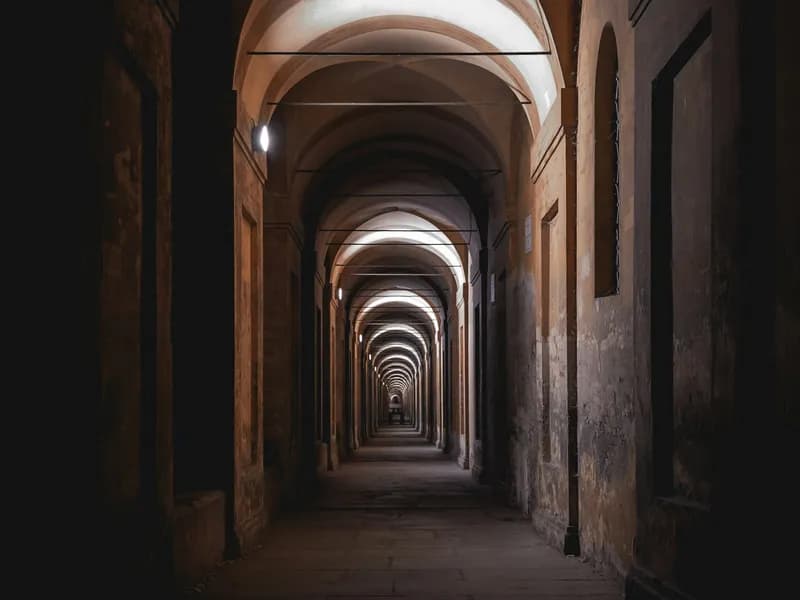
Portico di San Luca & the Sanctuary
The longest portico in the world: 3.8 km and 666 arches climbing 300m to the Madonna di San Luca sanctuary. Free and always open. Allow 2h round trip on foot, or ride the San Luca Express tourist train (~€10) up and walk down. Church free; dome ~€5. It was built so the icon could be carried into the city each year without getting wet.
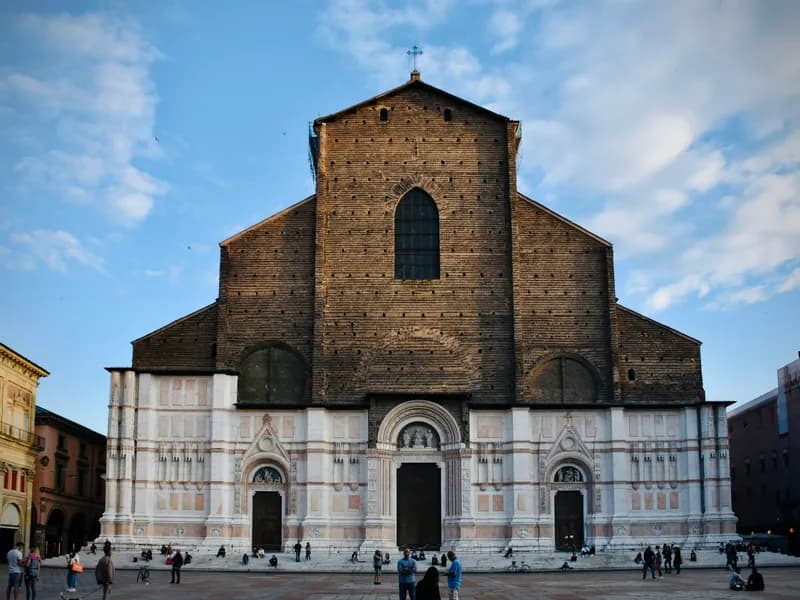
Piazza Maggiore & Basilica di San Petronio
The fifth-largest church in the world, its facade still half-clad in bare brick because Rome cut the funding — legend says to stop it outgrowing St. Peter's. Free entry, allow 45 min. Cassini's 1655 meridian line runs 67m across the floor, one of the largest sundials on earth, and it still keeps time.

Le Due Torri (Asinelli & Garisenda)
Bologna's leaning medieval towers. IMPORTANT: both have been closed to visitors since October 2023, after the Garisenda's tilt worsened and monitoring found movement in its foundations; consolidation work continues with no confirmed reopening date. They remain free to view from the street — for a climbable 360° panorama instead, the Torre dell'Orologio on Piazza Maggiore is open (~€8).
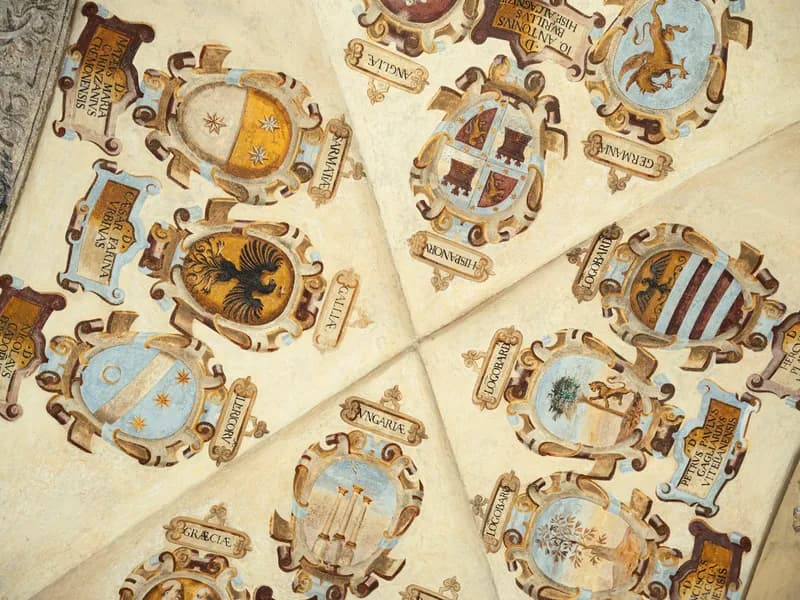
Archiginnasio & Anatomical Theatre
The first home of the University of Bologna — founded 1088, the oldest continuously operating university in the world. Entry ~€3, allow 45 min. The 1637 anatomical theatre is carved entirely in spruce and watched over by two skinned figures holding up the canopy. Six thousand student coats of arms cover the corridors.
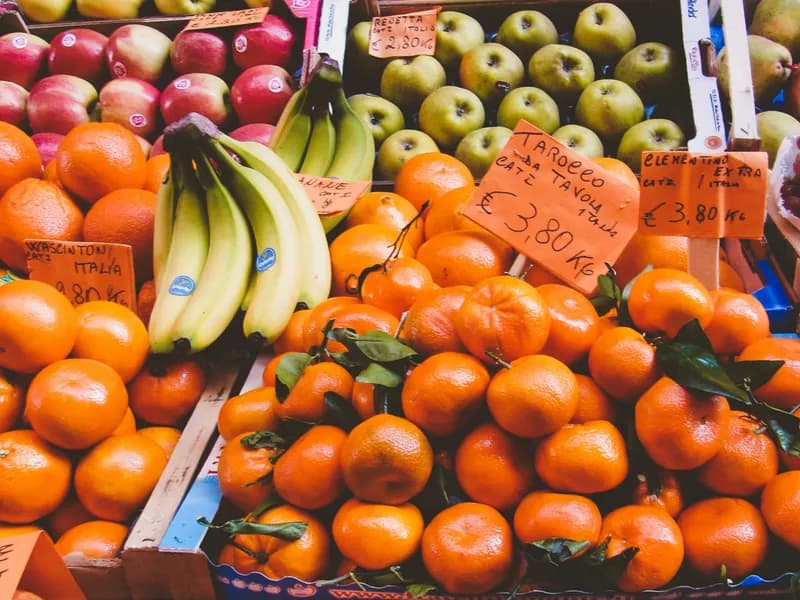
Quadrilatero Market
The medieval trade grid just east of Piazza Maggiore, still working: salumerie, fishmongers, pasta windows and cheese counters along Via Pescherie Vecchie. Free to browse. Busiest and best 10AM-1PM; largely shut Sunday and Thursday afternoons. The street names are the guild names, unchanged in 800 years.

Finestrella di Via Piella
A small shuttered window in an ordinary wall that opens onto the Canale delle Moline — the last visible trace of the canal network Bologna buried under its streets. Free, 10-min walk from Piazza Maggiore. Allow 10 min; it is a photo stop and the queue moves fast. Bologna once ran on more canals than it now admits.
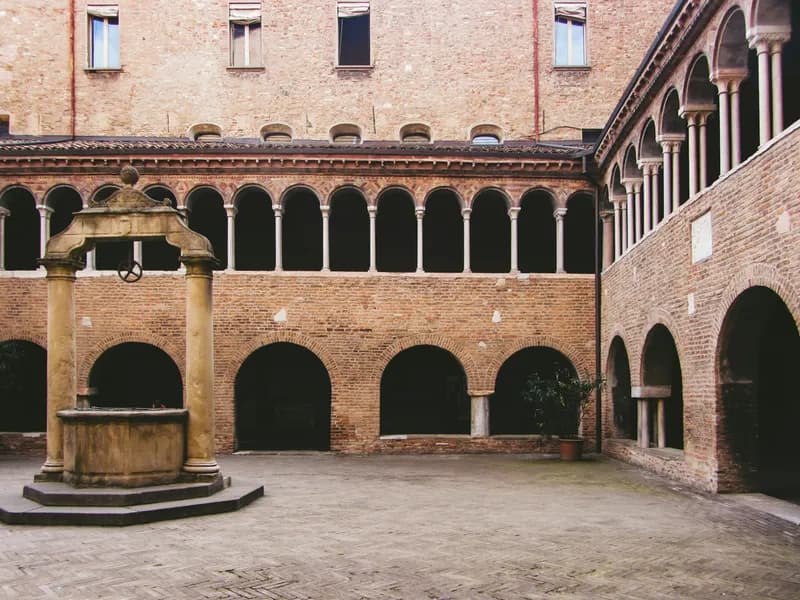
Basilica di Santo Stefano (Sette Chiese)
A labyrinth of interlocking churches from the 5th to 13th centuries wrapped around the Cortile di Pilato — you walk from one century into another through a doorway. Free entry, allow 1h. The quietest major site in the city, five minutes from the towers.
Planned Itinerary
7-Day Bologna Itinerary
Arrival & Piazza Maggiore at Dusk
Land at Bologna Guglielmo Marconi (BLQ) and take the Marconi Express monorail straight to Bologna Centrale — 7 minutes, ~€12, departures every 7 min from roughly 5:40AM to midnight. Base yourself in the Santo Stefano quarter or around Via de' Carbonesi: quiet, walkable, and 5 minutes from Piazza Maggiore. Under the porticoes you can walk anywhere in the centre without an umbrella, which is the whole point of this city. Keep tonight loose — orientation, one long piazza sit, and an early dinner.
Marconi Express monorail, BLQ to Bologna Centrale(7 minutes)
Buy at the machine or the marconiexpress.it app, ~€12 one way. If there are two or more of you a taxi is ~€20-25 for the 6 km and drops you at the door — worth it with luggage.
Walk Via dell'Indipendenza to Piazza Maggiore(20 minutes)
The whole 1.2 km from Centrale is porticoed. It is the city's main artery and the fastest orientation you'll get — Porta Galliera and the Montagnola park on your left, then the Cattedrale di San Pietro, then the square opens up.
Piazza Maggiore and the Fontana del Nettuno(45 minutes)
Giambologna's 1566 Neptune, still the city's mascot. Locals sit on the low stone platform in the middle of the square — the crescentone, a raised rectangle of pink stone. Sit on it; that's what it's for. Free, always open.
Aperitivo at Osteria del Sole(1 hour)
Vicolo Ranocchi 1/D, tucked off the Quadrilatero. Open since 1465 and it sells only wine — no food, no coffee, no menu. You bring your own food; buy mortadella and bread at Simoni round the corner first and put it on the table. Glass of Pignoletto ~€3. Cash only, closes around 9PM.
Dinner at Trattoria Gianni(1.5 hours)
Via Clavature 18, in a passageway you'd walk past. Tagliatelle al ragù ~€12 — and do not say 'spaghetti bolognese', it does not exist here and asking marks you instantly. Book a day ahead; it's small and it fills.
San Petronio, the Cassini Meridian & the Quadrilatero
Bologna's monumental core, done in a single tight loop — you will not walk more than 800m all day. Morning in the world's fifth-largest church, midday in the medieval market grid while it's actually working, then a climb for the rooftops and a canal secret at the end. The Quadrilatero is best 10AM-1PM and largely shuts Sunday and Thursday afternoons, so time your day around that window.
Basilica di San Petronio(45 minutes)
Free entry, opens 8:30AM. The facade is still half bare brick because Rome cut the funding in the 1500s — the legend is that it was being stopped from outgrowing St. Peter's. Walk the left aisle to find Cassini's 1655 meridian line: 67m of brass across the floor, one of the largest sundials on earth, and it still keeps time. A hole in the vault 27m up drops a disc of sun onto the date.
Panoramic terrace of San Petronio(30 minutes)
Lift from inside the basilica, ~€5. It puts you level with the roofline looking straight across at the Two Towers — the best terrace shot in the city, and almost nobody queues for it.
Biblioteca Salaborsa(20 minutes)
Piazza del Nettuno 3, free. A working public library in a glass-roofed courtyard, with the Roman and medieval city excavated under a glass floor you walk across. Locals read the paper here; it's the least touristy free sight in Bologna.
Torre dell'Orologio, Palazzo d'Accursio(45 minutes)
~€8, book a slot online — the Two Towers have been shut to visitors since October 2023 while the Garisenda's tilt is stabilised, so this is the climbable 360° panorama now. You come out over Piazza Maggiore looking down on the crescentone.
Lunch in the Quadrilatero(1.5 hours)
The medieval trade grid east of the square, street names unchanged in 800 years — Via Pescherie Vecchie (fishmongers), Via Drapperie (drapers), Via Caprarie (goat butchers). Eat standing at Simoni Laboratorio, Via Pescherie Vecchie 1: a tigella with mortadella and squacquerone runs ~€6-8 and it's the real mortadella, from here.
Santa Maria della Vita — the Compianto(30 minutes)
Via Clavature 10, ~€5. Seven terracotta figures by Niccolò dell'Arca, c.1463, screaming over the dead Christ. Nothing else in Italian sculpture looks like it. Ten minutes inside will do more to you than an hour in most museums.
Finestrella di Via Piella at golden hour(15 minutes)
10 min walk north. A shuttered window in an ordinary wall opens onto the Canale delle Moline — the last visible trace of the canal network Bologna buried under its streets. Free; the queue is three people deep and moves in a minute. Then walk 100m to Via Malcontenti for the open-air stretch of the same canal, which almost nobody finds.
Dinner at Sfoglia Rina(1 hour)
Via Castiglione 5b. Casual, counter-order, fresh pasta made in the window by sfogline you can watch. Tortellini in brodo ~€11 — in capon broth, never in cream. Good for a first night when you don't want a two-hour sit.
The Anatomical Theatre, the Two Towers & Santo Stefano
Today is the university city — founded 1088, the oldest continuously operating university in the world, and still 90,000 students strong. Start at the Archiginnasio before the school groups, then the towers, then the strangest church complex in Italy, and finish in the student quarter where dinner costs €10 and the piazza doesn't empty until 2AM.
Archiginnasio & the Anatomical Theatre(45 minutes)
Piazza Galvani 1, ~€3, opens 10AM. Six thousand student coats of arms cover the corridors — families paid to have them carved. The 1637 theatre is carved entirely in spruce, tiered around a marble dissection slab, with two spellati (skinned men) holding up the canopy. Go straight there first; the room takes eight people before it feels full.
Le Due Torri from Via Rizzoli(20 minutes)
Asinelli (97m) and the drunkenly leaning Garisenda. Both closed to climbers since October 2023 after monitoring found movement in the Garisenda's foundations — consolidation continues with no reopening date, and the scaffolding is part of the view now. Free to look at, and honestly the towers are better from below than from inside. Dante name-checked the Garisenda in the Inferno.
Basilica di Santo Stefano (Sette Chiese)(1 hour)
Free, 5 min from the towers along Via Santo Stefano. Seven interlocking churches from the 5th to 13th centuries — you walk through a doorway and change century. The Cortile di Pilato at the centre has a basin the Lombards left in the 8th century. The quietest major site in Bologna; go around 12:30 when the tour groups are eating.
Lunch at Drogheria della Rosa(1.5 hours)
Via Cartoleria 10, a former pharmacy with the wooden cabinets still in place. Emanuele will recite the menu at your table rather than hand you one — there isn't a written one. Around €45-55 a head. Book ahead.
Strada Maggiore: Santa Maria dei Servi & the Museo della Musica(1.5 hours)
Walk east under the portico. Santa Maria dei Servi (free) has a Cimabue Maestà from around 1280 and a portico that wraps a full quadriportico — rare. Then Palazzo Sanguinetti at Strada Maggiore 34, the Museo Internazionale della Musica (~€5): frescoed rooms, Rossini's manuscripts, and the oldest printed music book in existence.
Gelato at La Sorbetteria Castiglione(20 minutes)
Via Castiglione 44, since 1994 and still the benchmark. Ask for the Michelangelo (mascarpone, pine nuts, caramelised almonds). ~€3.50 for two flavours.
Evening on Via Zamboni & Piazza Verdi(3 hours)
The student artery. Dinner at Osteria dell'Orsa, Via Mentana 1 — no reservations, communal tables, a plate of tagliatelle al ragù for ~€8 and a quarter-litre of Sangiovese for €3. Queue at 7:30PM or after 9:30PM. Then a spritz on the steps of Piazza Verdi with everyone else. Ordinary pickpocket caution here late at night; otherwise Bologna is very safe.
Pasta with a Sfoglina & a Free Afternoon
The single most useful morning of the trip: learn to roll sfoglia by hand with a two-metre rolling pin, from someone who has done it since she was nine. Then deliberately do nothing until aperitivo. This is your rest day — Bologna in the afternoon is for sitting under a portico, and the summer heat here is genuinely humid (30-33°C in July and August).
Hand-rolled pasta class with a sfoglina(3-4 hours)
Two good routes: La Vecchia Scuola Bolognese (Alessandra Spisni's school near Porta San Felice) is the theatrical, old-guard option, ~€90-120; Le Cesarine puts you in an actual Bolognese home kitchen with a local cook, ~€100-130 including the meal. Either way you'll learn the mattarello technique — sfoglia is rolled, never machined — and make tortellini, which are sealed around your little finger. You eat what you make. Book at least a week out.
Coffee at Terzi Caffè(30 minutes)
Via Oberdan 10d. Manuel Terzi roasts seriously and the espresso is ~€1.30 standing at the bar. Sitting costs more everywhere in Italy — that's not a scam, it's the table service charge.
Free afternoon under the porticoes(3 hours)
Nap, or drift. If you want a target with zero effort: the Portico dei Servi on Strada Maggiore, or the Libreria Nanni bookstall at Via de' Musei 8 under the Portico della Morte — Bologna's oldest, second-hand stacks spilling onto the pavement since 1825.
Aperitivo at Mercato delle Erbe(1.5 hours)
Via Ugo Bassi 25. Working produce market by day, and from 6PM the covered hall turns into a bar-and-bench free-for-all. Banco 32 for oysters and a glass, or Altro? for a plate. Spritz ~€6, and you are drinking among people who live here.
Jazz at Cantina Bentivoglio(2.5 hours)
Via Mascarella 4b, in a 16th-century cellar. Live sets nightly from around 10PM, no cover most nights if you're eating or drinking. The wine list runs to 500 labels. Bologna has more live music per capita than any Italian city its size — this is where you feel it.
The 666 Arches to San Luca
The signature Bologna morning: the longest portico in the world, 3.8 km and 666 arches climbing 300m to the Madonna di San Luca sanctuary on the Colle della Guardia. It was built in the 1670s so the icon could be carried down into the city each spring without ever getting wet — the whole thing is a covered corridor up a hillside. Free and always open. Start by 8:30AM in summer; the last kilometre is a real climb and there is no shade problem, only heat.
Walk the Portico di San Luca from Porta Saragozza(1.5-2 hours)
Free. The arches are numbered — watch them count up. Flat until the Arco del Meloncello (arch 172), then it turns and climbs. If you'd rather not walk up, the San Luca Express tourist train leaves Piazza Maggiore (~€10) and you can ride up and walk down, which is the smart move in August. Bus 20 to Villa Spada is the local's shortcut — it cuts the flat first half.
Santuario della Madonna di San Luca(45 minutes)
Church free; the dome walkway ~€5 and worth it — you get the Po plain on one side and the Apennines on the other, with Bologna's red roofs laid out below. On a clear winter day you can see the Alps.
Lunch at Trattoria Meloncello(1.5 hours)
Via Saragozza 240, right at the Meloncello arch on your way back down. Old-school, red tablecloths, no concessions to anyone. Cotoletta alla bolognese (veal, prosciutto, parmigiano, brodo) ~€16. Closed Mondays.
Free afternoon — Parco di Villa Ghigi (optional)(2 hours)
If you have legs left: 30 hectares of hillside just south of Porta San Mamolo, free, open dawn to dusk. Olive terraces, oaks, and the best free view back over the city that isn't San Luca. It's also where the Via degli Dei — the 130 km walking route to Florence over the Apennines — effectively begins. Otherwise: nap.
Dinner at All'Osteria Bottega(2 hours)
Via Santa Caterina 51, in the Pratello quarter. Daniele Minarelli sources obsessively — culatello di Zibello aged 30 months, mora romagnola pork. Around €50-60 a head, two small rooms, and you must book. If it's full, Trattoria del Rosso (Via Augusto Righi 30) is the cheap, ancient, always-open fallback.
Modena — Duomo, the Ghirlandina & a Balsamic Acetaia
Regional train from Bologna Centrale, 30 min, ~€4.50, roughly two an hour — no need to book, just validate before boarding. Modena is small enough to do entirely on foot from its station (15 min walk to the Duomo). The UNESCO core in the morning, the market at midday, and an acetaia in the afternoon, which is the one thing you cannot fake at home: real Aceto Balsamico Tradizionale di Modena DOP is aged 12 to 25 years in a battery of shrinking barrels in somebody's attic.
Regional train Bologna Centrale to Modena(30 minutes)
~€4.50. Buy on the Trenitalia app and you skip validation; a paper ticket must be stamped at the green machine or it's a fine.
Duomo di Modena & Piazza Grande(1 hour)
Free. UNESCO since 1997. Wiligelmo's 12th-century relief panels across the facade are the beginning of Romanesque narrative sculpture in Italy — Genesis, carved by someone who signed his own work when nobody did that. Inside, look for the Preda Ringadora outside: a slab of stone where debtors were once made to bare their backsides in public.
Climb the Ghirlandina(45 minutes)
~€3, roughly 200 steps, weekends and some weekdays — check hours at visitmodena.it before you count on it. It leans slightly too. From the top you see the Apennines and, on a clear day, the whole Via Emilia running arrow-straight in both directions.
Mercato Albinelli(45 minutes)
Via Albinelli 6, Mon-Sat mornings, best before 1PM. A 1931 Liberty-style hall — cast iron, a fountain, and the tortellini counters where Modenesi actually buy. Closed Sunday.
Lunch at Trattoria Aldina(1 hour)
Via Albinelli 40, up a staircase beside the market with no sign worth mentioning. Lunch only, cash preferred, and it's where market traders eat. Tortellini in brodo ~€10, bollito misto if it's on. Get there at 12:15 or you queue.
Acetaia visit and tasting(1.5 hours)
Book ahead — Acetaia di Giorgio or Acetaia Villa San Donnino both do English tours, ~€20-30 including tasting, and most will collect you from central Modena. You'll climb into an attic full of barrels in descending sizes and taste a 25-year tradizionale off the back of your hand. It costs €80-100 for 100ml and after this you'll understand why the €6 supermarket bottle is a different product entirely.
Return train to Bologna(30 minutes)
Trains run until late evening. If you want to stretch the day: Osteria Francescana (Via Stella 22) releases bookings on a set date each month and is effectively a lottery; Franceschetta 58 is Bottura's casual place and takes actual reservations at a quarter of the price.
Last Market Morning & Departure
Bologna's edible souvenirs are the best in Italy and the shops in the Quadrilatero will vacuum-seal for travel — do this before you pack, not after. Then a slow last coffee and the Marconi Express back to BLQ. Budget 90 minutes door to gate: the monorail is 7 min and BLQ is small, so this is generous.
Final Quadrilatero shopping run(1.5 hours)
Tamburini (Via Caprarie 1) for mortadella and vacuum-sealed salumi. Paolo Atti & Figli (Via Caprarie 7, in business since 1868) for dried tortellini and torta di riso. La Baita on Via Pescherie Vecchie for Parmigiano-Reggiano — ask for a 30-month and have them seal it. Aim for 9:30-11AM; things shut Sunday and Thursday afternoons.
Antica Aguzzeria del Cavallo(20 minutes)
Via Drapperie 12. A knife shop trading since 1783 with a facade of carved horse heads. This is where you buy the rotella (pasta cutting wheel) and the mattarello you'll never use — and it will still be the best thing you bring home.
Majani chocolate(15 minutes)
Via de' Carbonesi 5. Founded 1796, and the inventors of the Fiat Cremino in 1911 — a four-layer solid chocolate block commissioned by the car company. A box is ~€12 and travels well.
Last espresso and a look back at the square(30 minutes)
Stand at the bar of any caffè on Piazza Maggiore, €1.30, and take one more look at the unfinished half of San Petronio's facade. It's been like that for 500 years. It'll wait for you.
Marconi Express to BLQ(7 minutes)
~€12 from Bologna Centrale, every 7 min until about midnight. Or a taxi from your hotel door, ~€20-25, which beats dragging bags to Centrale if your flight is early.
14-Day Bologna Itinerary
Arrival & Piazza Maggiore at Dusk
Land at Bologna Guglielmo Marconi (BLQ) and take the Marconi Express monorail to Bologna Centrale — 7 minutes, ~€12, every 7 min from roughly 5:40AM to midnight. Base yourself in the Santo Stefano quarter: quiet, walkable, 5 minutes from Piazza Maggiore, and hotel rates here run well below Florence or Venice for the same region. Over the next two weeks you'll use Bologna Centrale — the busiest rail junction in Italy — as a launchpad, so unpacking once is the entire strategy. Tonight, just orient.
Marconi Express monorail, BLQ to Bologna Centrale(7 minutes)
~€12 one way from the machine or the marconiexpress.it app. With two or more people and luggage, a taxi is ~€20-25 for the 6 km and goes door to door.
Walk Via dell'Indipendenza to Piazza Maggiore(20 minutes)
The full 1.2 km from Centrale is porticoed — Bologna has 62 km of porticoes in the historic centre alone, UNESCO-listed since 2021, and you can cross the whole city in a downpour without opening an umbrella. Test the theory now.
Piazza Maggiore and the Fontana del Nettuno(45 minutes)
Giambologna's 1566 Neptune. The raised pink-stone rectangle in the middle of the square is the crescentone — locals sit on it, and so should you. Free, always open.
Aperitivo at Osteria del Sole(1 hour)
Vicolo Ranocchi 1/D. Open since 1465, sells only wine — no food, no coffee, no menu. Buy mortadella and bread at Simoni on Via Pescherie Vecchie first and bring it in; that is the system. Pignoletto ~€3 a glass, cash only, shuts around 9PM.
Dinner at Trattoria Gianni(1.5 hours)
Via Clavature 18, in a passage you'd walk straight past. Tagliatelle al ragù ~€12. Never ask for spaghetti bolognese — it does not exist here; the ragù grips flat egg pasta and slides off spaghetti, which is the entire reason. Book a day ahead.
San Petronio, the Cassini Meridian & the Rooftops
The monumental core in one tight loop — you won't walk 800m all day. Morning inside the fifth-largest church in the world, a climb for the panorama, and an afternoon that ends with the strangest terracotta sculpture in Italy. Everything today is within three minutes of Piazza Maggiore.
Basilica di San Petronio(45 minutes)
Free, opens 8:30AM. The facade is still half bare brick because Rome cut the funding in the 1500s — legend says to stop it outgrowing St. Peter's. In the left aisle, Cassini's 1655 meridian: 67m of brass across the floor, one of the largest sundials on earth, still keeping time. A pinhole in the vault 27m up drops a disc of sunlight onto today's date at solar noon. Stand there at midday.
Panoramic terrace of San Petronio(30 minutes)
Lift from inside, ~€5. Puts you at roofline height looking straight at the Two Towers. Almost nobody queues for it.
Biblioteca Salaborsa(20 minutes)
Piazza del Nettuno 3, free. A working library in a glass-roofed courtyard with the Roman and medieval city excavated under a glass floor you walk on. People here are reading the paper, not photographing anything.
Torre dell'Orologio, Palazzo d'Accursio(45 minutes)
~€8, book a slot online. Since the Two Towers closed to visitors in October 2023 — the Garisenda's tilt worsened and monitoring found foundation movement, with consolidation ongoing and no reopening date — this is the climbable 360° in the centre. You emerge directly over the crescentone.
Collezioni Comunali d'Arte(45 minutes)
Same building as the tower, ~€6. Frescoed municipal apartments almost nobody enters, plus a room with Bologna's original 14th-century Madonna. Ten minutes in you realise you have it to yourself.
Lunch at Mercato di Mezzo(1 hour)
Via Clavature 12. Three floors of counters in a restored 19th-century market hall — tigelle, fried gnocco, a beer from Birra Baladin. Not the deepest food in Bologna but fast, ~€12-15, and it puts you back on the street quickly.
Santa Maria della Vita — the Compianto(30 minutes)
Via Clavature 10, ~€5. Seven life-size terracotta figures by Niccolò dell'Arca, c.1463, mid-scream over the dead Christ. Nothing else in Italian sculpture looks remotely like it. Fifteen minutes here will hit harder than most museums manage in two hours.
Dinner at Sfoglia Rina(1 hour)
Via Castiglione 5b. Counter-order, casual, and the sfogline roll the pasta in the window. Tortellini in brodo ~€11 — in capon broth, never in cream, and never ask for cream.
The Anatomical Theatre & the Quadrilatero
The oldest university in the world and the medieval market that has fed it since. The Quadrilatero is busiest and best 10AM-1PM and largely shuts Sunday and Thursday afternoons, so today is built around that window. Wear shoes you can stand in — this is a grazing day.
Archiginnasio & the Anatomical Theatre(45 minutes)
Piazza Galvani 1, ~€3, opens 10AM. The first home of the University of Bologna, founded 1088 and the oldest continuously operating one anywhere. Six thousand student coats of arms cover the corridors — families paid for the carving. The 1637 theatre is entirely spruce, tiered around a marble dissection slab, and the canopy is held up by two spellati: figures carved with their skin flayed off. Go there first; the room fills at eight people.
Sala dello Stabat Mater(15 minutes)
Same ticket, off the Archiginnasio courtyard. The old medical lecture hall where Rossini's Stabat Mater premiered in 1842, Donizetti conducting. Usually empty.
Quadrilatero grazing walk(2 hours)
The medieval trade grid, street names unchanged in 800 years: Via Pescherie Vecchie (fishmongers), Via Drapperie (drapers), Via Caprarie (goat butchers), Via Orefici (goldsmiths). Free to browse. Standing plate at Simoni Laboratorio (Via Pescherie Vecchie 1) — mortadella and squacquerone in a tigella, ~€6-8. Then La Baita for a 30-month Parmigiano shaving, and Tamburini (Via Caprarie 1) for the counter.
Antica Aguzzeria del Cavallo(20 minutes)
Via Drapperie 12. A knife-and-tools shop trading since 1783 with carved horse heads over the door. Buy the rotella pasta wheel; you'll thank yourself on day 6.
Basilica di San Domenico(45 minutes)
Free, 8 min southwest. The Arca di San Domenico holds work by Nicola Pisano, Niccolò dell'Arca (who took his name from this tomb) and a young Michelangelo — he carved the kneeling angel on the right in 1494, aged 19, and it's signed by no one but unmistakable. Mozart studied here at 14.
Finestrella di Via Piella & the buried canals(45 minutes)
Free, 10 min from Piazza Maggiore. A shuttered window in a plain wall opening onto the Canale delle Moline — the last visible trace of the canal network Bologna paved over. The queue moves in a minute. Then walk to Via Malcontenti and Via delle Moline for the open stretches almost nobody finds; Bologna once ran on more canals than it now admits.
Dinner at Da Cesari(2 hours)
Via de' Carbonesi 8. Family-run since 1955, and Paolo raises the mora romagnola pigs the salumi comes from. Tagliatelle al ragù ~€13, the pork is the reason to come. Book.
The Two Towers, Santo Stefano & the University Quarter
Medieval Bologna and then student Bologna, in a straight line east from the towers. Santo Stefano is the best free hour in the city and the quietest — hit it around 12:30 when the tour groups break for lunch. Tonight you eat where the 90,000 students eat, which is also where the food costs €8.
Le Due Torri from Via Rizzoli(20 minutes)
Asinelli at 97m and the drunkenly leaning Garisenda. Both have been closed to visitors since October 2023 and the Garisenda is inside a stabilisation rig — that's the view now, and it's part of the story. Free from the street. Dante put the Garisenda in the Inferno; he'd have recognised the lean.
Torre Prendiparte(45 minutes)
Via Sant'Alò 7. One of the surviving private towers, ~60m, and it can still be visited — book ahead through their site, ~€5-10. The prison cells partway up are covered in 18th-century graffiti carved by condemned men. You can also rent the whole tower as a two-person B&B, which is one of the odder overnight options in Italy.
Basilica di Santo Stefano (Sette Chiese)(1 hour)
Free. Seven interlocking churches spanning the 5th to 13th centuries wrapped around the Cortile di Pilato — you step through a doorway and change century. The basin in the courtyard was left by the Lombards in the 8th century. Quietest major site in Bologna, five minutes from the towers.
Lunch at Drogheria della Rosa(1.5 hours)
Via Cartoleria 10, a former pharmacy with the wooden apothecary cabinets still in place. Emanuele recites the menu at your table — there is no printed one. ~€45-55 a head. Book.
Strada Maggiore: Santa Maria dei Servi & the Museo della Musica(1.5 hours)
Santa Maria dei Servi (free) holds a Cimabue Maestà from around 1280 and is fronted by a rare full quadriportico. Then Palazzo Sanguinetti, Strada Maggiore 34, ~€5: frescoed rooms, Rossini and Farinelli manuscripts, and the oldest printed book of music in existence.
Gelato at La Sorbetteria Castiglione(20 minutes)
Via Castiglione 44. Ask for the Michelangelo — mascarpone, pine nuts, caramelised almonds. ~€3.50.
Dinner and drinks on Via Zamboni(3 hours)
Osteria dell'Orsa, Via Mentana 1: no reservations, communal tables, tagliatelle al ragù ~€8, a quartino of Sangiovese €3. Queue at 7:30PM or after 9:30PM. Then a spritz on the steps of Piazza Verdi. Normal pickpocket caution here late; otherwise the city is very safe.
The 666 Arches to San Luca — Free Afternoon
The longest portico in the world: 3.8 km and 666 arches climbing 300m to the Madonna di San Luca sanctuary. Built in the 1670s so the icon could be carried down into the city each spring without getting wet — a covered corridor up a hillside, entirely funded by citizens who each bought an arch. Free and always open. Start by 8:30AM in summer; the second half is a real climb and Bologna sits at 30-33°C in July and August. Then do nothing until aperitivo.
Walk the Portico di San Luca from Porta Saragozza(1.5-2 hours)
Free. The arches are numbered — watch them count. Flat to the Arco del Meloncello around arch 172, then it turns uphill and means it. Alternative: the San Luca Express tourist train from Piazza Maggiore (~€10) up, walk down. Bus 20 to Villa Spada is the local shortcut and cuts the flat half.
Santuario della Madonna di San Luca(45 minutes)
Church free; dome walkway ~€5 and worth it — Po plain on one side, Apennines on the other, Bologna's red roofs below. On a clear winter day the Alps show up on the horizon.
Lunch at Trattoria Meloncello(1.5 hours)
Via Saragozza 240, at the Meloncello arch on the way down. Red tablecloths, no concessions. Cotoletta alla bolognese ~€16 — veal under prosciutto and Parmigiano, finished in brodo. Closed Mondays.
Free afternoon(3 hours)
Deliberately unscheduled. If you want a soft target: Parco di Villa Ghigi, 30 hectares of free hillside below Porta San Mamolo, dawn to dusk, olive terraces and the best free view that isn't San Luca. It's also roughly where the Via degli Dei — the 130 km walking route to Florence over the Apennines — starts.
Aperitivo at Mercato delle Erbe(1.5 hours)
Via Ugo Bassi 25. Produce market by day; from 6PM the hall becomes benches and bars. Banco 32 for oysters and a glass, Altro? for a plate. Spritz ~€6, and the crowd lives here.
Dinner at All'Osteria Bottega(2 hours)
Via Santa Caterina 51, Pratello quarter. Two small rooms, culatello di Zibello aged 30 months, mora romagnola. ~€50-60 a head, and you must book. Fallback: Trattoria del Rosso, Via Augusto Righi 30, cheap and ancient and always has a table.
Pasta with a Sfoglina & Jazz on Via Mascarella
The morning that changes how you cook. Sfoglia is rolled by hand with a two-metre mattarello — never machined — and the woman teaching you has done it since she was nine. Afternoon free, then Bologna's other identity: it has more live music per capita than any Italian city its size, and Via Mascarella is where that lives.
Hand-rolled pasta class with a sfoglina(3-4 hours)
Two routes. La Vecchia Scuola Bolognese (Alessandra Spisni's school near Porta San Felice) is the theatrical old-guard option, ~€90-120. Le Cesarine puts you in a real Bolognese home kitchen with a local cook, ~€100-130 with the meal. Either teaches the mattarello and tortellini — sealed around your little finger, and there is a legally deposited size for them at the Camera di Commercio. You eat what you make. Book a week ahead.
Coffee at Terzi Caffè(30 minutes)
Via Oberdan 10d. Manuel Terzi's roasting is the serious end of Bolognese coffee. Espresso ~€1.30 standing at the bar; sitting costs more, everywhere in Italy, and that's the table charge, not a scam.
Free afternoon(3 hours)
Nap it off. Or drift the Libreria Nanni bookstall at Via de' Musei 8, under the Portico della Morte — Bologna's oldest, second-hand stacks spilling onto the pavement since 1825.
Dinner at Trattoria Anna Maria(2 hours)
Via delle Belle Arti 17a. Anna Maria Monari is a sfoglina herself and the walls are covered in signed photos of opera singers. Tortellini in brodo ~€14, gramigna alla salsiccia ~€12. Order the gramigna — a short curled pasta with sausage ragù that never leaves Emilia. Book.
Jazz at Cantina Bentivoglio(2.5 hours)
Via Mascarella 4b, in a 16th-century cellar, live sets nightly from around 10PM, no cover most nights if you're consuming. Five hundred labels on the list. Bravo Caffè at Via Mascarella 1 is the alternative if the programme doesn't grab you.
Modena — Duomo, the Ghirlandina & a Balsamic Acetaia
Regional train 30 min, ~€4.50, roughly two an hour, no booking needed. Modena is walkable from its station (15 min to the Duomo). UNESCO core in the morning, the 1931 market at midday, and an acetaia in the afternoon — the one thing you cannot replicate at home. Real Aceto Balsamico Tradizionale is aged 12 to 25 years in a battery of shrinking barrels in somebody's attic, and the €6 supermarket bottle is an unrelated product.
Regional train Bologna Centrale to Modena(30 minutes)
~€4.50. Buy on the Trenitalia app and there's nothing to validate; a paper ticket must be stamped at the green machine or it's a fine.
Duomo di Modena & Piazza Grande(1 hour)
Free, UNESCO since 1997. Wiligelmo's 12th-century Genesis reliefs across the facade are the start of Romanesque narrative sculpture in Italy — and he signed them, which nobody did then. Outside, the Preda Ringadora: a stone slab where bankrupts were made to bare their backsides in public as a debt penalty.
Climb the Ghirlandina(45 minutes)
~€3, ~200 steps. Check visitmodena.it before counting on it — opening is weekend-heavy. It leans slightly too. From the top the Via Emilia runs arrow-straight in both directions across the plain, exactly as the Romans drew it in 187 BC.
Mercato Albinelli(45 minutes)
Via Albinelli 6, Mon-Sat mornings, best before 1PM, closed Sunday. A 1931 Liberty hall — cast iron, a fountain, and the tortellini counters Modenesi actually buy from.
Lunch at Trattoria Aldina(1 hour)
Via Albinelli 40, up an unmarked staircase beside the market. Lunch only, cash preferred, market traders at the next table. Tortellini in brodo ~€10. Arrive 12:15 or queue.
Acetaia visit and tasting(1.5 hours)
Book ahead — Acetaia di Giorgio or Acetaia Villa San Donnino, ~€20-30 with tasting, most will collect you from central Modena. You climb into an attic of barrels in descending sizes and taste a 25-year tradizionale off the back of your hand. It sells for €80-100 per 100ml and after this you'll understand why.
Return train to Bologna(30 minutes)
Trains run late. For dinner: Osteria Francescana (Via Stella 22) releases bookings on a set date monthly and is a lottery; Franceschetta 58 is Bottura's casual room, takes real reservations, ~a quarter of the price.
Slow Bologna: Via Fondazza, Morandi & the Certosa
A genuine rest day, built around the painter who spent his life in one room in this city painting the same bottles. No trains, no tickets you have to be on time for. This is the Bologna that residents actually inhabit — the eastern quarter behind Strada Maggiore, the park, and a cemetery that is one of the great unvisited sights in Italy.
Slow morning on Via Fondazza(1.5 hours)
In 2013 the residents of this porticoed street started a Facebook group to lend each other drills and it became the world's first 'social street' — the model has since been copied in 400 cities. Walk it end to end. Casa Morandi at number 36 is where Giorgio Morandi lived and worked from 1933 to 1964; visits are limited and by arrangement through Bologna Musei, so check before you turn up.
MAMbo & the Museo Morandi(1.5 hours)
Via Don Minzoni 14, ~€6, closed Mondays. A converted bread oven — the old Forno del Pane — now Bologna's contemporary museum, with the Morandi collection inside it, including a reconstruction of his studio: the actual bottles and jugs, grey with the dust he refused to let anyone wipe off because the dust was the point.
Lunch at Vicolo Colombina(1.5 hours)
Vicolo Colombina 5, a lane off Via Altabella you would never find deliberately. Fresh pasta, a short list, and a courtyard. ~€35-45. Book, it's tiny.
Giardini Margherita(2 hours)
Bologna's big park, free, just outside Porta Santo Stefano. Twenty-six hectares, a lake with turtles, an Etruscan tumulus nobody mentions, and Le Serre — greenhouses converted into a bar and workspace where students spend entire afternoons. Bring a book. This is the whole activity.
Cimitero della Certosa(1 hour)
Via della Certosa 18, free, bus 14 or 20. A Carthusian monastery turned cemetery in 1801, and one of the strangest monumental cemeteries in Europe — full-size 19th-century neoclassical sculpture in covered cloisters, Byron came, Dickens came. Morandi is buried here, in a grave as plain as his paintings. An Etruscan necropolis was found underneath it.
Dinner at Trattoria di Via Serra(2 hours)
Via Luigi Serra 9b, in Bolognena across the tracks — 20 min walk from Centrale or bus 25. Tommaso and Flavio run maybe the most respected trattoria in the city; the ragù is a benchmark. Around €35-45. Book two weeks out, seriously, and note the two-week August closure like most of Bologna.
Parma — Dawn at a Parmigiano Dairy, Antelami's Baptistery
The earliest start of the trip and the best. Parmigiano-Reggiano dairies work at dawn because the evening's skimmed milk meets the morning's whole milk and the copper cauldrons fire at first light — visits start around 8AM and they are not moving that for you. Regional train Bologna to Parma is ~1h, ~€9, so you're on a 6:30-7AM departure. Sleep on the train back.
Early regional train to Parma(1 hour)
~€9 from Bologna Centrale, first trains from around 5:30AM. Your dairy will usually meet you at Parma station or you take a short taxi out into the plain — confirm when you book.
Parmigiano-Reggiano caseificio tour(2 hours)
Book weeks ahead through the Consorzio's own site (parmigianoreggiano.com lists the dairies that take visitors) or direct with Caseificio Bertinelli. ~€20-25. You watch curd being cut with the spino, two 40kg wheels hauled out of one cauldron in cheesecloth, and then the salting brine and the ageing room — thousands of wheels on shelves 8m high, tapped with a hammer by an inspector who is listening for hollows. Taste 12, 24 and 36 month side by side; the 36 crunches.
Battistero di Parma(45 minutes)
Piazza Duomo, ~€12 combined with the Diocesan Museum. Benedetto Antelami's octagon in pink Verona marble, begun 1196 — the hinge between Romanesque and Gothic in Italy. The interior is a painted dome of sixteen ribs; the Months cycle around the walls is Antelami's, and it is the reason art historians make this trip.
Duomo di Parma — Correggio's Assumption(30 minutes)
Free, next door. Look up: Correggio painted the dome in 1526-30 as a vortex of legs and clouds spiralling into light. A canon of the cathedral called it 'a hash of frogs' legs'. It also invented the ceiling for the next two hundred years of Baroque.
Lunch: a Pepèn panino(30 minutes)
Borgo Sant'Ambrogio 2. A counter, a queue of Parmigiani, and the Pepèn panino — horse meat, rocket, their sauce, ~€6. Parma eats horse and is not embarrassed about it. If that's a hard no, Salumeria Garibaldi at Via Garibaldi 42 will build you a prosciutto plate instead.
Palazzo della Pilotta & Teatro Farnese(1.5 hours)
~€15, closed Mondays. The Teatro Farnese is a vast 1618 wooden theatre — bombed flat in 1944 and rebuilt from its own splinters, deliberately left unpainted so you can see the reconstruction. The Galleria Nazionale upstairs has Correggio, Parmigianino and Leonardo's Scapigliata.
Return train to Bologna(1 hour)
~€9. If you have energy left, Trattoria del Tribunale (Vicolo Politi 5) does the definitive Parma tortelli d'erbetta before you go — but you have been up since 5:30.
Ferrara — Castello Estense & 9 km of Walls by Bike
Regional train 30 min, ~€5. Ferrara is Italy's great planned Renaissance city — the Este dukes doubled it in 1492 with the Addizione Erculea, the first modern urban plan in Europe — and it is flat, quiet and built for bicycles. Rent one at the station and you will see twice as much as walking. UNESCO listed, and on a weekday you will have Via delle Volte to yourself.
Regional train Bologna to Ferrara + bike rental(45 minutes)
~€5, roughly two trains an hour. Rent from one of the shops immediately outside Ferrara station, ~€10-12 for the day. Ferrara has more bikes than people and drivers expect you; ride like you belong.
Castello Estense(1.5 hours)
~€12-14, closed Tuesdays. A moated brick castle in the middle of a city centre, drawbridges still down. Go into the dungeons: Ugo and Parisina were beheaded down here in 1425 for the affair Byron later wrote a poem about, and the cells are carved with prisoners' graffiti. Then up to the roof terrace for the whole grid of the Addizione.
Palazzo dei Diamanti(45 minutes)
Corso Ercole I d'Este 21. Eight and a half thousand marble blocks cut as diamond points, each angled slightly differently so the facade changes as you walk past — stand at the corner and look along it, that's the trick the architect built in 1493. The Pinacoteca inside is ~€6-10 depending on the show.
Via delle Volte(30 minutes)
Free. A 2 km medieval street roofed by dozens of brick arches that once linked merchants' houses to their warehouses on the old Po docks. Damp, dim, and one of the most atmospheric streets in Italy. Ride it slowly.
Lunch at Trattoria da Noemi(1.5 hours)
Via Ragno 31a. Cappellacci di zucca — pumpkin-filled, with butter and sage or with ragù, ~€12 — and salama da sugo, a fermented minced-pork sausage boiled for hours and served over mash, which is Ferrara's great weird dish. Order it. Book ahead.
MEIS and the Jewish ghetto(1.5 hours)
Museo Nazionale dell'Ebraismo Italiano e della Shoah, Via Piangipane 81, ~€10, built inside a former prison. Ferrara's Jewish community goes back to the 13th century and the Este welcomed those expelled from Spain in 1492; Bassani set The Garden of the Finzi-Continis here. Then ride Via Mazzini and Via Vittoria through the old ghetto.
Cycle the city walls(1 hour)
Free. Nine kilometres of Renaissance ramparts, almost entirely intact, with a path along the top under trees. Do the northern stretch at golden hour. It is the single best thing in Ferrara and it costs nothing.
Aperitivo at Al Brindisi before the train(45 minutes)
Via Adelardi 11, beside the Duomo. It claims to be the oldest wine bar in the world — a licence from 1435, and Copernicus reportedly drank here as a student. Glass of Fortana ~€4.
Free Morning, then the University Quarter's Art
No alarm. Bologna's best paintings are all in one 300m stretch of Via Zamboni and Via delle Belle Arti, and they're all quiet — Bologna is a city people eat in, not a city people queue in, and the Pinacoteca is the proof. Save the morning, spend the afternoon in the university's own strange museums.
Free morning(3 hours)
Sleep, portico-sit, or take a coffee at Camera a Sud (Via Valdonica 5) and read. If it's Saturday, the Mercato Ritrovato at the Cineteca, Via Azzo Gardino 65, is Bologna's best small farmers' market — Apennine cheese, Vignola cherries in May-June, and a queue for the fried gnocco.
Pinacoteca Nazionale(2 hours)
Via delle Belle Arti 56, ~€6-8, closed Mondays. Raphael's Ecstasy of St Cecilia, Guido Reni's Pietà, and room after room of the Carracci — the family who invented the art academy here in the 1580s and reset Italian painting after Mannerism ran out of ideas. You will share it with about twelve people.
Palazzo Poggi museums(1.5 hours)
Via Zamboni 33, ~€5, closed Mondays. The university's own collections and one of the oddest museums in Europe: Ercole Lelli's 18th-century wax anatomical models — flayed bodies, obstetric models made so surgeons could practise delivery blind, ships' models, and a naval room. Climb the Specola tower for the 18th-century observatory.
Oratorio di Santa Cecilia(20 minutes)
Via Zamboni 15, through the portico beside San Giacomo. FREE, and it is a complete 1506 fresco cycle by Francesco Francia and Lorenzo Costa. There is usually nobody in it. Next door, San Giacomo Maggiore's Bentivoglio chapel holds the family's own Costa altarpiece.
Aperitivo at Le Stanze(1.5 hours)
Via del Borgo di San Pietro 1. You drink under 16th-century frescoes because the room was the Bentivoglio family's private chapel. Cocktails ~€10 and it feels like a mistake that you're allowed in.
Dinner at Oltre(2 hours)
Via Maggiore 1. The modern end of Bolognese cooking without abandoning the region — the tagliatelle is still hand-rolled, but the rest of the menu is arguing with tradition rather than repeating it. ~€45-55. Book.
Ravenna — Byzantine Mosaics & Dante's Tomb
Regional train 1h15, ~€8-9. Ravenna was the capital of the Western Roman Empire, then of Theodoric's Ostrogoths, then Byzantium's foothold in Italy — and it holds eight UNESCO sites of 5th- and 6th-century mosaic that are, without exaggeration, the finest surviving anywhere on earth. Buy the combined ticket; everything in the centre is within a 10-minute walk.
Regional train Bologna to Ravenna(1 hour 15 minutes)
~€8-9, roughly hourly. The centre is a 10 min walk from the station — you will not need a bus all day except for Classe.
Basilica di San Vitale(45 minutes)
Combined ticket ~€12.50 covers five sites. Consecrated 547. The apse mosaics of Justinian and Theodora facing each other across the sanctuary are the definitive images of the Byzantine court — Theodora with her retinue and her pearls, both of them in a Ravenna neither ever visited. Go at opening, 9AM.
Mausoleo di Galla Placidia(20 minutes)
Same ticket, plus a ~€2 timed-entry supplement between 1 March and 15 June. Slots are five minutes and strictly enforced — book online. Inside, a barrel vault of deep-blue mosaic scattered with 570 gold stars, in a room the size of a garage. Cole Porter honeymooned in Ravenna and wrote Night and Day after sitting in here. Five minutes is enough; it lands immediately.
Sant'Apollinare Nuovo & the Neonian Baptistery(1 hour)
Same ticket. Sant'Apollinare Nuovo has two 6th-century processions marching the full length of the nave — and if you look at the palace mosaic on the right, you can still see disembodied hands on the columns where the Byzantines erased Theodoric's Arian courtiers and forgot the fingers. The Neonian Baptistery is the oldest of the lot, c.430.
Dante's tomb(20 minutes)
Via Dante Alighieri, free. Exiled from Florence, Dante died here in 1321 and Ravenna has never given the body back — Florence sends oil for the lamp every September as a formal apology. The 'zona di silenzio' around it is enforced. The adjacent mound is where the bones were hidden from Allied bombing.
Lunch at Ca' de Vèn(1.5 hours)
Via Corrado Ricci 24. A 15th-century palazzo with frescoed vaults and old wine shelves running to the ceiling. Cappelletti and piadina, ~€30. Order the piadina — Romagna's flatbread, and it is a different country from Bologna's cuisine even at 80 km.
Sant'Apollinare in Classe(1.5 hours)
~€5, bus 4 from Ravenna station (~15 min) or one stop on the regional train. Alone on a plain that used to be the harbour of the Roman fleet, and the apse — Sant'Apollinare in a green paradise of trees, birds and twelve sheep, c.549 — is the quietest great mosaic in Italy. Almost everyone skips it. Don't.
Return train to Bologna(1 hour 15 minutes)
Last useful trains run to around 9PM; check before you commit to dinner in Ravenna.
Florence in 37 Minutes
Bologna Centrale is the busiest junction in Italy and Florence is 37 minutes away by Frecciarossa — closer than a lot of people's commutes. Book the train the night before for ~€20-25 (walk-up is €35-45) and take the 7:30AM so you're at the Uffizi door at opening. This is the day that proves the tip about basing in Bologna: same region, half the hotel rate, and Tuscany is a morning coffee away.
Frecciarossa to Firenze Santa Maria Novella(37 minutes)
~€20-35 depending on how far ahead you book, on Trenitalia or Italo. Fixed seat, no validation. SMN station puts you 10 min from the Duomo on foot.
Galleria degli Uffizi(2.5-3 hours)
~€25 high season, and you MUST book a timed slot at uffizi.it — turning up is a two-hour queue. Take the first slot, 8:15AM. Go straight to rooms 10-14 for Botticelli's Primavera and Birth of Venus before the groups land, then double back. The corridor windows over the Arno are the best free view in the building.
Lunch at Trattoria Mario(1 hour)
Via Rosina 2, beside the Mercato Centrale. Lunch only, cash only, closed Sunday, shared tables, open since 1953. Ribollita ~€7, bistecca by weight. Arrive at 12:00 and put your name on the list at the door.
Duomo complex or the Bargello(2 hours)
Brunelleschi's dome needs a booked slot (~€30 Brunelleschi Pass, 463 steps, and it sells out days ahead). If you'd rather not queue: the Bargello (~€10) has Donatello's bronze David, Michelangelo's Bacchus, and roughly a tenth of the crowd.
Oltrarno and Piazzale Michelangelo at sunset(2 hours)
Cross Ponte Vecchio and keep going — Santo Spirito's square is where Florentines actually drink, and the artisan workshops on Via Toscanella and Borgo San Frediano are still real. Then walk or take bus 12/13 up to Piazzale Michelangelo for the classic dusk shot; keep climbing 10 minutes further to San Miniato al Monte, where the Benedictine monks sing Gregorian vespers around 5:30PM and there are twenty people instead of two thousand.
Late Frecciarossa back to Bologna(37 minutes)
Trains run past 10PM. You'll be under your own portico eating a late gelato at Cremeria Funivia (Piazza Cavour 1d, open till 11PM) 40 minutes after leaving Tuscany.
Last Market Morning & Departure
Bologna's edible souvenirs are the best in Italy and the Quadrilatero shops will vacuum-seal for the flight — do it before you pack. Then a last espresso standing at a bar on Piazza Maggiore and the Marconi Express back to BLQ. Ninety minutes door to gate is generous: the monorail is 7 minutes and BLQ is small.
Final Quadrilatero shopping run(1.5 hours)
Aim for 9:30-11AM; the Quadrilatero largely shuts Sunday and Thursday afternoons. Tamburini (Via Caprarie 1) for mortadella and sealed salumi. Paolo Atti & Figli (Via Caprarie 7, since 1868) for dried tortellini and torta di riso. La Baita, Via Pescherie Vecchie, for a sealed 30-month Parmigiano. Bruno e Franco (Via Oberdan 16) if Tamburini's queue is out the door.
Majani chocolate(15 minutes)
Via de' Carbonesi 5. Founded 1796; they invented the Fiat Cremino in 1911 — a four-layer solid chocolate block commissioned by the car company. A box is ~€12 and survives a suitcase.
Last espresso on Piazza Maggiore(30 minutes)
Standing at the bar, €1.30. One more look at San Petronio's half-finished facade. It's been waiting 500 years; it can wait for you.
Marconi Express to BLQ(7 minutes)
~€12 from Bologna Centrale, every 7 min to around midnight. Or a taxi from your hotel door, ~€20-25, which beats hauling a sealed wheel of Parmigiano to Centrale if the flight is early.
21-Day Bologna Itinerary
Arrival & Piazza Maggiore at Dusk
Land at Bologna Guglielmo Marconi (BLQ) and take the Marconi Express monorail to Bologna Centrale — 7 minutes, ~€12, every 7 min from roughly 5:40AM to midnight. Base yourself in the Santo Stefano quarter: quiet, walkable, 5 minutes from Piazza Maggiore, and hotel rates here run well below Florence or Venice for the same region. Over the next three weeks you'll use Bologna Centrale — the busiest rail junction in Italy — as a launchpad for the whole of Emilia-Romagna and beyond, so unpacking once and radiating out is the entire strategy. Tonight, just orient.
Marconi Express monorail, BLQ to Bologna Centrale(7 minutes)
~€12 one way from the machine or the marconiexpress.it app. With two or more people and luggage, a taxi is ~€20-25 for the 6 km and goes door to door.
Walk Via dell'Indipendenza to Piazza Maggiore(20 minutes)
The full 1.2 km from Centrale is porticoed — Bologna has 62 km of porticoes in the historic centre alone, UNESCO-listed since 2021, and you can cross the whole city in a downpour without opening an umbrella. Test the theory now.
Piazza Maggiore and the Fontana del Nettuno(45 minutes)
Giambologna's 1566 Neptune. The raised pink-stone rectangle in the middle of the square is the crescentone — locals sit on it, and so should you. Free, always open.
Aperitivo at Osteria del Sole(1 hour)
Vicolo Ranocchi 1/D. Open since 1465, sells only wine — no food, no coffee, no menu. Buy mortadella and bread at Simoni on Via Pescherie Vecchie first and bring it in; that is the system. Pignoletto ~€3 a glass, cash only, shuts around 9PM.
Dinner at Trattoria Gianni(1.5 hours)
Via Clavature 18, in a passage you'd walk straight past. Tagliatelle al ragù ~€12. Never ask for spaghetti bolognese — it does not exist here; the ragù grips flat egg pasta and slides off spaghetti, which is the entire reason. Book a day ahead.
San Petronio, the Cassini Meridian & the Rooftops
The monumental core in one tight loop — you won't walk 800m all day. Morning inside the fifth-largest church in the world, a climb for the panorama, and an afternoon that ends with the strangest terracotta sculpture in Italy. Everything today is within three minutes of Piazza Maggiore.
Basilica di San Petronio(45 minutes)
Free, opens 8:30AM. The facade is still half bare brick because Rome cut the funding in the 1500s — legend says to stop it outgrowing St. Peter's. In the left aisle, Cassini's 1655 meridian: 67m of brass across the floor, one of the largest sundials on earth, still keeping time. A pinhole in the vault 27m up drops a disc of sunlight onto today's date at solar noon. Stand there at midday.
Panoramic terrace of San Petronio(30 minutes)
Lift from inside, ~€5. Puts you at roofline height looking straight at the Two Towers. Almost nobody queues for it.
Biblioteca Salaborsa(20 minutes)
Piazza del Nettuno 3, free. A working library in a glass-roofed courtyard with the Roman and medieval city excavated under a glass floor you walk on. People here are reading the paper, not photographing anything.
Torre dell'Orologio, Palazzo d'Accursio(45 minutes)
~€8, book a slot online. Since the Two Towers closed to visitors in October 2023 — the Garisenda's tilt worsened and monitoring found foundation movement, with consolidation ongoing and no reopening date — this is the climbable 360° in the centre. You emerge directly over the crescentone.
Collezioni Comunali d'Arte(45 minutes)
Same building as the tower, ~€6. Frescoed municipal apartments almost nobody enters, plus a room with Bologna's original 14th-century Madonna. Ten minutes in you realise you have it to yourself.
Santa Maria della Vita — the Compianto(30 minutes)
Via Clavature 10, ~€5. Seven life-size terracotta figures by Niccolò dell'Arca, c.1463, mid-scream over the dead Christ. Nothing else in Italian sculpture looks remotely like it. Fifteen minutes here will hit harder than most museums manage in two hours.
Dinner at Sfoglia Rina(1 hour)
Via Castiglione 5b. Counter-order, casual, and the sfogline roll the pasta in the window. Tortellini in brodo ~€11 — in capon broth, never in cream, and never ask for cream.
The Anatomical Theatre & the Quadrilatero
The oldest university in the world and the medieval market that has fed it since. The Quadrilatero is busiest and best 10AM-1PM and largely shuts Sunday and Thursday afternoons, so today is built around that window. Wear shoes you can stand in — this is a grazing day.
Archiginnasio & the Anatomical Theatre(45 minutes)
Piazza Galvani 1, ~€3, opens 10AM. The first home of the University of Bologna, founded 1088 and the oldest continuously operating one anywhere. Six thousand student coats of arms cover the corridors — families paid for the carving. The 1637 theatre is entirely spruce, tiered around a marble dissection slab, and the canopy is held up by two spellati: figures carved with their skin flayed off. Go there first; the room fills at eight people.
Sala dello Stabat Mater(15 minutes)
Same ticket, off the Archiginnasio courtyard. The old medical lecture hall where Rossini's Stabat Mater premiered in 1842, Donizetti conducting. Usually empty.
Quadrilatero grazing walk(2 hours)
The medieval trade grid, street names unchanged in 800 years: Via Pescherie Vecchie (fishmongers), Via Drapperie (drapers), Via Caprarie (goat butchers), Via Orefici (goldsmiths). Free to browse. Standing plate at Simoni Laboratorio (Via Pescherie Vecchie 1) — mortadella and squacquerone in a tigella, ~€6-8. Then La Baita for a 30-month Parmigiano shaving, and Tamburini (Via Caprarie 1) for the counter.
Antica Aguzzeria del Cavallo(20 minutes)
Via Drapperie 12. A knife-and-tools shop trading since 1783 with carved horse heads over the door. Buy the rotella pasta wheel; you'll thank yourself on day 6.
Basilica di San Domenico(45 minutes)
Free, 8 min southwest. The Arca di San Domenico holds work by Nicola Pisano, Niccolò dell'Arca (who took his name from this tomb) and a young Michelangelo — he carved the kneeling angel on the right in 1494, aged 19, and it's unmistakable. Mozart studied here at 14.
Dinner at Da Cesari(2 hours)
Via de' Carbonesi 8. Family-run since 1955, and Paolo raises the mora romagnola pigs the salumi comes from. Tagliatelle al ragù ~€13, the pork is the reason to come. Book.
The Two Towers, Santo Stefano & the University Quarter
Medieval Bologna and then student Bologna, in a straight line east from the towers. Santo Stefano is the best free hour in the city and the quietest — hit it around 12:30 when the tour groups break for lunch. Tonight you eat where the 90,000 students eat, which is also where the food costs €8.
Le Due Torri from Via Rizzoli(20 minutes)
Asinelli at 97m and the drunkenly leaning Garisenda. Both have been closed to visitors since October 2023 and the Garisenda is inside a stabilisation rig — that's the view now, and it's part of the story. Free from the street. Dante put the Garisenda in the Inferno; he'd have recognised the lean.
Torre Prendiparte(45 minutes)
Via Sant'Alò 7. One of the surviving private towers, ~60m, and it can still be visited — book ahead through their site, ~€5-10. The prison cells partway up are covered in 18th-century graffiti carved by condemned men. You can also rent the whole tower as a two-person B&B, one of the odder overnight options in Italy.
Basilica di Santo Stefano (Sette Chiese)(1 hour)
Free. Seven interlocking churches spanning the 5th to 13th centuries wrapped around the Cortile di Pilato — you step through a doorway and change century. The basin in the courtyard was left by the Lombards in the 8th century. Quietest major site in Bologna, five minutes from the towers.
Lunch at Drogheria della Rosa(1.5 hours)
Via Cartoleria 10, a former pharmacy with the wooden apothecary cabinets still in place. Emanuele recites the menu at your table — there is no printed one. ~€45-55 a head. Book.
Strada Maggiore: Santa Maria dei Servi & the Museo della Musica(1.5 hours)
Santa Maria dei Servi (free) holds a Cimabue Maestà from around 1280 and is fronted by a rare full quadriportico. Then Palazzo Sanguinetti, Strada Maggiore 34, ~€5: frescoed rooms, Rossini and Farinelli manuscripts, and the oldest printed book of music in existence.
Gelato at La Sorbetteria Castiglione(20 minutes)
Via Castiglione 44. Ask for the Michelangelo — mascarpone, pine nuts, caramelised almonds. ~€3.50.
Dinner and drinks on Via Zamboni(3 hours)
Osteria dell'Orsa, Via Mentana 1: no reservations, communal tables, tagliatelle al ragù ~€8, a quartino of Sangiovese €3. Queue at 7:30PM or after 9:30PM. Then a spritz on the steps of Piazza Verdi. Normal pickpocket caution here late; otherwise the city is very safe.
The 666 Arches to San Luca — Free Afternoon
The longest portico in the world: 3.8 km and 666 arches climbing 300m to the Madonna di San Luca sanctuary. Built in the 1670s so the icon could be carried down into the city each spring without getting wet — a covered corridor up a hillside, entirely funded by citizens who each bought an arch. Free and always open. Start by 8:30AM in summer; the second half is a real climb and Bologna sits at 30-33°C in July and August. Then do nothing until aperitivo.
Walk the Portico di San Luca from Porta Saragozza(1.5-2 hours)
Free. The arches are numbered — watch them count. Flat to the Arco del Meloncello around arch 172, then it turns uphill and means it. Alternative: the San Luca Express tourist train from Piazza Maggiore (~€10) up, walk down. Bus 20 to Villa Spada is the local shortcut and cuts the flat half.
Santuario della Madonna di San Luca(45 minutes)
Church free; dome walkway ~€5 and worth it — Po plain on one side, Apennines on the other, Bologna's red roofs below. On a clear winter day the Alps show up on the horizon.
Lunch at Trattoria Meloncello(1.5 hours)
Via Saragozza 240, at the Meloncello arch on the way down. Red tablecloths, no concessions. Cotoletta alla bolognese ~€16 — veal under prosciutto and Parmigiano, finished in brodo. Closed Mondays.
Free afternoon — Parco di Villa Ghigi(3 hours)
Deliberately unscheduled. Soft target: Parco di Villa Ghigi, 30 hectares of free hillside below Porta San Mamolo, dawn to dusk, olive terraces and the best free view that isn't San Luca. It's also roughly where the Via degli Dei — the 130 km walking route to Florence over the Apennines — starts, if you want to feel the mountains without leaving the city.
Aperitivo at Mercato delle Erbe(1.5 hours)
Via Ugo Bassi 25. Produce market by day; from 6PM the hall becomes benches and bars. Banco 32 for oysters and a glass, Altro? for a plate. Spritz ~€6, and the crowd lives here.
Dinner at All'Osteria Bottega(2 hours)
Via Santa Caterina 51, Pratello quarter. Two small rooms, culatello di Zibello aged 30 months, mora romagnola. ~€50-60 a head, and you must book. Fallback: Trattoria del Rosso, Via Augusto Righi 30, cheap and ancient and always has a table.
Pasta with a Sfoglina & Jazz on Via Mascarella
The morning that changes how you cook. Sfoglia is rolled by hand with a two-metre mattarello — never machined — and the woman teaching you has done it since she was nine. Afternoon free, then Bologna's other identity: it has more live music per capita than any Italian city its size, and Via Mascarella is where that lives.
Hand-rolled pasta class with a sfoglina(3-4 hours)
Two routes. La Vecchia Scuola Bolognese (Alessandra Spisni's school near Porta San Felice) is the theatrical old-guard option, ~€90-120. Le Cesarine puts you in a real Bolognese home kitchen with a local cook, ~€100-130 with the meal. Either teaches the mattarello and tortellini — sealed around your little finger, and there is a legally deposited size for them at the Camera di Commercio. You eat what you make. Book a week ahead.
Coffee at Terzi Caffè(30 minutes)
Via Oberdan 10d. Manuel Terzi's roasting is the serious end of Bolognese coffee. Espresso ~€1.30 standing at the bar; sitting costs more, everywhere in Italy, and that's the table charge, not a scam.
Free afternoon(3 hours)
Nap it off. Or drift the Libreria Nanni bookstall at Via de' Musei 8, under the Portico della Morte — Bologna's oldest, second-hand stacks spilling onto the pavement since 1825.
Dinner at Trattoria Anna Maria(2 hours)
Via delle Belle Arti 17a. Anna Maria Monari is a sfoglina herself and the walls are covered in signed photos of opera singers. Tortellini in brodo ~€14, gramigna alla salsiccia ~€12. Order the gramigna — a short curled pasta with sausage ragù that never leaves Emilia. Book.
Jazz at Cantina Bentivoglio(2.5 hours)
Via Mascarella 4b, in a 16th-century cellar, live sets nightly from around 10PM, no cover most nights if you're consuming. Five hundred labels on the list. Bravo Caffè at Via Mascarella 1 is the alternative if the programme doesn't grab you.
Slow Bologna — Morandi, Via Fondazza & the Certosa
A genuine rest day, built around the painter who spent his life in one room in this city painting the same bottles. No trains, no tickets you have to be on time for. This is the Bologna residents actually inhabit — the eastern quarter behind Strada Maggiore, the big park, and a cemetery that is one of the great unvisited sights in Italy.
Slow morning on Via Fondazza(1.5 hours)
In 2013 the residents of this porticoed street started a Facebook group to lend each other drills and it became the world's first 'social street' — the model has since been copied in 400 cities. Walk it end to end. Casa Morandi at number 36 is where Giorgio Morandi lived and worked from 1933 to 1964; visits are limited and by arrangement through Bologna Musei, so check before you turn up.
MAMbo & the Museo Morandi(1.5 hours)
Via Don Minzoni 14, ~€6, closed Mondays. A converted bread oven — the old Forno del Pane — now Bologna's contemporary museum, with the Morandi collection inside it, including a reconstruction of his studio: the actual bottles and jugs, grey with the dust he refused to let anyone wipe off because the dust was the point.
Lunch at Vicolo Colombina(1.5 hours)
Vicolo Colombina 5, a lane off Via Altabella you would never find deliberately. Fresh pasta, a short list, and a courtyard. ~€35-45. Book, it's tiny.
Giardini Margherita(2 hours)
Bologna's big park, free, just outside Porta Santo Stefano. Twenty-six hectares, a lake with turtles, an Etruscan tumulus nobody mentions, and Le Serre — greenhouses turned into a bar and workspace where students spend whole afternoons. Bring a book. This is the whole activity.
Cimitero della Certosa(1 hour)
Via della Certosa 18, free, bus 14 or 20. A Carthusian monastery turned cemetery in 1801, and one of the strangest monumental cemeteries in Europe — full-size 19th-century neoclassical sculpture in covered cloisters. Byron came, Dickens came. Morandi is buried here in a grave as plain as his paintings, and an Etruscan necropolis was found underneath it.
Dinner at Trattoria di Via Serra(2 hours)
Via Luigi Serra 9b, in Bolognina across the tracks — 20 min walk from Centrale or bus 25. Tommaso and Flavio run maybe the most respected trattoria in the city; the ragù is a benchmark. ~€35-45. Book two weeks out, and note the two-week August closure like most of Bologna.
The University Quarter's Art — Pinacoteca & Palazzo Poggi
Bologna's best paintings are all in one 300m stretch of Via Zamboni and Via delle Belle Arti, and they're all quiet — Bologna is a city people eat in, not a city people queue in, and the Pinacoteca is the proof. A relaxed morning, then the university's own strange museums in the afternoon.
Coffee at Camera a Sud & a Saturday market(45 minutes)
Camera a Sud, Via Valdonica 5, for a slow start in the old Jewish ghetto lanes. If it's Saturday, the Mercato Ritrovato at the Cineteca, Via Azzo Gardino 65, is Bologna's best small farmers' market — Apennine cheese, Vignola cherries in May-June, and a queue for the fried gnocco.
Pinacoteca Nazionale(2 hours)
Via delle Belle Arti 56, ~€6-8, closed Mondays. Raphael's Ecstasy of St Cecilia, Guido Reni's Pietà, and room after room of the Carracci — the family who invented the art academy here in the 1580s and reset Italian painting after Mannerism ran out of ideas. You will share it with about twelve people.
Palazzo Poggi museums(1.5 hours)
Via Zamboni 33, ~€5, closed Mondays. The university's own collections and one of the oddest museums in Europe: Ercole Lelli's 18th-century wax anatomical models — flayed bodies, obstetric models made so surgeons could practise delivery blind, ships' models, and a naval room. Climb the Specola tower for the 18th-century observatory.
Oratorio di Santa Cecilia(20 minutes)
Via Zamboni 15, through the portico beside San Giacomo. FREE, and it is a complete 1506 fresco cycle by Francesco Francia and Lorenzo Costa. There is usually nobody in it. Next door, San Giacomo Maggiore's Bentivoglio chapel holds the family's own Costa altarpiece.
Aperitivo at Le Stanze(1.5 hours)
Via del Borgo di San Pietro 1. You drink under 16th-century frescoes because the room was the Bentivoglio family's private chapel. Cocktails ~€10 and it feels like a mistake that you're allowed in.
Dinner at Oltre(2 hours)
Via Maggiore 1. The modern end of Bolognese cooking without abandoning the region — the tagliatelle is still hand-rolled, but the rest of the menu is arguing with tradition rather than repeating it. ~€45-55. Book.
Modena — Duomo, the Ghirlandina & a Balsamic Acetaia
Regional train 30 min, ~€4.50, roughly two an hour, no booking needed. Modena is walkable from its station (15 min to the Duomo). UNESCO core in the morning, the 1931 market at midday, and an acetaia in the afternoon — the one thing you cannot replicate at home. Real Aceto Balsamico Tradizionale is aged 12 to 25 years in a battery of shrinking barrels in somebody's attic, and the €6 supermarket bottle is an unrelated product.
Regional train Bologna Centrale to Modena(30 minutes)
~€4.50. Buy on the Trenitalia app and there's nothing to validate; a paper ticket must be stamped at the green machine or it's a fine.
Duomo di Modena & Piazza Grande(1 hour)
Free, UNESCO since 1997. Wiligelmo's 12th-century Genesis reliefs across the facade are the start of Romanesque narrative sculpture in Italy — and he signed them, which nobody did then. Outside, the Preda Ringadora: a stone slab where bankrupts were made to bare their backsides in public as a debt penalty.
Climb the Ghirlandina(45 minutes)
~€3, ~200 steps. Check visitmodena.it before counting on it — opening is weekend-heavy. It leans slightly too. From the top the Via Emilia runs arrow-straight in both directions across the plain, exactly as the Romans drew it in 187 BC.
Mercato Albinelli(45 minutes)
Via Albinelli 6, Mon-Sat mornings, best before 1PM, closed Sunday. A 1931 Liberty hall — cast iron, a fountain, and the tortellini counters Modenesi actually buy from.
Lunch at Trattoria Aldina(1 hour)
Via Albinelli 40, up an unmarked staircase beside the market. Lunch only, cash preferred, market traders at the next table. Tortellini in brodo ~€10. Arrive 12:15 or queue.
Acetaia visit and tasting(1.5 hours)
Book ahead — Acetaia di Giorgio or Acetaia Villa San Donnino, ~€20-30 with tasting, most will collect you from central Modena. You climb into an attic of barrels in descending sizes and taste a 25-year tradizionale off the back of your hand. It sells for €80-100 per 100ml and after this you'll understand why.
Return train to Bologna(30 minutes)
Trains run late. For dinner in Modena instead: Osteria Francescana (Via Stella 22) releases bookings on a set date monthly and is a lottery; Franceschetta 58 is Bottura's casual room, takes real reservations, ~a quarter of the price.
The Motor Valley — Ferrari at Maranello & the Prancing Horse
Emilia is Italy's food valley and its Motor Valley in the same 60 km strip — Ferrari, Lamborghini, Maserati, Pagani and Ducati were all born within an hour of Bologna. Today is built around Ferrari on a Modena base (regional train 30 min, ~€4.50): Enzo's birthplace in the city, then the shrine at Maranello. A car or an organised Motor Valley tour lets you add Lamborghini; by public transport, keep it Ferrari-focused and honest about the gaps.
Regional train to Modena, then the Museo Enzo Ferrari (MEF)(1.5 hours)
Museo Enzo Ferrari, Via Paolo Ferrari 85, ~10 min walk from Modena station, ~€22 (or a combined Maranello ticket ~€34). The yellow 'bonnet' hall of curved sheet metal wraps the actual house where Enzo was born in 1898, above his father's workshop. GT and single-seaters on a sweeping ramp, and the sound room where a 12-cylinder is played like an instrument.
Shuttle Modena to Maranello(30 minutes)
The dedicated Ferrari shuttle runs from beside Modena station to Maranello (~€15 return) or take the public bus. Same combined ticket. Confirm the timetable the day before; departures are limited outside peak season.
Museo Ferrari, Maranello(1.5 hours)
Via Dino Ferrari 43, ~€27. The Hall of Victories lines up the championship-winning F1 cars, and the Fiorano test track runs right beside the museum fence — if you hear a scream mid-afternoon, that's a prototype on a shakedown lap. The F1 and pit-stop simulators are a separate ~€25-30 and book out; the factory itself is closed to the public, but the museum is the closest you get to the Cavallino Rampante.
Lunch at Ristorante Cavallino(1.5 hours)
Via Abetone Inferiore 1, directly opposite the historic factory gate — the old Ferrari canteen, reworked by Massimo Bottura in 2021. Tortellini and Emilian classics with a Modena-motorsport wink, ~€45-60 a head. Book. Cheaper and just as thematic: any trattoria on Piazza Libertà in Maranello does a solid tortelloni.
Optional: Lamborghini at Sant'Agata Bolognese(2 hours)
Museo Lamborghini (MUDETEC), Via Modena 12, Sant'Agata Bolognese, ~€25; the factory production-line tour is ~€75 and must be booked well ahead. It sits between Bologna and Modena but is genuinely awkward without a car — this is the day to justify a rental or a guided Motor Valley tour if two supercar marques matter to you. Pagani is nearby at San Cesario sul Panaro for the true completists.
Return train to Bologna(30 minutes)
Shuttle back to Modena, regional to Bologna, ~€4.50. Home under your own portico for a late, quiet dinner.
A Free Bologna Day — Ducati, a Hilltop View & Open-Air Cinema
Halfway through three weeks, take the foot off. No day trip, no timed tickets you have to sprint for. Sleep in, then choose your own low-effort morning — a motorcycle temple for one of you, a slow café for the other — and spend the afternoon doing very little before an evening that is pure Bologna: a film projected onto Piazza Maggiore under the stars.
Slow start, or the Ducati Museum(2 hours)
For the motorcycle-minded: Museo Ducati, Via Antonio Cavalieri Ducati 3, Borgo Panigale, ~€20 (factory tour ~€30-40, book ahead), bus 13 from the centre ~30 min. Ducati started here in 1926 making radio condensers and pivoted to motorcycles after the war; the museum spirals through the desmodromic race bikes and the MotoGP livery. For everyone else: a long cappuccino and cornetto and nowhere to be.
San Michele in Bosco(1 hour)
Piazzale San Michele in Bosco, free, a short climb or bus 30 south of Porta San Mamolo. The terrace in front of the old monastery (now the Rizzoli orthopaedic institute) gives the classic postcard of Bologna's entire red-tiled grid with the Two Towers dead centre — the shot professionals use. The frescoed octagonal cloister behind it is worth a look if it's open.
Long lunch and a portico wander(2 hours)
No agenda. Trattoria del Rosso (Via Augusto Righi 30) for a €12 plate with no ceremony, or a tigelleria for crescentine and cured meats. Then drift the second-hand stacks at Libreria Nanni under the Portico della Morte, or just find a bench and let the afternoon go.
Spa or siesta(2 hours)
Bologna's summers are genuinely humid (30-33°C in July-August). This is the afternoon to nap through the heat or book a hammam session — a deliberate nothing between two busy weeks.
Sotto le Stelle del Cinema, Piazza Maggiore(2.5 hours)
From mid-June to August the Cineteca di Bologna projects restored classics onto a giant screen in Piazza Maggiore, free, hundreds of chairs filling by 9:30PM under the facade of San Petronio. It is one of the great European summer rituals. Grab a gelato at Cremeria Funivia (Piazza Cavour 1d, open till 11PM) and claim a seat early. Off-season, swap in an opera or concert at Teatro Comunale.
Parma — Dawn at a Parmigiano Dairy & Antelami's Baptistery
The earliest start of the trip and the best. Parmigiano-Reggiano dairies work at dawn because the evening's skimmed milk meets the morning's whole milk and the copper cauldrons fire at first light — visits start around 8AM and they are not moving that for you. Regional train Bologna to Parma is ~1h, ~€9, so you're on a 6:30-7AM departure. Sleep on the train back.
Early regional train to Parma(1 hour)
~€9 from Bologna Centrale, first trains from around 5:30AM. Your dairy will usually meet you at Parma station or you take a short taxi out into the plain — confirm when you book.
Parmigiano-Reggiano caseificio tour(2 hours)
Book weeks ahead through the Consorzio's own site (parmigianoreggiano.com lists the dairies that take visitors) or direct with Caseificio Bertinelli. ~€20-25. You watch curd being cut with the spino, two 40kg wheels hauled out of one cauldron in cheesecloth, then the salting brine and the ageing room — thousands of wheels on shelves 8m high, tapped with a hammer by an inspector listening for hollows. Taste 12, 24 and 36 month side by side; the 36 crunches.
Battistero di Parma(45 minutes)
Piazza Duomo, ~€12 combined with the Diocesan Museum. Benedetto Antelami's octagon in pink Verona marble, begun 1196 — the hinge between Romanesque and Gothic in Italy. A painted dome of sixteen ribs; the Months cycle around the walls is Antelami's, and it is the reason art historians make this trip.
Duomo di Parma — Correggio's Assumption(30 minutes)
Free, next door. Look up: Correggio painted the dome in 1526-30 as a vortex of legs and clouds spiralling into light. A canon of the cathedral called it 'a hash of frogs' legs'. It also invented the ceiling for the next two hundred years of Baroque.
Lunch: a Pepèn panino(30 minutes)
Borgo Sant'Ambrogio 2. A counter, a queue of Parmigiani, and the Pepèn panino — horse meat, rocket, their sauce, ~€6. Parma eats horse and is not embarrassed about it. If that's a hard no, Salumeria Garibaldi at Via Garibaldi 42 will build you a prosciutto plate instead.
Palazzo della Pilotta & Teatro Farnese(1.5 hours)
~€15, closed Mondays. The Teatro Farnese is a vast 1618 wooden theatre — bombed flat in 1944 and rebuilt from its own splinters, deliberately left unpainted so you can see the reconstruction. The Galleria Nazionale upstairs has Correggio, Parmigianino and Leonardo's Scapigliata.
Return train to Bologna(1 hour)
~€9. If you have energy left, Trattoria del Tribunale (Vicolo Politi 5) does the definitive Parma tortelli d'erbetta before you go — but you have been up since 5:30.
The Prosciutto Hills — Langhirano & the Castle of Torrechiara
The third leg of the Emilian trinity, after Parmigiano and balsamic: prosciutto. It is made only in the hills south of Parma, where the sea breeze funnelling up the valleys does the curing — salt and air, nothing else, aged 12 to 36 months. This is a hills day and needs wheels: rent a car in Bologna, or take the Parma train (~1h) and the TEP bus, or join a Food Valley tour that strings the producers together. Head south only — Langhirano and Torrechiara are one valley, so there's no zigzag.
Drive or bus south into the Parma Apennines(45 minutes)
From Parma it's ~25 min by car up the Val Parma toward Langhirano, or TEP bus line 12 (~40 min). The moment the plain tilts into vine-and-oak hills you're in the DOP zone — the prosciuttifici have their shutters open to the valley wind, which is the whole production secret.
Prosciutto di Parma producer visit(1.5 hours)
Book ahead with a prosciuttificio around Langhirano, or start at the Museo del Prosciutto di Parma (Via Bocchialini 7, Langhirano, ~€5). You see the salting, the resting rooms hung with tens of thousands of legs, and the sniff-test with a horse-bone needle before the five-point ducal crown is fire-branded on. Taste an 18-month against a 30-month; the difference is a different animal. The Festival del Prosciutto runs across September if you time it right.
Castello di Torrechiara & the Camera d'Oro(1.5 hours)
Località Torrechiara, ~€6, closed some weekdays — check first. A near-perfect 15th-century hilltop castle stacked on three walls above the valley. The Camera d'Oro, frescoed around 1460 for Pier Maria Rossi and his lover Bianca Pellegrini, is tiled floor-to-ceiling with painted gold ex-voto tiles and a map of the Rossi lands out the painted windows — one of the great secret rooms in Italy.
Lunch at Taverna del Castello(1.5 hours)
At the foot of Torrechiara, under the walls. Culatello, the local prosciutto, tortelli d'erbetta and horse for the brave, ~€30-40. A glass of Colli di Parma Malvasia — a faintly fizzy, floral white almost nobody drinks outside the province — is the right pairing.
Optional detour: Labirinto della Masone(2 hours)
If you're driving and prefer maze to castle, Franco Maria Ricci's Labirinto della Masone at Fontanellato (~€18, northwest of Parma — pick this OR the Torrechiara loop, not both) is the largest bamboo labyrinth in the world, 200,000 plants around a private art collection and a pyramid-topped chapel. Nearby Rocca Sanvitale hides a Parmigianino fresco and a camera obscura.
Return to Bologna(1.5 hours)
Back down to Parma and the regional train (~1h, ~€9), or drive the A1 (~1h15). A quiet evening — you've eaten enough cured pork for a week.
Ferrara — Castello Estense & 9 km of Walls by Bike
Regional train 30 min, ~€5. Ferrara is Italy's great planned Renaissance city — the Este dukes doubled it in 1492 with the Addizione Erculea, the first modern urban plan in Europe — and it is flat, quiet and built for bicycles. Rent one at the station and you will see twice as much as walking. UNESCO listed, and on a weekday you will have Via delle Volte to yourself.
Regional train Bologna to Ferrara + bike rental(45 minutes)
~€5, roughly two trains an hour. Rent from one of the shops immediately outside Ferrara station, ~€10-12 for the day. Ferrara has more bikes than people and drivers expect you; ride like you belong.
Castello Estense(1.5 hours)
~€12-14, closed Tuesdays. A moated brick castle in the middle of a city centre, drawbridges still down. Go into the dungeons: Ugo and Parisina were beheaded down here in 1425 for the affair Byron later wrote a poem about, and the cells are carved with prisoners' graffiti. Then up to the roof terrace for the whole grid of the Addizione.
Palazzo dei Diamanti(45 minutes)
Corso Ercole I d'Este 21. Eight and a half thousand marble blocks cut as diamond points, each angled slightly differently so the facade changes as you walk past — stand at the corner and look along it, that's the trick the architect built in 1493. The Pinacoteca inside is ~€6-10 depending on the show.
Via delle Volte(30 minutes)
Free. A 2 km medieval street roofed by dozens of brick arches that once linked merchants' houses to their warehouses on the old Po docks. Damp, dim, and one of the most atmospheric streets in Italy. Ride it slowly.
Lunch at Trattoria da Noemi(1.5 hours)
Via Ragno 31a. Cappellacci di zucca — pumpkin-filled, with butter and sage or with ragù, ~€12 — and salama da sugo, a fermented minced-pork sausage boiled for hours and served over mash, which is Ferrara's great weird dish. Order it. Book ahead.
MEIS and the Jewish ghetto(1.5 hours)
Museo Nazionale dell'Ebraismo Italiano e della Shoah, Via Piangipane 81, ~€10, built inside a former prison. Ferrara's Jewish community goes back to the 13th century and the Este welcomed those expelled from Spain in 1492; Bassani set The Garden of the Finzi-Continis here. Then ride Via Mazzini and Via Vittoria through the old ghetto.
Cycle the city walls, then aperitivo(1.5 hours)
Nine kilometres of Renaissance ramparts, almost entirely intact, with a tree-lined path along the top — do the northern stretch at golden hour, free, the single best thing in Ferrara. Then a glass of Fortana (~€4) at Al Brindisi, Via Adelardi 11, which claims a licence from 1435 and that Copernicus drank here as a student. Last trains to Bologna run late.
Comacchio & the Po Delta — Little Venice, Eel & Flamingos
A change of landscape entirely: out of the red-brick cities and into the vast flat wetlands where the Po finally reaches the sea. Comacchio is a miniature Venice of canals and staircased bridges built on eel and salt, ringed by lagoons where pink flamingos actually nest. It's slower and quieter than a city day — closer to a rest day with a boat on it. Easiest by car (~1h15); by rail, train to Ferrara (~30 min) then the Comacchio bus (~1h).
Drive or Ferrara-and-bus to Comacchio(1-1.5 hours)
By car from Bologna it's ~1h15 down the SS16 into the Delta del Po park. By public transport, regional train to Ferrara (~€5, 30 min) then bus toward the Lidi di Comacchio (~1h). In summer some direct coaches run — check before you rely on it.
Trepponti and the canals(1 hour)
The Ponte dei Trepponti of 1634 is Comacchio's emblem — a monumental brick bridge with five staircases fanning over the meeting of the canals, built as the fortified water-gate to the town. Wander the Trepponti, the pastel canal houses and the Loggiato dei Cappuccini, a 142-arch portico of 1647 running out to a church — a smaller, watery cousin of Bologna's own porticoes.
Manifattura dei Marinati(45 minutes)
Corso Mazzini 200, ~€4. The old municipal factory where marsh eel was grilled over long fire-pits and marinated in vinegar barrels — the twelve fireplaces and the vinegar hall are preserved, and in autumn they still light them for the eel festival. Comacchio's entire economy was built on the anguilla, and this explains how.
Lunch — marinated eel and delta risotto(1.5 hours)
A canal-side trattoria such as Al Cantinon or La Barcaccia. Anguilla marinata, risotto with delta shellfish, and the local wine of the sandbars, the Vino del Bosco Eliceo Fortana that grows on ungrafted vines in pure sand, ~€30-40. Eel is the point of coming; try it even if you think you won't.
Valli di Comacchio — flamingos by boat(1.5 hours)
From the Bettolino di Foce or Stazione Foce landings, small boats run into the brackish lagoons (~€15-20, seasonal, book in summer). The Valli host one of Italy's biggest colonies of greater flamingos, plus avocets and herons — a working salt-and-fish landscape that is now a birdwatcher's headline. Bring a hat; there is no shade on the water.
Museo Delta Antico (optional) and return(1 hour)
In the old hospital on Via Agatopisto, ~€6 — the Etruscan-Greek port city of Spina was excavated in these marshes, and its Attic vases and gold are here. Then the drive or bus-and-train back to Bologna; an early night before three days on the coast.
South to the Coast — Ravenna's Byzantine Mosaics (overnight Ravenna)
Now you break the Bologna base for three nights and swing down the Romagna coast — Ravenna, Rimini, San Marino — before looping home. Pack a small bag and leave the rest at your Bologna hotel if they'll hold it; you're coming back. Regional train to Ravenna ~1h15, ~€8-9, roughly hourly. Ravenna was capital of the Western Roman Empire, then of Theodoric's Ostrogoths, then Byzantium's foothold in Italy — and it holds the finest 5th- and 6th-century mosaic surviving anywhere. Staying the night lets you see it without the day-tripper rush.
Regional train Bologna to Ravenna, drop bags(1 hour 15 minutes)
~€8-9. The centre and most hotels are a 10 min walk from the station — check in or leave your bag (Hotel Cappello on Via IV Novembre 41 sits over the mosaics themselves) and go straight out. You won't need a bus all day except for Classe.
Basilica di San Vitale & Galla Placidia(1.5 hours)
Combined ticket ~€12.50 covers five sites. San Vitale, consecrated 547: the apse mosaics of Justinian and Theodora facing each other are the definitive images of the Byzantine court, both of them in a Ravenna neither ever visited. Then the tiny Mausoleo di Galla Placidia next door — a barrel vault of deep-blue mosaic scattered with 570 gold stars (timed entry, +~€2 supplement Mar-Jun; Cole Porter honeymooned here and wrote Night and Day after sitting in it). Go at 9AM opening.
Sant'Apollinare Nuovo & the Baptisteries(1 hour)
Same ticket. Sant'Apollinare Nuovo has two 6th-century processions marching the full length of the nave — look at the palace mosaic and you can still see disembodied hands on the columns where the Byzantines erased Theodoric's Arian courtiers and forgot the fingers. The Neonian Baptistery (c.430) is the oldest of the lot; the Arian Baptistery nearby is free.
Lunch at Ca' de Vèn(1.5 hours)
Via Corrado Ricci 24. A 15th-century palazzo with frescoed vaults and wine shelves running to the ceiling. Cappelletti and piadina, ~€30. Order the piadina — Romagna's flatbread is a different country from Bologna's cuisine even at 80 km.
Sant'Apollinare in Classe(1.5 hours)
~€5, bus 4 from Ravenna (~15 min) or one stop on the regional train. Alone on the plain that was once the harbour of the Roman fleet, its apse — Sant'Apollinare in a green paradise of trees, birds and twelve sheep, c.549 — is the quietest great mosaic in Italy. Almost everyone skips it. Don't.
Evening: Dante's tomb and a slow passeggiata(1.5 hours)
With the day-trippers gone, walk to Dante's tomb (Via Dante Alighieri, free) — exiled from Florence, he died here in 1321 and Ravenna has never given the body back; Florence still sends oil for the lamp every September as an apology. Then dinner in the emptied centre and a night in a city most people only give four hours.
Rimini — Roman Ariminum, the Tempio Malatestiano & Fellini
Regional train Ravenna to Rimini ~1h, ~€5-6, roughly hourly. Everyone knows Rimini as a beach machine, and the 15 km of Adriatic sand is real — but behind the lidos is a serious Roman colony and the hometown that Federico Fellini turned into cinema. Do the history and the dreamscape today; the beach is there whenever you want to fall onto it. Overnight in Rimini.
Arco d'Augusto & Ponte di Tiberio(1 hour)
Both free, at opposite ends of the old Roman cardo. The Arch of Augustus (27 BC) is the oldest surviving Roman arch anywhere; the Ponte di Tiberio, finished in 21 AD, still carries pedestrians across the Marecchia two thousand years on — its stones settle but never fall. Walk the length of Corso d'Augusto between them and you're walking the original street plan.
Domus del Chirurgo(1 hour)
Piazza Ferrari, ~€7 (Museo della Città). A 2nd-century Roman house frozen by fire, uncovered in 1989, with the most complete set of Roman surgical instruments ever found — scalpels, bone drills, and a tool for extracting arrowheads — laid out exactly where the town doctor left them. The mosaics are viewed on walkways above the dig.
Tempio Malatestiano(45 minutes)
Via IV Novembre 35, free. Leon Battista Alberti wrapped a Gothic church in a Roman-temple marble shell for the warlord Sigismondo Malatesta around 1450 — the first true Renaissance facade, left unfinished. Inside, a fresco by Piero della Francesca of Sigismondo kneeling, and a painted Crucifix attributed to Giotto. Pope Pius II hated Sigismondo so much he 'canonised him to Hell' — the tomb of his mistress Isotta is still here.
Lunch — piadina and brodetto in Borgo San Giuliano(1.5 hours)
Cross the Tiberius bridge into Borgo San Giuliano, the old fishermen's quarter of low painted houses covered in murals — many of them scenes from Fellini's films. Piadina at Nud e Crud, or brodetto (the Adriatic fish stew) at an osteria like Osteria de Börg, ~€25-35.
Fellini Museum & the Cinema Fulgor(2 hours)
~€12, spread across Castel Sismondo and Palazzo del Fulgor on Piazza Malatesta (opened 2021, one of Italy's largest museums devoted to a single director). Below is the Cinema Fulgor where a young Fellini first watched films, restored in red-and-gold by his own set designer Dante Ferretti. Amarcord and La Dolce Vita were this town, reimagined.
Sunset on the lungomare(1.5 hours)
Walk out to the Grand Hotel Rimini — the 1908 pile Fellini put at the centre of his childhood mythology — and along the reworked Parco del Mare seafront. A spritz with your feet nearly in the sand, and dinner of fritto misto at a beachfront stall. This is the rest built into the coast leg.
San Marino — the World's Oldest Republic (overnight Rimini)
A short hop into a country of 61 square kilometres: the Republic of San Marino, founded by tradition in 301 AD when a stonecutter fleeing persecution settled on Monte Titano, and never conquered since — the oldest surviving sovereign state and republic on earth, UNESCO-listed. It is unashamedly touristy up top, all crossbow shops and duty-free, but the three towers strung along a knife-edge ridge and the views to the Adriatic are the real thing. From Rimini it's a bus, not a train.
Bonelli Bus from Rimini to San Marino(50 minutes)
The Bonelli coach leaves from beside Rimini train station (~€6 each way, ~€10-12 return), climbing 750m to the ridge. No railway reaches San Marino. Buy the return; buses thin out in the afternoon. Get the passport novelty-stamped at the tourist office for ~€5 if you collect that sort of thing — there's no border check otherwise.
The Guaita and Cesta towers(1.5 hours)
A combined ticket (~€10) covers the first two of the three towers on the Titano crest. Guaita (the Prima Torre, 11th century) was a prison into the 1970s; Cesta (the Seconda) holds a museum of ancient weapons and sits at the highest point, 750m, with the whole Adriatic coast unrolled below and the Apennines behind. The cliff-edge Passo delle Streghe path linking them is the walk to do.
Palazzo Pubblico & the changing of the guard(45 minutes)
Piazza della Libertà, ~€4.50 inside. The seat of the two Captains Regent who still jointly govern for six months at a time. In summer the ceremonial Guard of the Rock changes on the hour in front of the palazzo — small, earnest and genuinely centuries old rather than staged for coaches.
Lunch with a view(1.5 hours)
A terrace restaurant on the upper town — piadina, torta tre monti (the layered wafer cake named for the three towers), and a glass of Sangiovese di San Marino, ~€25-35. You're eating over a 700m drop to the plain; take the table by the rail.
Duty-free wander, funivia and return(1.5 hours)
San Marino has no VAT, so the main street is wall-to-wall electronics, spirits and, oddly, licensed weaponry — browse or don't. Ride the funivia cable car down to Borgo Maggiore for the view, then the bus back to Rimini for your last coast night. If you'd rather have the ridge to yourself, staying overnight up here after the day crowds leave is magical — but Rimini keeps the logistics simple.
Back Toward Bologna — the Imola Circuit & a Painted Village
Loop home up the Via Emilia, the arrow-straight Roman road the whole region is strung along. Regional trains from Rimini pass through every Romagna town on the way to Bologna, so you can break the journey — for petrolheads the Imola grand prix circuit, for everyone else the mural village of Dozza and its regional wine cellars. A gentle re-entry day; be back under a Bologna portico by evening.
Check out, train toward Imola(1 hour)
Rimini to Imola by regional train is ~1h, ~€8, or faster on a Frecciarossa; regional tickets let you hop off and continue on a later train the same day. Imola station is a short walk or bus from both the circuit and the old town.
Autodromo Enzo e Dino Ferrari, Imola(1.5 hours)
The San Marino Grand Prix circuit, set in the green Parco delle Acque Minerali, is walkable when there's no event — you can follow parts of the track and the paddock. Come for the two memorials of the black weekend of 1994: the Ayrton Senna statue in the trees at the Tamburello curve and the Roland Ratzenberger memorial near Villeneuve. The Checkered Flag museum on site tells the circuit's story. A quiet, moving stop after the Ferrari museums of week two.
Detour to Dozza — the painted village(2 hours)
A hilltop borgo ~10 km from Imola (bus or short taxi). Since the 1960 Biennale del Muro Dipinto, artists have painted the house walls, so the whole village is a permanent open-air mural gallery you simply walk through, free. At the top, the Rocca Sforzesca (~€5) houses the Enoteca Regionale dell'Emilia-Romagna in its vaulted cellars — 200-plus regional wines to taste, from Sangiovese di Romagna to Bologna's own Pignoletto. Pick Dozza or the Autodromo if time is short; both in one day is a stretch.
Lunch in Imola or Dozza(1.5 hours)
Imola punches above its weight — San Domenico (Via Sacchi 1) is a two-Michelin-star institution if you want to mark the trip, ~€150+; otherwise a hill trattoria in Dozza does tagliatelle and grilled meats for ~€30 with a valley view.
Onward train to Bologna(40 minutes)
Imola to Bologna Centrale ~30-40 min, ~€4-5. Back to your original base, bags reclaimed, and an easy evening — a gelato at Cremeria Funivia and an early night before Tuscany tomorrow.
Florence in 37 Minutes
The signature day that proves the whole strategy of basing in Bologna: Florence is 37 minutes away by Frecciarossa — closer than a lot of people's commutes, same region, half the hotel rate, and Tuscany a morning coffee away. Book the train the night before for ~€20-25 (walk-up is €35-45) and take the 7:30AM so you're at the Uffizi door at opening.
Frecciarossa to Firenze Santa Maria Novella(37 minutes)
~€20-35 depending on how far ahead you book, on Trenitalia or Italo. Fixed seat, no validation. SMN station puts you 10 min from the Duomo on foot.
Galleria degli Uffizi(2.5-3 hours)
~€25 high season, and you MUST book a timed slot at uffizi.it — turning up is a two-hour queue. Take the first slot, 8:15AM. Go straight to rooms 10-14 for Botticelli's Primavera and Birth of Venus before the groups land, then double back. The corridor windows over the Arno are the best free view in the building.
Lunch at Trattoria Mario(1 hour)
Via Rosina 2, beside the Mercato Centrale. Lunch only, cash only, closed Sunday, shared tables, open since 1953. Ribollita ~€7, bistecca by weight. Arrive at 12:00 and put your name on the list at the door.
Duomo complex or the Bargello(2 hours)
Brunelleschi's dome needs a booked slot (~€30 Brunelleschi Pass, 463 steps, sells out days ahead). If you'd rather not queue: the Bargello (~€10) has Donatello's bronze David, Michelangelo's Bacchus, and roughly a tenth of the crowd.
Oltrarno and Piazzale Michelangelo at sunset(2 hours)
Cross Ponte Vecchio and keep going — Santo Spirito's square is where Florentines actually drink, and the artisan workshops on Via Toscanella and Borgo San Frediano are still real. Then walk or take bus 12/13 up to Piazzale Michelangelo for the classic dusk shot; keep climbing 10 minutes to San Miniato al Monte, where Benedictine monks sing Gregorian vespers around 5:30PM before twenty people instead of two thousand.
Late Frecciarossa back to Bologna(37 minutes)
Trains run past 10PM. You'll be under your own portico eating a late gelato at Cremeria Funivia (Piazza Cavour 1d, open till 11PM) 40 minutes after leaving Tuscany.
Last Market Morning & Departure
Three weeks in and the edible souvenirs are the whole point of the last morning — Bologna's are the best in Italy and the Quadrilatero shops will vacuum-seal for the flight, so do it before you pack, not after. Then a last espresso standing at a bar on Piazza Maggiore and the Marconi Express back to BLQ. Ninety minutes door to gate is generous: the monorail is 7 minutes and BLQ is small.
Final Quadrilatero shopping run(1.5 hours)
Aim for 9:30-11AM; the Quadrilatero largely shuts Sunday and Thursday afternoons. Tamburini (Via Caprarie 1) for mortadella and sealed salumi. Paolo Atti & Figli (Via Caprarie 7, since 1868) for dried tortellini and torta di riso. La Baita, Via Pescherie Vecchie, for a sealed 30-month Parmigiano. Bruno e Franco (Via Oberdan 16) if Tamburini's queue is out the door. If you skipped it earlier, grab a bottle of true Aceto Balsamico Tradizionale to go with the wheel.
Majani chocolate(15 minutes)
Via de' Carbonesi 5. Founded 1796; they invented the Fiat Cremino in 1911 — a four-layer solid chocolate block commissioned by the car company. A box is ~€12 and survives a suitcase.
Last espresso on Piazza Maggiore(30 minutes)
Standing at the bar, €1.30. One more look at San Petronio's half-finished facade. It's been waiting 500 years; it can wait for you.
Marconi Express to BLQ(7 minutes)
~€12 from Bologna Centrale, every 7 min to around midnight. Or a taxi from your hotel door, ~€20-25, which beats hauling a sealed wheel of Parmigiano to Centrale if the flight is early.
Travel Tips
Visa & Entry
Schengen Entry: EES Now, ETIAS Later
Italy is in the Schengen area — US, UK, Canadian and Australian passport holders get 90 days visa-free in any 180. The EU Entry/Exit System (EES) has been fully operational at all Schengen external borders since 10 April 2026: expect a facial scan and fingerprints on first entry instead of a passport stamp. ETIAS is NOT yet required — it launches in Q4 2026 and only becomes mandatory around April 2027, at EUR 20 (free under 18 and over 70). The official portal is not open yet, so any site selling you an ETIAS today is a scam.
Local Customs
Never Order Spaghetti Bolognese
It does not exist here, and asking for it marks you instantly. The dish is tagliatelle al ragù — flat egg pasta, because ragù grips it and slides straight off spaghetti. Order tortellini in brodo (in capon broth, never in cream), mortadella (the real thing, from here), gramigna alla salsiccia, and crescentine with squacquerone. Bologna's nickname 'la grassa' — the fat one — is earned.
transport
Marconi Express From the Airport
The Marconi Express monorail runs BLQ to Bologna Centrale in 7 min for ~€12, every 7 min, roughly 5:40AM to midnight. It is more expensive than the old bus but removes every traffic variable. The airport is only 6 km out, so a taxi runs ~€20-25 if there are two or more of you.
Italy's Best-Placed Base
Bologna Centrale is the busiest junction in Italy: Florence 37 min, Milan 1h, Venice 1h30, Rome 2h by fast train. Hotel rates run well below Florence or Venice for the same region. If you are touring northern Italy, basing here and radiating out beats moving hotels every two nights.
Budget
Bologna Welcome Card
The Bologna Welcome Card (from ~€25) bundles museums, the Torre dell'Orologio and transport, but Bologna's best things — the porticoes, San Petronio, Santo Stefano, the Quadrilatero, the Finestrella — are already free. Do the maths against your actual list; many visitors are better off without it.
Safety
August Closures and the Student City
Bologna is very safe, with the usual pickpocket caution around Centrale and Piazza Verdi late at night, and a genuinely high bike-theft rate — lock it properly. The bigger trap is timing: much of the city closes for two weeks in mid-August when the 90,000 students leave and the owners go to the coast. Check before you book that trip.
Related Articles
Travel Guides10 Unforgettable Things to Do in Bologna (Beyond the Ragu)
Beyond the ragu: walk the 666 arches to San Luca, stand on a 17th-century sundial, meet the skinned men in the anatomical theatre, and drink jazz in a 16th-century cellar. Ten things to actually do in Bologna.
TipsBologna Travel Tips: 18 Things to Know Before You Go
Bologna rewards the prepared. From the Marconi Express to the closed Two Towers to why you must never order spaghetti bolognese — here are 18 things to know before you go, plus what to pack and what travelers wish they'd known.
Travel GuidesBologna Food Guide: How to Eat Your Way Through La Grassa
They call Bologna 'la grassa' — the fat one — and it's a compliment. Here's how to eat your way through Italy's food capital: tagliatelle al ragu, tortellini in brodo, mortadella, the Quadrilatero market, and day trips for balsamic and Parmigiano.