
Etosha National Park
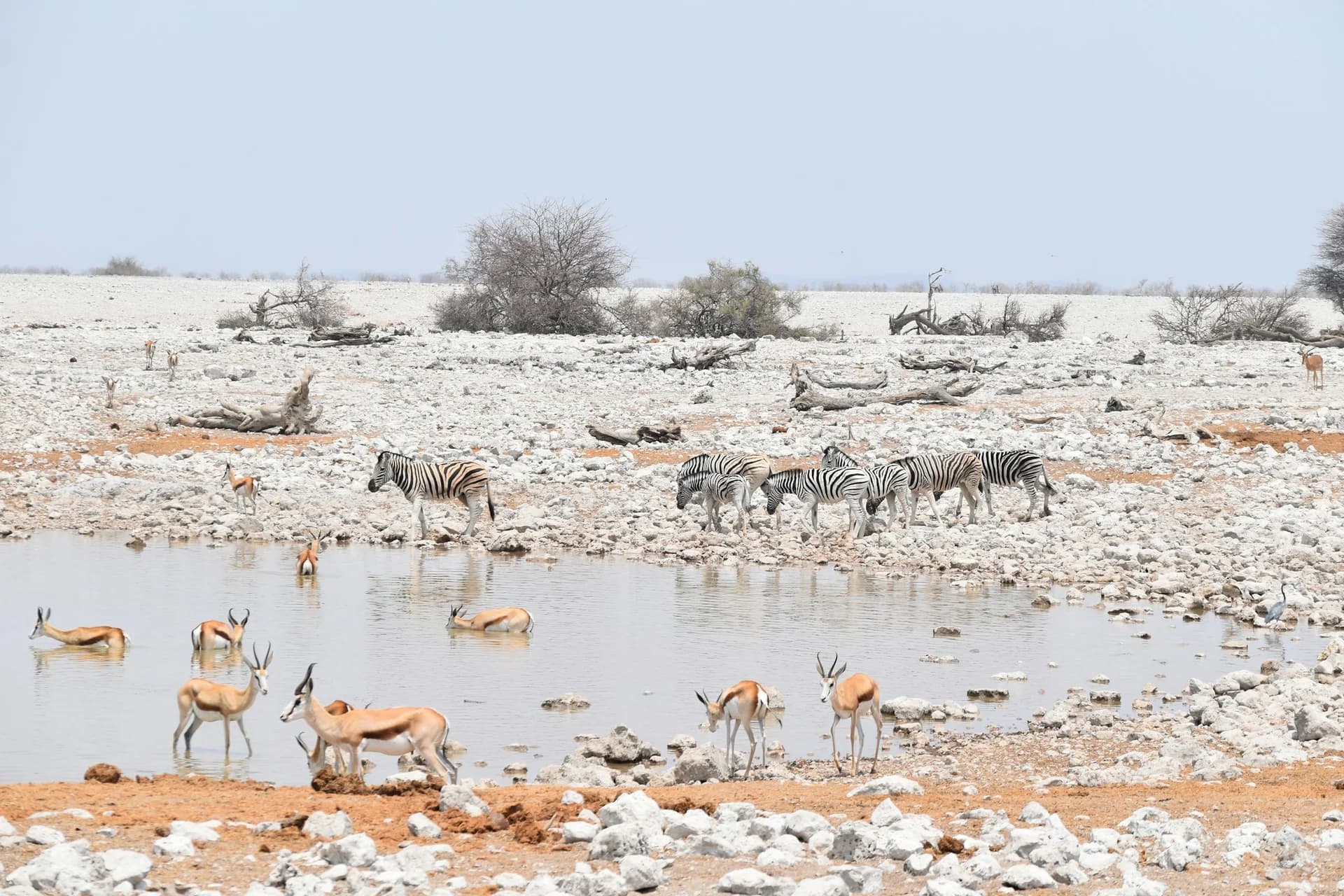
Photo: Patrick Duvanel / Unsplash
Key Facts
Best Time to Visit
June-November (dry season) — animals concentrate at waterholes; September-October is peak game viewing
Language
English (official), Afrikaans, Oshiwambo, German
Currency
Namibian Dollar (NAD), pegged 1:1 to South African Rand (ZAR); both accepted
Time Zone
Central Africa Time (UTC+2, no DST)
Airport
Hosea Kutako International (WDH) in Windhoek, 435km south (4.5-hour drive); Ondangwa (OND), 110km north
Population
Uninhabited park; nearest town Outjo (8,000) is 110km from Anderson Gate
Climate
Semi-arid, dry season 5-30°C (cold nights), wet season 18-36°C (November-April)
Safety Rating
Safe (Level 1) — Namibia is one of Africa's safest countries
Park Size
22,270 sq km — roughly the size of New Jersey; the Etosha Pan alone is 4,800 sq km
Top Highlights
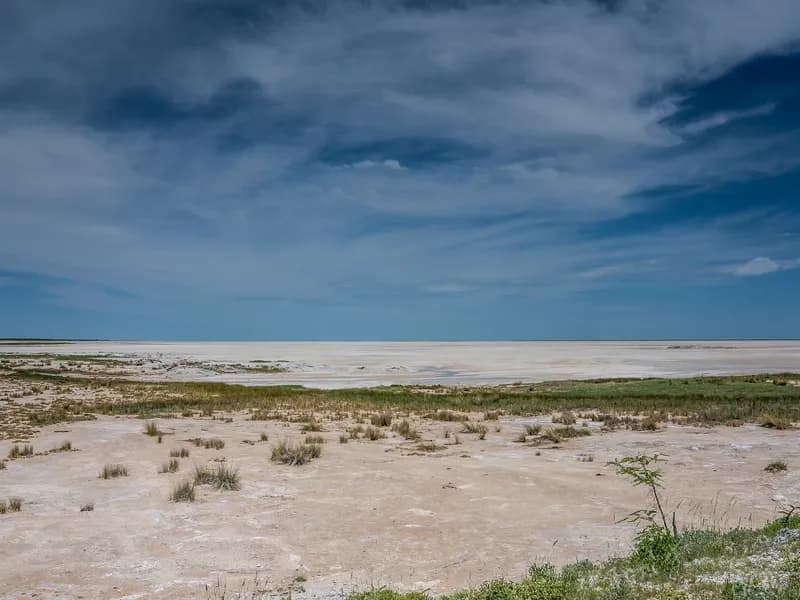
Etosha Pan
A vast, blindingly white salt pan stretching 130km across the park — so large it's visible from space. Dry for most of the year, it fills with shallow water in the wet season (January-March), attracting flamingos by the thousands. The pan's edges create surreal mirages in the heat. Drive to the Etosha Lookout for an ethereal, lunar-landscape view. Free with park entry (NAD 150/~$8 per person per day plus NAD 50/vehicle).
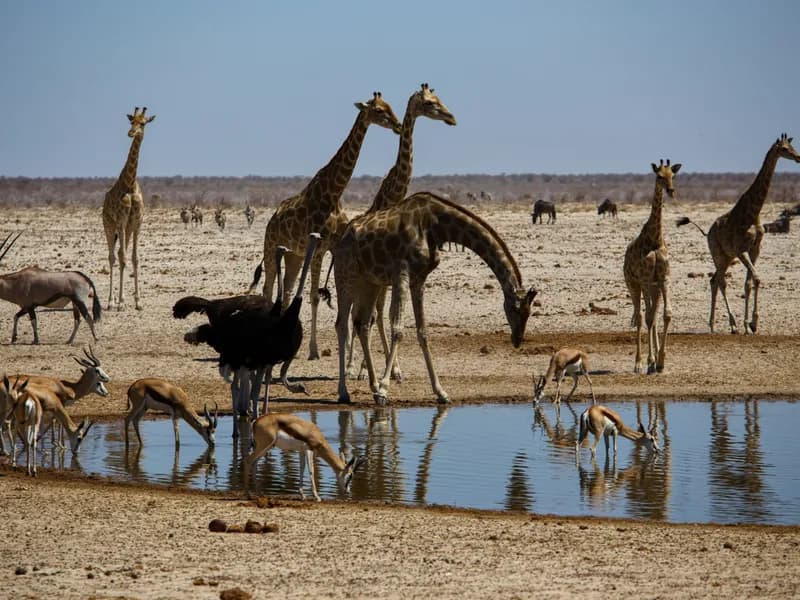
Waterhole Game Viewing
Etosha's genius is its 30+ natural and artificial waterholes — each a stage where wildlife comes to you. Park at a waterhole, turn off the engine, and wait. Dry-season highlights: elephant herds at Okaukuejo (up to 100 at once), rhinos at Moringa, lions at Gemsbokvlakte, and giraffe at Klein Namutoni. Each rest camp has a floodlit waterhole for night viewing — Okaukuejo's is legendary for black rhino visits after dark.
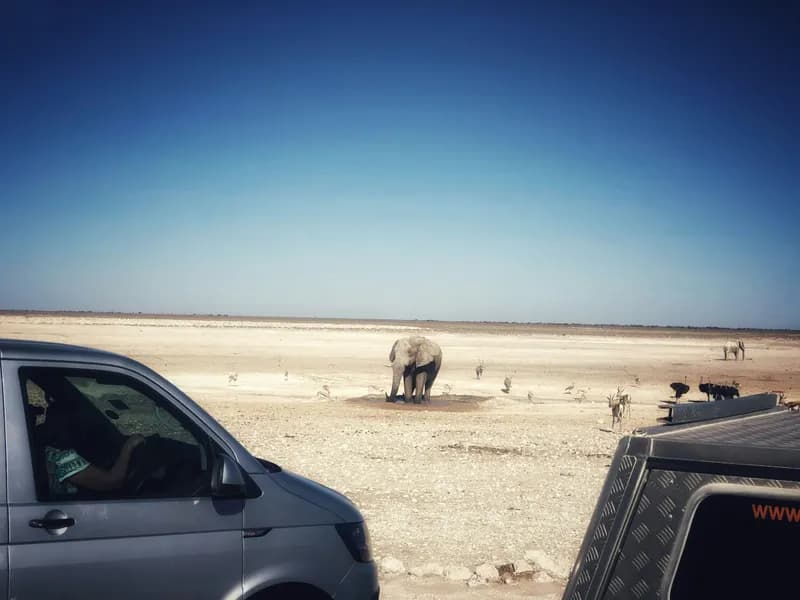
Self-Drive Safari
Etosha is one of Africa's best self-drive parks — well-maintained gravel roads, clear signage, and abundant wildlife visible from the car. A 2WD sedan is sufficient for all main routes. Park gates open at sunrise and you must be at your rest camp by sunset (strictly enforced, fines for late arrivals). The main Okaukuejo-Halali-Namutoni route (140km) covers the best waterhole circuit. Allow 2-3 full days minimum.
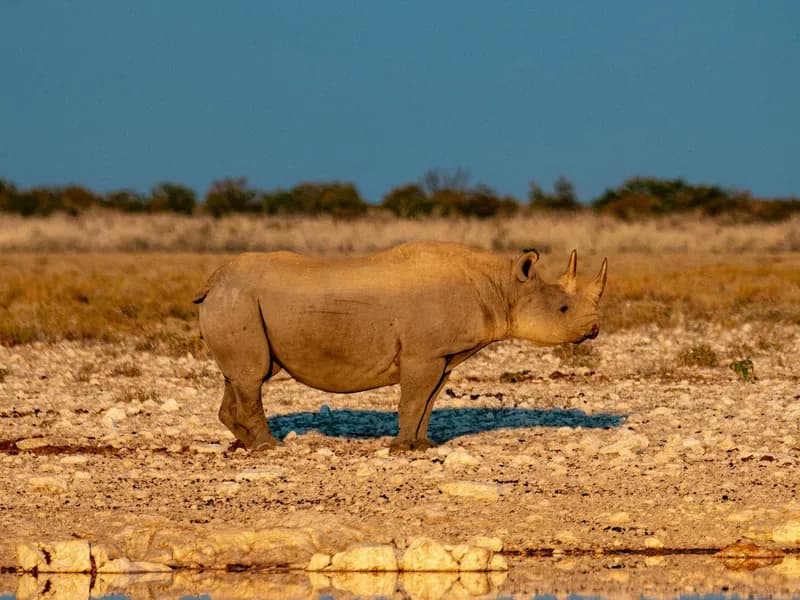
Black Rhino Sightings
Etosha is one of the last strongholds for the critically endangered black rhino, with an estimated 300-400 individuals — the largest population in any national park. Best spots: Okaukuejo waterhole at night (they visit between 8PM-midnight), and the Dolomite area in the western section. They're solitary and shy — patience is rewarded. Sightings are frequent in the dry season. Binoculars essential.
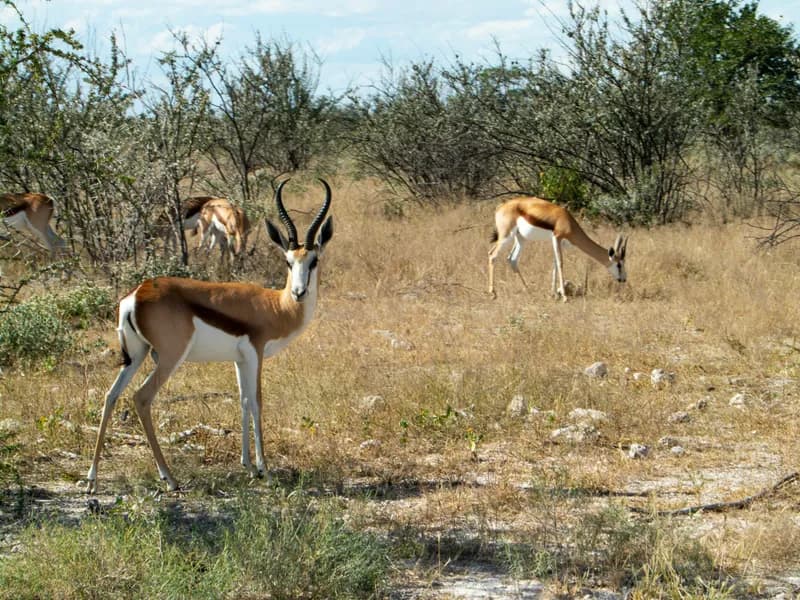
Springbok and Gemsbok Herds
The open grasslands around the pan edge are home to enormous herds of springbok (up to 1,000+), gemsbok (oryx) with their iconic straight horns, and wildebeest. The Fischer's Pan area and the road between Halali and Namutoni are prime viewing areas. During the wet season, newborn springbok lambs attract cheetah and jackal — predator-prey drama at its finest. The animals are comfortable around vehicles.
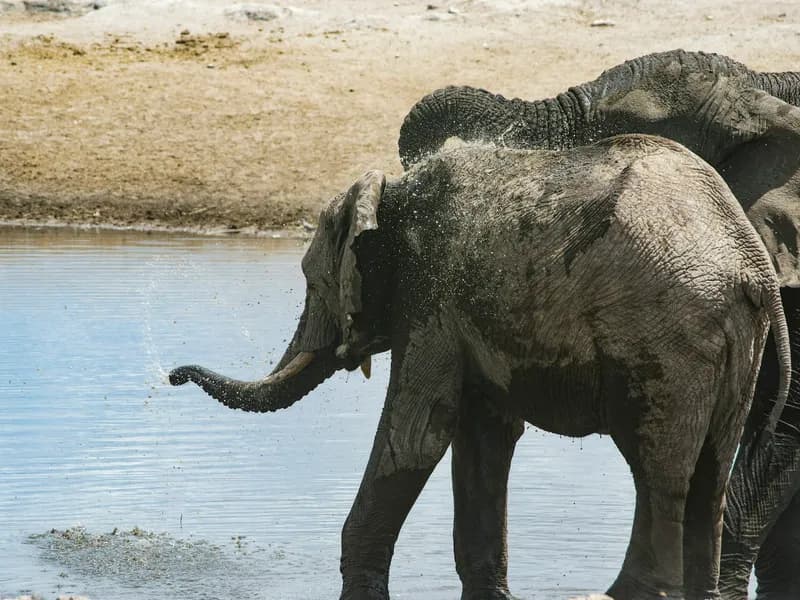
Okaukuejo Rest Camp
The largest and most popular rest camp, featuring the park's most famous floodlit waterhole — a natural amphitheater where elephants, rhinos, lions, and hyenas visit nightly. Accommodation ranges from campsites (NAD 370/~$20) to bush chalets (NAD 2,500/~$135). Book through Namibia Wildlife Resorts (NWR) months in advance for dry season. The camp has a restaurant, shop, pool, and petrol station.
Planned Itinerary
7-Day Etosha National Park Itinerary
Arrival & Drive to Etosha
Fly into Windhoek (WDH), pick up your rental car, and drive 4.5 hours north to Etosha National Park. Self-drive safari starts now.
Arrive Hosea Kutako Airport, Windhoek(1 hour)
Pick up rental car (from NAD 600-1,200/day, ~$32-65). A standard 2WD sedan handles all Etosha roads. Fill up in Windhoek — fuel is cheaper here
Drive north via B1 highway to Outjo(3.5 hours)
Stock up at Shoprite or Pick n Pay in Outjo — rest camp shops are overpriced. Buy braai (BBQ) meat, boerewors, salad, drinks, and firewood. Bring binoculars and a cooler box
Enter via Anderson Gate(30 minutes)
Park entry NAD 150/person/day (~$8) plus NAD 50/vehicle. Gates open sunrise, close sunset — times change monthly. Get a park map
Check into Okaukuejo Rest Camp(30 minutes)
NWR-managed. Campsites NAD 370 (~$20), bush chalets NAD 2,500 (~$135). Book months ahead for dry season. Has restaurant, shop, pool, and petrol
Evening at Okaukuejo floodlit waterhole(2 hours)
The most famous waterhole in Africa. Elephants, rhinos, lions, and hyenas visit nightly. Bring a warm jacket — desert nights drop to 5-10°C. The stone amphitheater seating is first-come, first-served
Okaukuejo to Halali — Waterhole Circuit
Drive the western waterhole circuit from Okaukuejo to Halali, stopping at each waterhole for game viewing.
Sunrise game drive from Okaukuejo(2 hours)
Leave at gate opening. Head east toward Gemsbokvlakte waterhole — lions are regulars here. The early light on the pan is magical
Okondeka waterhole(1 hour)
Near the pan edge. Springbok herds gather in the hundreds. Watch for cheetah stalking the open ground
Lunch at Halali Rest Camp(1 hour)
Restaurant with basic meals NAD 80-150 (~$4-8). Or eat from your cooler box at the picnic area
Halali floodlit waterhole afternoon/evening(3 hours)
Less famous than Okaukuejo but excellent for leopard sightings. Elephants visit late afternoon. The waterhole is closer to the seating — more intimate
Braai dinner at Halali campsite(1.5 hours)
Fire up the braai stand at your campsite. Boerewors, steak, and cold Windhoek lager. Under the stars in the African bush
Halali to Namutoni — Eastern Sector
Continue east to Namutoni, exploring the grasslands around Fischer's Pan where herds and predators concentrate.
Fischer's Pan area game drive(3 hours)
The road skirting Fischer's Pan passes through prime grassland. Springbok, gemsbok (oryx), wildebeest, and zebra. In wet season, flamingos fill the pan
Klein Namutoni waterhole(1.5 hours)
One of the best waterholes for giraffe. They splay their legs to drink — a photographer's dream. Park, engine off, and wait
Namutoni Rest Camp check-in(30 minutes)
Built around a historic German colonial fort (1903). Smaller and more atmospheric than Okaukuejo. Chalets NAD 1,800-2,200
King Nehale gate area drive(2 hours)
The northern gate area is less visited. Good for elephant herds and the occasional leopard at dusk
Sunset at Namutoni Fort tower(1 hour)
Climb the fort tower for panoramic views over the pan and surrounding bush. Sundowner drinks from the camp bar
Full Day — Pan Edge & Wildlife
Spend a full day exploring the pan edge where the surreal white landscape meets the bush. The Etosha Pan itself is the star.
Drive to the Etosha Lookout(1.5 hours)
The designated viewpoint over the pan. A vast, blindingly white salt flat stretching to the horizon. Mirages shimmer in the heat. Visible from space. Otherworldly
Chudop waterhole(1.5 hours)
Near Namutoni. Popular with elephants and occasionally visited by the park's black rhinos during daytime hours
Lunch at Namutoni restaurant(1 hour)
NAD 80-150. Or picnic at a designated spot — never exit your vehicle elsewhere
Andoni area drive(2.5 hours)
The eastern sector beyond Namutoni is quieter. Kudu, eland, and hartebeest. Better chance of solitary game viewing without other cars
Evening at Namutoni waterhole(2 hours)
The floodlit waterhole near the fort. Smaller but atmospheric. Jackals and hyenas are regulars after dark
Rest Day at Okaukuejo
Drive back west to Okaukuejo and spend a lazy afternoon watching wildlife come to you at the legendary waterhole.
Morning drive Namutoni to Okaukuejo(4 hours)
Take a different route back — stop at Goas, Rietfontein, and Aus waterholes. Each has different visitors
Lunch and pool at Okaukuejo(2 hours)
The swimming pool is a welcome relief from dusty game drives. Rest camp has good shade
Afternoon nap(2 hours)
You've been up at dawn for three days. Rest is part of safari
Night watch at Okaukuejo waterhole(3 hours)
Black rhinos typically visit between 8PM-midnight. Bring binoculars, warm layers, and patience. Seeing a rhino at the waterhole by floodlight is the Etosha highlight
Western Sector — Dolomite Camp
Explore the less-visited western section of Etosha with different landscapes and exclusive wildlife including black-faced impala.
Drive to Dolomite Camp area(2 hours)
The western section (beyond Okaukuejo) opened in 2011. Fewer visitors, more rugged terrain. Dolomite hills create a different landscape
Dolomite waterhole game viewing(2 hours)
This area has black-faced impala (endemic to northwest Namibia), Hartmann's mountain zebra, and good elephant populations
Lunch at Dolomite Camp(1 hour)
The newest NWR camp. Chalets NAD 2,800-3,200. Restaurant with panoramic views
Afternoon game drive in western sector(3 hours)
The Dolomite area roads are gravel and less traveled. The sense of wilderness is stronger here. Lion and leopard sightings possible
Departure Day
One last sunrise game drive, then the long drive south to Windhoek for your flight. The waterholes haunt your dreams.
Sunrise game drive from Okaukuejo(2 hours)
Leave at gate opening for a final session. The morning light on the pan creates silhouettes of gemsbok and springbok that look like paintings
Exit via Anderson Gate(30 minutes)
Say goodbye to Etosha. Fill up at the Okaukuejo petrol station before leaving
Drive to Windhoek via B1(4.5 hours)
The drive is long but the road is excellent. Stop at Outjo for a last pie at the bakery. Drop off the rental car at the airport
Hosea Kutako Airport departure(1 hour)
Allow 2 hours before your flight. Small airport, straightforward process
14-Day Etosha National Park Itinerary
Arrival & Drive to Etosha
Fly into Windhoek, rent a car, stock up, and drive north to Etosha.
Arrive Windhoek (WDH)(1 hour)
Rent 2WD sedan NAD 600-1,200/day. Fill up in Windhoek
Stock up in Outjo(1 hour)
Shoprite/Pick n Pay. Braai meat, boerewors, cooler box supplies, binoculars
Enter Anderson Gate(30 minutes)
NAD 150/person/day + NAD 50/vehicle. Sunrise-sunset gates
Check into Okaukuejo(30 minutes)
Campsites NAD 370, chalets NAD 2,500. Book months ahead
Okaukuejo waterhole evening(2 hours)
Africa's most famous waterhole. Elephants, rhinos, hyenas after dark. Bring warm jacket
Okaukuejo to Halali
Western waterhole circuit — stop at each waterhole between camps.
Sunrise game drive(2 hours)
Gemsbokvlakte waterhole for lions. Morning pan light
Okondeka waterhole(1 hour)
Springbok herds. Cheetah on open ground
Lunch at Halali(1 hour)
NAD 80-150 or cooler box picnic
Halali waterhole afternoon/evening(3 hours)
Intimate setting. Leopard sightings. Elephants late afternoon
Braai dinner(1.5 hours)
Boerewors and Windhoek lager under stars
Halali to Namutoni
Eastern sector grasslands — Fischer's Pan herds and Namutoni's colonial fort.
Fischer's Pan game drive(3 hours)
Prime grassland. Springbok, gemsbok, wildebeest, zebra. Flamingos in wet season
Klein Namutoni waterhole(1.5 hours)
Best for giraffe photography. Park, engine off, wait
Namutoni check-in(30 minutes)
German colonial fort. Chalets NAD 1,800-2,200
Sunset at Fort tower(1 hour)
Panoramic views. Sundowner drinks from camp bar
Pan Edge Exploration
Drive to the Etosha Pan lookout — the surreal salt flat visible from space.
Etosha Lookout drive(1.5 hours)
Blindingly white salt pan. Mirages. Otherworldly landscape
Chudop waterhole(1.5 hours)
Elephants and occasional daytime black rhino
Andoni area drive(2.5 hours)
Quieter eastern sector. Kudu, eland, hartebeest. Solitary viewing
Namutoni waterhole evening(2 hours)
Jackals and hyenas after dark
Rest Day at Okaukuejo
Drive back west, pool, and a patient evening waiting for black rhinos.
Drive Namutoni to Okaukuejo(4 hours)
Different route — Goas, Rietfontein, Aus waterholes
Afternoon nap(2 hours)
Dawn starts catch up with you
Night watch at Okaukuejo waterhole(3 hours)
Black rhinos visit 8PM-midnight. Binoculars, warm layers, patience
Western Sector — Dolomite
Less-visited western Etosha with dolomite hills and endemic species.
Drive to Dolomite area(2 hours)
Opened 2011. Fewer visitors, rugged terrain
Dolomite waterhole(2 hours)
Black-faced impala (endemic), Hartmann's mountain zebra
Lunch at Dolomite Camp(1 hour)
Newest NWR camp. NAD 2,800-3,200
Western sector game drive(3 hours)
Lion and leopard possible. Stronger wilderness feel
Exit Etosha & Drive to Damaraland
Leave Etosha and head southwest to Damaraland — a different Namibian landscape of desert-adapted elephants.
Final sunrise game drive(2 hours)
Last waterhole session. Silhouetted gemsbok at dawn
Exit Anderson Gate, drive to Twyfelfontein area(4 hours)
The landscape transforms from savanna to rocky desert. Fill up at Outjo or Khorixas
Check into Twyfelfontein Lodge or campsite(30 minutes)
Lodge NAD 2,000-3,000, camping NAD 300-400
Twyfelfontein rock engravings (UNESCO)(1.5 hours)
Over 2,000 rock engravings by San hunter-gatherers, up to 6,000 years old. NAD 80 entry. Guided tour mandatory. Astounding ancient art in a desert amphitheater
Damaraland — Desert Elephants
Track desert-adapted elephants through Damaraland's rocky valleys — one of only two populations on Earth.
Desert elephant tracking drive(4 hours)
Guided excursion from Twyfelfontein or Palmwag area. $80-120/person. Desert-adapted elephants are smaller and travel huge distances between water sources. Finding them is the adventure
Organ Pipes geological formation(45 minutes)
Basalt columns formed 150 million years ago. A short walk from the road near Twyfelfontein. Free with area entry
Burnt Mountain(30 minutes)
A slope of blackened dolerite that looks scorched. Eerie and photogenic at any time of day
Sundowner drive(2 hours)
Many lodges offer late afternoon drives through the Damaraland valleys. The desert light at golden hour is extraordinary
Drive to Sossusvlei Area
Long drive south through spectacular scenery to the Sossusvlei/Sesriem area — Namibia's iconic red dunes.
Drive to Sesriem(6 hours)
Via Khorixas and Solitaire. The road passes through some of Namibia's most dramatic landscapes. Fill up at Solitaire (and eat their legendary apple pie)
Check into Sesriem campsite or lodge(30 minutes)
NWR Sesriem campsite NAD 370 or lodges outside the gate (Desert Camp NAD 1,500-2,500, Sossusvlei Lodge NAD 3,000+)
Sesriem Canyon walk(1 hour)
A narrow 30m-deep gorge carved by the Tsauchab River. Short walk from the campsite. Best in late afternoon light. NAD 80 park entry
Sossusvlei & Dead Vlei
Namibia's most iconic landscape — towering red sand dunes, the ghostly Dead Vlei, and Big Daddy dune.
Sunrise at Dune 45(2 hours)
Leave Sesriem gate at opening (first light). Dune 45 is 45km in. The 170m climb takes 30-45 minutes. The view from the top at sunrise — red dunes in every direction — is one of Africa's great moments
Sossusvlei and Dead Vlei(3 hours)
Continue to the vlei. Dead Vlei is a surreal white clay pan with 900-year-old dead camel thorn trees against towering orange dunes. The most photographed landscape in Namibia
Big Daddy dune(1.5 hours)
At 325m, one of the world's tallest dunes. The climb is brutal in soft sand. The view from the top over Dead Vlei rewards everything
Lunch back at camp(1 hour)
The heat makes midday activity impossible. Rest
Sunset from a dune(1.5 hours)
Return to a dune near Sesriem gate for sunset. The dunes shift from orange to deep red to purple
Drive to Swakopmund
Drive west to the Atlantic coast — the surreal transition from desert to ocean.
Drive to Swakopmund(4-5 hours)
Via Walvis Bay. The desert meets the Atlantic Ocean in one of the most dramatic transitions on Earth. The coastal fog creates an eerie atmosphere
Check into Swakopmund(30 minutes)
Beach Lodge Hotel NAD 1,200-2,000, The Delight NAD 1,500-2,500, or backpacker options NAD 300-500. German colonial architecture town
Walk Swakopmund pier and town(2 hours)
German-era buildings, craft shops, and the Atlantic waterfront. The town feels European but sits between the Namib Desert and cold Atlantic
Dinner at The Tug restaurant(1.5 hours)
Converted tugboat on the beach. Seafood and steaks. NAD 150-300 (~$8-16). Swakopmund's most popular restaurant — book ahead
Swakopmund — Adventure & Rest
Adventure capital of Namibia — sandboarding, quad biking, or just relax on the cool coast.
Sandboarding on dunes(3 hours)
Lie-down or stand-up sandboarding on the dunes outside town. NAD 500-800 (~$27-43). Exhilarating and sandy
Lunch at Village Cafe(1 hour)
German-style cafe. Kuchen (cake), coffee, and light meals. NAD 80-150
Free afternoon(3 hours)
Cool ocean breeze after weeks of bush heat. Walk the beach, browse shops, or visit the Swakopmund Museum (NAD 30, good natural history)
Dinner at Kucki's Pub(1.5 hours)
Classic Swakop institution. German-Namibian food, cold beer, rugby on TV. NAD 100-200
Drive Back to Windhoek
Return south to Windhoek for your final night. The B2 highway is fast and well-maintained.
Morning walk on Swakopmund beach(1 hour)
Cold Atlantic air. Seals, pelicans, and flamingos at Walvis Bay lagoon (30 min south) if time allows
Drive to Windhoek(4 hours)
B2 highway. Stop at Karibib for gemstones or Okahandja for the wood carving market (bargain hard)
Check into Windhoek(30 minutes)
Hotel Heinitzburg NAD 2,000-3,000 (castle hotel), or Chameleon Backpackers NAD 200-400
Joe's Beerhouse dinner(2 hours)
Windhoek institution. Game meat platters (oryx, kudu, springbok), massive steaks, and craft beer. NAD 150-300. Book ahead for outdoor seating
Departure Day
Final morning in Namibia. Drop off the rental car and fly home with red sand still in your shoes.
Windhoek morning walk(1.5 hours)
Christuskirche (1910 German church), Independence Memorial Museum, and the craft market at Post Street Mall
Last biltong purchase(30 minutes)
Windhoek's butcheries sell the best biltong (dried meat) in the country. Kudu and oryx biltong make excellent gifts. NAD 200-400/kg
Drop off rental car and airport transfer(1 hour)
Hosea Kutako Airport is 45km east of Windhoek. Allow 2.5 hours before your flight
21-Day Etosha National Park Itinerary
Arrival in Windhoek
Fly into Hosea Kutako Airport. Spend a night in Windhoek to rest before the road trip begins.
Arrive Windhoek, rent car(1 hour)
2WD sedan NAD 600-1,200/day. Fill up here
Check into Windhoek hotel(30 minutes)
Hotel Heinitzburg (castle, NAD 2,000+), Chameleon Backpackers (NAD 200-400)
Windhoek city walk(2 hours)
Christuskirche, Independence Museum, Post Street Mall crafts. Compact city center
Dinner at Joe's Beerhouse(2 hours)
Game meat platters, craft beer. NAD 150-300. Windhoek institution
Drive to Etosha
Stock up and drive 4.5 hours north. Enter via Anderson Gate.
Stock up in Outjo(1 hour)
Shoprite: braai meat, boerewors, cooler supplies, binoculars, firewood
Drive to Etosha(3 hours)
B1 highway north. Good tar road
Enter Anderson Gate(30 minutes)
NAD 150/person/day + NAD 50/vehicle
Okaukuejo check-in(30 minutes)
Campsites NAD 370, chalets NAD 2,500
Okaukuejo waterhole evening(2 hours)
Elephants, rhinos, hyenas. Warm jacket essential
Okaukuejo to Halali
Western waterhole circuit with stops at every waterhole.
Sunrise game drive(2 hours)
Gemsbokvlakte for lions
Okondeka waterhole(1 hour)
Springbok herds and cheetah
Halali waterhole(3 hours)
Intimate. Leopard sightings
Halali to Namutoni
Eastern grasslands — Fischer's Pan and the colonial fort camp.
Fischer's Pan drive(3 hours)
Springbok, gemsbok, wildebeest, zebra
Klein Namutoni waterhole(1.5 hours)
Giraffe photography
Namutoni check-in(30 minutes)
Fort chalets NAD 1,800-2,200
Fort tower sunset(1 hour)
Panoramic views, sundowner drinks
Etosha Pan Deep Dive
Full day exploring the pan edge and less-visited eastern waterholes.
Etosha Lookout(1.5 hours)
Vast white salt pan. Mirages. Visible from space
Chudop waterhole(1.5 hours)
Elephants, possible daytime black rhino
Andoni area drive(2.5 hours)
Kudu, eland, hartebeest. Quiet sector
Back to Okaukuejo — Rest
Western drive and a restful afternoon with evening rhino watching.
Drive Namutoni to Okaukuejo (new route)(4 hours)
Goas, Rietfontein, Aus waterholes
Night watch Okaukuejo(3 hours)
Black rhinos 8PM-midnight
Western Sector — Dolomite
Exclusive western section with endemic species.
Dolomite waterhole(2 hours)
Black-faced impala (endemic), Hartmann's mountain zebra
Lunch at Dolomite Camp(1 hour)
NAD 2,800-3,200
Western sector game drive(3 hours)
Lion and leopard territory
Rest Day in Etosha
No driving plan. Sleep in, pool, re-visit favorite waterholes at leisure.
Afternoon waterhole session(3 hours)
Return to your favorite waterhole. Different animals visit at different times
Exit Etosha — Damaraland
Leave Etosha for the rocky desert landscapes of Damaraland.
Exit Anderson Gate, drive to Twyfelfontein(4 hours)
Landscape transforms to rocky desert
Twyfelfontein lodge/camp check-in(30 minutes)
Lodge NAD 2,000-3,000, camping NAD 300-400
Twyfelfontein rock engravings (UNESCO)(1.5 hours)
2,000+ San engravings up to 6,000 years old. NAD 80. Guided tour mandatory
Desert Elephants & Geology
Track desert-adapted elephants and explore ancient geological formations.
Desert elephant tracking(4 hours)
Guided $80-120. Smaller elephants traveling huge distances between water. Finding them is the adventure
Organ Pipes(45 minutes)
150-million-year-old basalt columns. Free with area entry
Burnt Mountain(30 minutes)
Blackened dolerite slope. Eerie, photogenic
Sundowner drive(2 hours)
Desert golden-hour light is extraordinary
Drive to Spitzkoppe
Drive south to the granite inselbergs of Spitzkoppe — Namibia's Matterhorn.
Drive to Spitzkoppe(3.5 hours)
Via Uis. The road passes through increasingly dramatic granite landscapes
Spitzkoppe community camp check-in(30 minutes)
NAD 200-300/campsite. No facilities except basic toilets. Bring everything
Rock arch and San paintings walk(2 hours)
The natural rock arch is Spitzkoppe's most famous feature. Nearby San rock paintings are 2,000-4,000 years old
Sunset photography(1.5 hours)
The granite domes glow orange-pink at sunset. World-class landscape photography location
Spitzkoppe & Drive to Swakopmund
Morning at Spitzkoppe, then drive to the coast.
Sunrise at Spitzkoppe(1.5 hours)
Dawn light on granite. Photographers set up at 5AM for this shot
Drive to Swakopmund(2.5 hours)
Desert to ocean. The transition is dramatic — fog rolls in from the cold Atlantic
Check into Swakopmund(30 minutes)
Beach Lodge NAD 1,200-2,000, backpackers NAD 300-500
Town walk and pier(2 hours)
German colonial architecture meets Atlantic coast
Dinner at The Tug(1.5 hours)
Converted tugboat. Seafood and steaks. NAD 150-300. Book ahead
Swakopmund Adventures
Sandboarding, quad biking, or skydiving on the coast.
Sandboarding(3 hours)
NAD 500-800. Lie-down or stand-up on coastal dunes. Exhilarating
Lunch at Village Cafe(1 hour)
German kuchen and coffee. NAD 80-150
Free afternoon(3 hours)
Beach walk, museum (NAD 30), or shopping
Dinner at Kucki's Pub(1.5 hours)
German-Namibian food. NAD 100-200
Walvis Bay & Rest
Day trip to Walvis Bay for flamingos, then rest in Swakopmund.
Walvis Bay lagoon(2.5 hours)
30km south. Thousands of flamingos, pelicans, and seals at the lagoon. Free viewing. One of southern Africa's best birding spots
Pelican Point kayak tour(3 hours)
Kayak among seals and dolphins at Pelican Point. NAD 600-800 (~$32-43). Cape fur seal colony of 60,000+
Lunch at The Raft in Walvis Bay(1 hour)
Seafood restaurant on the lagoon. Oysters NAD 100-150, fish and chips NAD 120
Drive to Sossusvlei
Head south to the red dunes — Namibia's most iconic landscape.
Drive to Sesriem(5 hours)
Via Walvis Bay and Solitaire. Eat apple pie at Solitaire — legendary
Sesriem check-in(30 minutes)
NWR campsite NAD 370, or lodges outside gate NAD 1,500-3,000+
Sesriem Canyon(1 hour)
30m-deep gorge. Short walk. Late afternoon light best. NAD 80 park entry
Sossusvlei & Dead Vlei
Towering red dunes, ghostly Dead Vlei, and Big Daddy — Namibia's most photographed landscape.
Sunrise at Dune 45(2 hours)
Leave at first light. 45km in. 170m climb. Red dunes in every direction at sunrise
Dead Vlei(2 hours)
White clay pan, 900-year-old dead trees, orange dune backdrop. Surreal and unforgettable
Big Daddy dune(1.5 hours)
325m — world's tallest dunes. Brutal climb. Dead Vlei view from top
Lunch at camp(1 hour)
Midday heat makes activity impossible
Sunset dune session(1.5 hours)
Dunes shift orange to red to purple
Rest Day at Sossusvlei
Free day. Revisit dunes, explore Sesriem Canyon more, or simply rest.
Optional second sunrise at dunes(2 hours)
Different light, different experience. Or sleep in
NamibRand nature walk(2.5 hours)
If staying at a lodge near NamibRand reserve, guided walks reveal the desert ecosystem — beetles, lizards, fairy circles
Stargazing(2 hours)
NamibRand is a certified International Dark Sky Reserve. The stars here rival anywhere on Earth
Drive to Lüderitz via Fish River Canyon
Long drive south to the German colonial ghost town area, passing Africa's largest canyon.
Drive south toward Fish River Canyon(5 hours)
Long day. The scenery is harsh and beautiful — flat desert giving way to dramatic canyon country
Fish River Canyon viewpoint(1.5 hours)
Africa's largest canyon: 160km long, 550m deep. The viewpoints are free and staggering. Sunset light turns the canyon walls red
Overnight at Hobas or Ai-Ais(30 minutes)
NWR rest camps. Camping NAD 300-400, chalets NAD 1,500-2,000. Ai-Ais has natural hot springs
Fish River Canyon & Drive to Windhoek
Morning at the canyon, then begin the long drive north to Windhoek.
Sunrise at Fish River Canyon(1.5 hours)
The canyon at dawn is magical. Few people make it here — you'll likely have viewpoints to yourself
Drive to Keetmanshoop(3 hours)
Visit the Quiver Tree Forest (NAD 60 entry) — 300-year-old aloe dichotoma trees. Photogenic at any time of day
Continue to Windhoek(4 hours)
Long drive on good roads. The B1 is Namibia's main highway
Dinner at Joe's Beerhouse(2 hours)
Bookend your trip where it began. Game meat and craft beer
Windhoek — Final Day
Last full day. Shopping, sightseeing, and farewell dinner.
Windhoek craft market(1.5 hours)
Post Street Mall and Namibia Craft Centre. San art, jewelry, karakul wool
Biltong shopping(30 minutes)
Kudu and oryx biltong from a Windhoek butchery. NAD 200-400/kg. Best gifts
Independence Memorial Museum(1 hour)
Free entry. Namibia's independence history in a modern building
Lunch at Nice Restaurant(1.5 hours)
Fine dining Namibian cuisine. NAD 200-400. Local ingredients, international technique
Farewell sunset drinks(1.5 hours)
Heinitzburg Hotel terrace. Views over Windhoek with a glass of Namibian wine
Departure Day
Drop off the rental car at the airport and fly home with red sand still in your shoes and waterholes in your dreams.
Final Windhoek coffee(30 minutes)
Craft Cafe on Independence Avenue. Good coffee and pastries
Drive to Hosea Kutako Airport(45 minutes)
45km east. Return the rental. Allow 2.5 hours before flight
Airport departure(1 hour)
Small, efficient airport. Last biltong at duty-free
Travel Tips
transport
Rent a Car in Windhoek — 2WD Is Fine
Most visitors fly into Windhoek (WDH) and rent a car for the 4.5-hour drive north via the B1 highway. A standard 2WD sedan handles all roads inside Etosha. Rental from NAD 600-1,200/day (~$32-65) including insurance. Fill up in Outjo or Tsumeb before entering — fuel is available at rest camps but at higher prices. Drive carefully at dawn and dusk — animals cross the roads freely.
Local Customs
Gate Times Are Strictly Enforced
Park gates (Anderson, Von Lindequist, King Nehale) open at sunrise and close at sunset — times change monthly. Rest camp gates also lock at sunset. Late arrivals face fines (NAD 500+) and may be turned away. Plan your driving distances accordingly — Okaukuejo to Namutoni is 140km and takes 4-6 hours with waterhole stops. Never drive at night inside the park.
Budget
Book NWR Camps Months Ahead for Dry Season
The three main rest camps (Okaukuejo, Halali, Namutoni) are managed by Namibia Wildlife Resorts (NWR) and fill up months ahead for July-October. Campsites from NAD 370/night, chalets from NAD 1,800-2,500. Book at nwr.com.na. Budget tip: private lodges outside the park gates (Etosha Village, Taleni Etosha Village) offer good value from NAD 1,200/night with pools and restaurants, but you lose the nighttime waterhole experience.
Bring Your Own Supplies — Shop in Windhoek or Outjo
Rest camp shops sell basics (canned food, snacks, drinks, firewood) at marked-up prices. Stock up at Shoprite or Pick n Pay in Windhoek or Outjo before entering. Bring a cooler box with ice for fresh food. Each campsite has a braai (BBQ) stand — buy meat and boerewors at the supermarket. Bring binoculars (essential), a bird guide, and a flashlight for the nighttime waterhole walks.
Safety
Stay in Your Vehicle — This Is Not a Zoo
Etosha has lions, elephants, leopards, and rhinos. Never exit your vehicle except at designated rest camps, picnic spots, and restrooms. Keep windows partially up when near elephants — they can be unpredictable. If an elephant approaches, put the car in reverse slowly. At floodlit waterholes, stay behind the stone walls. Maintain a 30m minimum distance from all animals.
Visa & Entry
Most Nationalities Enter Namibia Visa-Free
US, UK, EU, Canadian, and Australian citizens get 90-day visa-free entry to Namibia. Your passport must have at least 6 months validity and two blank pages. Namibia is safe, organized, and English-speaking — one of the easiest African countries for first-time visitors. No yellow fever certificate required unless arriving from an endemic country.
Ready to explore Etosha National Park?
Get AI-powered recommendations for your trip
Plan a Trip to Etosha National ParkRelated Articles
StoriesAfter Dark at Okaukuejo: The Patient Payoff of an Etosha Waterhole
Skip the frantic sighting-chase for one night. The real Etosha reveals itself slowly — at Okaukuejo's floodlit waterhole, where black rhino and dust-white elephants come to drink under the lights while a wall of strangers holds its breath.
Travel Guides12 Incredible Things to See in Etosha National Park
From the midnight rhinos at Okaukuejo to springbok herds a thousand strong, here's what makes Etosha one of Africa's greatest wildlife parks.
StoriesMy Self-Drive Safari Journal: Seven Days in Etosha National Park
Day 1: spotted nothing. Day 3: a black rhino at Okaukuejo waterhole at midnight. Day 5: I finally understood why people sit at waterholes for hours. Here's the full week.
Tips17 Etosha Tips That Will Save You Time, Money, and Frustration
From why you should shop in Windhoek to the exact time the rhinos appear at Okaukuejo, these are the tips that separate a good Etosha trip from a great one.