My Self-Drive Safari Journal: Seven Days in Etosha National Park
Seven Days Self-Driving Etosha National Park
Rent a Toyota Corolla in Windhoek for $45/day and point it 4.5 hours north toward Etosha National Park. A 2WD sedan at a wildlife reserve full of lions and elephants — and the rental agent won't even blink.
"Everyone does it," she'll tell you. "The roads are fine."
The roads are fine. The animals are extraordinary.
Day 1: Arrival and Rookie Mistakes
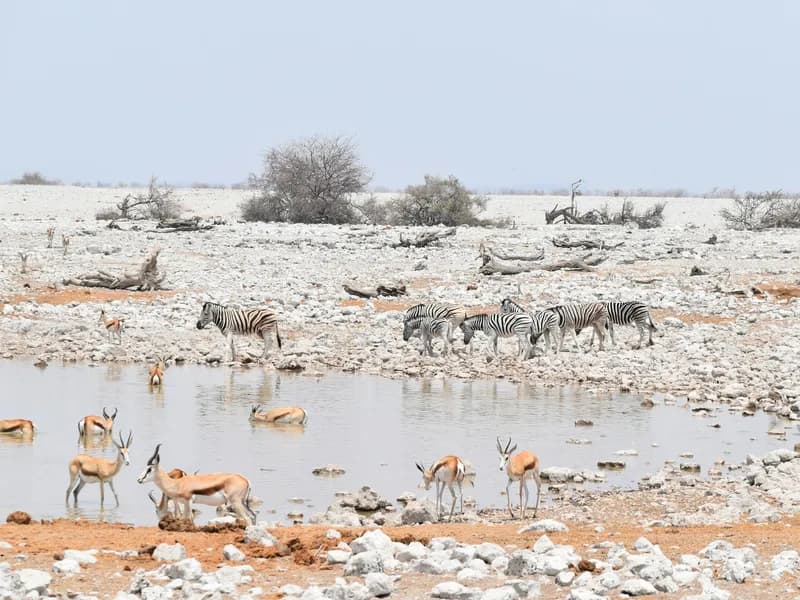
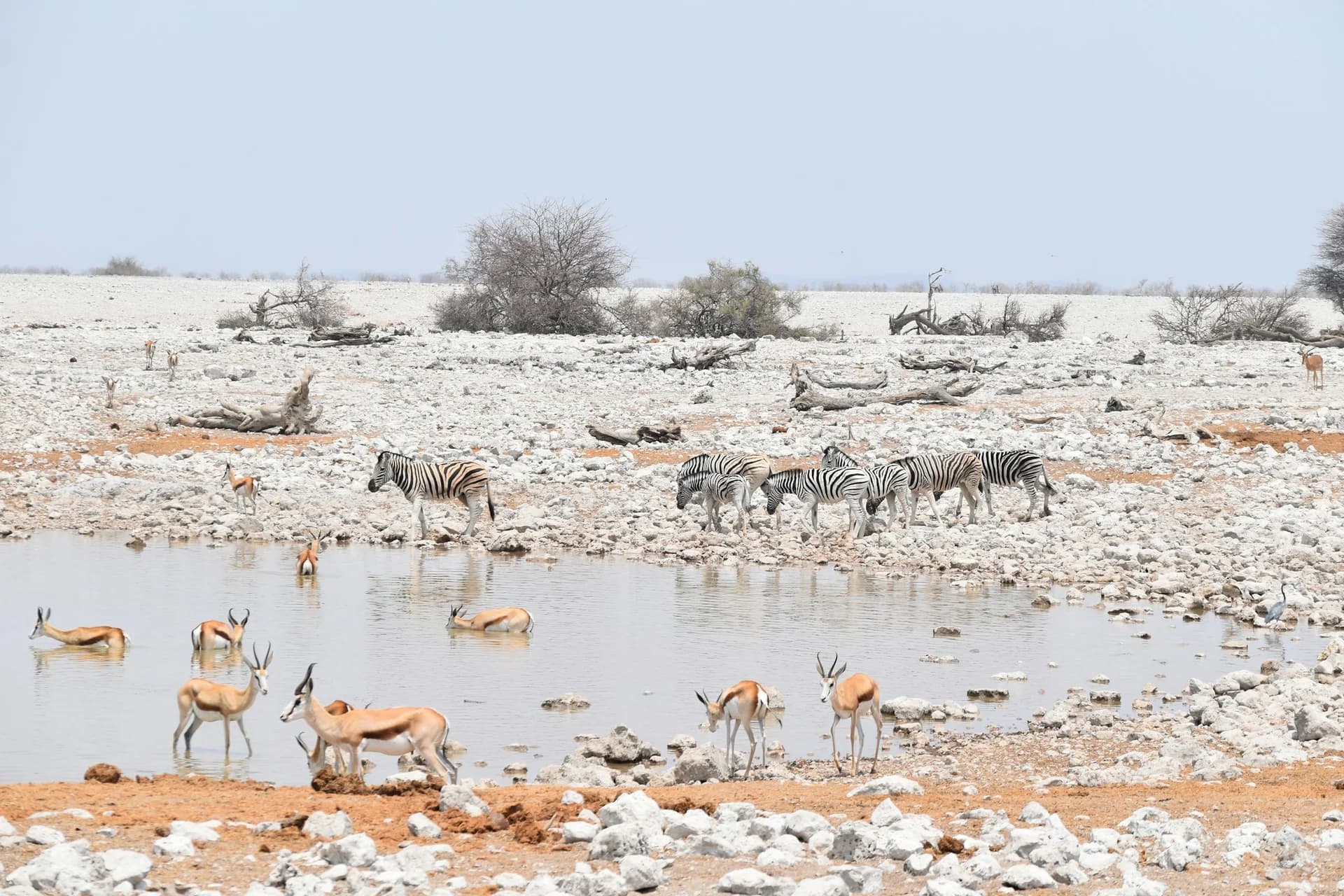
Anderson Gate, the southern entrance. Park entry runs NAD 150 ($8) per person plus NAD 50 ($3) per vehicle. Arrive at 2PM and you've made the classic first mistake — the animals rest through the hottest hours. The pan shimmers like a mirage. Drive for three hours and you'll log zebra, springbok, and one confused-looking jackal.
Check into Okaukuejo Rest Camp. A campsite goes for NAD 350 (~$19). Have the tent up by sunset, then walk to the floodlit waterhole.
Okaukuejo's waterhole is a natural amphitheater with tiered stone seating. You sit. You wait. You watch. At 7PM, a herd of elephants walks in — maybe fifteen of them, including a calf no more than a week old. They drink for twenty minutes, the adults forming a wall around the baby.
Stay until 11PM if you like. Nobody will tell you to leave — there's no closing time. By 10:30, a spotted hyena appears on the far side and drinks without looking up. You can hear it lapping from 30 meters away. The silence here is absolute.
Day 2: Learning to Wait
Up at 5:30AM. The gates open at sunrise — the exact time shifts monthly, and the rangers are strict. A late return means a fine.
Drive the loop road south of the pan. Stop at every waterhole. Most sit empty. One holds a lone gemsbok (oryx) with horns like rapiers, standing in the early light like it's posing for a nature documentary.
The lesson of Day 2 is patience. Safari isn't about driving — it's about stopping. Park at Nebrownii waterhole for ninety minutes. Nothing comes for the first hour. Then a giraffe arrives. Then two more. Then a herd of springbok, maybe two hundred, flowing around the giraffe like water around rocks.
Lunch waits at the Okaukuejo restaurant — decent food, captive-audience pricing. A burger is NAD 120 (~$6.50). The camp shop sells basic groceries, meat for braai (BBQ), and firewood.
Come evening, return to the waterhole. Two elephant herds. A lone black rhino appears at 9PM — short, tank-like, endangered, and completely indifferent to the thirty people watching from the stone seating with their jaws on the ground.
Day 3: The Pan
Drive east along the pan's southern edge toward Halali Camp. The Etosha Pan itself is otherworldly — a vast white salt flat stretching to the horizon, 130km long, visible from space. In dry season it's a blindingly white void. Mirages bend the far edge. Animals on the pan's margin — springbok, wildebeest — look like they're floating.
Stop at Fischer's Pan, a smaller extension where flamingos congregate after good rains. In October it's dry — cracked white earth and silence. But the road between Fischer's Pan and Halali holds the best game of the trip: a pride of lions resting under a camel thorn tree, maybe 15 meters from the road.
Turn off the engine. Four lionesses and a large male. The male opens one eye, assesses your Corolla, and closes it again. They sleep for twenty minutes while you sit paralyzed with your phone camera against the window.
Critical rule: never exit your vehicle in Etosha. The only exceptions are designated rest camps, picnic spots, and restrooms. This is not a zoo. The lions that look sleepy are not sleepy.
Halali Camp for the night. Campsite: NAD 350. Its waterhole is smaller than Okaukuejo's but lit. A family of warthogs trots past the tents at dusk, tails straight up like antennas.
Day 4: Rhino Country
The road between Halali and Namutoni runs through Etosha's eastern section — denser bush, more acacia trees, and the best chance for black rhino. Etosha holds 300-400 black rhinos, one of the largest populations anywhere.
Goas waterhole delivers the first daytime rhino — a female with a calf. They drink slowly, constantly scanning for threats, the calf pressed tight against its mother's side. A guide in the next car will tell you rhino calves stay with their mothers for 2-3 years.
Namutoni Rest Camp is a restored German fort from 1903. The architecture is colonial-white with towers and a courtyard. It feels misplaced — a European fortress in the African bush. But the restaurant is the best of the three camps (springbok steak, NAD 180/~$10).
Namutoni's waterhole has a tower platform for elevated views. At dusk, a herd of elephant — at least forty — arrives from the bush and fills the waterhole like a crowd at a concert. The sound of forty elephants drinking and splashing is something a phone's voice recorder can't capture but a memory can.
Day 5: The Slow Day
Drive to Chudop waterhole at dawn and stay for four hours. Bring a thermos of coffee, a book, and no expectations.
What comes: jackal, springbok, warthog, a martial eagle that lands on a dead tree and sits there like a statue. Then, at 10AM, a leopard — walking the bush edge, completely unhurried. It drinks at the waterhole for maybe thirty seconds and disappears. You'll have three photos, all blurry. It won't matter.
This is the day waterhole watching makes sense. It's not birdwatching or whale-watching with binoculars and checklists. It's closer to meditation. You sit. You look. The landscape does the rest.
In the afternoon, drive back to Okaukuejo. Cook braai at the campsite — pick up boerewors (sausage) and steak at the camp shop, NAD 80 (~$4.30) for enough meat for two meals. Eat while the sunset turns the pan pink.
Day 6: The Western Loop
The road from Okaukuejo west toward Dolomite Camp passes through grasslands where the springbok herds run enormous — you'll stop counting at 500. Gemsbok in groups of 20-30 stand like soldiers in formation, their straight horns catching the morning light.
Dolomite Camp is newer and more upscale — chalets with private waterholes, NAD 2,500+/night. Skip it on a budget if you must, but the western section is worth the drive for the landscapes alone. The vegetation shifts from flat pan-edge grassland to rolling hills with different acacia species.
Be back at Okaukuejo by 4PM. Final evening at the waterhole. The black rhino comes again, at 9:30PM exactly — same time as Day 2. The regulars at the waterhole (there are regulars — people who camp for a week and sit there every night) nod knowingly.
"He comes every night," an older South African man says. "Between nine and ten. Like clockwork."
Day 7: Departure
Take the sunrise drive from Okaukuejo to Anderson Gate. Fifteen minutes from the gate, a cheetah crosses the road in front of you. It moves with the specific liquid grace that only cats possess, glances at the Corolla, and vanishes into the grass.
Four seconds. The best four seconds of the trip.
Why You'll Want to Go Back
Most people start planning the return before they leave. Next time: ten days, not seven. A campsite at each of the three main rest camps. More waterhole time, less driving. And a 4x4 to reach the gravel roads in the western section.
Etosha is not the Serengeti. There are no great migrations, no massive predator hunts visible from the road. What Etosha offers is control. You drive yourself. You choose the waterhole. You decide when to stop and when to wait and when to give up and try somewhere else.
And at night, when the floodlights illuminate the waterhole and a black rhino walks out of the darkness like something from a different era, you understand why 22,000 square kilometers of Namibian bush has been fenced off and guarded for over a century.
Bring the 2WD. It's fine.
For more, see our Etosha tips.