17 Etosha Tips That Will Save You Time, Money, and Frustration
17 Etosha Tips That Will Save You Time, Money, and Frustration
Etosha is one of the easiest safari parks in Africa to visit independently. Rent a car, book a rest camp, drive in. No guide required. No 4x4 needed. But "easy" doesn't mean "obvious," and the difference between a smooth week and a frustrating one comes down to a handful of decisions made before you ever reach the gate. Here are the ones that matter.
Before You Go
1. Book NWR camps 3-6 months ahead for July-October
The three main rest camps — Okaukuejo, Halali, and Namutoni — are managed by Namibia Wildlife Resorts (NWR) and they fill up months ahead for dry season. Campsites are easier to snag than chalets, but even campsites sell out for peak weekends. Book at nwr.com.na. The website is clunky but functional.
2. Rent a 2WD in Windhoek — seriously
Every road inside Etosha that connects the main gates and rest camps is graded gravel or tar. A standard sedan handles them fine. Seven days in a Toyota Corolla is a perfectly comfortable way to see the park. The only time a 4x4 earns its keep is on the western concession roads toward Dolomite Camp, and even those are manageable in a crossover.
Rental from Windhoek: NAD 800-1,500/day (~$43-81) depending on vehicle.
3. Shop for groceries in Windhoek or Outjo
The rest camp shops sell basics (canned food, snacks, beer, firewood, ice) at marked-up prices. For proper braai supplies, fresh produce, and anything specific, hit Shoprite or Pick n Pay in Windhoek or Outjo (110km from Anderson Gate). The camp restaurants are fine but not cheap — NAD 100-200 per main.
4. Bring binoculars
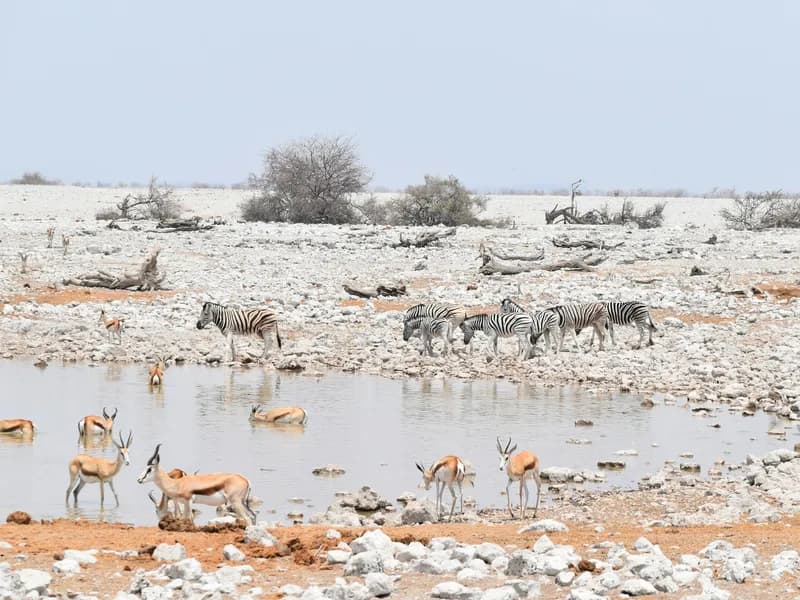
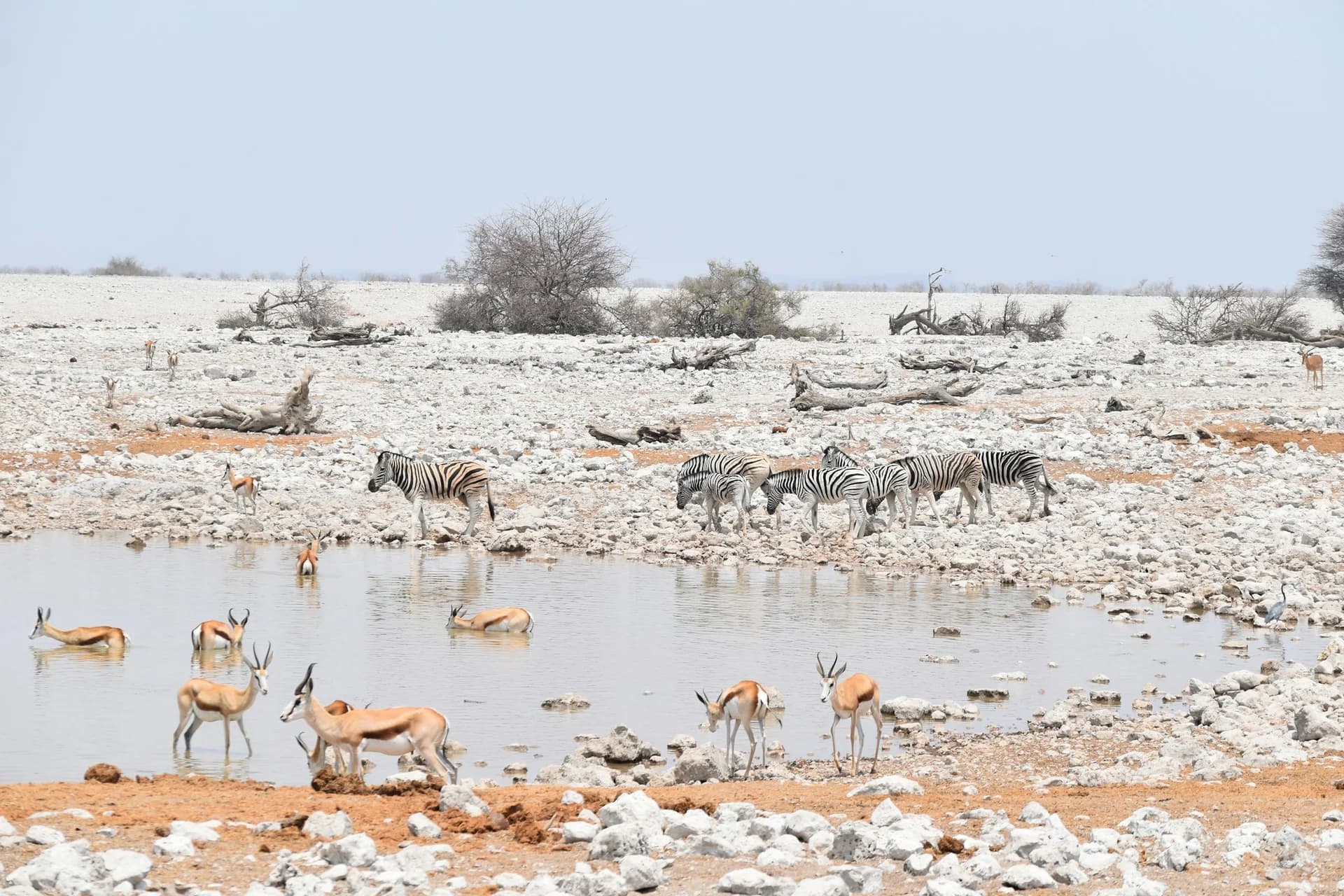
The single most important piece of gear after your car. Animals at waterholes can be 50-100 meters away. Binoculars turn "that might be a rhino" into "you can watch its ear twitch." 8x42 or 10x42 is ideal. Borrow or buy before the trip — the gift shops don't sell good ones.
5. Download the Etosha map offline
Maps.me has a decent offline map of Etosha with waterhole locations marked. Cell signal inside the park is zero. GPS works, but without a map layer it's useless. Screenshot the waterhole names and locations. You'll reference them constantly.
Driving & Game Viewing
6. Gate times are non-negotiable
Park gates and rest camp gates open at sunrise and close at sunset. The exact times change monthly and are posted at camp reception. Being late to a gate means a fine and a stern conversation with an armed ranger. Plan your driving distances accordingly — the park is 22,000 sq km.
7. The best game viewing is 6-9AM and 4-6PM
Midday heat drives animals into shade where you can't see them. The golden hours are early morning and late afternoon, when animals come to waterholes to drink. Plan your waterhole stops for these windows.
8. Turn off the engine at waterholes
Engine noise spooks animals. Pull up, park, turn off the ignition. Roll down the windows. Wait. Some waterholes have pull-off areas specifically designed for this. The animals are habituated to quiet vehicles but react to engine vibration.
9. The western Okaukuejo-to-Halali route beats the southern pan road
Most visitors drive the southern pan-edge road between camps. The road north of the pan through the Andoni area has fewer cars and denser game. Ask at camp reception for current sightings — rangers update a whiteboard daily with reported animals and locations.
10. Never leave your vehicle
This isn't a suggestion. It's a rule backed by fines and, more importantly, physics. Lions, elephants, and rhinos share this park with you. They have right of way. Stay in the car except at designated rest stops, picnic spots, and camps.
The Waterholes
11. Okaukuejo's waterhole is the best in Africa
Hyperbolic? Maybe. But the floodlit waterhole at Okaukuejo Rest Camp, with its stone amphitheater seating, is famous for nightly black rhino visits, elephant herds, and the occasional lion pride. There's no closing time. Bring a warm jacket (Etosha nights drop to 5°C in winter) and stay as long as you want.
12. The rhinos come between 9-10PM
Nothing here is guaranteed, but the pattern is remarkably reliable: over a typical week, the black rhino tends to appear at Okaukuejo between 9:15 and 9:45PM on most nights. The regulars who camp for weeks will tell you the same. Be patient. Bring a thermos.
13. Namutoni's waterhole tower is underrated
The elevated viewing platform at Namutoni gives a different perspective — you look down on the waterhole. Elephants at dusk, sometimes 40-50 strong, are the highlight. The tower also gives you better photography angles.
Budget & Logistics
14. The park is cheaper than you think
Entry: NAD 150/person ($8) + NAD 50/vehicle ($3). Campsite: NAD 350/night (~$19). If you're self-catering and camping, two people can do Etosha for $40-50/day total excluding car rental. The big expense is the rental car and fuel (figure NAD 25/liter, ~$1.35/liter).
15. Fuel is available at all three main rest camps
Okaukuejo, Halali, and Namutoni have petrol stations. Fill up at each camp stop. Distances between camps are 70-100km, and side-road diversions for game viewing add up. A full tank should last a day easily, but don't gamble.
16. Namibia is one of Africa's safest countries
Safety rating: Level 1. The crime rate is low, the infrastructure is solid, and the roads outside the park are excellent. The drive from Windhoek is uneventful (straight highway, minimal traffic) and safe. You're more likely to be delayed by a warthog on the road than by any human hazard.
17. Visa-free for most nationalities
US, UK, EU, Canadian, and Australian citizens get 90-day visa-free entry. Your passport needs 6 months validity and two blank pages. No advance application needed. The airport immigration at Windhoek is quick and efficient.
The one thing nobody tells you: Etosha is addictive. You'll tell yourself three nights is enough. Then you'll extend. Then you'll start planning the next trip before you've even left. The waterhole watching does something to you — some combination of patience, silence, and the thrill of not knowing what will walk out of the darkness next.
Bring more nights than you think you need.
For more, see our Etosha journal.