
Everest Base Camp

Photo: Ganesh Adhikari / Unsplash
Key Facts
Best Time to Visit
Pre-monsoon (March-May) and post-monsoon (late September-November). October offers the clearest skies and stable weather; winter is brutally cold and the monsoon (June-Aug) brings cloud, mud, and flight cancellations
Language
Nepali and Sherpa; English widely understood in teahouses along the trail
Currency
Nepalese Rupee (NPR); carry cash, ATMs stop above Namche Bazaar
Time Zone
Nepal Time (NPT, UTC+5:45)
Airport
Fly into Kathmandu Tribhuvan International (KTM), then a short flight to Lukla's Tenzing-Hillary Airport (LUA) to start the trek
Population
Base Camp is a seasonal tent camp; the largest trail village, Namche Bazaar, has ~1,600 residents
Climate
Alpine to high-alpine; daytime 10-15°C lower down, well below freezing at night higher up, intense UV and thin air
Safety Rating
Moderate — the terrain is safe but altitude sickness (AMS/HAPE/HACE) is the real danger; a guide and travel insurance covering helicopter evacuation are essential
Elevation
Base Camp 5,364m; the trek's high point Kala Patthar reaches 5,644m for the classic Everest view
Trek Duration
12-14 days round trip from Lukla, including 2 acclimatization days
Top Highlights

Kala Patthar Sunrise
The trek's true summit prize at 5,644m — from Everest Base Camp itself you can't actually see Everest's peak, but Kala Patthar delivers the definitive dawn panorama of the whole massif turning gold. The pre-dawn climb from Gorak Shep takes 1.5-2 hours in bitter cold and thin air. Bring a headlamp, down jacket, and hand warmers. The photograph most people come to Nepal for is taken here, not at Base Camp.
Everest Base Camp
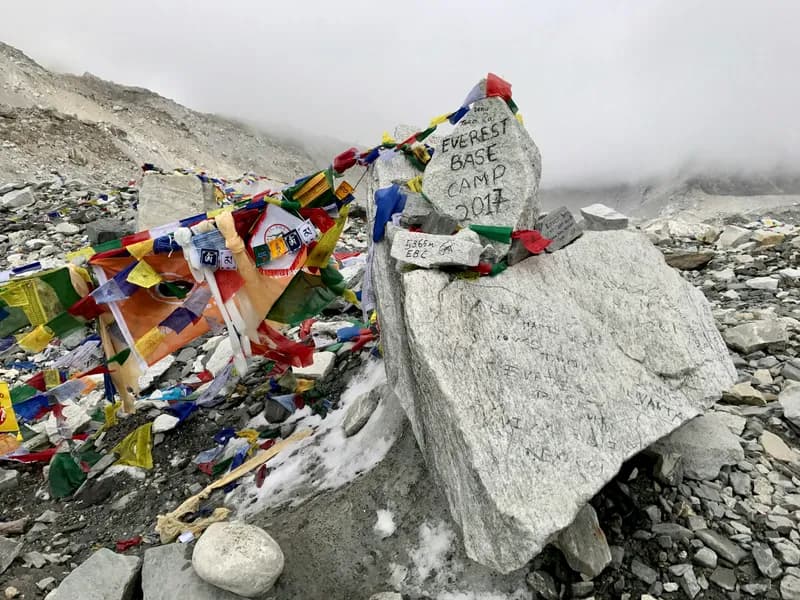
The 5,364m goal — a boulder-strewn moraine at the foot of the tumbling Khumbu Icefall, marked by prayer flags and a rock cairn. In April-May it becomes a tent city for summit expeditions. There is no lodge here; day-trippers walk 3-4 hours from Gorak Shep and back. Views of Everest itself are blocked by Nuptse, but standing beneath the icefall where every summit attempt begins is unforgettable. Allow a full acclimatized day.

Namche Bazaar
The bustling Sherpa capital at 3,440m, built into a natural amphitheater — the trek's essential acclimatization stop with a mandatory rest day. Browse gear shops, sip a flat white at the world's highest cafes, visit the Sherpa Culture Museum, and hike up to the Everest View Hotel for your first glimpse of the peak. Saturday's open-air market draws traders from across the Khumbu. Wi-Fi and hot showers exist here — the last real comfort before the high camps.
Tengboche Monastery
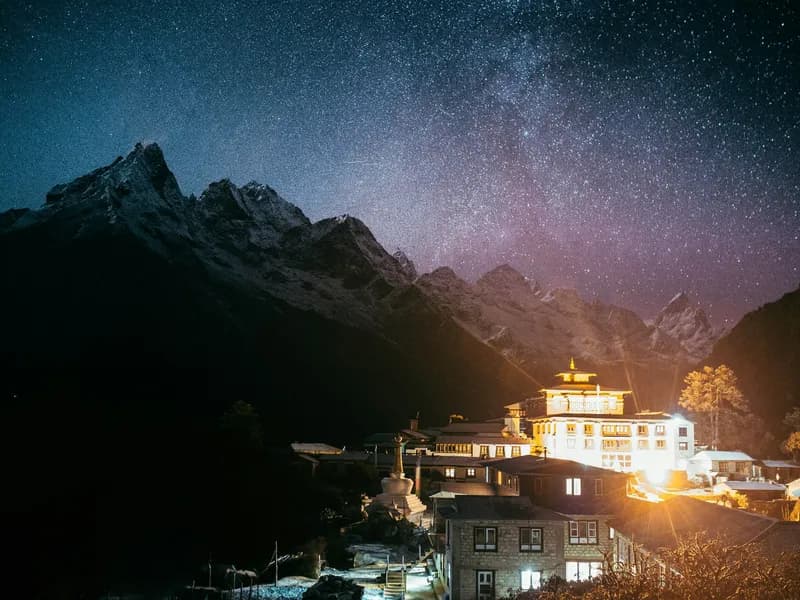
The spiritual heart of the Khumbu at 3,867m — the largest Buddhist monastery in the region, framed by Everest, Lhotse, and the fluted spire of Ama Dablam. Trekkers can attend the monks' morning or evening prayer ceremony (free; be respectful, remove shoes, no flash photography). The October Mani Rimdu festival features masked dances over several days. The setting is arguably the most beautiful on the entire trail.

The Lukla Flight
The white-knuckle prelude to the trek — a 30-40 minute flight from Kathmandu (or Ramechhap in peak season) onto Tenzing-Hillary Airport's short, steeply inclined 527m runway carved into the mountainside at 2,845m. Flights operate only in clear morning weather and are routinely delayed or cancelled by cloud, so build 1-2 buffer days into your itinerary. It's regularly called one of the world's most dramatic airports.

Gokyo Lakes (Alternative High Route)
A quieter, arguably more scenic alternative or add-on — a chain of six turquoise glacial lakes at ~4,700-5,000m beside the Ngozumpa, the longest glacier in the Himalaya. Climbing Gokyo Ri (5,357m) rewards you with a four-8,000m-peak panorama (Everest, Lhotse, Makalu, Cho Oyu). Many trekkers link Gokyo to Base Camp over the Cho La pass for a fuller loop. Fewer crowds, deeper wilderness, harder acclimatization.
Planned Itinerary
7-Day Everest Base Camp Itinerary
Arrival in Kathmandu (1,400m)
Land at Tribhuvan International (KTM), meet your trekking agency, and prep permits and gear in Thamel. This is a scenic short-trek option — 7 days cannot safely reach Everest Base Camp on foot, so the plan targets Namche Bazaar and the Everest View Hotel with honest acclimatization limits.
Airport transfer to Thamel(45 minutes)
Pre-arranged pickup to your hotel in the Thamel district; taxi fare if on your own is roughly 700-900 NPR.
Visa on arrival at KTM(30-60 minutes)
15-day tourist visa is ~$30 USD cash; fill the online form in advance to skip a queue. Passport must be valid 6+ months.
Gear check and rental in Thamel(2 hours)
Buy or rent down jacket, sleeping bag, trekking poles and a duffel at Shona's or the North Face knockoff shops. Rentals run ~$1-2/day per item.
Permit briefing with your agency(1 hour)
Confirm your licensed guide (mandatory since 2023), porter, and Lukla flight. Discuss AMS symptoms and the 'climb high, sleep low' plan.
Fly to Lukla (2,845m), trek to Phakding (2,610m)
The white-knuckle prelude: a 30-40 minute dawn flight onto Tenzing-Hillary Airport's steep 527m runway. In peak season (Oct/April) the flight departs from Ramechhap after a 4-5 hour pre-dawn drive. Then an easy downhill trek to Phakding along the Dudh Koshi.
Tara Air / Summit Air flight to Lukla(30-40 minutes)
Flights only in clear morning weather — routinely delayed by cloud. Package price ~$180-220 one way. One of the world's most dramatic airports.
Buy permits en route(30 minutes)
Sagarmatha National Park entry (~3,000 NPR) and the Khumbu Pasang Lhamu Rural Municipality fee (~2,000 NPR); the old TIMS card is not used in the Khumbu.
Trek Lukla to Phakding(3-4 hours)
An easy 200m descent along the Dudh Koshi, crossing your first prayer-flag-draped suspension bridges. Pass Cheplung and its mani stones.
Overnight at a Phakding teahouse(evening)
Riverside lodges like Beer Garden Lodge; dal bhat ~500-700 NPR, a hot shower ~300 NPR. Sleep low tonight to help acclimatize.
Phakding to Namche Bazaar (3,440m)
The big climbing day into the Khumbu heartland. Enter Sagarmatha National Park at Monjo, cross the high Hillary Suspension Bridge, then grind up the steep pine-forested switchbacks to the Sherpa capital — with a first glimpse of Everest on a clear day.
Trek to the park gate at Monjo(2-3 hours)
Show permits at the Sagarmatha National Park checkpost. Gentle trail with several bridge crossings over the milky Dudh Koshi.
Cross the Hillary Suspension Bridge(30 minutes)
The highest and most photographed bridge on the trail, festooned with prayer flags high above the river confluence at Larja Dobhan.
The Namche Hill climb(2.5-3 hours)
A relentless 600m ascent; take it slow. Around halfway there is a first Everest viewpoint on clear mornings. This is where altitude starts to bite.
Arrive Namche Bazaar(evening)
The bustling amphitheater town at 3,440m with the last reliable ATMs (high fees, often dry), bakeries, Wi-Fi and hot showers. Overnight at a lodge like Hotel Camp de Base.
Namche Bazaar — Acclimatization Day (3,440m)
Your essential and mandatory rest day, the single most important safety buffer of a short trek. You don't descend — you day-hike higher and sleep low to let red blood cells catch up. This is the acclimatization period this itinerary is built around.
Acclimatization hike to Everest View Hotel(3-4 hours round trip)
Climb ~400m to the hotel at 3,880m — the highlight of the short trek. On a clear morning it delivers your first full view of Everest, Lhotse and Ama Dablam over a coffee (~500-600 NPR).
Visit the Sherpa Culture Museum(1 hour)
Above town near the army camp; exhibits on Sherpa mountaineering history and Everest summiteers. Entry ~100 NPR.
Explore the Saturday market(1-2 hours)
If it's a Saturday, the open-air haat draws traders from across the Khumbu and Tibet. Otherwise browse gear shops and the Everest Bakery for apple pie and espresso.
AMS self-check and rest(evening)
Monitor for headache, nausea, breathlessness. Drink 3-4L of water. Sleep back down in Namche — 'climb high, sleep low' in action.
Namche to Tengboche Monastery (3,867m)
The most beautiful day of the short trek: a contouring trail with jaw-dropping Ama Dablam views, a descent to the river at Phunki Tenga, then a climb through rhododendron forest to the Khumbu's spiritual heart. This is the highest, most northern point on the 7-day plan.
Contour trail to Kyangjuma(2 hours)
A near-level path with panoramic views of Everest, Lhotse, Nuptse and the fluted spire of Ama Dablam. Watch for Himalayan tahr and blood pheasants.
Descend to Phunki Tenga and climb up(2-3 hours)
Drop to the river at 3,250m (small teahouses and water-powered prayer wheels), then a steep 600m forested ascent to Tengboche.
Attend prayers at Tengboche Monastery(1 hour)
The largest Buddhist monastery in the Khumbu, framed by Everest and Ama Dablam. Attend the monks' evening ceremony (free; remove shoes, no flash). Arguably the finest setting on the trail.
Overnight at Tengboche(evening)
Basic lodges like Tashi Delek; it's cold up here. Warm up by the yak-dung stove and try the bakery's cinnamon rolls.
Tengboche back down to Namche / Monjo (2,835m)
Turnaround day. Rather than push higher toward Dingboche — which this short itinerary cannot safely reach — you retrace the beautiful trail downhill, gaining comfort with every meter of descent as the air thickens.
Trek Tengboche to Namche(3-4 hours)
Reverse the forest descent and river climb, then the contour trail. Downhill on the knees but easy on the lungs; last big Ama Dablam views.
Coffee stop at the Everest Bakery, Namche(45 minutes)
Reward yourself with a proper flat white and apple pie at one of the world's highest cafes (~500 NPR each).
Continue down toward Monjo(2-3 hours)
Descend the Namche Hill and cross back over the Hillary Bridge to overnight lower at Monjo (2,835m) to shorten tomorrow's walk to Lukla.
Final teahouse dinner(evening)
Celebrate with dal bhat (unlimited refills, ~600 NPR) and swap stories with your guide about the higher route you'll come back for.
Trek to Lukla, fly to Kathmandu, depart
The final push back to Lukla and the flight out. Because Lukla flights are notoriously weather-dependent, this itinerary keeps the departure honest — never book an international flight for the same day.
Trek Monjo to Lukla(3-4 hours)
A gentle rolling walk with one final climb up to Lukla. Pass through Phakding and Cheplung one last time.
Fly Lukla to Kathmandu (or Ramechhap)(30-40 minutes)
Dawn departure only; if socked in by cloud, a helicopter charter out can run $500+ per seat. Never schedule an international flight the same day — always add a buffer day in Kathmandu.
Transfer to hotel and celebrate(2 hours)
Back to Thamel for a hot shower and a well-earned momo feast. Tip your guide (~$10-15/day) and porter (~$8-10/day) if you haven't already.
Departure or Kathmandu buffer(evening)
Ideally spend a buffer night in Kathmandu against Lukla delays before your international departure from KTM.
14-Day Everest Base Camp Itinerary
Arrival in Kathmandu (1,400m)
Land at Tribhuvan International (KTM), meet your agency, and prep for the classic full Everest Base Camp trek. Sort permits, gear and the Lukla flight in Thamel. This is the definitive 14-day EBC itinerary with two acclimatization days and Kala Patthar sunrise.
Airport transfer to Thamel(45 minutes)
Pre-arranged pickup; independent taxi ~700-900 NPR. Settle into a Thamel hotel.
Visa on arrival at KTM(30-60 minutes)
15-day visa ~$30 USD cash; pre-fill the online form. Passport valid 6+ months.
Gear check and rental in Thamel(2 hours)
Down jacket, -20°C sleeping bag, poles, headlamp, hand warmers and a duffel. Rent at Shona's; ~$1-2/day per item. Buy Diamox at a pharmacy after consulting a doctor.
Permit and route briefing(1 hour)
Confirm licensed guide (mandatory since 2023) and porter, and review AMS symptoms, the acclimatization plan, and helicopter-evacuation insurance covering to 6,000m.
Fly to Lukla (2,845m), trek to Phakding (2,610m)
The dramatic dawn flight onto Tenzing-Hillary Airport's steep 527m mountainside runway, then a gentle downhill start along the Dudh Koshi to ease into the trail. In peak season the flight leaves from Ramechhap after a 4-5 hour drive.
Tara Air / Summit Air flight to Lukla(30-40 minutes)
Clear morning weather only; package fare ~$180-220 one way. Delays are common — build buffer days.
Meet your porter and buy permits(30 minutes)
Sagarmatha NP entry (~3,000 NPR) plus Khumbu Pasang Lhamu fee (~2,000 NPR).
Trek Lukla to Phakding(3-4 hours)
Easy 200m descent through Cheplung, crossing the first prayer-flag suspension bridges over the milky Dudh Koshi.
Overnight in Phakding(evening)
Riverside lodges; dal bhat ~500-700 NPR. Sleep low to help acclimatize before the Namche climb.
Phakding to Namche Bazaar (3,440m)
The tough climb into the Khumbu capital: through Monjo's park gate, over the towering Hillary Suspension Bridge, then a relentless 600m ascent to the natural amphitheater of Namche.
Sagarmatha National Park checkpost at Monjo(2-3 hours)
Register permits. Gentle riverside walk with multiple bridge crossings.
Cross the Hillary Suspension Bridge(30 minutes)
The highest bridge on the trail at Larja Dobhan, draped in prayer flags high above the river confluence.
The Namche Hill climb(2.5-3 hours)
A steep 600m grind through pine forest; go slow. A first Everest viewpoint appears halfway on clear mornings.
Arrive Namche Bazaar(evening)
Last reliable ATMs, bakeries, hot showers and Wi-Fi. Stock cash — everything above here is cash-only NPR and pricier with altitude.
Namche Bazaar — Acclimatization Day (3,440m)
Mandatory rest day and the first key acclimatization stop. Day-hike high and sleep low. Take this seriously — rushing past Namche is the classic AMS mistake.
Acclimatization hike to Everest View Hotel(3-4 hours round trip)
Climb ~400m to 3,880m for your first grand view of Everest, Lhotse and Ama Dablam over a coffee (~500-600 NPR).
Visit the Sherpa Culture Museum(1 hour)
Mountaineering history and Everest summiteer exhibits above town; entry ~100 NPR.
Saturday market or Everest Bakery(1-2 hours)
The open-air haat if it's Saturday; otherwise apple pie and espresso at the Everest Bakery.
Rest, hydrate, AMS self-check(evening)
Drink 3-4L water. Monitor for headache and nausea; sleep back down in Namche.
Namche to Tengboche Monastery (3,867m)
A stunning day: the contour trail with Ama Dablam views, a river descent at Phunki Tenga, then a forested climb to the Khumbu's spiritual heart, the great Tengboche Monastery.
Contour trail to Kyangjuma(2 hours)
Near-level path with panoramas of Everest, Lhotse, Nuptse and Ama Dablam; watch for Himalayan tahr.
Descend and climb to Tengboche(2-3 hours)
Drop to Phunki Tenga (3,250m) with its water-driven prayer wheels, then a steep 600m ascent through rhododendron forest.
Evening prayers at Tengboche Monastery(1 hour)
The largest monastery in the Khumbu, framed by Everest and Ama Dablam. Attend the ceremony (free; remove shoes, no flash). The most beautiful setting on the trail.
Overnight at Tengboche(evening)
Basic lodges around the monastery; try the famous bakery's apple crumble before it gets bitterly cold.
Tengboche to Dingboche (4,410m)
Cross into the high alpine zone above the tree line. Descend to Deboche, cross the Imja Khola, pass Pangboche's ancient gompa, then climb into the broad Imja valley to Dingboche beneath the walls of Ama Dablam and Island Peak.
Trek to Pangboche(2-3 hours)
Through Deboche's forest and over the Imja Khola suspension bridge. Pangboche (3,930m) holds the region's oldest monastery — ask to see the relics.
Climb into the Imja Valley(2-3 hours)
The trees vanish; the trail opens to stone-walled potato fields. Landscape turns starkly alpine as you approach Dingboche.
Arrive Dingboche(afternoon)
A windswept village at 4,410m. Stay at a lodge like Good Luck or Peaceful; the bakery here serves surprisingly good pizza.
Gentle AMS-check stroll(30 minutes)
A short flat walk to keep the legs moving. Rest is critical now — you're above 4,400m.
Dingboche — Acclimatization Day (4,410m)
The second essential acclimatization day. Climb high toward Nangkartshang and sleep low in Dingboche. This is your body's last major rest before the thin air of the high camps.
Acclimatization hike to Nangkartshang viewpoint(3-4 hours round trip)
Climb ~600m up the ridge to ~5,000m for views of Makalu (world's 5th highest), Lhotse and Island Peak. Turn back if AMS symptoms appear.
Rest and refuel in Dingboche(afternoon)
Yak steak, garlic soup (a local AMS remedy) and endless tea by the stove. Charge devices while you can (~300-500 NPR).
Hydration and Diamox check(ongoing)
Keep to 3-4L of water. Reassess with your guide whether to continue — descending is always the right call if unwell.
Dingboche to Lobuche (4,940m)
A serious high-altitude day. Climb to Thukla, pass the sobering memorial cairns for climbers lost on Everest, then follow the lateral moraine of the Khumbu Glacier to Lobuche.
Trek to Thukla (Dughla)(2-3 hours)
A gradual climb along the valley to Thukla (4,620m) at the toe of the Khumbu Glacier. A tea stop here before the steep pull.
Thukla Pass and memorial cairns(1 hour)
A steep climb to the Thukla Pass ridge, lined with stone memorials and prayer flags for Scott Fischer, Babu Chiri Sherpa and others — a moving, humbling place.
Moraine trail to Lobuche(1.5-2 hours)
Follow the Khumbu Glacier's lateral moraine to the small, cold cluster of lodges at Lobuche (4,940m).
Overnight at Lobuche(evening)
Basic teahouses; nights are freezing. Eat well, hydrate, and rest — tomorrow is the big day to Base Camp.
Lobuche to Gorak Shep (5,164m) and Everest Base Camp (5,364m)
The summit of the whole journey. Reach the last settlement, Gorak Shep, then push out across the glacier moraine to stand at Everest Base Camp beneath the tumbling Khumbu Icefall.
Trek Lobuche to Gorak Shep(3 hours)
Undulating moraine trail beside the Khumbu Glacier. Drop your pack at a Gorak Shep lodge like Buddha Lodge and grab lunch before continuing.
Gorak Shep to Everest Base Camp(2-3 hours each way)
The 5,364m goal — a boulder-strewn moraine marked by prayer flags and a cairn. Everest's peak is hidden by Nuptse, but standing beneath the icefall where every summit bid begins is unforgettable. In April-May it's a tent city.
Return to Gorak Shep to sleep(2-3 hours)
There is no lodge at Base Camp — retrace to Gorak Shep for the night. Move slowly; you're now higher than anywhere you've slept.
Early night before Kala Patthar(evening)
Bitter cold and thin air make sleep hard. Set an alarm for the pre-dawn Kala Patthar climb.
Kala Patthar Sunrise (5,644m), descend to Pheriche (4,240m)
The trek's true prize — a bitterly cold pre-dawn climb for the definitive dawn panorama of Everest turning gold, then a big rewarding descent to thicker air at Pheriche.
Pre-dawn climb to Kala Patthar(1.5-2 hours up)
The 5,644m high point of the whole trek. From here — not Base Camp — you get the classic full view of Everest. Bring headlamp, down jacket and hand warmers; it's brutally cold in thin air.
Sunrise summit panorama(45 minutes)
Everest, Nuptse and Pumori blaze gold at dawn. This is the photograph most people come to Nepal for. Descend to Gorak Shep for breakfast.
Descend to Pheriche(4-5 hours)
A long drop back past Lobuche and Thukla to Pheriche (4,240m). Every meter down eases the lungs and helps recovery.
Optional HRA aid post talk(1 hour)
Pheriche has the Himalayan Rescue Association clinic; their altitude talks (donation) are excellent. Overnight in a warm lodge.
Pheriche to Namche Bazaar (3,440m)
A long, satisfying descent back below the tree line to the comforts of Namche — hot showers, bakeries and thicker air. The mountains show themselves one last time from behind.
Trek Pheriche to Tengboche(3-4 hours)
Retrace past Pangboche and Deboche, then the river crossing and climb back to Tengboche for a final monastery view.
Descend to Namche(3-4 hours)
The forested descent and contour trail back to Namche; last big Ama Dablam and Everest views over your shoulder.
Celebration at the Everest Bakery(1 hour)
A proper flat white, apple pie and a hot shower (~500-800 NPR). Restock cash at the ATM if needed.
Overnight in Namche(evening)
First truly comfortable night in over a week; sleep is easy again at 3,440m.
Namche to Lukla (2,845m)
The final long trekking day. Descend the Namche Hill, cross back over the Hillary Bridge, and follow the Dudh Koshi through Phakding all the way to Lukla.
Descend the Namche Hill(2 hours)
Steep on the knees; use poles. Recross the Hillary Suspension Bridge and pass back through the Monjo park gate.
Trek through Phakding to Lukla(4-5 hours)
Rolling riverside trail with a final uphill push into Lukla. Pass Cheplung and its mani stones one last time.
Farewell dinner in Lukla(evening)
Celebrate the finish with your guide and porter over dal bhat and a beer. Tip your guide (~$10-15/day) and porter (~$8-10/day).
Reconfirm the morning flight(30 minutes)
Check weather and flight status with your agency; Lukla departures are dawn-only and cloud-sensitive.
Fly Lukla to Kathmandu — Buffer Day (1,400m)
Fly out of the Himalaya back to Kathmandu. This day is deliberately built in as a weather buffer so a Lukla delay never threatens your international flight.
Fly Lukla to Kathmandu (or Ramechhap)(30-40 minutes)
Dawn departure in clear weather only. In a full lockout, a helicopter charter out can run $500+ per seat — this buffer day is your insurance.
Transfer to Thamel hotel(45 minutes)
Hot shower, laundry and a real bed. Decompress from two weeks at altitude.
Celebration meal and souvenirs(2-3 hours)
Feast on momos and thukpa; browse Thamel for pashmina, singing bowls and a summit-day photo print.
Rest and repack(evening)
Return rented gear and repack for departure. Early night if you have a morning flight.
Departure from Kathmandu
The final day — a leisurely morning in Kathmandu before your transfer to Tribhuvan International for the flight home, or an optional day of city sightseeing if your flight is late.
Optional Kathmandu Valley sightseeing(3-4 hours)
If time allows, visit Boudhanath Stupa or Swayambhunath (Monkey Temple) — fitting Buddhist bookends to a Khumbu trek. Entry ~400 NPR each.
Final gear return and packing(1 hour)
Settle any agency balance and tips; return rentals.
Airport transfer to KTM(45 minutes)
Depart for Tribhuvan International. Arrive 3 hours early for international flights.
International departure(—)
Fly home with the Everest massif still burning in your memory.
21-Day Everest Base Camp Itinerary
Arrival in Kathmandu (1,400m)
Land at Tribhuvan International (KTM) for the grand tour: Everest Base Camp plus the Gokyo Lakes and Cho La Pass loop — the fullest, most scenic circuit of the Khumbu, with extra acclimatization and rest built in. Meet your agency, sort permits and gear in Thamel.
Airport transfer to Thamel(45 minutes)
Pre-arranged pickup; independent taxi ~700-900 NPR.
Visa on arrival at KTM(30-60 minutes)
30-day visa ~$50 USD cash for this longer trip; pre-fill the online form. Passport valid 6+ months.
Gear check and rental in Thamel(2 hours)
Down jacket, -20°C bag, crampons or microspikes for Cho La, poles, headlamp, hand warmers. Rent at Shona's; ~$1-2/day per item. Buy Diamox after consulting a doctor.
Route and insurance briefing(1 hour)
Confirm licensed guide and porter, review the Gokyo/Cho La plan, and verify insurance covering helicopter evacuation to 6,000m — non-negotiable for the high passes.
Fly to Lukla (2,845m), trek to Phakding (2,610m)
The dramatic dawn flight onto Tenzing-Hillary Airport, then an easy downhill start along the Dudh Koshi. In peak season the flight departs from Ramechhap after a 4-5 hour pre-dawn drive.
Tara Air / Summit Air flight to Lukla(30-40 minutes)
Clear morning weather only; ~$180-220 one way. Delays are routine.
Buy permits en route(30 minutes)
Sagarmatha NP entry (~3,000 NPR) plus Khumbu Pasang Lhamu fee (~2,000 NPR).
Trek Lukla to Phakding(3-4 hours)
Easy 200m descent through Cheplung over the first suspension bridges along the Dudh Koshi.
Overnight in Phakding(evening)
Riverside lodges; dal bhat ~500-700 NPR. Sleep low to start acclimatizing.
Phakding to Namche Bazaar (3,440m)
The steep climb into the Khumbu capital via Monjo's park gate and the towering Hillary Suspension Bridge, then the relentless 600m Namche Hill.
Sagarmatha National Park checkpost at Monjo(2-3 hours)
Register permits; gentle riverside walk with several bridge crossings.
Cross the Hillary Suspension Bridge(30 minutes)
The highest, most photographed bridge on the trail, high above the river confluence at Larja Dobhan.
The Namche Hill climb(2.5-3 hours)
A steep 600m pine-forest grind; go slow. First Everest viewpoint halfway on clear mornings.
Arrive Namche Bazaar(evening)
Last reliable ATMs, bakeries, hot showers, Wi-Fi. Stock plenty of cash for the long circuit ahead.
Namche Bazaar — Acclimatization Day (3,440m)
First mandatory acclimatization day. Climb high to the Everest View Hotel and sleep low. Essential before either the Gokyo or the Base Camp valleys.
Acclimatization hike to Everest View Hotel(3-4 hours round trip)
Climb ~400m to 3,880m for the first grand view of Everest, Lhotse and Ama Dablam over coffee (~500-600 NPR).
Visit the Sherpa Culture Museum(1 hour)
Mountaineering history above town; entry ~100 NPR. Saturday market if timing aligns.
Everest Bakery break(1 hour)
Apple pie and espresso at the world's highest cafes.
Rest, hydrate, AMS self-check(evening)
3-4L of water; monitor symptoms; sleep back down in Namche.
Namche to Dole (4,040m) — into the Gokyo Valley
Branch northwest onto the quieter, wilder Gokyo route. Climb the ridge above Namche past Mong La with its stupa and panoramic views, then descend and climb into the Dudh Koshi's western valley toward Dole.
Climb to Mong La (3,975m)(2-3 hours)
A ridge-top settlement with a stupa and a superb Ama Dablam / Khumbila panorama. A teahouse here for tea and a rest.
Descend to Phortse Tenga(1.5 hours)
Drop to the river at 3,600m, a peaceful forested spot with a couple of lodges.
Climb to Dole(2-3 hours)
Ascend through rhododendron and birch into the remote Gokyo valley; far fewer trekkers here than the main EBC trail.
Overnight at Dole(evening)
Small teahouses at 4,040m; the valley feels wild and quiet. Watch for musk deer and Himalayan tahr.
Dole to Machhermo (4,470m)
A short, deliberately gentle acclimatization-paced day climbing the valley with the summit of Cho Oyu (world's 6th highest) revealing itself ahead. Slow ascent is critical on this thinner, less-traveled route.
Trek Dole to Luza to Machhermo(3-4 hours)
Gradual climb past summer yak pastures with Cho Oyu and Kangtega views opening up. Keep the pace easy to acclimatize.
Arrive Machhermo early(afternoon)
A cluster of lodges at 4,470m; arriving early leaves time to rest and hike a little higher in the afternoon.
Attend the IPPG altitude talk(1 hour)
Machhermo's rescue post runs a free daily 3pm altitude-sickness briefing — genuinely worth attending before Gokyo.
Short acclimatization stroll(1 hour)
Wander up the ridge behind the village for views, then sleep low. Garlic soup and plenty of tea.
Machhermo to Gokyo (4,790m)
Reach the turquoise Gokyo Lakes beside the Ngozumpa, the longest glacier in the Himalaya. Pass the first two sacred lakes to reach the village on the shore of the third.
Climb past the first and second lakes(3-4 hours)
Traverse the terminal moraine of the Ngozumpa Glacier, passing Longpongo and Taboche Tsho — vivid turquoise glacial pools.
Arrive Gokyo village(afternoon)
Lodges sit on the shore of the third lake, Dudh Pokhari, at 4,790m. A strikingly beautiful, remote setting.
Rest by the lake(afternoon)
Acclimatize gently; do not overexert. The bakery here is a welcome surprise at this altitude.
Plan the pre-dawn Gokyo Ri climb(evening)
Prep headlamp and layers for tomorrow's summit. Early night in the cold.
Gokyo Ri Summit (5,357m) — Acclimatization / Rest at Gokyo
Climb Gokyo Ri for a four-8,000m-peak panorama, then rest at Gokyo to acclimatize before the demanding Cho La Pass. This is a key high-altitude rest-and-climb day.
Pre-dawn climb to Gokyo Ri(2-3 hours up)
A steep 600m ascent to 5,357m rewarded with Everest, Lhotse, Makalu and Cho Oyu all in one sweep, plus the Ngozumpa Glacier below. Arguably a finer panorama than Kala Patthar.
Summit panorama and descent(1-2 hours)
Soak in the four-8,000er view, then descend to Gokyo for a late breakfast.
Optional fourth/fifth lakes walk(2-3 hours)
If strong, stroll to the fourth and fifth lakes and Scoundrel's Viewpoint over the Ngozumpa. Otherwise rest.
Rest and hydrate at Gokyo(afternoon)
Recover and fuel up. Confirm Cho La conditions with your guide — snow can close the pass.
Gokyo to Thagnak (4,700m) — Cho La approach
A short day crossing the vast Ngozumpa Glacier to the tiny settlement of Thagnak (Dragnag), positioning for an early start on the Cho La Pass. Deliberately gentle to bank rest before the big crossing.
Cross the Ngozumpa Glacier(2-3 hours)
A rough, rocky traverse over the Himalaya's longest glacier — ice, moraine and meltwater ponds. Follow your guide closely; the route shifts.
Arrive Thagnak (Dragnag)(afternoon)
A handful of basic lodges at 4,700m at the foot of the pass. Arrive early to rest.
Rest and prep for Cho La(afternoon)
Ready crampons/microspikes, gaiters and an early breakfast plan. The pass demands a pre-dawn start.
Early night(evening)
Cho La day is long and strenuous; sleep as much as the cold allows.
Cho La Pass (5,420m) to Dzongla (4,830m)
The crux of the circuit — a steep, glaciated crossing of the Cho La Pass linking the Gokyo and Base Camp valleys. A demanding, exhilarating high-alpine day.
Pre-dawn climb to the Cho La(3-4 hours)
A steep boulder ascent then a glacier crossing to the 5,420m pass, draped in prayer flags. Microspikes/crampons often needed; rope up if icy. Start before dawn to cross before afternoon wind.
Summit the pass(30 minutes)
Stunning views back to Cho Oyu and ahead to Ama Dablam and the Khumbu peaks. A genuine mountaineer's moment.
Descend to Dzongla(2-3 hours)
A careful, steep descent off the far side, then a traverse to the tiny settlement of Dzongla (4,830m).
Overnight at Dzongla(evening)
A couple of lodges with grandstand Ama Dablam and Cholatse views. Well-earned rest after the hardest day.
Dzongla to Lobuche (4,940m)
A shorter recovery day rejoining the main EBC trail. Traverse a scenic high ridge above the Chola Tsho lake with Ama Dablam ever-present, meeting the Base Camp route at Lobuche.
Traverse to the EBC trail(3-4 hours)
A beautiful contouring path above the turquoise Chola Tsho, joining the main Base Camp trail near Lobuche. Lighter day to recover from Cho La.
Arrive Lobuche(afternoon)
Rejoin the busier EBC route at 4,940m. Basic lodges; rest and refuel for the Base Camp push.
Rest and hydrate(afternoon)
Legs recover from the pass; keep drinking 3-4L. Garlic soup and an early dinner.
Plan the Base Camp day(evening)
Review timing with your guide for tomorrow's long day to Gorak Shep and Everest Base Camp.
Lobuche to Gorak Shep (5,164m) and Everest Base Camp (5,364m)
The Base Camp payoff. Reach the last settlement at Gorak Shep, then cross the glacier moraine to stand at Everest Base Camp beneath the Khumbu Icefall.
Trek Lobuche to Gorak Shep(3 hours)
Undulating moraine beside the Khumbu Glacier. Drop your pack at a Gorak Shep lodge and take lunch.
Gorak Shep to Everest Base Camp(2-3 hours each way)
The 5,364m goal — prayer flags and a cairn on the moraine below the tumbling Khumbu Icefall, where every summit attempt begins. Everest's peak itself is hidden by Nuptse.
Return to Gorak Shep(2-3 hours)
No lodge at Base Camp; retrace to sleep at Gorak Shep. Move slowly at this record altitude.
Early night before Kala Patthar(evening)
Sleep is hard in the thin, freezing air. Set a pre-dawn alarm for the sunrise climb.
Kala Patthar Sunrise (5,644m), descend to Pheriche (4,240m)
The trek's true prize — a frigid pre-dawn climb for the definitive golden dawn on Everest, then a long, restorative descent to thicker air.
Pre-dawn climb to Kala Patthar(1.5-2 hours up)
The 5,644m high point of the trek. From here — not Base Camp — comes the classic full Everest view. Headlamp, down jacket and hand warmers essential; brutally cold.
Sunrise summit panorama(45 minutes)
Everest, Nuptse and Pumori blaze gold — the photograph most people come to Nepal for. Descend to Gorak Shep for breakfast.
Descend to Pheriche(4-5 hours)
A long drop past Lobuche and Thukla's memorial cairns to Pheriche (4,240m). Each meter down aids recovery.
HRA aid post talk(1 hour)
The Himalayan Rescue Association clinic runs excellent altitude talks (donation). Warm lodge overnight.
Pheriche to Tengboche (3,867m)
Descend back below the tree line to the Khumbu's spiritual heart. Pass Pangboche's ancient gompa and return to the great monastery of Tengboche framed by Everest and Ama Dablam.
Trek Pheriche to Pangboche(2-3 hours)
Drop through Orsho and Shomare; visit Pangboche's oldest-in-the-region monastery (3,930m).
Continue to Tengboche(2-3 hours)
Over the Imja Khola and up through Deboche's forest to Tengboche. Trees and birdsong return — a joy after the high camps.
Evening prayers at Tengboche Monastery(1 hour)
Attend the monks' ceremony (free; remove shoes, no flash) in the finest setting on the trail.
Overnight at Tengboche(evening)
Warm up by the stove; the bakery's apple crumble is a well-earned treat.
Tengboche to Namche Bazaar (3,440m)
Return to the comforts of the Sherpa capital — hot showers, bakeries and thick, easy-breathing air — with final panoramic views on the contour trail.
Descend to Phunki Tenga and contour to Namche(4-5 hours)
The forest descent, river crossing, then the level contour trail with last big Everest, Lhotse and Ama Dablam views.
Celebration at the Everest Bakery(1 hour)
Proper flat white, apple pie and a hot shower (~500-800 NPR). Restock cash at the ATM.
Sherpa Culture Museum or gear shops(1-2 hours)
Browse Namche's shops for souvenirs; sleep is easy again at 3,440m.
Overnight in Namche(evening)
First fully comfortable night since the high valleys.
Namche to Lukla (2,845m)
The final long trekking day back to the airstrip: down the Namche Hill, over the Hillary Bridge, and along the Dudh Koshi through Phakding to Lukla.
Descend the Namche Hill(2 hours)
Steep on the knees — use poles. Recross the Hillary Suspension Bridge and pass back through Monjo.
Trek through Phakding to Lukla(4-5 hours)
Rolling riverside trail past Cheplung with a final uphill into Lukla.
Farewell dinner in Lukla(evening)
Celebrate the full circuit with your guide and porter. Tip guide (~$10-15/day) and porter (~$8-10/day).
Reconfirm the morning flight(30 minutes)
Check weather and flight status; Lukla departures are dawn-only and cloud-sensitive.
Fly Lukla to Kathmandu — Buffer Day (1,400m)
Fly back to Kathmandu. Deliberately scheduled as a weather buffer so a Lukla delay never threatens the onward plan or your flight home.
Fly Lukla to Kathmandu (or Ramechhap)(30-40 minutes)
Dawn departure in clear weather only. In a lockout, a helicopter out can run $500+ per seat — this buffer is your insurance.
Transfer to Thamel hotel(45 minutes)
Hot shower, laundry, a real bed. Decompress from three weeks at altitude.
Celebration meal(2-3 hours)
Momos, thukpa and a cold beer in Thamel; toast the Cho La and Kala Patthar.
Rest(evening)
Recover; the body has done a lot of work above 4,000m.
Kathmandu — Rest and Recovery Day (1,400m)
A genuine rest day in Kathmandu — a bonus of the 21-day plan. Recover fully, catch up on food and sleep, and explore the valley at an easy pace.
Sleep in and slow breakfast(morning)
No alarm, no altitude. Enjoy real coffee and a full menu after weeks of dal bhat.
Boudhanath Stupa visit(2-3 hours)
Nepal's largest stupa and Tibetan-Buddhist hub — a fitting reflection point after the Khumbu. Entry ~400 NPR; circle it with the pilgrims.
Massage and recovery(1-2 hours)
A Thamel spa massage does wonders for trek-weary legs (~1,500-2,500 NPR).
Evening at leisure(evening)
Rooftop dinner in Thamel; browse for pashmina, singing bowls and prints.
Kathmandu Valley Sightseeing (1,400m)
Explore the UNESCO heritage of the Kathmandu Valley — a cultural counterpoint to the mountains, and slack in the schedule in case an earlier Lukla delay pushed the buffer.
Swayambhunath (Monkey Temple)(1.5-2 hours)
Hilltop stupa with all-seeing Buddha eyes and city views; entry ~200 NPR. Watchful monkeys everywhere.
Kathmandu Durbar Square(2 hours)
Royal palace complex and Kumari (living goddess) house; entry ~1,000 NPR for foreigners. Rich Newari architecture.
Patan Durbar Square (optional)(2 hours)
The finest Newari square and metalwork museum across the river; entry ~1,000 NPR.
Farewell dinner with cultural show(evening)
A Newari thali dinner with folk dance in Thamel to round off the trip.
Kathmandu — Free / Contingency Day (1,400m)
A final flexible day, held in reserve as the ultimate weather contingency for the notoriously unreliable Lukla flight. If all went to plan, it's a relaxed day for shopping, spa and repacking.
Last-minute shopping(2-3 hours)
Thamel for trekking souvenirs, tea, prayer flags and gifts. Haggle politely — first prices are high.
Return rented gear(1 hour)
Settle the agency balance, return rentals, and confirm airport transfer time.
Optional Garden of Dreams or coffee(1-2 hours)
A tranquil neoclassical garden near Thamel (~400 NPR) to relax before the journey home.
Repack and early night(evening)
Organize bags for departure; confirm your international flight and transfer.
Departure from Kathmandu
The final day. A relaxed morning before your transfer to Tribhuvan International and the flight home after the full Everest, Gokyo and Cho La circuit.
Leisurely final breakfast(1 hour)
A last Kathmandu coffee and momos before heading out.
Final packing and settle up(1 hour)
Any remaining tips and agency balance; last souvenir grab.
Airport transfer to KTM(45 minutes)
Depart for Tribhuvan International; arrive 3 hours early for international flights.
International departure(—)
Fly home having stood at Everest Base Camp, summited Gokyo Ri and crossed the Cho La.
Travel Tips
Safety
Altitude Sickness Is the Real Danger — Ascend Slowly
Above 3,000m, ignoring acute mountain sickness (AMS) can be fatal. Follow 'climb high, sleep low', take the built-in acclimatization days at Namche and Dingboche seriously, and never gain more than ~500m of sleeping altitude per day up high. Watch for headache, nausea, and breathlessness; if symptoms worsen, descend immediately — this is non-negotiable. Many carry Diamox (acetazolamide) as a preventive after consulting a doctor. Drink 3-4L of water daily.
Insurance Must Cover Helicopter Evacuation to 6,000m
Standard travel insurance won't cut it — you need a policy that explicitly covers high-altitude trekking to 6,000m and emergency helicopter evacuation, which can otherwise cost $3,000-5,000 out of pocket. Confirm the altitude limit in writing before you go. Also beware the well-documented 'helicopter evacuation scam' where some operators pressure mildly ill trekkers into unnecessary (insurance-billed) airlifts — only agree to evacuation on genuine medical grounds.
Local Customs
You Now Need a Licensed Guide and Two Permits
Since 2023 Nepal requires solo trekkers to hire a licensed guide in most regions. For Everest you need the Sagarmatha National Park entry permit (~3,000 NPR) plus the local Khumbu Pasang Lhamu Rural Municipality permit (~2,000 NPR), both bought en route or in Kathmandu — the old TIMS card is not used in the Khumbu. A reputable agency arranges guide, porter, permits, and flights as a package.
Visa & Entry
Visa on Arrival in Kathmandu
Most nationalities get a tourist visa on arrival at Kathmandu airport: 15 days ~$30, 30 days ~$50, 90 days ~$125, payable in USD cash (or card). Bring a passport photo or use the airport kiosks. Fill the online application in advance to skip a queue. Your passport must be valid 6+ months. There is no separate visa for the trekking region — the permits above cover that.
Budget
Carry Enough Cash — ATMs Vanish After Namche
Namche Bazaar has the last reliable ATMs, and they charge high fees and often run dry. Above Namche everything is cash-only NPR, and prices climb sharply with altitude (a bottle of water can hit 300-400 NPR at Gorak Shep, a hot shower 500-800 NPR, charging your phone 300-500 NPR). Budget roughly $25-40/day for food and lodging on top of your package, and bring more cash than you expect to need.
transport
The Lukla Flight Will Probably Be Delayed — Build Buffer Days
Lukla flights fly only in clear morning weather and are cancelled constantly by cloud; in peak season (Oct, April) flights often depart from Ramechhap (a 4-5 hour pre-dawn drive from Kathmandu) instead of Kathmandu itself. Add at least 1-2 buffer days at the end of your trip so a weather delay doesn't make you miss an international flight. In a full weather lockout, a helicopter charter out can cost $500+ per seat.
Ready to explore Everest Base Camp?
Get AI-powered recommendations for your trip
Plan a Trip to Everest Base CampRelated Articles
Travel GuidesEverest Base Camp Trek FAQ: 15 Expert Answers on Fitness, Permits and Altitude
Do you need to be super fit? Can you trek solo? What do permits cost, is there Wi-Fi, and how dangerous is the altitude? Straight expert answers to the questions that matter.
Travel GuidesThe Complete Everest Base Camp Trek Guide: Permits, Teahouses, Budget and Altitude
Everything you need to plan the Everest Base Camp trek — best season, the Lukla flight, teahouse life, dal bhat, real costs, permits, and how to handle altitude safely.
StoriesEverest Base Camp Trek Day by Day: Your 14-Day Plan from Lukla to Kala Patthar
Fly into Lukla, climb through Namche and Tengboche, stand at 5,364m beneath the Khumbu Icefall, then watch Everest turn gold from Kala Patthar. Here's your full day-by-day plan.