
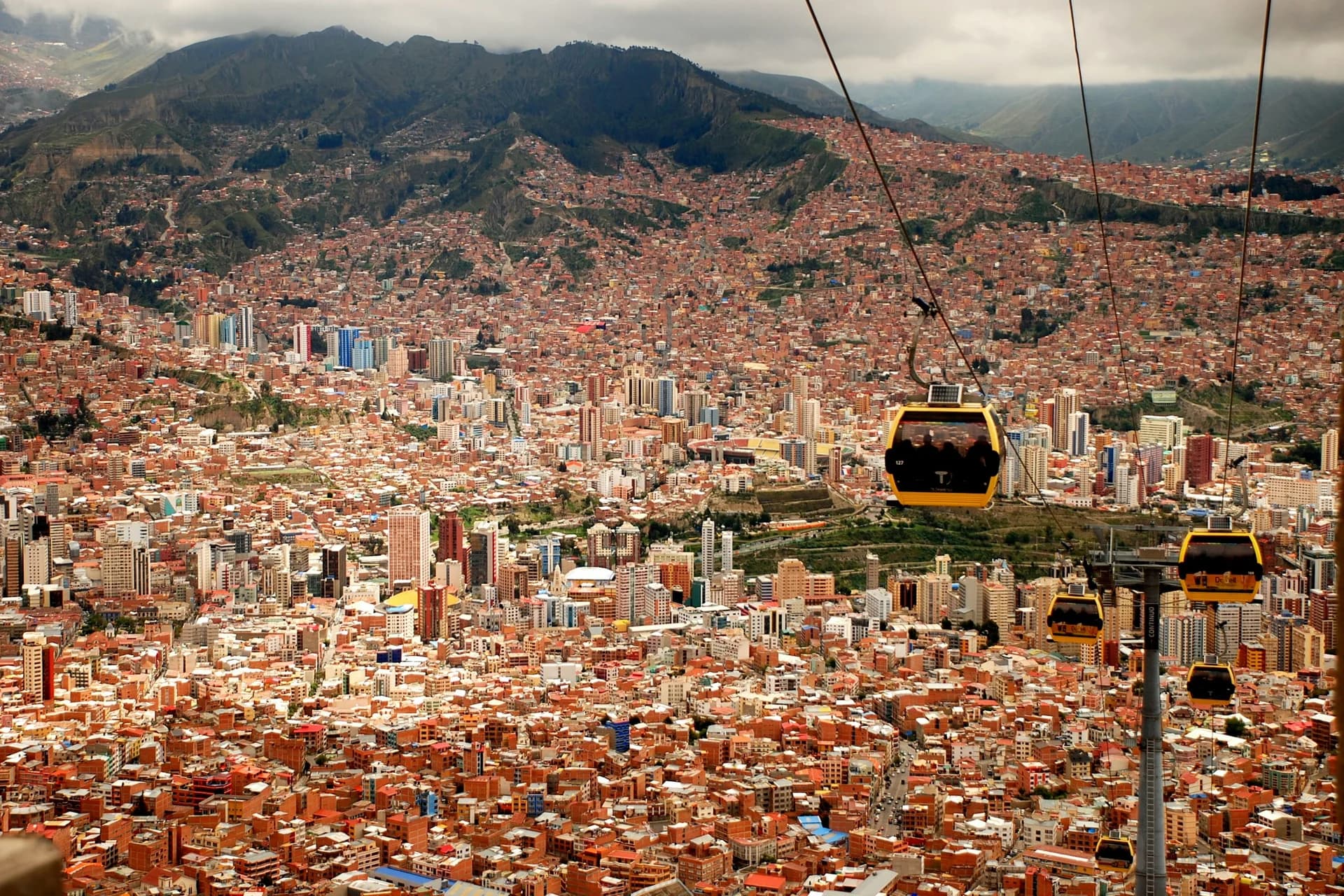
La Paz
Key Facts
Best Time to Visit
May to October (dry season, clear skies, best for outdoor activities)
Language
Spanish, Aymara, Quechua
Currency
Boliviano (BOB)
Time Zone
BOT (UTC-4)
Airport
El Alto International Airport (LPB) — at 4,061m, the world's highest international airport
Population
~2.0 million (metro area)
Climate
Subtropical highland, avg 5-17°C, dry winters and rainy summers
Safety Rating
Moderate Caution (Level 2 — watch for petty theft in crowded markets)
Altitude
3,640m (11,942 ft) city center — acclimatize for 1-2 days on arrival
Top Highlights
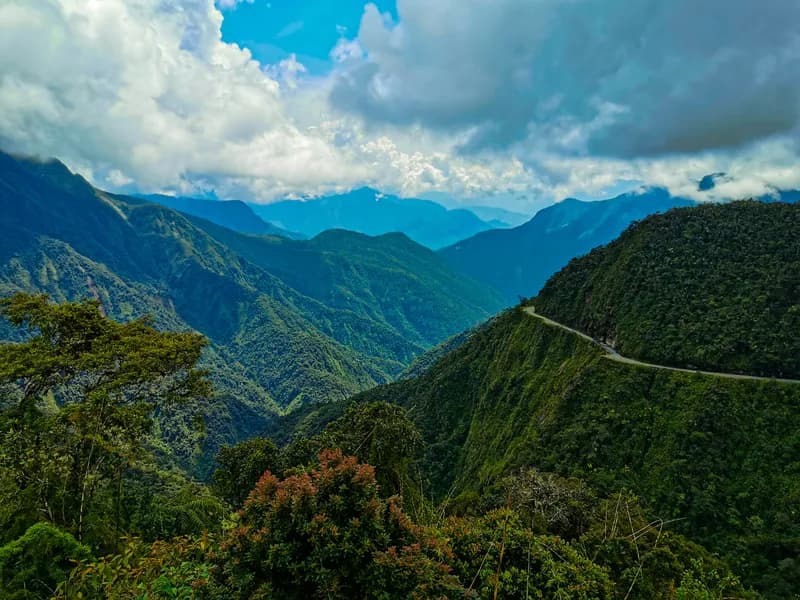
Death Road (North Yungas Road)
Once called the world's most dangerous road, this 64 km downhill mountain bike ride drops 3,600m from 4,650m altitude through clouds, waterfalls, and subtropical jungle to Coroico. Tours run daily from La Paz, $70-100 USD including bike, gear, transport, and lunch. Allow 8-10 hours round trip.
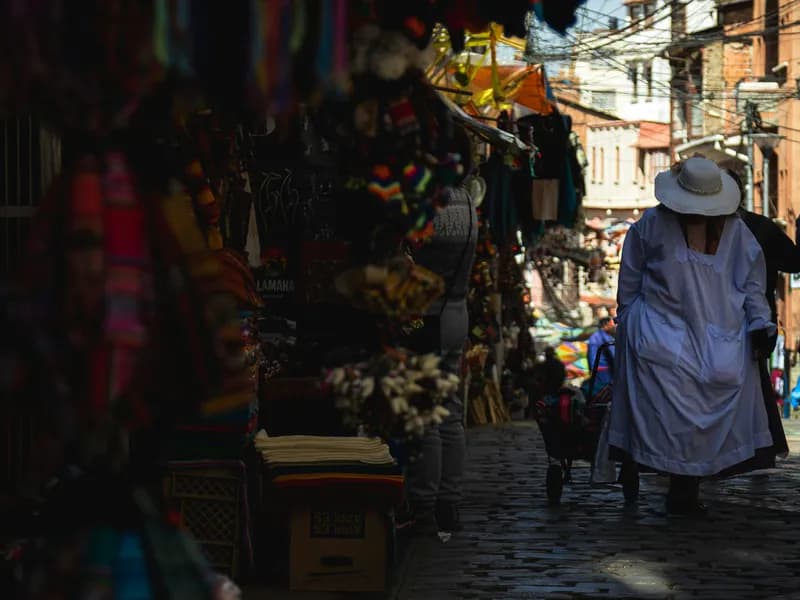
Witches' Market (Mercado de las Brujas)
A surreal open-air market on Calle Jiménez and Linares selling dried llama fetuses, potions, amulets, and ritual offerings to Pachamama (Mother Earth). Aymara healers offer readings and blessings. Free to browse, 5 minutes from Plaza San Francisco. Open daily 9AM-7PM.
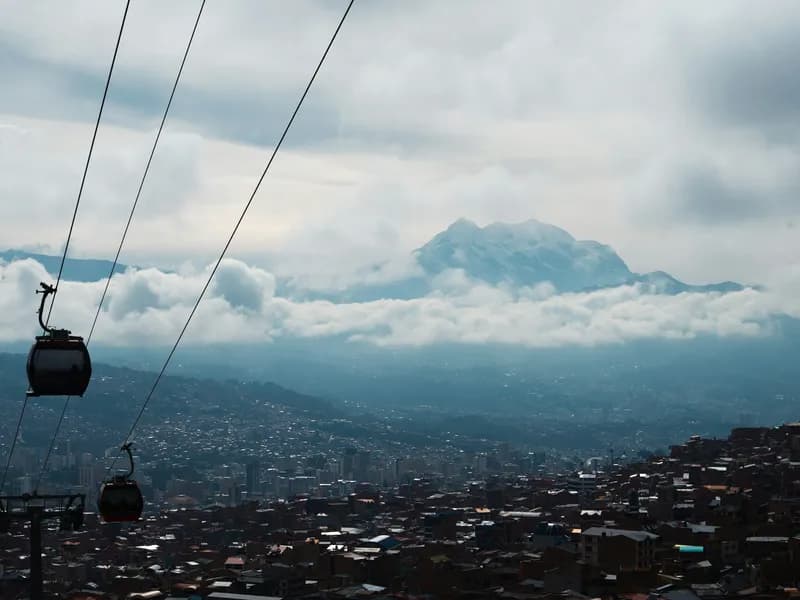
Mi Teleférico (Cable Car Network)
The world's longest and highest urban cable car system with 10 color-coded lines spanning 33 km across the city and up to El Alto. Ride the red and yellow lines for the most dramatic canyon views. ~$0.45 USD per ride. Operates 6AM-10PM daily.
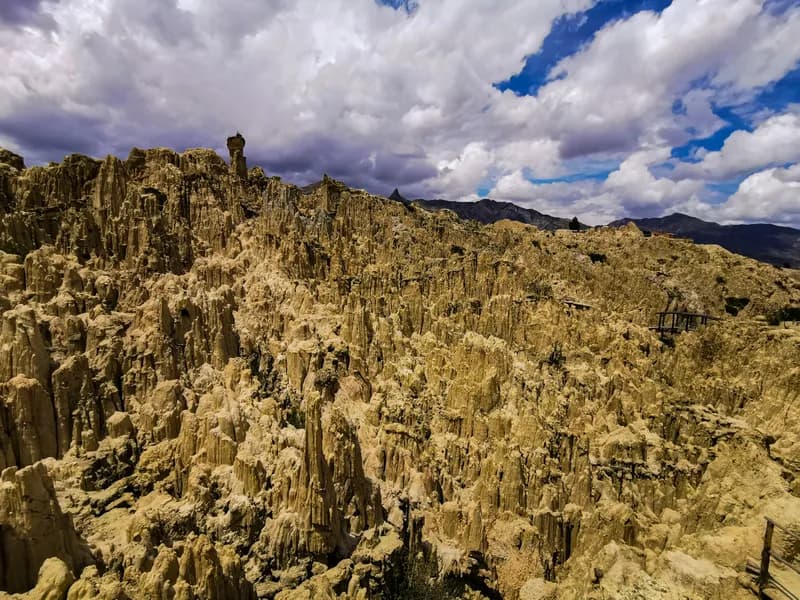
Valle de la Luna (Moon Valley)
An eroded clay and sandstone landscape resembling a lunar surface, just 10 km south of the city center. Two marked trails (15 and 45 minutes) wind through towering spires and canyons. Entry ~$3 USD. Taxi from center ~$5 USD. Best in afternoon light.
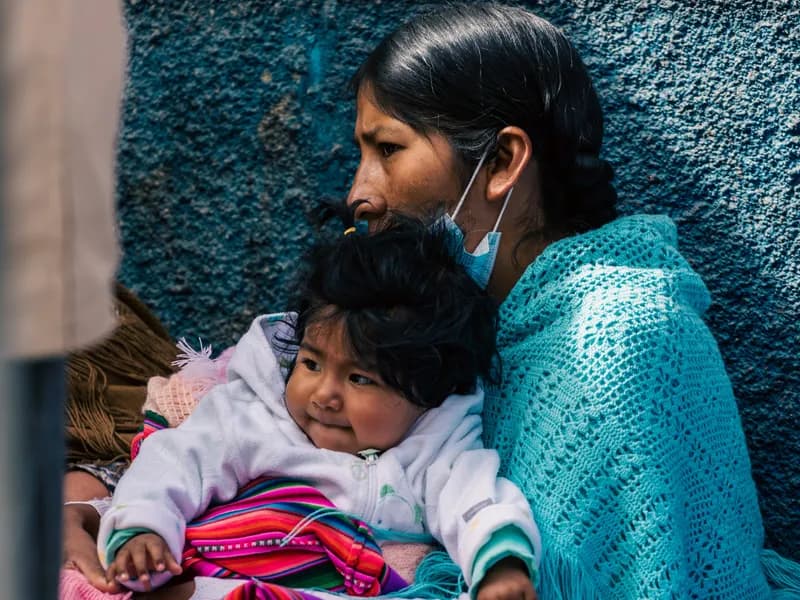
Cholitas Wrestling
Every Sunday at 5PM in El Alto's Multifuncional de Ceja arena, indigenous Aymara women in traditional multilayered pollera skirts and bowler hats perform spectacular lucha libre wrestling. Tickets ~$7-10 USD (tourist section). Absolutely unique to Bolivia.
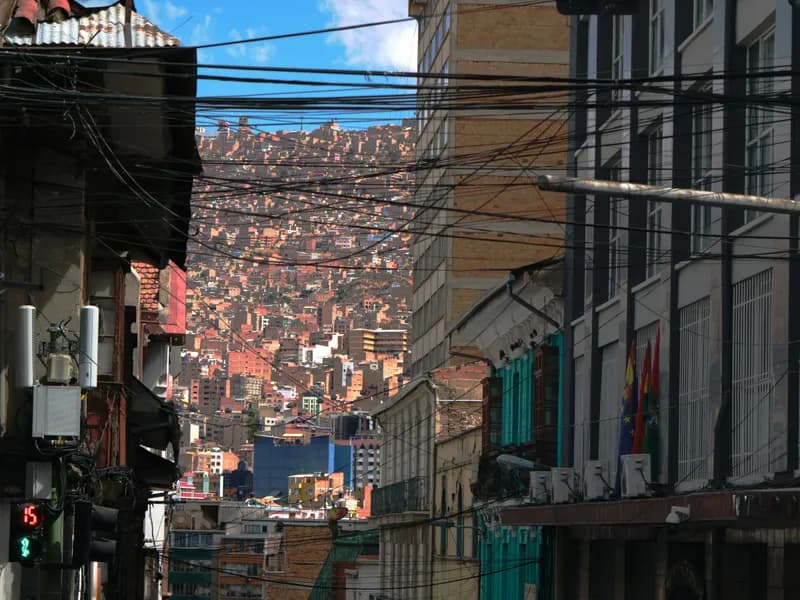
Plaza Murillo and Government District
The political heart of Bolivia with the Presidential Palace (Palacio Quemado), the Cathedral, and Congress. Pigeons swarm the plaza and shoe-shiners wear balaclavas (a local quirk). Free. Allow 1 hour to explore the surrounding colonial streets.
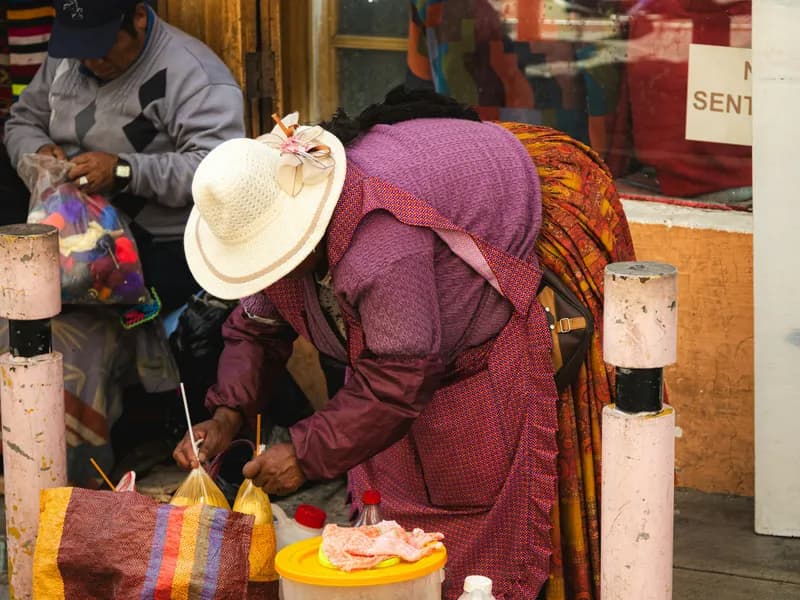
Mercado Lanza and Street Food
A bustling indoor market near Plaza San Francisco where local vendors serve salteñas (savory breakfast pastries, ~$0.60 each), api (warm purple corn drink), and fresh juices. Best experienced 7-10AM for salteñas. Entry free. A genuine slice of daily La Paz life.
Planned Itinerary
7-Day La Paz Itinerary
Arrival & Altitude Acclimatization
Fly into El Alto International Airport (LPB) at 4,061m — the world's highest international airport. The dramatic descent into La Paz's canyon is unforgettable. Take it very easy today — altitude sickness (soroche) hits most visitors. Drink coca tea immediately.
Arrive at El Alto Airport and transfer to La Paz(45 minutes)
Radio taxi to city center ~$8-10 USD. Use Tigo Taxi app — never hail on the street. Sit on the left for views of Illimani (6,438m) as you descend into the canyon
Check into hotel in Sopocachi or Zona Sur(30 minutes)
Mid-range hotels $25-50 USD/night. Sopocachi is central and pleasant. Request coca tea at check-in — it genuinely helps with altitude
Rest and hydrate(3 hours)
Do not overexert. Drink 3-4 liters of water today. Avoid alcohol completely. Take Sorojchi pills from any pharmacy ($1 USD). Your body needs 24-48 hours to adjust to 3,640m
Gentle walk around your neighborhood(30 minutes)
A short, flat walk to orient yourself. Walk slowly — you will be breathless on any incline
Light dinner at Alexander Coffee(1 hour)
A reliable café chain with soup, sandwiches, and coca tea on nearly every corner. Light meal ~$5-8 USD. Multiple locations including Sopocachi and Prado
Teleférico Rides & Witches' Market
Explore the city from above on the world's longest urban cable car system, then descend into the mystical Witches' Market.
Mi Teleférico red and yellow lines(2 hours)
Start at Estación Central and ride the red line up to El Alto for jaw-dropping canyon views, then connect to the yellow line. Each ride just ~$0.45 USD. Operates 6AM-10PM. The most scenic urban transport system on Earth
El Alto Market overview(45 minutes)
If it is Thursday or Sunday, the El Alto feria (open-air market) sprawls for kilometers — everything from llama sweaters to car parts. Worth a walk through for the sheer scale
Witches' Market (Mercado de las Brujas)(1 hour)
On Calle Jiménez and Linares — dried llama fetuses, potions, amulets, and ritual offerings to Pachamama. Aymara healers offer readings (~$3-5 USD). Free to browse. Open daily 9AM-7PM
Lunch at Mercado Lanza(45 minutes)
Bustling indoor market near Plaza San Francisco. Salteñas (savory breakfast pastries, ~$0.60 each), api (warm purple corn drink), and fresh juices. Best 7-10AM for salteñas but lunch plates available all day for ~$1.50-2 USD
Plaza San Francisco and Iglesia de San Francisco(1 hour)
The city's main square with the ornate 16th-century church. The rooftop terrace tours (~$3 USD) offer great views. Free to enter the church
Colonial Center & Valle de la Luna
Walk the historic government district in the morning, then visit the surreal lunar landscape on the city's southern edge.
Plaza Murillo and Government District(1.5 hours)
Presidential Palace, Cathedral, and Congress. Pigeons swarm the plaza and shoe-shiners wear balaclavas. Free. Walk the surrounding colonial streets
Calle Jaén Museums(1.5 hours)
La Paz's most charming colonial street with four small museums in restored houses — Museo del Litoral, Museo del Oro, and more. Combined ticket ~$2 USD. One of the few flat streets in the city
Lunch at Popular Cocina Boliviana(1 hour)
Modern Bolivian cuisine in Rosario neighborhood. Try the llama steak or pique macho (meat, potatoes, peppers plate). Mains ~$5-8 USD
Valle de la Luna (Moon Valley)(1.5 hours)
Eroded clay spires 10 km south of center. Two trails (15 and 45 min). Entry ~$3 USD. Taxi from center ~$5 USD. Best in afternoon light
Dinner at Gustu(2 hours)
Bolivia's most celebrated restaurant by Claus Meyer (Noma co-founder). Tasting menu ~$45 USD — extraordinary Bolivian ingredients. Book ahead. In Calacoto, Zona Sur
Death Road Mountain Biking
The legendary 64 km downhill ride from 4,650m through clouds and jungle to subtropical Coroico — once called the world's most dangerous road.
Tour pickup from hotel(30 minutes)
Reputable operators: Gravity Bolivia, Barracuda Biking. $70-100 USD including bike, gear, transport, and lunch. Depart 7AM. AVOID the cheapest operators — safety matters on this ride
Death Road (North Yungas Road) descent(4.5 hours)
3,600m of altitude drop through cloud forest, past waterfalls and sheer cliffs. Starts on tarmac at La Cumbre pass (4,650m) then switches to the original single-lane dirt road with 600m drops and no guardrails. Exhilarating and terrifying in equal measure
Lunch in Yolosa/Coroico valley(1 hour)
Post-ride meal at a riverside restaurant in the subtropical valley. Included in most tours. Cold beer and warm sun at 1,200m — you have descended into a completely different climate
Return drive to La Paz(3 hours)
The modern road back is safe and scenic. Most riders sleep. Arrive late afternoon
Rest Day & Cholitas Wrestling
Recover from Death Road. A lazy morning, then the most uniquely Bolivian spectacle imaginable in the afternoon.
Sleep in and leisurely breakfast(2 hours)
Your legs will feel the 64 km ride. Rest is essential
Walk to Mercado Rodriguez(1.5 hours)
A local market off the tourist trail in the Rosario neighborhood. Fresh fruits, meats, and prepared food. Empanadas and api for ~$0.50-1 USD. Authentic daily life
Cholitas Wrestling(2.5 hours)
Every Sunday at 5PM in El Alto's Multifuncional de Ceja arena. Indigenous Aymara women in pollera skirts and bowler hats perform spectacular lucha libre. Tickets ~$7-10 USD (tourist section). Take the red teleférico line to El Alto. Absolutely unique to Bolivia — do not miss this if your trip includes a Sunday
Tiwanaku Archaeological Site
Day trip to the pre-Incan ceremonial center on the altiplano — Bolivia's most important archaeological site and a UNESCO World Heritage Site.
Travel to Tiwanaku(1.5 hours)
72 km west of La Paz. Guided tours ~$25-35 USD including transport. Or take a minibus from Cementerio district (~$2 USD, 1.5 hours) and hire a guide at the site (~$10 USD)
Tiwanaku ruins and museum(3 hours)
Entry ~$15 USD including museum. The Kalasasaya temple, Gate of the Sun (Puerta del Sol), and Akapana Pyramid date to 500-900 AD. This civilization predated the Inca by a millennium. The on-site museum has impressive monoliths and pottery
Lunch at a restaurant near the site(1 hour)
Simple restaurants serve trucha (trout) and quinoa soup for ~$3-5 USD
Dinner at Namas Te(1.5 hours)
Vegetarian restaurant in Sopocachi with Bolivian and Indian-inspired dishes. Mains ~$4-6 USD. Good for a lighter meal after heavy altiplano food
Departure from La Paz
Final morning in the world's highest capital. Last shopping and transfer to El Alto Airport.
Morning salteñas at Paceña La Salteña(45 minutes)
The city's most famous salteñería on Calle Sánchez Lima. These savory pastries filled with spiced meat and sauce are eaten only in the morning — La Paz tradition. ~$0.60 each. Arrive before 10AM
Last-minute shopping on Calle Sagárnaga(1 hour)
The main tourist shopping street near San Francisco church. Alpaca sweaters ($15-30 USD), aguayo textiles, silver jewelry, and coca products
Transfer to El Alto Airport (LPB)(45 minutes)
Radio taxi or Tigo Taxi app ~$8-10 USD. The climb back to 4,061m is noticeable. Arrive 3 hours early for international flights
14-Day La Paz Itinerary
Arrival & Altitude Acclimatization
Fly into El Alto Airport (LPB) at 4,061m. Take it easy — altitude sickness hits most visitors. Coca tea immediately.
Airport transfer to La Paz(45 minutes)
Radio taxi ~$8-10 USD. Use Tigo Taxi app. Left side for Illimani views
Check into hotel in Sopocachi(30 minutes)
$25-50 USD/night. Request coca tea
Rest and hydrate(3 hours)
3-4 liters of water. No alcohol. Sorojchi pills $1 USD from any pharmacy
Light dinner at Alexander Coffee(1 hour)
Soup and coca tea. ~$5-8 USD
Teleférico & Witches' Market
The world's longest urban cable car and the mystical Witches' Market.
Mi Teleférico red and yellow lines(2 hours)
Canyon views from the sky. ~$0.45 USD per ride
Witches' Market(1 hour)
Dried llama fetuses, potions, Aymara healers. Free to browse
Lunch at Mercado Lanza(45 minutes)
Salteñas ~$0.60, api, fresh juices. Lunch plates ~$1.50-2 USD
Plaza San Francisco and church(1 hour)
16th-century church. Rooftop tours ~$3 USD
Colonial Center & Valle de la Luna
Historic government district and the lunar landscape south of town.
Plaza Murillo and Government District(1.5 hours)
Presidential Palace, Cathedral, balaclava shoe-shiners. Free
Calle Jaén Museums(1.5 hours)
Four museums in colonial houses. Combined ticket ~$2 USD
Lunch at Popular Cocina Boliviana(1 hour)
Llama steak or pique macho. ~$5-8 USD
Valle de la Luna(1.5 hours)
Eroded clay spires. Entry ~$3 USD. Taxi ~$5 USD
Dinner at Gustu(2 hours)
Claus Meyer's restaurant. Tasting menu ~$45 USD. Book ahead
Death Road Mountain Biking
64 km downhill from 4,650m through clouds to subtropical jungle. The legendary ride.
Tour pickup(30 minutes)
Gravity Bolivia or Barracuda Biking. $70-100 USD all-inclusive. Depart 7AM
Death Road descent(4.5 hours)
3,600m altitude drop. Cloud forest, waterfalls, sheer cliffs. Exhilarating
Lunch in Yolosa valley(1 hour)
Post-ride meal at 1,200m. Included in tour
Rest Day & Cholitas Wrestling
Recover from Death Road. The most uniquely Bolivian spectacle on Sunday afternoon.
Mercado Rodriguez(1.5 hours)
Off-the-beaten-path local market. Empanadas and api ~$0.50-1 USD
Cholitas Wrestling (Sunday)(2.5 hours)
5PM at El Alto arena. Aymara women in pollera skirts wrestling. ~$7-10 USD. Take red teleférico
Tiwanaku Archaeological Site
Day trip to the pre-Incan ceremonial center on the altiplano — UNESCO World Heritage Site.
Travel to Tiwanaku(1.5 hours)
Guided tour ~$25-35 USD or minibus $2 USD
Tiwanaku ruins and museum(3 hours)
Entry ~$15 USD. Kalasasaya temple, Gate of the Sun. 500-900 AD civilization
Lunch near site(1 hour)
Trucha and quinoa soup, ~$3-5 USD
Coroico Overnight Trip
Descend to the Yungas subtropical valley for an overnight stay — lush cloud forest, coffee plantations, and dramatic mountain views.
Minibus from La Paz to Coroico(3 hours)
From Villa Fátima minibus terminal. ~$3-4 USD. Winding mountain road with spectacular views
Check into hotel with pool(30 minutes)
Sol y Luna or Hotel Esmeralda — $30-60 USD/night with pool and valley views
Afternoon at the pool(2 hours)
At 1,750m, the warm subtropical climate feels like paradise after La Paz's chill. Hummingbirds buzz the garden
Walk through Coroico town(1 hour)
A tiny hillside town with a charming plaza, fruit stands selling tropical produce, and sunset views over the Yungas
Dinner at Back-Yard Café(1.5 hours)
Traveler-favorite with wood-fired pizza and cocktails. Mains ~$5-8 USD
Coroico — Coffee Tour & Return
Visit a Yungas coffee plantation, hike to waterfalls, then return to La Paz in the afternoon.
Yungas coffee plantation tour(2.5 hours)
Visit a small-scale organic coffee farm. See the growing, harvesting, and roasting process. Tastings included. ~$15-20 USD. Arrange through your hotel
Hike to local waterfall(1.5 hours)
Several trails lead to waterfalls within walking distance of Coroico. Ask your hotel for directions — most are free and unmarked. Bring water shoes
Lunch at Carla's Garden(1 hour)
Garden restaurant with valley views. Fresh trout and tropical fruit juices. ~$5-7 USD
Minibus back to La Paz(3 hours)
~$3-4 USD. Afternoon departures from the plaza
Chacaltaya & Urban Art
Visit the site of the world's former highest ski resort (now a climate-change monument) and explore La Paz's vibrant street art scene.
Tour to Chacaltaya (5,395m)(4 hours)
Half-day tour ~$15-25 USD. The world's highest ski resort until its glacier disappeared in 2009. Now a stark monument to climate change. 360° views of the Cordillera Real. Drive up — the altitude is extreme. Bring warm layers
Lunch at a comedor in Sopocachi(45 minutes)
Set almuerzo $1.50-2.50 USD. Soup, main, and juice
Street art walking tour(2 hours)
Self-guided or with a local guide (~$10 USD). La Paz has incredible murals, especially in the Sopocachi and Max Paredes neighborhoods. Cholita-inspired art, political murals, and psychedelic Aymara designs
Dinner at Ali Pacha(1.5 hours)
All-vegan restaurant celebrating Bolivian ingredients. Tasting menu ~$20 USD. Creative and surprisingly filling
Copacabana & Lake Titicaca (Overnight)
Travel to the sacred shores of Lake Titicaca — the highest navigable lake in the world at 3,812m.
Bus from La Paz to Copacabana(3.5 hours)
~$4-6 USD. Includes a short ferry crossing at the Strait of Tiquina where the bus drives onto a barge. Stunning altiplano scenery
Check into hotel in Copacabana(30 minutes)
Lakeside hotels $15-35 USD/night. Las Olas or Hotel Rosario del Lago are solid options with lake views
Copacabana Cathedral (Basilica de la Virgen de Copacabana)(45 minutes)
A stunning Moorish-style church housing the 16th-century Black Madonna. Free entry. The blessing of vehicles (Bendición de Movilidades) outside is a unique daily ritual — locals bring new cars for priest blessings
Hike to Cerro Calvario(1 hour)
A steep but short climb to the hilltop above town for sunset views over Lake Titicaca. Stations of the Cross along the path. Free. The view of the lake turning golden at sunset is unforgettable
Dinner at La Orilla(1.5 hours)
Lakeside restaurant. Trucha (trout) from the lake, grilled or ceviche-style. ~$5-8 USD
Isla del Sol — Sun Island
Boat to the sacred island where, according to Inca mythology, the sun was born. Ancient ruins, terraced hillsides, and crystalline views.
Boat from Copacabana to Isla del Sol(2 hours)
~$4-6 USD one way. Boats depart 8:30AM from the beach. Buy at the dock. Most boats go to the north end; some to the south end
Isla del Sol north to south hike(3.5 hours)
Walk the 8 km spine of the island from Challapampa (north) to Yumani (south). Pass Inca ruins, the Chinkana labyrinth, and terraced farming communities. The views of the lake and Cordillera Real are astounding. Note: as of recent years, the north-south trail may have access restrictions due to community disputes — check locally
Lunch at a community restaurant in Yumani(1 hour)
Simple trout and quinoa meals with lake views. ~$3-5 USD
Inca Stairway (Escalera del Inca) and Sacred Fountain(45 minutes)
206 stone steps from the shore to the village of Yumani, passing a sacred spring. Ancient and atmospheric
Return boat to Copacabana(2 hours)
Afternoon boats depart from Yumani pier around 3-4PM
Return to La Paz & Free Afternoon
Morning bus back to La Paz. Free afternoon for last explorations or relaxation.
Bus from Copacabana to La Paz(3.5 hours)
~$4-6 USD. Morning departure
Lunch at Café del Mundo(1 hour)
International menu in Sopocachi. Good coffee and sandwiches. ~$5-8 USD
Free afternoon — revisit favorites or rest(3 hours)
Return to the Witches' Market for gifts, ride a new teleférico line, or simply rest
Dinner at Reineke Fuchs(1.5 hours)
German-Bolivian pub with craft beer brewed on-site. Sausages and schnitzel. Pints ~$3 USD. Lively atmosphere in Sopocachi
Cooking Class & La Paz Markets Deep Dive
Hands-on Bolivian cooking and a deeper exploration of the city's market culture.
Bolivian cooking class(3 hours)
Learn to make salteñas, pique macho, and api morado. ~$25-35 USD through local hosts or Airbnb Experiences. Includes market shopping for ingredients
Explore Mercado Negro (Black Market)(1.5 hours)
Massive market in the Max Paredes neighborhood selling everything imaginable. Electronics, bootleg DVDs, car parts, herbs, and clothing. Not dangerous despite the name but keep valuables close
Final teleférico ride — silver line at sunset(1 hour)
The silver line has some of the most dramatic city views at sunset. ~$0.45 USD
Farewell dinner at Gustu(2 hours)
Return for the full tasting experience. ~$45 USD. A fitting finale
Departure from La Paz
Final morning. Salteñas, last shopping, and transfer to El Alto Airport.
Morning salteñas at Paceña La Salteña(45 minutes)
Famous salteñería on Calle Sánchez Lima. ~$0.60 each. Arrive before 10AM
Shopping on Calle Sagárnaga(1 hour)
Alpaca sweaters $15-30 USD, aguayo textiles, silver jewelry
Transfer to El Alto Airport(45 minutes)
Radio taxi ~$8-10 USD. Arrive 3 hours early for international flights
21-Day La Paz Itinerary
Arrival & Altitude Acclimatization
Fly into El Alto Airport (LPB) at 4,061m. Coca tea and rest — altitude sickness hits most visitors.
Airport transfer to La Paz(45 minutes)
Radio taxi ~$8-10 USD. Left side for Illimani views
Check into hotel in Sopocachi(30 minutes)
$25-50 USD/night. Coca tea at check-in
Rest and hydrate(3 hours)
No alcohol. Sorojchi pills $1 USD. 3-4 liters water
Light dinner at Alexander Coffee(1 hour)
Soup and coca tea, ~$5-8 USD
Teleférico & Witches' Market
World's longest urban cable car and the mystical market.
Mi Teleférico red and yellow lines(2 hours)
~$0.45 per ride. Canyon views from the sky
Witches' Market(1 hour)
Llama fetuses, potions, Aymara healers on Calle Jiménez
Lunch at Mercado Lanza(45 minutes)
Salteñas ~$0.60, lunch plates ~$1.50-2 USD
Plaza San Francisco and church(1 hour)
Rooftop tours ~$3 USD
Colonial Center & Valle de la Luna
Historic government district and the surreal lunar landscape.
Plaza Murillo and Government District(1.5 hours)
Presidential Palace, Cathedral. Free
Calle Jaén Museums(1.5 hours)
Four museums, combined ~$2 USD
Lunch at Popular Cocina Boliviana(1 hour)
Llama steak or pique macho, ~$5-8 USD
Valle de la Luna(1.5 hours)
Entry ~$3 USD. Taxi ~$5 USD
Dinner at Gustu(2 hours)
Tasting menu ~$45 USD. Book ahead
Death Road Mountain Biking
64 km downhill from 4,650m to subtropical jungle.
Tour pickup(30 minutes)
$70-100 USD all-inclusive. Gravity Bolivia or Barracuda
Death Road descent(4.5 hours)
3,600m drop through cloud forest and waterfalls
Lunch in Yolosa valley(1 hour)
Included. Beer at 1,200m subtropical warmth
Rest Day & Cholitas Wrestling
Recovery day. Aymara women wrestling in the evening (Sundays).
Mercado Rodriguez(1.5 hours)
Local market — empanadas and api ~$0.50-1 USD
Cholitas Wrestling (Sunday)(2.5 hours)
5PM El Alto. ~$7-10 USD. Red teleférico line
Tiwanaku Archaeological Site
Pre-Incan ruins on the altiplano — UNESCO World Heritage Site.
Travel to Tiwanaku(1.5 hours)
Tour ~$25-35 USD or minibus $2 USD
Tiwanaku ruins and museum(3 hours)
Entry ~$15 USD. Gate of the Sun, Kalasasaya temple
Lunch near site(1 hour)
Trucha and quinoa, ~$3-5 USD
Dinner at Namas Te(1.5 hours)
Vegetarian. ~$4-6 USD
Coroico Overnight — Yungas Valley
Descend to the subtropical cloud forest for an overnight stay.
Minibus to Coroico(3 hours)
From Villa Fátima. ~$3-4 USD
Check into hotel with pool(30 minutes)
Sol y Luna, $30-60 USD/night
Pool afternoon(2 hours)
1,750m subtropical warmth. Hummingbirds in the garden
Dinner at Back-Yard Café(1.5 hours)
Pizza and cocktails, ~$5-8 USD
Coroico — Coffee Tour & Return
Yungas coffee plantation and waterfall hike before returning.
Coffee plantation tour(2.5 hours)
Organic farm visit with tastings. ~$15-20 USD
Hike to local waterfall(1.5 hours)
Free unmarked trails near Coroico. Bring water shoes
Lunch at Carla's Garden(1 hour)
Valley views. Trout, ~$5-7 USD
Chacaltaya & Street Art
Former world's highest ski resort (now climate-change monument) and La Paz's mural scene.
Tour to Chacaltaya (5,395m)(4 hours)
~$15-25 USD. 360° views. Glacier disappeared 2009. Bring warm layers
Lunch at a comedor(45 minutes)
Set almuerzo $1.50-2.50 USD
Street art walking tour(2 hours)
Self-guided or ~$10 USD. Sopocachi and Max Paredes neighborhoods
Dinner at Ali Pacha(1.5 hours)
All-vegan Bolivian tasting menu ~$20 USD
Copacabana & Lake Titicaca (Overnight)
Travel to the highest navigable lake in the world at 3,812m.
Bus to Copacabana(3.5 hours)
~$4-6 USD. Ferry crossing at Strait of Tiquina
Check into lakeside hotel(30 minutes)
$15-35 USD/night. Las Olas or Hotel Rosario del Lago
Copacabana Cathedral(45 minutes)
Moorish-style church with Black Madonna. Free. Vehicle blessing ritual daily
Hike Cerro Calvario for sunset(1 hour)
Hilltop sunset over Lake Titicaca. Free. Unforgettable
Dinner at La Orilla(1.5 hours)
Lake trout. ~$5-8 USD
Isla del Sol — Sun Island
Where the Inca believed the sun was born. Ancient ruins and stunning lake views.
Boat to Isla del Sol(2 hours)
~$4-6 USD one way from Copacabana beach
Island hike north to south(3.5 hours)
8 km trail past Inca ruins, Chinkana labyrinth, terraced communities. Check trail access locally
Lunch at community restaurant in Yumani(1 hour)
Trout and quinoa, ~$3-5 USD
Inca Stairway and Sacred Fountain(45 minutes)
206 stone steps with sacred spring
Return boat(2 hours)
Afternoon boats 3-4PM from Yumani
Return to La Paz
Morning bus back. Free afternoon for rest or exploration.
Bus to La Paz(3.5 hours)
~$4-6 USD
Lunch at Café del Mundo(1 hour)
Sopocachi. Coffee and sandwiches, ~$5-8 USD
Dinner at Reineke Fuchs(1.5 hours)
Craft beer pub. Pints ~$3 USD
Bus to Sucre — Bolivia's White City
Travel to Bolivia's constitutional capital — a gorgeous colonial city at a more comfortable 2,810m with warmer weather.
Fly or bus to Sucre(1 hour flight / 12 hours bus)
Flights on Boliviana de Aviación ~$60-80 USD one way (recommended). Buses ~$10-15 USD but very long
Check into hotel near Plaza 25 de Mayo(30 minutes)
Beautiful colonial hotels $20-40 USD/night. Mi Pueblo Samary or Parador Santa María
Walk Plaza 25 de Mayo(1 hour)
Sucre's main square surrounded by white colonial buildings. The Casa de la Libertad (where Bolivian independence was signed) faces the plaza. Entry ~$3 USD
Dinner at Condor Café(1.5 hours)
Rooftop terrace with plaza views. International and Bolivian menu, ~$6-10 USD
Sucre — Colonial City & Dinosaur Footprints
UNESCO World Heritage colonial architecture in the morning, then 68-million-year-old dinosaur trackways in the afternoon.
Sucre colonial walking tour(2.5 hours)
Self-guided or free walking tour (tip-based). San Felipe Neri monastery rooftop (~$3 USD) offers the best city panorama. Textile Museum (~$3 USD) showcases incredible indigenous weaving
Lunch at El Huerto(1 hour)
Garden restaurant on Calle Ladislao Cabrera. Excellent international food with Bolivian touches. Mains ~$6-10 USD
Cal Orck'o — Dinosaur Footprints(2 hours)
A vertical limestone wall containing over 5,000 dinosaur footprints from 68 million years ago. Parque Cretácico (~$5 USD entry, taxi ~$3 USD from center). Guided tours of the cement quarry where the wall was discovered. Life-size dino replicas for kids
Mercado Central for chocolate(45 minutes)
Sucre is Bolivia's chocolate capital. Buy organic bars from Taboada or Para Ti for ~$2-3 USD each. The hot chocolate is exceptional
Sucre — Maragua Crater Hike
A full-day hike through indigenous communities to a geological crater formation — one of Bolivia's most rewarding off-the-beaten-path treks.
Transfer to trailhead at Chataquila(1 hour)
Taxi or tour ~$30-40 USD for the day. The chapel at Chataquila (3,600m) marks the start of the Inca trail descent
Hike to Maragua Crater(4 hours)
Descend on an Inca trail through Quechua farming communities to the stunning Maragua syncline — a geological formation resembling a giant crater. Indigenous textiles for sale in the village. Trail is well-marked
Lunch with a local family in Maragua(1 hour)
Community-based tourism — lunch prepared by villagers, ~$3-5 USD. A genuine cultural exchange
Return hike and transfer to Sucre(3 hours)
Ascend back to Chataquila or arrange pickup in Maragua
Sucre — Cooking Class & Free Afternoon
Learn Bolivian cooking, shop for textiles, and enjoy Sucre's slower pace before heading to Potosí.
Bolivian cooking class in Sucre(3 hours)
Make salteñas and mondongo (pork stew) with market shopping. ~$25-30 USD through local cooking schools
Textile shopping at ASUR Museum shop(1 hour)
Authentic indigenous textiles from the Jalq'a and Yampara communities. Fair-trade prices. The museum (~$4 USD) explains the symbolism in the weaving patterns
Farewell dinner at Joy Ride Café(1.5 hours)
Social enterprise restaurant training at-risk youth. Burgers, pasta, Bolivian dishes. ~$5-8 USD. Supports a great cause
Potosí — Cerro Rico & Colonial Wealth
Day trip or overnight to the silver mining city — once the richest and most populated city in the Americas.
Bus from Sucre to Potosí(3 hours)
~$3-5 USD. Frequent departures. The road climbs to 4,000m — Potosí sits at 4,090m, one of the world's highest cities
Cerro Rico mine tour(3.5 hours)
Tour an active mine inside the mountain that once funded the Spanish Empire. Buy gifts for miners (dynamite, coca leaves, alcohol) at the miners' market before entering. Physically demanding — crawling through narrow tunnels at 4,200m. ~$15-20 USD. Ethically complex but eye-opening. Only use reputable operators like Koala Tours
Casa de la Moneda (Mint Museum)(1.5 hours)
Where the Spanish minted the coins that financed their global empire. Entry ~$5 USD. Massive colonial building with original machinery
Return bus to Sucre or overnight in Potosí(3 hours)
Last buses ~6PM. If staying: Hostal Colonial, ~$15-20 USD/night
Return to La Paz
Fly or bus back to La Paz from Sucre. Free evening for last explorations.
Flight from Sucre to La Paz(1 hour)
~$60-80 USD. Morning departures
Free afternoon(3 hours)
Final teleférico rides, revisit favorite markets, or rest
Dinner at Café del Mundo(1.5 hours)
Reliable international menu in Sopocachi. ~$5-8 USD
Cooking Class & Market Deep Dive
Final hands-on cultural immersion in La Paz.
Morning salteñas at Paceña La Salteña(45 minutes)
~$0.60 each. Before 10AM
Explore Mercado Negro(1.5 hours)
Massive market in Max Paredes. Everything imaginable. Keep valuables close
Lunch at a tucked-away comedor(45 minutes)
Set almuerzo $1.50-2.50 USD
Language exchange or local meetup(2 hours)
Several cafés in Sopocachi host weekly Spanish-English exchanges. Ask at hostels or check Facebook groups. A great way to meet locals
Farewell dinner at Gustu(2 hours)
Final tasting menu. ~$45 USD
Free Day — Your La Paz
Your last full day. Return to favorites, explore something missed, or simply sit in a plaza and watch the city.
Revisit a favorite spot(2 hours)
The Witches' Market for last gifts, Valle de la Luna at a different time of day, or a new teleférico line
Final shopping on Calle Sagárnaga(1.5 hours)
Alpaca sweaters, aguayo textiles, silver jewelry
Sunset teleférico ride(1 hour)
Silver or green line for golden-hour views. ~$0.45 USD
Farewell drinks at The Adventurers' Brew(1.5 hours)
Craft brewery in Sopocachi. Local beers ~$2-3 USD
Departure from La Paz
Final morning in the world's highest capital.
Last coca tea(15 minutes)
A fitting farewell to Bolivia
Transfer to El Alto Airport(45 minutes)
Radio taxi ~$8-10 USD. 3 hours early for international
Travel Tips
Visa & Entry
Visa Requirements
US citizens need a visa ($160 USD, apply online or at border). EU, UK, Australian, and most Latin American passport holders enter visa-free for 90 days. Bring proof of yellow fever vaccination if arriving from a tropical country.
Safety
Altitude Sickness Is Real
At 3,640m, altitude sickness (soroche) affects most visitors. Rest for the first 24-48 hours, drink coca tea (mate de coca, legal and available everywhere), stay hydrated, and avoid alcohol on arrival. Pharmacies sell Sorojchi pills ($1 USD) — take preventatively.
Common Tourist Scam — Fake Police
A known scam involves someone posing as a tourist asking for directions, then a 'police officer' appears and asks to check your documents and wallet. Real Bolivian police will never ask to see your money. If approached, walk to the nearest shop or hotel and call real police (110).
transport
Getting Around Safely
Use radio taxis (called by phone or app) rather than hailing on the street. The Mi Teleférico cable car is the safest and most scenic transport. Avoid unofficial taxis especially at night. Uber does not operate in Bolivia — use the local 'Tigo Taxi' app.
Flights to La Paz
No direct flights from the US — connect via Lima (LATAM), Bogotá (Avianca), or Santa Cruz (Boliviana de Aviación). The landing at LPB airport at 4,061m is dramatic. Sit on the left side for Illimani views. Flight from Lima is ~2 hours.
Budget
Extremely Budget-Friendly
Bolivia is South America's cheapest country for travelers. Set lunches (almuerzo) cost $1.50-2.50 USD, hostels $6-10 USD/night, and mid-range hotels $25-50 USD. The cable car costs just $0.45 per ride. Budget travelers can comfortably spend $25-35 USD/day.
Local Customs
Coca Leaves Are Legal
Chewing coca leaves and drinking coca tea is a deeply rooted Andean tradition and completely legal in Bolivia. It genuinely helps with altitude sickness. However, do not attempt to take coca products out of Bolivia — they are illegal in most other countries.
Related Articles
StoriesFirst Day in La Paz: Thin Air, a Little Friction, and the Moment the City Clicks
La Paz greets you with thin air, steep streets, and a first day that leaves you breathless — then hands back the best view in Bolivia. Here's how the world's highest capital wins you over.
SeasonalWhen to Visit La Paz: A Season-by-Season Guide to Bolivia's Sky-High Capital
Dry season clarity vs. rainy season thunder, plus the festivals and street food that shift with the calendar. Here's when to go and why.
StoriesWhat La Paz Is Really Like: A Local's Perspective After 12 Years
Marco has lived in La Paz since 2014. He shares the places tourists miss, the scams to avoid, and why the altitude never fully stops being a problem.
Travel Guides10 Jaw-Dropping Things to Do in La Paz, Bolivia (That Cost Almost Nothing)
The world's highest capital city runs on $0.45 cable car rides, $1.50 lunches, and experiences you literally can't find anywhere else on Earth.