10 Jaw-Dropping Things to Do in La Paz, Bolivia (That Cost Almost Nothing)
10 Jaw-Dropping Things to Do in La Paz, Bolivia (That Cost Almost Nothing)
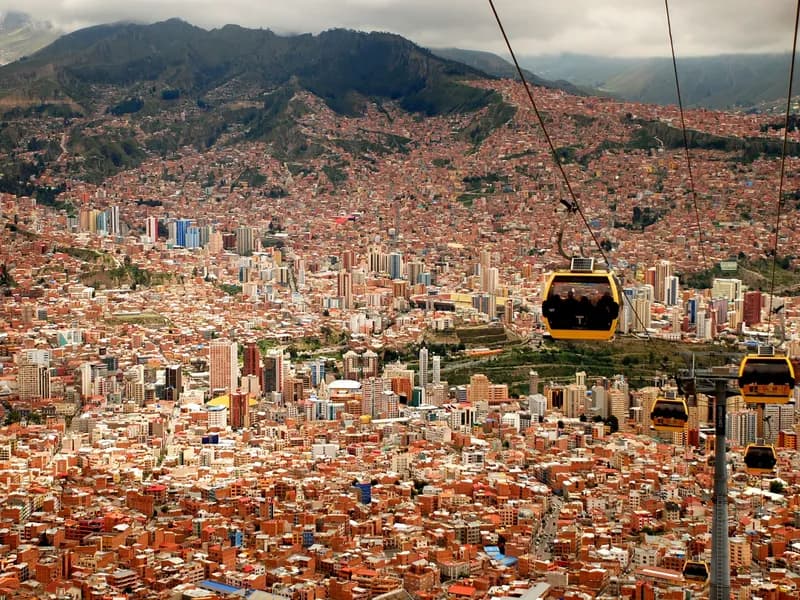
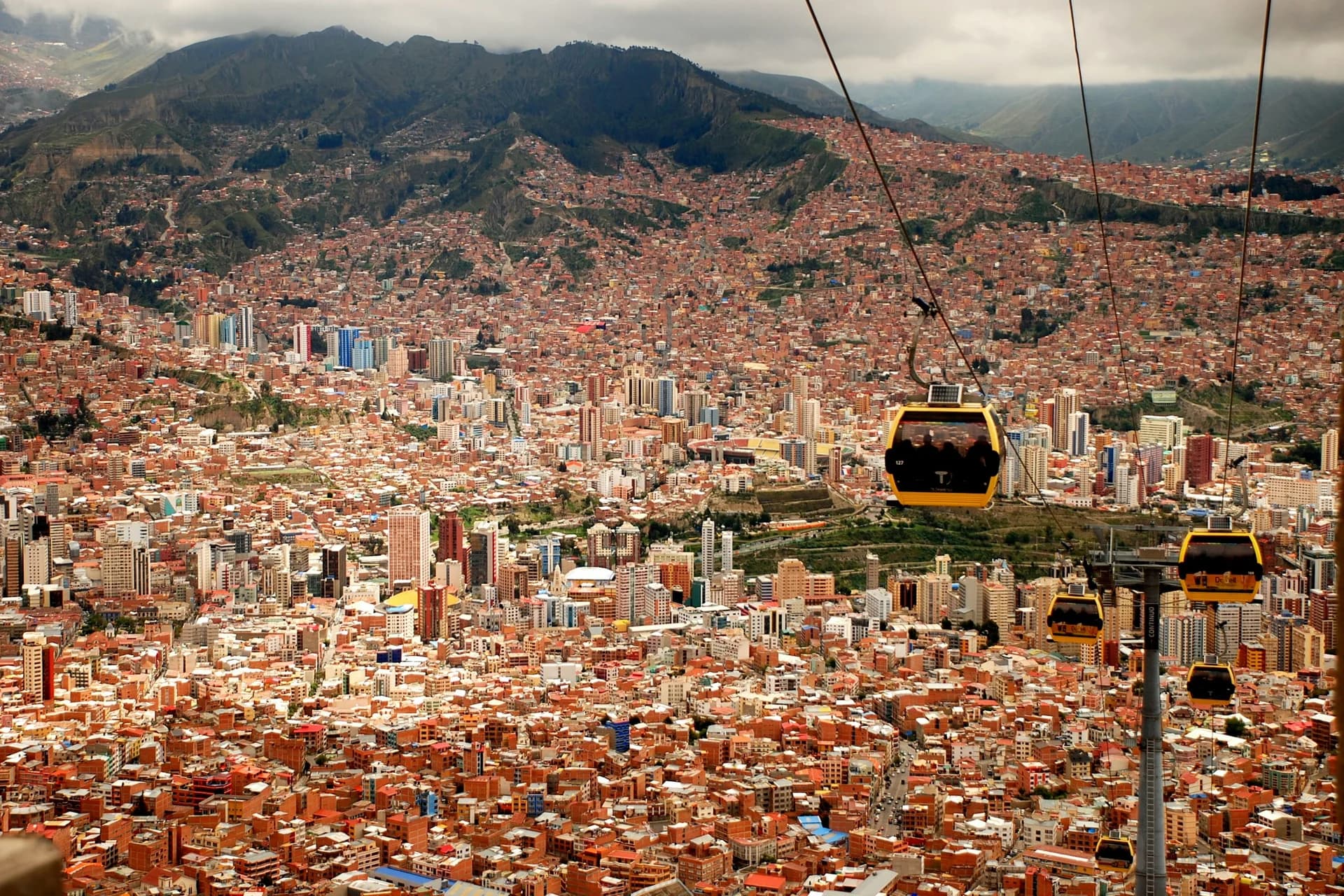
La Paz doesn't ease you in gently. Your flight lands at El Alto airport — 4,061 meters above sea level — and the moment you step onto the tarmac, your lungs make it clear that oxygen has become a luxury item. The taxi descends into a canyon so deep and so densely packed with buildings that the city looks like someone tipped a box of LEGO into a geological crack.
It's chaotic. It's overwhelming. And it's one of the most fascinating cities in South America — all for almost nothing.
1. Ride the Entire Mi Teleferico Network
Cost: ~$0.45 USD per ride
La Paz runs the world's longest and highest urban cable car system — 10 color-coded lines spanning 33 kilometers across the city and up to El Alto. This is public transport, not a tourist attraction, which means you're riding alongside abuelas with shopping bags and businessmen in suits.
The red and yellow lines serve up the most dramatic canyon views. The silver line to El Alto reveals the sheer scale of the altiplano stretching to the horizon. Ride all 10 lines in a single day for under $5 total. The views at sunset — city lights filling the canyon while Illimani's snow-capped peak turns pink — are worth a hundred times that.
2. Get Your Mind Blown at the Witches' Market
Cost: Free to browse
The Mercado de las Brujas on Calle Jimenez and Linares is no ordinary souvenir market. Stalls sell dried llama fetuses (offerings to Pachamama, Mother Earth), potions in unmarked bottles, amulets for every conceivable desire, and ritual items whose purposes reveal themselves slowly, if at all.
Aymara healers sit behind tables offering readings and blessings. A coca leaf reading runs about $3 — a healer tosses the leaves onto a cloth, studies the patterns, and offers a prophecy you'll be turning over for days. It's five minutes from Plaza San Francisco and open daily 9AM-7PM. Buy something small. Don't haggle too aggressively — these are sacred items to many Bolivians, not cheap trinkets.
3. Bike Death Road
Cost: $70-100 USD
Fair warning: this one isn't cheap by La Paz standards. But biking the North Yungas Road — once called the world's most dangerous road — is a 64-kilometer downhill ride that drops 3,600 meters from 4,650m altitude through clouds, waterfalls, and subtropical jungle to the village of Coroico.
The old road is narrow, unpaved, guardrail-free in many sections, and clings to the side of a cliff with drops of 600+ meters. Trucks and buses used it as the main highway until a new road opened in 2006. Now it belongs mostly to tourists on mountain bikes, which doesn't make it safe — just less deadly.
Go with a reputable operator like Gravity Bolivia: well-maintained bikes, an experienced guide, and a backup vehicle that follows the entire way. The views are spectacular, the grip on your handlebars white-knuckled for four hours straight. Absolutely worth it.
4. Watch Cholitas Wrestling
Cost: ~$7-10 USD
Every Sunday at 5PM in El Alto's Multifuncional de Ceja arena, indigenous Aymara women in traditional multilayered pollera skirts and bowler hats perform spectacular lucha libre wrestling.
This is no mockery or cultural exploitation — the cholitas are athletes performing for an enthusiastic local crowd. The moves are real (well, wrestling-real), the theatrics are gloriously over the top, and watching a woman in a bowler hat execute a flying dropkick while her pollera skirt billows like a parachute is something you'll remember for good.
Tourist section tickets run about $7-10 USD. Get there early for a good seat.
5. Eat Salteñas at Mercado Lanza
Cost: ~$0.60 each
Salteñas are Bolivia's breakfast pastry — a baked, empanada-like pouch filled with a sweet-savory stew of meat, potatoes, olives, and a slightly spicy sauce that erupts when you bite in. Technique matters: tilt, nibble a corner, slurp the juice first, THEN eat the rest. Skip the ritual and the filling detonates across your shirt.
Mercado Lanza, near Plaza San Francisco, is the best spot. Vendors start serving at 7AM, and by 10AM the best ones are sold out. At $0.60 each, eat three. Pair with api, a warm purple corn drink that tastes like cinnamon-spiced hot chocolate's cooler cousin.
6. Walk to Valle de la Luna
Cost: ~$3 USD entry
Moon Valley is an eroded clay and sandstone landscape that looks exactly like its name suggests — lunar. It's 10 kilometers south of the city center (taxi ~$5), and two marked trails (15 and 45 minutes) wind through towering spires, mushroom-shaped hoodoos, and narrow canyons.
The afternoon light is best for photography. The shorter trail does the job. The longer trail adds more of the same views along steeper paths. At $3 entry, there's zero reason to skip this.
7. Explore Plaza Murillo
Cost: Free
The political heart of Bolivia — the Presidential Palace (Palacio Quemado), the Cathedral, and Congress all face this one square. Pigeons swarm aggressively. Shoe-shiners wear balaclavas, a detail local guides explain plainly: the profession carries a social stigma, and the masks provide anonymity.
That kind of detail captures something worth loving about La Paz — even the mundane turns surprising here. The surrounding colonial streets reward an hour of wandering.
8. Take a Free Walking Tour
Cost: Tip-based (suggest $5-10 USD)
Red Cap Walking Tours runs daily free tours in English starting from Plaza San Francisco at 10AM and 2PM. The guides are locals who grew up in La Paz and share stories no guidebook carries — the history of the shoe-shiners' masks, the political significance of the cable cars, why certain buildings are intentionally left unfinished (to avoid property tax).
Two hours, covering the main center and the Witches' Market. The best orientation to the city.
9. Visit the Coca Museum
Cost: ~$4 USD
A tiny museum on Calle Linares dedicated to the coca leaf — its 4,000-year history in Andean culture, its role in modern Bolivia (legal and culturally important), and its controversial relationship with cocaine (a very small section, handled with scientific neutrality).
The museum includes samples of coca tea and the chance to chew coca leaves. Both are legal in Bolivia and genuinely helpful for altitude sickness. Don't try to take coca products out of the country.
10. Watch Sunset from Killi Killi Viewpoint
Cost: Free
A 20-minute uphill walk from the center (or a $3 taxi when the altitude makes stairs feel like Everest), Killi Killi is a lookout with a 270-degree view of the canyon city. As the sun drops, the buildings catch golden light, the snow on Illimani turns pink, and the cable car lines become strings of light crossing the void.
Bring coca tea in a thermos. Sit on the wall. Watch the city light up from the bottom of the canyon to the top.
Pro Tips
La Paz works beautifully as the anchor of a longer Bolivian trip — pair it with the surreal, mirror-flat salt desert of Salar de Uyuni, an overnight bus ride to the south.
From there the classic Andean route crosses the border into Peru and the thin-aired colonial streets of Cusco and the Sacred Valley, the staging point for Machu Picchu.
- Altitude sickness is real at 3,640m. Rest for the first 24-48 hours, drink coca tea constantly, and skip alcohol on arrival. Pharmacies sell Sorojchi pills for $1.
- Set lunches (almuerzo) at local restaurants cost $1.50-2.50 USD for soup, main course, and a drink. Eat where the office workers eat.
- Radio taxis are safer than street hails. Use the Tigo Taxi app.
- Bolivia is South America's cheapest country. Budget travelers can live comfortably on $25-35 USD per day.
La Paz isn't pretty in the conventional sense. It's dense, chaotic, and sits at an altitude that makes your heart work overtime just standing still — the same thin-air intensity that defines other high-altitude mountain capitals on the far side of the world. But it's also the most genuinely unique city in South America — a place where cable cars cross canyons, wrestlers wear bowler hats, and an entire day costs less than a single dinner in most capitals.