When to Visit La Paz: A Season-by-Season Guide to Bolivia's Sky-High Capital
When to Visit La Paz: A Season-by-Season Guide to Bolivia's Sky-High Capital
La Paz sits at 3,640 meters in a canyon carved into the Altiplano, and its weather doesn't follow typical tropical patterns. There are really only two seasons here: dry (May-October) and wet (November-April). But within those seasons, the temperature swings, festivals, crowds, and even the food change dramatically.
I've visited La Paz in every month except February, and the difference between a July visit and a January visit is like two different cities.
Why This Season Matters
Unlike beach destinations where "wrong season" means rain, La Paz's seasons affect altitude comfort, road accessibility to surrounding attractions (Death Road, Tiwanaku, the Yungas), festival schedules, and whether Illimani — the 6,438m guardian mountain — is visible or hidden behind clouds.
The season you choose shapes everything.
Dry Season: May to October
Weather
Clear blue skies almost every day. Daytime temperatures of 15-20°C, nighttime temperatures dropping to -2 to 5°C. The altitude makes the sun feel intense despite the cool air — you'll sunburn and shiver in the same hour. Humidity is low. The air is dry enough to crack your lips within a day.
Illimani is visible almost every morning, its snow catching the sunrise in shades of pink and gold. This is the postcard weather.
Why Come Now
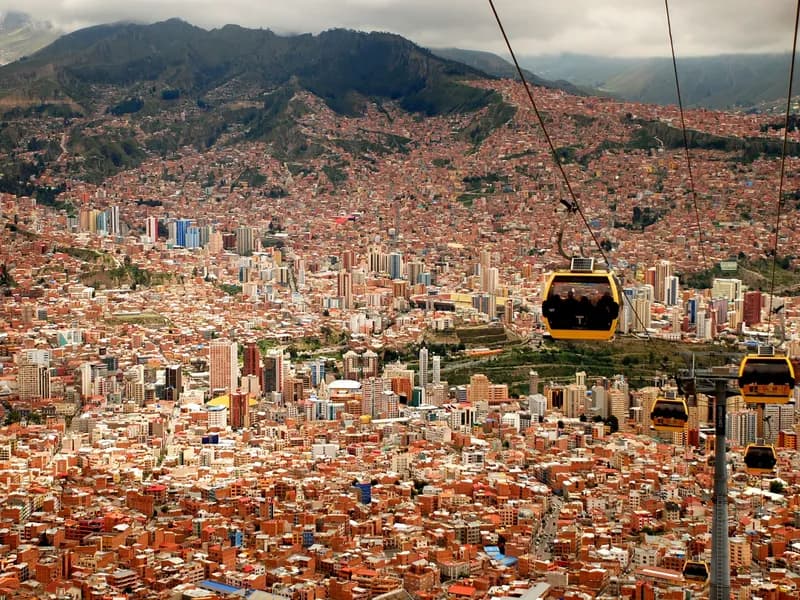
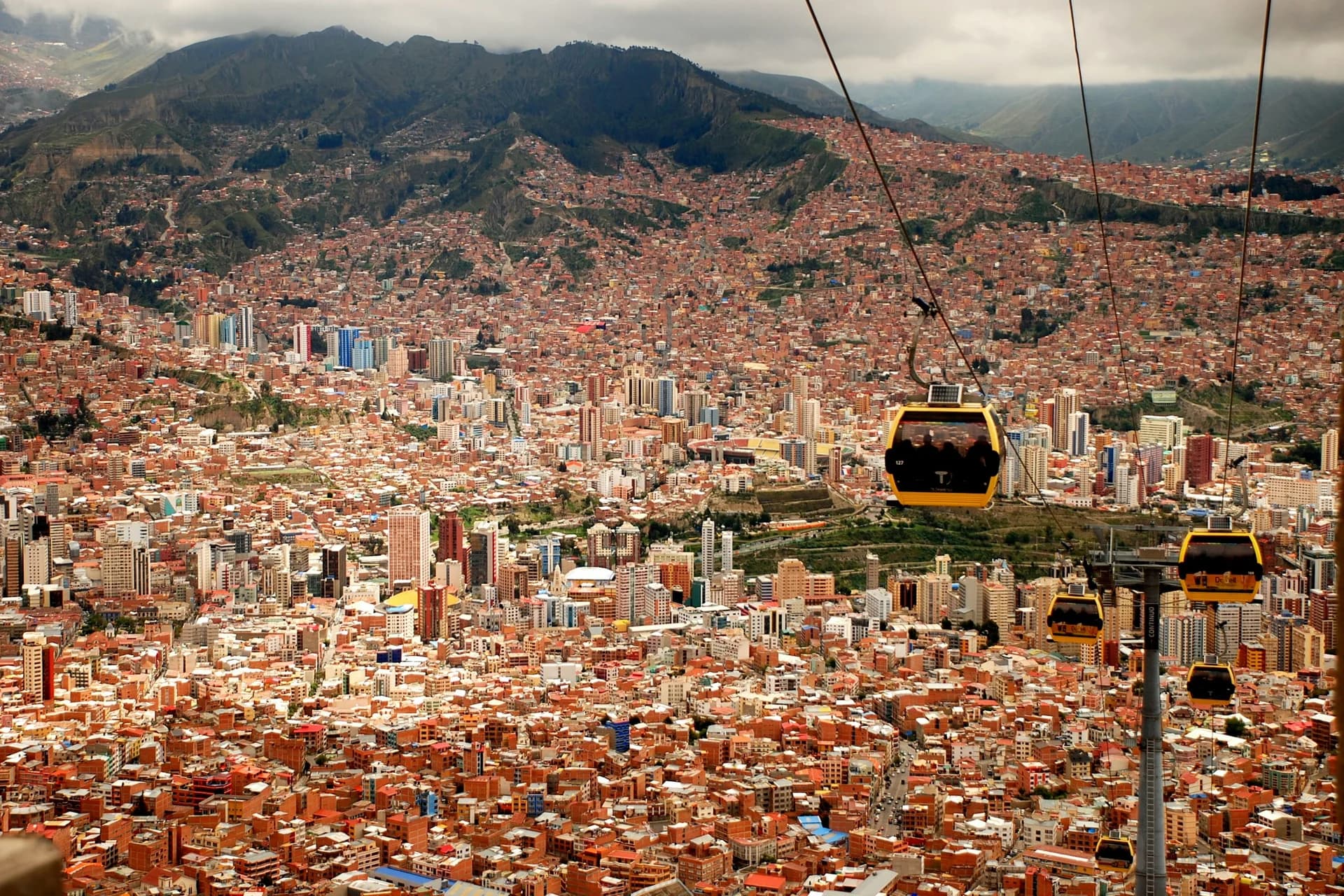
- Clearest views from cable cars and viewpoints. Killi Killi at sunset in June is breathtaking — you can see the entire Cordillera Real mountain chain.
- Best for Death Road cycling — dry conditions mean better grip on the gravel sections. July and August have the driest conditions.
- Festival season — Alasitas (late January, but prep starts in dry season), Gran Poder in June (La Paz's biggest street festival), and Bolivian Independence Day on August 6th with parades citywide.
- Tiwanaku accessibility — the ancient ruins 72 km from La Paz are best visited in dry season when the roads are reliable and the site isn't muddy.
Gran Poder Festival (June)
This is the one. La Paz's version of Carnival, held in late May or early June (date shifts yearly). Over 30,000 dancers in elaborate costumes parade through the streets for 12+ hours. Morenada, Caporales, and Tinku dance groups perform to brass bands so loud they rattle windows.
The entire city shuts down. Streets fill with food vendors — anticuchos (grilled beef heart skewers, $0.50 each), api con pastel (warm corn drink with cheese fritters), and so much beer that the gutters run amber.
Book accommodation 2-3 weeks ahead during Gran Poder. Prices stay low — this is Bolivia — but availability drops.
What to Pack (Dry Season)
- Layers. Seriously — t-shirt for midday, fleece for shade, puffy jacket for evening
- Sunscreen SPF 50+ (UV is extreme at this altitude)
- Lip balm with SPF (the dry air is punishing)
- Hat and sunglasses
- A warm beanie for early mornings and evenings
Seasonal Food
Dry season is the best time for freshly roasted peanuts sold on every street corner (5 bolivianos / $0.70 for a bag). Chicharron (fried pork) stalls set up along Avenida Montes on weekends — crispy pork with mote (boiled corn) and llajwa (spicy tomato salsa) for $3.
Wet Season: November to April
Weather
Afternoon thunderstorms almost daily — mornings start clear, clouds build by noon, and by 3PM the sky opens. Temperatures are slightly warmer (10-22°C) but it feels cooler when wet. Hail is common. Flash flooding hits steep streets, turning them into temporary rivers.
Illimani is often hidden behind clouds, especially in the afternoon. Morning is your window for mountain views.
Why Come Now
- Fewer tourists — La Paz's tourism drops significantly from December through March. Accommodation prices drop 10-20%.
- Lush scenery — the surrounding highlands turn green, and the road to Coroico and the Yungas is at its most dramatically beautiful (waterfalls everywhere).
- Carnival (February/March) — Bolivia's Carnival is a multi-day celebration with water balloon fights (you WILL get soaked), parades, and ch'alla rituals where homes and businesses are blessed with confetti and alcohol.
- Cheaper Death Road tours — some operators discount by 10-15% in wet season. The road is wetter and muddier, which some find more exciting (and others find terrifying).
Carnival (Oruro, but La Paz celebrates too)
The main Carnival happens in Oruro (3 hours from La Paz), but La Paz has its own celebrations. For the two weeks around Carnival, expect water balloons and water guns everywhere — even in the financial district. Locals throw water at EVERYONE. Wear clothes you don't care about.
The Alasitas festival in January features miniature versions of things people wish for — tiny houses, tiny cars, tiny university diplomas — blessed by yatiris (Aymara priests) at a massive fairground.
What to Pack (Wet Season)
- Waterproof jacket (essential — afternoon rain is almost guaranteed)
- Quick-dry pants
- Waterproof shoes or boots (La Paz's cobblestone streets become streams)
- Umbrella (locals use them; tourists somehow forget)
- Same sun protection — the UV penetrates clouds at this altitude
Seasonal Food
Sopa de mani (peanut soup) appears on every menu in wet season — a thick, creamy soup with pasta, potatoes, and fried cubes. It's the ultimate comfort food at altitude. Also: fresh corn season brings humitas (sweet corn tamales, $0.50 each) and roasted corn on the cob from street vendors.
Crowd Levels
| Month | Tourism Level | Notes |
|---|---|---|
| Jan-Feb | Low | Wet season, Carnival |
| Mar-Apr | Low-Medium | Rains easing, shoulder |
| May-Jun | Medium | Dry starts, Gran Poder |
| Jul-Aug | High (peak) | Dry, holidays, best weather |
| Sep-Oct | Medium | Dry, pleasant, fewer crowds |
| Nov-Dec | Low-Medium | Rains begin, Christmas markets |
Sample 5-Day Itinerary (Dry Season — July)
Day 1: Arrive, rest, coca tea. Late afternoon cable car ride (red line) for sunset views. Dinner at El Solar for pique macho.
Day 2: Walking tour (10AM from Plaza San Francisco). Witches' Market. Afternoon at Valle de la Luna ($3 entry). Sunset at Killi Killi.
Day 3: Death Road cycling (full day, $70-100 with reputable operator). Return exhausted. Early dinner, early bed.
Day 4: Tiwanaku ruins day trip ($25-40 with tour, $8 by local bus). Ancient pre-Inca site 72 km from the city. Allow full day.
Day 5: Morning at San Pedro market. Cable car exploration (all lines). Afternoon: Mercado Lanza for final salteñas. Cholitas wrestling at 5PM in El Alto (Sunday only).
My Recommendation
If you're exploring more of the region, Salar de Uyuni offers a complementary experience worth considering.
If you're exploring more of the region, Cusco offers a complementary experience worth considering.
If you're exploring more of the region, Lima offers a complementary experience worth considering.
Late May or September. May catches the transition from wet to dry — the air is clean from recent rains, the highlands are still green, and the dry season clarity is just beginning. September avoids the July-August tourist peak while still offering consistent clear skies.
But honestly? La Paz is a year-round destination. It's never going to be warm, never going to be crowded, and never going to cost more than a few dollars per day. The season changes the backdrop, not the substance.