What La Paz Is Really Like: A Local's Perspective After 12 Years
What La Paz Is Really Like: A Local's Perspective After 12 Years
Marco Villanueva moved to La Paz from Cochabamba in 2014 to study engineering at UMSA university. He never left. Now 34, he runs a small tour company and lives in Sopocachi — a neighborhood he describes as "the part of La Paz that thinks it's Buenos Aires" — and he holds strong opinions about where you should and shouldn't eat.
Over coca tea at a cafe on Calle 20 de Octubre — the standard remedy for a heart that wants to run a marathon while you sit perfectly still — he laid out the city the way only twelve years inside it can.
What's the first thing to know when you arrive?
Sit down. Seriously. Don't try to explore on day one, because the altitude will punish you. Every season, travelers land at the airport in El Alto at 4,061 meters, power through on excitement, and end up in a clinic by evening with severe altitude sickness. Coca tea genuinely works — drink it. Chew the leaves if you're open to it. And accept that for the first 48 hours, a single flight of stairs will leave you breathless.
Twelve years in, Marco still gets winded climbing to his fourth-floor apartment if he's been at sea level for more than a week.
Where to eat that tourists don't know about
The comedores inside Mercado Lanza and Mercado Rodriguez. Skip the tourist-facing stalls at the entrance and go deeper, past the meat section, past the grain vendors. The women running the lunch counters have cooked the same recipes for decades. A full almuerzo — soup, main course, juice, sometimes dessert — runs 15-18 bolivianos [$2-2.50 USD].
For salteñas, skip the tourist recommendations and head straight to Salteñas Giselle on Calle Potosi near Plaza del Estudiante. They sell out by 10:30AM, so arrive at 9. The crust is flakier, the filling carries more spice, and each one costs 5 bolivianos [$0.70].
For dinner, El Solar on Calle Cochabamba does the best pique macho in the city — a mountain of chopped steak, sausage, fries, tomatoes, onions, and locoto peppers. It's built for two, and easily demolished by one with an appetite.
What tourists get wrong about La Paz
The big one: they think it's dangerous. It isn't — no more than any Latin American city. The areas you'll actually visit — Sopocachi, San Pedro, the center — are perfectly safe during the day. At night, take a radio taxi instead of walking alone; the Tigo Taxi app works well. Don't hail taxis on the street, especially near bus terminals.
The fake police scam still circulates, unfortunately. Someone posing as a tourist asks you for directions, then a "police officer" appears wanting to check your wallet. Real police never ask to see your money. If it happens, walk into the nearest shop or hotel and call 110.
The honest take on Death Road
Marco has ridden it twice — once with Gravity Bolivia, all excellent equipment and professional guides, and once with a cheap operator a friend booked for $35. That second time, the brakes were barely functional, the guide was visibly hungover, and there was no support vehicle. Genuinely dangerous.
Pay $70-100 for a reputable operator — Gravity, Barracuda, or World's Death Road. Check the bikes before you start, and if the brakes feel soft, demand a different one. People have died on that road; it's rare, and it's almost always with budget operators cutting corners.
The best neighborhoods to explore
Sopocachi is the obvious favorite — good cafes, good restaurants, and a faintly bohemian streak. Avenida 6 de Agosto and the streets around it are walkable and pleasant.
San Pedro runs more local and less polished, and its market beats Mercado Lanza on prices. The old prison tours are gone, which is for the best — they were exploitative.
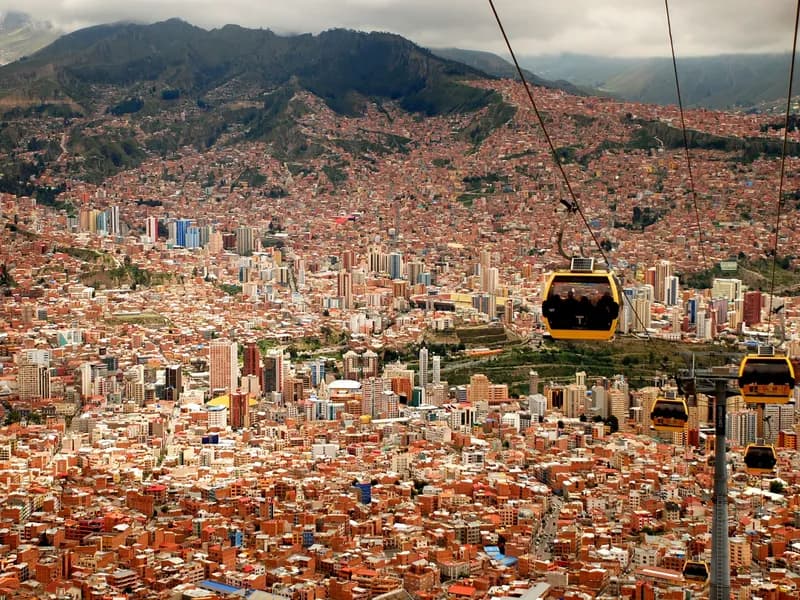
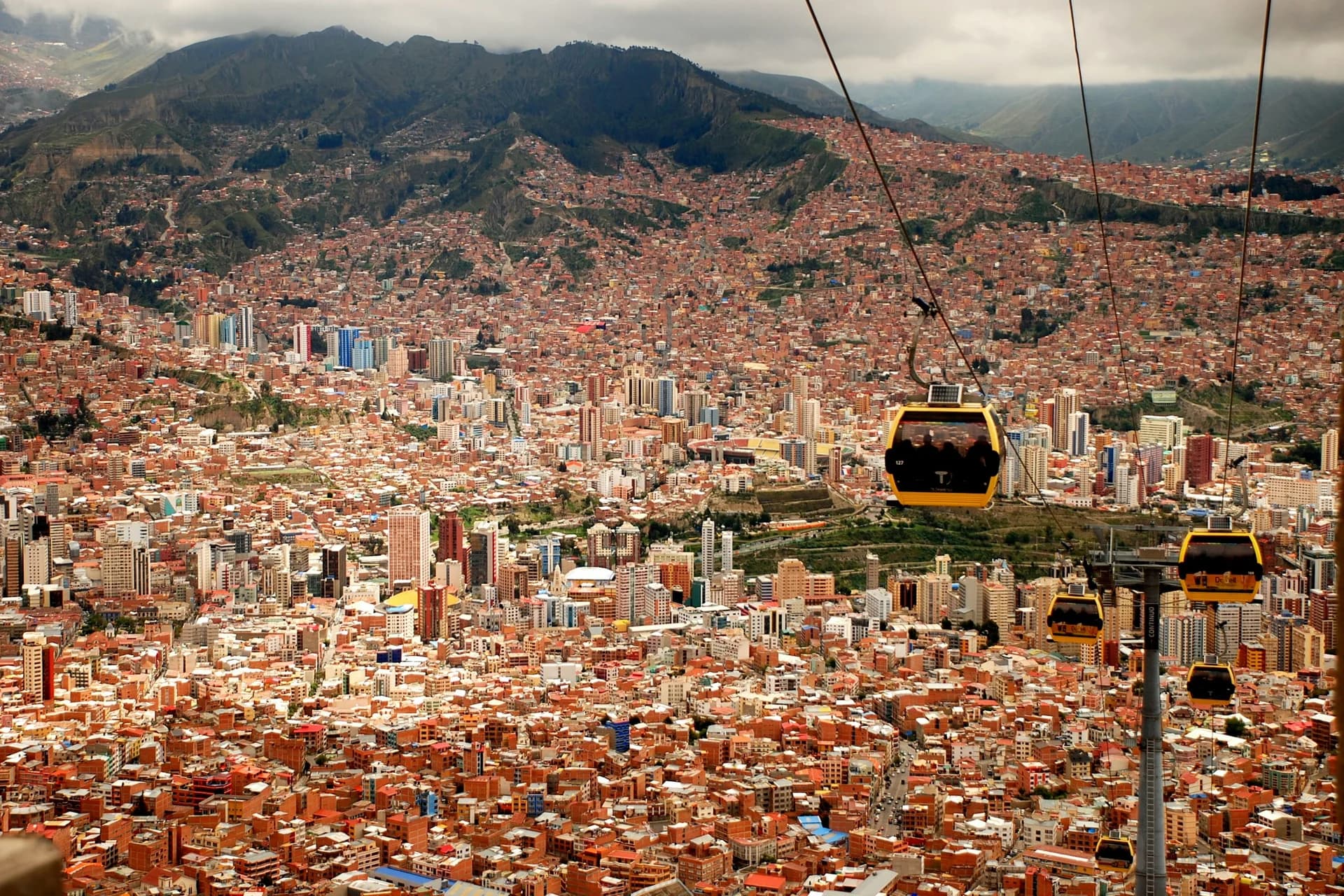
For views, ride the yellow or green cable car lines. The neighborhoods in between aren't tourist zones, but looking out over the canyon from the cars is staggering.
Skip the area right around the bus terminal after dark — it's sketchy.
Why every building looks unfinished
[laughs] There's a property-tax quirk in Bolivia: you pay more once a building is officially "complete." So people leave the rebar poking out of the roof and the top floor unfinished, and the building stays "under construction" indefinitely. It's a completely open tax dodge — everyone knows, the government knows, and nobody does anything about it because everyone does it.
The result is a skyline that looks permanently half-built, which, technically, it is.
Hidden spots worth finding
The Mirador de las Almas in Cota Cota — a run of stone arches on a hilltop over the valley. It's poorly signposted and hard to find without a local, but the view beats Killi Killi and you'll likely have it to yourself. A taxi from the center runs about $4.
Calle Jaen in the old town is a preserved colonial street with five small museums, all free on Tuesdays. The Musical Instruments Museum is the surprise standout, and most tourists walk straight past it.
And Coroico — not merely the endpoint of Death Road, but a destination in its own right. A mountain town three hours from La Paz at 1,750m, ringed by cloud forest. After La Paz's cold, the warmth feels miraculous. Spend a night at a finca (farm stay) for $15-20 and pick mandarin oranges off the trees.
Does coca tea really help with altitude?
Not magic, but yes. The alkaloids in coca leaves are mild stimulants that increase oxygen absorption. Every hotel lobby pours it free — drink 3-4 cups a day for the first few days. Chewing the leaves hits harder; a bag at any market costs $0.50.
Pharmacies sell Sorojchi pills (aspirin + caffeine + salophene) for about $1, and locals take them too. But the tea is the traditional approach, and it works as well as anything.
One firm rule: do not try to carry coca leaves or coca products out of Bolivia. Legal here, illegal almost everywhere else.
The one thing that defines La Paz
The cable cars. It sounds like a tourist answer, but it lands harder as a resident's. Before Mi Teleferico, getting from El Alto to Sopocachi meant 90 minutes in traffic. Now it takes 20, gliding over the entire canyon. A city once divided by geography became connected by air.
If you're exploring more of the region, Salar de Uyuni offers a complementary experience worth considering.
If you're branching out further, Cusco offers a complementary experience worth considering.
Ride the red line back from visiting his sister in El Alto and Marco still looks out the window every time — the city in its canyon, the snow on Illimani, the sun going down behind it. Twelve years on, the view still stops him.
That tells you something.