
Lake Titicaca

Photo: Sandro Ayalo / Unsplash
Key Facts
Best Time to Visit
May to October (dry season); clear skies but cold nights
Language
Spanish, Quechua, and Aymara; limited English outside tour operators
Currency
Peruvian Sol (PEN); Bolivian Boliviano (BOB) on the Bolivian shore
Time Zone
PET (UTC-5) on the Peruvian side
Airport
Inca Manco Cápac International (JUL) in Juliaca, ~45 km / ~1 hour from Puno
Population
About 150,000 in Puno, the lakeside gateway city (Puno Region)
Climate
High-altitude: sunny cool days (10-18°C), cold nights (often below freezing), intense UV
Safety Rating
Generally Safe (Level 1-2) — altitude is the main risk; usual care in Puno at night
Elevation
3,812 m (12,507 ft) — the world's highest navigable lake
Top Highlights
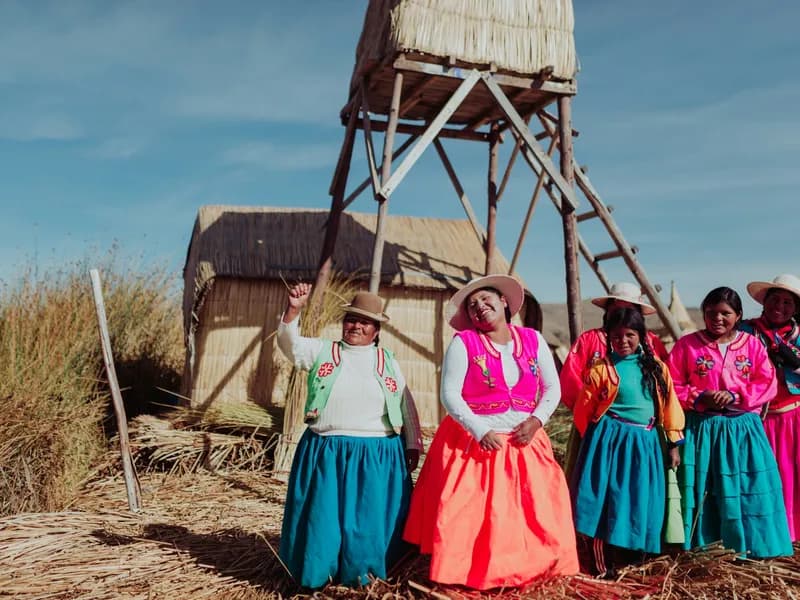
Uros Floating Islands
Dozens of islands hand-built from layered totora reeds, home to the Uros people for centuries, ~30 min by boat from Puno. Half-day tours ~30-50 PEN plus a ~10 PEN island landing fee; a short reed-boat ride costs ~10-15 PEN extra. Allow 2-3 hours. Buy directly from families and tip fairly — tourism is their livelihood.
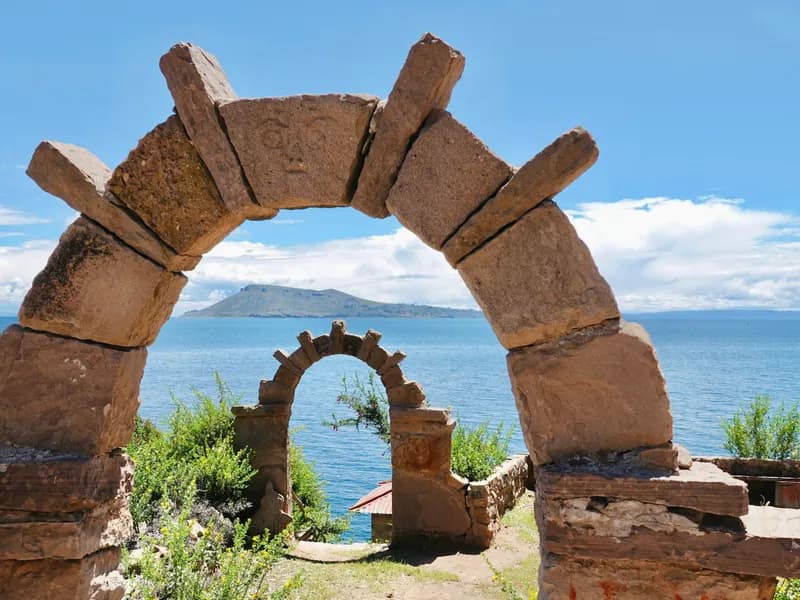
Taquile Island
A tranquil island where men knit fine textiles (a UNESCO-recognized tradition) and terraced paths climb to a plaza with sweeping lake views. Full-day tours from Puno ~50-80 PEN; ~2.5-3 hours by boat each way. A small landing fee applies. The uphill walk from the dock at 3,900+ m is deceptively tiring — pace yourself.
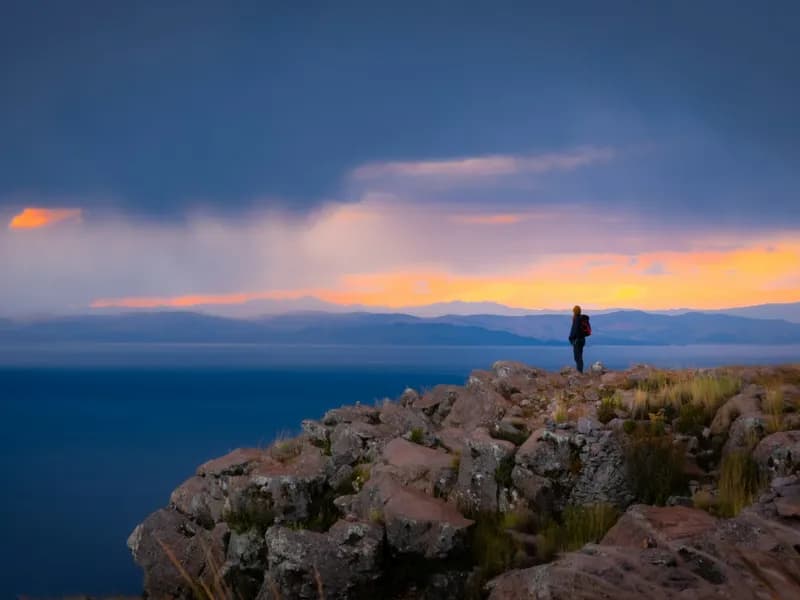
Amantaní Island Homestay
The classic overnight experience: a family homestay on this quiet island, a hike to the Pachatata and Pachamama temple summits for sunset, and a village dance in borrowed traditional dress. Two-day tours from Puno ~80-150 PEN including meals and lodging. Bring a gift (fruit, rice, school supplies) for your host family.
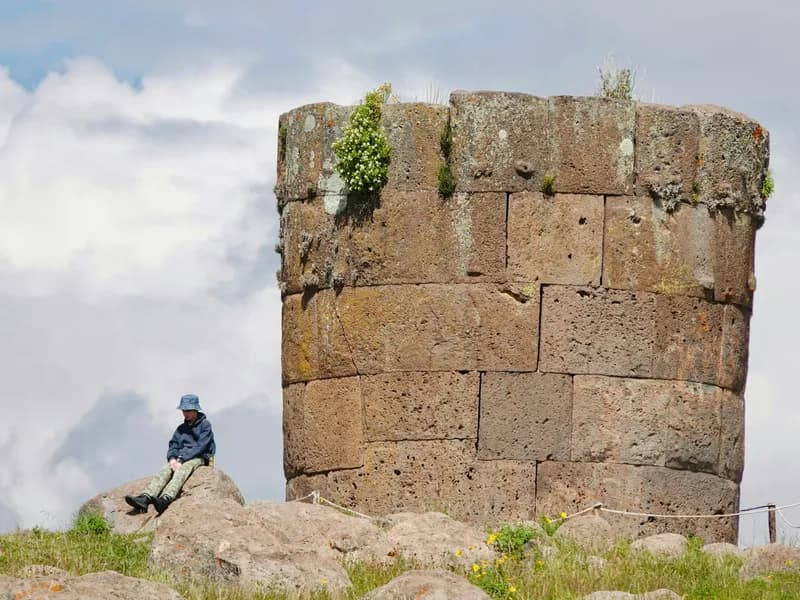
Sillustani Funerary Towers
Pre-Inca Colla stone burial towers (chullpas) up to 12 m tall, perched above the deep-blue Lake Umayo ~35 km from Puno. Entry ~15 PEN. Half-day tours ~30-45 PEN. Allow 2 hours. A striking, less-visited archaeological site — go late afternoon for golden light on the towers and lake.

Puno — Folklore Capital of Peru
Puno's Plaza de Armas, cathedral, and the Coca Museum make an easy afternoon, but the city truly comes alive during the Virgen de la Candelaria festival each February, one of South America's largest folk celebrations. Free to explore; small museum fees. Book far ahead if visiting for Candelaria.

Lake Titicaca Sunset Boat Cruise
Beyond the islands, a slow evening cruise on the still, mirror-like lake at 3,812 m — where sky and water blur — is a quiet highlight. Often bundled with island tours or arranged from the Puno docks (~30-60 PEN). Allow 1-2 hours. Bundle up: temperatures plunge the moment the sun drops behind the altiplano.
Planned Itinerary
7-Day Lake Titicaca Itinerary
Arrival in Puno — Gateway to Lake Titicaca
Land at Juliaca and transfer down to the lakeside city of Puno at 3,812 m. This is serious altitude, so today is deliberately gentle: check in, sip coca tea, and let your body adjust before the days on the water begin.
Transfer from Inca Manco Cápac Airport (JUL, Juliaca) to Puno(1 hour)
Pre-arranged private transfer ~S/90-130 (~$25-35) or a shared tourist van, ~45 km across the open altiplano. Confirm the pickup with your hotel the day before.
Check in and altitude rest with coca tea(2 hours)
Most Puno hotels (Casa Andina, Tierra Viva, GHL Lago Titicaca) offer free mate de coca at reception. Move slowly, hydrate, and skip alcohol on day one.
Slow walk to Plaza de Armas and the Basílica Catedral de Puno(1 hour)
The baroque 18th-century cathedral on the main square is free to enter. Keep the pace easy — the square already sits above 3,800 m.
Sunset on the Malecón Ecoturístico Bahía de los Incas(45 minutes)
A flat lakefront promenade — the easiest place to watch the light fade over the reeds without exertion. Bring a warm layer; nights drop near freezing.
Early dinner at Mojsa(1.5 hours)
Novo-andino spot on the plaza (Jr. Lima 635, upstairs). Try the trucha (lake trout) or quinoa dishes; mains ~S/35-55 (~$10-15). Turn in early.
Uros Floating Reed Islands and the Yavarí Steamship
An easy first excursion built around acclimatization: a short boat hop to the Uros floating islands in the morning, the historic Yavarí steamship at midday, and a restful afternoon back in town.
Morning boat to the Uros floating islands from Puno's port (Muelle de Puno)(Half day (~3 hours))
Boats leave the main dock from ~7:00-8:30am; a half-day Uros tour runs ~30-50 PEN plus a ~10 PEN island landing fee. Only ~30 min across the bay — gentle for a second day at altitude.
Optional totora reed-boat ride between islands(20 minutes)
The traditional balsa de totora costs ~10-15 PEN extra, paid directly to the Uros family. Buy a woven handicraft from the maker and tip fairly — tourism is their livelihood.
Lunch back in Puno at La Table del Inca(1.5 hours)
French-Andean fusion (Jr. Ancash 239); tasting-style plates ~S/45-70 (~$12-19). Or grab a lighter bite at Ricos Pan bakery on Jr. Lima.
Visit the Yavarí steamship(1 hour)
An 1862 iron gunboat carried up in pieces by mule, now moored beside the Sonesta Posadas del Inca hotel. Open ~8am-5pm; entry by donation (~S/10). Volunteers give a fascinating tour of the engine room.
Rest afternoon and Malecón stroll(Free time)
Deliberate downtime to keep acclimatizing. Coffee at the colonial Casa del Corregidor (Jr. Deustua 576), Puno's oldest house, is a cozy option.
Puno City Morning and the Sillustani Chullpas at Golden Hour
A relaxed city morning, then an afternoon overland to the pre-Inca funerary towers of Sillustani, timed for the late light that sets the stone and Lake Umayo aglow.
Museo de la Coca y Costumbres(1 hour)
Small, well-curated museum on Jr. Deza 301 covering coca's Andean role and regional folk costumes; entry ~S/10. A good, low-effort morning at altitude.
Lunch at Balcones de Puno or Colors Restobar(1.5 hours)
Balcones (Jr. Libertad 354) pairs Andean plates with an evening folklore show; Colors (Jr. Lima 342) does hearty alpaca and pizza, ~S/30-50.
Afternoon tour to the Sillustani funerary towers(Half day (~4 hours))
Depart Puno ~2:00-2:30pm; the drive is ~35 km / ~45 min. Half-day tours ~30-45 PEN, plus ~15 PEN site entry. The tall Colla and Inca chullpas above deep-blue Lake Umayo glow at golden hour.
Evening rest and light dinner(Free time)
Back in Puno by dusk. Warm up with a bowl of quinoa soup at Mama Micaela or La Casona; keep it early ahead of tomorrow's overnight on the lake.
Overnight Homestay on Amantaní Island
The trip's centerpiece: a boat deep into the lake to quiet Amantaní, an afternoon with a host family, and a sunset climb to the sacred temple summits — the classic community-tourism experience of Titicaca.
Morning boat from Puno toward Amantaní Island(3-3.5 hours)
Depart the Puno dock ~7:30am. Two-day homestay tours run ~80-150 PEN including meals and lodging. The boat glides past the Uros reed beds before the long open-water crossing.
Family homestay lunch on Amantaní(1.5 hours)
Meet your host family and share a simple lunch of lake trout, potatoes, and muña tea. Bring a practical gift — fresh fruit, rice, cooking oil, or school supplies rather than sweets.
Sunset hike to the Pachatata and Pachamama temples(2 hours)
A steady climb to the twin pre-Inca sanctuaries (~4,150 m) for panoramic lake sunset. Deceptively tiring at this altitude — go slowly and carry water.
Village dinner and traditional dance(2 hours)
An evening meal with the family, then a community dance in borrowed traditional dress (a poncho or embroidered blouse). Nights are frigid — pack a thermal layer and a headlamp.
Taquile Island and Return to Puno
Cross from Amantaní to Taquile, the island famous for its UNESCO-listed men's knitting tradition, walk its terraced paths to the plaza, then sail back to Puno for a well-earned rest.
Morning farewell and boat to Taquile Island(1.5 hours)
Say goodbye to your host family after breakfast and cross to Taquile. A small landing fee applies (~S/5-10) on arrival.
Terraced walk to Taquile's main plaza(1.5 hours)
The uphill path from the dock at 3,900+ m is genuinely tiring — pace yourself and pause for the sweeping lake views. Men knit the intricate chullo hats as they walk.
Community lunch on Taquile(1 hour)
The island's cooperative restaurants serve fresh grilled trout and quinoa soup, ~S/25-35. Browse the communal textile store where all handicrafts are fairly priced.
Afternoon boat back to Puno(2.5-3 hours)
The return crossing takes most of the afternoon; you'll reach the Puno dock by ~5pm. Rest and rehydrate on arrival.
Free Day in Puno with a Sunset Lake Cruise
A flexible rest day to shop, wander, and take a gentle evening cruise on the mirror-still lake — a quiet counterpoint to the busy island days.
Late start and market browsing(2 hours)
Sleep in, then explore the craft stalls along Jr. Lima and the Mercado Central for alpaca knits, chullo hats, and Toritos de Pukará ceramics. Haggle politely.
Optional viewpoint or leisure lunch(2 hours)
The energetic can climb to Mirador Kuntur Wasi (a big condor statue over the bay, ~600 steps — go slow). Otherwise, a long lunch at La Casa del Corregidor café.
Sunset boat cruise on Lake Titicaca(1.5 hours)
A slow evening cruise from the Puno docks (~30-60 PEN) where sky and water blur at 3,812 m. Bundle up — temperatures plunge the moment the sun drops behind the altiplano.
Farewell dinner with folklore show at Balcones de Puno(2 hours)
Andean tasting menu with live music and dance, ~S/50-80. Puno is the folklore capital of Peru — a fitting send-off.
Departure from Puno
Last souvenirs and a lakefront farewell before the transfer back to Juliaca for your onward flight or bus.
Final shopping and coffee near the Plaza de Armas(1.5 hours)
Pick up last alpaca goods and pastries at Ricos Pan or Loro Café. Withdraw any remaining soles from a bank ATM before heading out.
Checkout and hotel transfer arrangement(30 minutes)
Settle the bill and confirm your ride. Allow buffer time — the Juliaca road can be slow around town and market days.
Transfer from Puno to Juliaca Airport (JUL)(1 hour)
Private transfer ~S/90-130 (~$25-35). Aim to reach JUL at least 2 hours before your flight; check-in at this small airport can be slow. Onward buses/trains to Cusco or Arequipa also depart Puno's terminal.
14-Day Lake Titicaca Itinerary
Arrival in Puno — Gateway to Lake Titicaca
Land at Juliaca and transfer to Puno at 3,812 m. Because this is high altitude reached quickly, today stays light: check in, coca tea, and a gentle first look at the lake.
Transfer from Inca Manco Cápac Airport (JUL, Juliaca) to Puno(1 hour)
Private transfer ~S/90-130 (~$25-35) or a shared van, ~45 km across the altiplano. Confirm pickup with your hotel the day before.
Check in and altitude rest with coca tea(2 hours)
Move slowly, hydrate, skip alcohol. Consider acetazolamide only after consulting a doctor before the trip.
Slow walk to Plaza de Armas and the Basílica Catedral de Puno(1 hour)
The baroque cathedral on the main square is free; keep the pace easy at 3,800+ m.
Sunset on the Malecón Ecoturístico and early dinner at Mojsa(2 hours)
Flat lakefront stroll, then trout or quinoa at Mojsa (Jr. Lima 635), mains ~S/35-55. Warm layers essential — nights near freezing.
Uros Floating Reed Islands and the Yavarí Steamship
A gentle acclimatization excursion: the short crossing to the Uros floating islands, the historic Yavarí steamship, and a restful afternoon in town.
Morning boat to the Uros floating islands from Muelle de Puno(Half day (~3 hours))
Boats leave ~7:00-8:30am; half-day Uros tours ~30-50 PEN plus a ~10 PEN landing fee. Just ~30 min across the bay — easy for a second day at altitude.
Totora reed-boat ride between islands(20 minutes)
Traditional balsa de totora ~10-15 PEN, paid directly to the family. Ask before photographing people; buy handicrafts from the makers.
Visit the Yavarí steamship(1 hour)
An 1862 iron ship moored beside the Sonesta Posadas del Inca; open ~8am-5pm, entry by donation (~S/10). Great volunteer-led tour.
Rest afternoon at Casa del Corregidor café(Free time)
Coffee at Puno's oldest house (Jr. Deustua 576). Keep exertion low to finish acclimatizing.
Puno City Rest Day
A deliberate low-effort day to let the altitude settle — museums, colonial corners, and markets, all on foot around the center.
Museo de la Coca y Costumbres(1 hour)
Coca's Andean role and regional costumes on Jr. Deza 301; entry ~S/10.
Arco Deustua and Parque Pino(1 hour)
A slow amble past the stone arch honoring independence fighters and the leafy central park — flat and undemanding.
Lunch at Colors Restobar(1.5 hours)
Alpaca steak, burgers, and pizza on Jr. Lima 342, ~S/30-50. A relaxed people-watching spot.
Mercado Central and craft shopping(2 hours)
Browse alpaca knits and Toritos de Pukará ceramics. Withdraw soles in small notes from a bank ATM — island fees and homestays are cash-only.
Sillustani Chullpas and Lake Umayo
An afternoon overland to the pre-Inca funerary towers of Sillustani, timed for the golden light on stone and water.
Relaxed morning and lunch in Puno(3 hours)
Late breakfast, then trout at Mama Micaela before the afternoon departure. No need to rush.
Afternoon tour to the Sillustani funerary towers(Half day (~4 hours))
Depart ~2:00pm; ~35 km / ~45 min drive. Tours ~30-45 PEN plus ~15 PEN entry. The Colla and Inca chullpas above Lake Umayo glow at golden hour.
Optional stop at a Collata altiplano homestead(30 minutes)
Many tours pause at a rural family's home to see guinea pigs, alpacas, and adobe living quarters — tip a few soles if you buy crafts.
Evening rest in Puno(Free time)
Back by dusk; light dinner and an early night.
Taquile Island Full-Day Boat Tour
A full day on Taquile, the island of master knitters, with terraced walks, a communal lunch, and sweeping lake panoramas.
Morning boat from Puno to Taquile Island(2.5-3 hours)
Depart the dock ~7:00am. Full-day tours ~50-80 PEN; a small landing fee applies on arrival.
Terraced hike to Taquile's main plaza(1.5 hours)
The climb from the dock at 3,900+ m is deceptively tiring — pace yourself. Watch the men knit the intricate chullo hats, a UNESCO-recognized tradition.
Community lunch and textile cooperative(1.5 hours)
Grilled trout and quinoa soup at a cooperative restaurant, ~S/25-35; browse fairly priced weavings at the communal store.
Afternoon boat back to Puno(2.5-3 hours)
Return by ~5pm. Rest and rehydrate.
Cutimbo Chullpas — the Road Less Traveled
A half-day to the dramatic, little-visited Cutimbo tombs on a windswept mesa south of Puno, followed by a free afternoon.
Morning excursion to the Cutimbo chullpas(Half day (~4 hours))
~22 km south of Puno; a collectivo or short tour reaches the base, then a steep climb to the volcanic mesa. Entry ~S/10. Colla, Lupaca, and Inca tombs with carved reliefs — often you'll have them to yourself.
Lunch back in Puno at La Casona(1.5 hours)
A long-running spot on Jr. Lima for local alpaca and trout, ~S/30-45.
Free afternoon on the Malecón(Free time)
Easy lakefront time, coffee, and catching up on rest before the multi-day homestay ahead.
Overnight Homestay on Amantaní Island
A boat deep into the lake to quiet Amantaní for a family homestay, a sunset climb to the sacred summits, and a village dance.
Morning boat from Puno toward Amantaní(3-3.5 hours)
Depart ~7:30am. Two-day homestay tours ~80-150 PEN including meals and lodging. The boat passes the Uros reed beds before the open crossing.
Family homestay lunch(1.5 hours)
Trout, potatoes, and muña tea with your hosts. Bring a practical gift — fruit, rice, oil, or school supplies.
Sunset hike to the Pachatata and Pachamama temples(2 hours)
A steady climb to ~4,150 m for the lake sunset. Go slowly; carry water and a warm layer.
Village dinner and traditional dance(2 hours)
Community dance in borrowed dress after dinner. Frigid nights — pack thermals and a headlamp.
Return from Amantaní to Puno
A morning farewell and the long, scenic crossing back, then a restful afternoon in the city.
Breakfast and farewell to your host family(1 hour)
A quiet start; exchange thanks and any final gift before boarding.
Boat crossing back to Puno(3.5 hours)
The long open-water return; watch for Titicaca grebes and Andean gulls over the reeds. Reach the dock by early afternoon.
Afternoon rest and light dinner(Free time)
Recover in town — a hot soup at Mojsa and an early night.
Community Homestay on the Capachica Peninsula (Llachón)
Overland to the Capachica peninsula for authentic community tourism in Llachón — sailing, weaving, and a family homestay far from the day-tripper crowds.
Combi from Puno to Llachón, Capachica peninsula(2 hours)
Combis leave the Terminal Zonal / Av. Costanera for the ~74 km peninsula road, ~S/10-15; or arrange a community-tourism transfer. Homestays ~S/40-70 including meals.
Welcome lunch and settle into your homestay(1.5 hours)
Llachón and neighboring Ccotos run family-based lodging with lake-view terraces. Meals feature quinoa, potatoes, and just-caught trout.
Sail on a traditional totora or wooden boat(2 hours)
Community-owned sailboats and kayaks ply the sheltered bay — a calm, low-altitude-strain way to be on the water (~S/20-40).
Sunset walk to Auki Carus hill(1.5 hours)
A gentle climb to a viewpoint over the Amantaní and Taquile silhouettes. Dinner with the family, then an early night under brilliant stars.
Weaving and the Return to Puno
A morning of hands-on Andean crafts and community life before returning to the city.
Weaving and textile demonstration(1.5 hours)
Learn the backstrap-loom basics and natural-dye techniques from Ccotos/Llachón weavers; buy directly from the maker to support the cooperative.
Farewell lunch with your host family(1 hour)
A last shared meal before the road back.
Combi back to Puno(2 hours)
Return along the peninsula road; reach Puno by mid-afternoon.
Rest and café time(Free time)
Coffee and pastries at Ricos Pan; keep the evening low-key.
Rest Day in Puno with a Sunset Cruise
A flexible recovery day — spa, cafés, and a gentle evening cruise on the still lake.
Late morning and leisurely lunch(3 hours)
Sleep in; long lunch at La Table del Inca or a café on the plaza. No agenda.
Optional Museo Carlos Dreyer(1 hour)
A compact art-and-archaeology museum just off the plaza with pre-Columbian gold and regional paintings; entry ~S/15.
Sunset boat cruise on Lake Titicaca(1.5 hours)
A slow evening cruise from the Puno docks (~30-60 PEN) where sky and water blur. Bundle up as the sun drops behind the altiplano.
Dinner and folklore at Balcones de Puno(2 hours)
Andean tasting menu with live dance, ~S/50-80. Puno is Peru's folklore capital.
Aymara Colonial Churches of the South Shore
A full day tracing the lakeshore road south through Chucuito, Juli, and Pomata — a string of grand colonial churches born of the altiplano silver era.
Chucuito — Templo de la Fertilidad (Inca Uyo)(1 hour)
~18 km south; the curious phallic stone garden beside the Santo Domingo and La Asunción churches. Combined tours ~S/60-90, or collectivos from Puno.
Juli — 'Little Rome of the Americas'(1.5 hours)
~80 km south; four monumental Jesuit churches (San Pedro, San Juan de Letrán, La Asunción, San Juan Bautista) with colonial paintings and carved facades. Small entry fees ~S/5-10 each.
Lunch in Juli(1 hour)
Simple menú del día at a lakeside comedor, ~S/15-25.
Pomata — Santiago Apóstol, 'the Balcony of the Lake'(1 hour)
~106 km south; a rose-pink sandstone church with translucent alabaster windows on a bluff over Titicaca. Return to Puno by evening (~2 hours).
Relax and Shop in Puno
A slow final full day in the city — last souvenirs, favorite cafés, and one more lakefront sunset before moving on.
Craft shopping along Jr. Lima and Mercado Bellavista(2 hours)
Alpaca sweaters, chullo hats, and Toritos de Pukará ceramics. Pay in soles; keep small notes for the market.
Leisurely lunch at Mojsa or La Casa del Corregidor(1.5 hours)
A relaxed table on the plaza — trout ceviche or an alpaca dish, ~S/35-55.
Final Malecón walk and coffee(1.5 hours)
One last flat stroll along the bay; watch the fishing boats and reed beds.
Farewell dinner(2 hours)
A relaxed send-off at Colors Restobar or Mama Micaela. Pack for an early departure and confirm tomorrow's transport.
Departure via the Ruta del Sol toward Cusco
Leave Titicaca the scenic way — the Ruta del Sol tourist bus threads the altiplano with guided stops, or transfer to Juliaca (JUL) for a direct flight.
Early checkout and board the Ruta del Sol tourist bus(30 minutes)
Inka Express or Turismo Mer depart Puno ~7:00am (~S/160-200 / ~$45-55, lunch buffet included). Alternatively, a 1-hour transfer to Juliaca (JUL) for a flight — arrive 2 hours early.
Pukará — Museo Lítico and Kalasaya temple(1 hour)
~106 km north; the pre-Inca lithic sculptures and the origin of the famous Toritos de Pukará ceramics. A last chance for regional crafts.
La Raya pass and Raqchi(2 hours)
Cross the 4,338 m La Raya pass (highest point of the route) then the vast adobe Temple of Wiracocha at Raqchi in the Cusco region.
Andahuaylillas — the 'Sistine Chapel of the Andes'(1 hour)
The San Pedro Apóstol church with dazzling baroque frescoes and gold leaf, ~S/15 entry, before arriving in Cusco by early evening.
21-Day Lake Titicaca Itinerary
Arrival in Puno — Gateway to Lake Titicaca
Land at Juliaca and transfer to Puno at 3,812 m. Reached quickly from lower ground, this is serious altitude, so today is deliberately gentle: check in, coca tea, and an easy first look at the lake.
Transfer from Inca Manco Cápac Airport (JUL, Juliaca) to Puno(1 hour)
Private transfer ~S/90-130 (~$25-35) or shared van, ~45 km across the altiplano. Confirm pickup with your hotel the day before.
Check in and altitude rest with coca tea(2 hours)
Move slowly, hydrate, skip alcohol. Consult a doctor about acetazolamide before travel.
Slow walk to Plaza de Armas and the Basílica Catedral de Puno(1 hour)
The baroque cathedral on the main square is free; keep the pace easy above 3,800 m.
Sunset on the Malecón and early dinner at Mojsa(2 hours)
Flat lakefront stroll, then trout or quinoa at Mojsa (Jr. Lima 635), mains ~S/35-55. Warm layers essential.
Uros Floating Reed Islands and the Yavarí Steamship
A gentle acclimatization excursion: the short crossing to the Uros floating islands, the historic Yavarí steamship, and a restful afternoon.
Morning boat to the Uros floating islands from Muelle de Puno(Half day (~3 hours))
Boats leave ~7:00-8:30am; half-day Uros tours ~30-50 PEN plus a ~10 PEN landing fee. Just ~30 min across the bay.
Totora reed-boat ride between islands(20 minutes)
Traditional balsa de totora ~10-15 PEN, paid directly to the family. Ask before photographing; buy from the makers.
Visit the Yavarí steamship(1 hour)
An 1862 iron ship moored beside the Sonesta Posadas del Inca; open ~8am-5pm, donation entry (~S/10).
Rest afternoon at Casa del Corregidor café(Free time)
Coffee at Puno's oldest house (Jr. Deustua 576). Keep exertion low to acclimatize.
Puno City Rest Day
A low-effort day for the altitude to settle — museums, colonial corners, and markets, all on foot.
Museo de la Coca y Costumbres(1 hour)
Coca's Andean role and regional costumes on Jr. Deza 301; entry ~S/10.
Arco Deustua and Parque Pino(1 hour)
A slow amble past the independence arch and central park — flat and easy.
Lunch at Colors Restobar(1.5 hours)
Alpaca steak, burgers, and pizza on Jr. Lima 342, ~S/30-50.
Mercado Central shopping and ATM run(2 hours)
Withdraw soles in small notes — island fees and homestays are cash-only.
Sillustani Chullpas and Lake Umayo
An afternoon overland to the pre-Inca funerary towers of Sillustani, timed for golden light on stone and water.
Relaxed morning and lunch in Puno(3 hours)
Late breakfast, then trout at Mama Micaela before the afternoon departure.
Afternoon tour to the Sillustani funerary towers(Half day (~4 hours))
Depart ~2:00pm; ~35 km / ~45 min drive. Tours ~30-45 PEN plus ~15 PEN entry. Colla and Inca chullpas glow above Lake Umayo at golden hour.
Altiplano homestead stop(30 minutes)
Many tours pause at a rural family's home to see alpacas and adobe living quarters — tip a few soles for crafts.
Evening rest in Puno(Free time)
Back by dusk; light dinner and an early night.
Taquile Island Full-Day Boat Tour
A full day on Taquile, the island of master knitters, with terraced walks and a communal lunch.
Morning boat from Puno to Taquile Island(2.5-3 hours)
Depart ~7:00am. Full-day tours ~50-80 PEN; a small landing fee applies.
Terraced hike to Taquile's main plaza(1.5 hours)
The climb from the dock at 3,900+ m is deceptively tiring — pace yourself. Watch the men knit the intricate chullo hats.
Community lunch and textile cooperative(1.5 hours)
Grilled trout and quinoa soup, ~S/25-35; browse the fairly priced communal textile store.
Afternoon boat back to Puno(2.5-3 hours)
Return by ~5pm. Rest and rehydrate.
Cutimbo Chullpas — the Road Less Traveled
A half-day to the dramatic, little-visited Cutimbo tombs on a windswept mesa, then a free afternoon.
Morning excursion to the Cutimbo chullpas(Half day (~4 hours))
~22 km south of Puno; a collectivo reaches the base, then a steep climb to the mesa. Entry ~S/10. Colla, Lupaca, and Inca tombs with carved reliefs — often deserted.
Lunch back in Puno at La Casona(1.5 hours)
Local alpaca and trout on Jr. Lima, ~S/30-45.
Free afternoon on the Malecón(Free time)
Easy lakefront time and rest before the overnight homestay.
Overnight Homestay on Amantaní Island
A boat deep into the lake to quiet Amantaní for a family homestay, a sunset climb to the sacred summits, and a village dance.
Morning boat from Puno toward Amantaní(3-3.5 hours)
Depart ~7:30am. Two-day homestay tours ~80-150 PEN including meals and lodging. The boat passes the Uros reed beds.
Family homestay lunch(1.5 hours)
Trout, potatoes, and muña tea with your hosts. Bring a practical gift — fruit, rice, oil, or school supplies.
Sunset hike to the Pachatata and Pachamama temples(2 hours)
A steady climb to ~4,150 m for the lake sunset. Go slowly; carry water and a warm layer.
Village dinner and traditional dance(2 hours)
Community dance in borrowed dress after dinner. Frigid nights — pack thermals and a headlamp.
Return from Amantaní to Puno
A morning farewell and the long, scenic crossing back, then a restful afternoon.
Breakfast and farewell to your host family(1 hour)
A quiet start; exchange thanks and any final gift.
Boat crossing back to Puno(3.5 hours)
Watch for Titicaca grebes and Andean gulls over the reeds; reach the dock by early afternoon.
Afternoon rest and light dinner(Free time)
Recover in town — hot soup at Mojsa and an early night.
Rest Day in Puno with a Sunset Cruise
A flexible recovery day — cafés, an optional museum, and a gentle evening cruise on the still lake.
Late morning and leisurely lunch(3 hours)
Sleep in; long lunch at La Table del Inca. No agenda.
Optional Museo Carlos Dreyer(1 hour)
Pre-Columbian gold and regional art just off the plaza; entry ~S/15.
Sunset boat cruise on Lake Titicaca(1.5 hours)
A slow evening cruise from the docks (~30-60 PEN) where sky and water blur. Bundle up as the sun drops.
Dinner and folklore at Balcones de Puno(2 hours)
Andean tasting menu with live dance, ~S/50-80.
Community Homestay on the Capachica Peninsula (Llachón)
Overland to the Capachica peninsula for authentic community tourism in Llachón — sailing, weaving, and a family homestay away from the crowds.
Combi from Puno to Llachón, Capachica peninsula(2 hours)
Combis leave the Terminal Zonal / Av. Costanera for the ~74 km peninsula road, ~S/10-15; homestays ~S/40-70 with meals.
Welcome lunch and settle into your homestay(1.5 hours)
Llachón and neighboring Ccotos run family lodging with lake-view terraces; quinoa, potatoes, and fresh trout.
Sail on a traditional totora or wooden boat(2 hours)
Community sailboats and kayaks ply the sheltered bay (~S/20-40) — calm and low-strain.
Sunset walk to Auki Carus hill(1.5 hours)
A gentle climb to a viewpoint over Amantaní and Taquile. Dinner with the family under brilliant stars.
Weaving and the Return to Puno
A morning of hands-on Andean crafts and community life before returning to the city.
Weaving and natural-dye demonstration(1.5 hours)
Learn backstrap-loom basics from Ccotos/Llachón weavers; buy directly from the maker.
Farewell lunch with your host family(1 hour)
A last shared meal before the road back.
Combi back to Puno(2 hours)
Return along the peninsula road; reach Puno by mid-afternoon.
Rest and café time at Ricos Pan(Free time)
Coffee and pastries; keep the evening low-key.
Rest Day and Shopping in Puno
A slow city day to recharge before the multi-day crossing into Bolivia — markets, cafés, and lakefront calm.
Craft shopping along Jr. Lima(2 hours)
Alpaca knits, chullo hats, and Toritos de Pukará ceramics. Pay in soles with small notes.
Leisurely lunch at La Casa del Corregidor(1.5 hours)
A colonial-courtyard café for coffee and light Andean plates, ~S/25-45.
Change money for Bolivia and passport check(1 hour)
Buy some bolivianos (BOB) at a Puno casa de cambio and confirm your passport is valid. Note: US citizens need a paid Bolivia visa (~$160) — arrange in advance.
Malecón walk and early night(Free time)
One last flat stroll; pack for tomorrow's border crossing.
Cross to Bolivia — Copacabana
Cross the border at Kasani to the Bolivian shore and the pilgrimage town of Copacabana, with its famous dark virgin and a sunset hill of stations.
Tourist bus from Puno to Copacabana via the Kasani border(3.5-4 hours)
Titicaca Bolivia, Tour Perú, or Trans Titicaca depart ~7:30am (~S/30-50). Border formalities at Yunguyo-Kasani; keep your passport handy. Bolivia is UTC-4, one hour ahead of Peru.
Lunch on Copacabana's lakefront(1 hour)
Grilled trucha (trout) at a beachfront comedor, ~30-50 BOB.
Basílica de Nuestra Señora de Copacabana(1 hour)
The whitewashed Moorish-style shrine of the Virgen Morena, patron of Bolivia; free entry. Cars line up outside for the ch'alla blessing.
Sunset climb of Cerro Calvario(1.5 hours)
A short, steep pilgrimage path with stations of the cross to a hilltop panorama over the bay. Overnight in Copacabana.
Isla del Sol — Birthplace of the Inca Sun Myth
Boat out to the sacred Island of the Sun, hike its ancient trails, and overnight among terraces and star fields on the Bolivian shore of Titicaca.
Morning boat from Copacabana to Isla del Sol (north, Challapampa)(2 hours)
Community launches depart ~8:30am (~30-40 BOB each way); confirm which sectors are open, as inter-community access can change.
Hike to the Chincana ruins and Sacred Rock(2 hours)
The labyrinthine Chincana temple and the puma-shaped Roca Sagrada where legend places the sun's birth. Community fee ~10-15 BOB per sector.
Lunch at Challapampa or Yumani(1 hour)
Simple island fare — trout, soup, quinoa, ~25-40 BOB.
Settle into an Isla del Sol guesthouse(Free time)
Basic ecolodges in Yumani have terrace views but little heating — bring warm layers. Astonishing night skies.
Isla del Sol Trails and Return to Copacabana
A morning on the island's Inca stairways and sacred spring before the boat back to the mainland.
Escalera del Inca and the Fuente Sagrada (Yumani)(1.5 hours)
Descend the steep Inca stairway to the three-spouted sacred spring said to grant youth and fortune. Slow going at ~3,900 m.
Terrace walk and viewpoints(1.5 hours)
Gentle paths past agricultural terraces with views to the snow-capped Cordillera Real across the lake.
Boat back to Copacabana(1.5 hours)
Afternoon launch to the mainland (~30 BOB).
Evening rest in Copacabana(Free time)
Trout dinner on the lakefront; a relaxed night before recrossing the border.
Return to Puno from Bolivia
Recross the frontier at Kasani and return to Puno for a restful afternoon back on the Peruvian shore.
Morning tourist bus Copacabana to Puno(3.5-4 hours)
Depart ~1:30pm local (or a morning service); border formalities again at Kasani-Yunguyo. Reset watches back to Peru time (UTC-5).
Spend or change leftover bolivianos(20 minutes)
Use up small BOB notes before crossing; change the rest at a Puno casa de cambio.
Afternoon rest in Puno(Free time)
Ease back in — coffee, a hot shower, and an early dinner at Mojsa.
Rest Day in Puno
A full recovery day after the Bolivia leg — spa, cafés, and unhurried lakefront time.
Slow morning and spa or massage(2 hours)
Several Puno hotels and studios offer altitude-friendly massage; a gentle way to recover.
Leisurely lunch at La Table del Inca(1.5 hours)
French-Andean plates, ~S/45-70. No agenda.
Café afternoon and reading on the Malecón(Free time)
Watch the fishing boats and reed beds; catch up on rest.
Casual dinner at Colors Restobar(1.5 hours)
Relaxed alpaca or pizza, ~S/30-50.
Titicaca National Reserve Birdwatching and Reed-Boat Craft
A niche morning on the water: into the protected totora reed beds for birdlife, then a hands-on reed-boat building session with a Uros family.
Boat into the Reserva Nacional del Titicaca reed beds(2.5 hours)
The protected totorales of Puno Bay shelter the endemic, flightless Titicaca grebe, Andean gulls, ibis, and ducks — go early (~7am) for calm water and the best sightings. Charter ~S/60-100 for a small group.
Reed-boat building workshop with a Uros family(1.5 hours)
At a family island such as Uros Khantati, learn how totora reeds are bundled and lashed into a balsa; try your hand and buy a miniature directly from the maker (~S/20-40).
Lunch on the Uros or back in Puno(1 hour)
Share a simple trout lunch with the family, or return for a meal at Mama Micaela, ~S/25-40.
Free afternoon(Free time)
Rest, or browse the craft stalls one more time.
Free Day — Puno at Your Own Pace
An open rest day for anything you missed or want to repeat — a viewpoint, a favorite café, or simply the lakefront.
Optional Mirador Kuntur Wasi climb(1.5 hours)
For the energetic, ~600 steps to the giant condor statue over the bay — outstanding panoramas. Go slowly at altitude, or skip for a flat day.
Long lunch on the Plaza de Armas(1.5 hours)
A relaxed table at Mojsa or La Casa del Corregidor.
Sunset boat cruise or Malecón walk(1.5 hours)
One more glassy-lake evening (~30-60 PEN) or a simple flat stroll along the bay.
Quiet dinner(1.5 hours)
Keep it easy; start gathering souvenirs for the trip home.
Final Shopping and Farewell to Puno
A relaxed last full day — last crafts, favorite tables, and a farewell to the lake before an early departure tomorrow.
Craft shopping at Jr. Lima and Mercado Bellavista(2 hours)
Final alpaca goods, chullo hats, and Toritos de Pukará ceramics. Keep small soles for the market.
Farewell lunch(1.5 hours)
Trout ceviche or an alpaca dish at Mojsa, ~S/35-55.
Last Malecón walk and coffee(1.5 hours)
A final flat stroll and a warm drink over the bay.
Farewell dinner with folklore at Balcones de Puno(2 hours)
Live Andean music and dance, ~S/50-80. Pack and confirm tomorrow's transport.
Departure via the Ruta del Sol toward Cusco
Leave Titicaca the scenic way — the Ruta del Sol tourist bus with guided altiplano stops, or a transfer to Juliaca (JUL) for a direct flight.
Early checkout and board the Ruta del Sol tourist bus(30 minutes)
Inka Express or Turismo Mer depart Puno ~7:00am (~S/160-200 / ~$45-55, lunch buffet included). Alternatively, a 1-hour transfer to Juliaca (JUL) — arrive 2 hours early.
Pukará — Museo Lítico and Kalasaya temple(1 hour)
~106 km north; pre-Inca lithic sculptures and the origin of the famous Toritos de Pukará ceramics.
La Raya pass and Raqchi(2 hours)
Cross the 4,338 m La Raya pass, then the vast adobe Temple of Wiracocha at Raqchi in the Cusco region.
Andahuaylillas — the 'Sistine Chapel of the Andes'(1 hour)
The San Pedro Apóstol church with baroque frescoes and gold leaf, ~S/15 entry, before arriving in Cusco by early evening.
Travel Tips
Safety
This Is Serious Altitude — Don't Rush It
At 3,812 m, Puno sits higher than most of the Andes' famous towns, and flying straight into Juliaca (JUL) from sea level is the classic gotcha for altitude sickness. Ideally arrive from Cusco or Arequipa after acclimatizing. Rest on your first day, sip coca tea, skip alcohol, and consider acetazolamide (consult a doctor).
Visa & Entry
Entry and Crossing to Bolivia
Most Western nationalities enter Peru visa-free (90+ days). Titicaca straddles the border, and Copacabana/Isla del Sol on the Bolivian side make a popular add-on — but check Bolivia's rules first, as US citizens need a paid visa. Carry your passport on any lake tour that might approach the frontier, and change some money to bolivianos before crossing.
Local Customs
Homestay Etiquette and Fair Tipping
On Amantaní and the Uros islands you're a guest in a family's home and livelihood. Bring a practical gift for host families (fresh fruit, rice, cooking oil, or school supplies rather than sweets), buy handicrafts directly from the makers, and tip guides and boat crews. Photograph people only after asking.
transport
Getting to Puno
Fly into Juliaca (JUL) then transfer ~1 hour to Puno, or take the scenic route: the daily bus from Cusco (~6-7 hours, with tourist buses stopping at ruins en route) or the luxury Andean Explorer train. Cheap combis and taxis serve the docks. Book island tours through a reputable agency in Puno the day before.
Budget
Carry Cash in Small Notes
Island vendors, landing fees, and homestays are cash-only, and change for large bills is scarce out on the lake. Withdraw soles from bank ATMs in Puno before you sail. Tours are cheap but island fees and reed-boat rides add up — budget an extra 30-50 PEN per person for the small on-site charges and tips.
Ready to explore Lake Titicaca?
Get AI-powered recommendations for your trip
Plan a Trip to Lake TiticacaRelated Articles
Travel Guides12 Things You'll Actually Want to Do at Lake Titicaca (From Puno)
An insider's guide to the best of Lake Titicaca from Puno — the Uros islands, an Amantaní homestay, Taquile's knitters, golden-hour chullpas at Sillustani, trucha for days, and a border-hop to Bolivia, with real prices and a pro tip that saves your trip.
Travel GuidesUros vs Taquile vs Amantaní: Which Lake Titicaca Island Is Worth Your Day?
An analytical head-to-head of Lake Titicaca's three signature islands — the reed-built Uros, the knitting island of Taquile, and the homestay island of Amantaní — scored on authenticity, scenery, cost, effort, and who each one suits.
StoriesTwo Days on Lake Titicaca: The Uros, an Amantaní Homestay, and Taquile, Day by Day
A second-person, hour-by-hour plan for the classic Titicaca loop from Puno: the Uros floating islands, an overnight homestay on Amantaní, and the knitting island of Taquile — with real prices, boat times, and altitude tips.