
Mount Fuji

Key Facts
Best Time to Visit
Climbing season is early July to early September only. For photography, autumn (Oct-Nov) and winter (Dec-Feb) give the clearest snow-capped views; cherry blossoms frame it in early-mid April
Language
Japanese; limited English in rural Fuji Five Lakes area
Currency
Japanese Yen (JPY)
Time Zone
Japan Standard Time (JST, UTC+9)
Airport
Tokyo Haneda (HND) or Narita (NRT), ~2-2.5 hours by bus/train; Shizuoka (FSZ) is closer to the south side
Population
Uninhabited peak; gateway city Fujiyoshida has ~46,000 residents
Climate
Alpine at the summit (sub-zero even in summer, wind chill severe); mild at the lakes, hot humid summers, cold winters
Safety Rating
Generally Safe (Level 1) — main risks are altitude sickness, hypothermia, and rockfall on the climb
Height
3,776m (12,389ft) — highest mountain in Japan, an active volcano last erupting in 1707
UNESCO Status
World Heritage Site (2013) as a Cultural, not Natural, site for its spiritual significance
Top Highlights
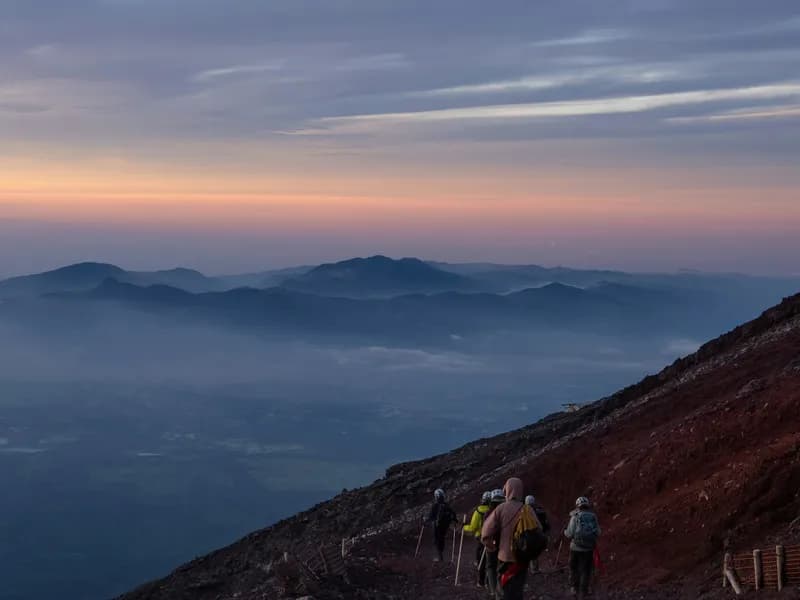
Climbing the Yoshida Trail
The most popular of four routes to the summit, starting at the Subaru Line 5th Station (2,300m). The ascent takes 5-7 hours, the descent 3-5. As of 2024 a 2,000 JPY (~$13) trail fee and a daily hiker cap apply, with the gate closed 4 PM-3 AM unless you have a mountain-hut reservation. Most climbers overnight in a hut (~7,000-10,000 JPY) to catch 'goraiko' — sunrise from the crater rim. Book huts months ahead.

Chureito Pagoda (Arakura Sengen Shrine)
The postcard shot of Japan — a five-storied red pagoda perched above Fujiyoshida with Fuji rising behind it, framed by cherry blossoms in April or red maples in autumn. Reach it by climbing ~400 steps from Arakurayama Sengen Park. Free entry. Arrive at dawn to beat crowds and photograph the mountain before afternoon haze. A 5-minute walk from Shimoyoshida Station.

Lake Kawaguchiko
The most accessible of the Fuji Five Lakes and the classic base for viewing the mountain's reflection on still mornings. Ride the Kachi Kachi Ropeway (~900 JPY round trip) to the Mount Tenjo observation deck, cruise the lake, or cycle the northern shore. The town has onsen ryokan, the Kubota Itchiku Art Museum, and lavender fields at Oishi Park in June-July. Best reflections at sunrise in autumn/winter.

Oshino Hakkai
A cluster of eight crystal-clear spring-fed ponds fed by Fuji's snowmelt filtered through lava for decades, set in a preserved village of thatched-roof houses. Free to wander (one premium pond charges ~300 JPY). The water is startlingly transparent and cold. Combine with a Fuji view on clear days. Very popular with tour buses midday — go early morning. About 20 minutes by bus from Kawaguchiko.
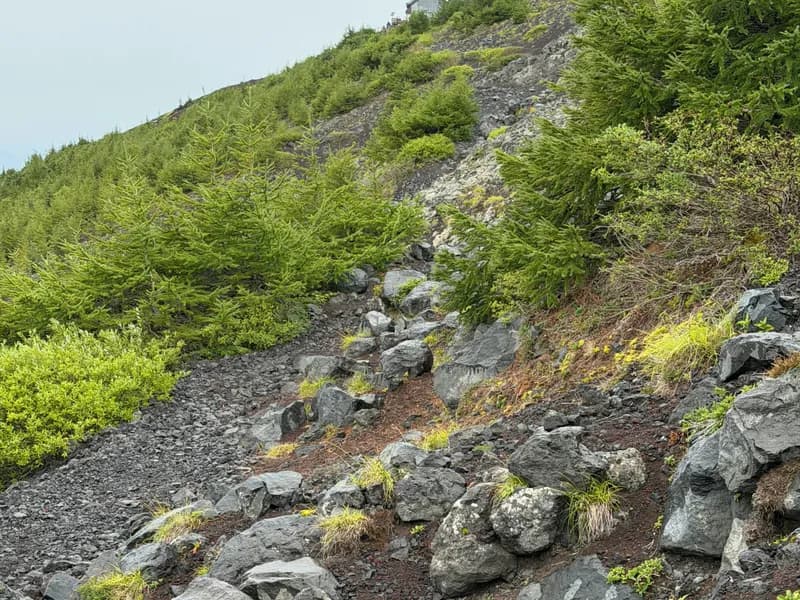
Fuji Five Lakes 5th Station
For non-climbers, the Subaru Line 5th Station (2,300m) offers Fuji's high-alpine atmosphere without the hike — shops, a shrine, and views over a sea of clouds. Reached by toll road or bus from Kawaguchiko (~1,570 JPY each way, ~1 hour). Closed to private cars in peak climbing weeks (shuttle only). Dress warmly — it can be 15°C colder than the lakeside even in summer.

Hakone Onsen & Lake Ashi
A hot-spring resort region on Fuji's southeast flank, famous for open-air onsen with mountain views, the Hakone Open-Air Museum, and pirate-ship cruises across Lake Ashi past the floating Hakone Shrine torii gate. The Hakone Free Pass (~6,100 JPY from Shinjuku) covers trains, cablecars, buses, and the ropeway over the sulfur vents of Owakudani. A perfect Fuji-view day trip or overnight from Tokyo.
Planned Itinerary
7-Day Mount Fuji Itinerary
Arrival at Kawaguchiko & Lakeside Orientation
Land at Haneda or Narita and make your way to the Fuji Five Lakes. The smoothest route is the direct Fujikyu/Keio highway bus from Shinjuku's Busta terminal to Kawaguchiko Station — reserve online in advance as it sells out. Settle into your lakeside base, grab your first Fuji view if the clouds cooperate, and pace yourself after the flight.
Airport to Shinjuku, then highway bus to Kawaguchiko(3-4 hours total)
From Haneda take the Keikyu/monorail into central Tokyo, then the Fujikyu highway bus from Busta Shinjuku to Kawaguchiko (~1h45, 2,000-2,200 JPY). Reserve the bus seat online — it sells out on weekends.
Check in at a Kawaguchiko ryokan(45 minutes)
Base yourself near the station or northern shore. Fuji Lake Hotel or Kozantei Ubuya (premium, lake-facing onsen rooms ~40,000 JPY) are classics; budget travelers use K's House Mt.Fuji hostel (~4,000 JPY).
Walk the northern lakeshore promenade(1.5 hours)
Stroll from the station toward the Kawaguchiko Ohashi bridge for your first mountain view. Best reflections come at dawn, but a clear late afternoon can deliver too.
Dinner of Fuji-region hoto noodles at Hoto Fudo(1 hour)
The area's signature dish — flat udon in miso-pumpkin broth simmered in an iron pot (~1,100 JPY). Hoto Fudo's Kawaguchiko-kita branch, in its striking cloud-shaped white building, is the local favorite.
Chureito Pagoda Sunrise & Lake Kawaguchiko
The classic postcard day. Beat the tour buses to the Chureito Pagoda at dawn for the iconic pagoda-and-Fuji frame, then spend the afternoon circling Lake Kawaguchiko by ropeway and shore. Morning light also gives you the sharpest mountain silhouette before afternoon haze rolls in.
Dawn climb to Chureito Pagoda(2 hours)
Take the Fujikyu line one stop to Shimoyoshida Station (5-min walk to the base), then climb the ~400 steps up Arakurayama Sengen Park. Free entry. Arrive before 7 AM for clear air and to beat the crowds; the five-storied red pagoda framing Fuji is Japan's most photographed view.
Brunch back in Kawaguchiko(1 hour)
Try a soft-serve at one of the station-area cafes, or fuel up on a rice set before the afternoon. Budget ~1,000-1,500 JPY.
Kachi Kachi Ropeway to Mt. Tenjo deck(1.5 hours)
Ride the ropeway (~900 JPY round trip) to the 1,075m observation deck for a panorama over the lake toward Fuji. Buy the eggy 'tanuki dango' skewer at the top and enjoy the Rabbit-and-Racoon-Dog folklore theme.
Cycle or cruise the lake(2 hours)
Rent a bike near the station (~500 JPY/hour) to ride the quieter northern shore, or take the 20-minute sightseeing cruise (~1,000 JPY) for mid-lake reflection shots.
Onsen soak at your ryokan(1 hour)
Rest tired legs in a Fuji-facing hot spring before dinner — many Kawaguchiko ryokan have open-air baths overlooking the lake.
Oshino Hakkai Springs & Oishi Park
A gentler day exploring the villages and gardens ringing the lakes. Start early at the crystal-clear Oshino Hakkai spring ponds before the tour buses arrive, then head to Oishi Park on the north shore for lavender or seasonal flower beds framing the mountain.
Early bus to Oshino Hakkai(2 hours)
Take the Fujikyu bus (~20 min from Kawaguchiko) to the eight spring-fed ponds, filtered through Fuji's lava for decades. Free to wander; the premium Waku-ike pond charges ~300 JPY. Go before 9 AM — midday it fills with coaches.
Snack on kusa-mochi and spring water(30 minutes)
Buy grilled mochi and fresh spring-water tofu from the thatched-roof village stalls (~500 JPY). Fill a bottle at the free spring tap.
Lunch of soba at a village restaurant(1 hour)
Handmade soba made with the clear spring water is the local specialty; a set runs ~1,200 JPY.
Oishi Park flower beds(1.5 hours)
Bus to the north shore's Oishi Park, where lavender blooms in June-July and kochia turns red in autumn, all set against Fuji across the water. Free. The Natural Living Center cafe here does a good blueberry soft-serve.
Free evening / self-guided rest(flexible)
Return to your ryokan and take the evening off — a slow soak and an early night. This is your built-in rest period.
5th Station Alpine Air (or the Yoshida Trail Climb)
Get up into Fuji's high-alpine zone. Non-climbers ride to the Subaru Line 5th Station (2,300m) for a sea-of-clouds view; if you're here in the July-early September climbing window and prepared, this is your day to start the Yoshida Trail ascent to overnight in a hut. Dress warmly — the 5th Station runs ~15°C colder than the lakeside.
Bus to Subaru Line 5th Station(1 hour each way)
From Kawaguchiko Station the bus climbs to the 2,300m 5th Station (~1,570 JPY each way). In peak climbing weeks private cars are banned, so shuttle/bus only. Browse the shops, visit the small shrine, and stamp your climbing staff.
CLIMBERS: Begin the Yoshida Trail ascent(5-7 hours)
In season only (early July-early Sept). Pay the 2,000 JPY trail fee, and note the gate closes 4 PM-3 AM to hikers without a hut booking. Ascend slowly toward the 7th/8th station huts (~7,000-10,000 JPY/night, book months ahead) to acclimatize before a dawn 'goraiko' summit.
NON-CLIMBERS: Komitake Shrine & short nature walk(1 hour)
Walk the easy Ochudo trail spur near the 5th Station for a taste of the alpine forest and cloud sea, without the full climb.
Lunch at the 5th Station(45 minutes)
Warm up with a bowl of curry rice or ramen at Fujikyu Unjokaku (~1,200 JPY) with panoramic windows.
NON-CLIMBERS: Return and relax lakeside(evening)
Descend by bus and spend a quiet evening in Kawaguchiko. Consider a lakeside izakaya dinner.
Descent, Art & Culture in Kawaguchiko
If you climbed, this is your descent-and-recover day after a dawn summit. If you stayed low, it's a cultural day at Kawaguchiko's museums and craft spots. Either way, keep it low-impact.
CLIMBERS: Dawn summit & descent(5-7 hours)
Reach the crater rim for sunrise, then descend the sandy Yoshida descent route back to the 5th Station and bus down. Rest fully afterward.
Kubota Itchiku Art Museum(1.5 hours)
On the north shore, this museum houses the late Itchiku Kubota's revived 'tsujigahana' silk kimono, set in a striking gaudi-esque building and garden (~1,300 JPY). One of the most atmospheric small museums in Japan.
Lunch on the north shore(1 hour)
The Kawaguchiko Natural Living Center or a nearby lakeside cafe; budget ~1,500 JPY.
Music Forest / Orgel museum(1.5 hours)
The whimsical European-style Kawaguchiko Music Forest with antique music boxes and a rose garden makes a relaxed afternoon (~1,800 JPY), or skip for more onsen time.
Farewell ryokan dinner (kaiseki)(1.5 hours)
Book your ryokan's multi-course kaiseki dinner featuring local Koshu wine and Fuji-region trout.
Day Trip to Hakone Onsen & Lake Ashi
Swap the lakes for the hot-spring valleys of Hakone on Fuji's southeast flank. A full day of ropeways over sulfur vents, an open-air art park, and a pirate-ship cruise beneath the floating Hakone Shrine torii — with Fuji views on clear days. This is a long transfer day, so start early.
Transfer to Hakone(2-2.5 hours)
There's no direct rail; the practical route is a bus or train to Gotemba/Odawara then onto the Hakone loop. Alternatively, day-trip Hakone directly from Tokyo on another itinerary. Buy the Hakone Free Pass (~6,100 JPY) covering the trains, cablecars, buses, ropeway and cruise.
Owakudani ropeway & sulfur vents(1.5 hours)
Ride the Hakone Ropeway over the steaming Owakudani volcanic valley. Eat a 'kuro-tamago' black egg, boiled in the sulfur springs and said to add seven years to your life (~500 JPY for 5).
Lake Ashi pirate-ship cruise(1 hour)
Cruise across Lake Ashi (covered by the Free Pass) past the vermilion Hakone Shrine torii gate rising from the water — with Fuji behind it on a clear day.
Hakone Open-Air Museum(1.5 hours)
Sculptures by Henry Moore and a Picasso pavilion set across mountain lawns, with a free foot-onsen (~1,600 JPY). Time it before the last cablecar.
Return to Kawaguchiko(2-2.5 hours)
Head back in the evening; grab a bento for the ride.
Final Fuji View & Departure
Wake for one last shot at a clear sunrise reflection — the mountain is shyest in summer afternoons, so mornings are your best odds. Then check out and transfer back to Tokyo for your onward flight, leaving a generous buffer given the single-lane roads that can jam on weekends.
Sunrise reflection walk(1 hour)
Head to the Kawaguchiko Ohashi bridge or the north shore at dawn for a mirror-still reflection if winds are calm — the classic 'Sakasa Fuji.'
Last-minute souvenirs & breakfast(1 hour)
Pick up Fujiyama cookies and Shingen-mochi near the station, and a coffee before checkout.
Check out of ryokan(30 minutes)
Store bags at the station coin lockers if you have hours to spare.
Highway bus back to Shinjuku, then to the airport(3.5-4 hours)
Take the reserved Fujikyu bus back to Busta Shinjuku (~1h45), then the airport limousine bus or train to Haneda/Narita. Build in buffer — weekend traffic on the single access road can add an hour.
14-Day Mount Fuji Itinerary
Arrival at Kawaguchiko & Lakeside Orientation
Land at Haneda or Narita and travel to the Fuji Five Lakes via the direct Fujikyu highway bus from Busta Shinjuku — reserve online as it sells out. Settle into your lakeside base, catch a first Fuji view if the clouds allow, and take it easy after the flight.
Airport to Shinjuku, then highway bus to Kawaguchiko(3-4 hours total)
From Haneda take the monorail into Tokyo, then the Fujikyu highway bus from Busta Shinjuku to Kawaguchiko (~1h45, 2,000-2,200 JPY). Reserve the seat online.
Check in at a Kawaguchiko ryokan(45 minutes)
Kozantei Ubuya for lake-facing onsen luxury (~40,000 JPY), or K's House Mt.Fuji hostel for budget (~4,000 JPY).
Northern lakeshore promenade walk(1.5 hours)
Walk toward Kawaguchiko Ohashi bridge for your first mountain view.
Hoto noodle dinner at Hoto Fudo(1 hour)
Miso-pumpkin flat-udon hotpot (~1,100 JPY) at the cloud-shaped Kawaguchiko-kita branch.
Chureito Pagoda Sunrise & Lake Kawaguchiko
Beat the buses to the Chureito Pagoda at dawn for the iconic frame, then spend the afternoon on the ropeway and lake. Morning light gives the sharpest silhouette before afternoon haze.
Dawn climb to Chureito Pagoda(2 hours)
Fujikyu line to Shimoyoshida Station (5-min walk), then ~400 steps up Arakurayama Sengen Park. Free. Before 7 AM for clear air and no crowds.
Brunch in Kawaguchiko(1 hour)
Rice set or soft-serve near the station (~1,000-1,500 JPY).
Kachi Kachi Ropeway to Mt. Tenjo deck(1.5 hours)
Ropeway (~900 JPY round trip) to the 1,075m deck; try the tanuki dango skewer at the top.
Lake cruise or cycle the northern shore(2 hours)
20-min sightseeing cruise (~1,000 JPY) or a bike rental (~500 JPY/hour).
Onsen soak before dinner(1 hour)
Rest legs in a Fuji-facing hot spring at your ryokan.
Oshino Hakkai Springs & Oishi Park
A gentler day among the spring villages and flower gardens. Reach the crystal-clear Oshino Hakkai ponds before the tour buses, then head to Oishi Park's flower beds on the north shore.
Early bus to Oshino Hakkai(2 hours)
Fujikyu bus (~20 min) to the eight lava-filtered spring ponds. Free; premium Waku-ike pond ~300 JPY. Before 9 AM to beat coaches.
Kusa-mochi and spring water(30 minutes)
Grilled mochi and fresh spring-water tofu from thatched-roof stalls (~500 JPY).
Handmade soba lunch(1 hour)
Spring-water soba set (~1,200 JPY) in the village.
Oishi Park flower beds(1.5 hours)
North-shore park with lavender (Jun-Jul) or red kochia (autumn) against Fuji. Free; blueberry soft-serve at the Natural Living Center.
Free evening / rest(flexible)
Slow soak and early night — your first built-in rest period.
5th Station Alpine Air (or Yoshida Trail Climb)
Head up into Fuji's high-alpine zone. Non-climbers ride to the 2,300m Subaru Line 5th Station; in the July-early-September climbing window, prepared hikers start the Yoshida Trail ascent to overnight in a hut. Dress warmly — it's ~15°C colder up top.
Bus to Subaru Line 5th Station(1 hour each way)
From Kawaguchiko (~1,570 JPY each way). Shuttle-only in peak weeks. Shops, shrine, cloud-sea views.
CLIMBERS: Begin Yoshida Trail ascent(5-7 hours)
In season only. Pay the 2,000 JPY fee; gate closes 4 PM-3 AM without a hut booking. Ascend slowly to the 7th/8th station huts (7,000-10,000 JPY, book months ahead).
NON-CLIMBERS: Ochudo trail spur & Komitake Shrine(1 hour)
Easy alpine forest walk near the 5th Station for the cloud sea without the full climb.
Lunch at Fujikyu Unjokaku(45 minutes)
Curry rice or ramen (~1,200 JPY) with panoramic windows.
NON-CLIMBERS: Descend and relax lakeside(evening)
Bus down; quiet izakaya dinner in Kawaguchiko.
Descent, Art & Culture in Kawaguchiko
A recovery-and-culture day. Climbers descend from a dawn summit; everyone else explores Kawaguchiko's atmospheric museums. Keep the pace low.
CLIMBERS: Dawn summit & descent(5-7 hours)
Crater rim for 'goraiko' sunrise, then the sandy Yoshida descent route to the 5th Station and bus down.
Kubota Itchiku Art Museum(1.5 hours)
North-shore museum of revived tsujigahana silk kimono in a Gaudi-esque building (~1,300 JPY).
North-shore lunch(1 hour)
Lakeside cafe near the Natural Living Center (~1,500 JPY).
Kawaguchiko Music Forest(1.5 hours)
European-style orgel museum and rose garden (~1,800 JPY), or swap for more onsen time.
Kaiseki ryokan dinner(1.5 hours)
Multi-course dinner with Koshu wine and Fuji-region trout.
Hakone Onsen, Lake Ashi & Overnight
Move to the hot-spring valleys of Hakone on Fuji's southeast flank for a two-night base — ropeways over sulfur vents, an open-air art park, and a pirate-ship cruise beneath the floating torii. Staying over lets you enjoy Hakone at a relaxed pace instead of rushing back.
Transfer to Hakone(2-2.5 hours)
Bus/train via Gotemba or Odawara onto the Hakone loop. Buy the Hakone Free Pass (~6,100 JPY) covering trains, cablecars, buses, ropeway and cruise.
Check in to a Hakone onsen ryokan(45 minutes)
Gora or Sengokuhara area ryokan with private open-air baths; budget ~20,000-35,000 JPY with dinner.
Owakudani ropeway & black eggs(1.5 hours)
Ropeway over the steaming volcanic valley; eat a kuro-tamago black egg (~500 JPY for 5).
Lake Ashi pirate-ship cruise(1 hour)
Cruise past the vermilion Hakone Shrine torii on the water, Fuji behind on clear days.
Onsen and kaiseki dinner(2 hours)
Soak and dine at your ryokan.
Hakone Art Trail & Return to the Lakes
A slower Hakone morning of open-air art and traditional crafts before returning to Kawaguchiko in the afternoon. This closes out the core-highlights week with the region's cultural depth.
Hakone Open-Air Museum(2 hours)
Henry Moore sculptures and a Picasso pavilion on mountain lawns, with a free foot-onsen (~1,600 JPY).
Hakone Shrine lakeside torii walk(1 hour)
Walk to the famous water torii for photos; early morning avoids the queue.
Lunch of Hakone soba(1 hour)
Try Hatsuhana's grated-yam soba near Yumoto (~1,300 JPY).
Return transfer to Kawaguchiko(2-2.5 hours)
Head back and re-settle at your lakeside base for the second week.
Quiet lakeside evening(flexible)
Rest period — soak and an early dinner.
Day Trip to Fujinomiya & the Shizuoka Side
See Fuji from its southern face. A day trip over to the Shizuoka side takes in the ancient Fujisan Hongu Sengen Taisha shrine — Fuji's spiritual headquarters — and the Shiraito Falls, a fan of snowmelt streams. Different angle, fewer foreign tourists.
Transfer toward Fujinomiya(1.5-2 hours)
Bus/train around the mountain's west side toward Fujinomiya (Shizuoka). Roads here are quieter than the north side.
Fujisan Hongu Sengen Taisha(1.5 hours)
The head shrine of ~1,300 Sengen shrines nationwide, whose grounds legally include Fuji's summit above the 8th station. Free; spring-fed Wakutama Pond is a designated Special Natural Monument.
Fujinomiya yakisoba lunch(1 hour)
The town's famous chewy B-grade yakisoba, topped with sardine powder (~700 JPY). Try it at the Fujinomiya Yakisoba Antenna Shop.
Shiraito Falls(1.5 hours)
A 150m-wide curtain of snowmelt streams fanning over a lava cliff, a UNESCO component site of Fuji. Small ~200 JPY parking fee area; the walk down is easy.
Return to Kawaguchiko(1.5-2 hours)
Head back for the evening.
Saiko & Aokigahara Lava Caves
Explore the wilder western Fuji Five Lakes. Lake Saiko's quiet shores, the reconstructed thatched village of Iyashi-no-Sato, and the lava caves formed by Fuji's eruptions make a nature-forward day away from the Kawaguchiko crowds.
Retro Bus to Iyashi-no-Sato Nenba(1.5 hours)
Take the green-line Fuji Five Lakes sightseeing 'Retro Bus' from Kawaguchiko to Lake Saiko's restored thatched-roof craft village (~500 JPY entry). Try on samurai armor or fire pottery, with Fuji rising behind the roofs.
Narusawa Ice Cave & Fugaku Wind Cave(1.5 hours)
Walk into lava tube caves in the Aokigahara forest, ice-cold year-round (~350 JPY each). Bring a jacket — it's near freezing inside even in summer.
Forest lunch(1 hour)
Simple cafe near the caves or a packed bento; budget ~1,200 JPY.
Lake Saiko shore walk(1 hour)
One of the quietest lakes for reflections and the 'Kozanji-view' angle used on the old 1,000-yen note (from nearby Motosuko).
Return and rest(flexible)
Back to Kawaguchiko; free evening — a built-in rest period.
Overnight Excursion to Fujiyoshida Old Town
Shift your base a short hop to Fujiyoshida, the historic gateway town, for a night steeped in Fuji pilgrimage culture. Wander the retro Honcho-dori shopping street — the one with the mountain looming perfectly at the end — and dine on the town's signature thick udon.
Transfer to Fujiyoshida(30 minutes)
Short Fujikyu line hop to Gekkoji/Fujisan Station area; check into a small local inn or business hotel (~9,000 JPY).
Honcho-dori 'Fuji street' photo walk(1.5 hours)
The retro-Showa shopping street where Fuji sits framed between the buildings — the viral 'Lawson-and-Fuji' style shots. Best light in late afternoon.
Yoshida udon lunch(1 hour)
The town's famously chewy, firm udon with cabbage and horse meat (~600 JPY). Michimoto or Kanetsuki are local favorites — lunch-only, cash-only.
Kitaguchi Hongu Fuji Sengen Shrine(1.5 hours)
The atmospheric cedar-lined shrine that marks the traditional start of the Yoshida pilgrimage trail to the summit. Free; the moss-covered stone lanterns are stunning.
Evening at a local izakaya(1.5 hours)
Dine among locals near Gekkoji Station; try Fuji-region sake.
Fuji-Q Highland Thrills or Slow Fujiyoshida Morning
Choose your energy level. Thrill-seekers spend the day at Fuji-Q Highland, home to record-breaking roller coasters with Fuji as the backdrop; those wanting calm take a slow Fujiyoshida morning before returning to the lakes. Either way you return to Kawaguchiko by evening.
Fuji-Q Highland (optional)(half to full day)
One of Japan's premier amusement parks with the Fujiyama and Takabisha coasters. Entry is free; pay per ride or ~6,000 JPY for a day pass. Adjacent to Fuji-Q Highland Station.
ALTERNATIVE: Fujiyoshida coffee & craft morning(2 hours)
A slow morning at a Honcho-dori cafe and the local textile shops — Fujiyoshida is a historic weaving town.
Lunch(1 hour)
In-park food or a return Yoshida udon fix (~700-1,500 JPY).
Return to Kawaguchiko & check in(45 minutes)
Re-settle at a lakeside ryokan for the final stretch.
Sunset lakeshore stroll(1 hour)
Golden-hour walk along the north shore.
Lake Yamanaka & Cycling Day
The largest of the Fuji Five Lakes, Yamanakako sits closest to the mountain and has a flat 14km cycling loop — a relaxed, active day with constant Fuji views and swan boats. A gentle rest-adjacent day before the finale.
Bus to Lake Yamanaka(1 hour)
Fujikyu bus around to Yamanakako (~40 min). The lake sits at the highest elevation of the five, giving crisp Fuji views.
Cycle the lakeshore loop(2.5 hours)
Rent a bike (~1,500 JPY/half-day) for the flat ~14km cycling path circling the lake. Stop at the Hananomiyako Flower Park (~600 JPY) in bloom seasons.
Lakeside lunch(1 hour)
A cafe on the north shore with terrace Fuji views (~1,500 JPY).
Benifuji-no-yu onsen(1.5 hours)
A day-use hot spring with open-air baths facing Fuji (~900 JPY) — ideal after cycling.
Return to Kawaguchiko(1 hour)
Head back for a quiet evening.
Free Day — Reflection Mornings & Onsen
A deliberate slow-travel day. Keep the morning open for another shot at a mirror-still 'Sakasa Fuji' reflection — the mountain is shy, so multiple mornings improve your odds — then indulge in onsen, cafes, and last souvenir hunting. This is your final rest period.
Sunrise reflection attempt(1.5 hours)
Return to the Kawaguchiko Ohashi bridge or Oishi Park at dawn for the inverted-Fuji reflection on calm water.
Leisurely cafe breakfast(1 hour)
A relaxed morning at a lakeside cafe.
Half-day onsen and reading(flexible)
Deliberately unstructured — soak, nap, and recover before departure.
Souvenir shopping near the station(1 hour)
Fujiyama cookies, Shingen-mochi, and Koshu wine.
Farewell dinner(1.5 hours)
A final hoto or kaiseki meal at your favorite spot.
Final Fuji View & Departure
One last dawn attempt at a clear view, then check out and transfer back to Tokyo for your flight. Build in a generous buffer — the single access road can jam on weekends.
Sunrise view / photo(1 hour)
Last chance for a clear morning silhouette or reflection at the north shore.
Breakfast and checkout(1 hour)
Coffee and a light bite before leaving; store bags in station lockers if needed.
Highway bus to Shinjuku(1h45)
Reserved Fujikyu bus back to Busta Shinjuku.
Transfer to Haneda/Narita(1-1.5 hours)
Airport limousine bus or train onward. Leave buffer for weekend traffic.
21-Day Mount Fuji Itinerary
Arrival at Kawaguchiko & Lakeside Orientation
Land at Haneda or Narita and travel to the Fuji Five Lakes via the direct Fujikyu highway bus from Busta Shinjuku — reserve online as it sells out. Settle in, catch a first Fuji view if the clouds allow, and ease into the trip after your flight.
Airport to Shinjuku, then highway bus to Kawaguchiko(3-4 hours total)
Monorail from Haneda into Tokyo, then the Fujikyu highway bus from Busta Shinjuku to Kawaguchiko (~1h45, 2,000-2,200 JPY). Reserve online.
Check in at a Kawaguchiko ryokan(45 minutes)
Kozantei Ubuya for lake-facing onsen luxury (~40,000 JPY) or K's House Mt.Fuji hostel for budget (~4,000 JPY).
Northern lakeshore promenade walk(1.5 hours)
Walk toward Kawaguchiko Ohashi bridge for your first view.
Hoto noodle dinner at Hoto Fudo(1 hour)
Miso-pumpkin flat-udon hotpot (~1,100 JPY) at the cloud-shaped Kawaguchiko-kita branch.
Chureito Pagoda Sunrise & Lake Kawaguchiko
Beat the buses to the Chureito Pagoda at dawn for the iconic frame, then spend the afternoon on the ropeway and lake. Morning light is sharpest before the haze.
Dawn climb to Chureito Pagoda(2 hours)
Fujikyu line to Shimoyoshida Station (5-min walk), then ~400 steps up Arakurayama Sengen Park. Free. Before 7 AM.
Brunch in Kawaguchiko(1 hour)
Rice set or soft-serve near the station (~1,000-1,500 JPY).
Kachi Kachi Ropeway to Mt. Tenjo deck(1.5 hours)
Ropeway (~900 JPY round trip) to the 1,075m deck; tanuki dango skewer at the top.
Lake cruise or cycle the shore(2 hours)
20-min cruise (~1,000 JPY) or a bike (~500 JPY/hour).
Onsen soak before dinner(1 hour)
Fuji-facing hot spring at your ryokan.
Oshino Hakkai Springs & Oishi Park
A gentler day among the spring villages and flower gardens. Reach the crystal-clear Oshino Hakkai ponds before the buses, then Oishi Park's flower beds on the north shore.
Early bus to Oshino Hakkai(2 hours)
Fujikyu bus (~20 min) to the eight lava-filtered spring ponds. Free; Waku-ike pond ~300 JPY. Before 9 AM.
Kusa-mochi and spring water(30 minutes)
Grilled mochi and spring-water tofu from thatched-roof stalls (~500 JPY).
Handmade soba lunch(1 hour)
Spring-water soba set (~1,200 JPY).
Oishi Park flower beds(1.5 hours)
Lavender (Jun-Jul) or red kochia (autumn) against Fuji. Free; blueberry soft-serve at the Natural Living Center.
Free evening / rest(flexible)
Slow soak and early night — rest period.
5th Station Alpine Air (or Yoshida Trail Climb)
Up into Fuji's high-alpine zone. Non-climbers ride to the 2,300m Subaru Line 5th Station; in the July-early-September window, prepared hikers start the Yoshida Trail to overnight in a hut. Dress warmly — ~15°C colder up top.
Bus to Subaru Line 5th Station(1 hour each way)
From Kawaguchiko (~1,570 JPY each way). Shuttle-only in peak weeks. Shops, shrine, cloud sea.
CLIMBERS: Begin Yoshida Trail ascent(5-7 hours)
In season only. Pay the 2,000 JPY fee; gate closes 4 PM-3 AM without a hut booking. Ascend slowly to 7th/8th station huts (7,000-10,000 JPY, book months ahead).
NON-CLIMBERS: Ochudo trail spur & Komitake Shrine(1 hour)
Easy alpine forest walk near the 5th Station.
Lunch at Fujikyu Unjokaku(45 minutes)
Curry rice or ramen (~1,200 JPY), panoramic windows.
NON-CLIMBERS: Descend and relax(evening)
Quiet izakaya dinner in Kawaguchiko.
Descent, Art & Culture in Kawaguchiko
A recovery-and-culture day. Climbers descend from a dawn summit; others explore Kawaguchiko's atmospheric museums. Keep it low-impact.
CLIMBERS: Dawn summit & descent(5-7 hours)
Crater rim for 'goraiko' sunrise, then the sandy Yoshida descent route back to the 5th Station.
Kubota Itchiku Art Museum(1.5 hours)
Revived tsujigahana silk kimono in a Gaudi-esque building (~1,300 JPY).
North-shore lunch(1 hour)
Lakeside cafe (~1,500 JPY).
Kawaguchiko Music Forest(1.5 hours)
Orgel museum and rose garden (~1,800 JPY), or more onsen time.
Kaiseki ryokan dinner(1.5 hours)
Koshu wine and Fuji-region trout.
Hakone Onsen, Lake Ashi & Overnight
Move to the hot-spring valleys of Hakone on Fuji's southeast flank for a two-night base — ropeways over sulfur vents, an open-air art park, and a pirate-ship cruise beneath the floating torii.
Transfer to Hakone(2-2.5 hours)
Bus/train via Gotemba or Odawara onto the Hakone loop. Hakone Free Pass ~6,100 JPY covers trains, cablecars, buses, ropeway and cruise.
Check in to a Hakone onsen ryokan(45 minutes)
Gora or Sengokuhara ryokan with private open-air baths (~20,000-35,000 JPY with dinner).
Owakudani ropeway & black eggs(1.5 hours)
Ropeway over the steaming valley; kuro-tamago black egg (~500 JPY for 5).
Lake Ashi pirate-ship cruise(1 hour)
Cruise past the vermilion Hakone Shrine water torii, Fuji behind on clear days.
Onsen and kaiseki dinner(2 hours)
Soak and dine at your ryokan.
Hakone Art Trail & Return to the Lakes
A slower Hakone morning of open-air art and crafts before returning to Kawaguchiko. This closes out the core-highlights week.
Hakone Open-Air Museum(2 hours)
Henry Moore sculptures and a Picasso pavilion, free foot-onsen (~1,600 JPY).
Hakone Shrine lakeside torii walk(1 hour)
The famous water torii; early morning avoids the queue.
Hakone soba lunch(1 hour)
Hatsuhana's grated-yam soba near Yumoto (~1,300 JPY).
Return transfer to Kawaguchiko(2-2.5 hours)
Re-settle at the lakeside base.
Quiet lakeside evening(flexible)
Rest period — soak and early dinner.
Fujinomiya & Shiraito Falls (Southern Face)
See Fuji from its southern face. A day trip to the Shizuoka side takes in the ancient Fujisan Hongu Sengen Taisha — Fuji's spiritual headquarters — and the fan-shaped Shiraito Falls. Fewer foreign tourists here.
Transfer toward Fujinomiya(1.5-2 hours)
Bus/train around the west side to Fujinomiya (Shizuoka).
Fujisan Hongu Sengen Taisha(1.5 hours)
Head shrine of ~1,300 Sengen shrines, owning Fuji's summit above the 8th station. Free; Wakutama Pond is a Special Natural Monument.
Fujinomiya yakisoba lunch(1 hour)
Chewy B-grade yakisoba with sardine powder (~700 JPY) at the Antenna Shop.
Shiraito Falls(1.5 hours)
A 150m-wide curtain of snowmelt over lava, a UNESCO component site.
Return to Kawaguchiko(1.5-2 hours)
Head back for the evening.
Saiko, Iyashi-no-Sato & Lava Caves
Explore the wilder western lakes: Lake Saiko's quiet shores, the reconstructed thatched village of Iyashi-no-Sato, and the eruption-formed lava caves in the Aokigahara forest.
Retro Bus to Iyashi-no-Sato Nenba(1.5 hours)
Green-line sightseeing bus to Lake Saiko's restored thatched-roof craft village (~500 JPY). Try armor, pottery, or dyeing crafts with Fuji behind the roofs.
Narusawa Ice Cave & Fugaku Wind Cave(1.5 hours)
Lava tube caves in Aokigahara, ice-cold year-round (~350 JPY each). Bring a jacket.
Forest lunch(1 hour)
Cafe near the caves or a bento (~1,200 JPY).
Lake Saiko shore walk(1 hour)
Quiet reflections away from the crowds.
Return and rest(flexible)
Free evening — rest period.
Multi-Day Excursion: To Kyoto (Day 1)
Begin a three-night side trip to Kyoto for classical-Japan contrast. Travel via the Shinkansen and spend the afternoon among eastern Kyoto's temples. This is where the 21-day trip broadens beyond the mountain.
Transfer to Mishima and Shinkansen to Kyoto(3.5-4 hours)
Bus/train to Mishima Station, then the Tokaido Shinkansen to Kyoto (~2h10, ~11,000 JPY). Fuji is visible from the right-side windows on a clear day.
Check in near Gion/Higashiyama(45 minutes)
A machiya townhouse stay or ryokan in eastern Kyoto (~15,000-30,000 JPY).
Kiyomizu-dera at golden hour(1.5 hours)
The wooden-stage temple with city views (~500 JPY); late afternoon light is best.
Ninenzaka & Sannenzaka lanes(1 hour)
Historic sloping stone lanes toward Gion, lined with tea shops.
Kaiseki or obanzai dinner in Gion(1.5 hours)
Kyoto home-style small plates; budget ~4,000 JPY.
Kyoto Excursion (Day 2) — Arashiyama & Temples
A full Kyoto day across the Arashiyama bamboo grove and the golden pavilion. A deliberate change of scenery and pace mid-trip.
Arashiyama Bamboo Grove at dawn(1.5 hours)
Before 8 AM the towering grove is near-empty. Free. Pair with Tenryu-ji temple garden (~500 JPY).
Okochi Sanso villa & garden(1 hour)
A silent-film star's hillside garden with matcha included (~1,000 JPY).
Riverside lunch in Arashiyama(1 hour)
Yudofu (tofu hotpot) near the Togetsukyo bridge (~2,000 JPY).
Kinkaku-ji golden pavilion(1 hour)
The gold-leaf temple reflected in its pond (~500 JPY).
Evening in Pontocho alley(1.5 hours)
Lantern-lit riverside dining alley for dinner.
Kyoto Excursion (Day 3) — Fushimi Inari & Nara Option
Cap the Kyoto side trip with the vermilion torii tunnels of Fushimi Inari, with an optional half-day to Nara's deer park. A niche, slower-paced cultural immersion before returning to Fuji.
Fushimi Inari Taisha at sunrise(2 hours)
Climb the thousands of vermilion torii up Mt. Inari before the crowds. Free; the full loop takes ~2 hours.
Inari-zushi breakfast(30 minutes)
Sweet fried-tofu sushi from a stall at the shrine approach (~500 JPY).
OPTIONAL: Nara half-day(half day)
30-min train to Nara for Todai-ji's Great Buddha and the free-roaming deer of Nara Park (deer crackers ~200 JPY).
Nishiki Market food crawl(1.5 hours)
Kyoto's covered 'kitchen' market — try tako-tamago, soy-milk donuts, and pickles (~2,000 JPY grazing).
Relaxed Kyoto evening(flexible)
Rest period before the next day's return travel.
Return to Kawaguchiko & Recovery
Travel back to the Fuji region and reset. A deliberately light transfer-and-recover day after the Kyoto excursion, with just an easy lakeside evening.
Shinkansen to Mishima, transfer to Kawaguchiko(4 hours)
Reverse the Kyoto route — Shinkansen to Mishima, then bus/train back to the lakes.
Re-check-in and unpack(45 minutes)
Settle back at a lakeside ryokan for the final stretch.
Gentle lakeshore walk(1 hour)
Stretch travel-stiff legs along the north shore.
Onsen and light dinner(1.5 hours)
Recovery soak and an early night — rest period.
Fujiyoshida Old Town & Pilgrimage Culture
A day steeped in Fuji pilgrimage history in Fujiyoshida — the retro Honcho-dori 'Fuji street', the cedar-lined shrine that starts the Yoshida trail, and the town's signature thick udon.
Transfer to Fujiyoshida(30 minutes)
Short Fujikyu hop to the Fujisan/Gekkoji Station area.
Honcho-dori 'Fuji street' photo walk(1.5 hours)
The retro-Showa street with Fuji framed between buildings. Late-afternoon light is best.
Yoshida udon lunch(1 hour)
Firm, chewy udon with cabbage and horse meat (~600 JPY) at Michimoto — lunch-only, cash-only.
Kitaguchi Hongu Fuji Sengen Shrine(1.5 hours)
Cedar-lined shrine marking the historic pilgrimage trailhead; moss-covered stone lanterns. Free.
Return to Kawaguchiko(30 minutes)
Back for the evening.
Lake Yamanaka Cycling & Onsen
The largest and highest of the five lakes, closest to Fuji, with a flat 14km cycling loop — a relaxed, active day with constant mountain views.
Bus to Lake Yamanaka(1 hour)
Fujikyu bus (~40 min) to Yamanakako.
Cycle the lakeshore loop(2.5 hours)
Rent a bike (~1,500 JPY/half-day) for the flat ~14km path. Stop at Hananomiyako Flower Park (~600 JPY) in bloom seasons.
Lakeside lunch(1 hour)
North-shore terrace cafe with Fuji views (~1,500 JPY).
Benifuji-no-yu onsen(1.5 hours)
Day-use hot spring with Fuji-facing open-air baths (~900 JPY).
Return to Kawaguchiko(1 hour)
Head back for a quiet evening.
Photography Day — Motosuko & the 1,000-Yen View
A niche day for photographers. Lake Motosuko offers the exact Fuji angle printed on the old 1,000-yen note, and the western lakes deliver the clearest reflections. A slow, image-focused day chasing light.
Early transfer to Lake Motosuko(1.5 hours)
Retro Bus or drive to the westernmost lake; the Nakanokura Pass viewpoint is the banknote angle. Sunrise gives the sharpest reflection.
Reflection and long-exposure shots(2 hours)
Work the still-water 'Sakasa Fuji' reflection; bring an ND filter for silky-water exposures.
Koan campsite & lakeside picnic(1.5 hours)
The famous camp-and-Fuji spot; picnic lunch with a supermarket bento (~800 JPY).
Shoji Lake viewpoint(1 hour)
The smallest lake, with the 'Fuji cradling a child' overlapping-hills view from the Panorama-dai trail.
Return and rest(flexible)
Free evening — rest period.
Workshop Day — Craft, Sake & Soba
A hands-on cultural day. Depending on season and bookings, join a soba-making class, a hata-ori textile weaving workshop in historic Fujiyoshida, or a Koshu-wine tasting in nearby Katsunuma. A slower, immersive change of pace.
Soba-making or textile-weaving workshop(2 hours)
Learn to hand-cut soba, or weave on a loom in Fujiyoshida's historic textile district (~3,000-5,000 JPY; book ahead).
Eat your own soba lunch(1 hour)
Finish and eat what you made, or a village soba set (~1,200 JPY).
OPTIONAL: Katsunuma wine tasting(2 hours)
Short trip to Japan's oldest wine region for Koshu-grape tasting at Chateau Mercian or Grace Wine (~1,500 JPY tasting flights).
Return to Kawaguchiko(1 hour)
Head back for the evening.
Casual izakaya dinner(1.5 hours)
Local sake and grilled skewers.
Slow Day — Onsen, Cafes & Free Time
A deliberate slow-travel day with no fixed agenda. Rest, revisit a favorite spot, or simply soak and read. On a three-week trip, unstructured recovery days keep the pace sustainable.
Late breakfast at a lakeside cafe(1 hour)
No alarm — a relaxed start.
Half-day onsen and reading(flexible)
Deliberately open — soak, nap, wander. Rest period.
Optional revisit of a favorite spot(flexible)
Return to whichever pagoda, lake, or village you liked best, on your own schedule.
Sunset lakeshore stroll(1 hour)
Golden-hour walk on the north shore.
Quiet dinner(1 hour)
A simple hoto or ramen night.
Panoramic Hikes — Mitsutoge or Tenjozan Ridge
For your active finale, hike one of the ridges famous for their Fuji panorama. Mt. Mitsutoge delivers the postcard framing from the mountains above Kawaguchiko — a proper day hike with the region's best free view.
Train/bus to the Mitsutoge trailhead(45 minutes)
Fujikyu line to Mitsutoge Station, or start from the Kachi Kachi ropeway top for the ridge traverse.
Ascend Mt. Mitsutoge (1,785m)(3-4 hours)
A moderate hike to a panoramic ridge with an unobstructed Fuji-over-Kawaguchiko view. Carry water, snacks, and layers.
Summit picnic lunch(45 minutes)
Convenience-store onigiri and coffee with the best free Fuji panorama in the region.
Descent(2-3 hours)
Return via the ridge or down to a nearby station.
Recovery onsen(1.5 hours)
Soak tired legs back in Kawaguchiko.
Final Free Day — Reflection Mornings & Souvenirs
Your last full day, kept open. Try once more for a mirror-still dawn reflection, then unwind with cafes, last souvenir shopping, and a farewell dinner. The final built-in rest period before departure.
Sunrise reflection attempt(1.5 hours)
Kawaguchiko Ohashi bridge or Oishi Park at dawn for the inverted 'Sakasa Fuji' on calm water.
Leisurely cafe breakfast(1 hour)
A relaxed lakeside morning.
Souvenir shopping(1.5 hours)
Fujiyama cookies, Shingen-mochi, and Koshu wine near the station.
Free afternoon / onsen(flexible)
Unstructured rest — soak and pack slowly.
Farewell dinner(1.5 hours)
A final kaiseki or hoto meal at your favorite spot.
Final Fuji View & Departure
One last dawn attempt at a clear view, then check out and transfer back to Tokyo for your flight. Build in a generous buffer — the single access road jams on weekends.
Sunrise view / photo(1 hour)
Last chance for a clear morning silhouette or reflection at the north shore.
Breakfast and checkout(1 hour)
Coffee and a light bite; store bags in station lockers if needed.
Highway bus to Shinjuku(1h45)
Reserved Fujikyu bus back to Busta Shinjuku.
Transfer to Haneda/Narita(1-1.5 hours)
Airport limousine bus or train onward. Leave buffer for weekend traffic.
Travel Tips
Local Customs
You Can Only Climb in Season — and Now You Pay
Officially Fuji is climbable only from early July to early September, when huts, first-aid stations, and buses operate. Climbing off-season is legal but strongly discouraged and genuinely dangerous (ice, no rescue support). Since 2024 the Yoshida Trail charges a 2,000 JPY entry fee and caps daily numbers; the gate closes overnight to hikers without a hut booking to stop reckless 'bullet climbing' straight through the night.
Safety
Altitude and Cold Catch People Out
The summit sits at 3,776m — altitude sickness, sudden temperature drops, and 100km/h winds are real. Ascend slowly, rest at the 8th station to acclimatize, and carry layers, gloves, a headlamp, and rain gear even in July. Summit temperatures hover near freezing at dawn. Many climbers underestimate this in shorts and sneakers and end up hypothermic. There is no shelter between huts.
Visa & Entry
Visa-Free Entry for Most Visitors
Citizens of ~70 countries (including the US, UK, EU, Australia, Canada) get visa-free short-stay entry to Japan for up to 90 days — just a valid passport and onward ticket. No special permit is needed for the Fuji region beyond the new Yoshida Trail climbing fee. From April 2025 Japan is phasing in an online pre-travel system (JESTA); check current rules before you fly.
transport
Highway Bus Beats the Train from Tokyo
The fastest, cheapest way to the Fuji Five Lakes is the direct highway bus from Shinjuku's Busta terminal to Kawaguchiko (~1 hour 45 min, ~2,000-2,200 JPY; reserve online, it sells out). By rail you'd take the JR to Otsuki then transfer to the private Fujikyu line, which is slower and the JR Pass doesn't cover the Fujikyu segment. For Hakone, use the Odakyu line and Hakone Free Pass instead.
Budget
The Mountain Hides Behind Clouds — Plan Buffer Days
Fuji is famously shy: it's often shrouded in cloud, especially on summer afternoons. Your best odds of a clear view are early morning in autumn and winter (Nov-Feb), when dry air lifts the haze. Don't build a one-day trip around seeing it clearly — give yourself two mornings if you can. Hut nights on the climb (7,000-10,000 JPY) and Kawaguchiko ryokan fill up in season, so book early.
Related Articles
Travel Guides11 Unmissable Things to Do Around Mount Fuji (Beyond the Climb)
You don't have to summit Fuji to have the trip of a lifetime. From the Chureito Pagoda at dawn to black eggs in Hakone and lava caves in Aokigahara — here are 11 things worth your time around the mountain.
Travel GuidesMount Fuji Travel Guide: Everything You Need to Plan the Trip
From the fastest bus out of Shinjuku to the best onsen ryokan, the new climbing rules, a realistic budget in yen, and the Japanese phrases that'll actually help — this is the full Mount Fuji planning guide.
SeasonalClimbing Mount Fuji in Season: The Complete July-September Guide
Fuji opens for climbing just two months a year. Here's exactly when to go, what the weather does at 3,776m, how the new 2024 rules work, and how to catch the goraiko sunrise from the crater rim.