
Oslo

Photo: Vidar Nordli-Mathisen / Unsplash
Key Facts
Best Time to Visit
May to August for long days and fjord ferries; December to March to ski from the metro
Language
Norwegian; English spoken almost universally
Currency
Norwegian Krone (NOK) — not the euro; Norway is outside the EU
Time Zone
CET (UTC+1), CEST (UTC+2) in summer
Airport
Oslo Gardermoen (OSL), 47 km north — Flytoget express to Oslo S in 19 min (~NOK 235), or the Vy regional train for roughly half that
Population
720,000 (city proper), 1.07 million (metro area)
Climate
Humid continental — mild summers (16-22°C), cold snowy winters (-7 to 0°C); about 6 hours of daylight in December
Safety Rating
Very Safe (Level 1)
Cost Note
One of the world's most expensive cities — a beer runs NOK 100-140 and a casual main NOK 250-400
Top Highlights

Vigeland Sculpture Park (Frognerparken)
Over 200 granite and bronze figures by Gustav Vigeland, rising to the 17m Monolith carved from a single block of stone — 121 bodies climbing over each other. Completely free, open 24/7, year-round, no gate. Allow 1.5-2h. Tram 12 from the centre. The largest sculpture park by a single artist anywhere.

Oslo Opera House
The roof is the attraction: a slab of white Carrara marble rising straight out of the fjord that you are invited to walk up, free, 24/7. Allow 30-45 min. The foyer is open daily and guided tours run ~NOK 150. Norwegians treat it as a public square — people sunbathe on the opera house.

MUNCH
Thirteen floors of leaning tower on the waterfront holding around 26,000 Munch works — including versions of 'The Scream' — left to the city in the artist's will. Entry ~NOK 200. Allow 2-3h. The 13th-floor bar has the best view in Oslo and costs nothing extra with a ticket.
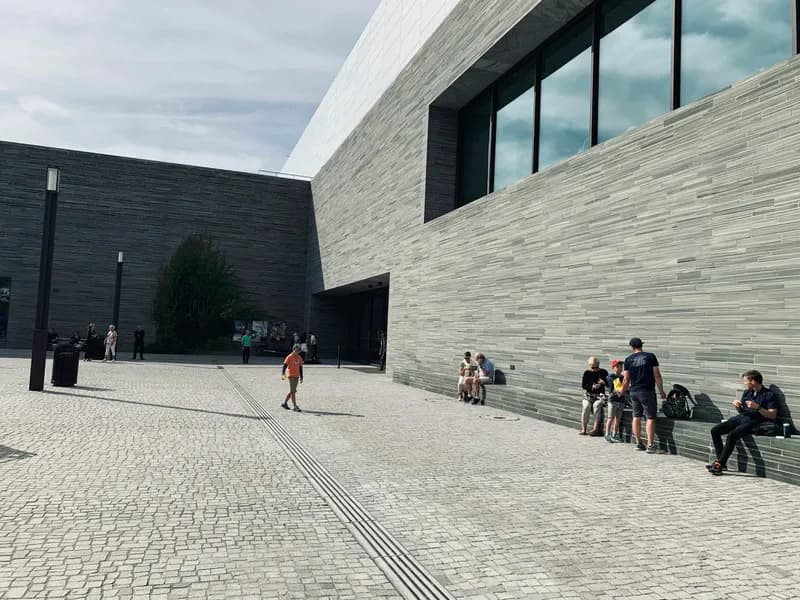
National Museum
The largest art museum in the Nordics, opened in 2022. Holds the best-known 1893 painted version of 'The Scream' — note that the versions are split between here and MUNCH, which surprises people. Entry ~NOK 200, closed Mondays. Allow 3h.

Museum of the Viking Age (Bygdøy)
CLOSED — plan around this. The former Viking Ship Museum shut in 2021 for a complete rebuild and is due to reopen as the Museum of the Viking Age in late 2027, more than three times its old size, with the Oseberg, Gokstad and Tune ships. Until then, see Viking Age material at the Historical Museum downtown (~NOK 120).
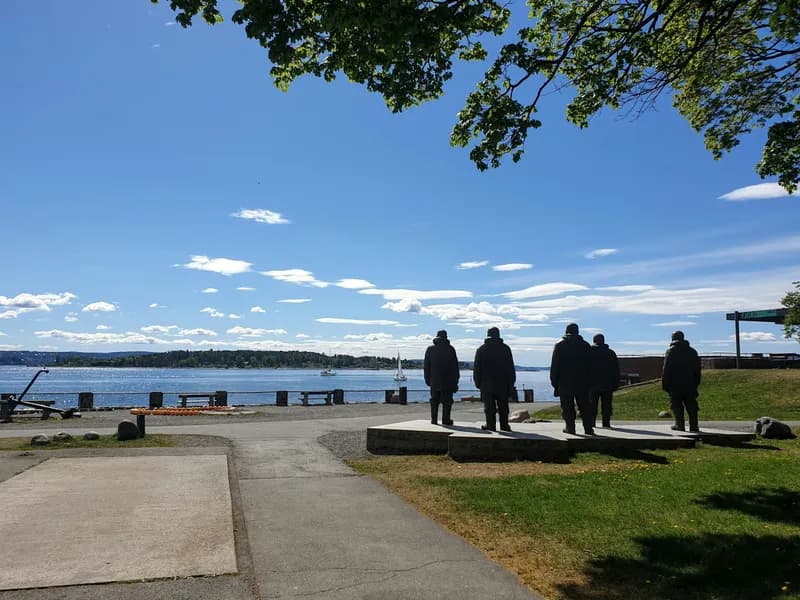
Fram Museum (Bygdøy)
Board the Fram itself — the wooden polar ship that carried Nansen and Amundsen further north and south than any vessel before or since. Entry ~NOK 160. Allow 1.5h. Ferry B9 from Rådhusbrygge (April-October) runs on a standard Ruter transport ticket, so the crossing is effectively free.

Holmenkollen Ski Jump
A ski jump, museum and viewing platform over the entire fjord — Norwegians have been jumping here since 1892. Entry ~NOK 200. Allow 2h. Metro line 1 from the centre takes 30 min and climbs into the forest; the ride is half the reason to go.

Oslofjord Islands
Hovedøya, Gressholmen and Langøyene sit 10-25 min from Aker Brygge on public ferries — included in a normal Ruter ticket at no extra fare, which makes it the cheapest fjord trip in Norway. Free swimming beaches and 12th-century monastery ruins on Hovedøya. Allow half a day.
Planned Itinerary
7-Day Oslo Itinerary
Arrival at Gardermoen & the Opera House Roof
This week is built for June through August, when Oslo gets 18 hours of light, the Bygdøy and island ferries are running, and the fjord is warm enough to swim. (In winter the same route works but the islands and Bygdøy ferry drop out and Holmenkollen gains a toboggan run.) Land at Oslo Gardermoen (OSL), 47 km north. Base yourself in Sentrum for walkability or Grünerløkka for the better bars and cheaper beds. Do nothing ambitious today except walk up a roof.
Vy regional train from OSL to Oslo S(22 minutes)
Everyone funnels onto Flytoget at NOK 235. The Vy R11/R13 regional leaves the same underground platform, takes three minutes longer, and costs about NOK 140. Buy it in the Vy app before you clear customs — Norway is effectively cashless and some machines won't take foreign notes at all.
Check in and buy a 7-day Ruter pass in the Ruter app(30 minutes)
A 7-day zone-1 pass runs roughly NOK 449 against NOK 127 for 24 hours. It covers metro, tram, bus and — this is the part people miss — the public fjord ferries to Bygdøy and the islands. Skip the Oslo Pass (~NOK 495/24h) unless you're doing two-plus museums in a single day.
Walk the Oslo Opera House roof(45 minutes)
Bjørvika, free, open 24/7, no ticket and no gate. Start up the north-west ramp from the plaza and walk to the ridge above the fjord. The white Carrara marble is cut with a texture grid so it isn't lethal in the wet, but it still glazes — proper shoes. Locals sunbathe here; treat it as a public square, because that's what it is.
Dinner at Vippa, Akershusstranda 25(1.5 hours)
A 20-minute waterfront walk from the Opera around the Akershus headland. A container-shed food hall of small kitchens run mostly by immigrant chefs — Eritrean, Syrian, Vietnamese — with mains at NOK 150-200. That is genuinely cheap food in this city, and the fjord is right there.
Sunset from the Sørenga Sjøbad boardwalk(45 minutes)
A free seawater pool and floating jetty at the end of the Sørenga peninsula, 15 minutes' walk east of the Opera. In late June the sun doesn't drop until nearly 22:40 and it never gets properly dark. Locals swim off the pontoons until midnight.
Downtown: The Scream, the Nobel Hall & Akershus Fortress
A tight walking day inside a 1.5 km triangle — no transport needed beyond your feet. Museum first, before the cruise-ship groups land, then the two free civic heavyweights nobody bothers with, then the waterfront. Note the National Museum is closed Mondays; if today is Monday, swap this with Day 5.
National Museum, Brynjulf Bulls plass 3(3 hours)
Doors at 10:00, entry ~NOK 200, closed Mondays. The largest art museum in the Nordics, opened in 2022. Go straight upstairs to the Munch room and get the 1893 painted 'The Scream' before 11:00 — after that it's a phone forest. The confusing part nobody warns you about: the Scream versions are split between here and MUNCH, so this is not a duplicate of tomorrow's museum. Don't miss the Light Hall's Norwegian romantic landscapes on the way out.
Lunch at Fiskeriet, Youngstorget 2b(1 hour)
Fish soup around NOK 180, fish and chips around NOK 235. This is the single most useful Oslo habit: eat your real meal at lunch. The same kitchens charge 30-40% more for near-identical plates after 17:00.
Oslo City Hall (Rådhuset)(45 minutes)
Free, open 09:00-16:00, and startlingly empty. This is the room where the Nobel Peace Prize is handed over every 10 December. The main hall is wall-to-wall murals including Munch's 'Life'. It costs nothing and takes 45 minutes — there is no excuse.
Akershus Fortress grounds and Norway's Resistance Museum(2 hours)
The fortress grounds are free and open until 21:00 — walk the ramparts above the fjord, past the guardhouses. The Resistance Museum (~NOK 100) sits inside the walls at the exact spot where the occupation executed Norwegian resistance members; it is small, quiet and far better than its size suggests. Akershus Castle itself is ~NOK 100 more if you want the royal mausoleum.
Astrup Fearnley Museet, Tjuvholmen(1.5 hours)
~NOK 180. Renzo Piano's sail-roofed building at the tip of Tjuvholmen, 15 minutes' walk from the fortress along Aker Brygge. Contemporary collection — the Jeff Koons and Damien Hirst pieces are the draw. The free sculpture park and city beach out front are arguably better than the ticket.
Cocktails at Himkok, Storgata 27(2 hours)
Unmarked door, no sign, just a number — press the buzzer. A World's 50 Best bar that distils its own aquavit and gin on site. Cocktails NOK 160-190, which in Oslo terms is roughly the price of two beers elsewhere. Go before 20:00 or queue.
Bygdøy Peninsula: Polar Ships, a Balsa Raft & a Stave Church
Bygdøy is a 10-minute ferry across the harbour and holds four museums in a 20-minute walk of each other. Read this first: the Viking Ship Museum is CLOSED. It shut in 2021 for a full rebuild and reopens as the Museum of the Viking Age in late 2027 — the Oseberg and Gokstad ships are sealed inside a construction site. Do not go looking for it. You'll see Viking Age material downtown instead.
Ferry B9 from Rådhusbrygge 3 to Dronningen(10 minutes)
Runs April-October from the City Hall quays and it's on your standard Ruter ticket — no extra fare, no booking, no tourist mark-up. Sit outside on the stern for the view back at the Opera and the fortress. Catch the 09:45 to beat the coach parties.
Fram Museum(1.5 hours)
~NOK 160, doors at 10:00. You climb aboard the Fram itself — the wooden ship Nansen deliberately froze into the pack ice, and Amundsen sailed to Antarctica. It has been further north and further south than any vessel in history and it is sitting indoors in front of you, ladders and all. Go below decks; most people don't.
Kon-Tiki Museum(1 hour)
~NOK 140, literally across the car park from the Fram. Heyerdahl's actual balsa raft from the 1947 Pacific crossing, plus the Ra II reed boat. Fifteen minutes here reframes the whole 'Norwegians and boats' thing.
Lunch at Lanternen, Huk Aveny 2(1 hour)
Waterfront terrace on the marina, 10 minutes from Kon-Tiki. Shrimp sandwich around NOK 250, and the fjord is directly below the railing. Book on summer weekends or you'll stand.
Norsk Folkemuseum (Norwegian Museum of Cultural History)(2 hours)
~NOK 200. 160 relocated historic buildings on an open-air site, anchored by the Gol Stave Church — c.1200, dismantled and moved here in the 1880s. In summer there are costumed staff baking lefse in the old farmhouses. This is where your Viking-era itch gets partly scratched while the ship museum is shut.
Swim at Huk beach(1.5 hours)
Free, at the southern tip of Bygdøy, 15 minutes' walk from the museums. Rock slabs and sand, water around 18-20°C in July. The far eastern end past the headland is the naturist section — signposted, so no surprises either way.
Vigeland Park to Holmenkollen: Frogner and the Forest Line
Everything today sits on one axis — tram 12 out to Frogner, then metro line 1 from Majorstuen straight up into the treeline. No zigzagging. Line 1 climbs from the city to 469 m at Frognerseteren in half an hour and the ride itself is half the point.
Vigeland Sculpture Park (Frognerparken)(2 hours)
Tram 12 to Vigelandsparken. Free, unfenced, open 24 hours a year-round — over 200 Gustav Vigeland figures culminating in the 17 m Monolith: 121 human bodies climbing over each other, carved from one block of granite. Come at 08:30 and you'll have the bridge to yourself; by noon the Angry Boy has a queue. Walk it from the main gate up the axis so the Monolith reveals itself the way Vigeland intended.
Vigeland Museum, Nobels gate 32(1 hour)
~NOK 120, closed Mondays, five minutes from the park's south gate. His actual studio, left as it was — plaster casts, tools, and the man's ashes in the tower. It answers the question the park raises: who spends 20 years doing this?
Lunch at Kolonihagen Frogner, Frognerveien 33(1 hour)
A courtyard restaurant in a back yard off Frognerveien, 10 minutes from the museum. Organic Norwegian, lunch mains NOK 220-280 — the same kitchen's evening tasting menu is triple that.
Metro line 1 to Holmenkollen(30 minutes)
From Majorstuen, line 1 climbs out of the tunnel and into the forest, and by Besserud you're looking down at the entire fjord through birch trees. It's a normal metro on a normal ticket that happens to end in a national park.
Holmenkollen Ski Museum and jump tower(2 hours)
~NOK 200. Norwegians have been launching themselves off this hill since 1892; the current steel jump went up in 2010. The museum burrows under the in-run, then a lift takes you to the platform at the top — you stand exactly where the jumpers push off and look down the ramp at Oslo. It is much steeper in person than on television.
Apple cake at Frognerseteren(1 hour)
Two stops further to the line 1 terminus, then five minutes uphill. A dark 1891 dragestil log building with a terrace over the whole fjord. Order the eplekake med krem — around NOK 130 and the most famous slice of cake in Norway. Sit outside even if it's cold; they hand out blankets.
Dinner at Hos Thea, Gabels gate 11(2 hours)
Back down line 1 to Frogner. A basement institution since 1985, tiny and dark, mains NOK 320-390. Book — there are maybe 45 seats and half of them are regulars.
The Akerselva, Grünerløkka & MUNCH After Dark
Walk the river that made Oslo industrial, from top to bottom, then finish in the tower at the bottom of it. The Akerselva drops 149 m from Maridalsvannet to the fjord and the whole 8 km is a public path past mills, waterfalls and graffiti. We'll do the good middle stretch. Mathallen is closed Mondays.
Coffee at Tim Wendelboe, Grüners gate 1(45 minutes)
Six seats, no laptops, filter around NOK 55. Wendelboe is a former World Barista Champion and this shop is why a chunk of the world's third-wave coffee tastes the way it does. Closes early — usually 17:00 on weekdays. Order the filter, not the espresso, and take the tasting notes seriously.
Akerselva river walk from Nydalen down to Vulkan(1.5 hours)
Metro line 4/5 to Nydalen, then follow the river south on the marked path. You pass the Nedre Foss waterfall, the old Hjula Weaving Mill, and roughly 3 km of legal graffiti walls under the bridges. Free, flat, and almost entirely locals walking dogs.
Lunch at Mathallen Oslo, Vulkan(1 hour)
Closed Mondays. A former iron foundry turned food hall on the riverbank — around 30 stalls. Skip the sit-down restaurants and eat at the counters: Hitchhiker does south-east Asian small plates NOK 120-170, and the cheesemonger will let you taste brunost properly before you decide whether you hate it.
Thorvald Meyers gate and Olaf Ryes plass(1.5 hours)
Grünerløkka's spine. Vintage at Fretex and Robot, records at Big Dipper, and the park at Olaf Ryes plass where everyone drinks in the sun on the first warm day of the year. Detour two minutes to Syverkiosken, Maridalsveien 45 — the last old-school pølse kiosk in Oslo, a hot dog in a lompe potato wrap for about NOK 70.
MUNCH, Bjørvika(3 hours)
~NOK 200. Thirteen leaning floors on the waterfront holding roughly 26,000 works Munch willed to the city. Go in the evening — it stays open to 21:00 Thursday to Saturday and the crowd evaporates after 18:00. The rotating Scream room shows one of the museum's versions at a time behind a shutter that opens on a timer; be patient, it comes round every few minutes.
Drinks at Kranen, MUNCH 13th floor(1 hour)
The top-floor bar. Your museum ticket already gets you up here, so the view over the fjord, the Opera roof and Ekeberg costs nothing extra — you only pay if you drink, and a beer is NOK 110-130. Best sightline in Oslo, and almost everyone leaves the building without going up.
Oslofjord Islands & a Fjord Sauna — Slow Day
Your rest day, and the cheapest fjord trip in Norway. The tourist cruises out of Aker Brygge want NOK 400-600 for a loop of the harbour. The public B-ferries to the islands cost nothing beyond the Ruter pass already in your pocket. Buy the picnic on Saturday if today is Sunday — Vinmonopolet, the only shop licensed to sell anything over 4.7% ABV, is shut Sundays and closes by mid-afternoon Saturday.
Picnic run at Meny and Vinmonopolet(45 minutes)
Shrimp, flatbread, a bag of Norwegian strawberries in July. Supermarket beer maxes out at 4.7% and stops selling at 20:00 weekdays, 18:00 Saturdays; anything stronger is Vinmonopolet only. This alone halves what the day costs.
Ferry B1 from Rådhusbrygge 4 to Hovedøya(10 minutes)
Included in your Ruter ticket. No booking, no separate fare — it is a bus that floats. Roughly every half hour in summer.
Cistercian monastery ruins, Hovedøya(1 hour)
Free. English monks founded the abbey here in 1147; Danish troops burned it in 1532 and the roofless nave is still standing in a meadow. There is no fence, no ticket booth and usually nobody there. Walk the island's 3 km perimeter loop afterwards — old gun batteries on the south shore.
Swim and lie about on the west beach(2.5 hours)
Free. Water hits 18-20°C by late July. This is the actual point of the day: do nothing, on a fjord island, ten minutes from the city hall.
Ferry B3 onward to Gressholmen(15 minutes)
Same ticket. Quieter and scrubbier than Hovedøya — Oslo's first airport was here in the 1920s, for seaplanes. The rabbits are feral and unbothered. Gressholmen Kro serves beer on the lawn until early evening.
Sauna at Oslo Badstuforening, Sukkerbiten(1.5 hours)
A floating wood-fired sauna beside the Opera, roughly NOK 200-300 for a drop-in session — book online, they sell out. Sauna, jump into the fjord, repeat. Norwegians do this in February at 2°C; in July you have no excuse.
Dinner at Vaaghals, Dronning Eufemias gate 8(2 hours)
Two minutes from the sauna in Barcode. Norwegian sharing plates, NOK 180-260 each, three or four per person. Their aquavit list is the education you didn't know you needed — ask for a Linie, which is genuinely shipped across the equator and back before bottling.
Departure: Last Coffee, Aquavit & the Airport Train
Norwegian hotels almost universally check out at 11:00 or 12:00 but will hold bags at reception all day. Work backwards from your flight: Vy regional to Gardermoen is 22 minutes and OSL wants you there 2 hours before an international departure, so a 14:00 flight means leaving the city around 11:15.
Breakfast and coffee at Fuglen, Universitetsgata 2(1 hour)
A 1963 coffee bar that turns into a cocktail bar at night, and every stick of vintage Norwegian teak furniture in the room has a price tag on it. You can drink your coffee in a chair and then buy the chair. Filter around NOK 50.
Last shopping on Karl Johans gate and at Norway Designs(1.5 hours)
Norway Designs at Stortingsgata 28 for glass and ceramics that aren't troll-shaped. If you want a wool sweater, real Norwegian brands run NOK 1,800-3,000 — anything at NOK 600 came from a container. Claim your tax-free refund at the airport with the receipt if you spent over NOK 315 in one shop.
Aquavit at Vinmonopolet(20 minutes)
Closed Sundays — check your day. Linie or Gilde aquavit runs NOK 400-500 and is the one thing here that's actually cheaper than buying it at home. Duty limits apply coming into and out of Norway; one litre of spirits plus 1.5 litres of wine is the standard allowance.
Vy regional train from Oslo S to Gardermoen (OSL)(22 minutes)
~NOK 140 versus Flytoget's NOK 235 for three minutes' difference. Same underground platforms at Oslo S. Don't try to spend your last kroner in coins — barely anywhere takes cash, so leave with an empty wallet and a full card.
14-Day Oslo Itinerary
Arrival at Gardermoen & the Opera House Roof
Two weeks: eight days of Oslo and the fjord towns on its doorstep, then west across the mountains to Flåm and Bergen. Build this for late May to early September — the Bygdøy and island ferries run April to October, and the Nærøyfjord cruise and Flåm Railway are at their best with light in the sky until 22:00. Land at Oslo Gardermoen (OSL), 47 km north, base in Sentrum or Grünerløkka, and do nothing today except climb a roof.
Vy regional train from OSL to Oslo S(22 minutes)
Flytoget wants NOK 235 and gets there in 19 minutes. The Vy R11/R13 leaves the same underground platform, takes 22, and costs about NOK 140. Buy in the Vy app on the plane — Norway is close to fully cashless and you will not need a single note all fortnight.
Check in and buy a 7-day Ruter pass(30 minutes)
About NOK 449 for zone 1 against NOK 127 for 24 hours. It covers metro, tram, bus and the public fjord ferries to Bygdøy and the islands. Skip the Oslo Pass (~NOK 495/24h) unless a given day has two-plus paid museums in it — at ~NOK 200 a museum that's where the maths tips.
Walk the Oslo Opera House roof(45 minutes)
Bjørvika, free, 24/7, no gate. Up the north-west ramp to the ridge over the fjord. The Carrara marble is texture-cut so it isn't lethal wet, but it still glazes in rain. Norwegians picnic and sunbathe on it — nobody will tell you to get down.
Dinner at Vippa, Akershusstranda 25(1.5 hours)
Twenty minutes on foot around the Akershus headland. A container food hall of small kitchens run largely by immigrant chefs — Eritrean, Syrian, Vietnamese — mains NOK 150-200. In Oslo terms that is a bargain, and you're eating on the water.
Sunset from the Sørenga Sjøbad boardwalk(45 minutes)
Free seawater pool on the peninsula 15 minutes east of the Opera. Late June the sun holds until nearly 22:40 and never truly sets. People are still diving off the pontoons at midnight.
Downtown: The Scream, the Nobel Hall & Akershus Fortress
A walking day inside a 1.5 km triangle. Big museum first, before the cruise groups, then the two free civic buildings almost no visitor enters, then the waterfront. The National Museum is closed Mondays — if today is Monday, swap with Day 5.
National Museum, Brynjulf Bulls plass 3(3 hours)
Doors 10:00, ~NOK 200, closed Mondays. Largest art museum in the Nordics, opened 2022. Head upstairs to the Munch room and take the 1893 painted 'The Scream' before 11:00; after that it's a wall of phones. The versions are split between here and MUNCH — this is not a duplicate of Day 5. The Light Hall of Norwegian romantic landscape upstairs is the sleeper.
Lunch at Fiskeriet, Youngstorget 2b(1 hour)
Fish soup ~NOK 180, fish and chips ~NOK 235. Learn this habit now: eat the real meal at lunch. The identical plate costs 30-40% more after 17:00 in the same building.
Oslo City Hall (Rådhuset)(45 minutes)
Free, 09:00-16:00, and usually near-empty. The Nobel Peace Prize is handed over in the main hall every 10 December, under Munch's 'Life'. Free and 45 minutes — there's no argument against it.
Akershus Fortress grounds and Norway's Resistance Museum(2 hours)
Grounds free and open to 21:00 — walk the ramparts over the fjord. The Resistance Museum (~NOK 100) is inside the walls at the ground where the occupation shot Norwegian resistance members. Small, sober, and better than its footprint suggests.
Astrup Fearnley Museet, Tjuvholmen(1.5 hours)
~NOK 180. Renzo Piano's sail-roofed building at the tip of Tjuvholmen, 15 minutes along Aker Brygge from the fortress. The free sculpture park and city beach outside are arguably the better half.
Cocktails at Himkok, Storgata 27(2 hours)
No sign — just a street number and a buzzer. A World's 50 Best bar distilling its own aquavit and gin on the premises. NOK 160-190 a cocktail, which locally is two beers. Before 20:00 or you queue.
Bygdøy Peninsula: Polar Ships, a Balsa Raft & a Stave Church
Ten minutes across the harbour to a peninsula holding four museums within a 20-minute walk. Read this before you plan: the Viking Ship Museum is CLOSED. It shut in 2021 for a total rebuild and reopens as the Museum of the Viking Age in late 2027 — the Oseberg, Gokstad and Tune ships are sealed inside a construction site. Do not go looking for it; you'll get your Viking Age fix downtown on Day 9.
Ferry B9 from Rådhusbrygge 3 to Dronningen(10 minutes)
April to October from the City Hall quays, and it runs on a standard Ruter ticket — no separate fare, no booking, no tourist premium. Stand at the stern for the view back at the Opera. Take the 09:45 and you'll land before the coaches.
Fram Museum(1.5 hours)
~NOK 160, doors 10:00. You board the Fram herself — the ship Nansen deliberately froze into the pack ice and Amundsen took to Antarctica, the vessel that has been further north and further south than any other in history, sitting indoors with her ladders out. Go below decks; most visitors never do.
Kon-Tiki Museum(1 hour)
~NOK 140, across the car park. Heyerdahl's actual 1947 balsa raft plus the Ra II. Fifteen minutes in here and the Norwegian relationship with boats stops being a cliché.
Lunch at Lanternen, Huk Aveny 2(1 hour)
Marina terrace 10 minutes from Kon-Tiki. Shrimp sandwich ~NOK 250 with the fjord under the railing. Book on summer weekends.
Norsk Folkemuseum(2 hours)
~NOK 200. 160 relocated historic buildings, anchored by the Gol Stave Church — c.1200, dismantled and rebuilt here in the 1880s. Summer brings costumed staff baking lefse on the farmhouse hearths.
Swim at Huk beach(1.5 hours)
Free, at Bygdøy's southern tip, 15 minutes from the museums. Rock slabs and sand, 18-20°C in July. The far east end past the headland is the naturist section and it's signposted.
Vigeland Park to Holmenkollen: Frogner and the Forest Line
One clean axis: tram 12 out to Frogner, then metro line 1 from Majorstuen up into the treeline. Line 1 climbs to 469 m at Frognerseteren in half an hour on a normal ticket and ends in a national park.
Vigeland Sculpture Park (Frognerparken)(2 hours)
Tram 12 to Vigelandsparken. Free, unfenced, open 24 hours, year-round — 200-plus Gustav Vigeland figures rising to the 17 m Monolith: 121 bodies climbing over each other out of a single block of granite. Arrive 08:30 and the bridge is yours; by noon the Angry Boy has a queue. Walk it from the main gate along the axis so the Monolith reveals itself in sequence.
Vigeland Museum, Nobels gate 32(1 hour)
~NOK 120, closed Mondays, five minutes from the park's south gate. His studio left as it stood — plaster casts, tools, and his ashes in the tower. It answers the obvious question: who does this for twenty years?
Lunch at Kolonihagen Frogner, Frognerveien 33(1 hour)
Courtyard restaurant in a back yard, 10 minutes from the museum. Lunch mains NOK 220-280; the same kitchen's evening tasting is triple.
Metro line 1 to Holmenkollen(30 minutes)
From Majorstuen the line surfaces and climbs into forest; by Besserud you're looking down the whole fjord through birch. It's a metro that happens to end at the treeline.
Holmenkollen Ski Museum and jump tower(2 hours)
~NOK 200. Norwegians have jumped this hill since 1892; the current steel jump dates from 2010. The museum tunnels under the in-run and a lift puts you on the take-off platform looking straight down the ramp at the city. Far steeper in person than on TV.
Apple cake at Frognerseteren(1 hour)
Two stops on to the line 1 terminus, five minutes uphill. A dark 1891 dragestil log lodge with a terrace over the fjord. Order eplekake med krem, ~NOK 130 — the most famous slice of cake in the country. Sit outside; they hand out blankets.
Dinner at Hos Thea, Gabels gate 11(2 hours)
Back down line 1 to Frogner. A basement institution since 1985, 45 seats, mains NOK 320-390. Book — half the room are regulars.
The Akerselva, Grünerløkka & MUNCH After Dark
Walk the river that industrialised Oslo, then finish in the tower at the mouth of it. The Akerselva drops 149 m from Maridalsvannet to the fjord and the whole 8 km is a public path past mills, waterfalls and legal graffiti walls. Mathallen is closed Mondays.
Coffee at Tim Wendelboe, Grüners gate 1(45 minutes)
Six seats, no laptops, filter ~NOK 55. Wendelboe is a former World Barista Champion and a meaningful share of how the world's third-wave coffee tastes traces back through this room. Usually closes 17:00 weekdays. Order filter, not espresso.
Akerselva river walk from Nydalen down to Vulkan(1.5 hours)
Metro line 4/5 to Nydalen, follow the marked riverside path south. Nedre Foss waterfall, the old Hjula Weaving Mill, and roughly 3 km of sanctioned graffiti under the bridges. Free, flat, and almost entirely locals with dogs.
Lunch at Mathallen Oslo, Vulkan(1 hour)
Closed Mondays. An old iron foundry turned food hall, ~30 stalls, on the riverbank. Eat at the counters rather than the sit-down places: Hitchhiker does south-east Asian small plates NOK 120-170, and the cheesemonger will walk you through brunost before you commit.
Thorvald Meyers gate, Olaf Ryes plass and Syverkiosken(1.5 hours)
Grünerløkka's spine — vintage at Fretex and Robot, records at Big Dipper, and the park where the whole neighbourhood drinks on the first warm day. Two minutes off it at Maridalsveien 45 is Syverkiosken, the last old-school pølse kiosk in Oslo: a hot dog in a lompe potato wrap, ~NOK 70.
MUNCH, Bjørvika(3 hours)
~NOK 200. Thirteen leaning floors on the waterfront holding roughly 26,000 works Munch left to the city in his will. Go in the evening — open to 21:00 Thursday to Saturday and the crowd thins hard after 18:00. The Scream room shows one version at a time behind a light-protective shutter on a timer; wait, it comes round.
Drinks at Kranen, MUNCH 13th floor(1 hour)
Your museum ticket already puts you up here, so the best view in Oslo — fjord, Opera roof, Ekeberg ridge — costs nothing extra. Beer NOK 110-130. Most people leave the building without ever going up.
Oslofjord Islands & a Fjord Sauna — Slow Day
Rest day, and the cheapest fjord trip in Norway. Harbour cruises out of Aker Brygge charge NOK 400-600 for a loop; the public B-ferries to the islands cost nothing beyond the Ruter pass in your pocket. If today is Sunday, buy the drink yesterday — Vinmonopolet is the only shop licensed above 4.7% ABV, shut Sundays, closes mid-afternoon Saturday.
Picnic run at Meny and Vinmonopolet(45 minutes)
Shrimp, flatbread, Norwegian strawberries if it's July. Supermarket beer caps at 4.7% and stops selling 20:00 weekdays / 18:00 Saturdays. Doing lunch this way instead of a restaurant halves the day's cost.
Ferry B1 from Rådhusbrygge 4 to Hovedøya(10 minutes)
On your Ruter ticket. No booking, no separate fare — a bus that floats, roughly every half hour in summer.
Cistercian monastery ruins, Hovedøya(1 hour)
Free. English monks founded the abbey in 1147; Danish troops burned it in 1532 and the roofless nave still stands in a meadow with no fence and no ticket booth. Walk the island's 3 km perimeter after — old gun batteries on the south shore.
Swim and do nothing on the west beach(2.5 hours)
Free. 18-20°C by late July. This is the point of the day — a fjord island ten minutes from the city hall, and no agenda.
Ferry B3 onward to Gressholmen(15 minutes)
Same ticket. Scrubbier and quieter — Oslo's first airport was here in the 1920s for seaplanes. The rabbits are feral and completely unbothered. Gressholmen Kro pours beer on the lawn till early evening.
Sauna at Oslo Badstuforening, Sukkerbiten(1.5 hours)
Floating wood-fired sauna beside the Opera, ~NOK 200-300 drop-in, book online because they sell out. Sauna, fjord, repeat. Norwegians do this in February at 2°C.
Drøbak & Oscarsborg Fortress: The Guns That Sank the Blücher
South down the fjord to a white wooden village and the small island fortress that changed Norwegian history in eleven minutes. Bus 500 from Oslo bus terminal takes about 40 minutes and is inside the Ruter system if you extend a zone; in summer the passenger boat from Aker Brygge does it in 90 minutes and is the better journey. Go by boat, come back by bus.
Summer boat from Aker Brygge to Drøbak(1.5 hours)
Roughly NOK 200-250 one way, summer sailings only. Down the Oslofjord past Nesodden and the wooden holiday houses. Sit on the top deck on the west side.
Wander Drøbak's old wooden centre(1.5 hours)
A grid of 18th and 19th-century white timber houses that supplied Oslo with ice before refrigeration — they cut it from the fjord and shipped it to England. Julehuset, the year-round Christmas shop in the old town, is deeply silly and worth ten minutes even in August.
Lunch at Skipperstuen, Havnegata(1 hour)
Harbourside, seafood mains NOK 260-340. Shrimp caught in this fjord, served with mayonnaise and white bread, which is the entire Norwegian summer in one plate.
Ferry to Oscarsborg Fortress(10 minutes)
~NOK 100 return from Drøbak harbour, runs through the day in season. The island sits in the narrowest gap in the fjord — 400 m of water.
Oscarsborg Fortress and the Blücher story(2 hours)
Grounds free; the museum ~NOK 100. At 04:21 on 9 April 1940 the fortress commander fired two ancient Krupp guns — nicknamed Moses and Aron — plus torpedoes from 1901 into the German heavy cruiser Blücher at point-blank range and sank her with roughly 1,000 aboard. The delay let the Norwegian king, government and gold reserve escape Oslo. You can stand at the guns. The wreck is still down there, and they still pump oil off it.
Bus 500 back to Oslo(40 minutes)
From Drøbak centre to Oslo bussterminal. Extend your Ruter ticket to zone 2S in the app — about NOK 40 more, far cheaper than buying a separate ticket.
Fredrikstad: The Best-Preserved Fortress Town in Northern Europe
An hour south by train and almost no international visitors go. Fredrikstad's Gamlebyen is a walled star fortress from 1663 that is still a functioning neighbourhood — people live in it, drink in it, and cross to it on a free ferry. Vy from Oslo S, roughly hourly, ~NOK 200-250 each way, and book the day before for the minipris fare.
Vy train Oslo S to Fredrikstad(1 hour 10 minutes)
Book in the Vy app the night before — minipris fares start around NOK 149 and roughly double if you buy on the platform. Sit on the left going south for the Oslofjord.
The free Glomma ferry to Gamlebyen(10 minutes)
From the quay by the station across the river. Genuinely free — it's a municipal service, no ticket, no fare, runs every 15 minutes. One of the very few free things in Norway that isn't a view.
Walk the ramparts of Gamlebyen(2 hours)
Free, always open. A complete 1663 bastioned star fort with the moat still wet, and unlike every other fortress town in Europe it never got demolished or turned into a theme park — it's a living neighbourhood of cobbles, artisan workshops and 200 residents. Do the full rampart circuit anticlockwise, then drop into the old prison and the model railway shed.
Lunch at Majoren Stue & Kro, Voldportgata 73(1.5 hours)
Inside the walls, in an 18th-century officers' building with a garden. Traditional Norwegian — mains NOK 240-320. The raspeballer (potato dumplings) if they have them on.
Kongsten Fort(1 hour)
Free, 15 minutes' walk uphill from Gamlebyen. The 1685 outwork on the rock above town, roofless and open, with a view over the whole fortress plan below — this is where the star shape finally makes sense. Almost nobody walks up.
Train back to Oslo and a quiet dinner in Grünerløkka(2 hours)
Territoriet at Markveien 58 has 400-plus wines by the glass and no bookings — arrive at 18:00 or stand. Tomorrow is a slow day; you've earned an early night either way.
Slow Oslo: Ekeberg, Tøyen, Vikings & Grønland — Rest Day
Nothing today is compulsory. This is the Oslo the shorter trips skip: the hill Munch was standing on when he had the idea, the immigrant east side, and the Viking material that is not where you think it is. Pack tonight — tomorrow starts early on the Bergen Railway.
Ekebergparken sculpture park(2 hours)
Tram 13 or 19 to Ekebergparken. Free, always open. A forested hillside east of the centre holding Marina Abramović, Dalí, Renoir and a James Turrell skyspace among the trees. Find the marked Munch viewpoint — this is the exact ridge where he was walking when 'a scream passed through nature.' You look down on the fjord he painted.
Historical Museum, Frederiks gate 2(1.5 hours)
~NOK 120, closed Mondays. This is where the Viking Age lives while the ship museum on Bygdøy is a building site until late 2027 — the Oseberg grave goods, the Gjermundbu helmet (the only reasonably complete Viking helmet ever found, anywhere), and the medieval stave church portals. Downtown, small, and criminally under-visited.
Botanical Garden, Tøyen(1 hour)
Free, open daily. Oslo's oldest garden, from 1814, with a Victorian Palm House and a scent garden laid out to be walked with your eyes shut. Locals bring lunch and lie in it.
Late lunch on Grønland(1.5 hours)
Ten minutes' walk from Tøyen. This is where Oslo stops being expensive — Punjab Tandoori at Grønland 24 does a curry and rice for around NOK 130, which is roughly a third of a Sentrum main, and there's usually a queue of Norwegian construction workers out the door. The Grønland Basar next door sells spices, Turkish bread and things no supermarket in Frogner has heard of.
Damstredet and Telthusbakken(45 minutes)
Free. Two cobbled lanes of crooked early-1800s wooden houses that survived because the city forgot about them. Gamle Aker Church at the top is Oslo's oldest standing building, roughly 1080. Continue into Vår Frelsers Gravlund and find Munch's and Ibsen's graves in the Grove of Honour — they're signposted at the gate.
Vinmonopolet run and pack(45 minutes)
Closed Sundays. Fjord Norway prices make Oslo look reasonable, so buy anything you want to drink over the next week now. Then pack: tomorrow's train leaves Oslo S early and the Bergen Railway does not wait.
The Bergen Railway & Flåm Railway: Oslo to the Aurlandsfjord
One of the great rail days on earth, and it's a scheduled service, not an excursion. Oslo S to Myrdal on the Bergen Railway is about 4h40 across the Hardangervidda plateau, then the Flåmsbana drops 866 m in 20 km down to the fjord. Book the Vy leg weeks ahead for minipris (~NOK 299-499 versus NOK 1,000+ walk-up), and book the Flåm Railway separately. Overnight in Flåm.
Vy Bergen Railway, Oslo S to Myrdal(4 hours 40 minutes)
Departures around 06:25 and 08:25; take the earlier one. Sit on the right leaving Oslo. After Geilo you're above the treeline on the Hardangervidda — Europe's largest mountain plateau, snow patches into July, reindeer if you're lucky. Finse at 1,222 m is the highest station in northern Europe and doubled as Hoth in The Empire Strikes Back. There's a café car; it's fine, and NOK 60 for a coffee.
Flåm Railway (Flåmsbana), Myrdal to Flåm(55 minutes)
~NOK 600 one way. Twenty kilometres, 866 m of descent, gradients of 1:18, twenty tunnels — eighteen of them hand-dug. It stops at Kjosfossen waterfall for five minutes and a woman in red appears on the rocks singing, which is either the most charming or most preposterous thing in Norwegian tourism depending on your mood. Left side going down.
Check in at Flåm(30 minutes)
The Fretheim Hotel by the quay is the historic option (from ~NOK 1,900 in season); Flåm Marina is cheaper and on the water. Flåm has about 350 residents and up to 300,000 cruise passengers a year — after the last ship leaves around 17:00 the place empties out completely and becomes lovely.
Flåm Railway Museum(45 minutes)
Free, by the station. Photographs of the men who dug those tunnels by hand between 1924 and 1940, at a metre a month. It reframes the ride you just took.
Dinner at Ægir BrewPub(2 hours)
A purpose-built Viking stave hall with a fire in the middle. Their beers have won international medals and the Viking Plank tasting board (~NOK 700, feeds two) pairs five courses to five beers. Book — it's the only serious dinner in the village.
Flåm: Stegastein, Undredal Goat Cheese & a Free Afternoon
A slow day in the fjord. One viewpoint, one absurdly small village, and then genuinely nothing — which after ten days is the point. Everything today is within 30 minutes of Flåm.
Stegastein viewpoint(2 hours)
Free to stand on. A 30 m timber ramp cantilevered 650 m above the Aurlandsfjord, ending in a glass wall that reads as if it isn't there — the floor just stops. Twenty minutes up the hairpins from Aurland. If you're not driving, the shuttle bus from Flåm is ~NOK 300 return. Go before 10:00 or after 16:00; the coaches own it in between.
Undredal(2 hours)
A village of about 80 people and roughly 500 goats, 15 minutes along the E16 from Flåm and connected to a road only since 1988. The stave church from 1147 seats 40 and is the smallest still in use in Scandinavia. Buy the brown and white goat cheese direct at Undredal Stølsysteri — they'll cut you a slab off the wheel and it is nothing like the supermarket brunost.
Lunch at Undredal Stølsysteri or back at Flåm Bakeri(1 hour)
The cheese, flatbread and cured meat plate at the dairy runs about NOK 250 and is the honest local answer. Flåm Bakeri does a skillingsbolle cinnamon bun for NOK 45 if you'd rather keep moving.
Free afternoon by the fjord(3 hours)
Deliberately empty. Options: rent a kayak at the Flåm marina (~NOK 500 for two hours) and paddle the Aurlandsfjord at water level, walk the flat Flåmsdalen valley path to Brekkefossen waterfall (40 minutes each way), or sit outside Ægir with a beer and watch the light move down the walls. The cruise ships are gone by 17:00.
Nærøyfjord Cruise, Voss & On to Bergen
The signature leg of the Norway-in-a-Nutshell route, done in the right direction. Boat through a UNESCO fjord to Gudvangen, bus over to Voss, train down to Bergen — arriving mid-evening. Book the cruise ahead in season; the electric boats sell out.
Nærøyfjord cruise, Flåm to Gudvangen(2 hours)
~NOK 500-600. The modern boats are electric and near-silent, which matters more than you'd think — the Nærøyfjord narrows to 250 m with 1,700 m walls on either side and you can hear the waterfalls. UNESCO-listed since 2005. Stand at the bow, dress two layers warmer than the temperature suggests, and take the 09:00 or 11:00 rather than the 15:00.
Bus Gudvangen to Voss(1 hour 15 minutes)
Connects with the boat at the quay — it's timetabled to. Up the Nærøydalen valley on the E16 with waterfalls off both walls. If the Stalheimskleiva hairpin road is open on the day, that bus is the one to take; check locally, it has been closed and restricted for repairs in recent years and the tunnel route is the norm.
Voss stop(1 hour)
Norway's extreme sports town — if you've ever wanted to jump off something, this is where. For most people it's a 45-minute lunch. Tre Brør in the centre does a decent sandwich and the best coffee for 100 km.
Vy train Voss to Bergen(1 hour 15 minutes)
~NOK 250. Down the Bergen Railway's final descent through Dale and along the Sørfjorden. Left side.
Check in and walk Bryggen at dusk(1.5 hours)
Stay in Bryggen or Nordnes. Then walk the wharf at 21:00 when the day-trippers have gone: the crooked Hanseatic timber façades, UNESCO-listed since 1979, leaning into each other over the alleys. Go into the passages behind the front row — that's where it actually is.
Late dinner at Pingvinen, Vaskerelven 14(1.5 hours)
Norwegian home cooking in a pub, mains NOK 220-290, kitchen runs late. Raspeballer (potato dumplings with salted meat) on Thursdays and locals plan around it. This is where Bergensers eat, not where the wharf sends you.
Bergen: Bryggen, Fløibanen & Grieg's Cottage
Your one full Bergen day, so front-load it. Bergen averages around 230 days of rain a year — bring a shell, don't bother with an umbrella, the wind takes it. Nobody here cancels anything for weather.
Fløibanen funicular at opening(1.5 hours)
~NOK 190 return, first car around 07:30. Eight minutes to 320 m and the whole city, harbour and archipelago underneath you. Go first thing — the queue at 11:00 runs 40 minutes. Walk down instead of riding back: the marked path through the trees takes 45 minutes and drops you into the old town.
Bryggen wharf and Bryggens Museum(2 hours)
The wharf is free to walk. Museum ~NOK 120. Bergen was the Hanseatic League's northern outpost and the German merchants who lived here weren't allowed to marry locally — the museum sits on excavated 12th-century foundations found after the 1955 fire. Note the Hanseatic Museum at Finnegården has been shut for restoration for years; the Schøtstuene assembly rooms are the working substitute.
Lunch at Fisketorget indoor market(1 hour)
Honest warning: the outdoor stalls are a tourist trap and will charge NOK 400 for a fish plate. The permanent indoor hall next door is better and cheaper. Or walk five minutes to Trekroneren at Kong Oscars gate 1 — a hole-in-the-wall doing a reindeer sausage in a lompe for around NOK 110, which is the best-value hot food in Bergen.
Troldhaugen, Edvard Grieg's home(2.5 hours)
~NOK 170, Bybanen light rail line 1 to Hop then 20 minutes on foot — about 45 minutes door to door. His villa and the composing hut on the rocks over the lake, left as he had it. In summer there are 30-minute lunchtime recitals on his own 1892 Steinway in the hall built into the hillside. Book the concert slot; it's the whole reason to come.
KODE 3 for the Munch collection(1.5 hours)
~NOK 165 covers all four KODE buildings. KODE 3 holds the Rasmus Meyer collection — one of the three most significant Munch holdings anywhere, and after Oslo you'll have the context to see why the Bergen paintings are the ones scholars argue about. Almost empty compared to MUNCH.
Dinner at Lysverket or Colonialen(2.5 hours)
Lysverket in the KODE 4 building does modern west-coast Norwegian, tasting from ~NOK 900. Colonialen is the more classical room. Either way: this coast's seafood is the reason the country got rich twice, and tonight is the night for it.
Departure from Bergen
Fly out of Bergen Flesland (BGO), which has direct European connections and a 55-minute hop to Oslo Gardermoen if your long-haul leaves from there — leave a 2-hour buffer for that connection. Bybanen light rail line 1 runs from the city centre to the terminal door in 45 minutes for about NOK 42, which makes the NOK 500 taxi genuinely absurd.
Morning coffee at Det Lille Kaffekompaniet, Nedre Fjellsmauet 2(45 minutes)
A tiny counter on a steep cobbled lane below Fløyen, going since 1994 and the reason Bergen's coffee scene exists. Take it outside and sit on the steps.
Last walk through the Bryggen alleys(45 minutes)
Free, and at 08:00 you'll have them alone before the first cruise ship berths. The wooden galleries and staircases behind the façades are the actual UNESCO listing — the postcard front row is only the skin of it.
Last shopping(45 minutes)
Dale of Norway or Oleana knitwear if you want the real thing — NOK 1,800-3,500 and it will outlive you. Claim tax-free at the airport on anything over NOK 315 from a single shop, and have the goods unopened in your bag.
Bybanen light rail line 1 to Bergen Flesland (BGO)(45 minutes)
~NOK 42 from Byparken, every 5-10 minutes, straight to the terminal. Buy it in the Skyss app. Don't try to offload leftover coins here — Norway barely takes cash, and you should be leaving with a card balance, not a wad of kroner.
21-Day Oslo Itinerary
Arrival at Gardermoen & the Opera House Roof
Three weeks with Oslo as the hub: ten days working outward through the city and the Oslofjord, a six-day loop west to Flåm, the Nærøyfjord and Bergen returning over the Hardangervidda, then a northern spur up Mjøsa to Lillehammer before you fly home. Build it for late May to early September, when the Bygdøy and island ferries run, the Nærøyfjord cruise sails, and the light holds past 22:00. Land at Oslo Gardermoen (OSL), 47 km north, base in Sentrum or Grünerløkka, and do nothing today except climb a roof.
Vy regional train from OSL to Oslo S(22 minutes)
Flytoget wants NOK 235 and saves you three minutes. The Vy R11/R13 regional leaves the same underground platform for about NOK 140. Buy it in the Vy app on the plane — Norway is close to fully cashless and you may not touch a single note in three weeks.
Check in and buy a 7-day Ruter pass(30 minutes)
Roughly NOK 449 for a zone-1 week against NOK 127 for 24 hours. It covers metro, tram, bus and the public fjord ferries to Bygdøy and the islands. Skip the Oslo Pass (~NOK 495/24h) unless a day has two-plus paid museums stacked in it.
Walk the Oslo Opera House roof(45 minutes)
Bjørvika, free, 24/7, no gate. Up the north-west ramp to the ridge over the fjord. The white Carrara marble is texture-cut so it isn't lethal when wet, but it still glazes in rain — proper shoes. Norwegians picnic and sunbathe on it; treat it as the public square it is.
Dinner at Vippa, Akershusstranda 25(1.5 hours)
Twenty minutes on foot around the Akershus headland. A container food hall of small kitchens run largely by immigrant chefs — Eritrean, Syrian, Vietnamese — with mains NOK 150-200. That is genuinely cheap food in this city, and you're eating on the water.
Sunset from the Sørenga Sjøbad boardwalk(45 minutes)
A free seawater pool and floating jetty at the end of the Sørenga peninsula, 15 minutes east of the Opera. In late June the sun holds until nearly 22:40 and never fully sets. Locals dive off the pontoons past midnight.
Downtown: The Scream, the Nobel Hall & Akershus Fortress
A walking day inside a 1.5 km triangle — feet only. Big museum first, before the cruise groups land, then the two free civic buildings almost no visitor enters, then the waterfront. The National Museum is closed Mondays; if today is Monday, flip this with a day-trip day (Day 7 or 9) and come back.
National Museum, Brynjulf Bulls plass 3(3 hours)
Doors 10:00, ~NOK 200, closed Mondays. The largest art museum in the Nordics, opened 2022. Go straight up to the Munch room and take the 1893 painted 'The Scream' before 11:00 — after that it's a wall of phones. The confusing part: the Scream versions are split between here and MUNCH, so this is not a duplicate of Day 6. Don't skip the Light Hall's Norwegian romantic landscapes on the way out.
Lunch at Fiskeriet, Youngstorget 2b(1 hour)
Fish soup ~NOK 180, fish and chips ~NOK 235. Learn the single most useful Oslo habit now: eat the real meal at lunch. The identical plate costs 30-40% more after 17:00 in the same kitchen.
Oslo City Hall (Rådhuset)(45 minutes)
Free, 09:00-16:00, and usually near-empty. This is the room where the Nobel Peace Prize is handed over every 10 December, its walls covered in murals including Munch's 'Life'. Free and 45 minutes — there is no argument against it.
Akershus Fortress grounds and Norway's Resistance Museum(2 hours)
Grounds free and open to 21:00 — walk the ramparts over the fjord past the guardhouses. The Resistance Museum (~NOK 100) sits inside the walls at the exact ground where the occupation executed Norwegian resistance members. Small, sober, and far better than its footprint suggests.
Astrup Fearnley Museet, Tjuvholmen(1.5 hours)
~NOK 180. Renzo Piano's sail-roofed building at the tip of Tjuvholmen, 15 minutes along Aker Brygge from the fortress. The Koons and Hirst pieces are the draw, but the free sculpture park and city beach out front are arguably the better half. End the day with a cocktail at Himkok, Storgata 27 — no sign, just a buzzer, a World's 50 Best bar distilling its own aquavit, NOK 160-190 a drink.
Bygdøy Peninsula: Polar Ships, a Balsa Raft & a Stave Church
Ten minutes across the harbour to a peninsula holding four museums within a 20-minute walk. Read this first: the Viking Ship Museum is CLOSED. It shut in 2021 for a total rebuild and reopens as the Museum of the Viking Age in late 2027 — the Oseberg, Gokstad and Tune ships are sealed inside a construction site. Do not go looking for it; you'll get your Viking Age fix downtown on Day 8.
Ferry B9 from Rådhusbrygge 3 to Dronningen(10 minutes)
April to October from the City Hall quays, on a standard Ruter ticket — no separate fare, no booking, no tourist premium. Stand at the stern for the view back at the Opera and the fortress. Take the 09:45 and you land before the coaches.
Fram Museum(1.5 hours)
~NOK 160, doors 10:00. You board the Fram herself — the ship Nansen deliberately froze into the pack ice and Amundsen took to Antarctica, the vessel that has been further north and further south than any other in history, sitting indoors with her ladders out. Go below decks; most visitors never do.
Kon-Tiki Museum(1 hour)
~NOK 140, literally across the car park from the Fram. Heyerdahl's actual 1947 balsa raft plus the Ra II reed boat. Fifteen minutes here and the Norwegian relationship with boats stops being a cliché.
Lunch at Lanternen, Huk Aveny 2(1 hour)
Marina terrace 10 minutes from Kon-Tiki. Shrimp sandwich ~NOK 250 with the fjord directly under the railing. Book on summer weekends or you'll stand.
Norsk Folkemuseum(2 hours)
~NOK 200. 160 relocated historic buildings on an open-air site, anchored by the Gol Stave Church — c.1200, dismantled and rebuilt here in the 1880s. In summer, costumed staff bake lefse on the farmhouse hearths. This is where your Viking-era itch gets partly scratched while the ship museum is shut. Finish with a free swim at Huk beach, 15 minutes south — rock slabs, 18-20°C in July, naturist section signposted at the far east end.
Vigeland Park to Holmenkollen: Frogner and the Forest Line
One clean axis and no zigzagging: tram 12 out to Frogner, then metro line 1 from Majorstuen straight up into the treeline. Line 1 climbs to 469 m at Frognerseteren in half an hour on a normal ticket and ends in a national park — the ride is half the point.
Vigeland Sculpture Park (Frognerparken)(2 hours)
Tram 12 to Vigelandsparken. Free, unfenced, open 24 hours year-round — over 200 Gustav Vigeland figures rising to the 17 m Monolith: 121 human bodies climbing over each other, carved from a single block of granite. Arrive 08:30 and the bridge is yours; by noon the Angry Boy has a queue. Walk from the main gate up the axis so the Monolith reveals itself the way Vigeland intended.
Vigeland Museum, Nobels gate 32(1 hour)
~NOK 120, closed Mondays, five minutes from the park's south gate. His actual studio, left as it was — plaster casts, tools, and the man's ashes in the tower. It answers the question the park raises: who does this for twenty years?
Lunch at Kolonihagen Frogner, Frognerveien 33(1 hour)
A courtyard restaurant in a back yard off Frognerveien, 10 minutes from the museum. Organic Norwegian, lunch mains NOK 220-280 — the same kitchen's evening tasting menu is triple that.
Metro line 1 to Holmenkollen and the ski jump tower(3 hours)
From Majorstuen line 1 surfaces and climbs into forest; by Besserud you're looking down the whole fjord through birch. The Ski Museum (~NOK 200) burrows under the in-run — Norwegians have launched off this hill since 1892 — then a lift puts you on the take-off platform looking straight down the ramp at the city. Far steeper in person than on television.
Apple cake at Frognerseteren, then dinner at Hos Thea(3 hours)
Two stops on to the line 1 terminus, five minutes uphill: Frognerseteren, a dark 1891 dragestil log lodge with a terrace over the fjord. Order eplekake med krem, ~NOK 130, the most famous slice of cake in the country — sit outside, they hand out blankets. Then back down line 1 to Frogner for dinner at Hos Thea, Gabels gate 11, a 45-seat basement institution since 1985, mains NOK 320-390. Book.
Oslofjord Islands & a Fjord Sauna — Slow Day
Your first rest day, deliberately early, and the cheapest fjord trip in Norway. Harbour cruises out of Aker Brygge charge NOK 400-600 for a loop; the public B-ferries to the islands cost nothing beyond the Ruter pass already in your pocket. If today is Sunday, buy the picnic drink yesterday — Vinmonopolet is the only shop licensed to sell anything over 4.7% ABV, shut Sundays, closing mid-afternoon Saturday.
Picnic run at Meny and Vinmonopolet(45 minutes)
Shrimp, flatbread, a bag of Norwegian strawberries if it's July. Supermarket beer caps at 4.7% and stops selling 20:00 weekdays / 18:00 Saturdays; anything stronger is Vinmonopolet only. Doing lunch this way instead of a restaurant halves what the day costs.
Ferry B1 from Rådhusbrygge 4 to Hovedøya(10 minutes)
On your Ruter ticket. No booking, no separate fare — a bus that floats, roughly every half hour in summer.
Cistercian monastery ruins and the perimeter loop, Hovedøya(1.5 hours)
Free. English monks founded the abbey here in 1147; Danish troops burned it in 1532 and the roofless nave still stands in a meadow with no fence and no ticket booth, usually nobody there. Walk the island's 3 km perimeter afterwards — old gun batteries on the south shore.
Swim and do nothing on the west beach(2.5 hours)
Free. Water hits 18-20°C by late July. This is the actual point of the day: a fjord island ten minutes from the city hall, and no agenda. Ferry B3 onward to Gressholmen if you want quieter — scrubbier, feral rabbits, and Gressholmen Kro pours beer on the lawn till early evening.
Sauna at Oslo Badstuforening, Sukkerbiten(1.5 hours)
A floating wood-fired sauna beside the Opera, ~NOK 200-300 drop-in — book online, they sell out. Sauna, jump into the fjord, repeat. Norwegians do this in February at 2°C; in July you have no excuse. Finish two minutes away at Vaaghals in Barcode (Dronning Eufemias gate 8) for Norwegian sharing plates, NOK 180-260 each — ask for a Linie aquavit, genuinely shipped across the equator and back before bottling.
The Akerselva, Grünerløkka & MUNCH After Dark
Walk the river that industrialised Oslo, top to bottom, then finish in the tower at the mouth of it. The Akerselva drops 149 m from Maridalsvannet to the fjord and the whole 8 km is a public path past mills, waterfalls and legal graffiti walls. Mathallen is closed Mondays; if today is Monday, swap the food-hall lunch for Grünerløkka's cafés.
Coffee at Tim Wendelboe, Grüners gate 1(45 minutes)
Six seats, no laptops, filter ~NOK 55. Wendelboe is a former World Barista Champion and a meaningful share of how the world's third-wave coffee tastes traces back through this room. Usually closes 17:00 weekdays. Order the filter, not the espresso, and take the tasting notes seriously.
Akerselva river walk from Nydalen down to Vulkan(1.5 hours)
Metro line 4/5 to Nydalen, then follow the marked riverside path south. You pass the Nedre Foss waterfall, the old Hjula Weaving Mill, and roughly 3 km of sanctioned graffiti under the bridges. Free, flat, and almost entirely locals walking dogs.
Lunch at Mathallen Oslo, Vulkan(1 hour)
Closed Mondays. An old iron foundry turned food hall on the riverbank, ~30 stalls. Eat at the counters rather than the sit-down places: Hitchhiker does south-east Asian small plates NOK 120-170, and the cheesemonger will walk you through brunost before you decide whether you hate it.
Thorvald Meyers gate, Olaf Ryes plass and Syverkiosken(1.5 hours)
Grünerløkka's spine — vintage at Fretex and Robot, records at Big Dipper, and the park at Olaf Ryes plass where the whole neighbourhood drinks on the first warm day of the year. Two minutes off it at Maridalsveien 45 is Syverkiosken, the last old-school pølse kiosk in Oslo: a hot dog in a lompe potato wrap, ~NOK 70.
MUNCH after dark, Bjørvika, and drinks at Kranen(3.5 hours)
~NOK 200. Thirteen leaning floors on the waterfront holding roughly 26,000 works Munch willed to the city. Go in the evening — open to 21:00 Thursday to Saturday and the crowd thins hard after 18:00. The Scream room shows one version at a time behind a light-protective shutter on a timer; wait, it comes round. Your ticket already puts you up in Kranen, the 13th-floor bar with the best view in Oslo — beer NOK 110-130, and almost everyone leaves without going up.
Drøbak & Oscarsborg: The Guns That Sank the Blücher
South down the fjord to a white wooden village and the small island fortress that changed Norwegian history in eleven minutes. In summer the passenger boat from Aker Brygge does it in 90 minutes and is the better journey; bus 500 from the bus terminal takes about 40 minutes and sits inside the Ruter system if you extend a zone. Go by boat, come back by bus.
Summer boat from Aker Brygge to Drøbak(1.5 hours)
Roughly NOK 200-250 one way, summer sailings only. Down the Oslofjord past Nesodden and the wooden holiday houses. Sit on the top deck, west side.
Wander Drøbak's old wooden centre(1.5 hours)
A grid of 18th and 19th-century white timber houses that supplied Oslo with ice before refrigeration — they cut it from the fjord and shipped it as far as England. Julehuset, the year-round Christmas shop in the old town, is deeply silly and worth ten minutes even in August.
Lunch at Skipperstuen, Havnegata(1 hour)
Harbourside, seafood mains NOK 260-340. Shrimp caught in this fjord, served with mayonnaise and white bread, which is the entire Norwegian summer on one plate.
Oscarsborg Fortress and the Blücher story(2.5 hours)
Ferry ~NOK 100 return from Drøbak harbour, 10 minutes across the fjord's narrowest gap. Grounds free; museum ~NOK 100. At 04:21 on 9 April 1940 the fortress commander fired two ancient Krupp guns — nicknamed Moses and Aron — plus torpedoes from 1901 into the German heavy cruiser Blücher at point-blank range and sank her with roughly 1,000 aboard. The delay let the king, government and gold reserve escape Oslo. You can stand at the guns; the wreck is still down there and they still pump oil off it.
Bus 500 back to Oslo(40 minutes)
From Drøbak centre to Oslo bussterminal. Extend your Ruter ticket to zone 2S in the app — about NOK 40 more, far cheaper than a separate ticket.
Slow Oslo: Ekeberg, Tøyen, Vikings & Grønland — Rest Day
Nothing today is compulsory. This is the Oslo the shorter trips skip: the hill Munch was standing on when he had the idea, the immigrant east side, and the Viking material that is not where you think it is. A slow, cheap day on the east side of the city, no long transfers.
Ekebergparken sculpture park(2 hours)
Tram 13 or 19 to Ekebergparken. Free, always open. A forested hillside east of the centre holding Marina Abramović, Dalí, Renoir and a James Turrell skyspace among the trees. Find the marked Munch viewpoint — the exact ridge where he was walking when 'a scream passed through nature.' You look down on the fjord he painted; it's the best free photography spot in the city at golden hour.
Historical Museum, Frederiks gate 2(1.5 hours)
~NOK 120, closed Mondays. This is where the Viking Age lives while Bygdøy is a building site until late 2027 — the Oseberg grave goods, the Gjermundbu helmet (the only reasonably complete Viking helmet ever found, anywhere) and the medieval stave church portals. Downtown, small, and criminally under-visited.
Botanical Garden, Tøyen(1 hour)
Free, open daily. Oslo's oldest garden, from 1814, with a Victorian Palm House and a scent garden laid out to be walked with your eyes shut. Locals bring lunch and lie in it.
Late lunch on Grønland(1.5 hours)
Ten minutes from Tøyen. This is where Oslo stops being expensive — Punjab Tandoori at Grønland 24 does a curry and rice for around NOK 130, roughly a third of a Sentrum main, with a queue of Norwegian construction workers out the door. The Grønland Basar next door sells spices and Turkish bread no supermarket in Frogner has heard of.
Damstredet, Telthusbakken and the poets' graves(1 hour)
Free. Two cobbled lanes of crooked early-1800s wooden houses that survived because the city forgot about them. Gamle Aker Church at the top is Oslo's oldest standing building, c.1080. Continue into Vår Frelsers Gravlund and find Munch's and Ibsen's graves in the Grove of Honour — signposted at the gate.
Fredrikstad: Northern Europe's Best-Preserved Fortress Town
An hour south by train, and almost no international visitors go. Fredrikstad's Gamlebyen is a walled star fortress from 1663 that is still a functioning neighbourhood — people live in it, drink in it, and cross to it on a free ferry. Vy from Oslo S is roughly hourly, ~NOK 200-250 each way; book the day before for the minipris fare.
Vy train Oslo S to Fredrikstad(1 hour 10 minutes)
Book in the Vy app the night before — minipris fares start around NOK 149 and roughly double if you buy on the platform. Sit on the left going south for the Oslofjord.
The free Glomma ferry to Gamlebyen(10 minutes)
From the quay by the station across the river. Genuinely free — a municipal service, no ticket, no fare, every 15 minutes. One of the very few free things in Norway that isn't a view.
Walk the ramparts of Gamlebyen(2 hours)
Free, always open. A complete 1663 bastioned star fort with the moat still wet, and unlike every other fortress town in Europe it never got demolished or turned into a theme park — it's a living neighbourhood of cobbles, artisan workshops and 200 residents. Do the full rampart circuit anticlockwise, then drop into the old prison and the model railway shed.
Lunch at Majoren Stue & Kro, Voldportgata 73(1.5 hours)
Inside the walls, in an 18th-century officers' building with a garden. Traditional Norwegian, mains NOK 240-320. The raspeballer (potato dumplings) if they have them on.
Kongsten Fort, then train back to Oslo(2 hours)
Kongsten is free, 15 minutes uphill from Gamlebyen — the 1685 outwork on the rock above town, roofless and open, with a view over the whole star plan below where the shape finally makes sense, and almost nobody walks up. Then the train back. Tomorrow is a genuinely slow day, so an early night is fine either way.
Nordmarka Forest, the Right to Roam & a Roastery Crawl — Slow Day
Your last easy day before the mountains, and a lesson in what 'allemannsretten' actually means: the right to roam lets anyone walk, forage and camp on uncultivated land for free, and the Oslomarka forest starts at the end of a metro line. No car, no permit, no fee — just a metro ticket to the treeline. Pack tonight: tomorrow the Bergen Railway leaves Oslo S early and does not wait.
Roastery breakfast at Supreme Roastworks, Thorvald Meyers gate 18a(45 minutes)
A working roastery and café in Grünerløkka run by former Norwegian barista and roasting champions — you can watch them cup on the bench. Filter ~NOK 55, a bun ~NOK 50. If you're building a proper crawl, string Fuglen (Universitetsgata 2), Java (Ullevålsveien 47, Robert Thoresen's original) and Talor & Jørgen onto it — but this is a rest day, so one good cup and out.
Metro line 5 to Sognsvann and the lake loop(1.5 hours)
The last stop on line 5, 20 minutes from the centre, drops you at a forest lake ringed by a flat, stroller-friendly 3.3 km gravel loop — the gentlest possible taste of the Marka. Free swimming off the rocks on the far side in summer (16-18°C, colder than the fjord). This is where half of Oslo comes to run before work.
Waffles at Ullevålseter, deep in the forest(2.5 hours)
Free to walk in. From Sognsvann (or from Frognerseteren on line 1) marked trails lead to Ullevålseter, a 1930s forest lodge an hour's walk in — no road, cash-free but Vipps and card work, homemade cakes and waffles around NOK 60-90 served to hikers, skiers and cyclists on the porch. It is the platonic Norwegian Sunday, on a weekday. Turn back the way you came, or push on toward Kikutstua if you have the legs.
Vinmonopolet stock-up and pack(45 minutes)
Closed Sundays. Fjord and mountain prices make Oslo look reasonable, so buy anything you want to drink over the next week now — a hip flask of aquavit for the Hardangervidda is not a bad idea. Then pack: the western loop starts at dawn.
The Bergen Railway & Flåm Railway: Oslo to the Aurlandsfjord
One of the great rail days on earth, and it's a scheduled service, not an excursion. Oslo S to Myrdal on the Bergen Railway is about 4h40 across the Hardangervidda plateau, then the Flåmsbana drops 866 m in 20 km down to the fjord. Book the Vy leg weeks ahead for minipris (~NOK 299-499 versus NOK 1,000+ walk-up), and book the Flåm Railway separately. Overnight in Flåm.
Vy Bergen Railway, Oslo S to Myrdal(4 hours 40 minutes)
Departures around 06:25 and 08:25; take the earlier one. Sit on the right leaving Oslo. After Geilo you're above the treeline — Europe's largest mountain plateau, snow patches into July, reindeer if you're lucky. Finse at 1,222 m is the highest station in northern Europe and doubled as Hoth in The Empire Strikes Back. There's a café car; it's fine, NOK 60 for a coffee.
Flåm Railway (Flåmsbana), Myrdal to Flåm(55 minutes)
~NOK 600 one way. Twenty kilometres, 866 m of descent, gradients of 1:18, twenty tunnels — eighteen of them hand-dug. It stops at Kjosfossen waterfall for five minutes and a woman in red appears on the rocks singing, either the most charming or most preposterous thing in Norwegian tourism depending on your mood. Left side going down.
Check in at Flåm and the Railway Museum(1.5 hours)
The Fretheim Hotel by the quay is the historic option (from ~NOK 1,900 in season); Flåm Marina is cheaper and on the water. Flåm has about 350 residents and up to 300,000 cruise passengers a year — after the last ship leaves around 17:00 the place empties and becomes lovely. The free Flåm Railway Museum by the station shows the men who dug those tunnels by hand between 1924 and 1940, at a metre a month; it reframes the ride you just took.
Dinner at Ægir BrewPub(2 hours)
A purpose-built Viking stave hall with a fire in the middle. Their beers have won international medals, and the Viking Plank tasting board (~NOK 700, feeds two) pairs five courses to five beers. Book — it's the only serious dinner in the village.
Flåm: Stegastein, Undredal Goat Cheese & a Free Afternoon
A slow day in the fjord. One viewpoint, one absurdly small village, and then genuinely nothing — which after eleven days is the point. Everything today is within 30 minutes of Flåm.
Stegastein viewpoint(2 hours)
Free to stand on. A 30 m timber ramp cantilevered 650 m above the Aurlandsfjord, ending in a glass wall that reads as if it isn't there — the floor just stops. Twenty minutes up the hairpins from Aurland. If you're not driving, the shuttle bus from Flåm is ~NOK 300 return. Go before 10:00 or after 16:00; the coaches own it between.
Undredal(2 hours)
A village of about 80 people and roughly 500 goats, 15 minutes along the E16 from Flåm and connected to a road only since 1988. The stave church from 1147 seats 40 and is the smallest still in use in Scandinavia. Buy the brown and white goat cheese direct at Undredal Stølsysteri — they'll cut you a slab off the wheel, and it is nothing like the supermarket brunost.
Lunch at Undredal Stølsysteri or Flåm Bakeri(1 hour)
The cheese, flatbread and cured-meat plate at the dairy runs about NOK 250 and is the honest local answer. Flåm Bakeri does a skillingsbolle cinnamon bun for NOK 45 if you'd rather keep moving.
Free afternoon by the fjord(3 hours)
Deliberately empty. Rent a kayak at the Flåm marina (~NOK 500 for two hours) and paddle the Aurlandsfjord at water level, walk the flat Flåmsdalen valley path to Brekkefossen waterfall (40 minutes each way), or sit outside Ægir with a beer and watch the light move down the walls. The cruise ships are gone by 17:00 and the village is yours.
Nærøyfjord Cruise, Voss & On to Bergen
The signature leg of the Norway-in-a-Nutshell route, done in the right direction. Boat through a UNESCO fjord to Gudvangen, bus over to Voss, train down to Bergen — arriving mid-evening. Book the cruise ahead in season; the electric boats sell out.
Nærøyfjord cruise, Flåm to Gudvangen(2 hours)
~NOK 500-600. The modern boats are electric and near-silent, which matters more than you'd think — the Nærøyfjord narrows to 250 m with 1,700 m walls on either side and you can hear the waterfalls. UNESCO-listed since 2005. Stand at the bow, dress two layers warmer than the temperature suggests, and take the 09:00 or 11:00 rather than the 15:00.
Bus Gudvangen to Voss(1 hour 15 minutes)
Timetabled to connect with the boat at the quay. Up the Nærøydalen valley on the E16 with waterfalls off both walls. If the Stalheimskleiva hairpin road is open on the day, that bus is the one to take — check locally, it has been closed and restricted for repairs and the tunnel route is now the norm.
Voss stop and lunch(1 hour)
Norway's extreme-sports town — if you've ever wanted to jump off something, this is where. For most people it's a 45-minute lunch: Tre Brør in the centre does a decent sandwich and the best coffee for 100 km.
Vy train Voss to Bergen and Bryggen at dusk(3 hours)
~NOK 250, down the Bergen Railway's final descent through Dale and along the Sørfjorden, left side. Stay in Bryggen or Nordnes, then walk the wharf at 21:00 when the day-trippers have gone — the crooked Hanseatic timber façades, UNESCO-listed since 1979, leaning into each other over the alleys. Go into the passages behind the front row; that's where it actually is. Late dinner at Pingvinen, Vaskerelven 14 — Norwegian home cooking, mains NOK 220-290, where Bergensers actually eat.
Bergen: Bryggen, Fløibanen & Grieg's Cottage
Your first full Bergen day, so front-load it. Bergen averages around 230 days of rain a year — bring a shell, skip the umbrella, the wind takes it. Nobody here cancels anything for weather.
Fløibanen funicular at opening(1.5 hours)
~NOK 190 return, first car around 07:30. Eight minutes to 320 m and the whole city, harbour and archipelago underneath you. Go first thing — the 11:00 queue runs 40 minutes. Walk down instead of riding back: the marked path through the trees takes 45 minutes and drops you into the old town.
Bryggen wharf and Bryggens Museum(2 hours)
The wharf is free to walk; the museum ~NOK 120. Bergen was the Hanseatic League's northern outpost, and the German merchants who lived here weren't allowed to marry locally — the museum sits on excavated 12th-century foundations found after the 1955 fire. Note the Hanseatic Museum at Finnegården has been shut for restoration for years; the Schøtstuene assembly rooms are the working substitute.
Lunch at Trekroneren or the indoor fish market(1 hour)
Honest warning: the outdoor fish-market stalls are a tourist trap and will charge NOK 400 for a plate. The permanent indoor hall next door is better and cheaper. Or walk five minutes to Trekroneren at Kong Oscars gate 1 — a hole-in-the-wall doing a reindeer sausage in a lompe for around NOK 110, the best-value hot food in Bergen.
Troldhaugen, Edvard Grieg's home(2.5 hours)
~NOK 170, Bybanen light rail line 1 to Hop then 20 minutes on foot, about 45 minutes door to door. His villa and the composing hut on the rocks over the lake, left as he had it. In summer there are 30-minute lunchtime recitals on his own 1892 Steinway in the hall built into the hillside. Book the concert slot; it's the whole reason to come.
KODE 3 for the Munch collection, then dinner(3.5 hours)
~NOK 165 covers all four KODE buildings. KODE 3 holds the Rasmus Meyer collection — one of the three most significant Munch holdings anywhere, and after Oslo you have the context to see why the Bergen paintings are the ones scholars argue about. Almost empty compared to MUNCH. For dinner, Lysverket in the KODE 4 building does modern west-coast Norwegian (tasting from ~NOK 900); this coast's seafood is the reason the country got rich twice, and tonight is the night for it.
Slow Bergen: Ulriken, Gamle Bergen & the Fjellveien
A rest day between the fjord crossing and the mountain drive home. Bergen sits inside seven mountains and you climbed one yesterday from the funicular; today take the highest at your own pace, then a gentle wooden-house wander and a flat walk with a view. Nothing here is more than 20 minutes from the centre.
Ulriken 643 cable car(2 hours)
~NOK 385 return — Bergen's steepest tourist price, and worth it once. Seven minutes to 643 m, the highest of the seven mountains and wilder than Fløyen: bare rock, a radio mast, and the coast laid out to the islands. There's a restaurant at the top for a coffee. The famous Vidden traverse to Fløyen runs 6-7 hours across the plateau from here if the weather's clear and you've changed your mind about resting; otherwise ride back down.
The Fjellveien walk(1.5 hours)
Free. A flat gravel road that contours along the mountainside above the city, the local afternoon walk for generations — benches, the whole harbour below, and the best low-effort photography in Bergen. Pick it up above Bryggen and follow it as far as you like toward Sandviken, then drop back down the steep lanes.
Gamle Bergen open-air museum, Sandviken(2 hours)
~NOK 150, bus 3 or 4 or a 30-minute walk along the water. Around 50 relocated wooden 18th- and 19th-century houses arranged as a small town, staffed in summer by people in period dress who'll show you a merchant's parlour and a barber-dentist's chair. Quiet, low-key, and the counterpoint to Bryggen's crowds.
Håkonshallen, Bergenhus Fortress(1 hour)
~NOK 120, grounds free. A 13th-century royal ceremonial hall built for King Håkon Håkonsson's coronation-era court, on the point guarding the harbour, next to the Rosenkrantz Tower. It took a direct hit when a Dutch munitions ship blew up alongside in 1944 and was rebuilt — the medieval bones are still there. A calm hour to end a calm day before tomorrow's long drive.
The Hardangerfjord & Vøringsfossen: Over the Mountains toward Home
Instead of retracing the Bergen Railway, loop home by road through the Hardangerfjord — Norway's orchard country and its most famous waterfall. This is the one stretch of the trip where a car earns its keep: pick up a one-way rental in Bergen and drop it in Oslo (expect a NOK 1,500-2,500 drop fee on top, worth it for two days of this). If you'd rather not drive, the alternative is the Bergen Railway straight back to Oslo (~6.5h) or a 55-minute Bergen-Oslo flight — but you'd miss today entirely. Overnight near Eidfjord.
Pick up the car and drive to Steinsdalsfossen, Norheimsund(2 hours)
About 75 minutes east of Bergen on the Rv7. Steinsdalsfossen is a waterfall you walk behind on a paved path — free, five minutes from the car park, and Kaiser Wilhelm II used to make a summer pilgrimage to it before 1914. A gentle first leg into the Hardangerfjord.
The Hardanger fruit route and a cider stop(2 hours)
The inner Hardangerfjord is Norway's apple, pear and cherry orchard — the sheltered water and long light ripen fruit this far north, and Hardanger cider now carries a protected-origin label like champagne. Follow signs off the Rv13/Rv7 to a farm shop near Lofthus or Ulvik (Alde Sider, Aga Sideri and others) for a tasting and a bottle. Lunch here is farm plates and fjord views, NOK 200-300.
Cross the Hardangerbrua to Vøringsfossen(2.5 hours)
The Hardanger Bridge, opened 2013, throws a 1,380 m span across the fjord toward Eidfjord. Beyond it the road climbs into Måbødalen to Vøringsfossen — a 182 m plunge that is Norway's most-photographed waterfall, now with a stepped stone footbridge (opened 2020) that lets you stand right over the gorge. Free. The historic Fossli Hotel (1891) sits at the very top of the falls, where Grieg wrote part of his Norwegian Dances.
Overnight in Eidfjord(1 hour)
Drop down to Eidfjord village on the water for the night — the Quality Hotel Vøringfoss or a fjordside guesthouse, from ~NOK 1,400. It's a working fjord settlement, not a resort, and after the day-cruise ship that docks here leaves, it goes quiet. Dinner is fjord trout and whatever the kitchen landed; this is not a restaurant town, so eat where you're staying.
Across the Hardangervidda: Eidfjord Back to Oslo
The last mountain crossing, and the biggest: the Rv7 climbs out of Eidfjord onto the Hardangervidda, Europe's largest mountain plateau and home to its biggest wild reindeer herd, then drops down the Hallingdal to Oslo. Roughly 5 hours of driving with stops. Seasonal warning — in winter (roughly November to April) this road runs on convoy escort or closes outright in storms; check Statens vegvesen before you set off, and watch for reindeer on the road at any time of year.
Hardangervidda Natursenter, Øvre Eidfjord(1 hour)
~NOK 195, right at the foot of the climb. A well-made nature centre on the plateau's ecology, the wild reindeer, and the last ice age — a 20-minute panoramic film and a good stop before the road tops out at nearly 1,200 m. Worth it to understand the emptiness you're about to drive across.
Drive the plateau: Måbødalen to Dyranut and Haugastøl(2 hours)
Free, and unforgettable. The road switchbacks up Måbødalen, then flattens onto open tundra — no trees, snow poles three metres high for the winter, mountain lodges every 30 km at Dyranut and Halne. Stop at a layby, turn the engine off, and listen to nothing. The Rallarvegen cycling road and the DNT trailheads for multi-day Hardangervidda hikes branch off around Haugastøl if you want to file it away for next time.
Lunch and a leg-stretch at Geilo(1.5 hours)
The mountain resort where the plateau meets the Hallingdal, and a Bergen Railway station — if the drive has beaten you, this is the natural place to drop the car and take the train the rest of the way (Geilo-Oslo ~3.5h). Otherwise, a proper lunch (Hallingstuene does modern Norwegian) and back on the Rv7 down the valley.
Hallingdal to Oslo and re-check in(3 hours)
Down through Nesbyen and Hønefoss, dropping steadily back to the coast and to prices that suddenly feel reasonable. Drop the car at the Oslo depot, check back into a hotel — Sentrum or Grünerløkka again — and keep dinner easy. Territoriet at Markveien 58 has 400-plus wines by the glass and takes no bookings; arrive at 18:00 or stand.
Oslo to Lillehammer: Maihaugen & the 1994 Olympic Town
A northern spur up the shore of Mjøsa, Norway's largest lake, to the town that hosted the 1994 Winter Olympics — still widely called the best-organised Games ever held. Vy from Oslo S runs the Dovre line hourly; book minipris the day before (~NOK 249) or pay double on the platform. Overnight in Lillehammer.
Vy train Oslo S to Lillehammer(2 hours 10 minutes)
Up the east side of Mjøsa the whole way — sit on the left for the lake. The world's oldest paddle steamer still in service, the Skibladner (1856), plies these waters in summer between Hamar, Gjøvik and Lillehammer if you'd rather one leg by boat (~NOK 300+), but the train is the practical move.
Maihaugen open-air museum(3 hours)
~NOK 220. One of northern Europe's largest open-air museums — around 200 buildings the dentist Anders Sandvig collected and relocated from across Gudbrandsdalen from the 1880s, anchored by the c.1200 Garmo Stave Church. Costumed staff work the old farms in summer, and a whole 20th-century residential street shows how ordinary Norwegians actually lived. Allow the full three hours; it's much bigger than it looks from the gate.
The Olympic sites: Lysgårdsbakkene and Håkons Hall(2 hours)
Walk up the Lysgårdsbakkene ski-jump arena that held the 1994 opening ceremony — you can climb the jump-tower steps for the view down the run and over the town, free to the base area. Håkons Hall nearby holds the Norwegian Olympic Museum (~NOK 150), the only one in northern Europe. For the real thrill, the Olympic bob and luge track is 15 km north at Hunderfossen, where a wheel-bob run with a pilot is ~NOK 350 in summer.
Check in and dinner in Lillehammer(2 hours)
Stay central — the Mølla Hotell in a converted 1863 mill, or Clarion Collection Hotel Hammer, from ~NOK 1,300. Gågata, the old wooden pedestrian high street, has the town's restaurants; Nikkers does game and Norwegian comfort food, mains NOK 250-350, in a log building by the river. Sigrid Undset, who won the 1928 Nobel for Kristin Lavransdatter, lived here — her home Bjerkebæk (~NOK 150) is worth a morning if books are your thing.
Gudbrandsdalen & Hamar: Home via the Viking Ship Hall
Work your way back down Mjøsa toward Oslo with a long stop at Hamar, whose two great buildings — one medieval, one Olympic — sit an easy walk apart on a peninsula in the lake. Trains are hourly; you can also break the return at Eidsvoll, where Norway's 1814 constitution was signed, if history is running the trip.
Slow morning in Lillehammer(1.5 hours)
No rush. Coffee and a cinnamon bun on Gågata, a wander down to the Mesna river, and — if you skipped it yesterday — Bjerkebæk, Sigrid Undset's timbered home preserved as she left it. Then the short hop south to Hamar.
Domkirkeodden and the Hamar Cathedral ruins(2 hours)
~NOK 195. The roofless arches of the medieval Hamar Cathedral, ruined after the Reformation, now sheltered under a vast glass tent (the Hamardomen, 1998) that turns the ruin into something between a greenhouse and a cathedral again — one of Norway's most striking pieces of modern architecture wrapped around one of its oldest. The surrounding open-air museum runs down to the lakeshore.
Vikingskipet and lunch(1.5 hours)
The Hamar Olympic Hall, built for the 1994 speed-skating, is shaped like an upturned Viking longship 96 m across — you can see it from the train and walk up to it for free. Lunch in Hamar's centre before the last leg: the Stortorget square has cafés, and the town is markedly cheaper than Oslo. Rail buffs should detour to the Norwegian Railway Museum (~NOK 120) by the water.
Vy train Hamar to Oslo(1 hour 20 minutes)
Back down to Oslo S and the last two nights in the city. Keep the evening loose — you've been moving for nine days straight since Flåm. A quiet dinner in Grünerløkka and an early night sets up a proper final day tomorrow.
Last Oslo Day: SALT Sauna, Deichman & the Farewell Dinner
One full day back in the capital to close loops — the waterfront architecture that's gone up in the last decade, a sauna on the fjord, and the meal you've been saving for. Nothing is far; it's all within a 20-minute walk of the Opera, so pace it as slow or as full as you like.
Deichman Bjørvika and the Barcode walk(2 hours)
Free. Oslo's main public library (2020) leans out over the plaza beside the Opera — go up through the cantilevered floors to the top for the reading rooms and the fjord view, then walk the Barcode strip behind it: a row of a dozen deliberately mismatched high-rises along Dronning Eufemias gate that Oslo argued about for years and now can't imagine the skyline without. The best free architecture walk in the country.
Nobel Peace Center or a second MUNCH loop(1.5 hours)
If Day 2's downtown left you wanting more, the Nobel Peace Center on Rådhusplassen (~NOK 150) tells the stories behind the laureates in the building beside the hall where the prize is given. Or go back to MUNCH for the floors you rushed — the ticket logic still favours ending upstairs at Kranen. Either is a calm, indoor middle to the day.
SALT sauna village, Langkaia(2 hours)
A sprawl of tarred-wood pyramids on the waterfront between the Opera and Sørenga — part art space, part bar, part sauna complex, including Árdna, once billed as the world's largest sauna. Drop-in sessions ~NOK 200-300; you sweat, walk ten steps and drop into the Oslofjord, and repeat, with the Opera roof and the Barcode towers right there. The last fjord swim of the trip, in the middle of the city.
Farewell dinner and last shopping(3 hours)
Shop first, while things are open — Norway Designs at Stortingsgata 28 for glass and ceramics that aren't troll-shaped, and claim tax-free at the airport on anything over NOK 315 from one shop. Then the meal: Smalhans in St. Hanshaugen does a set-price Norwegian dinner around NOK 400-500 that's the sweet spot, or blow the budget properly at Maaemo (three Michelin stars, tasting from ~NOK 5,000, book weeks out) if this is the trip for it. Last drink back at Himkok or Fuglen.
Departure: Last Coffee, Aquavit & the Airport Train
Norwegian hotels almost universally check out at 11:00 or 12:00 but hold bags at reception all day. Work backwards from your flight: the Vy regional to Gardermoen is 22 minutes and OSL wants you there two hours before an international departure, so a 14:00 flight means leaving the city around 11:15.
Breakfast and coffee at Fuglen, Universitetsgata 2(1 hour)
A 1963 coffee bar that turns into a cocktail bar at night, where every stick of vintage Norwegian teak furniture has a price tag — you can drink your coffee in a chair and then buy the chair. Filter around NOK 50, and a fitting last cup after three weeks of the country's obsession with it.
Aquavit at Vinmonopolet(20 minutes)
Closed Sundays — check your day. A bottle of Linie or Gilde aquavit runs NOK 400-500 and is the one thing here that's genuinely cheaper than buying it at home, the same Linie you drank in the fjord, shipped across the equator and back before bottling. Duty limits apply: one litre of spirits plus 1.5 litres of wine is the standard allowance out of Norway.
Vy regional train from Oslo S to Gardermoen (OSL)(22 minutes)
~NOK 140 versus Flytoget's NOK 235 for three minutes' difference, same underground platforms at Oslo S. Don't try to spend your last coins — barely anywhere takes cash, so leave with an empty wallet and a full card, and claim your tax-free refund at the terminal on anything unopened in your bag.
Travel Tips
Visa & Entry
Schengen Yes, EU No
Norway is in the Schengen area but NOT in the European Union — US, UK, Canadian and Australian visitors still get 90 days visa-free in any 180. Because Norway sits outside the EU customs union, there are duty limits on alcohol and tobacco you bring in, and even EU citizens pass a customs check. The EU Entry/Exit System (EES) has been fully operational at all Schengen external borders since 10 April 2026: expect a facial scan and fingerprints on first entry instead of a passport stamp. ETIAS is NOT yet required — it launches in Q4 2026 and only becomes mandatory around April 2027, at EUR 20 (free under 18 and over 70). The official portal is not open yet, so any site selling you an ETIAS today is a scam.
Budget
Oslo Is Expensive — Here Is How to Blunt It
Beer NOK 100-140, a casual main NOK 250-400. Counter it: the best sights are free (Vigeland Park, the Opera roof, Akershus Fortress grounds, the Botanical Garden). Buy alcohol at Vinmonopolet, the only shop licensed to sell anything above 4.7% ABV — closed Sundays and it shuts early Saturday, so plan. Eat your main meal at lunch, when the same kitchens run cheaper menus.
Oslo Pass Maths
The Oslo Pass (~NOK 495/24h) bundles most museums plus all public transport. At ~NOK 200 a museum it breaks even at roughly two museums plus transport in a day. But if your Oslo is Vigeland, the Opera roof and the islands — all free or transport-only — skip it and buy a Ruter pass instead.
transport
Island Ferries Are Just Public Transport
The Oslofjord island ferries run on a standard Ruter ticket — no separate fare, no booking. A 24h Ruter pass (~NOK 127) covers metro, tram, bus and those ferries, which turns a fjord cruise into a bus ride. Tourist fjord cruises charge many times that for a similar view.
Local Customs
Bring a Card, Not Cash
Norway is close to fully cashless: cards and Vipps work everywhere, and plenty of places refuse cash outright — including some buses and cafés. Tipping is not expected, service is included, and rounding up is plenty. Do not change money into a wad of kroner before flying; you will struggle to spend it.
Safety
Right to Roam, and the Ice
'Allemannsretten' — the right to roam — lets anyone walk, forage and camp on uncultivated land for free, and the Oslomarka forest starts at the end of metro line 1, with marked trails and cabins. In winter dress for -10°C and expect pavements to glaze over: locals strap on 'brodder', shoe spikes sold in every supermarket for a few hundred kroner. Buy them on day one.
Related Articles
TipsOslo Travel Tips: 18 Things to Know Before You Go (Especially About Money)
Practical Oslo tips for an expensive city: take the Vy train not the Flytoget, ride island ferries on your Ruter pass, eat your main meal at lunch, buy drinks before Vinmonopolet closes, and skip the ETIAS scam sites.
StoriesWhat Oslo Locals Actually Know: The Insider's Guide to Norway's Fjord Capital
The habits, shortcuts, and traps longtime Oslo residents live by: eat your big meal at lunch, ride the island ferries on your transit pass, take the free elevator to the best view, and where the city stops being expensive.
SeasonalOslo in Summer: Midnight Light, Fjord Saunas, and the Cheapest Boat Trip in Norway
Why summer is Oslo's best season: 18 hours of daylight, swimmable fjord, free public island ferries, floating saunas, and a sample day that costs almost nothing. Time your trip for the long light.