
Shirakawa-go

Photo: Rap Dela Rea / Unsplash
Key Facts
Best Time to Visit
January to February for snow (and light-up events); October to November for autumn colours
Language
Japanese
Currency
Japanese Yen (JPY)
Time Zone
JST (UTC+9)
Airport
Toyama Airport (TOY); larger hubs are Komatsu (KMQ) and Chubu Centrair Nagoya (NGO)
Population
~1,500 in Shirakawa village; ~600 in the Ogimachi hamlet (village proper)
Climate
Humid continental; heavy snowfall in winter (often 1-2m), warm humid summers
Safety Rating
Generally Safe (Level 1)
UNESCO Status
World Heritage Site since 1995 (with Gokayama)
Top Highlights

Ogimachi Village
The main and largest settlement, with over 100 preserved gassho-zukuri farmhouses whose steep thatched roofs shed heavy snow. Free to walk through the lanes and rice paddies. Best early morning or dusk to avoid tour-bus crowds. Allow 2-3 hours to wander.
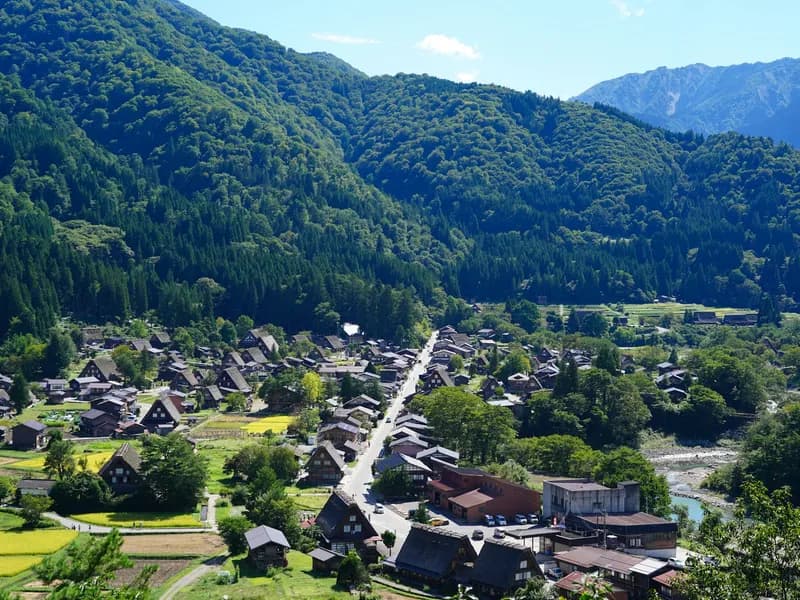
Shiroyama Viewpoint (Ogimachi Observation Deck)
The classic postcard panorama looking down over the whole village and its snow-dusted roofs. Free entry. A 15-20 minute uphill walk from the village, or a shuttle bus (~200 yen) from Wada House. Go in the golden hour for the best light.
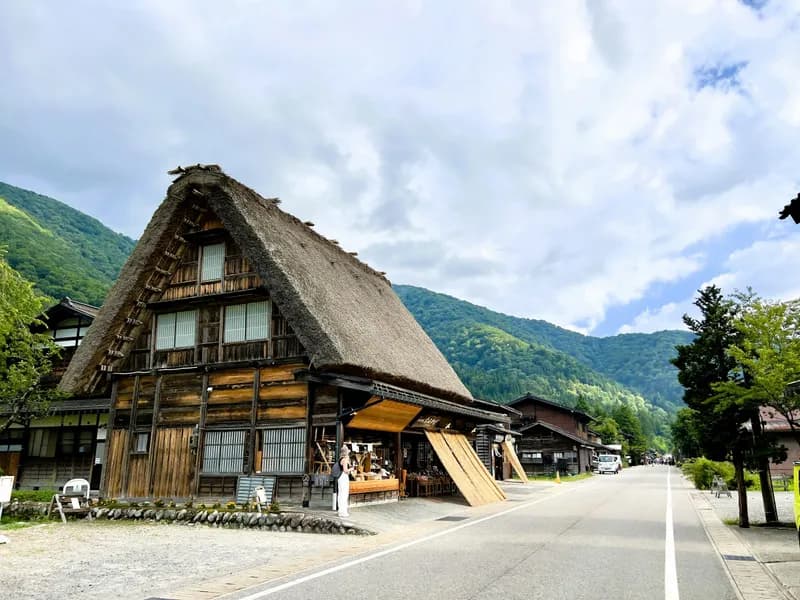
Wada House (Wada-ke)
The village's largest gassho-zukuri house and a National Important Cultural Property, once home to a wealthy silk-trading family. Entry ~400 yen. Open daily ~9AM-5PM. Climb to the attic to see the silkworm-cultivation floors and rope-tied timber frame. Allow 30-45 minutes.
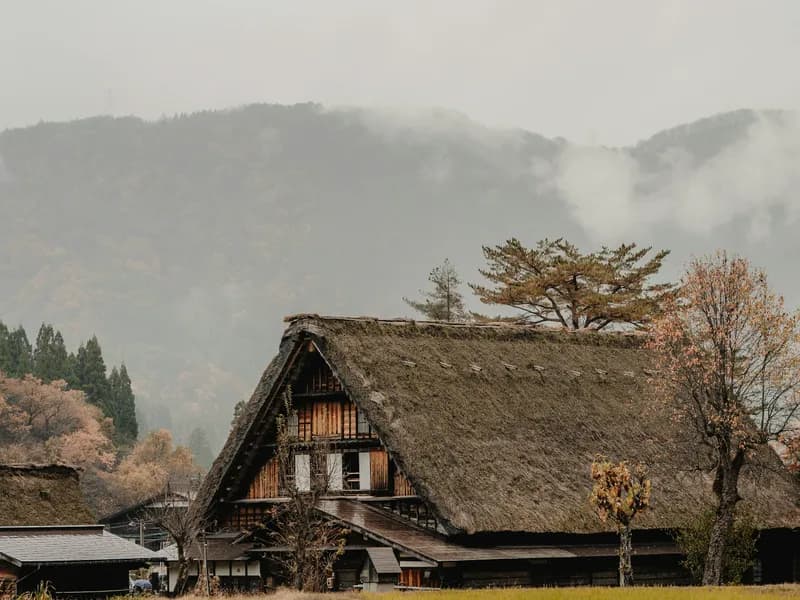
Gassho-zukuri Minkaen Open-Air Museum
An open-air museum across the river with ~25 relocated farmhouses you can enter and explore. Entry ~600 yen. Open ~8:40AM-5PM (closed some winter weekdays). Ideal for seeing the interiors up close. Allow 1-1.5 hours; reached via the suspension bridge.
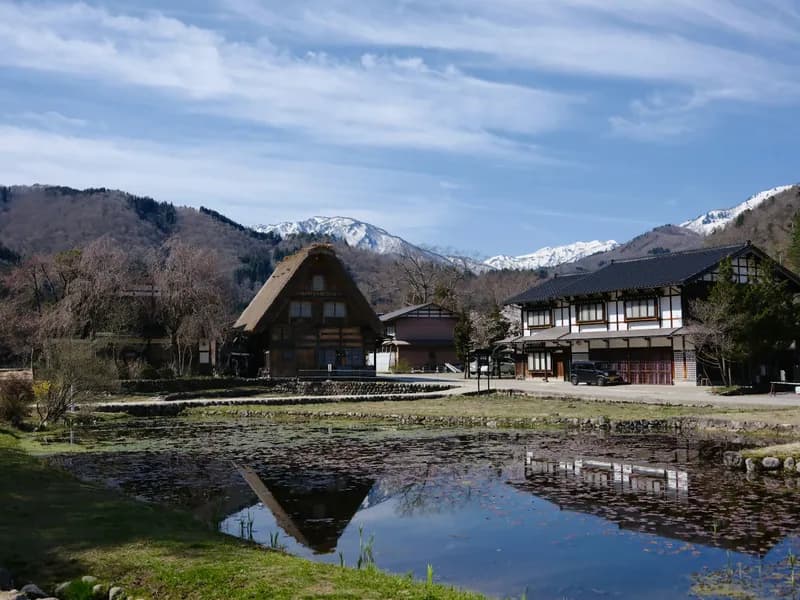
Myozenji Temple & Museum
A rare temple with a thatched gassho-style main hall and bell tower. Entry ~400 yen to the attached museum showing daily mountain-village life. Open daily ~9AM-4PM. A quieter, less-crowded stop; allow 40 minutes.
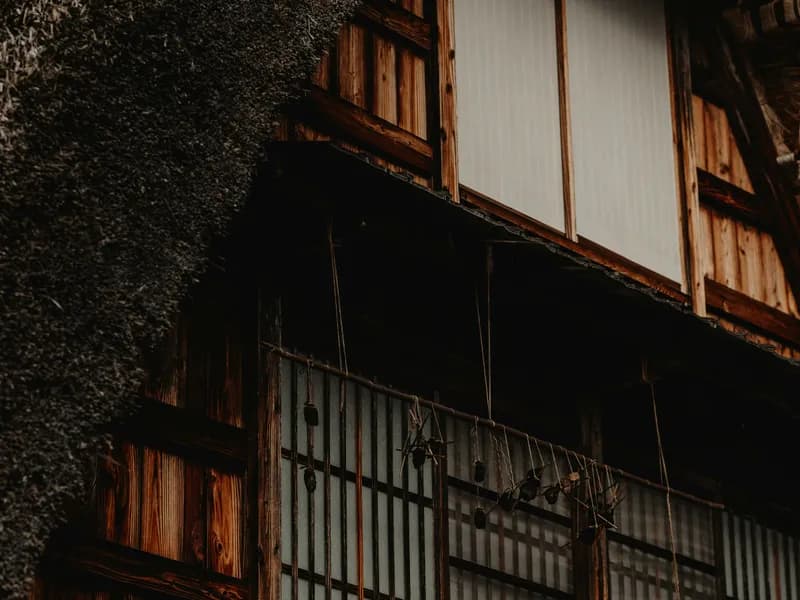
Kanda House (Kanda-ke)
A well-preserved four-storey farmhouse with an active irori (sunken hearth) whose smoke helps preserve the timber and thatch. Entry ~400 yen. Open daily ~9AM-5PM. Sit by the hearth with the free tea and see the roof structure from inside. Allow 30 minutes.
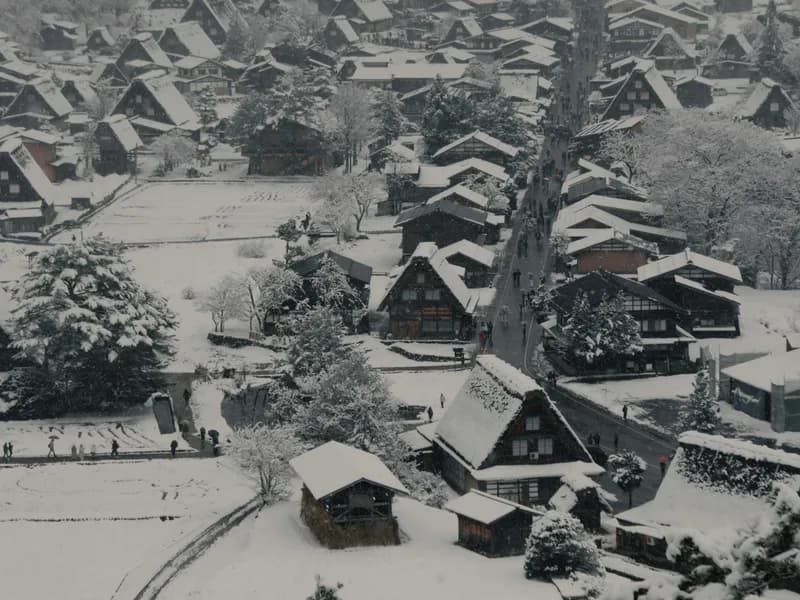
Winter Light-Up Event
On select evenings in January and February the snow-covered gassho houses are illuminated after dark — the village's most iconic sight. Advance reservations for viewing and parking are now required and sell out early. Check the official Shirakawa-go tourism site months ahead.
Planned Itinerary
7-Day Shirakawa-go Itinerary
Arrival in Takayama, Gateway to the Alps
Fly into Chubu Centrair (Nagoya) and take the scenic Hida Limited Express up into the mountains to Takayama, the historic castle town that's the natural base for reaching Shirakawa-go. Settle in and explore the beautifully preserved old streets at dusk.
Hida Limited Express train, Nagoya to Takayama(2.5 hours)
A gorgeous ride following the Hida River gorge; ~6,000 yen, or free with a JR Pass. Sit on the right for the best river views
Check into a ryokan or hotel near Takayama Station(45 minutes)
Base here for two nights; the Sanmachi old town is a 12-min walk
Evening walk through Sanmachi Suji(1.5 hours)
The Edo-era merchant streets of dark-timber sake breweries and machiya; quietest and most atmospheric after the day-trippers leave
Hida beef dinner at Kotte Ushi or Center4 Hamburgers(1.5 hours)
Try Hida-gyu sushi on a rice cracker (~600 yen a pair) or a Hida-beef burger; the local wagyu rivals Kobe
Takayama: Morning Markets & Hida Folk Village
A full day in Takayama before heading to the mountains. Start at the riverside morning markets, tour the old government house, then visit an open-air museum of gassho-zukuri farmhouses — a perfect primer for Shirakawa-go.
Miyagawa morning market(1 hour)
Riverside stalls of pickles, sarubobo dolls and local produce, 7AM-noon; free to browse, try the fresh soy milk doughnuts
Takayama Jinya(1 hour)
The only surviving Edo-period provincial government house in Japan, ~440 yen; open ~8:45AM
Sake brewery tasting on Sanmachi(1 hour)
Takayama's cold water and rice make excellent sake; several breweries like Funasaka offer tastings for a few hundred yen
Lunch of Takayama ramen(1 hour)
The local soy-based 'chuka soba' at Menya Shirakawa, ~900 yen
Hida Folk Village (Hida no Sato)(2 hours)
An open-air museum of 30+ relocated thatched farmhouses around a pond, ~700 yen; bus from the station ~10 min. A great preview of gassho architecture
Into Shirakawa-go: Ogimachi Village
Take the Nohi Bus over the mountains to Shirakawa-go and check into a gassho-zukuri farmhouse for the night — the single best thing you can do here. Once the tour buses leave around 4PM, you'll have the UNESCO village almost to yourself.
Nohi Bus, Takayama to Shirakawa-go(50 minutes)
~2,600 yen; reserve online in peak season as seats sell out. Drops at the Ogimachi bus terminal
Wander Ogimachi Village(2.5 hours)
Over 100 preserved gassho-zukuri farmhouses among the rice paddies; free to walk the lanes. Cross the Deai suspension bridge into the village
Wada House (Wada-ke)(45 minutes)
The village's largest farmhouse and a National Important Cultural Property, ~400 yen; climb to the silkworm-cultivation attic
Check into a gassho-zukuri minshuku(1 hour)
Family guesthouses like Magoemon or Yokichi, ~10,000-18,000 yen per person with dinner and breakfast; reserve months ahead
Home-cooked irori dinner at your minshuku(1.5 hours)
Dinner around the sunken hearth — river fish, mountain vegetables and Hida beef hotpot, cooked by your hosts
Shirakawa-go Deep Dive & Viewpoint
A slow day to see the village properly now the crowds have gone. Catch the postcard panorama from the observation deck, tour the historic houses and the open-air museum, and soak in a hot spring by evening.
Sunrise at Shiroyama Viewpoint(1 hour)
The classic panorama over the whole village; a 15-20 min uphill walk or the shuttle bus (~200 yen) from Wada House. Golden hour is magic and near-empty
Gassho-zukuri Minkaen Open-Air Museum(1.5 hours)
About 25 relocated farmhouses you can enter across the river, ~600 yen; reached via the suspension bridge
Myozenji Temple & Museum(45 minutes)
A rare temple with a thatched gassho-style main hall and bell tower, ~400 yen; a quiet, uncrowded stop
Kanda House (Kanda-ke)(30 minutes)
A four-storey farmhouse with an active irori hearth; sit by the fire with free tea, ~400 yen
Soak at Shirakawa-go no Yu onsen(1.5 hours)
A riverside hot spring at the village edge, ~700 yen; ease the day's walking with mountain views
Gokayama's Hidden Villages
Explore Shirakawa-go's quieter, less-visited UNESCO sibling. The Gokayama hamlets of Suganuma and Ainokura are smaller, remoter and far less crowded, with a living tradition of washi papermaking.
Nohi/World Heritage Bus to Gokayama(45 minutes)
Toward Ainokura via Suganuma, ~1,300 yen; check the limited timetable in advance
Suganuma village(1 hour)
A tiny cluster of nine gassho houses in a river bend, feeling frozen in time; a small folklore museum, ~300 yen
Ainokura village(2 hours)
The largest Gokayama hamlet with ~20 farmhouses and a hilltop viewpoint; wonderfully peaceful. Free to wander
Washi paper-making workshop(1 hour)
Gokayama is famous for handmade washi; try making a postcard at the Gokayama Washi-no-Sato, ~600 yen
On to Kanazawa: Gardens & Geisha District
Cross to the coast and the elegant castle city of Kanazawa, home to one of Japan's three great gardens and beautifully preserved samurai and geisha quarters that survived the war unbombed.
Nohi Bus, Shirakawa-go to Kanazawa(1.25 hours)
~2,000 yen; reserve in advance as this route fills fast. Drops at Kanazawa Station
Kenrokuen Garden(1.5 hours)
One of Japan's three most celebrated landscape gardens, ~320 yen; stunning in every season
Kanazawa Castle Park(1 hour)
The restored castle keep and gates beside the garden; free to enter the grounds
Lunch at Omicho Market(1 hour)
The 'kitchen of Kanazawa'; a fresh kaisendon seafood bowl piled with local crab and shrimp, ~2,500 yen
Higashi Chaya geisha district(1.5 hours)
Wooden teahouses on lantern-lit lanes; visit Shima teahouse (~500 yen) and a gold-leaf shop — Kanazawa makes 99% of Japan's gold leaf
Kanazawa Highlights & Departure
A final morning of Kanazawa's contrasts — cutting-edge contemporary art and a samurai quarter — before flying home from nearby Komatsu or taking the Shinkansen onward.
21st Century Museum of Contemporary Art(1.5 hours)
A circular glass museum famous for Leandro Erlich's Swimming Pool illusion, ~from 500 yen for exhibits; the outer ring is free
Nagamachi samurai district(1 hour)
Earthen-walled lanes and the Nomura samurai residence with its exquisite garden, ~550 yen
Last-minute gold-leaf souvenirs and lunch(1.5 hours)
Gold-leaf ice cream and lacquerware near Higashi Chaya
Transfer to Komatsu Airport (KMQ) or Shinkansen(1 hour)
Airport bus ~40 min, or the Hokuriku Shinkansen east toward Tokyo/Nagano
14-Day Shirakawa-go Itinerary
Arrival in Takayama, Gateway to the Alps
Fly into Chubu Centrair (Nagoya) and ride the scenic Hida Limited Express up into the mountains to Takayama, the historic castle town that's the natural base for Shirakawa-go. Explore the old streets at dusk.
Hida Limited Express train, Nagoya to Takayama(2.5 hours)
Following the Hida River gorge, ~6,000 yen or free with a JR Pass; sit on the right for river views
Check into a ryokan near Takayama Station(45 minutes)
Base here for two nights
Evening walk through Sanmachi Suji(1.5 hours)
Edo-era streets of sake breweries and machiya, quietest after the day-trippers leave
Hida beef dinner at Kotte Ushi(1.5 hours)
Hida-gyu sushi on a rice cracker, ~600 yen a pair; the local wagyu rivals Kobe
Takayama: Morning Markets & Hida Folk Village
A full day in Takayama — riverside morning markets, the Edo government house, and an open-air museum of thatched farmhouses that primes you for Shirakawa-go.
Miyagawa morning market(1 hour)
Riverside stalls of pickles and sarubobo dolls, 7AM-noon; try the soy-milk doughnuts
Takayama Jinya(1 hour)
Japan's only surviving Edo provincial government house, ~440 yen
Sake brewery tasting on Sanmachi(1 hour)
Tastings at breweries like Funasaka for a few hundred yen
Lunch of Takayama ramen(1 hour)
Soy-based chuka soba at Menya Shirakawa, ~900 yen
Hida Folk Village (Hida no Sato)(2 hours)
30+ relocated thatched farmhouses around a pond, ~700 yen
Into Shirakawa-go: Ogimachi Village
Take the Nohi Bus over the mountains to Shirakawa-go and check into a gassho-zukuri farmhouse — the single best thing to do here. After the tour buses leave around 4PM, the UNESCO village is almost yours.
Nohi Bus, Takayama to Shirakawa-go(50 minutes)
~2,600 yen; reserve in peak season
Wander Ogimachi Village(2.5 hours)
100+ gassho-zukuri farmhouses among rice paddies; cross the Deai suspension bridge
Wada House (Wada-ke)(45 minutes)
The village's largest farmhouse, ~400 yen; climb to the silkworm attic
Check into a gassho-zukuri minshuku(1 hour)
Guesthouses like Magoemon, ~10,000-18,000 yen with dinner and breakfast
Irori-hearth dinner at your minshuku(1.5 hours)
River fish, mountain vegetables and Hida beef hotpot around the sunken hearth
Shirakawa-go Deep Dive & Onsen
A slow day to see the village properly. Catch the postcard panorama at sunrise, tour the historic houses and open-air museum, and soak in a riverside hot spring by evening.
Sunrise at Shiroyama Viewpoint(1 hour)
The panorama over the whole village; 15-20 min walk or shuttle (~200 yen), near-empty at dawn
Gassho-zukuri Minkaen Open-Air Museum(1.5 hours)
~25 relocated farmhouses you can enter, ~600 yen, across the suspension bridge
Myozenji Temple & Museum(45 minutes)
A rare thatched gassho-style temple hall, ~400 yen
Kanda House (Kanda-ke)(30 minutes)
Four-storey farmhouse with an active irori hearth and free tea, ~400 yen
Soak at Shirakawa-go no Yu onsen(1.5 hours)
A riverside hot spring at the village edge, ~700 yen
Gokayama's Hidden Villages & Washi
Explore Shirakawa-go's quieter UNESCO sibling. The Gokayama hamlets of Suganuma and Ainokura are remoter and far less crowded, with a living washi papermaking tradition.
World Heritage Bus to Gokayama(45 minutes)
Toward Ainokura via Suganuma, ~1,300 yen; limited timetable
Suganuma village(1 hour)
Nine gassho houses in a river bend; small folklore museum, ~300 yen
Ainokura village(2 hours)
The largest Gokayama hamlet with a hilltop viewpoint; wonderfully peaceful
Washi paper-making workshop(1 hour)
Make a postcard at Gokayama Washi-no-Sato, ~600 yen
On to Kanazawa: Gardens & Geisha District
Cross to the coast and the elegant castle city of Kanazawa, home to one of Japan's three great gardens and preserved samurai and geisha quarters that survived the war unbombed.
Nohi Bus, Shirakawa-go to Kanazawa(1.25 hours)
~2,000 yen; reserve ahead
Kenrokuen Garden(1.5 hours)
One of Japan's three great landscape gardens, ~320 yen
Kanazawa Castle Park(1 hour)
Restored keep and gates beside the garden; grounds free
Lunch at Omicho Market(1 hour)
A kaisendon seafood bowl with local crab, ~2,500 yen
Higashi Chaya geisha district(1.5 hours)
Wooden teahouses and gold-leaf shops; visit Shima teahouse, ~500 yen
Kanazawa: Art, Samurai & Gold Leaf
A day for Kanazawa's contrasts — cutting-edge contemporary art, an earthen-walled samurai quarter, and a hands-on gold-leaf craft workshop.
21st Century Museum of Contemporary Art(1.5 hours)
The circular glass museum with Leandro Erlich's Swimming Pool illusion, ~500 yen for exhibits
Nagamachi samurai district(1 hour)
The Nomura samurai residence and its garden, ~550 yen
Gold-leaf (kinpaku) workshop at Hakuza or Kanazawa Katani(1.5 hours)
Decorate your own chopsticks or plate with gold leaf, ~1,000-2,500 yen
Kazuemachi Chaya district at dusk(1 hour)
A smaller riverside geisha quarter, quieter than Higashi Chaya
Toyama Bay & Takaoka
Shift east to Toyama, famed for the freshest sushi on the Sea of Japan and striking modern architecture, with a side trip to Takaoka's great bronze Buddha and Zen temple.
Shinkansen/train to Toyama(40 minutes)
Hokuriku Shinkansen from Kanazawa, ~20 min, plus onward local trains
Zuiryuji Temple, Takaoka(1 hour)
A National Treasure Zen temple, ~500 yen; pair with the Takaoka Daibutsu bronze Buddha nearby
Toyama Bay sushi lunch(1.5 hours)
White shrimp and firefly squid straight from the bay; try Sushidai Honten, ~3,000 yen
Toyama Glass Art Museum(1.5 hours)
A Kengo Kuma-designed building shared with the city library, ~200 yen for exhibits
Fugan Canal Kansui Park at sunset(1 hour)
Home to a canalside Starbucks often called Japan's most beautiful; overnight in Toyama
Tateyama Kurobe Alpine Route
One of Japan's great mountain journeys — a chain of cable cars, ropeways and a trolley bus that crosses the Northern Alps, past the vast Kurobe Dam and (in spring) towering walls of snow, delivering you to the Nagano side.
Tateyama Station to Murodo, cable car and highland bus(1.5 hours)
The dramatic climb to Murodo at 2,450m; the famous 'snow corridor' walls tower here April-June
Walk the Murodo alpine plateau(1.5 hours)
Volcanic Mikurigaike pond and steaming Jigokudani; alpine air and 3,000m peaks all around
Ropeway and cable car to Kurobe Dam(1.5 hours)
Japan's tallest dam at 186m; walk the crest and see the thundering water discharge in summer
Trolley bus to Ogizawa and on to Matsumoto(2 hours)
Exit on the Nagano side; local bus/train to Matsumoto for the night. The full route pass is ~10,000 yen
Matsumoto Castle & a Restful Afternoon
A gentler day around Matsumoto, home to Japan's oldest original wooden castle keep, followed by an unhurried afternoon in the willow-lined merchant streets — a deliberate breather after the mountain crossing.
Matsumoto Castle (Matsumotojo)(1.5 hours)
The 'Crow Castle', a National Treasure with steep original interiors, ~700 yen; go at opening to beat groups
Nakamachi and Nawate old streets(1.5 hours)
White-walled storehouses turned into craft shops and cafés along the Metoba River
Lunch of Shinshu soba(1 hour)
Nagano's celebrated buckwheat noodles; try Kobayashi Soba, ~1,200 yen
Free afternoon and coffee(2 hours)
Browse the folk-craft shops or relax — no fixed plan
Optional soak at Asama Onsen(1.5 hours)
A low-key hot-spring quarter on the edge of Matsumoto
Kamikochi Alpine Valley
A day in Kamikochi, the pristine highland valley at the heart of the Northern Japan Alps — a car-free river basin of turquoise water, marshland boardwalks and 3,000m peaks reflected in still ponds.
Bus to Kamikochi(1.5 hours)
Via Shin-Shimashima; private cars are banned, so everyone arrives by bus, ~2,500 yen. Open late April to mid-November only
Kappa Bridge and the Azusa River(1 hour)
The valley's iconic suspension bridge with the Hotaka peaks behind
Walk to Taisho Pond and Myojin Pond(2.5 hours)
Flat, well-marked riverside trails past mirror-still ponds; watch for wild macaques
Lunch at a Kamikochi lodge(1 hour)
Curry rice or a mountain lunch set with a view, ~1,500 yen
Bus back toward the Hida side(1.5 hours)
Transfer via Hirayu Onsen toward Takayama for the night
Hida-Furukawa & Back to Takayama
A quieter day in Hida-Furukawa, a small canal town of white storehouses made famous by the film 'Your Name', with time for a craft experience before returning to Takayama.
Train to Hida-Furukawa(15 minutes)
A short hop north of Takayama on the JR Hida line, ~240 yen
Setogawa canal and Shirakabe Dozogura storehouses(1.5 hours)
Carp-filled canals beside white-walled storehouses; the real-life setting from 'Your Name'
Hida Furukawa Matsuri Kaikan(1 hour)
See the town's giant festival floats and drum, ~700 yen
Sarubobo doll or wood-craft workshop(1 hour)
Make the region's traditional faceless good-luck doll, ~1,500 yen
Return to Takayama for a farewell Hida beef dinner(2 hours)
A hoba-miso and Hida-gyu grill to end the trip
Gujo Hachiman, Town of Water
A day trip to Gujo Hachiman, a charming castle town threaded with crystal-clear canals and springs, famous for its all-night summer dance and for making Japan's ultra-realistic plastic food samples.
Bus/train to Gujo Hachiman(1.5 hours)
From Takayama toward Nagoya; Gujo sits on the scenic Nagaragawa Railway
Gujo Hachiman Castle(1 hour)
A reconstructed wooden mountain castle with valley views, ~400 yen
Walk the spring-fed canals and Sogisui(1.5 hours)
Igawa Komichi waterway and one of Japan's 100 famous waters running through the old town
Plastic-food-sample making workshop(1 hour)
Gujo makes most of Japan's restaurant window food replicas; craft your own tempura or lettuce, ~1,500 yen
Travel to Nagoya for the night(2 hours)
Position near Chubu Centrair for tomorrow's flight
Nagoya & Departure
A relaxed final morning in Nagoya for last souvenirs and a regional specialty lunch before flying home from Chubu Centrair.
Last souvenirs at Nagoya Station(1 hour)
Hida sake, sarubobo dolls and Nagoya sweets
Hitsumabushi eel lunch(1 hour)
Nagoya's signature grilled eel over rice, eaten three ways; Atsuta Horaiken, ~4,000 yen
Meitetsu train to Chubu Centrair Airport (NGO)(40 minutes)
The μ-SKY limited express runs straight to the terminal, ~1,250 yen
21-Day Shirakawa-go Itinerary
Arrival in Takayama, Gateway to the Alps
Fly into Chubu Centrair (Nagoya) and ride the scenic Hida Limited Express up into the mountains to Takayama, the natural base for Shirakawa-go. Explore the old streets at dusk.
Hida Limited Express, Nagoya to Takayama(2.5 hours)
Along the Hida River gorge, ~6,000 yen or free with a JR Pass
Check into a ryokan near Takayama Station(45 minutes)
Base here for two nights
Evening walk through Sanmachi Suji(1.5 hours)
Edo-era streets of sake breweries, quietest after dark
Hida beef dinner at Kotte Ushi(1.5 hours)
Hida-gyu sushi on a rice cracker, ~600 yen a pair
Takayama: Morning Markets & Hida Folk Village
A full day in Takayama — riverside markets, the Edo government house, and an open-air museum of thatched farmhouses that primes you for Shirakawa-go.
Miyagawa morning market(1 hour)
Riverside stalls, 7AM-noon; try the soy-milk doughnuts
Takayama Jinya(1 hour)
Japan's only surviving Edo provincial government house, ~440 yen
Sake brewery tasting on Sanmachi(1 hour)
Tastings at Funasaka for a few hundred yen
Lunch of Takayama ramen(1 hour)
Soy-based chuka soba at Menya Shirakawa, ~900 yen
Hida Folk Village (Hida no Sato)(2 hours)
30+ relocated thatched farmhouses, ~700 yen
Into Shirakawa-go: Ogimachi Village
Take the Nohi Bus over the mountains to Shirakawa-go and check into a gassho-zukuri farmhouse. After 4PM the tour buses leave and the UNESCO village is almost yours.
Nohi Bus, Takayama to Shirakawa-go(50 minutes)
~2,600 yen; reserve in peak season
Wander Ogimachi Village(2.5 hours)
100+ gassho-zukuri farmhouses among rice paddies; cross the Deai suspension bridge
Wada House (Wada-ke)(45 minutes)
The village's largest farmhouse, ~400 yen; the silkworm attic
Check into a gassho-zukuri minshuku(1 hour)
Guesthouses like Magoemon, ~10,000-18,000 yen with two meals; two nights here
Irori-hearth dinner at your minshuku(1.5 hours)
River fish and Hida beef hotpot around the sunken hearth
Shirakawa-go Deep Dive & Onsen
A slow day to see the village properly, now the crowds are gone — the postcard viewpoint at sunrise, the historic houses and open-air museum, and a hot-spring soak by evening.
Sunrise at Shiroyama Viewpoint(1 hour)
The panorama over the whole village, near-empty at dawn; walk or shuttle ~200 yen
Gassho-zukuri Minkaen Open-Air Museum(1.5 hours)
~25 relocated farmhouses to enter, ~600 yen
Myozenji Temple & Museum(45 minutes)
A rare thatched gassho-style temple hall, ~400 yen
Kanda House (Kanda-ke)(30 minutes)
Four-storey farmhouse with an active hearth and free tea, ~400 yen
Soak at Shirakawa-go no Yu onsen(1.5 hours)
A riverside hot spring at the village edge, ~700 yen; second night in the minshuku
Gokayama's Hidden Villages & Washi
Explore Shirakawa-go's quieter UNESCO sibling — the remote Gokayama hamlets of Suganuma and Ainokura, far less crowded, with a living washi papermaking tradition.
World Heritage Bus to Gokayama(45 minutes)
Toward Ainokura via Suganuma, ~1,300 yen; limited timetable
Suganuma village(1 hour)
Nine gassho houses in a river bend; folklore museum, ~300 yen
Ainokura village(2 hours)
The largest Gokayama hamlet with a hilltop viewpoint; wonderfully peaceful
Washi paper-making workshop(1 hour)
Make a postcard at Gokayama Washi-no-Sato, ~600 yen
On to Kanazawa: Gardens & Geisha District
Cross to the coast and elegant Kanazawa, home to one of Japan's three great gardens and preserved samurai and geisha quarters that survived the war unbombed.
Nohi Bus, Shirakawa-go to Kanazawa(1.25 hours)
~2,000 yen; reserve ahead
Kenrokuen Garden(1.5 hours)
One of Japan's three great landscape gardens, ~320 yen
Kanazawa Castle Park(1 hour)
Restored keep and gates; grounds free
Lunch at Omicho Market(1 hour)
A kaisendon seafood bowl with local crab, ~2,500 yen
Higashi Chaya geisha district(1.5 hours)
Wooden teahouses and gold-leaf shops; Shima teahouse, ~500 yen
Kanazawa: Art, Samurai & Gold Leaf
A day for Kanazawa's contrasts — contemporary art, an earthen-walled samurai quarter, and a hands-on gold-leaf craft workshop.
21st Century Museum of Contemporary Art(1.5 hours)
The circular glass museum with Erlich's Swimming Pool, ~500 yen
Nagamachi samurai district(1 hour)
The Nomura samurai residence and garden, ~550 yen
Gold-leaf (kinpaku) workshop(1.5 hours)
Decorate chopsticks or a plate at Hakuza, ~1,000-2,500 yen
Kazuemachi Chaya district at dusk(1 hour)
A quieter riverside geisha quarter
Rest Day: Zen, Tea & Slow Kanazawa
A deliberate free day to recharge before the mountain leg — quiet gardens, a meditative museum, and a tea ceremony, with nothing you must rush to.
D.T. Suzuki Museum(1.5 hours)
A serene minimalist museum with a mirror-water meditation court, honouring the Zen scholar, ~310 yen
Matcha and wagashi in a Kenrokuen teahouse(1 hour)
A quiet tea break at Shigure-tei overlooking the garden, ~730 yen
Free afternoon around Korinbo and the river(3 hours)
Café-hop, browse craft shops, or simply do nothing
Kaiseki or oden dinner(1.5 hours)
Kanazawa oden simmered in a light dashi at a counter izakaya
Toyama Bay & Takaoka
Shift east to Toyama, famed for the freshest sushi on the Sea of Japan and striking modern architecture, with a side trip to Takaoka's great bronze Buddha and Zen temple.
Shinkansen/train to Toyama(40 minutes)
Hokuriku Shinkansen from Kanazawa, ~20 min, plus local trains
Zuiryuji Temple, Takaoka(1 hour)
A National Treasure Zen temple, ~500 yen; with the Takaoka Daibutsu nearby
Toyama Bay sushi lunch(1.5 hours)
White shrimp and firefly squid; Sushidai Honten, ~3,000 yen
Toyama Glass Art Museum(1.5 hours)
A Kengo Kuma building shared with the library, ~200 yen
Fugan Canal Kansui Park at sunset(1 hour)
The canalside Starbucks; overnight in Toyama
Kurobe Gorge Railway & Unazuki Onsen
A slow, scenic day riding an open-sided former construction railway deep into one of Japan's steepest ravines, ending with a night in a riverside hot-spring town.
Train to Unazuki Onsen(1.25 hours)
Local Toyama Chihou line into the mountains
Kurobe Gorge open-air torokko train(2.5 hours)
The little trolley train winds along the gorge past turquoise water and vermilion bridges, round trip ~4,000 yen; open late April to November
Riverside foot-baths and short gorge walks(1.5 hours)
Free open-air ashiyu foot onsen at the stops along the line
Stay and soak at an Unazuki Onsen ryokan(2 hours)
A relaxed evening in a hot-spring inn with a kaiseki dinner
Tateyama Kurobe Alpine Route to Matsumoto
One of Japan's great mountain journeys — a chain of cable cars, ropeways and a trolley bus crossing the Northern Alps past the vast Kurobe Dam and (in spring) walls of snow, delivering you to the Nagano side.
Cable car and highland bus to Murodo(1.5 hours)
The climb to Murodo at 2,450m; the 'snow corridor' towers here April-June
Walk the Murodo alpine plateau(1.5 hours)
Mikurigaike pond and steaming Jigokudani amid 3,000m peaks
Ropeway and cable car to Kurobe Dam(1.5 hours)
Japan's tallest dam at 186m; walk the crest
Trolley bus to Ogizawa and on to Matsumoto(2 hours)
Exit on the Nagano side; the full route pass is ~10,000 yen. Overnight Matsumoto
Matsumoto Castle & a Restful Afternoon
A gentler day around Matsumoto and its National Treasure castle, then an unhurried afternoon in the willow-lined merchant streets — a breather after the mountain crossing.
Matsumoto Castle (Matsumotojo)(1.5 hours)
The 'Crow Castle', Japan's oldest original keep, ~700 yen; go at opening
Nakamachi and Nawate old streets(1.5 hours)
White-walled storehouses turned craft shops along the Metoba River
Lunch of Shinshu soba(1 hour)
Nagano's buckwheat noodles at Kobayashi Soba, ~1,200 yen
Free afternoon and optional Asama Onsen soak(3 hours)
Relax with no fixed plan; a low-key hot-spring quarter nearby
Kamikochi Alpine Valley
A day in Kamikochi, the pristine highland valley at the heart of the Northern Alps — a car-free basin of turquoise water, boardwalks and 3,000m peaks mirrored in still ponds.
Bus to Kamikochi(1.5 hours)
Via Shin-Shimashima; cars are banned, ~2,500 yen. Open late April to mid-November
Kappa Bridge and the Azusa River(1 hour)
The iconic suspension bridge below the Hotaka peaks
Walk to Taisho Pond and Myojin Pond(2.5 hours)
Flat riverside trails past mirror-still ponds; watch for macaques
Lunch at a Kamikochi lodge(1 hour)
Curry rice with a mountain view, ~1,500 yen
Narai-juku on the Nakasendo
Begin a multi-day journey along the old Nakasendo, the Edo-era highway between Kyoto and Tokyo. Start at Narai, once its wealthiest post town, a kilometre-long street of dark timber inns almost unchanged in 200 years.
Train to Narai on the Kiso Valley line(1 hour)
JR from Matsumoto down the Kiso valley, ~680 yen
Walk the length of Narai-juku(1.5 hours)
The preserved post-town street of latticed machiya, sake shops and lacquerware; free to wander
Lunch of gohei-mochi(1 hour)
Grilled rice cakes glazed with sweet walnut-miso, a Kiso specialty, ~500 yen
Continue to Kiso-Fukushima or Tsumago(1 hour)
Move down the valley toward the Magome-Tsumago section
Overnight in a Nakasendo minshuku(1.5 hours)
Stay in a traditional inn along the old road with a home-cooked dinner
Walk the Magome-Tsumago Trail
The classic Nakasendo hike — a beautiful 8km forest trail over the Magome Pass linking two of Japan's best-preserved post towns, walking the same stones as Edo-era travellers and feudal processions.
Explore Magome-juku(1 hour)
A steep stone-paved hillside post town with mountain views; start from the top
Hike the Magome Pass to Tsumago(3 hours)
The 8km forest trail past waterfalls, a tea house and bear bells to ring along the way; luggage-forwarding is available between towns
Lunch in Tsumago(1 hour)
Soba or gohei-mochi in the beautifully preserved village
Explore Tsumago-juku(1.5 hours)
The car-free post town where wires and signs are hidden to preserve the Edo streetscape; the honjin inn museum, ~300 yen
Overnight in a Tsumago inn(1.5 hours)
A traditional stay in the hushed, lantern-lit village once the day visitors leave
Slow Kiso Valley & On to Nagano
A gentle travel day out of the Kiso valley, with time for one more quiet village or forest walk before reaching Nagano city for the night.
Morning in Tsumago or a Kiso forest walk(1.5 hours)
An unhurried start; the Atera valley or a riverside stroll
Train up the Kiso valley to Nagano(2 hours)
A scenic ride following the Kiso River, changing at Shiojiri
Lunch in Nagano(1 hour)
Oyaki stuffed dumplings, a Nagano staple, near the station
Free afternoon and check-in(2 hours)
Settle into Nagano; rest ahead of tomorrow
Zenkoji Temple & the Snow Monkeys
Two Nagano icons in a day — the great pilgrimage temple of Zenkoji and the wild Japanese macaques of Jigokudani who bathe in a steaming mountain hot spring.
Zenkoji Temple(1.5 hours)
A 1,400-year-old pilgrimage temple; walk the pitch-dark under-floor passage to the 'key to paradise', ~600 yen
Bus to Jigokudani Monkey Park(1 hour)
Toward Yudanaka, then a 30-min forest walk to the park, ~800 yen entry
Jigokudani Snow Monkey Park(1.5 hours)
Wild macaques soaking in their own hot-spring pool, especially in winter snow
Stay at a Shibu Onsen ryokan(2 hours)
A historic hot-spring town of nine public baths and wooden inns; wear a yukata to bath-hop
Rest Day at Shibu Onsen
A true do-nothing day in one of Japan's most atmospheric hot-spring towns — soak, wander cobbled lanes in a yukata, and let the trip's long stretches catch up with you.
Nine-bath onsen tour in a yukata(2 hours)
Guests get a key to the town's nine public baths; hop between them along the old lanes
Stroll to Onsen-ji Temple and the hillside shrine(1 hour)
The town's small temple, said to complete the nine-bath pilgrimage
Free afternoon with tea and reading(3 hours)
Nothing scheduled — the point of the day
Return to Hida: Hida-Furukawa & Takayama
Cross back toward the Hida side and the quiet canal town of Hida-Furukawa, made famous by the film 'Your Name', before an evening back in familiar Takayama.
Train back toward Takayama(3 hours)
Via Nagano and Matsumoto onto the Hida line; a scenic transit day
Setogawa canal and storehouses, Hida-Furukawa(1.5 hours)
Carp-filled canals beside white-walled storehouses, the 'Your Name' setting
Sarubobo doll craft workshop(1 hour)
Make the region's faceless good-luck doll, ~1,500 yen
Farewell Hida beef dinner in Takayama(2 hours)
Hoba-miso and a Hida-gyu grill
Gujo Hachiman, Town of Water
A final day trip to Gujo Hachiman, a castle town threaded with crystal-clear canals and famous for making Japan's ultra-realistic plastic food samples.
Train/bus to Gujo Hachiman(1.5 hours)
From Takayama toward Nagoya, on the scenic Nagaragawa Railway
Gujo Hachiman Castle(1 hour)
A reconstructed wooden mountain castle with valley views, ~400 yen
Spring-fed canals and Sogisui(1.5 hours)
The Igawa Komichi waterway and famous pure spring in the old town
Plastic-food-sample workshop(1 hour)
Craft your own tempura or lettuce replica, ~1,500 yen
Travel to Nagoya for the night(2 hours)
Position near Chubu Centrair for the flight
Nagoya & Departure
A relaxed final morning in Nagoya for last souvenirs and a regional lunch before flying home from Chubu Centrair.
Last souvenirs at Nagoya Station(1 hour)
Hida sake, sarubobo dolls and Nagoya sweets
Hitsumabushi eel lunch(1 hour)
Nagoya's grilled eel over rice, three ways; Atsuta Horaiken, ~4,000 yen
Meitetsu μ-SKY train to Chubu Centrair (NGO)(40 minutes)
Straight to the terminal, ~1,250 yen; arrive ~2.5 hours before an international flight
Travel Tips
Visa & Entry
Visa-Free Short Stays
Japan grants visa-free entry for up to 90 days to passport holders from the US, UK, Canada, Australia, most of the EU and many other countries. Japan is rolling out the JESTA/pre-clearance electronic system — verify the current requirement on the official immigration site before you fly.
transport
Getting There by Bus
There is no train to Shirakawa-go. Take a Nohi Bus from Takayama (~50 min, ~2,600 yen) or from Kanazawa (~75 min, ~2,000 yen). The Kanazawa and some Takayama routes require advance seat reservations — book online in peak season as they sell out.
Budget
Stay Overnight in a Farmhouse
Most visitors come on day trips, so the village is magical and near-empty after ~4PM. Book a night in a gassho-zukuri minshuku (family guesthouse) — around 10,000-18,000 yen per person with dinner and breakfast. There are only a handful, so reserve months ahead, especially for winter.
Local Customs
Respect That People Live Here
Shirakawa-go is a working village, not a theme park. Don't enter private gardens or open house doors, keep drones grounded (they're restricted), and stay on paths through the rice fields. Photograph residents only with permission.
Safety
Winter Roads and Footing
In deep winter, roads may close or need chains and snow tyres — self-driving is only for the confident. Paths get icy: wear waterproof boots with grip. The gotcha many miss: the winter light-up now requires paid advance reservations for viewing slots and parking, and turning up without one means you won't get in.
Ready to explore Shirakawa-go?
Get AI-powered recommendations for your trip
Plan a Trip to Shirakawa-goRelated Articles
Travel GuidesShirakawa-go FAQ: Transport, Tickets, and Etiquette for Visiting the Gassho-Zukuri Village
No train, mandatory light-up reservations, and houses that charge admission but still have families living upstairs. Here's what to know before you go.
StoriesThe Shirakawa-go Route: A Day-by-Day Plan From Takayama to Kanazawa
A full mountain-to-coast route through Japan's gassho-zukuri villages, built around one overnight stay that changes the whole trip.
SeasonalShirakawa-go in Winter: When to Go, What to Book, and the Light-Up Reservation Trap
Deep snow, thatched roofs, and one evening of illumination that sells out months in advance. Here's how to actually get into winter Shirakawa-go.