
Torres del Paine

Key Facts
Best Time to Visit
Austral spring to autumn (October-April). December-February is peak summer with long daylight but ferocious wind and crowds; March-April brings golden foliage and calmer conditions. The park is largely inaccessible in winter
Language
Spanish; English spoken at lodges and by trekking guides
Currency
Chilean Peso (CLP); carry cash, card coverage is patchy inside the park
Time Zone
Punta Arenas / Magallanes Time (UTC-3)
Airport
Punta Arenas Presidente Carlos Ibáñez del Campo (PUQ), then ~3-hour bus to gateway town Puerto Natales; seasonal flights also serve Puerto Natales (PNT)
Population
Uninhabited park; gateway Puerto Natales has ~20,000 residents
Climate
Cold, wet, and famously windy sub-polar climate; four seasons in a day, gusts routinely exceeding 100 km/h in summer
Safety Rating
Generally Safe (Level 1) — main hazards are extreme wind, rapid weather changes, and hypothermia; wildfire rules are strictly enforced
Entrance Fee
Park entry ~$35-49 USD for foreign visitors (multi-day rate); buy online via Aspticket in advance
Established
National park since 1959; UNESCO Biosphere Reserve since 1978
Top Highlights

Base of the Towers (Mirador Las Torres)
The park's signature view and hardest day hike — a demanding 18-20km round trip (7-9 hours) ending with a brutal moraine scramble to a glacial lake beneath the three granite towers that give the park its name. At dawn the towers glow blood-red. Start very early or stay at a refugio nearby. The final hour is steep boulder-hopping; the wind at the top can knock you over. This is the shot everyone comes for.

The W Trek
Patagonia's classic multi-day route — a 4-5 day, ~70-80km trek tracing a W shape past the Towers, French Valley, and Grey Glacier. You sleep in refugios (dorm beds ~$60-90 or full board ~$150+) or campsites, all of which must be booked months ahead through Las Torres, Vertice, or CONAF. No wild camping is permitted. Guided and self-guided options exist. The most rewarding way to experience the park without the full O Circuit.
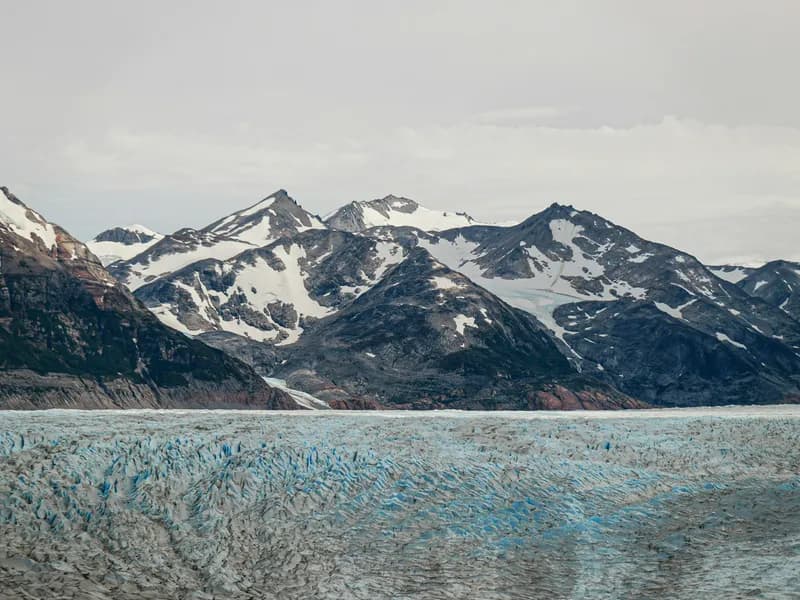
Grey Glacier
A vast tongue of the Southern Patagonian Ice Field calving pale-blue icebergs into Grey Lake. Hike to the miradors on the W's western arm, take a boat cruise to the ice face (~$100-130), or kayak among the bergs. The glacier is several kilometers wide where it meets the lake. Suspension bridges near Refugio Grey add drama to the trail. Dress for spray and wind on the boat.
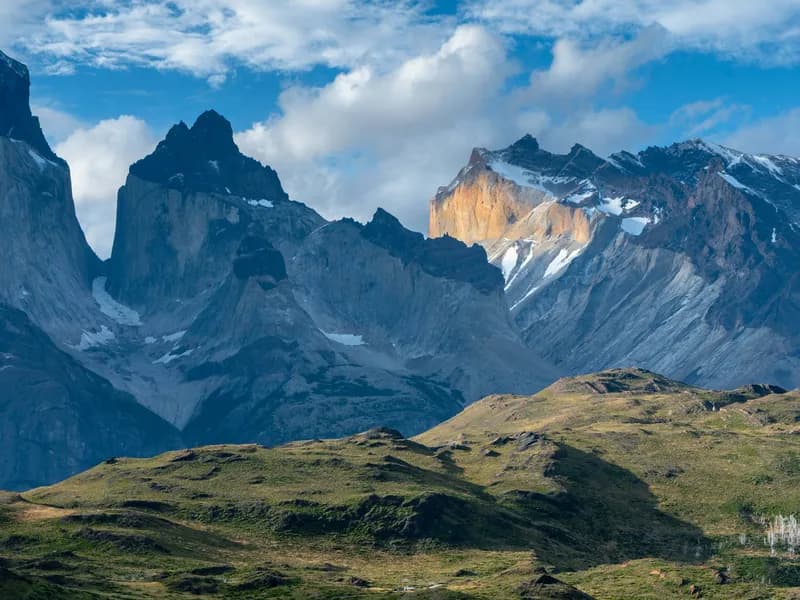
French Valley (Valle del Francés)
The wild central arm of the W — a steep climb into an amphitheater ringed by the Paine Grande massif and Cuernos, where avalanches regularly thunder off the hanging glacier across the valley. The lower Mirador Francés is the common turnaround; strong hikers push on to Mirador Británico for a 360° cirque. Notoriously exposed to wind. Allow a full day. Some of the most dramatic scenery in the whole park.
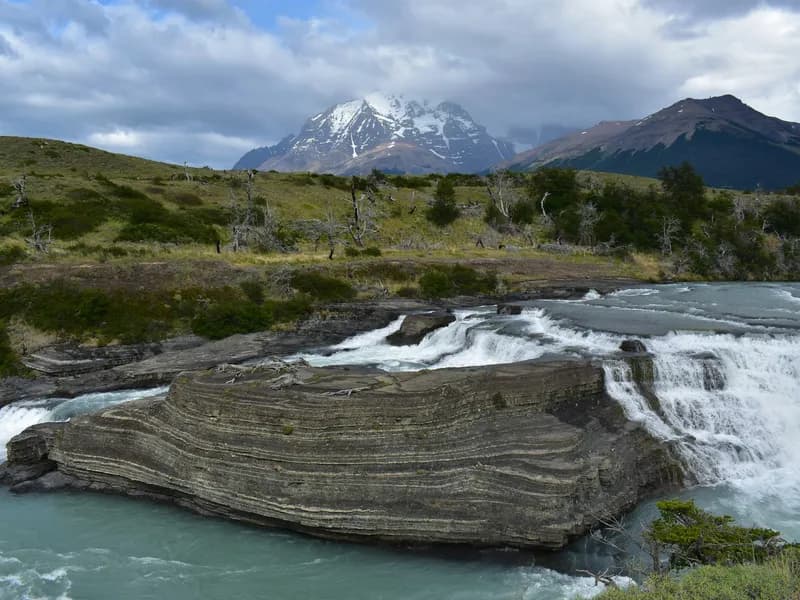
Salto Grande & Lake Pehoé
An easy, road-accessible payoff for non-trekkers — a short flat walk to the thundering Salto Grande waterfall between Lakes Nordenskjöld and Pehoé, with the Cuernos horns as a backdrop. The turquoise Lake Pehoé and its iconic clifftop hotel offer some of the park's best photo stops. Free with entry. Perfect for a day visit or a weather day when the high trails are socked in.
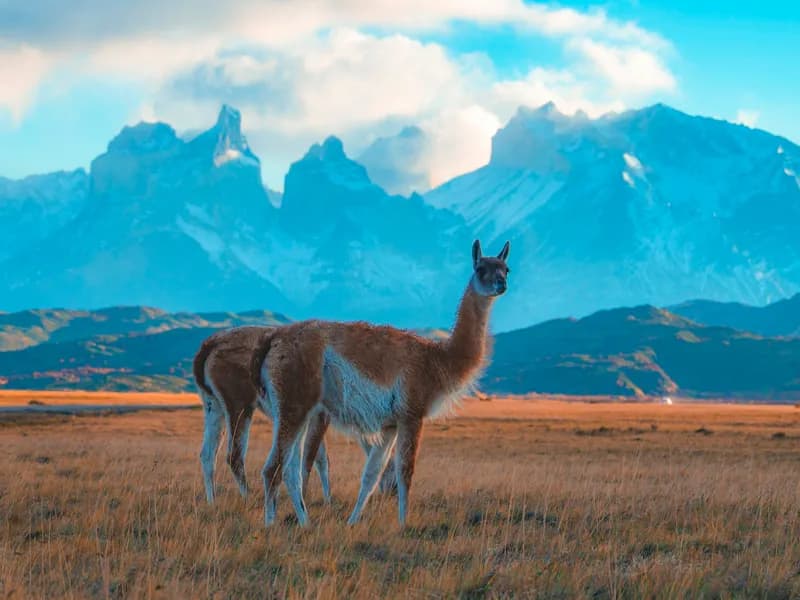
Guanaco & Puma Wildlife Watching
The eastern grasslands teem with guanacos (wild relatives of the llama), and Torres del Paine has become one of the best places on Earth to spot wild puma, especially at dawn and dusk in the Laguna Amarga sector. Specialist puma-tracking tours run in autumn/winter (~$150-250/day). You'll also see Andean condors, rheas, and flamingos on the lagoons. Keep a respectful distance and never feed wildlife.
Planned Itinerary
7-Day Torres del Paine Itinerary
Arrival in Punta Arenas & Bus to Puerto Natales
Fly into Patagonia's gateway and transfer to the trekking hub of Puerto Natales, where you'll base for the W Trek. Arrive with your park ticket already bought online via Aspticket to skip the gate queues.
Land at Punta Arenas (PUQ) airport(1 hour)
LATAM and Sky Airline fly daily from Santiago (~3.5 hrs). Arrive by early afternoon to catch a same-day bus north.
Bus-Sur / Buses Fernández to Puerto Natales(3 hours)
Buses depart directly from the PUQ airport, no need to go into the city. ~CLP 14,000-18,000 ($15-20). The road runs past Seno Otway across the pampa.
Check in and settle in Puerto Natales(1 hour)
Waterfront town of ~20,000 on Seno Última Esperanza. Withdraw pesos now — ATMs run dry in high season and card coverage inside the park is patchy.
Dinner at La Mesita Grande(1.5 hours)
Beloved wood-fired pizza joint on the plaza with communal tables. Mains ~CLP 9,000-13,000. Book ahead in peak season.
Gear Prep, Milodón Cave & Trek Briefing
A deliberate buffer day in Puerto Natales to rent gear, buy trail food, attend the free evening trekking talk, and see the famous Milodón Cave before entering the park. This is your rest/free window before four hard days on the trail.
Rent gear at Erratic Rock or Yaghan House(2 hours)
Rent poles, sleeping bag, and stove far cheaper than buying (~CLP 5,000-9,000/day per item). Erratic Rock's free 3pm 'W Talk' is the best briefing in town.
Provision at Unimarc supermarket(1 hour)
Buy lightweight trail food if self-catering the refugios — pasta, tuna, nuts, chocolate. Remember: stoves only at designated campsite areas, never on the trail.
Half-day tour to Cueva del Milodón(3 hours)
A 30m-high cave 24km from town where a giant ground sloth's remains were found. ~CLP 12,000 entry plus transfer. Easy, weather-proof outing.
Free evening: dinner at Cangrejo Rojo(1.5 hours)
Cozy spot known for king crab (centolla) and lamb. Rest early — tomorrow the trek begins. Confirm your refugio bookings are printed; rangers check them at trailheads.
W Trek Day 1 — Base of the Towers (Mirador Las Torres)
Enter the park and tackle the W's iconic eastern arm. Bus to Laguna Amarga, drop packs at Refugio Central, and climb to the granite towers that name the park. This is the hardest day-hike in Patagonia.
Morning bus Puerto Natales → Laguna Amarga(2 hours)
Buses Fernández/Gómez depart ~7:00-7:30am (~CLP 20,000-25,000 round trip). Show your online park ticket (~$35-49 USD) and PDI card at the CONAF gate.
Shuttle to Welcome Center & check in at Refugio Central(45 min)
Short park shuttle (~CLP 3,500) to the Las Torres/Fantástico Sur base. Stash overnight gear before the climb.
Hike to Mirador Base Las Torres(8 hours)
18-20km round trip, ~800m gain. Climbs the Ascencio valley past Refugio Chileno, then a brutal final hour of moraine boulder-scrambling to the glacial lake beneath the three towers. Wind at the top can knock you over.
Night at Refugio Central / Chileno(overnight)
Dorm bed ~$60-90 or full board ~$150+, booked months ahead via Fantástico Sur. Chileno is closer to the towers if you scored a bed there.
W Trek Day 2 — Cuernos Traverse to Los Cuernos
A gentler transfer day along the north shore of Lake Nordenskjöld beneath the Cuernos horns, repositioning west toward the French Valley. Big scenery, moderate effort — a natural half-rest after yesterday's punishment.
Trek Refugio Central → Refugio Los Cuernos(5 hours)
~11km lakeside trail hugging Nordenskjöld's turquoise water with the Cuernos towering above. Exposed and windy in stretches — poles help.
Rest and lake views at Los Cuernos(2 hours)
Afternoon downtime with the massif reflected in the lake. Refuel and dry gear. This is your on-trail rest window.
Night at Refugio Los Cuernos(overnight)
Fantástico Sur refugio with cabins and dome tents perched above the lake. Beds ~$70-90; book months ahead. Meals or self-cater in the cooking shelter.
W Trek Day 3 — French Valley (Valle del Francés)
The wild central arm of the W. Climb into a glacial amphitheater ringed by Paine Grande and the Cuernos, where avalanches thunder off hanging glaciers, then push west to sleep at Paine Grande.
Trek to Camp Italiano & up French Valley(4 hours)
From Los Cuernos to Camp Italiano (~5.5km), drop your pack, then climb to Mirador Francés — the amphitheater where ice avalanches crash off the hanging glacier across the valley.
Optional push to Mirador Británico(2 hours)
Strong hikers continue to the 360° cirque (Británico), the finest viewpoint in the valley. Notoriously wind-exposed; turn back if trails are flagged dangerous.
Trek Italiano → Refugio Paine Grande(2.5 hours)
~7.5km across open moraine to the big lakeside refugio on Lago Pehoé, the W's western hub. Fierce headwinds are common on this flat stretch.
Night at Refugio Paine Grande(overnight)
Vertice-run refugio with a large dining hall and bar. Beds ~$60-90 or camping. Book via Vertice months ahead. Reward yourself with a hot meal and a beer.
W Trek Day 4 — Grey Glacier & Catamaran Out
The W's western arm delivers the grand finale: hanging suspension bridges and the pale-blue ice tongue of Grey Glacier calving into Grey Lake. Return to Paine Grande and ride the catamaran across Lake Pehoé to close the loop.
Hike to Grey Glacier miradors(6 hours)
~22km round trip from Paine Grande to the miradors above Grey Lake, past thrilling suspension bridges near Refugio Grey. The glacier is several kilometers wide where it calves icebergs. Dress for spray and wind.
Catamaran Paine Grande → Pudeto(30 min)
The classic W exit across Lake Pehoé (~$40 / CLP 35,000 one way), with the Cuernos framed behind you. Catch the afternoon sailing — times are seasonal, so confirm at the refugio.
Bus Pudeto → Puerto Natales(2 hours)
Connecting bus meets the catamaran at Pudeto. Back in town by evening. ~CLP 12,000-15,000.
Celebratory dinner at Base Camp / Baguales(2 hours)
Toast the finished W over craft beer and a burger at Base Camp (attached to Erratic Rock) or Cerveza Baguales on the plaza. You've earned it.
Departure via Punta Arenas
Return your rented gear, grab a final Patagonian breakfast, and bus back to PUQ for your flight home. Build in buffer — Patagonian weather can delay both buses and planes.
Return rental gear & pack(1 hour)
Drop poles, bag, and stove back at Erratic Rock/Yaghan House. Final espresso at a plaza café.
Bus Puerto Natales → Punta Arenas (PUQ)(3 hours)
Buses run direct to the airport. Leave ~4-5 hours before your flight to absorb wind delays. ~CLP 14,000-18,000.
Fly out of Punta Arenas (PUQ)(1 hour)
LATAM/Sky back to Santiago (~3.5 hrs) for onward connections. Surrender your PDI tourist card at immigration.
14-Day Torres del Paine Itinerary
Arrival in Punta Arenas & Bus to Puerto Natales
Fly into Patagonia and transfer north to Puerto Natales, your base for the full O Circuit. This trip tackles the complete Paine loop plus side trips, so buy your park ticket online via Aspticket in advance.
Land at Punta Arenas (PUQ)(1 hour)
LATAM/Sky Airline from Santiago (~3.5 hrs). Aim to arrive by early afternoon for a same-day bus.
Bus-Sur / Buses Fernández to Puerto Natales(3 hours)
Buses leave from the airport itself. ~CLP 14,000-18,000 ($15-20) across the windswept pampa.
Check in and orient(1 hour)
Withdraw plenty of pesos now — ATMs run dry in high season and the park is largely cash-only.
Dinner at Cangrejo Rojo(1.5 hours)
Local favorite for king crab and lamb. Early night before a busy prep day.
Prep Day — Gear, Provisions & Trek Briefing
A full rest/prep day in Puerto Natales. Rent gear, buy trail food, confirm every refugio and campsite booking, and attend Erratic Rock's free trekking talk. The O Circuit is unforgiving, so start it well-equipped.
Rent gear at Erratic Rock / Yaghan House(2 hours)
Tent, sleeping bag, mat, poles, stove (~CLP 5,000-9,000/day/item). The O's back side has basic CONAF/Vertice camps, so a full kit matters.
Erratic Rock 'W & O Talk' (free, 3pm)(1 hour)
The definitive briefing on trail conditions, John Gardner Pass, and the counter-clockwise O direction rangers enforce.
Provision at Unimarc(1 hour)
8-9 days of lightweight food. Stoves permitted only at designated camp areas — never on the trail.
Free afternoon on the waterfront(2 hours)
Stroll the Costanera and the Milodón monument, coffee at a plaza café. Rest — the O starts tomorrow.
O Circuit Day 1 — Enter Park & Base of the Towers
Bus into the park, drop packs at Las Torres base, and warm up with the park's signature climb to Mirador Base Las Torres before starting the loop counter-clockwise.
Bus Puerto Natales → Laguna Amarga(2 hours)
Depart ~7:00am (~CLP 20,000-25,000 round trip). Show park ticket ($35-49 USD) and PDI card at CONAF.
Hike to Mirador Base Las Torres(8 hours)
18-20km round trip past Refugio Chileno, finishing with a steep moraine scramble to the glacial lake beneath the three towers. Dawn light turns them blood-red.
Night at Refugio Central / Camping Torre Central(overnight)
Fantástico Sur base camp. Bed ~$60-90 or camping ~$25. Booked months ahead.
O Circuit Day 2 — Seron (Back Side Begins)
Leave the crowds behind and enter the remote, tranquil back side of the massif. An easy rolling day along the Paine River valley to Camp Serón — the O's gentle opening on its wild northern arc.
Trek Central → Camp Serón(5 hours)
~13km of open pampa and river meadows, gentle gradient. Guanacos and condors are common; the crowds vanish here.
Afternoon rest at Camp Serón(2 hours)
Grassy Vertice campsite in a sheltered valley bend — a fine spot to relax. On-trail rest window.
Night at Camp Serón(overnight)
Vertice camping ~$18-25 with hot showers and a small shop. Book via Vertice ahead of time.
O Circuit Day 3 — Dickson Glacier & Lake
A big, wild traverse to the shore of Lake Dickson, backed by its namesake glacier and the distant ice field. One of the most beautiful and least-visited corners of the park.
Trek Serón → Refugio Dickson(6 hours)
~19km over a windy ridge above Lago Paine, then down to the glacier-fed Dickson basin. Exposed and gusty on the high traverse.
Lakeshore evening at Dickson(1.5 hours)
Camp on a green spit beside the milky lake with Dickson Glacier across the water and the Southern Ice Field beyond.
Night at Refugio/Camping Dickson(overnight)
Remote Vertice site, camping ~$18-25 or basic beds. Stock up — the next stops are even more spartan.
O Circuit Day 4 — Los Perros & the Pass Approach
Climb through Magellanic beech forest to the moraine and hanging glacier of Los Perros, positioning below John Gardner Pass — the O's crux — for an early crossing tomorrow.
Trek Dickson → Camp Los Perros(5 hours)
~12km climbing through forest and bog to a raw glacial lagoon beneath Los Perros glacier. Muddy; gaiters help.
Scout the pass approach & rest(1.5 hours)
Rangers set an early departure window for the pass. Prep gear, eat well, and rest — tomorrow is the hardest day of the circuit.
Night at Camp Los Perros(overnight)
Basic Vertice camp in the forest, ~$18-22. Cold and often wet; a warm bag is essential.
O Circuit Day 5 — John Gardner Pass & First Grey Views
The circuit's crux and payoff: cross the 1,200m John Gardner Pass to your first jaw-dropping view over the Grey Glacier and the vast Southern Patagonian Ice Field, then descend to Grey.
Cross John Gardner Pass(4 hours)
Steep climb to ~1,200m, notoriously wind-blasted and sometimes snowbound even in summer. The reveal at the top — the entire Grey Glacier sprawling below — is the trip's defining moment.
Descend past suspension bridges to Refugio Grey(4 hours)
A knee-testing forest descent alongside the ice, crossing dramatic hanging suspension bridges near the glacier front.
Night at Refugio Grey(overnight)
Vertice refugio right by the glacier. Bed ~$60-90 or camping. Celebrate finishing the O's back side.
W Arm — Grey Glacier Up-Close & Paine Grande
Now on the W's western arm, savor Grey Glacier from the miradors (or an optional ice boat/kayak), then trek south to the lakeside hub of Paine Grande on Lago Pehoé.
Grey Glacier miradors & optional ice cruise(3 hours)
Walk the miradors above the calving ice face; or book the Grey III boat cruise (~$100-130) to the blue wall of ice. Dress for spray.
Trek Grey → Refugio Paine Grande(3.5 hours)
~11km along Grey Lake and over open moraine to the big refugio on Lago Pehoé. Strong headwinds on the exposed sections.
Night at Refugio Paine Grande(overnight)
Vertice hub with dining hall and bar. Bed ~$60-90. A comfortable, well-earned base for the final W arm.
W Arm — French Valley & Catamaran Out
The last great arm of the W: climb into the French Valley amphitheater, then ride the catamaran across Lake Pehoé and bus back to Puerto Natales to close the loop.
French Valley to Mirador Francés / Británico(5 hours)
From Paine Grande to Camp Italiano, then up to the amphitheater where avalanches roar off the hanging glacier; strong hikers push to the 360° Británico cirque.
Catamaran Paine Grande → Pudeto(30 min)
Cross Lake Pehoé (~$40 / CLP 35,000) with the Cuernos framed behind. Confirm the seasonal afternoon sailing time.
Bus Pudeto → Puerto Natales(2 hours)
Connecting bus meets the catamaran. Back in town by evening; celebratory pizza at La Mesita Grande.
Rest Day in Puerto Natales
A full recovery day after the circuit. Sleep in, do laundry, return gear, and refuel with the town's best food. Your legs need this before the Argentina side trip.
Sleep in, laundry & gear return(2 hours)
Drop rental kit at Erratic Rock/Yaghan House. Local lavanderías turn laundry around same-day.
Waterfront wander & Costanera(2 hours)
Stroll the fjord promenade, photograph the Monumento al Viento sculpture, browse craft shops. Full rest window.
Long lunch at Afrigonia or Santolla(2 hours)
Afrigonia fuses African-Patagonian flavors; Santolla serves king crab in a shipping-container setting. Splurge, you finished the O.
Cross to Argentina — El Calafate
Bus across the border to El Calafate, gateway to the Perito Moreno Glacier. A scenic international transfer over the Patagonian steppe; keep your PDI card and passport handy.
Bus Puerto Natales → El Calafate(5 hours)
Cootra/Bus-Sur run daily (~$35-45 / CLP 30,000-40,000). Border formalities at Cerro Castillo/Cancha Carrera; carry no fresh produce across.
Check in and explore El Calafate(2 hours)
Lakeside town on Lago Argentino. Stroll Avenida del Libertador's chocolate shops and outfitters. Currency shifts to Argentine pesos.
Dinner: Patagonian lamb at La Tablita(1.5 hours)
Famous parrilla for spit-roasted cordero patagónico. Argentina is cheaper than Chile — enjoy the steak and Malbec.
Perito Moreno Glacier
A full day at one of the world's few advancing glaciers, where a 5km-wide, 70m-high wall of ice calves thunderously into Lago Argentino from a network of steel boardwalks.
Bus/tour to Los Glaciares National Park(1.5 hours)
~80km from El Calafate. Park entry ~AR pesos equivalent of $25-30. Tours or public Caltur buses both work.
Balcony boardwalks at Perito Moreno(4 hours)
Kilometers of tiered walkways face the ice front — wait for the crack-and-roar of calving. The only major glacier still advancing; utterly hypnotic.
Optional Big Ice / Minitrekking on the glacier(3 hours)
Strap on crampons and walk on the ice with Hielo & Aventura (~$150-250). Book ahead; ends with whisky over glacier ice.
Return to El Calafate(1.5 hours)
Back by evening. Optional boat safari among icebergs if you skip the ice trek.
Return to Puerto Natales via the Steppe
Bus back across the border to Puerto Natales for your final Chilean night, timing the crossing for your onward flight from Punta Arenas the next day.
Bus El Calafate → Puerto Natales(5 hours)
Reverse the border crossing (~$35-45). Watch for guanacos and rheas on the steppe. Re-enter Chile with a fresh PDI card.
Free afternoon in Puerto Natales(2 hours)
Last-minute souvenirs, coffee, repacking. Rest window before travel day.
Farewell dinner at Base Camp / Baguales(2 hours)
Craft beer and burgers where the trekking crowd gathers. Swap trail stories from the O.
Departure via Punta Arenas
Bus back to PUQ and fly home. Leave generous buffer — Patagonian wind delays buses and planes alike.
Bus Puerto Natales → Punta Arenas (PUQ)(3 hours)
Direct to the airport (~CLP 14,000-18,000). Depart 4-5 hours before your flight.
Fly out of Punta Arenas (PUQ)(1 hour)
LATAM/Sky to Santiago (~3.5 hrs). Surrender your PDI tourist card at immigration.
21-Day Torres del Paine Itinerary
Arrival in Punta Arenas & Bus to Puerto Natales
Fly into Patagonia's southern gateway and transfer to Puerto Natales, base for a three-week Patagonian grand tour: the full O Circuit plus El Chaltén, Perito Moreno, and Tierra del Fuego penguins.
Land at Punta Arenas (PUQ)(1 hour)
LATAM/Sky from Santiago (~3.5 hrs). Arrive by early afternoon.
Bus-Sur / Buses Fernández to Puerto Natales(3 hours)
Direct from the airport (~CLP 14,000-18,000) across the pampa.
Check in and withdraw pesos(1 hour)
ATMs run dry in high season — take out plenty of CLP now for the park's cash economy.
Dinner at La Mesita Grande(1.5 hours)
Wood-fired pizza on the plaza, communal tables. A relaxed first night.
Punta Arenas Side Trip — Magdalena Island Penguins
Before the trek, a day back south to see the Magellanic penguin colony on Isla Magdalena — up to 120,000 breeding pairs on a rugged island in the Strait of Magellan (Nov-Mar only).
Transfer to Punta Arenas ferry port(3 hours)
Bus down to Punta Arenas to meet the Magdalena boat. Alternatively swap for the closer Seno Otway colony if seas are rough.
Ferry to Isla Magdalena (Los Pingüinos Natural Monument)(5 hours round trip)
Solo Expediciones/TABSA sail across the Strait (~$100-130). Walk a roped path through the colony past the lighthouse; also cormorants and sea lions on nearby Marta Island.
Overnight in Punta Arenas(overnight)
Stay in the city tonight to save backtracking. Dinner of centolla at La Marmita or Fuego.
Return to Natales — Gear, Milodón Cave & Briefing
Bus back to Puerto Natales and switch into trek mode: rent gear, provision, see the Milodón Cave, and attend the free O Circuit briefing. Buy your park ticket online via Aspticket.
Bus Punta Arenas → Puerto Natales(3 hours)
Return north (~CLP 14,000-18,000).
Rent full kit at Erratic Rock / Yaghan House(1.5 hours)
Tent, bag, mat, poles, stove for the O's remote back side (~CLP 5,000-9,000/day/item). Catch the free 3pm 'W & O Talk'.
Cueva del Milodón visit(2 hours)
The 30m cave 24km from town where giant-sloth remains were found (~CLP 12,000). Easy, weather-proof.
Provision & rest(1.5 hours)
8-9 days of trail food at Unimarc. Confirm every refugio/camp booking is printed — rangers check them. Early night.
O Circuit Day 1 — Enter Park & Base of the Towers
Bus into the park, stash overnight gear at Las Torres, and warm up with the signature climb to the granite towers before starting the loop counter-clockwise.
Bus Puerto Natales → Laguna Amarga(2 hours)
Depart ~7:00am (~CLP 20,000-25,000 round trip). Show park ticket ($35-49 USD) and PDI card at CONAF.
Hike to Mirador Base Las Torres(8 hours)
18-20km round trip past Refugio Chileno, ending in a steep moraine scramble to the glacial lake beneath the three towers.
Night at Refugio Central / Camping Torre Central(overnight)
Fantástico Sur base. Bed ~$60-90 or camping ~$25. Booked months ahead.
O Circuit Day 2 — Seron (Back Side Begins)
Enter the wild, crowd-free back side of the massif with a gentle rolling day up the Paine River valley to Camp Serón.
Trek Central → Camp Serón(5 hours)
~13km of open pampa and meadows, gentle grade. Guanacos and condors abound.
Afternoon rest at Serón(2 hours)
Sheltered grassy Vertice camp in a valley bend — relax and dry gear. Rest window.
Night at Camp Serón(overnight)
Vertice camping ~$18-25, hot showers and a small shop.
O Circuit Day 3 — Dickson Glacier & Lake
A big, remote traverse to the shore of Lake Dickson beneath its glacier and the Southern Ice Field — one of the park's most beautiful and least-visited corners.
Trek Serón → Refugio Dickson(6 hours)
~19km over a windy ridge above Lago Paine, descending to the glacier-fed Dickson basin.
Lakeshore evening(1.5 hours)
Camp on a green spit facing Dickson Glacier across milky water.
Night at Camping Dickson(overnight)
Remote Vertice site ~$18-25. The next stops get more spartan.
O Circuit Day 4 — Los Perros & Pass Approach
Climb through beech forest to the moraine lagoon of Los Perros, positioning below John Gardner Pass for an early crossing tomorrow.
Trek Dickson → Camp Los Perros(5 hours)
~12km through forest and bog to a raw glacial lagoon beneath Los Perros glacier. Muddy; gaiters help.
Scout pass & rest(1.5 hours)
Rangers set an early pass-departure window. Prep, eat well, and rest before the circuit's hardest day.
Night at Camp Los Perros(overnight)
Basic Vertice forest camp ~$18-22. Cold and often wet.
O Circuit Day 5 — John Gardner Pass & Grey Views
The circuit's crux: cross the ~1,200m John Gardner Pass for your first sweeping view of the Grey Glacier and the Southern Patagonian Ice Field, then descend to Grey.
Cross John Gardner Pass(4 hours)
Steep, wind-blasted climb to ~1,200m, sometimes snowbound in summer. The reveal of the entire Grey Glacier below is the trip's defining moment.
Descend to Refugio Grey via suspension bridges(4 hours)
Knee-testing forest descent alongside the ice, over hanging suspension bridges near the glacier front.
Night at Refugio Grey(overnight)
Vertice refugio by the glacier. Bed ~$60-90 or camping. Back-side complete.
W Arm — Grey Glacier & Paine Grande
Join the W's western arm: enjoy Grey Glacier from the miradors or an optional ice cruise, then trek south to the Paine Grande hub on Lago Pehoé.
Grey miradors & optional ice cruise(3 hours)
Miradors above the calving face; or the Grey III boat cruise to the blue ice wall (~$100-130). Dress for spray and wind.
Trek Grey → Refugio Paine Grande(3.5 hours)
~11km along Grey Lake and open moraine, strong headwinds common.
Night at Refugio Paine Grande(overnight)
Vertice hub with dining hall and bar. Bed ~$60-90.
W Arm — French Valley & Catamaran Out
The final arm of the O/W: climb into the French Valley amphitheater, then ride the catamaran across Lake Pehoé and bus back to Puerto Natales, completing the full circuit.
French Valley to Mirador Francés / Británico(5 hours)
Up to the amphitheater where avalanches thunder off the hanging glacier; strong hikers push to the 360° Británico cirque.
Catamaran Paine Grande → Pudeto(30 min)
Cross Lake Pehoé (~$40 / CLP 35,000) with the Cuernos behind. Confirm seasonal sailing time.
Bus Pudeto → Puerto Natales(2 hours)
Connecting bus meets the catamaran. Back in town by evening; pizza at La Mesita Grande.
Rest Day in Puerto Natales
Full recovery after the O Circuit. Sleep in, laundry, return gear, and refuel. Your legs earn this before the Argentina trekking leg.
Sleep in, laundry & gear return(2 hours)
Drop kit at Erratic Rock/Yaghan House; same-day lavandería service.
Waterfront & Costanera stroll(2 hours)
Fjord promenade, Monumento al Viento, craft shops. Rest window.
Long lunch at Afrigonia or Santolla(2 hours)
African-Patagonian fusion or king crab in a container restaurant. Splurge; you finished the O.
Cross to Argentina — El Calafate
Bus across the border to El Calafate on Lago Argentino, hub for Perito Moreno and the springboard to El Chaltén.
Bus Puerto Natales → El Calafate(5 hours)
Cootra/Bus-Sur daily (~$35-45). Border at Cerro Castillo; carry no fresh produce across.
Check in & explore El Calafate(2 hours)
Chocolate shops and outfitters on Avenida del Libertador. Switch to Argentine pesos.
Dinner: Patagonian lamb at La Tablita(1.5 hours)
Spit-roasted cordero patagónico and Malbec. Argentina is cheaper than Chile.
Perito Moreno Glacier
A full day at the advancing Perito Moreno Glacier — a 5km-wide, 70m-high ice wall calving into Lago Argentino from tiered boardwalks in Los Glaciares National Park.
Bus to Los Glaciares NP(1.5 hours)
~80km from El Calafate; park entry ~$25-30 equivalent.
Balcony boardwalks at Perito Moreno(4 hours)
Tiered walkways face the ice front — wait for the crack-and-roar of calving. The only major advancing glacier.
Optional Minitrekking on the ice(3 hours)
Crampon walk with Hielo & Aventura (~$150-250); ends with whisky over glacier ice.
Return to El Calafate(1.5 hours)
Back by evening.
Transfer to El Chaltén — Argentina's Trekking Capital
Scenic bus north to El Chaltén beneath the Fitz Roy massif, a walk-in-from-town trekking village and Argentina's answer to the W. All trails start at the edge of the village.
Bus El Calafate → El Chaltén(3 hours)
Chaltén Travel/Caltur run daily (~$25-35), skirting Lago Viedma with Fitz Roy growing on the horizon.
Check in & warm-up walk to Los Cóndores(2 hours)
Easy 1-hour viewpoint above town for a first look at the whole Fitz Roy skyline. Free, right from the trailhead.
Dinner: craft beer at La Cervecería(1.5 hours)
Locro stew and house ale. Rest — Laguna de los Tres is tomorrow.
Fitz Roy — Laguna de los Tres
The signature El Chaltén hike: a hard day to the alpine lake directly beneath Monte Fitz Roy's spires, mirroring the Base Las Torres climb across the border.
Trek to Laguna de los Tres(8 hours)
~20km round trip, ~750m gain, finishing with a brutal final km of switchbacks to the turquoise lake under Fitz Roy. Best light at dawn.
Detour to Laguna Capri or Piedras Blancas(1 hour)
Add the Piedras Blancas glacier viewpoint or lakeside Capri on the return.
Recovery dinner in El Chaltén(1.5 hours)
Steak and Malbec at Ahonikenk or empanadas at La Senyera. Free/no-permit trekking — one of El Chaltén's joys.
Cerro Torre — Laguna Torre
A gentler El Chaltén classic to Laguna Torre, facing the impossibly sharp needle of Cerro Torre across a glacial lake dotted with icebergs.
Trek to Laguna Torre(6 hours)
~18km round trip, mostly flat, to the iceberg-strewn lake beneath Cerro Torre. Wind often clears the summit clouds by late morning.
Mirador Maestri viewpoint(1 hour)
Short climb along the moraine for the Grande Glacier and a fuller Torre panorama.
Free evening in El Chaltén(2 hours)
Rest window: ice cream at Domo Blanco, browse gear shops. Relax before the long transfer back to Chile.
Rest & Transfer to El Calafate
An easy travel-and-rest day: short optional walk in the morning, then bus back to El Calafate to overnight ahead of the border crossing.
Optional Chorrillo del Salto walk(1.5 hours)
Flat 4km stroll to a photogenic waterfall — a gentle send-off for tired legs. Or simply sleep in. Rest window.
Bus El Chaltén → El Calafate(3 hours)
Afternoon service (~$25-35) back across the steppe.
Overnight in El Calafate(overnight)
Last Argentine dinner and Malbec; repack for the border.
Return to Puerto Natales via the Steppe
Bus back across the border into Chile, watching for guanacos and rheas on the pampa, for your final Patagonian base nights.
Bus El Calafate → Puerto Natales(5 hours)
Reverse the crossing (~$35-45); fresh PDI card issued on Chilean entry.
Free afternoon in Puerto Natales(2 hours)
Coffee, souvenirs, repacking. Rest window.
Dinner at Cangrejo Rojo(1.5 hours)
King crab and lamb back on the Chilean side.
Day Trip — Salto Grande, Lake Pehoé & Wildlife
A relaxed non-trekking return to the park by road to see the icons you may have only passed: Salto Grande waterfall, turquoise Lake Pehoé, and the guanaco-rich eastern grasslands.
Full-day park scenic tour by van(9 hours)
Guided road tour from Puerto Natales (~CLP 45,000-60,000) hitting the classic miradors without a backpack.
Salto Grande & Lake Pehoé(2 hours)
Short flat walk to the thundering falls between Lakes Nordenskjöld and Pehoé, Cuernos behind, plus the iconic clifftop-hotel view over turquoise Pehoé.
Wildlife stop at Laguna Amarga sector(2 hours)
Guanacos, rheas, condors, and flamingos on the lagoons; the eastern grasslands are among the best places on Earth to spot wild puma at dawn/dusk. Keep a respectful distance.
Return to Puerto Natales(2 hours)
Back by evening for a final town dinner.
Rest Day & Gear Return in Puerto Natales
A final easy day to decompress, return all rented gear, and enjoy the town before travel. Buffer against any weather delays on the trek/side trips.
Return rental gear & laundry(1.5 hours)
Settle up at Erratic Rock/Yaghan House; final laundry.
Costanera walk & souvenir shopping(2 hours)
Last waterfront stroll, wool and craft shops, coffee. Rest window.
Farewell dinner at Afrigonia / Base Camp(2 hours)
Toast three weeks of Patagonia. Swap stories from both sides of the border.
Departure via Punta Arenas
Bus back to PUQ and fly home. Leave generous buffer — Patagonian wind delays both buses and flights.
Bus Puerto Natales → Punta Arenas (PUQ)(3 hours)
Direct to the airport (~CLP 14,000-18,000). Depart 4-5 hours before your flight.
Fly out of Punta Arenas (PUQ)(1 hour)
LATAM/Sky to Santiago (~3.5 hrs). Surrender your PDI tourist card at immigration.
Travel Tips
Local Customs
Book Refugios and Campsites Months in Advance
You cannot just turn up and hike the W or O — every overnight stop must be pre-booked through the operators that run them (Las Torres/Fantástico Sur, Vertice, and CONAF's free sites), and rangers check reservations at trail entrances. Beds and even tent platforms sell out 4-6 months ahead for peak season (Dec-Feb). Wild camping is banned. Piece your itinerary together across operators before booking flights.
Safety
The Wind Is the Real Challenge
Patagonian wind is legendary — summer gusts routinely exceed 100 km/h and can knock hikers off their feet, especially on exposed passes and near lakes. Use trekking poles, keep three points of contact in gusts, and never camp with a lightweight tent unstaked. Weather flips from sun to sleet within an hour, so always carry a windproof shell and layers regardless of the morning forecast. Trails close in dangerous wind.
Absolutely No Open Flames — Fire Rules Are Strict
Major wildfires in 2005 and 2011 (both started by tourists) burned huge swaths of the park, and rules are now zero-tolerance: no campfires anywhere, and cooking with stoves is permitted only at designated campsite areas, never on the trail. Smoking is banned outside marked zones. Breaking these rules brings heavy fines and expulsion. The scorched hillsides you'll pass are a sobering reminder of the stakes.
transport
Everything Routes Through Puerto Natales
The park has no town — you base in Puerto Natales, ~2 hours away, reached by a 3-hour bus from Punta Arenas airport (~$15-20). From Natales, morning buses (~$20-25 round trip) run to the park entrances at Laguna Amarga and Pudeto, timed to connect with the Pudeto-Paine Grande catamaran (~$40 round trip) that many W-trekkers use. Buy the park ticket online in advance to skip queues at the gate.
Visa & Entry
Visa-Free Entry and No More Reciprocity Fee
Citizens of the US, UK, EU, Canada, Australia and many others enter Chile visa-free for up to 90 days and receive a paper tourist card (PDI) at immigration — keep it, you surrender it on departure. Chile scrapped its old airport reciprocity fee years ago. Your passport must be valid for your stay. If crossing to Argentine Patagonia (e.g. El Calafate) check that side's rules too.
Budget
Patagonia Is Expensive — Bring Cash and Rent Gear in Natales
This is one of South America's priciest regions: refugio beds run $60-90, full-board packages $150+, and a single boat cruise $100+. Save money by renting camping gear, stoves, and even hiking boots in Puerto Natales rather than buying, self-catering with supermarket food carried in, and using CONAF's free campsites where available. ATMs in Natales can run dry in high season, so withdraw pesos before you arrive.
Ready to explore Torres del Paine?
Get AI-powered recommendations for your trip
Plan a Trip to Torres del PaineRelated Articles
TipsTorres del Paine: 18 Things to Know Before You Go
The wind will knock you over. The refugios book out six months ahead. You cannot just turn up and hike. Here's everything you need to know before you set foot in Patagonia's greatest park.
Travel GuidesTrekking & Wildlife in Torres del Paine: The Complete Nature Guide
Guanacos on the pampa, pumas at dawn, condors overhead, and 80 km of trail past granite towers and calving glaciers. Here's why Torres del Paine is the world's greatest trekking park — and how to do it right.
StoriesThe Towers Appear: A Walk Through Torres del Paine
Round the last moraine and the three granite towers just appear — 800 meters up, blood-red at dawn. This is what everyone comes to Patagonia for. Here's the whole park, scene by scene.