
Verona

Photo: Marcus Ganahl / Unsplash
Key Facts
Best Time to Visit
April to June and September to October; the Arena opera festival runs mid-June to early September
Language
Italian (English spoken in tourist areas)
Currency
Euro (EUR)
Time Zone
CET (UTC+1), CEST (UTC+2) in summer
Airport
Verona Villafranca 'Valerio Catullo' (VRN), 10 km southwest; Venice Marco Polo (VCE), 120 km east
Population
257,000 (city proper), 715,000 (metro area)
Climate
Humid subtropical — hot summers (28-32°C), cold foggy winters (0-7°C)
Safety Rating
Very Safe (Level 1)
UNESCO Status
Historic centre inscribed since 2000
Top Highlights

Verona Arena
A 1st-century Roman amphitheatre, the third largest in Italy, still doing the job it was built for. Daytime entry ~€12; opera tickets from ~€30 on the unreserved stone steps to €250+ in the stalls. Performances start ~9PM and can run past 1AM. Rent or bring a cushion — you are sitting on Roman stone for four hours.

Casa di Giulietta
The courtyard and bronze statue are free; the house and its balcony cost ~€6. Allow 30 min. The balcony was bolted on in 1936 from an old sarcophagus, specifically to give visitors something to photograph. The Capello family who owned the house have no link to Shakespeare's fictional Capulets. Expect a wall of chewing gum, love letters and elbows.
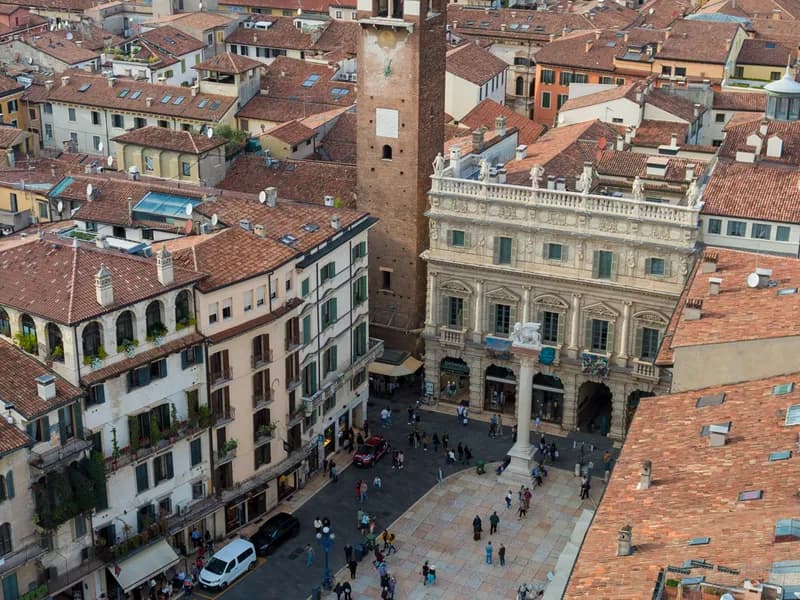
Piazza delle Erbe
The Roman forum, still the market square 2,000 years on, ringed by frescoed facades and the Madonna Verona fountain of 1368 — the fountain's statue is Roman, recycled. Free. Allow 45 min. The whale rib hanging under the Arco della Costa is the local mystery nobody has settled.
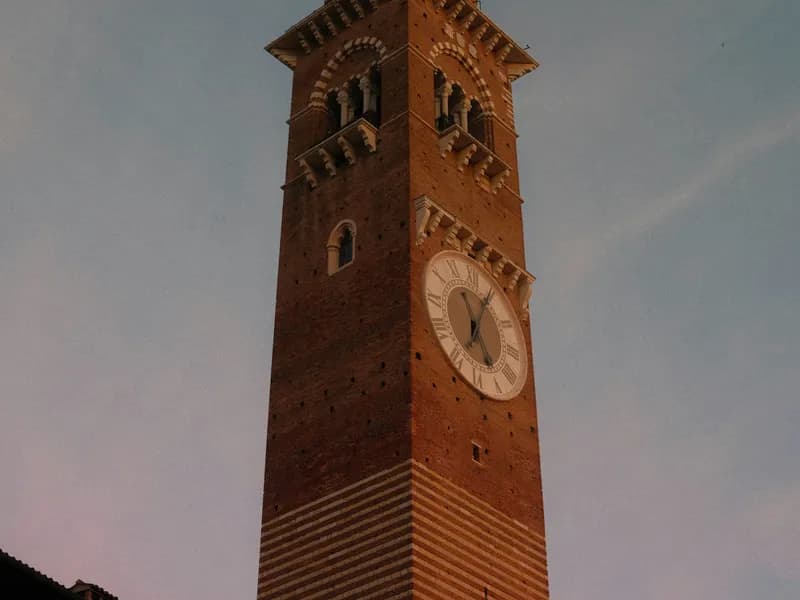
Torre dei Lamberti
84m over Piazza delle Erbe, entry ~€6 with the lift (or 368 steps if you insist). Allow 45 min. The best panorama of Verona's terracotta roofs, the Adige loop and the Arena from directly above. The bells still ring on the hour and they are extremely loud at close range.
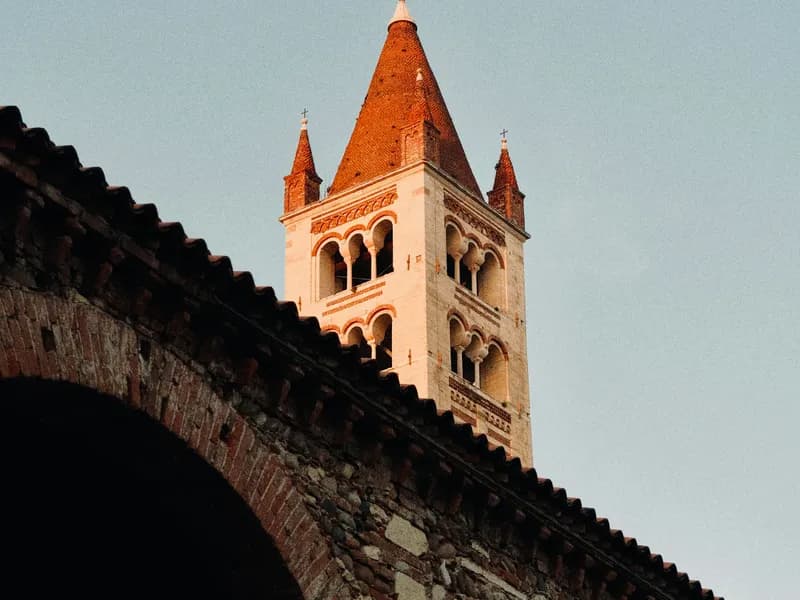
Basilica di San Zeno Maggiore
Italy's finest Romanesque church and the one locals send you to. Entry ~€4, a 20-min walk west of the centre. Allow 1h. The 48 bronze door panels (11th-12th c.) are a comic strip in metal, and Mantegna's altarpiece is inside. Shakespeare married Romeo and Juliet here — the crypt is the reason.
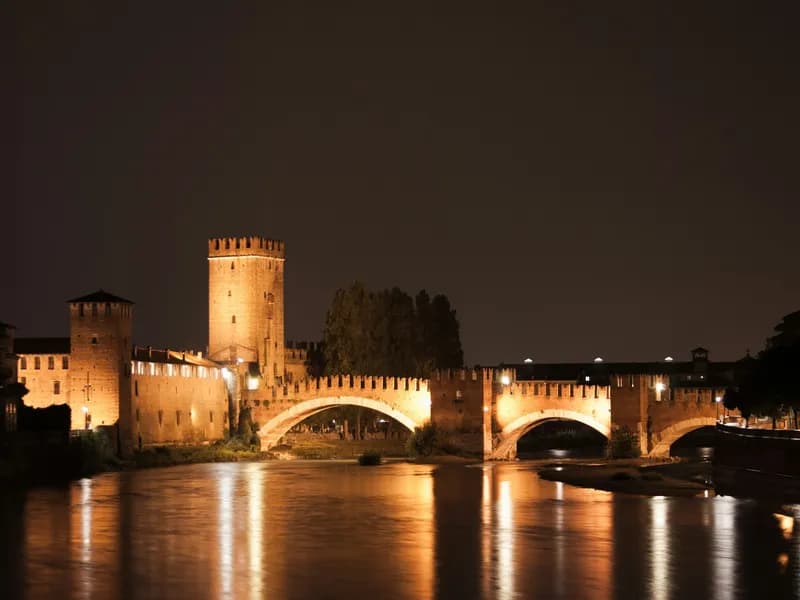
Castelvecchio & Ponte Scaligero
A 14th-century brick castle and its fortified bridge, both blown up in 1945 and rebuilt from the riverbed stones. Museum ~€6; crossing the bridge is free. Allow 1.5h. Carlo Scarpa's 1960s restoration is a pilgrimage site for architects — the building is the exhibit.
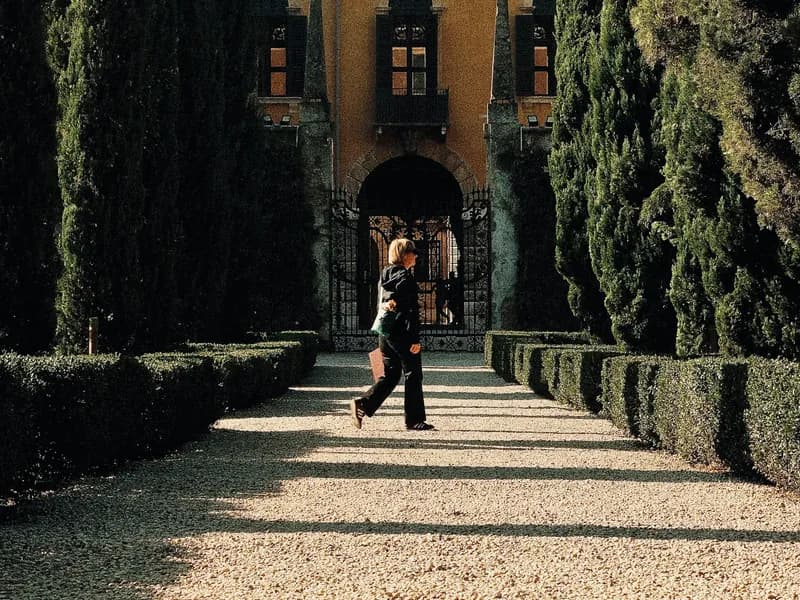
Giardino Giusti
A 1580 Renaissance garden of cypress avenues, box parterres and a belvedere over the city. Entry ~€10, open daily, 15-min walk across the river. Allow 1h. Goethe and Mozart both came; almost no modern visitor does, which is the point — it is the quietest beautiful place in Verona.
Planned Itinerary
7-Day Verona Itinerary
Arrival at VRN & First Evening on Piazza Brà
Land at Verona Villafranca (VRN), 10 km southwest, and take the Aerobus straight into town. Base yourself in the centro storico between Piazza Brà and Piazza delle Erbe — the whole historic centre is barely 1.5 km across, so you will walk everywhere for the next week. If you have hired a car, do not drive it into the centre: the ZTL cameras issue €80-100+ fines per pass and your rental company forwards them months later. Tonight is orientation only: the Arena from the outside, a Valpolicella, and an early dinner.
Aerobus (line 199) from VRN to Porta Nuova station(15 minutes)
Departs from directly outside arrivals every 20 minutes, ~€8, buy from the machine or onboard. A taxi is ~€25-30 and no faster. From Porta Nuova it is a flat 20-minute walk up Corso Porta Nuova to Piazza Brà, or bus 11/12/13 for ~€1.50 from a tabaccheria.
Hotel check-in in the centro storico(45 minutes)
Anywhere inside the Adige bend works. Hotel Milano & Spa has a rooftop terrace looking straight into the Arena's upper arches; Hotel Accademia and Palazzo Victoria sit on Via Mazzini. If you drove, give reception your plate number now so they can register it against the ZTL — this only works before you enter, not after.
The Liston walk around Piazza Brà(45 minutes)
The wide pink limestone pavement on the west side of the square is the Liston, laid in the 1770s, and the evening passeggiata still runs along it. The stone is Rosso Ammonitico from the Lessinia hills above town — look down and you will find ammonite fossils underfoot. Circle the Arena's exterior; the surviving four-arch fragment on the north side, the 'Ala', is all that is left of the original outer ring.
Aperitivo at Osteria del Bugiardo(1 hour)
Corso Porta Borsari 17a, the Buglioni estate's own bar. A glass of Valpolicella Ripasso is ~€5 and comes with a bowl of something salty. Standing at the bar costs less than sitting, which is true almost everywhere in Italy.
Dinner at Osteria Sottoriva(1.5 hours)
Via Sottoriva 9a, under the last surviving medieval porticoes in Verona. Order the bigoli con l'anatra — thick bronze-drawn wheat pasta in duck ragù, ~€12 — and a half-litre of house Valpolicella. No reservation needed if you arrive by 7:30PM; after 8PM you will queue.
Gelato at Gelateria Savoia(20 minutes)
Via Roma 1b, right off Piazza Brà, going since 1939. Two scoops ~€3.50. The pistachio is the benchmark; skip anything coloured brighter than food should be.
The Arena, Piazza delle Erbe & the Scaligeri Centre
The single densest day of the trip, but everything sits inside a 600-metre radius so there is no zigzagging. Start at the Arena the moment it opens to have the arcades to yourself, then work north through Verona's two great squares. If you plan to hit four or more sites today, buy the VeronaCard (~€27/24h) at the first entrance — it covers the Arena, Juliet's House, Torre dei Lamberti, Castelvecchio, San Zeno and Giardino Giusti and pays for itself before lunch.
Verona Arena at opening(1.5 hours)
Piazza Brà, entry ~€12, doors at 9AM (Mondays it opens at 1:30PM). Built in the 1st century AD and the third largest amphitheatre in Italy. Climb to the top row of the cavea for the view down into the bowl, then walk the outer ambulatory where the stone is grooved by two millennia of feet. Critical timing note: during the opera festival (mid-June to early September) the Arena shuts to sightseers around 3:30PM on performance days for the stage set, so morning is not optional.
Coffee at Caffè Borsari(20 minutes)
Corso Porta Borsari 15d — a bar roughly the size of a wardrobe, every surface buried in ceramics and hanging cups. Espresso €1.20 standing. Two doors up is Porta Borsari itself, a 1st-century AD Roman city gate still standing at full height in the middle of a shopping street, free and permanently ignored by everyone walking past it.
Piazza delle Erbe(45 minutes)
The Roman forum, still the market square 2,000 years later. The stalls sell souvenirs now — the frescoed facades are the reason to be here. The Madonna Verona fountain dates from 1368 but the statue in it is Roman, recycled by the Scaligeri. Under the Arco della Costa hangs a whale rib; nobody has settled why. Look up at Casa Mazzanti's 16th-century frescoes — Verona was once entirely painted like this, hence 'urbs picta'.
Torre dei Lamberti(45 minutes)
Entrance through the Cortile Mercato Vecchio, ~€6 with the lift or 368 steps if you insist. 84 metres up and the best panorama in the city: terracotta roofs, the Adige loop, and the Arena seen from directly above with its open oval floor. The bells still ring on the hour and at close range they are genuinely painful — check your watch before you step onto the top platform.
Lunch at Caffè Filippini(1 hour)
Piazza delle Erbe 26, trading since 1901. Sit outside, order a plate of sopressa and a Filippini — the house cocktail of vermouth, gin and a whole slice of lemon, ~€8. Food is simple and the point is the square.
Piazza dei Signori & the Arche Scaligere(1 hour)
Through the Arco della Costa into Verona's quiet, formal second square, with Dante glowering in the middle (he took refuge here in 1303 and dedicated the Paradiso to Cangrande della Scala). Two minutes on, the Arche Scaligere are the Gothic tombs of the Scaligeri lords stacked in wedding-cake tiers behind a wrought-iron fence of ladder motifs — 'scala' means ladder. Free to view from the street, which is all you need.
Basilica di Sant'Anastasia(45 minutes)
~€4, or ~€8 for the Chiese Vive combined ticket that also gets you into the Duomo, San Zeno and San Fermo — buy it here and use it over the next three days. Verona's biggest church. The two crouching 'gobbi' (hunchbacks) holding the holy water stoups by the door are the local mascots. Pisanello's fresco of St George and the Princess is high up in the Pellegrini Chapel; there is a coin-operated light, and it is worth every cent.
Dinner at Trattoria al Pompiere(2 hours)
Vicolo Regina d'Ungheria 5 — book a few days ahead. Walls covered in signed photographs, a serious salumi counter and a cheese trolley that arrives whether or not you asked. Order pastissada de caval (horse stew with polenta) if you are willing; Verona has eaten it since the Ostrogoths and pretending otherwise is tourism. ~€45-55 a head with wine.
Juliet's Verona, Castelvecchio & San Zeno
Do the Juliet business early and cynically, then spend the rest of the day heading west along the river to the two buildings that actually justify Verona: Castelvecchio, rebuilt by Carlo Scarpa into a museum that architects fly here to study, and San Zeno, the finest Romanesque church in Italy. It is a 20-minute walk from Castelvecchio to San Zeno along Via Barbarani — flat, shaded, no bus needed.
Casa di Giulietta at 8:30AM(45 minutes)
Via Cappello 23. The courtyard is free; the house and balcony ~€6. Go at opening or you are queueing to photograph the back of someone's head. Be clear-eyed about it: the balcony was bolted on in 1936 from an old sarcophagus specifically to give visitors something to shoot, the Capello family who owned the house have nothing to do with Shakespeare's fictional Capulets, and rubbing the bronze statue's right breast is a 20th-century invention. Treat it as civic theatre and it is delightful. The Juliet Club genuinely does answer the thousands of letters left on the wall.
Porta Borsari to Arco dei Gavi via Corso Cavour(45 minutes)
A straight 700m Roman decumanus. The Arco dei Gavi at the far end is a 1st-century AD triumphal arch built by a family rich enough to sign their own monument — the architect Vitruvius Cerdo carved his name on it, which almost never happens. Napoleon's troops dismantled it in 1805; it was rebuilt from the stored blocks in 1932, 20 metres from where it stood.
Museo di Castelvecchio(2 hours)
Corso Castelvecchio 2, ~€6. Cangrande II built the castle in 1354 to defend himself from his own citizens, not from foreigners. What you are here for is Carlo Scarpa's 1958-64 restoration: he stripped out the fascist-era fakery, cut the building open and hung Cangrande I's equestrian statue on a raw concrete beam in mid-air, grinning like a man who has heard a joke. The building is the exhibit. Pisanello, Bellini and Mantegna are the supporting cast. Verona's civic museums are usually free on the first Sunday of the month.
Ponte Scaligero(20 minutes)
Free, walk it out and back. The fortified castle bridge with Ghibelline swallowtail merlons; its 48.7m central arch was the longest span in the world when it was built. German troops blew it up in 1945 and it was rebuilt in 1949-51 from its own bricks dredged out of the Adige — you can see where the salvaged stone stops and the new begins.
Lunch at Trattoria I Masenini(1 hour)
Via Roma 34, a two-minute walk back toward Piazza Brà. Risotto all'Amarone here is done properly — the rice is Vialone Nano from Isola della Scala, 25 km south, which is the whole reason Veneto risotto works. ~€35 a head.
Basilica di San Zeno Maggiore(1.5 hours)
Piazza San Zeno, ~€4 or on your Chiese Vive ticket, generally 8:30AM-6PM (Sundays from 12:30PM). Give the 48 bronze door panels (11th-12th century) twenty minutes before you go in — they are a comic strip in metal, and the older left-hand panels are visibly cruder and better than the polished later ones. Inside: Mantegna's altarpiece of 1457-59 (the predella panels are copies; Napoleon took the originals and they are still in the Louvre and Tours), a statue of San Zeno smiling like he knows something, and the crypt where Shakespeare married Romeo and Juliet. The rose window is a Wheel of Fortune with figures riding it up and falling off.
Dinner in the San Zeno quarter(2 hours)
Stay out here — the square empties of visitors by 7PM and fills with locals. For a splurge, Casa Perbellini 12 Apostoli (Corticella San Marco 3, back toward the centre) holds two Michelin stars with the kitchen as the dining room; book weeks ahead, tasting menus from ~€150. Cheaper and excellent: any of the osterie ringing Piazza San Zeno for polenta e sopressa and a jug of Bardolino.
Ponte Pietra, the Teatro Romano & Sunset from Castel San Pietro
Today is the east bank — the Roman city's other half, plus the quietest beautiful place in Verona. Everything is a short walk apart and you finish the day 150 metres above the river with the whole city laid out below. Wear shoes you can climb in.
Duomo di Verona(45 minutes)
Piazza Duomo, ~€4 or on the Chiese Vive ticket. Titian's Assumption hangs in the first chapel on the left — his only work in the city. The ticket also opens San Giovanni in Fonte next door, where the 12th-century baptismal font is carved from a single block of marble, and the excavations of the earlier basilicas underneath.
Biblioteca Capitolare(45 minutes)
Piazza Duomo 13, ~€4-6. It claims to be the oldest continuously working library in the world — codices copied here in the early 500s are still in the building. Its treasure is a 5th-century palimpsest of Gaius' Institutes, scraped and overwritten in the 8th century and recovered in 1816; effectively the only surviving Roman law textbook. Opening hours are erratic and mostly mornings — check the day before or you will find a locked door.
Ponte Pietra(20 minutes)
Free. Verona's Roman bridge, 1st century BC, and the oldest structure in town. Retreating German troops blew it up in April 1945; between 1957 and 1959 it was rebuilt using stones fished out of the Adige riverbed. Stand at the north end and look back: the two white arches on the left are original Roman, the red brick ones on the right are 16th-century, and you can read the whole demolition and salvage in the colour change.
Teatro Romano & Museo Archeologico(1.5 hours)
Rigaste Redentore 2, ~€4.50 or on the VeronaCard. A 1st-century BC theatre cut into the hillside, buried under houses for centuries until a wealthy local bought the whole block in the 1830s and demolished it to dig them out. A lift takes you up through the rock into the former convent of San Girolamo, now the archaeological museum — small, empty, and with a terrace looking straight across at Ponte Pietra. It still hosts Shakespeare and jazz in the Estate Teatrale Veronese every June to September.
Lunch at Osteria Ponte Pietra(1 hour)
Via Ponte Pietra 34, at the bridge's south foot. Small, seasonal, ~€40 a head. If you want cheaper, cross into Veronetta and eat at Trattoria dal Ropeton (Via San Giovanni in Valle 46) with the university crowd for half that.
Giardino Giusti(1 hour)
Via Giardino Giusti 2, ~€10, 15-minute walk east. Laid out in 1580 and almost untouched since: a cypress avenue driven dead straight at the cliff, box parterres, a small hedge maze, and a grotesque stone Mascherone at the top with the belvedere behind it. Goethe wrote about it in 1786 and Mozart played here. Almost nobody comes, which is the point — it is the quietest beautiful place in Verona and you will likely have the upper terrace to yourself.
Funicular to Castel San Pietro for sunset(1.5 hours)
Base station on Via Fontanelle Santo Stefano, ~€2 return, one minute up. The castle itself is a Habsburg barracks and is not open — the terrace in front of it is the entire point, and it is free. Arrive 40 minutes before sunset: the Adige goes copper, the Arena reads as a grey oval in the roofscape, and the bells across the river all go off at slightly different times. Walk down afterwards via the stairs behind the Teatro Romano, ten minutes.
Dinner in Veronetta(1.5 hours)
Antica Trattoria da l'Amelia on Lungadige Rubele 32, or Osteria La Fontanina by the funicular base for something more polished. Veronetta is the student quarter — cheaper, louder, and the only part of the centre where you will hear more Italian than English at the next table.
Free Morning, then Amarone in the Valpolicella
Sleep in. Tastings do not start before 11AM and you should not arrive at the first one hungry or tired. In the afternoon head 20 km north into the Valpolicella, the amphitheatre of hills where Amarone is made by drying the grapes on racks for three to four months before they are ever pressed. Do not drive yourself — Italy's limit is 0.5 g/l, the valley roads are patrolled, and you are going to be tasting wines that run to 16% alcohol. Hire a driver (~€150-200 for the afternoon) or book a small-group tour from Verona.
Slow morning at Piazza Brà(2 hours)
Coffee and a slice of pandoro at a Liston café. Pandoro was invented here in 1894 by Domenico Melegatti, who patented the eight-pointed star mould; the version sold everywhere in Italy at Christmas is a Verona export. Then wander Via Mazzini's shops or just sit. You have earned it and today ends late.
Villa della Torre, Fumane(1.5 hours)
Allegrini's 16th-century Mannerist villa in Fumane, ~30 min from Verona, tours and tastings from ~€40, book ahead. The fireplaces are carved as the open mouths of monsters — you literally light a fire inside a demon's face. The tasting runs Valpolicella Classico up to Amarone and La Poja. Attributed variously to Giulio Romano and Michele Sanmicheli; nobody is certain, which is very Valpolicella.
Lunch at an estate agriturismo(1.5 hours)
Most producers will do a plate of Monte Veronese DOP cheese, sopressa and bread with the tasting for another ~€15-20 — take it. Drinking Amarone on an empty stomach at 2PM in a Veneto summer is a decision you will regret by four.
Zýmē, San Pietro in Cariano(1.5 hours)
Celestino Gaspari's winery is built into a disused 15th-century limestone quarry, so the cellar is the rock itself. Tastings ~€35, book. Gaspari trained under Giuseppe Quintarelli — the cult producer up the road in Negrar whose wines you will see on lists at €300 and whose cellar is effectively impossible to visit. This is the closest you will get to that lineage with a booking.
Pieve di San Giorgio di Valpolicella(45 minutes)
Free, and ask your driver for it — most tours skip it. A Romanesque church on a rock spur with a Lombard stone ciborium dated 712 AD, a small cloister, and a terrace looking down the whole valley toward the Adige. Ten minutes, no ticket, no crowd, and the best view in the Valpolicella.
Dinner at Antica Bottega del Vino(2 hours)
Vicolo Scudo di Francia 3, back in Verona. Trading since 1890 with a cellar of roughly 4,000 labels — this is where you order the vertical of Amarone you just learned to taste. Ask for a glass of Recioto with dessert: same dried grapes, fermentation stopped early, sweet, and the wine Amarone was accidentally invented from when a barrel was forgotten.
Lake Garda — Sirmione and the Grotte di Catullo
A deliberately slow day out. Sirmione sits at the tip of a 4 km limestone spit poking into the south end of Lake Garda, with a moated castle guarding the only way in and a Roman villa ruin in an olive grove at the far end. The trick is timing: coaches disgorge between 10AM and 5PM, so go early, take the long midday break the locals take, and stay for the late-afternoon emptying-out.
Bus or train to Sirmione(1 hour)
Direct ATV/Arriva bus 164 from Verona Porta Nuova, ~1h, ~€5, and it drops you at the castle bridge. Faster if you prefer: regional train to Desenzano del Garda-Sirmione (~20 min, ~€5) then bus 26 for another 20 min. Cars cannot pass the castle without a hotel permit, which is the best thing about the place.
Rocca Scaligera(45 minutes)
~€6, at the neck of the peninsula. A moated Scaligeri castle from the 13th century, water on all four sides, with a walkable curtain wall and a keep you can climb for the view down the spit. Same family whose tombs you saw in Verona — Garda was their western frontier.
Grotte di Catullo(1.5 hours)
~€8, closed Mondays, opens 8:30AM, at the far tip — a 20-minute walk up through the town. Not grottoes and probably not Catullus's: a vast 1st-century BC-1st century AD Roman villa collapsed into terraces above the water, set in an olive grove of some 1,500 trees. The largest Roman domestic ruin in northern Italy and half of it is roofless rooms opening straight onto blue. Go before 10AM and it is nearly silent.
Swim at Jamaica Beach(1 hour)
Right below the Grotte at the tip — a flat shelf of white limestone that runs out under 30cm of clear water before it drops off. No sand, no loungers, bring water shoes. In July the lake sits around 24-25°C. This is the one genuinely good swim on the south lake.
Lunch and a long sit in the old town(2 hours)
Eat lake fish — lavarello (whitefish) or a plate of fried alborelle. Avoid the front row of restaurants on the main drag facing the castle and walk two streets in; prices drop by a third and the fish stops being frozen. Then do nothing for an hour, which is what the day is for.
Aperitivo at Bardolino on the way back(1.5 hours)
If you have the energy, hop the lakeside bus up the eastern shore to Bardolino (~40 min) for a glass of Chiaretto — the pale rosé version of Bardolino — on the promenade as the light goes off the water, then bus 163/164 back to Verona, ~1h. If you do not, go straight home and eat pizza at du de Cope (Galleria Pellicciai 10) instead. Both are correct answers.
Last Morning, Market Shopping & Departure
A slow final morning inside the Adige bend, a last round of shopping for things that will survive the flight, then the Aerobus back to VRN. Build in a buffer — the airport is small and check-in desks for the first wave of morning departures get congested, but you only need 90 minutes for a Schengen flight and 2 hours for anything else.
Last espresso on Piazza delle Erbe(45 minutes)
Go back one more time before the stalls open properly. Between 7:30 and 8:30AM the square belongs to delivery vans and the people who actually live above it, and the frescoes get the low light. This is the version of Piazza delle Erbe you came for.
Shopping at Salumeria G. Albertini(45 minutes)
Corso Sant'Anastasia 41 — a proper deli, not a gift shop. Vacuum-packed sopressa vicentina and Monte Veronese DOP will fly fine in checked baggage (EU to EU is unrestricted; note that meat and dairy cannot legally enter the US or UK). Add a bottle of Amarone from the Valpolicella producer you liked and a boxed Melegatti pandoro.
Left luggage and a final walk(1 hour)
If your flight is late, drop bags at Porta Nuova's left-luggage office (~€6 for a few hours) and walk the Adige embankment from Ponte Nuovo to Ponte Scaligero — 25 minutes, no ticket, and the last good look at the city from water level.
Aerobus back to VRN(15 minutes)
From Porta Nuova, every 20 minutes, ~€8. Allow for the 20-minute walk down from Piazza Brà on top of that. Verona is a small airport — landside food is poor, so eat before you go.
14-Day Verona Itinerary
Arrival at VRN & First Evening on Piazza Brà
Land at Verona Villafranca (VRN), 10 km southwest, and ride the Aerobus into town. Base yourself in the centro storico inside the Adige bend — over two weeks you will use Verona as a hub and radiate out by train, so being a 20-minute walk from Porta Nuova matters more than anything else. If you have a hire car, do not bring it into the centre: the ZTL cameras issue €80-100+ fines per pass, forwarded by your rental company months later. Tonight is orientation only.
Aerobus (line 199) from VRN to Porta Nuova station(15 minutes)
Directly outside arrivals, every 20 minutes, ~€8. A taxi is ~€25-30 and no faster. From Porta Nuova, walk 20 minutes up Corso Porta Nuova to Piazza Brà or take bus 11/12/13 for ~€1.50 bought at a tabaccheria (~€2 from the driver).
Hotel check-in in the centro storico(45 minutes)
Anywhere between Piazza Brà and Piazza delle Erbe. Hotel Milano & Spa's roof terrace looks straight into the Arena's arches; Due Torri sits on Piazza Sant'Anastasia. Booking note: during the Arena opera festival (mid-June to early September) and Vinitaly (April) the entire city sells out and rates roughly triple — book those dates months ahead or stay in Peschiera and commute 15 minutes by train.
The Liston walk around Piazza Brà(45 minutes)
The broad pink pavement on the square's west side is the Liston, laid in the 1770s, and the evening passeggiata still runs it end to end. The stone is Rosso Ammonitico quarried in the Lessinia hills above town — look down and you will find ammonite fossils in the paving. Circle the Arena; the four-arch 'Ala' fragment on the north side is all that survives of the original outer ring.
Aperitivo at Osteria del Bugiardo(1 hour)
Corso Porta Borsari 17a, the Buglioni estate's own bar. Valpolicella Ripasso ~€5 with a bowl of something salty. Standing at the bar costs less than sitting, here and everywhere in Italy.
Dinner at Osteria Sottoriva(1.5 hours)
Via Sottoriva 9a, under the last medieval porticoes left in Verona. Bigoli con l'anatra — thick bronze-drawn wheat pasta in duck ragù, ~€12 — plus a half-litre of house Valpolicella. Arrive by 7:30PM or queue.
Gelato at Gelateria Savoia(20 minutes)
Via Roma 1b off Piazza Brà, open since 1939. Two scoops ~€3.50. Judge any Italian gelateria by whether the pistachio is grey-green (real) or bright green (not).
Roman Verona — The Arena, the Gates & the Oldest Museum in Europe
One theme, one era, one small area. The Arena at opening, then a loop of the Roman gates and the extraordinary, entirely empty stone museum on Piazza Brà. Buy the VeronaCard (~€32/48h) this morning at the Arena entrance — it will cover today and tomorrow's sites and pay for itself by lunchtime.
Verona Arena at opening(1.5 hours)
Piazza Brà, ~€12, doors 9AM (Mondays 1:30PM). 1st century AD, the third largest amphitheatre in Italy and still doing its original job. Climb to the top row of the cavea, then walk the outer ambulatory where the stone is worn into channels. During the opera festival it closes to sightseers around 3:30PM on performance days for the stage build — morning is not optional.
Museo Lapidario Maffeiano(1 hour)
Piazza Brà 28, ~€4.50 or on the VeronaCard. Founded in 1745 by Scipione Maffei and one of the oldest public museums in Europe — arguably the first anywhere devoted to inscriptions. Greek, Etruscan and Roman stones racked in a colonnaded courtyard. You will very likely be the only person in it, which after the Arena is a relief.
Lunch at Locanda 4 Cuochi(1 hour)
Via Alberto Mario 12, two minutes off Piazza Brà. Modern Veronese, open kitchen, the best value serious cooking in the centre — a two-course lunch runs ~€25-30. Book, or turn up at noon.
Porta Borsari and Corso Porta Borsari(45 minutes)
Free. A 1st-century AD city gate standing at full height in the middle of a shopping street, its inscription still legible, and thousands of people walk past it daily without looking up. This was the decumanus maximus — the street you are on is the Roman street, one storey down.
Porta Leoni(30 minutes)
Via Leoni, free. Odder and better than Borsari: half the gate is embedded in a house facade like a fossil in rock, and beside it a sunken excavation shows you the Roman street level, three metres below where you are standing. That gap is 2,000 years of Verona piling up on itself.
Aperitivo at Osteria Monte Baldo(1 hour)
Via Rosa 12. Order a glass and the counter of cicchetti in front of you starts arriving — this is the closest thing Verona has to a Venetian bacaro, and it fills with locals at 6:30PM sharp. A glass of Soave ~€3.50.
Dinner at La Taverna di Via Stella(1.5 hours)
Via Stella 5c, frescoed floor to ceiling with mock-medieval murals. Hearty and unrepentant Veronese: lesso con la pearà — boiled meats with pearà, a sauce of bone marrow, breadcrumbs and an aggressive quantity of black pepper. It is Verona's genuine local dish and almost nobody orders it. ~€35 a head.
Piazza delle Erbe, Torre dei Lamberti & the Scaligeri
The medieval city, all inside 400 metres. Two great squares, the best view in Verona, a house museum almost nobody finds, and the Gothic tombs of the family that built all of it. Nothing today needs a taxi.
Piazza delle Erbe(45 minutes)
The Roman forum, still the market square 2,000 years on. Be honest about it: the stalls sell souvenirs now, and the frescoed facades are the reason to stand here. The Madonna Verona fountain is from 1368 but the statue in it is Roman, recycled. The whale rib hanging under the Arco della Costa is the local mystery nobody has settled. Casa Mazzanti's 16th-century frescoes are the surviving hint that the whole city was once painted — 'urbs picta'.
Torre dei Lamberti(45 minutes)
Entrance via the Cortile Mercato Vecchio, ~€6 with the lift (368 steps otherwise). 84 metres up: terracotta roofs, the Adige loop, and the Arena seen straight down into its open oval. The bells ring on the hour and at that range they hurt — check the time before you step out.
Palazzo Maffei Casa Museo(1.5 hours)
Piazza delle Erbe 38, ~€15. Opened in 2020 in the baroque palace at the head of the square and still oddly under-visited. Luigi Carlon's private collection hangs Morandi, Balla, De Chirico and a Magritte alongside 17th-century furniture, and the spiral staircase inside is worth the ticket alone. Go up to the top floor for the window looking straight down the length of Piazza delle Erbe.
Lunch at Ristorante Maffei(1 hour)
Piazza delle Erbe 38, in the courtyard of the same palace. Ask to see the cellar — they will show you the Roman remains under the floor, including a well and part of the forum's paving. ~€45 a head; the courtyard tables are the ones to want.
Piazza dei Signori & the Arche Scaligere(1 hour)
Through the Arco della Costa into Verona's formal square, Dante glowering in the centre — he sheltered here in 1303 under Cangrande della Scala and dedicated the Paradiso to him. Two minutes further, the Arche Scaligere stack the Scaligeri lords' Gothic tombs in wedding-cake tiers behind an iron fence of ladder motifs; 'scala' means ladder, and the family signed their monuments the way a brand signs a logo. Free from the street.
Basilica di Sant'Anastasia(45 minutes)
~€4, or buy the Chiese Vive combined ticket (~€8) here and use it for the Duomo, San Zeno and San Fermo later this week. Verona's largest church. The two crouching 'gobbi' holding the holy water stoups at the door are city mascots. Pisanello's St George and the Princess is high in the Pellegrini Chapel; feed the coin-operated light.
Dinner at Trattoria al Pompiere(2 hours)
Vicolo Regina d'Ungheria 5 — book several days ahead. Signed photographs floor to ceiling, a serious salumi counter, a cheese trolley that appears unbidden. Order pastissada de caval, horse stew with polenta, which Verona has eaten since the Ostrogoths. ~€45-55 a head with wine.
Free Morning, then the Juliet Industry Done Properly
A slow start — you have twelve days left and no need to sprint. Then handle the Juliet circuit with your eyes open. It is theatre, not history, and once you accept that it is genuinely enjoyable. Everything is south of Piazza delle Erbe and walkable in a loop.
Free morning: coffee and Via Mazzini(3 hours)
Espresso and a slice of pandoro somewhere on the Liston — pandoro was invented in Verona in 1894 by Domenico Melegatti, who patented the eight-pointed star mould. Then browse Via Mazzini, the marble-paved shopping spine, or sit in Piazza Brà and do nothing at all.
Casa di Giulietta(45 minutes)
Via Cappello 23. Courtyard free, house and balcony ~€6, allow 30 minutes. The balcony was bolted on in 1936 from an old sarcophagus, specifically to give visitors something to photograph. The Capello family who owned the house have no connection to Shakespeare's fictional Capulets, and rubbing the statue's right breast for luck is a 20th-century invention. Expect chewing gum, love letters and elbows. The Juliet Club does genuinely answer the letters left on the wall — thousands a year, in dozens of languages, by volunteers.
Basilica di San Fermo Maggiore(45 minutes)
Stradone San Fermo 3, ~€4 or on Chiese Vive. Two churches stacked vertically: an 11th-century Romanesque lower church that the Benedictines built over a martyr's grave, and a Gothic upper one on top of it. The upper church's ceiling is a wooden ship's keel painted with 416 individual saints' portraits, and you can walk down a stair into the dark Romanesque one underneath. Nobody goes. It is a ten-minute walk from Juliet's house and about 200 times quieter.
Tomba di Giulietta & Museo degli Affreschi(1 hour)
Via del Pontiere 35, ~€4.50 or VeronaCard. An empty red marble sarcophagus in the crypt of a former Capuchin convent, in a room with no lid on the story at all. Dickens came in 1844 and called it a 'dusty hole' — read his account before you go and the visit becomes funny rather than disappointing. The museum upstairs holds the detached frescoes stripped off Verona's building facades to save them, which is where 'urbs picta' actually lives now. People still get married in the crypt.
Aperitivo at Enoteca Segreta(1 hour)
Vicolo Samaritana 10, down an alley you will walk past twice. Small, vaulted, wines by the glass from ~€4 and someone behind the bar who will actually talk you through the difference between Valpolicella Classico, Ripasso and Amarone before you go to the valley itself on day 8.
Dinner at Hostaria La Vecchia Fontanina(1.5 hours)
Piazzetta Chiavica 5. Tables on a tiny hidden square, gnocchi and risotto done straight, ~€30 a head. Verona is genuinely obsessed with gnocchi — on the Friday of Carnival the city elects a 'Papà del Gnoco' who parades through San Zeno with a giant fork, a tradition running since 1531.
Castelvecchio, Scarpa & the Bronze Doors of San Zeno
The two buildings that actually justify Verona, both on the west side and 20 minutes apart on foot along Via Barbarani. Castelvecchio is a pilgrimage for architects; San Zeno is the church Veronese send you to when they are tired of you talking about balconies.
Arco dei Gavi(20 minutes)
Free, at the Castelvecchio end of Corso Cavour. A 1st-century AD arch built by a family rich enough to sign their own monument — the architect, Vitruvius Cerdo, carved his name on it, which almost never happens in Roman architecture. Napoleon's troops took it apart in 1805; it was rebuilt from the stored blocks in 1932, 20 metres from where it originally stood.
Museo di Castelvecchio(2.5 hours)
Corso Castelvecchio 2, ~€6. Cangrande II built it in 1354 to defend himself from his own citizens rather than any foreign army — the bridge behind it was his escape route. What you are here for is Carlo Scarpa's 1958-64 restoration: he tore out the fascist-era fakery, cut the building open along its seams, and hung Cangrande I's equestrian statue on a raw concrete beam in mid-air, grinning like a man who has just heard a joke. The building is the exhibit; Pisanello, Bellini, Mantegna and Veronese are the supporting cast. Verona's civic museums are typically free on the first Sunday of the month.
Ponte Scaligero(20 minutes)
Free. The fortified castle bridge with Ghibelline swallowtail merlons; its 48.7m central arch was the longest span on earth when built. German troops blew it up in 1945 and it was rebuilt in 1949-51 from its own bricks dredged out of the Adige — walk it slowly and you can see exactly where the salvaged stone ends and the new starts.
Lunch at Trattoria I Masenini(1 hour)
Via Roma 34, back toward Piazza Brà. Risotto all'Amarone done properly, with Vialone Nano rice grown at Isola della Scala 25 km south — that specific rice is the reason Veneto risotto works and Lombard risotto is different. ~€35 a head.
Basilica di San Zeno Maggiore(1.5 hours)
Piazza San Zeno, ~€4 or Chiese Vive, roughly 8:30AM-6PM (Sundays from 12:30PM). Spend twenty minutes on the 48 bronze door panels (11th-12th century) before you go in — a comic strip in metal, and the cruder left-hand panels are the older and by some distance the better ones. Inside: Mantegna's altarpiece of 1457-59 (the predella panels are copies — Napoleon took the originals, still in the Louvre and Tours), the statue of San Zeno smiling like he knows something, and the crypt where Shakespeare married Romeo and Juliet. The rose window is a Wheel of Fortune with figures riding it up and tumbling off.
Dinner at Casa Perbellini 12 Apostoli(2.5 hours)
Corticella San Marco 3. Giancarlo Perbellini's two-Michelin-star room, with the kitchen as the dining room so you watch the whole thing being built. Tasting menus from ~€150, book weeks ahead. If that is not the trip you are on, eat instead at one of the osterie ringing Piazza San Zeno — polenta e sopressa and a jug of Bardolino, and the square empties of visitors at 7PM and refills with the neighbourhood.
Ponte Pietra, the Teatro Romano & Sunset from Castel San Pietro
The east bank and the Roman city's other half, finishing 150 metres above the river with all of Verona underneath you. Everything is a short walk apart; wear shoes you can climb stairs in.
Duomo di Verona(45 minutes)
Piazza Duomo, ~€4 or Chiese Vive. Titian's Assumption hangs in the first chapel on the left — his only painting in the city. The ticket also opens San Giovanni in Fonte next door, where the 12th-century font is carved from one block of marble, plus the excavated remains of the earlier basilicas underneath the floor.
Biblioteca Capitolare(45 minutes)
Piazza Duomo 13, ~€4-6, hours erratic and mostly mornings — check the day before or you will find a locked door. It claims to be the oldest continuously working library on earth; codices copied here in the early 500s are still in the building. Its treasure is a 5th-century palimpsest of Gaius' Institutes, scraped and overwritten in the 8th century, recovered in 1816, and effectively the only surviving Roman law textbook.
Ponte Pietra(20 minutes)
Free. Verona's Roman bridge, 1st century BC, and the oldest structure in the city. Blown up by retreating German troops in April 1945 and rebuilt between 1957 and 1959 from stones fished out of the Adige riverbed. Stand at the north end and look back: two white arches on the left are original Roman, the red brick ones on the right 16th-century, and the entire demolition and salvage is legible in the colour change.
Teatro Romano & Museo Archeologico(1.5 hours)
Rigaste Redentore 2, ~€4.50 or VeronaCard. A 1st-century BC theatre cut into the hillside, buried under houses for centuries until a wealthy local, Andrea Monga, bought the entire block in the 1830s and demolished it to dig the theatre out. A lift runs up through the rock into the former convent of San Girolamo, now a small, empty archaeological museum with a terrace looking straight across at Ponte Pietra. It still hosts Shakespeare, dance and jazz in the Estate Teatrale Veronese every June to September — a play in a Roman theatre for ~€25 is the best-value night in the city.
Lunch at Trattoria dal Ropeton(1 hour)
Via San Giovanni in Valle 46, up in Veronetta. Big plates, university prices, ~€25 a head, and the only room in Verona where you will hear no English at all. Their gnocchi are the reference version.
Funicular to Castel San Pietro for sunset(1.5 hours)
Base station on Via Fontanelle Santo Stefano, ~€2 return, one minute up. The castle is a Habsburg barracks and is not open — the free terrace in front of it is the whole point. Arrive 40 minutes before sunset: the Adige turns copper, the Arena reads as a grey oval in the roofscape, and every bell across the river goes off at a slightly different moment. Walk down afterwards via the stairs behind the Teatro Romano, ten minutes.
Dinner in Veronetta(1.5 hours)
Antica Trattoria da l'Amelia on Lungadige Rubele 32, or Osteria La Fontanina near the funicular base for something more polished. Veronetta is the student quarter — cheaper, louder, and where the city actually eats.
Rest Day — Giardino Giusti and Doing Nothing Slowly
The first proper rest day, and deliberately placed before the week of day trips starts. Nothing today is more than 20 minutes' walk from the last thing. The only fixed point is a Renaissance garden where you will probably be alone, and the only rule is that you do not look at your watch.
Late breakfast at Pasticceria Flego(1 hour)
Via Stella 13. A cappuccino and a proper Italian pastry, standing up, at 10AM — which is technically an hour past the cutoff at which Italians stop drinking cappuccino, and nobody will say anything. ~€4.
Giardino Giusti(2 hours)
Via Giardino Giusti 2, ~€10, open daily, 15 minutes' walk across the river. Laid out in 1580 and barely touched since: a cypress avenue driven dead straight at the cliff face, box parterres, a small hedge maze, and a grotesque stone Mascherone at the top with a belvedere behind it. Goethe wrote about it in 1786 and Mozart played here. Take a book. Almost no modern visitor comes, which is exactly the point — this is the quietest beautiful place in Verona and you can have the upper terrace to yourself for an hour.
Long lunch and nothing else(2 hours)
Antica Osteria al Duomo, Via Duomo 7a — wood-panelled, an accordion player who turns up when he feels like it, and horse meat on the menu because this is Verona. ~€30 a head. Order a second half-litre and stay.
Siesta(2 hours)
Genuinely. In July and August the centre hits 32°C and everything worth doing closes between 1PM and 4PM anyway. The Italians are right about this and the day trips start tomorrow.
Aperitivo at Al Carro Armato(1.5 hours)
Vicolo Gatto 2a, tucked behind Sant'Anastasia — long communal tables, no music, chess boards, and an unhurried crowd. Named after a tank. A glass of Soave Classico ~€3.50.
Dinner wherever you are standing(1.5 hours)
No booking today. If the queue at Osteria Sottoriva is short, go back. If not, du de Cope (Galleria Pellicciai 10) does the best pizza in the centre — Renato Bosco's long-fermentation dough, ~€12-16, and they take walk-ins.
Day Trip — Amarone and the Valpolicella Hills
Twenty kilometres north into the amphitheatre of hills where Amarone is made: the grapes are picked in September and then dried on racks in ventilated lofts for three to four months before they are ever pressed, which is why the wine hits 15-16% and costs what it costs. Do not drive yourself — Italy's limit is 0.5 g/l, the valley roads are patrolled, and you will be tasting all afternoon. Hire a driver (~€150-200 for the day) or book a small-group tour from Verona. If you are here between September and January, ask specifically to see a fruttaio, the drying loft. It is the single most interesting room in the valley.
Villa della Torre, Fumane(1.5 hours)
Allegrini's 16th-century Mannerist villa, ~30 minutes from Verona, tours and tastings from ~€40, book ahead. The fireplaces are carved as the open mouths of monsters, so you light a fire inside a demon's face — Mannerism being what happens when the Renaissance gets bored. Attributed variously to Giulio Romano and Michele Sanmicheli and nobody is sure, which is very Valpolicella. The tasting runs Classico up through Amarone and La Poja.
Lunch at the estate(1.5 hours)
Take whatever plate of Monte Veronese DOP, sopressa and bread they offer with the tasting, usually ~€15-20 extra. Drinking Amarone on an empty stomach at 2PM in a Veneto summer is a decision you will be regretting by four o'clock.
Serego Alighieri, Gargagnago(1.5 hours)
Tastings from ~€30, book. The estate has been owned by Dante Alighieri's direct descendants since his son Pietro bought it in 1353, and it is still in the family after 21 generations — now run in partnership with Masi. You are drinking wine from land bought with the proceeds of the Divine Comedy, which is a sentence that should not be true and is.
Zýmē, San Pietro in Cariano(1.5 hours)
Celestino Gaspari built his winery into a disused 15th-century limestone quarry, so the cellar is the rock itself. Tastings ~€35. Gaspari trained under Giuseppe Quintarelli, the cult producer up the road in Negrar whose bottles run to €300 on lists and whose cellar is essentially impossible to book. This is as close to that lineage as a mortal gets.
Pieve di San Giorgio di Valpolicella(45 minutes)
Free, and ask your driver for it by name — tours skip it. A Romanesque church on a rock spur with a Lombard stone ciborium dated 712 AD, a small cloister, and a terrace over the whole valley down to the Adige. No ticket, no crowd, and the best view in the Valpolicella.
Dinner at Antica Bottega del Vino(2 hours)
Vicolo Scudo di Francia 3, back in Verona. Trading since 1890, a cellar of roughly 4,000 labels, and the place to order the vertical of Amarone you have just learned to taste. Finish with a glass of Recioto: same dried grapes, fermentation stopped early, sweet — and the wine Amarone was accidentally invented from when somebody forgot a barrel and let it ferment dry.
Day Trip — Lake Garda, Sirmione & the Grotte di Catullo
Garda is 30 minutes away and Sirmione sits at the tip of a 4 km limestone spit poking into the lake's south end, with a moated castle guarding the only way in and a collapsed Roman villa in an olive grove at the far end. The whole game is timing: the coaches arrive between 10AM and 5PM. Go early, take a long lunch, stay for the emptying-out.
Bus 164 to Sirmione(1 hour)
Direct from Verona Porta Nuova, ~€5, drops you at the castle bridge. Faster alternative: regional train to Desenzano del Garda-Sirmione (~20 min, ~€5) then bus 26. Cars cannot pass the castle without a hotel permit, which is the best thing about the place. Aim to be at the castle by 9AM.
Grotte di Catullo(1.5 hours)
~€8, closed Mondays, opens 8:30AM, a 20-minute walk up through the town to the tip. Not grottoes and probably not Catullus's villa: a colossal Roman house of the 1st century BC-1st century AD collapsed into terraces above the water, sitting in an olive grove of some 1,500 trees. The largest Roman domestic ruin in northern Italy, and half of it is roofless rooms opening straight onto blue. Before 10AM it is nearly silent.
Swim at Jamaica Beach(1 hour)
Directly below the Grotte at the tip. A flat shelf of white limestone running out under 30cm of glass-clear water before it drops away. No sand, no loungers, bring water shoes. The lake sits around 24-25°C in July. This is the one genuinely good swim on the south lake.
Rocca Scaligera(45 minutes)
~€6, at the neck of the peninsula. A 13th-century Scaligeri castle with water on all four sides, a walkable curtain wall and a keep to climb. Same family whose tombs you saw on Piazza dei Signori — Garda was their western frontier and this is what that meant on the ground.
Lunch two streets back from the front(1.5 hours)
Eat lake fish — lavarello (whitefish) grilled, or a plate of fried alborelle eaten whole. Walk two streets in from the restaurants facing the castle: prices drop by a third and the fish stops being frozen. Then sit for an hour doing nothing, which is what this day is for.
Aperitivo at Bardolino(1.5 hours)
Take the lakeside bus up the eastern shore to Bardolino (~40 min) for a glass of Chiaretto — the pale rosé cousin of Bardolino — on the promenade as the light comes off the water. The free Museo dell'Olio d'Oliva at Cisano just south is genuinely worth 30 minutes if you time it. Bus 163/164 back to Verona takes about an hour.
Day Trip — Vicenza, the City Palladio Built
Thirty to fifty minutes east by train and a completely different proposition: a small city that one architect essentially redesigned, and that every neoclassical building from Washington to St Petersburg is descended from. Buy the Card Musei Vicenza (~€15) at the Teatro Olimpico — it covers the theatre, Palazzo Chiericati and the rest.
Train Verona Porta Nuova to Vicenza(40 minutes)
Regional trains roughly every 30 minutes, ~€6-9; the Frecciarossa does it in 25 for triple that and is not worth it. Validate a regional ticket in the green machine on the platform or risk a €50 fine — this does not apply to e-tickets bought in the Trenitalia app. Corso Palladio starts a 10-minute walk from the station.
Teatro Olimpico(1.5 hours)
Piazza Matteotti, on the Card Musei. Palladio's last work, begun in 1580, finished by Scamozzi after his death and opened in 1585 — the oldest surviving indoor theatre in the world. The trick is Scamozzi's stage set: seven streets of Thebes built in forced perspective, receding so steeply that they are only a few metres deep and look like a city. It was built for one performance and has never been taken down. Sit in the middle of the cavea and let your eye be fooled.
Basilica Palladiana & Corso Palladio(1 hour)
Piazza dei Signori. Palladio's first major commission, and it is not a church — it is a medieval town hall that was falling over, which he saved by wrapping it in a white marble loggia of arches within arches. The rooftop terrace bar is open in season: a spritz up there at 6PM with the whole square underneath is the best €10 in Vicenza.
Lunch at Righetti(1 hour)
Piazza Duomo 3 — a self-service trattoria where you take your food, eat, and then tell the cashier what you had and pay on trust. Nobody checks. Baccalà alla vicentina (stockfish stewed slowly in milk and onion, served with white polenta, and it is far better than that sounds) for about €10. It has run on the honour system for decades.
Villa Valmarana ai Nani(1 hour)
Via dei Nani 8, ~€12, a 25-minute uphill walk or a short taxi. Giambattista Tiepolo frescoed the main villa and his son Giandomenico did the guest wing, and the contrast is the whole point: the father paints gods and heroes, the son paints people in a room being bored. The stone dwarfs on the garden wall give the villa its name and have a suitably grim local legend attached.
Villa La Rotonda(1 hour)
Via della Rotonda 45, a 10-minute walk on from Valmarana down the Valletta del Silenzio path. Palladio's perfectly symmetrical domed villa, four identical porticoed facades, built for a retired priest who wanted somewhere to look at his own view. Grounds and interior have different, limited opening days — check the villa's site the week before or you will get the garden only, which is still worth it. This is the building Jefferson copied at Monticello.
Train back and dinner in Verona(2 hours)
Last useful regional back to Verona runs late evening; check the board. Eat back in Verona at Osteria Giulietta e Romeo (Corso Sant'Anastasia 27) — better than a name like that has any right to be, ~€35.
Slow Day — Gnocchi Class and a Free Afternoon
The second rest day, with one thing in it that you will use for the rest of your life. Verona is unreasonably serious about gnocchi — it elects a Papà del Gnoco during Carnival and has done since 1531 — and learning to make them properly here means learning that the potato variety and the restraint with flour are the entire recipe. Afternoon is deliberately empty.
Half-day cooking class(4 hours)
Book a small-group class through Cook in Verona or ask your hotel to arrange one — expect ~€100-120 for a morning that starts at the market stalls and ends at a table with what you made. Ask specifically for gnocchi and bigoli: bigoli are extruded through a bigolaro, a brass press that looks like a medieval torture device, and watching the dough come out of it explains why the pasta holds duck ragù the way it does. Most classes include the wine, which is how you end up napping at 3PM.
Market and deli walk(1 hour)
If your class does not include it, do it yourself: Salumeria G. Albertini at Corso Sant'Anastasia 41 for sopressa and Monte Veronese DOP, then the produce stalls that survive at the edges of Piazza delle Erbe. Ask for Vialone Nano rice by name — it is grown at Isola della Scala, 25 km south, holds its shape through 18 minutes of stirring, and is the reason Veneto risotto is Veneto risotto.
Free afternoon(4 hours)
Nothing scheduled. If it is hot, sleep. If it is not, the Adige embankment from Ponte Nuovo round to Ponte Scaligero is a 25-minute flat walk with the whole city on one side and the river on the other, and costs nothing. If it rains, the Museo di Storia Naturale on Lungadige Porta Vittoria 9 has the Bolca fossil fish — Eocene, 50 million years old, preserved down to the fins, and world-class.
Aperitivo on Piazza dei Signori(1 hour)
Gelateria Impero has a terrace on the square; so does everyone else. Order a spritz — Select or Aperol, not Campari, if you want the local version — and watch the light come off the Loggia del Consiglio's frescoed facade around 7PM.
Dinner at Il Desco(2.5 hours)
Via Dietro San Sebastiano 5-7, one Michelin star and a much older, quieter room than Perbellini's. Tasting menus from ~€120, book. Alternatively eat what you cooked this morning and skip dinner entirely — a legitimate outcome of a good class.
Day Trip — Venice, Done Like Someone Who Lives Nearby
Seventy minutes on a fast train, and Verona's biggest advantage over staying in Venice is precisely this: you get the city and then you leave before the evening rate applies. Do not attempt St Mark's, the Doge's Palace, Murano and Burano in one day — you will see queues and nothing else. Do one museum, one neighbourhood and eat standing up.
Frecciarossa or Italo to Venezia Santa Lucia(1 hour 15 minutes)
From Verona Porta Nuova, ~€15-40 depending how far ahead you book; regionale takes 2h15 for ~€11 and is only worth it if you booked nothing. Take the 7-something and be walking out of Santa Lucia before 9AM. Check whether your date falls on a Venice access fee day (~€5 for day-trippers on peak dates) and pay it on the official portal beforehand — inspectors do check at Santa Lucia.
Rialto Market and All'Arco(1.5 hours)
The fish market runs Tuesday to Saturday mornings and is dead by 1PM (closed Sunday and Monday entirely). Then go to All'Arco, Calle Arco 436, a bacaro the size of a hallway run by a father and son who will build you cicchetti from whatever they bought at the market at 6AM. Point at things. Four cicchetti and two glasses of wine, standing on the street outside, ~€15. They close mid-afternoon.
Gallerie dell'Accademia(2 hours)
Dorsoduro, ~€12, closed Monday afternoons — check. The best collection of Venetian painting anywhere, in a former scuola: Giorgione's Tempest, Bellini, Carpaccio's St Ursula cycle, Veronese's enormous Feast in the House of Levi, which he was hauled before the Inquisition over and 'fixed' by changing the title rather than the painting. Half the crowd of the Doge's Palace and ten times the reward.
Cantine del Vino già Schiavi(1 hour)
Fondamenta Nani 992, Dorsoduro, opposite the San Trovaso gondola yard. A wine shop that became a bacaro, still run by the same family, walls stacked floor to ceiling with bottles. Everyone stands on the bridge outside with a glass and a plate of the inventive cicchetti. €1.50 a glass of house white. Watch the gondolas being built across the canal while you drink.
Walk Cannaregio(1.5 hours)
From the Accademia, walk north — do not take the vaporetto, you will see nothing. Cross to Cannaregio and follow the Fondamenta della Misericordia and Ormesini out to the north lagoon edge. This is where Venetians actually live: laundry, kids playing football against a church wall, and the Ghetto Nuovo, the first place in the world to be called a ghetto, in 1516. The word is Venetian, from the foundry that stood here.
Dinner at Osteria alla Vedova, then the late train(2 hours)
Calle del Pistor 3912, Cannaregio, cash only, no bookings for small groups — go at 7PM. The polpette (fried meatballs) are €2 each at the bar and are the reason the place exists. Then walk 15 minutes to Santa Lucia; fast trains back to Verona run until roughly 9PM, regionali later. Check the last departure in the morning, not at 10PM.
Day Trip — Padua and Giotto's Scrovegni Chapel
Fifty minutes by train to see one room that changed European painting. Giotto frescoed the Scrovegni Chapel between 1303 and 1305 for a banker trying to buy his father out of Dante's Inferno — Reginaldo Scrovegni is named in Canto XVII as a usurer, and his son built this as the receipt. Book the timed slot at least a week ahead; walk-ups do not work.
Train to Padova and the Scrovegni Chapel(2 hours)
Regionale ~1h from Verona Porta Nuova (~€9), Frecciarossa ~40 min. The chapel ticket (~€18 with the Musei Civici) is a hard timed slot: you are held in a climatised chamber for 15 minutes to strip the humidity off your body, then let in for 15 minutes only. Book online well ahead. Inside: 38 panels of the lives of the Virgin and Christ on a wall of that specific blue, and Giotto's people have weight, backs, faces and grief — before this, painted figures floated. The Lamentation on the lower left is the single most important 15 minutes of art history you can stand in front of.
Caffè Pedrocchi(45 minutes)
Via VIII Febbraio 15. Opened in 1831 and known for over a century as 'the café without doors' because it never shut, day or night. You may still sit in the Sala Verde without ordering anything at all — a rule kept deliberately, so that students with no money had somewhere warm. Order the caffè Pedrocchi anyway: espresso, mint cream and cocoa, ~€5, and do not stir it.
Palazzo della Ragione and the Mercato sotto il Salone(1.5 hours)
The medieval hall upstairs (~€7) has the largest unsupported wooden roof in Europe and a giant wooden horse built for a 1466 joust. Underneath it, the Mercato sotto il Salone is the real find — a covered arcade of butchers, cheesemongers and salumerie that has been trading in the same spot for 800 years. Buy lunch here and eat it in Piazza delle Erbe outside.
Basilica di Sant'Antonio(1 hour)
Free, and it is Padua's actual heart — a domed, minaret-flanked pilgrimage church that gets several million visitors a year, most of them not tourists. Donatello did the bronze altar reliefs. Outside stands his Gattamelata, the first monumental bronze equestrian statue cast in Europe since antiquity, and the thing every Renaissance sculptor after him had to answer to.
Orto Botanico di Padova(1 hour)
~€10, closed Mondays. Founded in 1545 to grow medicinal plants for the university and the oldest academic botanical garden in the world still on its original site — UNESCO-listed for it. The circular walled plot is the original 1545 layout. In the corner is Goethe's palm, planted in 1585, which he saw in 1786 and which sent him off on the theory of plant metamorphosis.
Spritz on Prato della Valle, then the train back(1.5 hours)
The largest square in Italy — an ellipse with a canal round the middle and 78 statues staring at each other across it. Students drink on the grass. Have a spritz (Padua and Venice argue about who invented it; nobody won) and then walk 15 minutes to the station. Regionali to Verona run until late evening.
Last Morning, Shopping & Departure
A slow final morning inside the Adige bend, a last round of shopping for things that survive a flight, then the Aerobus back to VRN. Verona is a small airport — 90 minutes is enough for a Schengen departure, 2 hours for anything longer, and there is nothing to do landside so do not go early.
Last espresso on Piazza delle Erbe(45 minutes)
Between 7:30 and 8:30AM the square belongs to delivery vans and the people who live above it, the stalls are still folded up, and the frescoes get the low raking light. This is the version of Piazza delle Erbe you came for and the only hour you will get it.
Shopping at Salumeria G. Albertini and the wine shops(1 hour)
Corso Sant'Anastasia 41 for vacuum-packed sopressa and Monte Veronese DOP — fine in checked baggage within the EU, but note that meat and dairy cannot legally enter the US or UK. Add the Amarone from whichever Valpolicella producer you actually liked, a bottle of Recioto, and a boxed Melegatti pandoro, which is a Verona invention and does not count as a tourist item.
Left luggage and a final river walk(1 hour)
If the flight is late, drop bags at Porta Nuova's left-luggage office (~€6 for a few hours) and walk the Adige embankment from Ponte Nuovo to Ponte Scaligero — 25 minutes, flat, free, and the last good look at the city from water level. Ponte Pietra at midday is worth one more crossing.
Aerobus back to VRN(15 minutes)
From outside Porta Nuova, every 20 minutes, ~€8, 15 minutes to the terminal. Add the 20-minute walk down from Piazza Brà. If you are leaving from Venice Marco Polo (VCE) instead, it is 1h10 by train to Venezia Mestre plus the ATVO airport bus (~€10, 25 min) — budget 3 hours door to gate.
21-Day Verona Itinerary
Arrival at VRN & First Evening on Piazza Brà
Land at Verona Villafranca (VRN), 10 km southwest, and ride the Aerobus into town. Base yourself in the centro storico inside the Adige bend — over three weeks Verona becomes a hub you radiate out from by train and bus, so being a 20-minute walk from Porta Nuova station matters more than the view from the room. If you have a hire car, do not bring it into the centre: the ZTL cameras issue €80-100+ fines per pass, forwarded by your rental company months later. Tonight is orientation only — the Arena from the outside, a Valpolicella, an early dinner.
Aerobus (line 199) from VRN to Porta Nuova station(15 minutes)
Directly outside arrivals, every 20 minutes, ~€8, buy from the machine or onboard. A taxi is ~€25-30 and no faster. From Porta Nuova, walk 20 minutes up Corso Porta Nuova to Piazza Brà or take bus 11/12/13 for ~€1.50 bought at a tabaccheria (~€2 from the driver).
Hotel check-in in the centro storico(45 minutes)
Anywhere between Piazza Brà and Piazza delle Erbe puts everything within walking distance. Hotel Milano & Spa's roof terrace looks straight into the Arena's arches; Due Torri sits on Piazza Sant'Anastasia; Palazzo Victoria and Hotel Accademia are on Via Mazzini. Booking note: during the Arena opera festival (mid-June to early September) and Vinitaly (April) the whole city sells out and rates roughly triple — book those dates months ahead. If you drove, give reception your plate number now to register it against the ZTL; this only works before you enter the zone, not after.
The Liston walk around Piazza Brà(45 minutes)
The broad pink pavement on the square's west side is the Liston, laid in the 1770s, and the evening passeggiata still runs it end to end. The stone is Rosso Ammonitico quarried in the Lessinia hills above town — look down and you will find ammonite fossils in the paving. Circle the Arena's exterior; the four-arch 'Ala' fragment on the north side is all that survives of the original outer ring, which once stood a storey higher all the way round.
Aperitivo at Osteria del Bugiardo(1 hour)
Corso Porta Borsari 17a, the Buglioni estate's own bar. A glass of Valpolicella Ripasso is ~€5 and comes with a bowl of something salty. Standing at the bar costs less than sitting, here and everywhere in Italy — a rule worth internalising on night one.
Dinner at Osteria Sottoriva(1.5 hours)
Via Sottoriva 9a, under the last surviving medieval porticoes in Verona. Order bigoli con l'anatra — thick bronze-drawn wheat pasta in duck ragù, ~€12 — with a half-litre of house Valpolicella. Arrive by 7:30PM or you will queue in the portico.
Gelato at Gelateria Savoia(20 minutes)
Via Roma 1b off Piazza Brà, going since 1939. Two scoops ~€3.50. Judge any Italian gelateria by whether the pistachio is grey-green (real) or bright green (not). Theirs is grey-green.
Roman Verona — The Arena, the Gates & the Oldest Museum in Europe
One theme, one era, one small area, no zigzagging. The Arena at opening while the arcades are still empty, then a loop of the Roman gates and the extraordinary, almost deserted stone museum on Piazza Brà. Buy the VeronaCard (~€32/48h) this morning at the Arena entrance — it covers the Arena, Museo Lapidario, Juliet's House, Castelvecchio, Torre dei Lamberti, San Zeno, Giardino Giusti and the city buses, and pays for itself before lunch.
Verona Arena at opening(1.5 hours)
Piazza Brà, entry ~€12, doors at 9AM (Mondays it opens at 1:30PM). Built in the 1st century AD and the third largest amphitheatre in Italy, still doing its original job. Climb to the top row of the cavea for the view down into the bowl, then walk the outer ambulatory where the stone is grooved into channels by two millennia of feet. Critical timing note: during the opera festival it shuts to sightseers around 3:30PM on performance days for the stage build, so morning is not optional.
Coffee at Caffè Borsari(20 minutes)
Corso Porta Borsari 15d — a bar roughly the size of a wardrobe, every surface buried in ceramics and hanging cups. Espresso €1.20 standing. Two doors up is Porta Borsari itself, a 1st-century AD Roman city gate standing at full height in the middle of a shopping street, its inscription still legible, permanently ignored by everyone walking past it. This was the decumanus maximus.
Museo Lapidario Maffeiano(1 hour)
Piazza Brà 28, ~€4.50 or on the VeronaCard. Founded in 1745 by Scipione Maffei and one of the oldest public museums in Europe — arguably the first anywhere devoted to inscriptions. Greek, Etruscan and Roman stones racked in a colonnaded courtyard. You will very likely be the only person in it, which after the Arena crowds is a genuine relief.
Porta Leoni(30 minutes)
Via Leoni, free, a five-minute walk. Odder and better than Borsari: half the gate is embedded in a house facade like a fossil in rock, and beside it a sunken excavation shows the Roman street level three metres below where you stand. That vertical gap is 2,000 years of Verona piling up on itself.
Lunch at Locanda 4 Cuochi(1 hour)
Via Alberto Mario 12, two minutes off Piazza Brà. Modern Veronese, open kitchen, the best value serious cooking in the centre — a two-course lunch runs ~€25-30. Book, or turn up at noon.
Dinner at La Taverna di Via Stella(1.5 hours)
Via Stella 5c, frescoed floor to ceiling with mock-medieval murals. Order lesso con la pearà — boiled meats with pearà, a sauce of bone marrow, breadcrumbs and an aggressive quantity of black pepper. It is Verona's genuine local dish and almost nobody orders it. ~€35 a head.
Medieval Verona — Piazza delle Erbe, Torre dei Lamberti & the Scaligeri
The medieval city, all inside 400 metres. Two great squares, the best view in Verona, a house museum almost nobody finds, and the Gothic tombs of the family that built most of what you will see this week. Nothing today needs a taxi and nothing is out of sight of the last thing.
Piazza delle Erbe(45 minutes)
The Roman forum, still the market square 2,000 years on. Be honest about it: the stalls sell souvenirs now, and the frescoed facades are the reason to stand here. The Madonna Verona fountain is from 1368 but the statue in it is Roman, recycled by the Scaligeri. The whale rib hanging under the Arco della Costa is the local mystery nobody has settled. Casa Mazzanti's 16th-century frescoes are the surviving hint that the whole city was once painted — 'urbs picta'.
Torre dei Lamberti(45 minutes)
Entrance via the Cortile Mercato Vecchio, ~€6 with the lift or 368 steps if you insist. 84 metres up: terracotta roofs, the Adige loop, and the Arena seen straight down into its open oval. The bells still ring on the hour and at close range they genuinely hurt — check your watch before you step onto the top platform.
Palazzo Maffei Casa Museo(1.5 hours)
Piazza delle Erbe 38, ~€15. Opened in 2020 in the baroque palace at the head of the square and still oddly under-visited. Luigi Carlon's private collection hangs Morandi, Balla, De Chirico and a Magritte alongside 17th-century furniture, and the spiral staircase inside is worth the ticket alone. Go to the top floor for the window looking straight down the length of the piazza.
Lunch at Ristorante Maffei(1 hour)
Piazza delle Erbe 38, in the courtyard of the same palace. Ask to see the cellar — they will show you the Roman remains under the floor, including a well and part of the forum's paving. ~€45 a head; the courtyard tables are the ones to want.
Piazza dei Signori & the Arche Scaligere(1 hour)
Through the Arco della Costa into Verona's quiet, formal second square, Dante glowering in the centre — he sheltered here in 1303 under Cangrande della Scala and dedicated the Paradiso to him. Two minutes further, the Arche Scaligere stack the Scaligeri lords' Gothic tombs in wedding-cake tiers behind an iron fence of ladder motifs; 'scala' means ladder and the family signed their monuments the way a brand signs a logo. Free to view from the street.
Basilica di Sant'Anastasia(45 minutes)
~€4, or buy the Chiese Vive combined ticket (~€8) here and use it over the next three days for the Duomo, San Zeno and San Fermo. Verona's largest church. The two crouching 'gobbi' (hunchbacks) holding the holy water stoups by the door are the city mascots. Pisanello's fresco of St George and the Princess is high in the Pellegrini Chapel; feed the coin-operated light and it is worth every cent.
Dinner at Trattoria al Pompiere(2 hours)
Vicolo Regina d'Ungheria 5 — book several days ahead. Signed photographs floor to ceiling, a serious salumi counter, and a cheese trolley that arrives whether or not you asked. Order pastissada de caval (horse stew with polenta) if you are willing; Verona has eaten it since the Ostrogoths and pretending otherwise is tourism. ~€45-55 a head with wine.
Free Morning, then the Juliet Industry Done Properly
A slow start — you have seventeen days left and no reason to sprint. Then handle the Juliet circuit with your eyes open. It is theatre, not history, and once you accept that it is genuinely enjoyable. Everything today sits south of Piazza delle Erbe and links up in a loop you can walk in an afternoon.
Free morning: coffee and Via Mazzini(3 hours)
Espresso and a slice of pandoro somewhere on the Liston — pandoro was invented in Verona in 1894 by Domenico Melegatti, who patented the eight-pointed star mould, and the version sold everywhere in Italy at Christmas is a Verona export. Then browse Via Mazzini, the marble-paved shopping spine between Brà and Erbe, or sit in Piazza Brà and do nothing at all.
Casa di Giulietta(45 minutes)
Via Cappello 23. The courtyard is free; the house and balcony ~€6, allow 30 minutes. Be clear-eyed about it: the balcony was bolted on in 1936 from an old sarcophagus specifically to give visitors something to photograph, the Capello family who owned the house have no link to Shakespeare's fictional Capulets, and rubbing the bronze statue's right breast for luck is a 20th-century invention. Expect a wall of chewing gum, love letters and elbows. The Juliet Club does genuinely answer the thousands of letters left here every year, in dozens of languages, by volunteers.
Basilica di San Fermo Maggiore(45 minutes)
Stradone San Fermo 3, ~€4 or on Chiese Vive. Two churches stacked vertically: an 11th-century Romanesque lower church the Benedictines built over a martyr's grave, and a Gothic upper one on top of it. The upper church's ceiling is a wooden ship's-keel roof painted with 416 individual saints' portraits, and a stair leads down into the dark Romanesque church underneath. It is a ten-minute walk from Juliet's house and about 200 times quieter.
Tomba di Giulietta & Museo degli Affreschi(1 hour)
Via del Pontiere 35, ~€4.50 or VeronaCard. An empty red marble sarcophagus in the crypt of a former Capuchin convent, in a room with no lid on the story at all. Dickens came in 1844 and called it a 'dusty hole' — read his account before you go and the visit becomes funny rather than disappointing. The museum upstairs holds the detached frescoes stripped off Verona's building facades to save them, which is where 'urbs picta' actually lives now. People still get married in the crypt.
Aperitivo at Enoteca Segreta(1 hour)
Vicolo Samaritana 10, down an alley you will walk past twice before you find it. Small, vaulted, wines by the glass from ~€4, and someone behind the bar who will talk you through the difference between Valpolicella Classico, Ripasso and Amarone before you go up to the valley itself on day 8.
Dinner at Hostaria La Vecchia Fontanina(1.5 hours)
Piazzetta Chiavica 5. Tables on a tiny hidden square, gnocchi and risotto done straight, ~€30 a head. Verona is genuinely obsessed with gnocchi — on the Friday of Carnival the city elects a 'Papà del Gnoco' who parades through San Zeno with a giant fork, a tradition running since 1531.
Castelvecchio, Scarpa & the Bronze Doors of San Zeno
The two buildings that actually justify Verona, both on the west side and 20 minutes apart on foot along Via Barbarani — flat, shaded, no bus needed. Castelvecchio is a pilgrimage for architects; San Zeno is the church Veronese send you to when they are tired of you talking about balconies.
Arco dei Gavi(20 minutes)
Free, at the Castelvecchio end of Corso Cavour. A 1st-century AD triumphal arch built by a family rich enough to sign their own monument — the architect Vitruvius Cerdo carved his name on it, which almost never happens in Roman architecture. Napoleon's troops took it apart in 1805; it was rebuilt from the stored blocks in 1932, 20 metres from where it originally stood.
Museo di Castelvecchio(2.5 hours)
Corso Castelvecchio 2, ~€6. Cangrande II built the castle in 1354 to defend himself from his own citizens rather than any foreign army — the bridge behind it was his escape route. What you are here for is Carlo Scarpa's 1958-64 restoration: he tore out the fascist-era fakery, cut the building open along its seams, and hung Cangrande I's equestrian statue on a raw concrete beam in mid-air, grinning like a man who has just heard a joke. The building is the exhibit; Pisanello, Bellini, Mantegna and Veronese are the supporting cast. Verona's civic museums are typically free on the first Sunday of the month.
Ponte Scaligero(20 minutes)
Free, walk it out and back. The fortified castle bridge with Ghibelline swallowtail merlons; its 48.7m central arch was the longest span on earth when built. German troops blew it up in 1945 and it was rebuilt in 1949-51 from its own bricks dredged out of the Adige — go slowly and you can see where the salvaged stone ends and the new begins.
Lunch at Trattoria I Masenini(1 hour)
Via Roma 34, back toward Piazza Brà. Risotto all'Amarone done properly, with Vialone Nano rice grown at Isola della Scala 25 km south — that specific rice is the reason Veneto risotto works and Lombard risotto is different. ~€35 a head.
Basilica di San Zeno Maggiore(1.5 hours)
Piazza San Zeno, ~€4 or on Chiese Vive, roughly 8:30AM-6PM (Sundays from 12:30PM). Give the 48 bronze door panels (11th-12th century) twenty minutes before you go in — a comic strip in metal, and the cruder left-hand panels are the older and by some distance the better ones. Inside: Mantegna's altarpiece of 1457-59 (the predella panels are copies; Napoleon took the originals, still in the Louvre and Tours), the statue of San Zeno smiling like he knows something, and the crypt where Shakespeare married Romeo and Juliet. The rose window is a Wheel of Fortune with figures riding it up and tumbling off.
Dinner at Casa Perbellini 12 Apostoli(2.5 hours)
Corticella San Marco 3. Giancarlo Perbellini's two-Michelin-star room, with the kitchen as the dining room so you watch the whole thing being built; tasting menus from ~€150, book weeks ahead. If that is not the trip you are on, eat instead at one of the osterie ringing Piazza San Zeno — polenta e sopressa and a jug of Bardolino, and the square empties of visitors at 7PM and refills with the neighbourhood.
Ponte Pietra, the Teatro Romano & Sunset from Castel San Pietro
The east bank and the Roman city's other half, finishing 150 metres above the river with all of Verona underneath you. Everything is a short walk apart; wear shoes you can climb stairs in and save the last hour for the light.
Duomo di Verona(45 minutes)
Piazza Duomo, ~€4 or on Chiese Vive. Titian's Assumption hangs in the first chapel on the left — his only painting in the city. The ticket also opens San Giovanni in Fonte next door, where the 12th-century baptismal font is carved from a single block of marble, plus the excavated remains of the earlier basilicas under the floor.
Biblioteca Capitolare(45 minutes)
Piazza Duomo 13, ~€4-6, hours erratic and mostly mornings — check the day before or you will find a locked door. It claims to be the oldest continuously working library on earth; codices copied here in the early 500s are still in the building. Its treasure is a 5th-century palimpsest of Gaius' Institutes, scraped and overwritten in the 8th century, recovered in 1816, and effectively the only surviving Roman law textbook.
Ponte Pietra(20 minutes)
Free. Verona's Roman bridge, 1st century BC, and the oldest structure in the city. Blown up by retreating German troops in April 1945 and rebuilt between 1957 and 1959 from stones fished out of the Adige riverbed. Stand at the north end and look back: the two white arches on the left are original Roman, the red brick ones on the right are 16th-century, and the whole demolition and salvage is legible in the colour change.
Teatro Romano & Museo Archeologico(1.5 hours)
Rigaste Redentore 2, ~€4.50 or VeronaCard. A 1st-century BC theatre cut into the hillside, buried under houses for centuries until a wealthy local, Andrea Monga, bought the whole block in the 1830s and demolished it to dig the theatre out. A lift runs up through the rock into the former convent of San Girolamo, now a small archaeological museum with a terrace looking straight across at Ponte Pietra. It still hosts Shakespeare, dance and jazz in the Estate Teatrale Veronese every June to September — a play in a Roman theatre for ~€25 is the best-value night in the city.
Funicular to Castel San Pietro for sunset(1.5 hours)
Base station on Via Fontanelle Santo Stefano, ~€2 return, one minute up. The castle is a Habsburg barracks and is not open — the free terrace in front of it is the entire point. Arrive 40 minutes before sunset: the Adige turns copper, the Arena reads as a grey oval in the roofscape, and every bell across the river goes off at a slightly different moment. Walk down afterwards via the stairs behind the Teatro Romano, ten minutes, and eat in Veronetta — Antica Trattoria da l'Amelia on Lungadige Rubele 32, or Osteria La Fontanina by the funicular base for something more polished.
Rest Day — Giardino Giusti and Doing Nothing Slowly
The first proper rest day, deliberately placed before the excursions begin. Nothing today is more than 20 minutes' walk from the last thing. The only fixed point is a Renaissance garden where you will probably be alone, and the only rule is that you do not look at your watch.
Late breakfast at Pasticceria Flego(1 hour)
Via Stella 13. A cappuccino and a proper Italian pastry, standing up, at 10AM — which is technically an hour past the cutoff at which Italians stop drinking cappuccino, and nobody will say a word. ~€4.
Giardino Giusti(2 hours)
Via Giardino Giusti 2, ~€10 or on the VeronaCard, open daily, 15 minutes' walk across the river. Laid out in 1580 and barely touched since: a cypress avenue driven dead straight at the cliff face, box parterres, a small hedge maze, and a grotesque stone Mascherone at the top with a belvedere behind it. Goethe wrote about it in 1786 and Mozart played here. Take a book — almost no modern visitor comes, which is exactly the point, and you can have the upper terrace to yourself for an hour.
Long lunch and nothing else(2 hours)
Antica Osteria al Duomo, Via Duomo 7a — wood-panelled, an accordion player who turns up when he feels like it, and horse meat on the menu because this is Verona. ~€30 a head. Order a second half-litre and stay put.
Siesta(2 hours)
Genuinely. In July and August the centre hits 32°C and everything worth doing closes between 1PM and 4PM anyway. The Italians are right about this, and the day trips start tomorrow.
Aperitivo at Al Carro Armato(1.5 hours)
Vicolo Gatto 2a, tucked behind Sant'Anastasia — long communal tables, no music, chess boards, and an unhurried crowd. Named after a tank. A glass of Soave Classico ~€3.50, which is a small preview of a wine town you will visit in the second half of the trip.
Dinner wherever you are standing(1.5 hours)
No booking today. If the queue at Osteria Sottoriva is short, go back. If not, du de Cope (Galleria Pellicciai 10) does the best pizza in the centre — Renato Bosco's long-fermentation dough, ~€12-16, and they take walk-ins.
Day Trip — Amarone and the Valpolicella Hills
Twenty kilometres north into the amphitheatre of hills where Amarone is made: the grapes are picked in September and dried on racks in ventilated lofts for three to four months before they are ever pressed, which is why the wine hits 15-16% and costs what it costs. Do not drive yourself — Italy's limit is 0.5 g/l, the valley roads are patrolled, and you will be tasting all afternoon. Hire a driver (~€150-200 for the day) or book a small-group tour from Verona. Between September and January, ask specifically to see a fruttaio, the drying loft — it is the single most interesting room in the valley.
Villa della Torre, Fumane(1.5 hours)
Allegrini's 16th-century Mannerist villa, ~30 minutes from Verona, tours and tastings from ~€40, book ahead. The fireplaces are carved as the open mouths of monsters, so you light a fire inside a demon's face — Mannerism being what happens when the Renaissance gets bored. Attributed variously to Giulio Romano and Michele Sanmicheli and nobody is certain, which is very Valpolicella. The tasting runs Classico up through Amarone and La Poja.
Lunch at the estate(1.5 hours)
Take whatever plate of Monte Veronese DOP, sopressa and bread they offer with the tasting, usually ~€15-20 extra. Drinking Amarone on an empty stomach at 2PM in a Veneto summer is a decision you will be regretting by four o'clock.
Serego Alighieri, Gargagnago(1.5 hours)
Tastings from ~€30, book. The estate has been owned by Dante Alighieri's direct descendants since his son Pietro bought it in 1353, and it is still in the family after 21 generations — now run in partnership with Masi. You are drinking wine from land bought with the proceeds of the Divine Comedy, which is a sentence that should not be true and is.
Zýmē, San Pietro in Cariano(1.5 hours)
Celestino Gaspari built his winery into a disused 15th-century limestone quarry, so the cellar is the rock itself. Tastings ~€35. Gaspari trained under Giuseppe Quintarelli, the cult producer up the road in Negrar whose bottles run to €300 on lists and whose cellar is essentially impossible to book. This is as close to that lineage as a mortal gets.
Pieve di San Giorgio di Valpolicella(45 minutes)
Free, and ask your driver for it by name — tours skip it. A Romanesque church on a rock spur with a Lombard stone ciborium dated 712 AD, a small cloister, and a terrace over the whole valley down to the Adige. No ticket, no crowd, and the best view in the Valpolicella.
Dinner at Antica Bottega del Vino(2 hours)
Vicolo Scudo di Francia 3, back in Verona. Trading since 1890, a cellar of roughly 4,000 labels, and the place to order the vertical of Amarone you have just learned to taste. Finish with a glass of Recioto: same dried grapes, fermentation stopped early, sweet — the wine Amarone was accidentally invented from when somebody forgot a barrel and let it ferment dry.
Day Trip — Lake Garda, Sirmione & the Grotte di Catullo
The south lake, 30 minutes away. Sirmione sits at the tip of a 4 km limestone spit poking into Garda's southern end, with a moated castle guarding the only way in and a collapsed Roman villa in an olive grove at the far end. The whole game is timing: the coaches arrive between 10AM and 5PM. Go early, take a long lunch, stay for the emptying-out. You cover the northern lake as a proper overnight later in the trip, so today is deliberately unhurried.
Bus 164 to Sirmione(1 hour)
Direct ATV/Arriva bus 164 from Verona Porta Nuova, ~€5, drops you at the castle bridge. Faster alternative: regional train to Desenzano del Garda-Sirmione (~20 min, ~€5) then bus 26. Cars cannot pass the castle without a hotel permit, which is the best thing about the place. Aim to be at the castle by 9AM.
Grotte di Catullo(1.5 hours)
~€8, closed Mondays, opens 8:30AM, a 20-minute walk up through the town to the tip. Not grottoes and probably not Catullus's villa: a colossal Roman house of the 1st century BC-1st century AD collapsed into terraces above the water, in an olive grove of some 1,500 trees. The largest Roman domestic ruin in northern Italy, and half of it is roofless rooms opening straight onto blue. Before 10AM it is nearly silent.
Swim at Jamaica Beach(1 hour)
Directly below the Grotte at the tip. A flat shelf of white limestone running out under 30cm of glass-clear water before it drops away. No sand, no loungers, bring water shoes. The lake sits around 24-25°C in July. This is the one genuinely good swim on the south lake.
Rocca Scaligera(45 minutes)
~€6, at the neck of the peninsula. A 13th-century Scaligeri castle with water on all four sides, a walkable curtain wall and a keep to climb. Same family whose tombs you saw on Piazza dei Signori — Garda was their western frontier and this moated harbour is what that meant on the ground.
Lunch two streets back from the front(1.5 hours)
Eat lake fish — lavarello (whitefish) grilled, or a plate of fried alborelle eaten whole. Walk two streets in from the restaurants facing the castle: prices drop by a third and the fish stops being frozen. Then sit for an hour doing nothing, which is what this day is for.
Aperitivo at Bardolino on the way back(1.5 hours)
Take the lakeside bus up the eastern shore to Bardolino (~40 min) for a glass of Chiaretto — the pale rosé cousin of Bardolino — on the promenade as the light comes off the water. The free Museo dell'Olio d'Oliva at Cisano just south is worth 30 minutes if you time it. Bus 163/164 back to Verona takes about an hour.
Slow Day — Gnocchi Class, the Market & Opera at the Arena
A day built around two things you will remember for years: learning to make Verona's food with your own hands in the morning, and — if you are here between mid-June and early September — sitting on 2,000-year-old stone under the stars at night. The afternoon between them is deliberately empty, because the opera does not finish until after 1AM and the stone is unforgiving.
Half-day cooking class(4 hours)
Book a small-group class through Cook in Verona or ask your hotel to arrange one — expect ~€100-120 for a morning that starts at the market stalls and ends at a table with what you made. Ask specifically for gnocchi and bigoli: bigoli are extruded through a bigolaro, a brass press that looks like a medieval torture device, and watching the dough come out of it explains why the pasta holds duck ragù the way it does. The potato variety and the restraint with flour are the whole gnocchi recipe. Most classes include the wine, which is how you end up napping at 3PM.
Market and deli walk(1 hour)
If your class does not include it, do it yourself: Salumeria G. Albertini at Corso Sant'Anastasia 41 for sopressa and Monte Veronese DOP, then the produce stalls that survive at the edges of Piazza delle Erbe. Ask for Vialone Nano rice by name — grown at Isola della Scala 25 km south, it holds its shape through 18 minutes of stirring and is the reason Veneto risotto is Veneto risotto.
Siesta and a light early dinner(3 hours)
If you have opera tickets, treat this afternoon as recovery. Sleep off the class wine, then eat something small and early — the Arena has no interval dinner and you will be sitting until past midnight. On a non-festival date, spend the afternoon on the Adige embankment from Ponte Nuovo to Ponte Scaligero, 25 flat minutes, free, and eat wherever you end up.
Opera at the Verona Arena(4 hours)
Mid-June to early September only. Curtain is ~9PM because the Roman stone needs to cool, and the show can run past 1AM. Tickets from ~€30 on the unreserved 'gradinata' stone steps to €250+ in the stalls; the steps are the authentic experience but arrive 90 minutes early to claim space and rent a cushion (~€4) unless you enjoy suffering. The Zeffirelli production of Aida is the festival's signature — a stage that fills with what looks like the entire cast of ancient Egypt — but Carmen, Nabucco and Turandot rotate through the season. Everyone lights a small candle before the overture; bring a layer, because the temperature drops 10°C after midnight.
Non-festival alternative: Teatro Romano(2.5 hours)
If your dates fall outside the opera season, the Estate Teatrale Veronese (June-September) puts Shakespeare, dance and jazz on in the Roman theatre across the river — a play in a 1st-century BC theatre for ~€25 is the best-value night in the city, and it finishes at a civilised hour. Book at the Teatro Romano box office.
Day Trip — Vicenza, the City Palladio Built
Thirty to fifty minutes east by train and a completely different proposition: a small city that one architect essentially redesigned, and from which every neoclassical building from Washington to St Petersburg is descended. Buy the Card Musei Vicenza (~€15) at the Teatro Olimpico — it covers the theatre, Palazzo Chiericati and the rest.
Train Verona Porta Nuova to Vicenza(40 minutes)
Regional trains roughly every 30 minutes, ~€6-9; the Frecciarossa does it in 25 for triple the price and is not worth it. Validate a regional paper ticket in the green machine on the platform or risk a €50 fine — this does not apply to e-tickets bought in the Trenitalia app. Corso Palladio starts a 10-minute walk from the station.
Teatro Olimpico(1.5 hours)
Piazza Matteotti, on the Card Musei. Palladio's last work, begun in 1580, finished by Scamozzi after his death and opened in 1585 — the oldest surviving indoor theatre in the world. The trick is Scamozzi's stage set: seven streets of Thebes built in forced perspective, receding so steeply they are only a few metres deep and read as a whole city. Built for a single performance and never taken down. Sit in the middle of the cavea and let your eye be fooled.
Basilica Palladiana & Corso Palladio(1 hour)
Piazza dei Signori. Palladio's first major commission, and not a church — it is a medieval town hall that was falling over, saved by wrapping it in a white marble loggia of arches within arches. The rooftop terrace bar is open in season: a spritz up there at 6PM with the whole square underneath is the best €10 in Vicenza.
Lunch at Righetti(1 hour)
Piazza Duomo 3 — a self-service trattoria where you take your food, eat, then tell the cashier what you had and pay on trust. Nobody checks. Baccalà alla vicentina (stockfish stewed slowly in milk and onion with white polenta, far better than that sounds) for about €10. It has run on the honour system for decades.
Villa Valmarana ai Nani & Villa La Rotonda(2 hours)
Via dei Nani 8, ~€12: Giambattista Tiepolo frescoed the main villa and his son Giandomenico the guest wing — the father paints gods and heroes, the son paints people in a room being bored, and the contrast is the point. The stone dwarfs on the garden wall give the villa its name. Ten minutes on down the Valletta del Silenzio path is Villa La Rotonda (Via della Rotonda 45), Palladio's perfectly symmetrical domed villa with four identical porticoed facades, built for a retired priest who wanted somewhere to look at his own view — the building Jefferson copied at Monticello. Grounds and interior have different, limited opening days; check the villa's site the week before or you will get the garden only.
Train back and dinner in Verona(2 hours)
Regionali run back late evening; check the board. Eat back in Verona at Osteria Giulietta e Romeo (Corso Sant'Anastasia 27) — better than a name like that has any right to be, ~€35.
Day Trip — Mantua, the Gonzaga City & Giulio Romano's Palazzo Te
Fifty minutes south by regionale into Lombardy and one of the great overlooked Renaissance capitals — a moated city on three artificial lakes that the Gonzaga ran for four centuries and filled with Mantegna and Giulio Romano. Flatter, quieter and less touristed than anything in the Veneto, and the food changes: sweet pumpkin tortelli, Lambrusco and a crumbling almond cake. UNESCO-listed with neighbouring Sabbioneta since 2008.
Train Verona Porta Nuova to Mantova(50 minutes)
Direct regionale roughly hourly, ~€5, validate the paper ticket in the green machine. Mantova Porta Nuova station is a 15-minute walk from the centre, or bus 2M. Come on any day but Monday, when the Palazzo Ducale and Palazzo Te both close.
Palazzo Ducale & the Camera degli Sposi(2 hours)
Piazza Sordello, ~€15, timed entry for the Camera — book ahead in season. A 500-room city-within-a-city, but the reason to come is one small room: Mantegna's Camera degli Sposi (1465-74), the Gonzaga family painted life-size on the walls and, on the ceiling, the first true di sotto in sù illusion in Western art — a painted oculus open to the sky with cherubs and a peacock leaning over the rim looking down at you. It took Mantegna nine years and it changed what a ceiling could do.
Basilica di Sant'Andrea(45 minutes)
Piazza Mantegna, free. Leon Battista Alberti's last and greatest church, begun 1472, a single vast barrel-vaulted nave modelled on a Roman triumphal arch and basilica — the model for church architecture for the next 200 years. Mantegna is buried in the first chapel on the left, under his own bronze self-portrait bust. The crypt holds the Sacred Blood relic that made Mantua a pilgrimage city; it is paraded through the streets every Good Friday.
Lunch at Trattoria dei Martini / L'Ochina Bianca(1.5 hours)
Order tortelli di zucca — pumpkin tortelli with amaretti and mostarda, sweet and savoury at once, and Mantua's defining dish. Trattoria dei Martini (Piazza Carlo d'Arco 1) and L'Ochina Bianca (Via Finzi 2) both do them properly, ~€30-35 a head, with a chilled Lambrusco Mantovano — the real thing is dry and faintly bitter, nothing like the export sweet stuff. Finish with a slice of sbrisolona, the almond cake you break with your fist rather than cut.
Palazzo Te(1.5 hours)
Viale Te 13, ~€15, a 20-minute walk south of the centre. Giulio Romano's pleasure palace for Federico II Gonzaga (1524-34), and the wildest building of the entire Renaissance. The Sala dei Giganti wraps floor, walls and ceiling in a single continuous fresco of the gods destroying the Titans — the whole room appears to be collapsing on you, and it was built so that a fire in the centre and voices in the corners amplified the effect. Giulio, Raphael's chief pupil, plays deliberate architectural jokes throughout: keystones that slip, triglyphs that drop. Look for them.
Rotonda di San Lorenzo & the train back(1 hour)
On the way back to the station, the Rotonda di San Lorenzo on Piazza delle Erbe is Mantua's oldest church, an 11th-century round Romanesque building sunk below street level, free and usually empty. If it is open, glance into the Teatro Bibiena on Via Accademia 47, the bell-shaped 1769 theatre where a 13-year-old Mozart gave a concert in January 1770 — his father called it the most beautiful theatre he had ever seen. Regionali back to Verona run until late evening.
To the Dolomites — Verona to Bolzano & up into Val Gardena
The first day of a three-day mountain excursion, and a complete change of world. The Brenner railway runs due north up the Adige valley through the vineyards into German-speaking South Tyrol, where the food, the language and the architecture all tip over into the Alpine. Pack an overnight bag and leave the rest at your Verona hotel — most will hold luggage for guests returning in a few days. Book two nights in Val Gardena (Ortisei / St. Ulrich) before you leave.
Train Verona Porta Nuova to Bolzano/Bozen(1 hour 30 minutes)
Direct RegionalExpress up the Brenner line roughly hourly, ~€12-14, following the Adige the whole way past Rovereto and Trento with the vineyards climbing the valley walls. Sit on the right for the castles. Bolzano is bilingual from the station signs onward — this was Austrian until 1919 and it has never fully decided to be Italian.
South Tyrol Museum of Archaeology — Ötzi the Iceman(1.5 hours)
Via Museo 43, ~€13, closed Mondays — book a timed slot online in summer. The whole museum exists for one body: Ötzi, a 5,300-year-old man murdered by an arrow in the mountains and freeze-dried in a glacier until two German hikers found him melting out in 1991. He is kept behind glass in a refrigerated cell at -6°C and you view him through a small window; his copper axe, his shoes stuffed with grass, his last meal and the arrowhead still in his shoulder are all here. It is the most extraordinary thing in the Alps and it is genuinely sobering.
Lunch and Piazza Walther in Bolzano(1.5 hours)
Eat South Tyrolean now, because you are about to for three days: canederli (bread dumplings, speck or cheese) in broth, a plate of speck and mountain cheese, and a Forst beer rather than wine. Sit on Piazza Walther under the Gothic Duomo with its green-and-yellow diamond-tiled roof, then walk the arcaded Via dei Portici, the medieval merchants' street, before you head for the hills.
Bus SAD 170 up to Ortisei / St. Ulrich(1 hour)
From Bolzano bus station, line 170/171 climbs into Val Gardena, ~€6, roughly hourly — check the return times now, they thin out in the evening. The valley is one of the three Ladin-speaking valleys, where an older Rhaeto-Romance language still holds on beneath the German and Italian, and it is the world capital of wooden sculpture: the shop windows in Ortisei are full of hand-carved saints and nativity figures, a 400-year-old cottage industry. Check into your hotel and take an evening walk along the Rio Gardena before dinner.
Dinner in Ortisei(1.5 hours)
A Stube — a wood-panelled Tyrolean parlour — is what you want: Schlutzkrapfen (spinach-and-ricotta ravioli), a Wiener schnitzel, or barley soup, finished with apple strudel or Kaiserschmarrn (shredded caramelised pancake with plum compote). Everything is heavier and warmer than the Veneto and after a day of altitude you will want it. ~€30-40 a head.
The Dolomites — Alpe di Siusi, Seceda & the Odle Peaks
A full day above 2,000 metres among the most photographed mountains on earth — the Dolomites are UNESCO-listed for exactly this, pale limestone towers that go pink at dawn and dusk in the phenomenon the locals call enrosadira. Cable cars do the climbing for you; your job is to walk gently along the ridges and stop at a rifugio when you are hungry. Check the mountain weather the night before and go up early, before the afternoon cloud builds.
Seceda cable car and the tilted ridge(2.5 hours)
From Ortisei, the Furnes-Seceda gondola climbs to 2,500m, ~€40 return — the single most iconic view in the Dolomites. Seceda's summit is a grass ridge that tilts up and then drops off a sheer cliff, and directly across the void stand the Odle/Geisler peaks, a serrated wall of bare stone. The easy path along the ridgeline needs only trainers in summer and delivers the postcard at every step. This is where every photograph you have ever seen of the Dolomites was taken.
Alpe di Siusi / Seiser Alm(2 hours)
The Mont Sëuc cable car from the centre of Ortisei runs up to the Alpe di Siusi, Europe's largest high-altitude alpine meadow — 57 square kilometres of rolling pasture at 1,800-2,000m, dotted with hay barns and grazing cattle, with the Sassolungo and Sciliar massifs rising straight out of the grass. Cars are banned from the meadow during the day, which keeps it silent. Walk any of the flat marked trails; a gentle loop of an hour or two is all it takes to feel it.
Lunch at a mountain rifugio(1.5 hours)
Eat at a working hut — Rifugio Bolzano/Schlernhaus if you are on the Alpe, or any of the malghe scattered across it. The menu is fixed by tradition: goulash with polenta or canederli, barley soup, a plate of speck and Graukäse (the sour grey cheese of the valley), and Kaiserschmarrn to finish. A big lunch on a hut terrace with that view is one of the great cheap luxuries in Europe, ~€20-25.
Sassolungo viewpoint or an easy trail(1.5 hours)
In the afternoon, take a low, flat walk rather than anything ambitious — the point today is the scenery, not a summit. The paths toward the base of the Sassolungo (Langkofel) put you under a 3,181m tower of sheer rock, and the light on the way back down in late afternoon is when the enrosadira starts. Keep an eye on the last cable car down; they stop around 5-6PM.
Evening in Ortisei(1.5 hours)
Back in the valley, wander the pedestrian centre, look properly at the woodcarvers' workshops — the good ones sell the same figures the shops downstairs sell for ten times the price — and eat another Stube dinner. If your legs are done, the town's outdoor thermal-adjacent lidos and the Rio Gardena riverside walk are both flat and free.
The Dolomites — Lago di Carezza, the Great Dolomites Road & Return to Verona
A slower final mountain morning built around one perfect lake and the drama of the Great Dolomites Road, then the train back down the Adige to Verona in time for a light dinner in the centro storico. If you booked a driver or a small-group Dolomites tour for these three days, this is the morning to use it; on public transport, the Bolzano-based buses reach Carezza directly.
Lago di Carezza / Karersee(1 hour)
Bus 180 from Bolzano (or a stop on the Great Dolomites Road if you have a driver), free to view from the lakeside path. A small emerald-green lake in a fir forest that mirrors the pink Latemar massif on a still morning — the colour is real, from mineral springs feeding it, and the Ladin legend says a sorcerer smashed a rainbow into the water trying to win a mermaid, which is why it shifts colour. Go before 10AM for the reflection and before the coaches. A 20-minute loop path circles it.
The Great Dolomites Road(2 hours)
The Grande Strada delle Dolomiti (SS241/SS48) is the classic mountain drive Theodor Christomannos pushed through in the 1890s to open the range to tourism — hairpins over the Costalunga and Pordoi passes with the Latemar, Sella and Marmolada in turn filling the windscreen. With a driver, stop at the Passo Pordoi (2,239m) where a cable car climbs to the Sass Pordoi plateau, 'the terrace of the Dolomites'. On buses you will only get a slice of it, which is still worth doing.
Train Bolzano to Verona Porta Nuova(1 hour 30 minutes)
Back down the Brenner line, ~€12-14, roughly hourly, the vineyards returning as the German signs fade and the temperature climbs. You will feel the altitude leave your legs somewhere around Trento. Reclaim your held luggage at the Verona hotel.
Light dinner back in the centro storico(1.5 hours)
After three days of dumplings and speck you will want something Veneto and simple. Osteria Sottoriva (Via Sottoriva 9a) or a plate of gnocchi at Hostaria La Vecchia Fontanina (Piazzetta Chiavica 5), a half-litre of Valpolicella, and an early night. The northern lake starts in two days.
Rest & Recovery — Sunrise Photography Walk and an Afternoon in Soave
A gentle re-entry after the mountains, and the trip's most relaxed full day. The morning is a photographer's version of Verona in the best light of the day, when you have the streets to yourself; the afternoon is a short, easy run east to a walled wine town almost no visitor bothers with. Nothing is strenuous and the whole day can be skipped for a genuine lie-in if your legs vote for it.
Sunrise photography walk(2 hours)
Set an alarm once on this trip and it should be for this. Cross to Ponte Pietra at first light — the white Roman arches and Castel San Pietro above catch the earliest sun while the river runs still and green, and there is nobody there. Loop up the stairs behind the Teatro Romano to the Castel San Pietro terrace for the whole city waking under low gold light, then come down through empty Piazza delle Erbe before the stalls unfold. The frescoes only read properly in this raking light, and by 8:30AM it is gone.
Late breakfast and a slow start(1.5 hours)
Reward the early start: cappuccino and a pastry at Pasticceria Flego (Via Stella 13) or Caffè Borsari, then genuinely nothing for an hour. If your body wants the whole day horizontal, take it — this is the built-in slack day, and Soave will keep.
Afternoon in Soave(3 hours)
Take the ATV bus 130 or a regionale to Soave-San Bonifacio (~25 minutes east) into a small walled town wrapped in a complete medieval circuit of 24 towers, crowned by another Scaligeri castle on the hill — the Castello di Soave, ~€8, with a walkable rampart and a view over the vineyards. This is the home of Soave Classico, the crisp Garganega white you have been drinking all trip; the hillside vines around the town are the Classico zone. Walk the walls, climb to the castle, and come back down for the wine.
Soave Classico tasting(1.5 hours)
Taste at the source before you head back. Pieropan and Suavia are the benchmark producers and both take visitors by appointment; in town, an enoteca on the main Via Roma will pour you a flight of Classico and the fuller Recioto di Soave sweet version for a few euros a glass. Buy a bottle or two of the good stuff — it costs a third of what it does on a Verona restaurant list.
Quiet dinner back in Verona(1.5 hours)
Nothing booked and nothing far. Al Carro Armato (Vicolo Gatto 2a) for communal tables and no music, or a walk-in pizza at du de Cope (Galleria Pellicciai 10). Early night — you are on the lake tomorrow.
Northern Lake Garda — Malcesine & Monte Baldo (Overnight)
The northern lake is a different creature from Sirmione's flat southern shore: here Garda narrows into a fjord between mountains that drop straight into the water, and the wind funnels down it reliably enough to have made it a windsurfing capital. Malcesine, halfway up the eastern shore under Monte Baldo, is the base — a Scaligeri castle on a rock, a cable car to a 1,760m ridge, and one night on the lake so you get the evening and the early morning the day-trippers never see. Pack an overnight bag.
Verona to Malcesine up the eastern shore(2 hours)
ATV bus 483/484 from Verona Porta Nuova up the Gardesana Orientale shore road, ~€7, or drive (Malcesine has paid lakeside garages outside its own small ZTL — do not chance the centre). The road hugs the cliff the whole way through Torri del Benaco and Brenzone, the lake widening beside you. Check into your Malcesine hotel and drop the bag.
Castello Scaligero di Malcesine(1 hour)
~€6, on a spur of rock straight above the water. A 13th-century Scaligeri castle — same family, western frontier again — but its best story is Goethe's: in September 1786 he sat sketching the tower, was arrested by suspicious locals as an Austrian spy, and talked his way out. He wrote the whole comic episode up in his Italian Journey, and there is a small room in the castle about it. The keep gives you the lake in both directions.
Monte Baldo cable car(2.5 hours)
The Funivia Malcesine-Monte Baldo climbs from the lakeside to 1,760m in two stages, ~€22-30 return, and the upper cabins rotate 360° as they rise so everyone gets the whole panorama — the lake below on one side, the Dolomites and the Adamello on the other. Monte Baldo is nicknamed 'the botanical garden of Europe' for the alpine flora on its slopes, protected for centuries. At the top there are easy ridge walks, paragliders launching off the edge, and in summer a mountain-biking scene. The view straight down onto Garda is the point.
Lakeside lunch or late aperitivo(1.5 hours)
Back at lake level, eat Garda fish again — lavarello, or the local trout — at a table on the water rather than on the main pedestrian lane, where prices drop and the view improves. Malcesine's old core is a tangle of stepped alleys below the castle; wander them once the afternoon cruise crowds have gone.
Evening in Malcesine and sunset over the lake(2 hours)
This is why you stayed the night. The last ferries and coaches leave around 6PM and the town empties; the sun goes down behind the western mountains and the lake turns to pewter, and you can have a Bardolino on the harbour wall in near silence. Dinner in one of the alley trattorie, then an early night — you cross to the top of the lake in the morning.
Riva del Garda, Torbole & Return to Verona
The very head of the lake, where Garda ends against sheer cliffs and slips over the border into Trentino. Riva del Garda has a medieval core under a mountain wall and a genuinely spectacular gorge waterfall a short way inland; neighbouring Torbole is where the afternoon wind — the Ora — blows in like clockwork and the windsurfers live for it. A relaxed morning and early afternoon, then back down to Verona.
Ferry Malcesine to Riva del Garda(1 hour)
Take the Navigazione Lago di Garda ferry up the lake rather than the bus — from the water you see the cliffs the road tunnels through, ~€8-10, roughly every couple of hours in season (check the timetable the night before; winter service is thin). The battello slides past Limone sul Garda's lemon terraces on the western shore on the way up.
Riva del Garda old town(1.5 hours)
Free to wander. A moated 12th-century fortress, the Rocca, sits at the water's edge (its museum ~€5), and the Torre Apponale on the main piazza can be climbed for the view down the whole lake. Riva was Austrian until 1918 — Kafka, Thomas Mann and Nietzsche all convalesced here in its spa-town heyday — and the Habsburg-era grandeur still shows in the lakefront. The Bastione, a round Venetian tower on the cliff above town, is a 20-minute climb or a short lift for the classic overhead shot of the lake.
Cascata del Varone(1.5 hours)
~€7, a short bus or taxi ride inland from Riva. A 100m waterfall that has carved a deep, narrow gorge into the rock, and walkways take you right inside the cleft with the water thundering past a metre away — you get wet, which in a Garda summer is the point. It has been open to visitors since 1874. Ten minutes up the road is Lago di Tenno, a startlingly turquoise little lake, if you have the time.
Torbole and the wind(1 hour)
A 15-minute walk or short hop round the head of the lake to Torbole, the windsurfing and kitesurfing capital of Garda — the thermal Ora wind comes up the lake from the south every afternoon in summer with total reliability, and the water off the Foci del Sarca fills with sails. Even if you do not sail, a drink on the front watching them is the local theatre. Goethe stayed here too, in 1786, and wrote about the wind.
Return to Verona(2.5 hours)
From Riva/Torbole, ATV/Trentino Trasporti buses run back down the eastern shore to Verona (~2h, ~€8), or take the bus to Rovereto and the Brenner-line train down to Porta Nuova, which is often faster. Back in the centro storico for a last easy dinner; you have three day trips and the departure left.
Day Trip — Venice, Done Like Someone Who Lives Nearby
Seventy minutes on a fast train, and Verona's biggest advantage over staying in Venice is precisely this: you get the city and then you leave before the evening rate applies. Do not attempt St Mark's, the Doge's Palace, Murano and Burano in one day — you will see queues and nothing else. Do one museum, one neighbourhood and eat standing up.
Frecciarossa or Italo to Venezia Santa Lucia(1 hour 15 minutes)
From Verona Porta Nuova, ~€15-40 depending how far ahead you book; the regionale takes 2h15 for ~€11 and is only worth it if you booked nothing. Take a 7-something departure and be walking out of Santa Lucia before 9AM, straight onto the Grand Canal. Check whether your date falls on a Venice access-fee day (~€5-10 for day-trippers on peak dates) and pay it on the official portal beforehand — inspectors do check at Santa Lucia.
Rialto Market and All'Arco(1.5 hours)
The fish market runs Tuesday to Saturday mornings and is dead by 1PM (closed Sunday and Monday entirely). Then go to All'Arco, Calle Arco 436, a bacaro the size of a hallway run by a father and son who build cicchetti from whatever they bought at the market at 6AM. Point at things. Four cicchetti and two glasses of wine, standing on the street outside, ~€15. They close mid-afternoon.
Gallerie dell'Accademia(2 hours)
Dorsoduro, ~€12, closed Monday afternoons — check. The best collection of Venetian painting anywhere, in a former scuola: Giorgione's Tempest, Bellini, Carpaccio's St Ursula cycle, and Veronese's enormous Feast in the House of Levi — which the Inquisition hauled him over for irreverence, and which he 'fixed' by changing the title rather than the painting. Half the crowd of the Doge's Palace and ten times the reward.
Cantine del Vino già Schiavi(1 hour)
Fondamenta Nani 992, Dorsoduro, opposite the San Trovaso gondola yard. A wine shop that became a bacaro, still run by the same family, walls stacked floor to ceiling with bottles. Everyone stands on the bridge outside with a glass and a plate of the inventive cicchetti; €1.50 a glass of house white, and you watch the gondolas being built across the canal while you drink.
Walk Cannaregio and dinner at Osteria alla Vedova(3 hours)
From the Accademia walk north — do not take the vaporetto, you will see nothing — cross to Cannaregio and follow the Fondamenta della Misericordia out to the north lagoon edge, past the Ghetto Nuovo, the first place in the world to be called a ghetto, in 1516 (the word is Venetian, from the foundry that stood here). Dinner at Osteria alla Vedova, Calle del Pistor 3912, cash only, no bookings for small groups — go at 7PM; the fried polpette are €2 each at the bar and are the reason the place exists. Then 15 minutes to Santa Lucia; fast trains run back to Verona until roughly 9PM, regionali later. Check the last departure in the morning, not at 10PM.
Day Trip — Padua and Giotto's Scrovegni Chapel
The last excursion, and fifty minutes east to see one room that changed European painting. Giotto frescoed the Scrovegni Chapel between 1303 and 1305 for a banker trying to buy his father out of Dante's Inferno — Reginaldo Scrovegni is named in Canto XVII as a usurer, and his son built this as the receipt. Book the timed slot at least a week ahead; walk-ups do not work. Keep it lighter than a full-throttle day — you fly tomorrow.
Train to Padova and the Scrovegni Chapel(2 hours)
Regionale ~1h from Verona Porta Nuova (~€9), Frecciarossa ~40 min. The chapel ticket (~€18 with the Musei Civici) is a hard timed slot: you are held in a climatised chamber for 15 minutes to strip the humidity off your body, then let in for 15 minutes only. Inside, 38 panels of the lives of the Virgin and Christ on a wall of that specific deep blue, and Giotto's people have weight, backs, faces and grief — before this, painted figures floated. The Lamentation on the lower left is the single most important 15 minutes of art history you can stand in front of.
Caffè Pedrocchi(45 minutes)
Via VIII Febbraio 15. Opened in 1831 and known for over a century as 'the café without doors' because it never shut, day or night. You may still sit in the Sala Verde without ordering anything at all — a rule kept deliberately, so students with no money had somewhere warm. Order the caffè Pedrocchi anyway: espresso, mint cream and cocoa, ~€5, and do not stir it.
Palazzo della Ragione and the Mercato sotto il Salone(1.5 hours)
The medieval hall upstairs (~€7) has the largest unsupported wooden roof in Europe and a giant wooden horse built for a 1466 joust. Underneath it, the Mercato sotto il Salone is the real find — a covered arcade of butchers, cheesemongers and salumerie trading in the same spot for 800 years. Buy lunch here and eat it in the Piazza delle Erbe outside.
Basilica di Sant'Antonio(1 hour)
Free, and Padua's actual heart — a domed, minaret-flanked pilgrimage church that draws several million visitors a year, most of them not tourists. Donatello did the bronze altar reliefs. Outside stands his Gattamelata, the first monumental bronze equestrian statue cast in Europe since antiquity, and the thing every Renaissance sculptor after him had to answer to.
Spritz on Prato della Valle, then the train back(1.5 hours)
The largest square in Italy — an ellipse with a canal round the middle and 78 statues staring at each other across it. Students drink on the grass. Have a spritz (Padua and Venice both claim to have invented it; nobody won the argument) and then walk 15 minutes to the station. Regionali to Verona run until late evening — but tonight, take an earlier one and pack your bag before bed.
Last Morning, Market Shopping & Departure
A slow final morning inside the Adige bend, a last round of shopping for the things that will survive a flight, then the Aerobus back to VRN. Verona is a small airport — 90 minutes is enough for a Schengen departure and 2 hours for anything longer, and there is nothing to do landside, so do not go early. If you are leaving from Venice Marco Polo (VCE) instead, budget three hours door to gate.
Last espresso on Piazza delle Erbe(45 minutes)
Go back one more time. Between 7:30 and 8:30AM the square belongs to delivery vans and the people who live above it, the stalls are still folded up, and the frescoes get the low raking light. This is the version of Piazza delle Erbe you came for, and the only hour of the day you will get it to yourself.
Shopping at Salumeria G. Albertini and the wine shops(1 hour)
Corso Sant'Anastasia 41 for vacuum-packed sopressa and Monte Veronese DOP — fine in checked baggage within the EU, but note that meat and dairy cannot legally enter the US or UK. Add the Amarone from whichever Valpolicella producer you actually liked, the Soave you carried back from the source, a bottle of Recioto, and a boxed Melegatti pandoro, which is a Verona invention and does not count as a tourist item.
Left luggage and a final river walk(1 hour)
If your flight is late, drop bags at Porta Nuova's left-luggage office (~€6 for a few hours) and walk the Adige embankment from Ponte Nuovo to Ponte Scaligero — 25 minutes, flat, free, and the last good look at the city from water level. Cross Ponte Pietra once more at midday; three weeks in and it is still the best thing in town.
Aerobus back to VRN(15 minutes)
From outside Porta Nuova, every 20 minutes, ~€8, 15 minutes to the terminal — add the 20-minute walk down from Piazza Brà. For Venice Marco Polo (VCE), it is 1h10 by train to Venezia Mestre plus the ATVO airport bus (~€10, 25 min). Verona's airport is small and the landside food is poor, so eat one last plate in town before you go.
Travel Tips
Visa & Entry
Schengen Entry: EES Now, ETIAS Later
Italy is in the Schengen area — US, UK, Canadian and Australian passport holders get 90 days visa-free in any 180. The EU Entry/Exit System (EES) has been fully operational at all Schengen external borders since 10 April 2026: expect a facial scan and fingerprints on first entry instead of a passport stamp. ETIAS is NOT yet required — it launches in Q4 2026 and only becomes mandatory around April 2027, at EUR 20 (free under 18 and over 70). The official portal is not open yet, so any site selling you an ETIAS today is a scam.
transport
An Easy Stop Between Venice and Milan
The Aerobus links VRN airport to Porta Nuova station every 20 min, 15 min for ~€8. Verona sits on the main line: Venice 1h10, Milan 1h, Bologna 50 min by fast train. It is a far cheaper overnight base than Venice and Lake Garda is 30 min away by bus.
ZTL Camera Fines
Verona's centre is a camera-monitored ZTL. Entering without a permit is an automatic €80-100+ fine per pass, forwarded by your rental company months later. Park at Cittadella or Arena garages outside the zone, or have your hotel register your plate in advance.
Budget
VeronaCard
The VeronaCard (~€27/24h, ~€32/48h) covers the Arena, Juliet's House, Castelvecchio, Torre dei Lamberti, San Zeno, Giardino Giusti and city buses. Four sites in a day and it has paid for itself. It does not cover opera tickets.
Local Customs
Juliet Is Fictional — Enjoy It Anyway
Shakespeare never set foot in Verona and Juliet never existed. The balcony dates from 1936, the 'tomb' is a repurposed sarcophagus, and rubbing the statue's right breast for luck is a 20th-century invention. The Juliet Club does genuinely answer the thousands of letters left on the wall. Treat the whole thing as civic theatre and it is delightful; treat it as history and you will be annoyed.
Opera at the Arena, Done Right
Curtain is ~9PM because the stone needs to cool. The cheap 'gradinata' steps are unreserved — arrive 90 min early to claim space, and rent a cushion (~€4) unless you enjoy suffering. Everyone lights a small candle before the overture. No dress code on the steps; the stalls dress up. Bring a layer, it drops 10°C after midnight.
Related Articles
StoriesFour Days in Verona: The Day-by-Day Plan That Actually Works
Four days in Verona, mapped hour by hour: the Arena at opening, the two great squares, Juliet done cynically, the best church in Italy, and a Lake Garda escape — all on foot.
Travel GuidesOpera Under the Stars and a Balcony That's a Beautiful Lie: Verona for Romantics
Opera in a 2,000-year-old Roman amphitheatre, a balcony that's a beautiful lie, sunset over the Adige, and Amarone from the hills 20 minutes north. Verona for people who fall hard.
Travel GuidesVerona, Answered: 15 Straight Answers on the Arena, Opera, Juliet's Balcony and Amarone
The real questions travelers ask about Verona — opera tickets, Juliet's balcony, the VeronaCard, Amarone, Lake Garda — answered straight, with prices, hours and a few opinions you didn't ask for.