
Atacama Desert Q&A: Your Questions Answered by a Travel Expert
Atacama Desert Q&A: Your Questions Answered
The Atacama is remote, high, and expensive to reach — which means people have a lot of questions before they commit. Below are the ones travelers ask most, with the straight answers you'll wish you had before booking — think of it as the field companion to our complete Atacama trip guide.
Getting There & Around
How do you actually get to San Pedro de Atacama? Fly Santiago to Calama (CJC) — about 2 hours — then take a pre-booked shuttle (Transvip or Licancabur, ~15,000 CLP) for the 100 km, 90-minute drive to San Pedro. There's no airport in San Pedro itself. Skip airport taxis; they cost triple.
Do you need to rent a car? No, not for most travelers. San Pedro is tiny and walkable, and every excursion picks you up at your hotel. A car only makes sense if you specifically want to self-drive to the salt flats and set your own pace — and even then, the roads are rough and cash-only fuel is a hassle.
How far is it from Santiago — could it work as a day trip? No. It's a 2-hour flight plus a 90-minute transfer each way. This is a 4-to-6-day destination, minimum. Treat it as its own trip, not a side excursion.
How Long & When
How many days do you need? Four full days is the honest minimum; five or six is better. The first day or two goes to acclimatization, and the big-ticket sights (El Tatio, Piedras Rojas) are spread far apart. Three days means skipping something good.
What's the best time of year? It's a year-round desert — barely any rain, warm days always. Aim for March–May or September–November for mild weather and thinner crowds. If stargazing matters, book around a new moon in any month.
Will it be cold? Yes, at the extremes. Days run 20–25°C, but nights and pre-dawn geyser tours drop to freezing or below. Pack for both a hot afternoon and a cold night — layers are non-negotiable.
The Altitude Question (Everyone Asks This)
Will the altitude make you sick? It can, and it's the #1 thing that derails Atacama trips. San Pedro sits at 2,400 m and tours climb past 4,300 m. Spend your first 24–48 hours on low-altitude activities, drink 3+ litres of water a day, go easy on alcohol, and consider soroche pills or coca tea. Ascend gradually and most people are fine.
What should you do on your first day? Almost nothing strenuous. Settle in, hydrate, and take a flat, easy walk. A gentle bike ride to the Pukará de Quitor hillfort and Aldea de Tulor ruins is the ideal acclimatization outing for day two.
Is it safe to climb to El Tatio with no altitude experience? Yes, provided you've acclimatized in San Pedro for a day or two first and go slow up top. The geysers sit at 4,320 m, so move deliberately, skip alcohol the night before, and keep hydrating.
Money & Costs
Is the Atacama expensive? Honestly, yes — every sight is a guided excursion. Budget 25,000–40,000 CLP per half-day tour, more for full-day trips, plus lodging and food. A comfortable mid-range day runs $80–120 per person. It earns the price, but go in knowing it isn't a budget destination.
Can you pay by card? Often not. Many agencies, park gates, and small restaurants are cash-only in Chilean pesos, and local ATMs run dry or charge steep fees. Withdraw cash at Calama airport or in Santiago before you arrive.
How much cash should you carry? Enough for your tours plus meals — roughly 25,000–40,000 CLP per excursion day, plus food money. Better to arrive with too much than to be stuck at a cash-only park gate.
Booking Tours
Book tours in advance or on arrival? Both work. Popular trips (El Tatio, stargazing) do sell out, so book them a day ahead. Prices barely differ between the many agencies on Caracoles street — choose on group size and reviews, not price. Smaller groups mean a better experience.
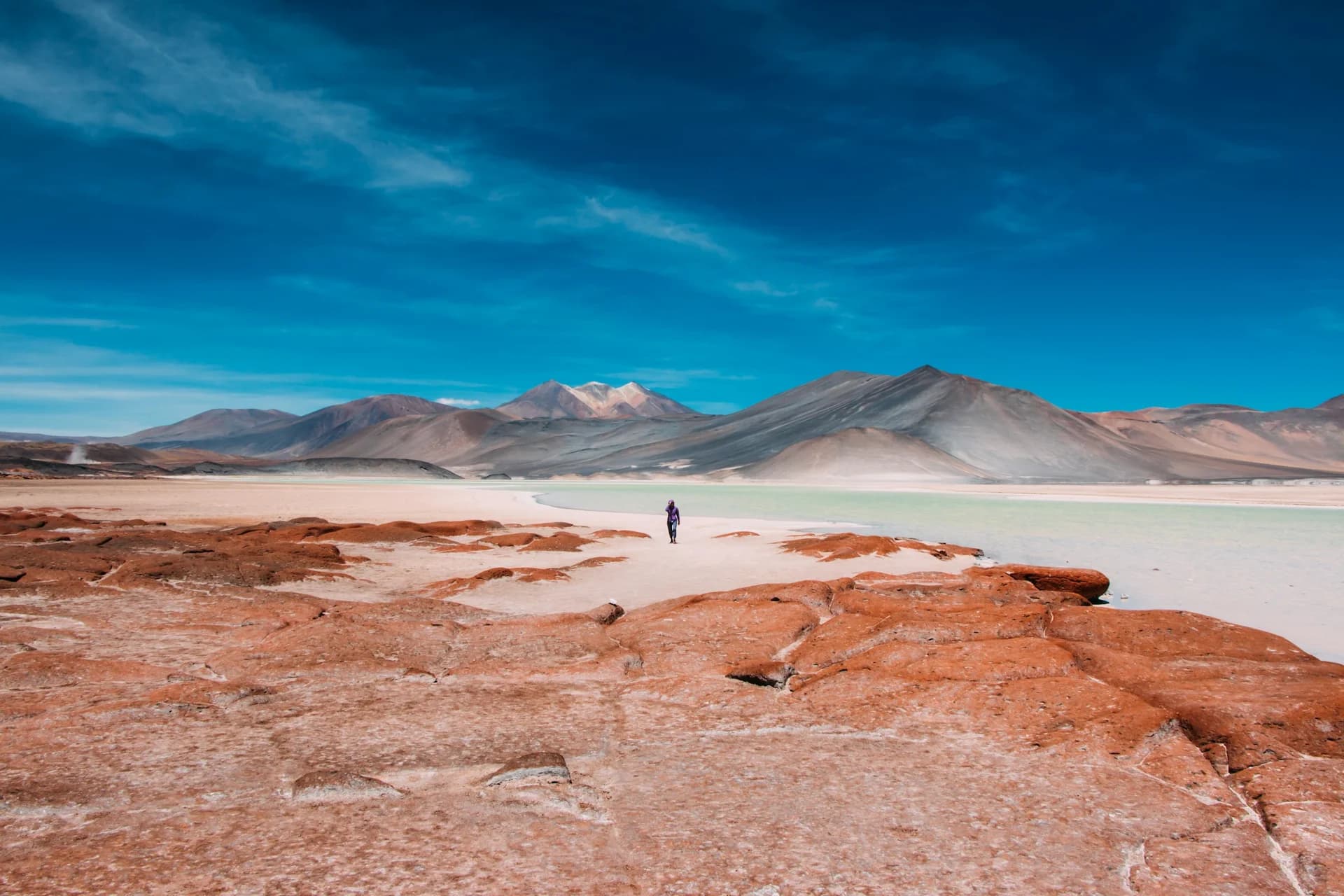
Which tours are the must-dos? Valle de la Luna at sunset, the El Tatio Geysers at dawn, a Laguna Cejar float, the Piedras Rojas altiplano day, Laguna Chaxa for flamingos, and one stargazing night. If you only have time for three: El Tatio, Piedras Rojas, and stargazing.
Practical Bits
Do you need a visa? Most visitors don't. US, EU, UK, Canada, Australia and many other nationals get a 90-day tourist stay on arrival. Keep the paper PDI slip handed over at immigration — hotels ask for it, and you surrender it when you leave Chile.
Can you bring snacks across the border? No fresh food, seeds, or plant/animal products — Chile bans them strictly and fines undeclared items. Declare everything at customs.
Is the water safe to drink? Stick to bottled or filtered water. And drink far more than you think you need — the dry air dehydrates you fast, which also worsens altitude symptoms.
Is there mobile signal and WiFi? Spotty. Most San Pedro hotels and cafés have WiFi, but it's slow, and signal drops to nothing on excursions. Download your maps and any stargazing apps offline before you head out.
Can you combine the Atacama with Bolivia's Uyuni salt flats? Yes, and plenty of travelers do. Multi-day 4x4 tours run between San Pedro and Uyuni across the altiplano — a spectacular overland crossing past flamingo lagoons and steaming fumaroles. Book it as a one-way and fly out the far side to skip the backtrack — plenty of travelers push on afterward to Buenos Aires before flying home.
Quick Reference
| Question | Short Answer |
|---|---|
| Days needed | 4 minimum, 5–6 ideal |
| Get there | Fly to Calama, shuttle 90 min |
| Rental car | Not necessary |
| Biggest risk | Altitude sickness |
| Payment | Carry cash (CLP) |
| Best time | Mar–May, Sep–Nov; new moon for stars |
| Visa | 90 days visa-free for most |
| Cost/day | ~$80–120 mid-range |
Get the altitude and the cash sorted, book your tours by group size, and the Atacama takes care of the rest. Few places on Earth pack this much strangeness — geysers, salt mirrors, red rocks, and a galaxy overhead — into one small desert town. Plan it right and you'll wonder why you didn't come sooner.


