
10 Galápagos Experiences Worth Building Your Whole Trip Around
10 Galápagos Experiences Worth Building Your Whole Trip Around
The Galápagos aren't cheap, and nobody's going to pretend otherwise. As of 2024 the national park entrance fee for foreign adults is $200 in cash, paid on arrival, plus a $20 Transit Control Card you buy at your mainland Ecuador departure gate in Quito or Guayaquil. Hold onto that card — you'll need it to leave.
Here's the good news: this is one of the rare places on earth that actually delivers on the brochure. The animals don't run from you. A sea lion will nap on the bench next to you at the dock. And you can build a genuinely great week around the three inhabited islands — Santa Cruz, San Cristóbal, and Isabela — without ever setting foot on a $6,000 cruise. These are the 10 experiences to plan around.
1. Meet the Giants at the Charles Darwin Research Station (Santa Cruz)
Start here, on your first afternoon in Puerto Ayora. Entry to the station is free (you've already paid the park fee), and it's an easy 15-minute walk from town along Avenida Charles Darwin.
The breeding center is where baby tortoises the size of your palm grow up before being released back onto their home islands. You'll also find the preserved body of Lonesome George, the last Pinta Island tortoise, who died in 2012. Go early — it opens at 7:30AM and the midday heat is brutal on the exposed paths.
2. Walk (Don't Boat) to Tortuga Bay (Santa Cruz)
Skip the water taxi. The real move is the 2.5km walking trail from Puerto Ayora — a paved path through cactus forest that ends at one of the widest white-sand beaches you'll ever stand on. It's free, and the trail gate is open 6AM to 6PM.
The main beach has serious surf, so walk to the far end and around to Playa Mansa, the calm lagoon behind it. That's where you'll paddle a kayak over marine iguanas grazing on the bottom and white-tip reef sharks cruising the shallows — the kind of glassy paddle you'd cross the world for in Abel Tasman, except here the wildlife doesn't flinch. Bring water — there's nothing to buy out here.
3. Cliff-Jump at Las Grietas (Santa Cruz)
A short $1 water taxi across Academy Bay, then a 20-minute walk past a salt flat and a sea lion or two, gets you to Las Grietas — a narrow crevice of turquoise water wedged between two lava walls. The mix of fresh and salt water makes it eerily clear.
Bring a snorkel. Swim the length of the gorge, scramble over the rocks at the far end, and you've got a second, quieter pool almost to yourself. It's the best free swim on the island.
4. Snorkel with Sharks at Kicker Rock / León Dormido (San Cristóbal)
This is the one people fly home talking about. Kicker Rock is a 500-foot cleaved tuff cone rising straight out of the ocean, and a day boat from Puerto Baquerizo Moreno runs $100–150 including gear and lunch.
You'll snorkel the channel between the two towers, where the water drops away into deep blue and Galápagos sharks, spotted eagle rays, and — if the season's right — schooling hammerheads glide beneath you. It's completely safe, guided, and genuinely heart-in-throat. Non-swimmers, sit this one out.
5. Fly Alongside Blue-Footed Boobies on North Seymour Island
North Seymour is a small uplifted island a short boat ride off Santa Cruz, and it's the single best spot to see the Galápagos' most famous birds up close. Day tours run around $180 and require a certified guide.
You'll walk a marked loop past blue-footed boobies doing their comic mating dance, male magnificent frigatebirds puffing out scarlet throat pouches the size of balloons, and land iguanas lounging in the trail. Bring a real camera — your phone won't do the frigatebirds justice.
6. Chase Seahorses at Los Túneles / Cabo Rosa (Isabela)
On Isabela's southern coast, cooled lava flowed into the sea and hardened into a maze of arches and bridges you can walk across and snorkel through. A half-day tour from Puerto Villamil runs $100–120.
The snorkeling here is calmer than Kicker Rock and arguably richer: seahorses clinging to mangrove roots, white-tip reef sharks stacked under ledges like firewood, and green sea turtles that couldn't care less about you — it's the same mangrove-reef cast you'll meet snorkeling around Bocas del Toro in Panama, only calmer. Up top, the boat pauses so you can photograph blue-footed boobies nesting right beside the trail.
7. Hike into the Caldera of Sierra Negra (Isabela)
Sierra Negra has one of the largest active volcanic calderas on the planet — roughly 10km across. It last erupted in 2018. The guided hike is about 16km round trip and costs around $40–60 for transport and a guide.
Go in the morning before the mist rolls in and swallows the view. The rim itself is a gentle walk; push on to Volcán Chico and the landscape turns to steaming fumaroles and fields of black and rust-red lava that look genuinely Martian — the same volcanic-island drama that makes the Azores so memorable, just drier and stranger. Wear real shoes and pack a rain layer — the highlands are damp even when the coast is baking.
8. Float for Free at Concha de Perla (Isabela)
Right next to the Isabela ferry dock, a boardwalk through the mangroves leads to Concha de Perla — a sheltered natural lagoon that costs nothing to snorkel. It's the easiest wildlife swim in the archipelago.
Sea lions torpedo past you, penguins dart by if you're lucky, and rays glide across the sandy bottom. Time it near high tide for the clearest water, and watch the boardwalk on the way in — a sea lion has usually claimed it for a nap.
9. Climb Pinnacle Rock on Bartolomé Island
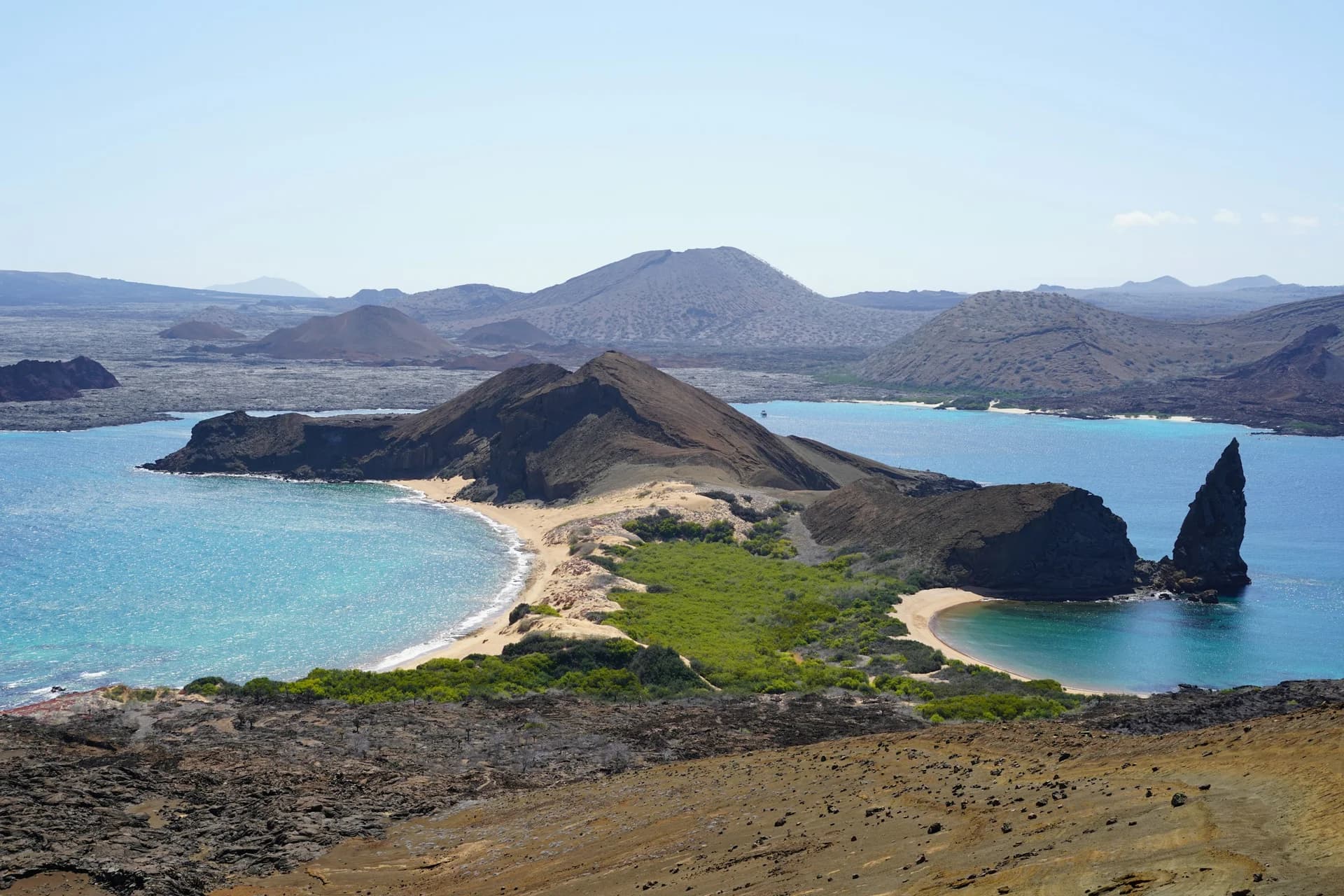
Bartolomé is uninhabited, so you'll reach it on a full-day boat tour (typically $180–220 from Santa Cruz). A wooden staircase climbs 372 steps to the island's summit, and the view down over Pinnacle Rock and the twin half-moon bays is the postcard shot of the entire Galápagos.
After the climb, the boat drops you to snorkel below the pinnacle, where Galápagos penguins — the only penguin species living north of the equator — zip around your fins. It's a long day out, but it's the trip most people would repeat first.
10. Slow Down in Puerto Villamil (Isabela)
Isabela's only town is a scatter of sand streets, beach bars, and a lagoon where wild flamingos feed a five-minute walk from your hotel. There's no rush here, and that's the point.
Rent a bike for a few dollars and ride the coastal track to the Wall of Tears, a haunting stone wall built by a former penal colony, passing giant tortoises grazing wild along the way. End the day with a cold Pilsener at a beachfront bar for around $3 while the sun drops behind the volcanoes.
Pro Tips Before You Go
- Bring cash. The $200 park fee is cash-only on arrival, and card machines across the islands are unreliable. Budget extra for tours in dollars.
- Base on two islands, not one. Santa Cruz plus Isabela is the sweet spot. Inter-island speedboat ferries run about $30–35 each way and take roughly two hours across open water — take a motion-sickness pill before you board.
- Book ferries a day ahead in high season (June–August and December–January). They sell out, and the schedule is thin.
- Water taxis in the harbors are $1. Keep coins handy after dark.
- You cannot roam alone. Most islands and snorkel sites legally require a certified naturalist guide, so build tours into your budget rather than assuming you'll wing it.
- Reef-safe sunscreen only, and keep two meters from every animal. The wildlife's fearlessness is exactly why this place is worth the trip — don't be the reason that changes.
Build your week around even six of these and you'll leave understanding why people spend a lifetime saving for the Galápagos — and why almost nobody regrets it.
Related Articles
 Travel Guides
10 Things to Do in the Maasai Mara That Aren't Just the River Crossing
 Travel Guides
12 Best Things to Do in Luxor: A Both-Banks Hit List for Ancient Thebes
 Travel Guides