
The Canary Islands Bucket List: 12 Experiences Worth Building a Trip Around
The Canary Islands Bucket List: 12 Experiences Worth Building a Trip Around
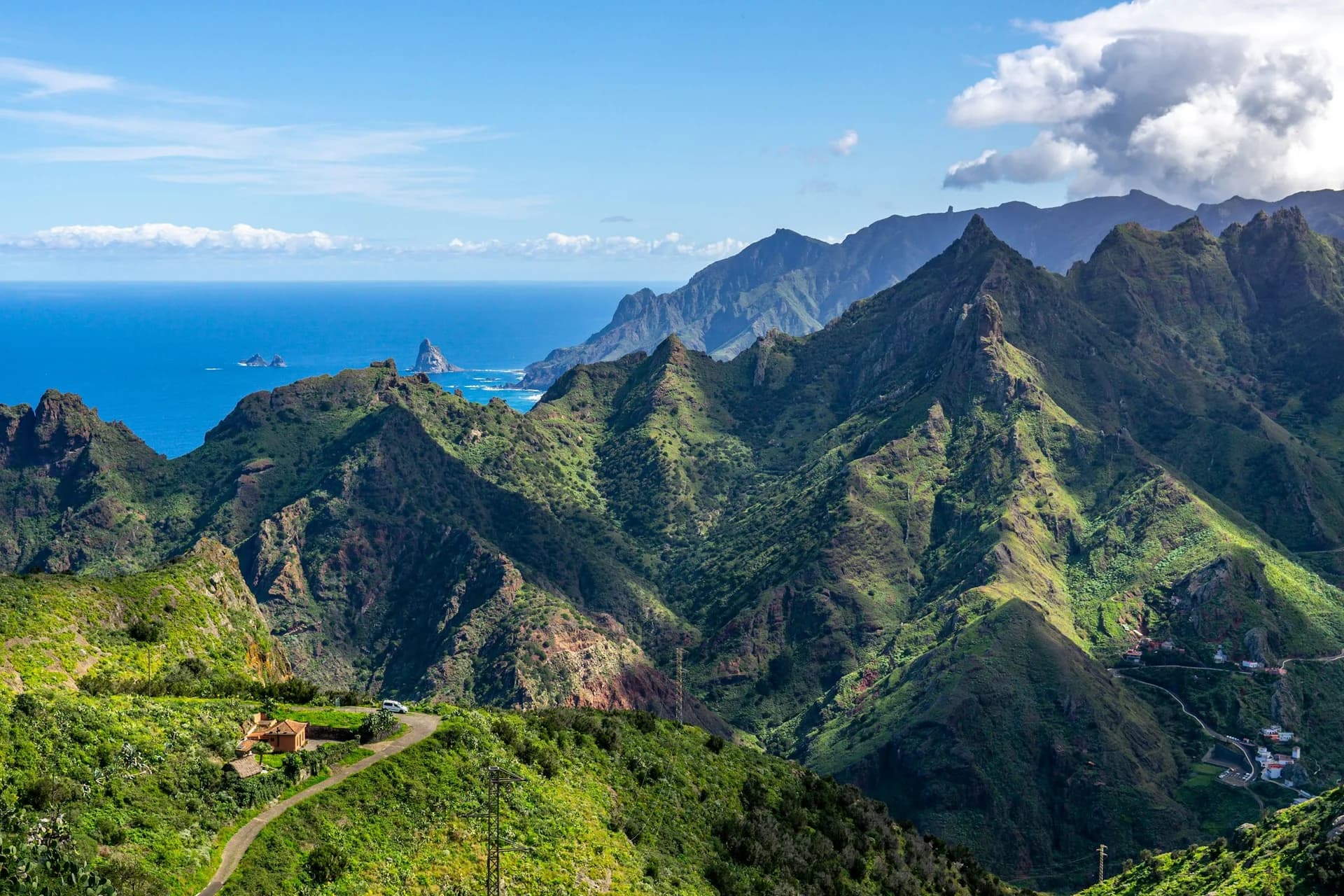
Seven islands, one ocean, and a thermometer that barely twitches off 22°C all year. The Canaries sit closer to Morocco than to mainland Spain, and that geography does something strange to a holiday. You get Spanish coffee and tapas, then you step outside the cafe and the land looks borrowed from another planet. Lava fields. Laurel forests older than the Roman Empire. A peak so high that planes pass it at eye level.
You could spend a week here and barely finish one island. So skip the trap of trying to see all seven. These are the twelve Canary Islands experiences that earn the airfare — the ones travellers still talk about long after the tan has faded.
1. Take the cable car up Spain's highest mountain
Mount Teide tops out at 3,718 metres, and the Teleférico hauls you from 2,356m to 3,555m in about eight minutes for roughly €38 (~$41) return. Book your slot online. The queue at the base station can swallow two hours on a summer morning.
Here's the move most people miss. The cable car stops just short of the crater, and to stand on the true summit — the final 200 metres to Pico del Teide — you need a free permit. The national park releases a limited number each day through its reservation site, so sort it weeks ahead. Turn up without the slip and a ranger turns you back at the gate. No charm, no exceptions.
Go early. By midday the cloud sea (the mar de nubes) usually drowns the lower slopes, and the wind up top bites even in July. Bring a fleece — this is not the beach.
2. Stargaze where the professionals point their telescopes
The air above Teide is so clear and stable that real observatories live up here. The whole archipelago is a designated Starlight Reserve, and on La Palma the Roque de los Muchachos hosts some of the largest telescopes on Earth — the same altitude-plus-dry-air recipe that put the world's other great observatories under the dry, high skies above the Atacama.
You don't need a science degree to cash in. Guided night tours run from the Teide foothills for around €40–€50 (~$43–$54), green-laser pointers and all. Pack a hat, gloves, and a thermos. At 2,000-plus metres the temperature drops hard once the sun goes, and the Milky Way overhead is the kind you thought only existed in edited photos.
3. Eat lunch cooked by a volcano
Timanfaya National Park on Lanzarote is a field of fire mountains that last erupted in the 1730s and still runs hot a few metres down. At the El Diablo restaurant, chefs grill chicken and chops over a pit that draws its heat straight from the ground — no gas, no charcoal, just geothermal.
The park protects its lava fields fiercely, so you can't wander on foot. The included coach trip, the Ruta de los Volcanes, loops you through the strangest terrain in the islands while a guide tips water down a borehole to watch it blast back as steam. Entry runs about €12 (~$13). Arrive before 10am or the car park fills and you'll idle in a line of rental hatchbacks.
4. Drink wine grown in pits of black gravel
Nothing should grow in La Geria, the volcanic heart of Lanzarote, yet it produces some of the most distinctive whites in Spain. Farmers dig each vine into its own crescent-shaped hollow (a zoco) lined with low lava-stone walls, so the plants drink from the dew the porous ground traps overnight.
Stop at Bodega La Geria or El Grifo — the latter dates to 1775 and claims the title of oldest winery in the Canaries. A tasting flight of crisp Malvasía Volcánica costs around €10–€15 (~$11–$16) and pairs with the view of thousands of black craters marching toward the horizon — it's the same volcanic-island winemaking that shaped the terraced vineyards of Madeira further west in the Atlantic. Drive this road at golden hour. It photographs like nowhere else on the planet.
5. Hike down the Masca ravine
The Barranco de Masca on Tenerife's wild northwest plunges from a cliff-clinging hamlet down a gorge of palm trees and towering rock to a black-pebble cove. It reopened with a managed system, so you now book a timed slot and pay roughly €10 (~$11), helmet supplied at the trailhead.
Reckon on three to four hours down. Most walkers skip the brutal climb back and catch the boat from Masca beach to Los Gigantes instead (book it with your permit). Wear proper shoes — this is a scramble over loose stone, not a stroll, the same lesson we relearned in our seven-day Dolomites hiking journal — and start early to beat the heat trapped in the canyon walls.
6. Walk through a forest from before the Ice Age
Garajonay National Park crowns the centre of La Gomera with laurisilva — laurel cloud-forest that once blanketed the Mediterranean and now survives in only a handful of Atlantic pockets — you can walk the same prehistoric woodland in the laurel forests of the Azores to the north. Mist threads through moss-furred trunks, water drips off ferns, and the whole place feels several million years out of step with the beach below.
Get here by ferry from Los Cristianos on Tenerife (about 50 minutes with Fred Olsen). While you're on the island, listen for Silbo Gomero, the whistling language locals once used to send messages across the deep valleys — UNESCO-protected and still taught in schools. Ask in a village restaurant and someone will usually demonstrate.
7. Watch pilot whales off Costa Adeje
The channel between Tenerife and La Gomera holds a resident pod of short-finned pilot whales plus bottlenose dolphins, and they're out there all year — not a seasonal gamble. Boats leave from Los Cristianos, Puerto Colón and Costa Adeje for around €25–€45 (~$27–$49) depending on length and lunch.
Look for the blue Barco Azul eco-flag, which marks operators that keep a respectful distance and cap their numbers. Skip the giant party catamarans blasting music. The small-group sailings give you a far better shot at a quiet, close encounter — and a far better conscience.
8. Swim off a black sand beach
Volcanic islands make black beaches, and they're warmer underfoot and more dramatic than any postcard stretch of gold — the same mineral-dark sand you'll find across Cape Verde further south in the Atlantic. In Puerto de la Cruz, Playa Jardín was landscaped by the artist César Manrique into a run of dark sand backed by gardens and a stone fort.
For something rawer, drive to El Bollullo below La Orotava — a cove of charcoal sand and real Atlantic swell, reached by a footpath past banana plantations, the kind of hidden cove you'd otherwise chase around Mallorca. There's a single beach bar pouring cold beer and frying fresh fish. Mind the current; this is open ocean, not a sheltered lagoon, and the lifeguard flags mean what they say.
9. See Lanzarote the way César Manrique built it
One artist shaped how an entire island looks. Manrique fought to ban billboards and high-rises, and instead carved attractions straight into the lava. At Jameos del Agua he turned a collapsed volcanic tube into a concert hall and a lagoon home to tiny blind albino crabs. At Mirador del Río he punched a viewpoint through a cliff 400 metres above the sea.
Buy a combined ticket if you plan to hit several sites — it trims the cost of individual entries (each runs about €10, ~$11). Add the Jardín de Cactus, his last great project, where 4,500 cacti spiral around an old quarry. Together they're the reason Lanzarote never grew the concrete sprawl that crept over other resort coasts.
10. Float in the Garachico rock pools
In 1706 a volcano buried the busy port town of Garachico under lava and reshaped its shoreline forever. What the eruption left behind is El Caletón — a maze of natural tide pools where the Atlantic filters in over black rock, calm enough to swim and shallow enough to laze in.
Go at low tide and on a flat-sea day; when the swell is up, the council closes the access steps for good reason. Afterward, dry off in the old square over a plate of vieja (parrotfish) at one of the family-run spots near the harbour. The whole town runs at half the speed of the southern resorts, which is rather the point.
11. Climb the dunes at Maspalomas
The south of Gran Canaria hides a small Sahara. The Maspalomas dunes roll for several square kilometres of wind-sculpted golden sand down to a lighthouse and the sea — a stretch of Atlantic gold to rival the golden beaches of the Algarve — protected as a nature reserve and crossed only on foot.
Walk in from the Playa del Inglés end early or late — midday sun on open dune is no joke, and there's no shade out there. It's a genuinely odd thing, trekking across desert with the Atlantic glittering ahead, and it costs nothing but the effort — reason enough to give Gran Canaria a few nights of its own rather than day-tripping over from Tenerife. Keep to the marked routes; the inner dunes are a breeding ground for birds and off-limits.
12. Track down a guachinche in the Orotava valley
This is the meal you'll brag about. Guachinches are informal, often family-run eateries scattered through Tenerife's green north, where growers sell their own young wine alongside a tiny handwritten menu of home cooking — the Canarian cousin of the young-wine-and-small-plates counters you'd hunt down in the pintxos bars of Bilbao. Think papas arrugadas — salt-wrinkled little potatoes — drowned in mojo rojo and mojo verde, grilled pork, and a carafe of house red for a few euros.
They don't advertise and the good ones move around with the harvest, so ask locally or follow the hand-painted cardboard signs above La Orotava and Santa Úrsula. Bring cash, bring an appetite, and don't expect English menus or a website. That scruffiness is exactly the seal of the real thing.
Pro Tip
Island-hop across the Canary Islands by ferry rather than flying internally — Fred Olsen and Naviera Armas link the main islands, and the Tenerife–La Gomera crossing is under an hour. Rent a car on each island you stay on; public transport reaches the resorts but not the ravines, vineyards, and rock pools that make a trip. Driving is on the right, fuel is cheap by European standards, and the mountain roads reward patience over speed. One last thing: pack layers. You can start the day at sea level in shorts and finish it shivering at 3,500 metres on Teide, all before dinner.


