
Your Chiang Mai Questions Answered: 14 Things First-Timers Always Ask
Your Chiang Mai Questions Answered: 14 Things First-Timers Always Ask
Ask anyone who has sent panicked WhatsApp messages at 2AM Thailand time before their first Chiang Mai trip — the same questions surface every single time. Here they are, answered in one place, so you can plan with your eyes open and skip the late-night scramble.
Getting There & Around
Q: How do you get from Bangkok to Chiang Mai?
Fly. One hour, from 1,500 THB one-way on AirAsia, Nok Air, or Thai Lion. The overnight train (about 700 THB for a sleeper, 13 hours) is a romantic alternative and the scenery is beautiful, but it eats a full night of your trip.
Q: What's the best way to get around Chiang Mai?
The Old City is walkable — about 1.5km across the moated square. For anything outside it, use red songthaews (shared pickup trucks, 30-50 THB per ride within town), Grab (ride-hailing app, ~150-200 THB for airport to Old City), or rent a scooter.
Scooter rental runs 200-300 THB/day and is the most freeing option. Just carry an international driving permit, always wear a helmet (500 THB fine without one at police checkpoints), and expect traffic far calmer than Bangkok.
Q: Is the airport far from the city?
No. Fifteen minutes to the Old City by any transport. Grab: 150-200 THB. Fixed-price airport taxi: 150 THB. Airport bus: 40 THB. Chiang Mai is compact.
Budget & Money
Q: How cheap is Chiang Mai really?
Remarkably cheap. Street food meals: 40-80 THB ($1.10-2.30). A guesthouse room: 300-600 THB/night ($8.50-17). Most temples: free or under 50 THB. A half-day cooking class with a full meal: ~1,000-1,500 THB.
Budget travelers can live well on 1,000-1,500 THB/day (~$28-43). That's three meals, accommodation, and a temple or two. A mid-range traveler spending 3,000-4,000 THB/day lives very comfortably.
Q: Do you need cash or will cards work?
Carry cash. Most street food vendors, songthaews, and smaller shops are cash-only. ATMs are everywhere but charge a flat 220 THB foreign fee per withdrawal. Withdraw 10,000+ THB at once to minimize fees. Restaurants and hotels generally accept cards.
Safety
Q: Is Chiang Mai safe?
Very safe. It's a chill, friendly city where violent crime against tourists is essentially nonexistent. Standard precautions apply — don't leave valuables unattended, stay aware in crowded markets. But Chiang Mai is the kind of place where solo female travelers feel comfortable walking at night.
Q: What about the air quality issue?
Late February through April is burning season. Agricultural fires in the surrounding hills push the AQI to hazardous levels (200-400+). This is a real health issue, not a minor inconvenience.
If your trip falls in this window: bring N95 masks, download the IQAir app to check air quality hourly, stay indoors during the worst hours, and weigh whether your dates are flexible. November to February brings the cleanest air.
Experiences
Q: Which elephant sanctuary should you choose?
Elephant Nature Park. Full stop. Founded by Lek Chailert, it's the gold standard for ethical elephant experiences. Full-day visit: ~2,500 THB including transport from your hotel, lunch, and bathing elephants in the river. No riding. No hooks. No shows.
Book 2-4 weeks ahead on their official website. There are other legitimate sanctuaries, but if you can only do one, make it ENP.
Red flags for unethical places: they offer elephant riding, the elephants do tricks or perform, you can take selfies while sitting on an elephant. Skip all of these.
Q: Are the cooking classes worth it?
Absolutely the best-value activity in Chiang Mai. For 1,000-1,500 THB, you get hotel pickup, a market tour, and a full day cooking 4-6 dishes in an outdoor kitchen — pad thai, green curry, tom yum soup, mango sticky rice. You eat everything you make.
Thai Farm Cooking School, Mama Noi, and Pantawan are the top-rated options. Book 1-2 days ahead.
Q: How many temples should you visit?
Three or four per day maximum — and honestly, two is better if you want to actually absorb the experience rather than collect photos. The Old City has 30+ temples, and after about five, they start to blur together.
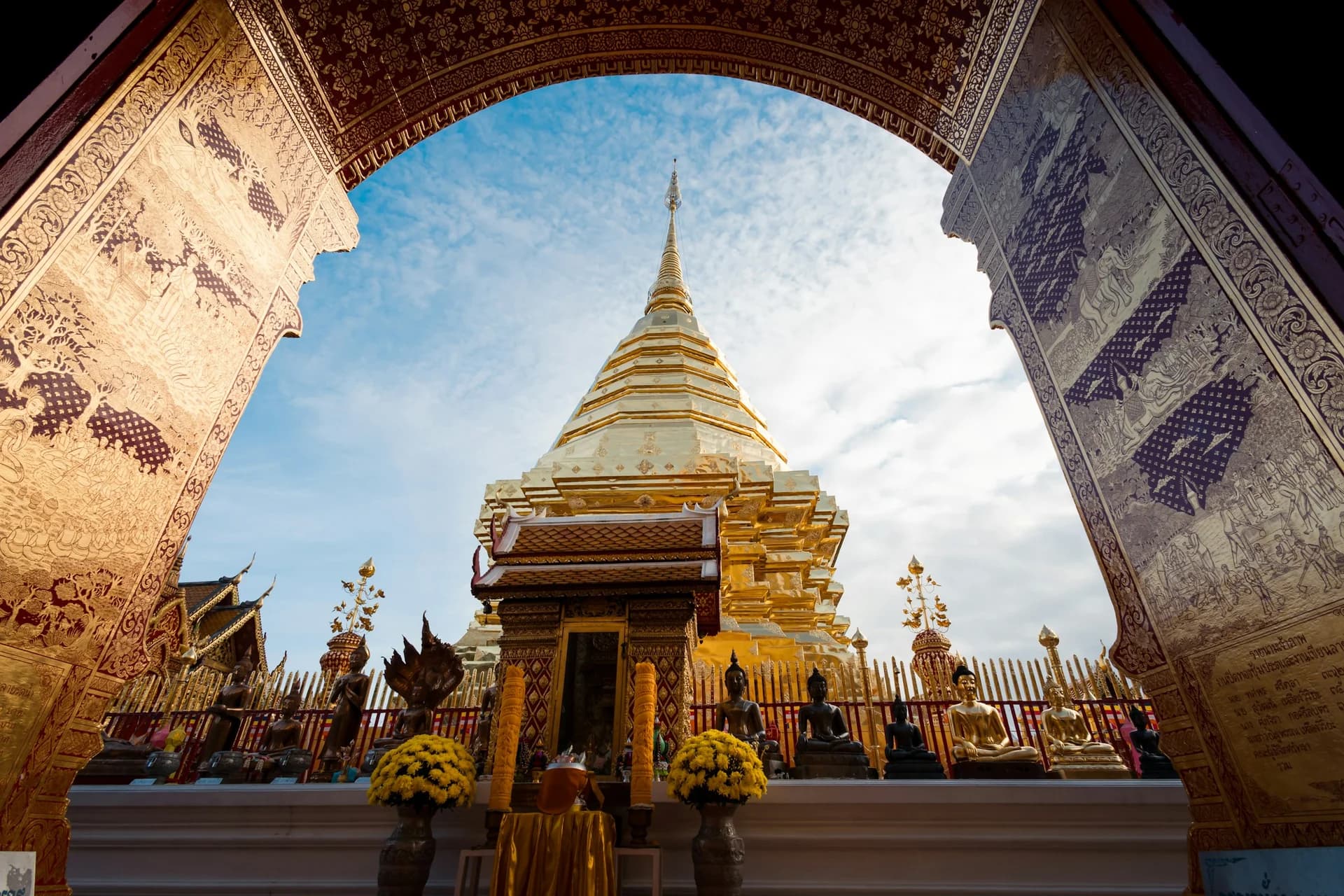
The essential three: Doi Suthep (mountaintop, sunset, panoramic views), Wat Chedi Luang (ruined pagoda + monk chat), and Wat Phra Singh (finest Lanna architecture).
Food
Q: What's the signature dish and where do you get it?
Khao soi — coconut curry noodle soup with both soft and crispy fried egg noodles, pickled mustard greens, and shallots. It's unique to northern Thailand, and Chiang Mai does it best.
Best bowls: Khao Soi Mae Sai (near Chang Phuak Gate, 50-60 THB), Khao Soi Khun Yai, and Khao Soi Lam Duan Fah Ham (slightly more upscale, 80-100 THB). Expect to eat khao soi at least once a day. Don't fight it.
Q: How spicy is the food? You can't handle heat.
Northern Thai food is generally milder than Bangkok or southern Thai cuisine. Khao soi is creamy and only moderately spicy. But som tam and some curries can be nuclear.
Say "mai pet" (not spicy) when ordering. Thais understand that foreigners have different heat tolerances and won't judge you. That said, try "pet nit noi" (a little spicy) once — the flavors open up with a touch of chili in ways the mild version simply can't replicate. For more, check out our complete Chiang Mai guide.
Logistics
Q: What should you pack?
Cool season (November-February): light layers, a hoodie for mornings, sunscreen. Hot season (March-May): the lightest clothes you own, a hat, sunscreen, an N95 mask. Rainy season (June-October): a lightweight rain jacket, quick-dry clothes.
All seasons: comfortable walking shoes (temples involve lots of shoe-on-shoe-off), a light scarf for temple visits (covered shoulders required), and insect repellent.
Q: Should you stay in the Old City or Nimman?
Old City if you want temples, markets, and a traditional atmosphere within walking distance. The Sunday Walking Street market runs right through the Old City.
Nimman if you want cafes, co-working spaces, restaurants, and a more modern vibe. It's where the digital nomad community hangs out.
Both are excellent. If it's your first visit and you're staying 4+ days, split it — 2 nights in each.
Chiang Mai doesn't require complicated planning. Show up, eat khao soi, visit a temple, take a cooking class, meet some elephants ethically, and let the mountain air do the rest. It's the easiest destination in Southeast Asia to fall in love with.


