
The Complete Chiang Mai Guide: Temples, Elephants & Cooking Schools
The Complete Chiang Mai Guide: Temples, Elephants & Cooking Schools
Chiang Mai is the anti-Bangkok. Where Bangkok overwhelms with scale and speed, Chiang Mai charms with mountain air, a walkable Old City, and a pace that makes you question why you live wherever you live. I update this guide annually. Here's the 2026 edition.
Overview
A laid-back mountain city of about 130,000 people (1.2 million in the province) surrounded by misty peaks in northern Thailand. It has over 300 ancient temples within the moated Old City alone, Thailand's best cooking schools, ethical elephant sanctuaries, and a digital nomad scene that's made it one of Asia's most popular long-stay destinations.
The vibe is different from southern Thailand. Slower. Cooler (literally — it's at 300m elevation). Less party-focused. More culture, nature, and food.
Best Time to Visit
November to February is perfect. Cool, dry weather (15-28°C), clear mountain views, and the Yi Peng lantern festival in November. This is peak season — book accommodation early.
March to April is burning season. Agricultural fires cause hazardous air quality (AQI 200-400+). Bring an N95 mask if you must visit. Check AQI via the IQAir app. I'd genuinely recommend avoiding this period.
June to October is rainy season — afternoon showers are heavy but brief. Fewer tourists, lower prices, and the mountains are at their greenest.
Getting There
Most visitors fly from Bangkok — 1 hour, from 1,500 THB one-way on AirAsia or Nok Air. Chiang Mai International Airport (CNX) is 15 minutes from the Old City by Grab (150-200 THB) or fixed-price airport taxi (150 THB). The airport bus costs 40 THB.
Where to Stay
Old City — Best for first-timers. Walk to 30+ temples, night markets within the moat. Budget guesthouses from 300-600 THB/night.
Nimman — Hip neighborhood west of the Old City with cafes, co-working spaces, and restaurants. Digital nomad central. Hotels from 800-2,000 THB/night.
Riverside (Ping River) — Quieter, some excellent boutique hotels. 10-minute songthaew ride to Old City.
What to Do
Temples (The Top 5)
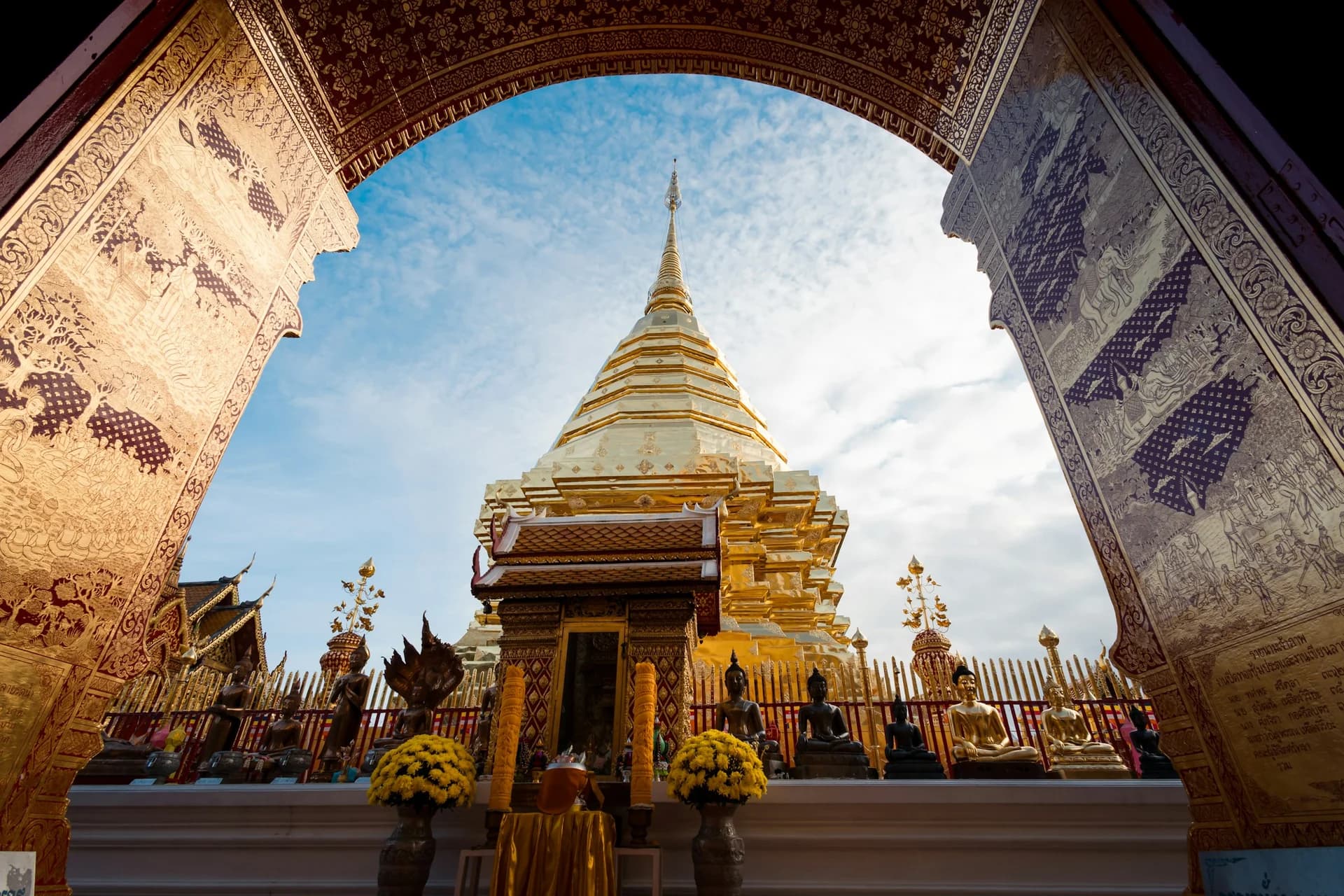
- Doi Suthep — Gold-spired mountaintop temple 15km from town. 50 THB entry. Climb 306 steps or take the funicular (50 THB). Songthaew from Old City ~100 THB. Best at sunset.
- Wat Chedi Luang — Ruined 14th-century pagoda in the Old City. Free monk chat daily 9AM-6PM (ask monks about Buddhism in English).
- Wat Phra Singh — Gilded chapel, 40 THB. The finest example of Lanna architecture in the city.
- Wat Chiang Man — Oldest temple in Chiang Mai. Free.
- Wat Suan Dok — Contains the ashes of Chiang Mai's royal family. White chedis against mountain backdrop. Free.
Ethical Elephant Experience
Elephant Nature Park is the gold standard. Founded by Lek Chailert, it's a rescue sanctuary 60km from town. Full-day visits cost 2,500 THB ($71) including transport, lunch, and bathing elephants. No riding — observe and feed only.
Book 2-4 weeks in advance on their official website. Includes hotel pickup. This is worth every baht.
Skip any place that offers elephant riding, tiger petting, or shows with performing animals. These involve systematic abuse. If a place lets you ride elephants, they've broken the elephant's spirit through a process called phajaan. Don't support it.
Thai Cooking Class
Chiang Mai is Thailand's cooking class capital. Top options:
- Thai Farm Cooking School — Full day, ~1,500 THB, includes market tour and 5 dishes
- Mama Noi — Organic farm setting, excellent for vegetarians
- Pantawan — Smaller class sizes, more personal instruction
Most include hotel pickup, a market tour, and you cook 4-6 dishes. Book 1-2 days ahead. This is the best value activity in Chiang Mai.
Doi Inthanon National Park
Thailand's highest peak (2,565m) with twin royal pagodas, cloud forest trails, and Hmong hill tribe villages. 90km southwest of Chiang Mai. Entry: 300 THB. Hire a driver for the day (~1,500-2,000 THB). Bring a jacket — temperatures drop to 5-10°C at the summit.
Food Guide
The Essential Dish: Khao Soi
Chiang Mai's signature dish is a coconut curry noodle soup with both soft and crispy fried noodles on top, served with pickled mustard greens and shallots. Every restaurant makes it. The best versions cost 50-80 THB.
Top spots: Khao Soi Mae Sai (near Chang Phuak Gate), Khao Soi Khun Yai, and Khao Soi Lam Duan Fah Ham.
Markets
- Sunday Walking Street — 1km along Ratchadamnoen Road, 4PM-midnight. Handmade crafts, art, and incredible street food. Much more authentic than the tourist Night Bazaar.
- Saturday Walking Street — Wualai Road, same hours, slightly less crowded.
- Chang Phuak Gate food stalls — Nightly. The best cowman chicken (khao man gai) in town.
Budget Eating
Budget 200-500 THB/day for food. Street meals cost 40-80 THB. A full cooking class meal (5 dishes you cook yourself) counts as lunch. Cafe culture is huge in Nimman — excellent coffee for 60-100 THB.
Budget Breakdown
| Category | Daily Budget |
|---|---|
| Accommodation | 300-1,500 THB (~$8.50-43) |
| Food | 200-500 THB (~$5.70-14) |
| Transport | 100-300 THB (~$2.85-8.50) |
| Activities | 0-2,500 THB (~$0-71) |
| Total | 600-4,800 THB (~$17-137/day) |
Budget travelers can live well on 1,000-1,500 THB/day. That's $28-43 for a comfortable day with good food and a clean room.
Safety
- Burning season (March-April) — Hazardous air quality. Bring N95 masks.
- Scooter safety — Police checkpoints fine helmetless riders 500 THB. Get an international driving permit.
- General safety — Chiang Mai is very safe. Petty crime is rare.
Essential Phrases For more, check out our Chiang Mai travel story.
| English | Thai |
|---|---|
| Hello | Sawadee krap/ka |
| Thank you | Khob khun krap/ka |
| How much? | Tao rai? |
| Not spicy | Mai pet |
| Delicious | Aroy mak |
Final Thoughts
Chiang Mai is the kind of place where a planned 3-day stopover turns into a 2-week stay. The combination of cheap living, excellent food, genuine cultural experiences, and mountain scenery creates a gravity that's hard to escape.
Give it at least 4 days. Do the cooking class. See the elephants ethically. Climb Doi Suthep at sunset. And eat khao soi until you can't imagine life without it.
That's usually around bowl number three.


