
What They Don't Tell You About Koh Samui: A Conversation with Nong, Island Resident Since 2009
What They Don't Tell You About Koh Samui: A Conversation with Nong, Island Resident Since 2009
Nong Rattanaporn arrived on Koh Samui from Nakhon Si Thammarat in 2009 to manage a dive shop in Chaweng. Today she runs a small guesthouse in Maenam with her husband and two kids, dives twice a week, and speaks Thai, English, and enough German to look after her European guests. Nearly two decades of watching the island shift gives her the kind of read on Koh Samui you won't find on a resort brochure. Picture iced coffee on the guesthouse porch, Maenam Beach stretching empty in front of you — that's the vantage point for everything that follows.
On Where to Actually Eat
Skip Chaweng. The restaurants there are priced for tourists — 200-400 THB ($5.70-11) for a pad thai that runs 50 THB ($1.43) at the night markets. The island rewards you for going where residents actually eat.
Start here:
- Khao tom shop near Nathon pier — rice soup with fish, doors open at 5AM. The fishermen fuel up here before their boats head out. 40 THB ($1.14) buys a bowl bigger than your head.
- Hua Thanon Muslim market — this fishing village on the south coast runs stalls staffed by Thai-Muslim families. The roti mataba (stuffed flatbread) at 30 THB ($0.86) is the best breakfast on the island.
- Maenam walking street (Thursday night) — not as famous as Fisherman's Village on Friday, but cheaper and less tourist-oriented. The grilled squid on sticks at 30 THB ($0.86) is absurd, in the best way.
For seafood, aim for Hua Thanon or Bang Rak — not Chaweng. Hua Thanon's restaurants buy straight off the boats that dock right there. A whole grilled sea bass with Thai herbs runs 200-300 THB ($5.70-8.57). Order the same fish at a Chaweng beach restaurant and you'll pay 500-800 THB ($14-23).
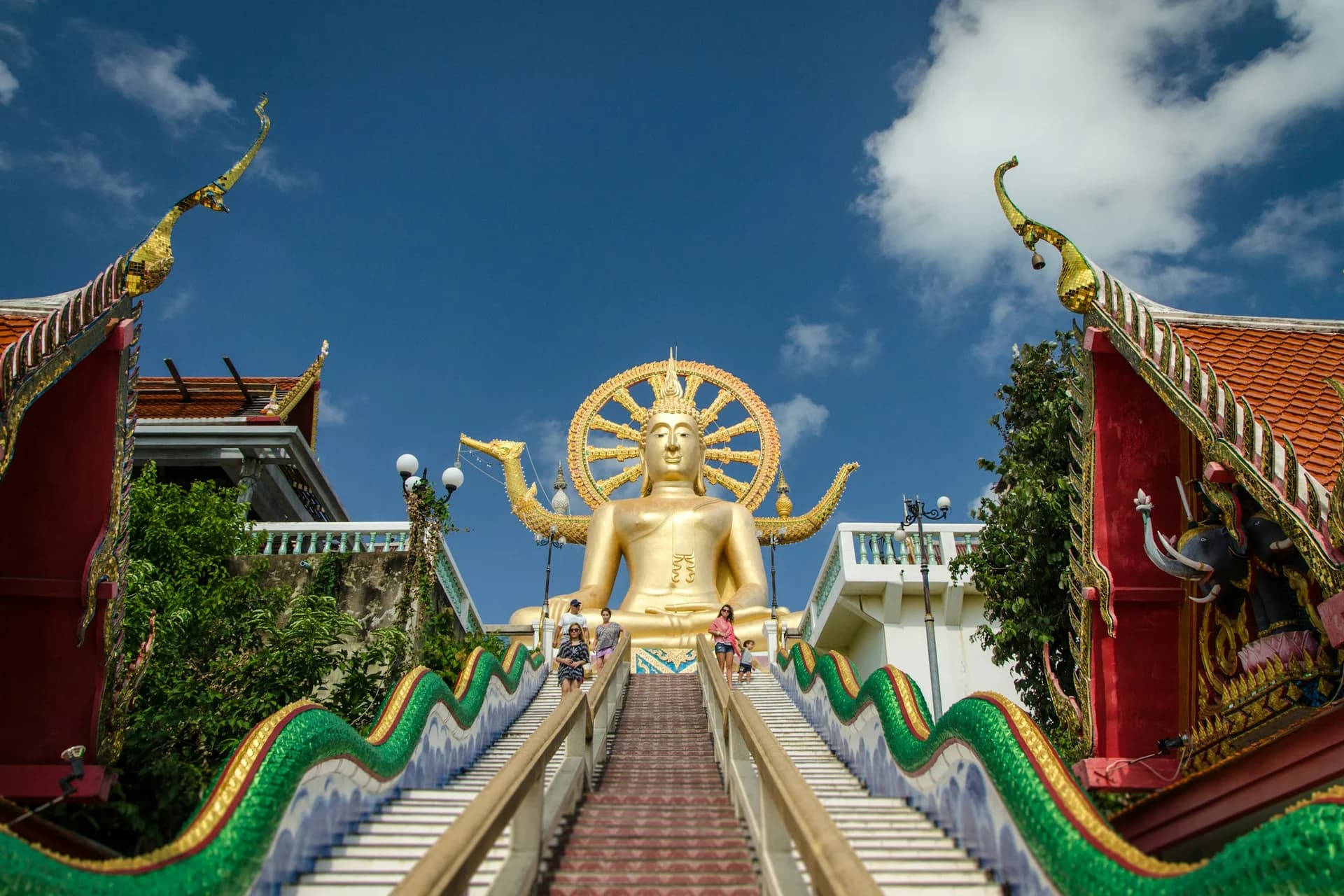
Coffee has come a long way here. Stacked Samui near Big Buddha pulls excellent espresso — 80 THB ($2.28) for a latte. And on the mornings you just need caffeine, the iced coffee at 7-Eleven (25 THB / $0.71) does the job without apology.
On the Beaches Nobody Visits
Silver Beach (Haad Thong Ta Khian), tucked between Chaweng and Lamai, is the local favorite. It's tiny — maybe 200 meters — cradled between rocks, with no sunlounger vendors and no jet skis. The water is clear and the snorkeling starts right off the sand. A narrow, unsigned access road keeps the tour buses away.
Then there's Taling Ngam on the west coast. The beach itself is nothing to write home about — rocky, not much for swimming — but the sunsets are the best on the island. The InterContinental has its famous infinity pool here, and you don't need a room to enjoy the view. Park at the beach, buy a coconut from the roadside vendor (30 THB / $0.86), and watch the sun drop into the Gulf.
Lipa Noi is the closest thing to what Samui beaches used to be: long, quiet, shallow water made for kids. One restaurant (Nikki Beach) charges resort prices; the rest of the sand belongs to local families and a handful of small guesthouses.
On What Tourists Do Wrong
The biggest miss is staying in Chaweng and never leaving. Chaweng earns its two nights — the beach is long, the nightlife is right there, and there's a convenience store on every corner. But spend the whole week inside it and you've done the Koh Samui equivalent of parking in Times Square and calling it New York.
Rent a scooter (200-300 THB / $5.70-8.57 per day) and drive the ring road. The entire island loops in 90 minutes. Stop at the south-coast viewpoints. Cut inland through the coconut plantations. Watch the fishermen at Hua Thanon. That's the real island.
A few scams are worth sidestepping. The main one is motorbike rental "damage" — some shops point to pre-existing scratches on return and demand payment. Photograph the bike from every angle before you ride away; your phone's date and timestamp are your proof. Jet ski rentals play the same game, so skip them entirely and go kayaking or stand-up paddleboarding instead. And the "free" tuk-tuk ride? It ends at a gem shop where the driver collects commission. A polite no thanks is all it takes.
As for the Full Moon Party on Koh Phangan — it delivers if you're 22 and want to dance on a beach until sunrise. Treat it as a must-do, though, and you risk coming back sunburned, hungover, and short one phone. If you go, leave the valuables behind, wear shoes (the beach hides broken glass), skip drinks poured into open containers by strangers, and book an organized boat back rather than flagging a random speedboat at 3AM. Or trade it for the Half Moon Party or Jungle Party — same island, smaller crowds, better music.
On How Samui Has Changed
Some stretches are unrecognizable from 2009. Chaweng had maybe 30 hotels back then; now it counts hundreds. The ring road has been widened, mini-malls have sprung up, and a Central Festival shopping mall arrived complete with a Starbucks and a cinema.
The coconut plantations are thinning out. A single rai (1,600 sqm) of beachfront land now fetches 15-20 million THB ($428,000-571,000), so farmers sell to hotel developers — hard to keep growing coconuts at 5 THB each when the ground beneath them is worth that.
But the south and west coasts have held their shape. Taling Ngam, Lipa Noi, Thong Krut — these still look like the Samui of nearly two decades ago. The island spirit endures, too. Neighbors share food. Temples hold their festivals. The older generation still trusts the guardian spirits of the coconut trees to watch over the island.
And if there's one thing to carry with you, it's a single Thai word: "sabai" — comfortable, content, at ease. Samui runs on it. Things unfold slowly. Your food takes longer because the cook is chatting with a neighbor. The taxi is late because the driver stopped to help someone with a flat tire. Don't fight it, and don't rush it — the island keeps its own time. Cling to a schedule and you'll spend the week frustrated. Let it go, and you'll be sabai. That's the whole secret of Koh Samui.


