Salzburg for Music Lovers: From Mozart's Piano to Modern Festivals
Salzburg for Music Lovers: From Mozart's Piano to Modern Festivals
Salzburg has been a music city since before the word "music city" existed. Mozart was born here in 1756 — at Getreidegasse 9, above a grocery shop on what's now the most famous shopping street in Austria. He composed his first piece at age five. He left Salzburg at 25, called it provincial, and died in Vienna at 35. But the city never let him go, and the result is a place where music isn't an attraction — it's infrastructure.
If music is your reason for traveling, Salzburg is one of the most rewarding destinations in Europe. Here's how to make the most of it.
Why Salzburg Is Special for Music
Three things make Salzburg unique in the music world:
- Density: A city of 157,000 people has over 4,000 cultural events per year. More per capita than Vienna, Berlin, or London.
- Continuity: The Salzburg Festival has run since 1920. The Mozarteum academy has trained musicians since 1841. St. Peter's Abbey has had an active choir since the 8th century.
- Setting: Where else can you hear Bach in a fortress built in 1077, Mozart in the house where he was born, and jazz in a cave bar underneath a medieval square?
It's not just classical. Salzburg has a growing jazz, experimental, and contemporary scene. But classical is the foundation, and it's world-class.
The Top 10 Music Experiences
1. Mozart's Birthplace (Geburtshaus)
The yellow building at Getreidegasse 9 where Wolfgang Amadeus was born on January 27, 1756. Three floors of exhibits including his childhood violin (tiny), family letters, and original scores. The rooms are small and the displays are focused — it's not overwhelming.
Entry: €14. Open daily 9AM-5:30PM. Allow 1 hour. Buy tickets online to skip queues in summer.
The emotional highlight: standing in the room where he was born and realizing how ordinary the space is. A middle-class apartment above a busy commercial street. Genius needs context.
2. Fortress Concerts at Hohensalzburg
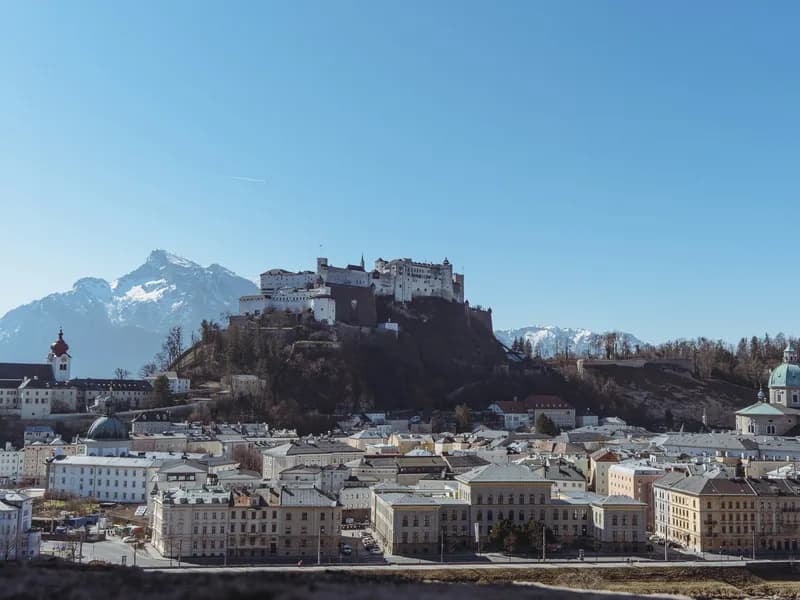
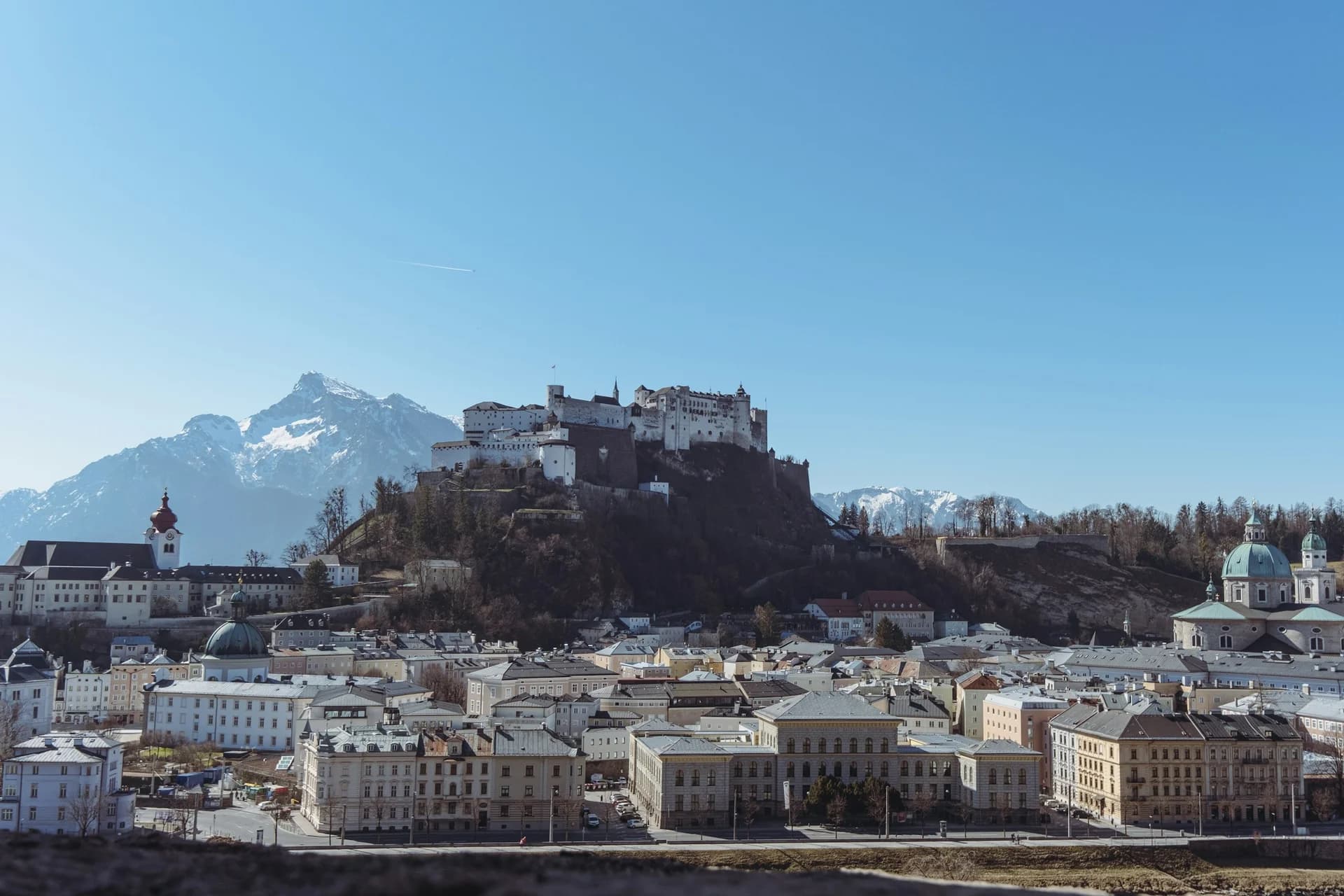
Chamber music performed in the Golden Hall of the fortress — a medieval room with a coffered ceiling and views of the city 120 meters below. The acoustics shouldn't work in a stone military building, but they do. Somehow the walls absorb just enough.
Tickets: €35-60, including funicular ride and a drink during intermission. Concerts year-round, evenings. The program rotates — Mozart, Haydn, Schubert are staples. The experience of riding a funicular up to a medieval castle for a concert is pure Salzburg.
3. The Salzburg Festival (Salzburger Festspiele)
July-August. Founded in 1920. The world's premier classical music and opera festival. Five weeks, 200+ performances across multiple venues — the Großes Festspielhaus (2,179 seats, built into the Mönchsberg cliff), the Felsenreitschule (carved from rock), and the Salzburg Cathedral square.
Tickets range from €30 (standing room) to €400+ (premium opera seats). The Jedermann ("Everyman") performance on the cathedral square is the festival's signature — a morality play performed outdoors against the Baroque facade. Standing outside the ticketed area, you can still hear and partially see it.
Book months ahead. The festival website (salzburgerfestival.at) releases tickets in January for that summer.
4. Marble Hall Concerts at Mirabell Palace
Daily chamber concerts in one of the most beautiful Baroque rooms in Austria. The Marble Hall has stucco, gilded windows, and a ceiling fresco. The room seats about 200 people. The intimacy is the point — you're 5 meters from the musicians.
Tickets: €25-40. Check the schedule at the tourist office or mirabelmusic.at. Programs typically feature Mozart, Vivaldi, and Handel.
5. Mozarteum Concert Hall and Academy
The Mozarteum is two things: a university for music performance (where Anna Netrebko studied) and a concert hall. The Großer Saal hosts orchestral concerts year-round. The building is modern (rebuilt in the 1990s) with excellent acoustics.
Mozartwoche (Mozart Week, late January) is the annual highlight — a focused festival of Mozart works performed by international soloists and orchestras. Tickets start at €30 and it's far less chaotic than the summer festival.
6. St. Peter's Abbey Church
The Romanesque church attached to Europe's oldest monastery (founded 696 AD) hosts regular choral and organ concerts. The acoustics in the stone nave are extraordinary. Many concerts are free or donation-based.
The Mozart Dinner Concert at Stiftskeller St. Peter recreates an 18th-century dinner with costumed musicians performing Mozart. It's touristy (€65-85), but the food is good and the music is professionally performed. A fun splurge.
7. Salzburg Cathedral Organ Concerts
The cathedral has five organs. Five. Free organ concerts happen regularly — check the schedule posted at the cathedral entrance or the tourist office. The main organ has 4,000 pipes. When it plays, you feel it in your chest.
Sunday High Mass at 10AM features the cathedral choir and often full orchestral accompaniment. Free to attend.
8. Jazz at Jazzit
Jazzit (Elisabethstraße 11) is Salzburg's dedicated jazz venue — a small basement club with 120 capacity and bookings that punch way above its weight. International and Austrian jazz acts several nights a week. Tickets €10-25. The bar is good, the crowd is local, and the sound system is excellent for the size.
The Salzburg Jazz Festival in November is a week of performances across multiple venues. Less famous than the summer festival, much cooler.
9. Stiegl-Brauwelt Music and Beer
Okay, it's a brewery, not a concert hall. But Stiegl-Brauwelt hosts regular music events — acoustic sessions, traditional Austrian folk music, and jazz — in their event space. €15 entry to the museum includes two beer tastings. The combination of a good Goldbräu and live music in a 500-year-old brewing tradition is hard to beat.
10. Busking on Getreidegasse
Free. No ticket needed. Some of the best spontaneous music in Salzburg happens on Getreidegasse and around the Mozartplatz. Mozarteum students busk for practice and pocket money. I've heard genuinely concert-quality violin performances in front of Mozart's birthplace. Tip generously.
Hidden Musical Gems
- Die Weisse on Steingasse: A craft brewery with occasional live music in a medieval cellar setting
- Nonnberg Abbey: The oldest nunnery north of the Alps. Gregorian chant during services — not a performance, but you can attend
- Record shops: RPM Records on Linzergasse has an excellent vinyl and CD collection. The owner knows Salzburg's music scene inside out
Best Time for Music
- January: Mozartwoche — focused, intimate, affordable
- July-August: Salzburg Festival — the main event, expensive and crowded but extraordinary
- November: Jazz Festival — the underground counterpart
- December: Advent singing and Christmas concerts in churches. The carol service at Salzburg Cathedral is stunning
- Year-round: Fortress concerts, Marble Hall concerts, Mozarteum performances, and cathedral organ recitals
Budget for Music
| Experience | Cost |
|---|---|
| Busking / Cathedral organ | Free |
| Sunday Mass with orchestra | Free |
| Mozart's Birthplace | €14 |
| Fortress concert | €35-60 |
| Marble Hall concert | €25-40 |
| Jazzit gig | €10-25 |
| Salzburg Festival (standing) | €30+ |
| Salzburg Festival (premium) | €200-400+ |
| Mozart Dinner Concert | €65-85 |
A music-focused trip to Salzburg can cost almost nothing (free concerts, busking, cathedral services) or a small fortune (festival opera seats, multiple concerts per day). Most visitors land somewhere in between — one or two ticketed concerts plus free music scattered throughout the day.
A Music Lover's Itinerary
Day 1: Mozart's Birthplace morning → Grünmarkt lunch → Mirabell Marble Hall afternoon concert → Getreidegasse buskers → Fortress concert evening
Day 2: Salzburg Cathedral organ (check schedule) → Mozarteum campus walk → Stiegl-Brauwelt brewery + music → Jazzit evening gig
Day 3: Mozart's Residence (right bank, €14) → Kapuzinerberg walk (bring headphones for the hike, or don't — the birdsong is its own music) → St. Peter's Abbey → Evening at Augustiner Bräustübl beer hall (no music, but the sound of a thousand conversations in a 400-year-old hall has its own rhythm)
Salzburg doesn't just remember its musical past — it performs it, daily, in fortress halls and palace rooms and cathedral naves and basement jazz clubs. The city's relationship with music isn't nostalgic. It's ongoing.
For practical tips on visiting Salzburg, see our top 10 things to do guide and our local interview for insider restaurant picks. If classical music is your passion, Vienna offers the Philharmonic and State Opera just 2.5 hours away by train.