What the Locals Really Think: An Interview with a Salzburg Resident of 15 Years
What the Locals Really Think: An Interview with a Salzburg Resident of 15 Years
Anna Berger moved from Vienna to Salzburg in 2011 to study music at the Mozarteum. She never left. Now she works as a concert organizer and lives in the Mülln neighborhood on the right bank of the Salzach, a ten-minute walk from the old town but a world away from the tourist circuit.
The conversation unfolds at Café Tomaselli — Salzburg's oldest coffee house (since 1705) — on a Wednesday morning in early October, when the summer festival crowds have finally thinned and the city belongs to residents again.
Let's start simple. What do tourists always get wrong about Salzburg?
The first correction comes fast: it isn't a small town. It's a city of 157,000, with a university, an opera house, hospitals, and traffic jams. Because most visitors only see the Altstadt [old town], they assume the whole place is cobblestones and Mozart souvenir shops. But the old town is only about 10% of Salzburg. The other 90% is where people actually live.
Then there's the Sound of Music. Austrians didn't grow up with the film, and most Salzburgers have never seen it — those who have tend to spend the runtime correcting the geography. The tour is fine as entertainment. Just don't expect a local to match your enthusiasm.
Where do you take friends when they visit?
Her answer never changes: Augustiner Bräustübl. It's a beer hall run by Augustinian monks in the Mülln neighborhood. You walk in, grab a stone mug from the shelf, rinse it at the fountain, and fill it from the barrel. Half a liter costs about €4. The food stalls in the entrance hall sell Schweinsbraten [roast pork], pretzels, cheese, and salads. You sit in the beer garden in summer or in the massive vaulted halls in winter.
It has been operating since 1621 — four hundred years of beer — and it stays quiet because it's a 15-minute walk from the old town and wasn't in the guidebooks. Though the secret may be getting out.
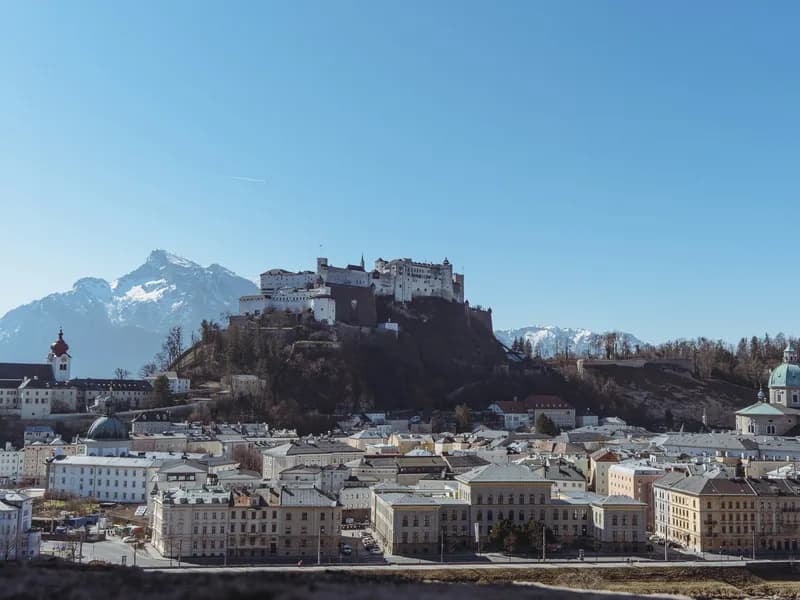
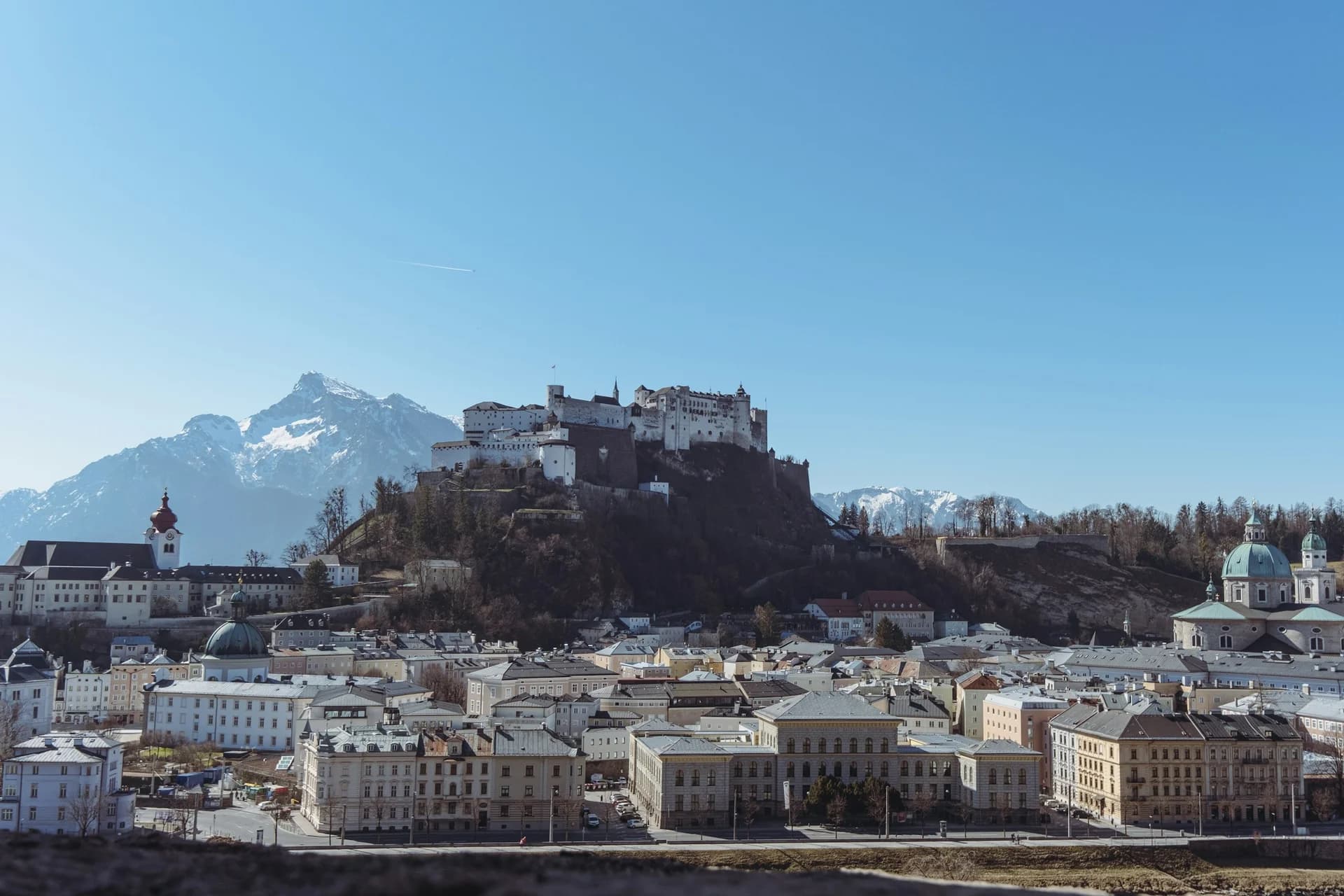
From there, the walk continues up the Kapuzinerberg, the hill on the right bank. It's a 15-minute climb through forest to a viewpoint that looks straight across at the fortress and the old town. Free, quiet, and better than any paid overlook.
What's your honest opinion on the Salzburg Card?
Genuinely good value. €31 for 24 hours gets you the fortress (€16.30), the funicular, buses, and most museums. Doing two or three major attractions in a day, it pays for itself. The 48-hour (€40) and 72-hour (€46) versions are even better deals. Buy it at the tourist office at the train station.
Locals wouldn't buy one — they hold annual passes to the things they care about. But for visitors doing 2-3 days? Absolutely worth it.
Best place to eat in Salzburg that tourists don't know about?
Stiftskeller St. Peter. Tourists do know this one — it's supposedly Europe's oldest restaurant, dating to 803 AD — but it remains genuinely good. Skip the formal dining room and eat in the courtyard in summer. The Tafelspitz [boiled beef] is excellent and costs about €22.
For cheap eats, head to the Grünmarkt at Universitätsplatz. The market stalls sell bratwurst, strudel, cheese, and bread — everything you need for €6-10, and far better than any restaurant at that price point.
Avoid the restaurants directly on Mozartplatz and Residenzplatz. They charge double for average food. Walk two blocks in any direction and quality goes up while prices come down.
What about the festival? Is it just for rich people?
The Salzburg Festival [July-August] carries expensive tickets — opera seats can run €200-400 — but not everything is elite. Standing-room tickets start at €15-30. The Jedermann performance on the cathedral square is partially visible for free from outside the seated area, and the festival brings free concerts and open-air events across the city.
For great music in Salzburg, though, you don't need the festival at all. The Mozarteum hosts concerts year-round. The fortress concerts (€35-60, includes funicular) are atmospheric. And the Marble Hall in Mirabell Palace stages daily chamber concerts in one of the most beautiful rooms in the city.
Mozartwoche in late January is the quiet favorite among residents — smaller, more focused, and you can get tickets for everything.
Any tourist traps you'd warn people away from?
The Mozart chocolate balls — Mozartkugeln. The machine-made ones (blue and silver wrapper, by Mirabell) are mass-produced and mediocre. If you're going to buy them, get the handmade originals from Fürst (red and gold wrapper), made by hand since 1890. The shop is on Brodgasse 13. A box costs more, but it's actual confectionery, not a souvenir.
Also skip the horse-drawn carriages in the old town unless you really want the experience. €55 for 30 minutes buys you a route you can walk in 20 minutes — and actually stop to look at things along the way.
What's your favorite season in Salzburg?
Early October wins. The summer crowds have left, the weather is still mild (10-15°C), the trees along the Salzach turn gold, and the city seems to exhale. The Grünmarkt fills with pumpkins and new-season apples. The beer gardens are still open. The fortress is uncrowded.
December is beautiful too — the Christmas markets on Residenzplatz and Mirabellplatz are genuine, not manufactured for tourists, and Salzburgers actually shop there. And the Krampuslauf in early December, when people dressed as terrifying demon figures run through the streets, is something you'll never forget. It's a pre-Christian Alpine tradition and it's completely wild.
Skip January-February unless you like cold rain and gray skies. And expect July-August to feel overwhelming with festival crowds.
What do Salzburgers do on a typical weekend?
Saturday morning: the Grünmarkt for shopping, then coffee at Café Tomaselli or Café Bazar (the one on the river — Thomas Bernhard used to go there). Afternoon hike or bike ride.
Sunday: almost everything is closed. This is Austria — Sunday closure laws are serious. The only shops open are at the train station, so people hike, visit family, or head to a Gasthaus for Sonntagsbraten [Sunday roast]. The Stiegl brewery restaurant is open. Churches are open, obviously.
Residents bike a lot. Salzburg has good bike paths along the Salzach river, and you can cycle to Hellbrunn Palace in 20 minutes. In winter they ski — Bad Gastein, Flachau, and Obertauern are all within 1-1.5 hours.
Any hidden spots most visitors miss?
The Steingasse on the right bank — a narrow medieval lane that was the original trade route, where hardly anyone goes. At the end sits a tiny bar called Die Weisse that serves its own craft beer and outstanding pizza. It's where Salzburg's 20-and-30-somethings go.
Nonnberg Abbey — the oldest continuously operating nunnery north of the Alps (since 714 AD). The courtyard is free to enter and the views back toward the city are lovely. Yes, it's in the Sound of Music. No, the nuns don't sing.
And the Salzburg Altstadt at night. After 9PM the old town empties. The cobblestones turn wet, the fortress is lit up, and you can walk Getreidegasse alone. That's the Salzburg residents keep for themselves.
Last question: will you ever leave?
Probably not. Vienna is bigger and has more to do, but Salzburg has the Alps. You can be on a mountain in 30 minutes, walk to work through a UNESCO old town, and pay half what an apartment would cost in Munich, an hour away. And the beer is better.
Salzburg isn't perfect. It's expensive by Austrian standards. The weather is moody — it rains more than people expect. And the summer crowds are genuinely difficult. But after 15 years, the city still surprises her. Last week she found a courtyard behind Getreidegasse she'd never noticed before. You don't get tired of a city that keeps showing you new things.
Just don't ask her to sing "Edelweiss."
For a deeper dive into what to see, read our top 10 things to do in Salzburg. If you love Salzburg's musical heritage, our music lover's guide covers fortress concerts to jazz. For another compact European city with mountain access, Lucerne is the Swiss equivalent.