
The Slow Way Into the Douro: A Journey Up Portugal's River of Wine
The Slow Way Into the Douro: A Journey Up Portugal's River of Wine
There's a fast way into the Douro Valley, and there's a right way. The fast way is a rental car and ninety minutes of motorway out of Porto. The right way starts at São Bento station, under that vaulted hall lined with some twenty thousand blue-and-white azulejo tiles, with a €14 (about $15) ticket in your hand and nowhere you need to be.
Take the right way. Here's how the day unfolds.
The train that learns to follow the water
The Linha do Douro leaves Porto and spends its first hour being ordinary — suburbs, tunnels, a stop at Marco de Canaveses that nobody remembers. You'll be tempted to think you've been oversold. Don't.
Somewhere past Peso da Régua, the track gives up trying to go straight and surrenders to the river. From there it hugs the Douro so closely the water seems to lap at the rails. Sit on the right-hand side, facing forward. This is not a gentle suggestion — it's the difference between watching the valley and watching a hillside.
And then the terraces begin.
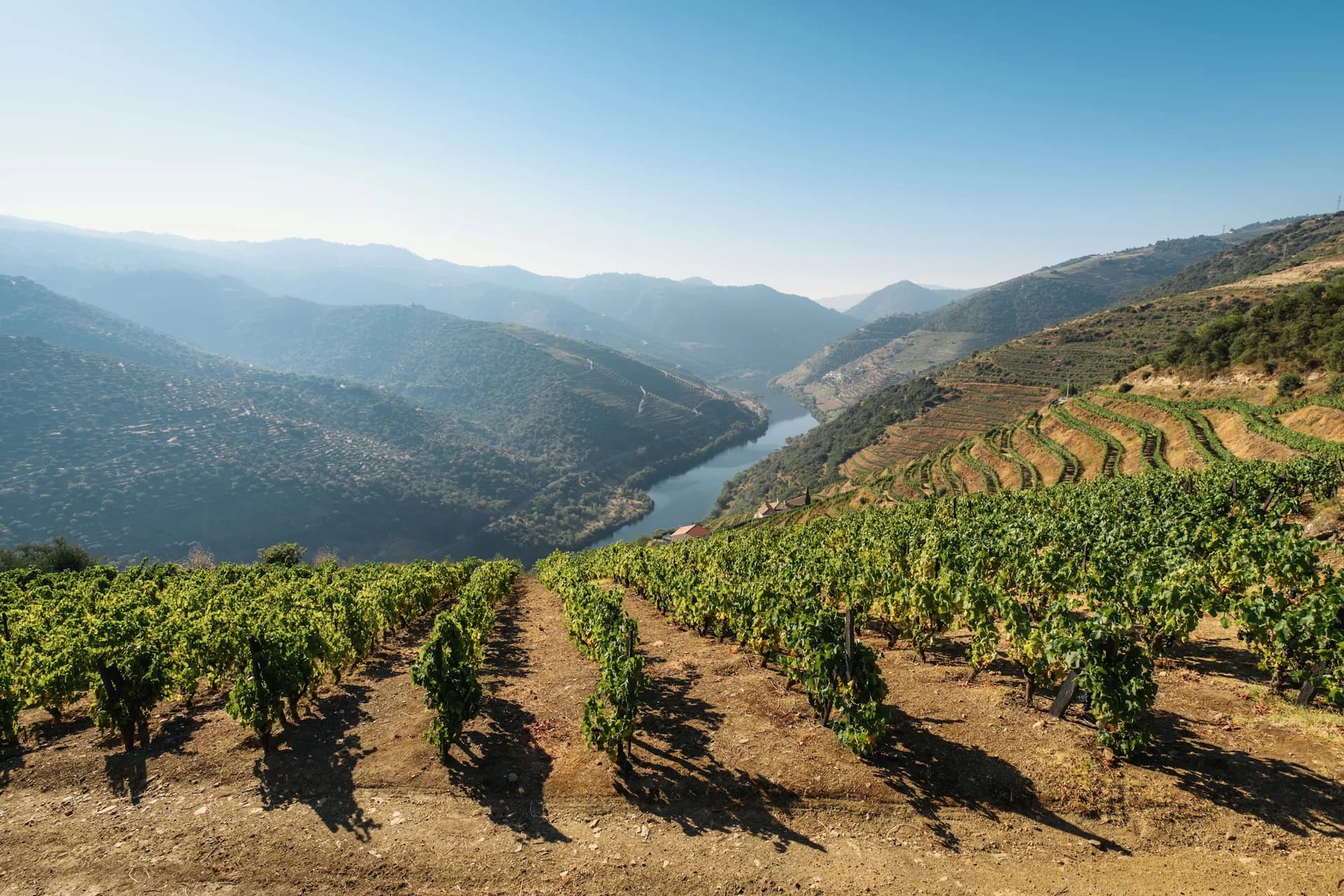
They climb out of the water in stone-walled steps, thousands of them, stacked so tightly the hills look combed. This is the Alto Douro, farmed for wine since the Romans and mapped as a protected region since 1756 — the oldest demarcated wine appellation on earth, predating even the classified estates of Bordeaux. UNESCO added the whole landscape to its World Heritage list in 2001. You'll understand why somewhere around the second bend, when the phone comes out and stays out for the rest of the ride.
Pinhão, and the small panic that follows
The train sighs into Pinhão about two and a half hours after Porto. Step onto the platform and the first thing to find you is the heat — in July and August the valley bakes past 38°C (100°F), because those same slopes that make the wine also trap the sun like an oven.
The second thing is the station itself. Pinhão's platform is wrapped in azulejo panels from the 1930s — hand-painted scenes of the grape harvest, women carrying baskets, boats loaded with barrels, the vintage as it looked a hundred years ago. Most people photograph them. Fewer stop to read them. Do both.
Then comes the friction, and every first-timer feels it. You're in Pinhão. The famous estates are up on the ridges. And there is no bus, no metro, no obvious next move. The village itself is about three streets and a riverfront, and for a disorienting ten minutes it can feel like the postcards lied.
They didn't. You just need the next step.
Getting up the hill
Here's the move the guidebooks bury. The great quintas aren't built for people who wander in off the street — they run on booking. Reserve a tasting the day before (most estates take an email or a WhatsApp message), and many will send a driver to collect you from the Pinhão platform. No car, no problem, no white-knuckle mountain road.
If you'd rather drive yourself, the N222 out of Pinhão was once voted the best driving road in the world — 27 kilometres of switchbacks with the river winking below. It's a glorious road and a genuinely demanding one, and it is not the place to be after a generous tasting flight. Which is the whole argument for the driver.
Point yourself toward Quinta do Crasto. It sits high above a horseshoe bend, and its infinity pool — the one every Douro photo you've ever seen was taken beside — hangs over the terraces like it's about to pour into them. A visit with tasting runs around €25–35 ($27–38) and needs booking ahead. Their old-vine reds, from vines planted before anyone bothered keeping records, are the ones to slow down for.
If you're basing yourself nearer Régua, Quinta do Vallado is one of the oldest estates in the valley and one of the easiest to reach — its schist-walled winery a short hop from town. Either way the pattern holds: a slow walk through the vines, a cool cellar that smells of old oak and warm stone, and a table on a terrace with a view that does half the selling for them — the same unhurried ritual you'll recognise from South Africa's Cape Winelands, only centuries older.
As the growers here like to say, the Douro makes three wines — the port, the table wine, and the view.
The payoff comes in gold
Time your afternoon so you're on the water for the last light. A rabelo boat cruise — the flat-bottomed wooden boats that once hauled port barrels downriver to Porto's cellars — pushes off from Pinhão's quay for about €15 ($16) an hour, longer runs for a little more. The engines have replaced the sails, but the shape of the hull hasn't changed in three hundred years.
This is when the valley stops performing and simply becomes itself. The sun drops behind the western ridge. The terraces turn from green to bronze to something close to burning. The river goes flat and mirror-black, and the vineyards double themselves on its surface. Boats are few, the air finally cools, and the only sound is water against a wooden hull.
That morning panic on the platform? Gone. Forgotten. This is the thing you came four thousand miles for, and it delivers without asking you to pretend.
If you have a second day
One day gives you the highlight reel. Two lets you breathe.
Spend the extra morning in Peso da Régua, the valley's working capital and the point where port has been graded and shipped for centuries. The Museu do Douro on the riverfront (around €7.50 / $8, open 10am–6pm) is small, sharp, and honest about how this landscape was really built — the terraces, the trade, the human labour behind the romance. Half an hour there quietly changes how you taste everything afterward.
Then wander back down to the water for lunch. Order the polvo à lagareiro — octopus roasted with garlic and olive oil — and a glass of chilled white from grapes grown on the slope across the river. It costs less than you'd guess and tastes like the exact place it came from.
The honest bit
Come in late September or early October if the calendar allows. That's the vindima, the harvest, when the estates open their granite lagares and let visitors stomp grapes barefoot the old way, and the whole valley smells of crushed fruit. Spring — April into June — is the quieter, greener alternative, terraces in full leaf and the heat still kind. High summer is stunning and brutal in equal measure; if you land in August, do the outdoor things early and let the afternoon belong to a shaded tasting room — or trade the valley's furnace afternoons for the beaches of the Algarve down south.
So: book your estates before you arrive. Sit on the right side of the train. Say yes to the boat. Do those three things, and the Douro hands you the rarest thing in modern travel — a place that's more beautiful in person than in the photo that talked you into going.


