12 Things to Do in Ghent That Make It Belgium's Most Underrated City Break
12 Things to Do in Ghent That Make It Belgium's Most Underrated City Break
Bruges gets the postcards. Brussels gets the meetings. Ghent gets the people who actually want to enjoy Belgium. This is a working university city with a thousand-year-old core, canals you can drink beside, and a moated castle sitting smack in the middle of town like it forgot to leave. Give it two days and it'll out-charm cities twice its size. Here's exactly how to spend your time.
1. Stand Face to Face with the Ghent Altarpiece
Inside St. Bavo's Cathedral hangs the Adoration of the Mystic Lamb, the 1432 Van Eyck masterpiece that's been stolen, dismantled, hidden from the Nazis, and restored panel by painstaking panel. Entry to the AR-guided viewing runs about €16 (roughly $17) and hands you a headset that peels back six centuries of overpainting right in front of your eyes. Book a morning slot online. Afternoons clog up, and you do not want a queue standing between you and the most influential painting in Northern European art.
One detail worth knowing: the lower-left panel, "The Just Judges," was stolen in 1934 and never recovered. What hangs there today is a copy. Nobody has ever found the original.
2. Climb the Walls of Gravensteen Castle
A genuine medieval fortress, moat and all, rising straight out of the city center — the kind of moated castle you'd normally travel to Cesky Krumlov to find, not stumble on mid-city. Gravensteen dates to 1180 and comes with the single funniest audio tour in Belgium — a deadpan comedian narrates your walk through the torture chamber and the count's quarters. Entry is around €13 (≈$14). Climb to the ramparts for a rooftop-height view over Ghent's spires, then duck back down into the armory. Give it 90 minutes.
3. Take the Canal Boat Along Graslei and Korenlei
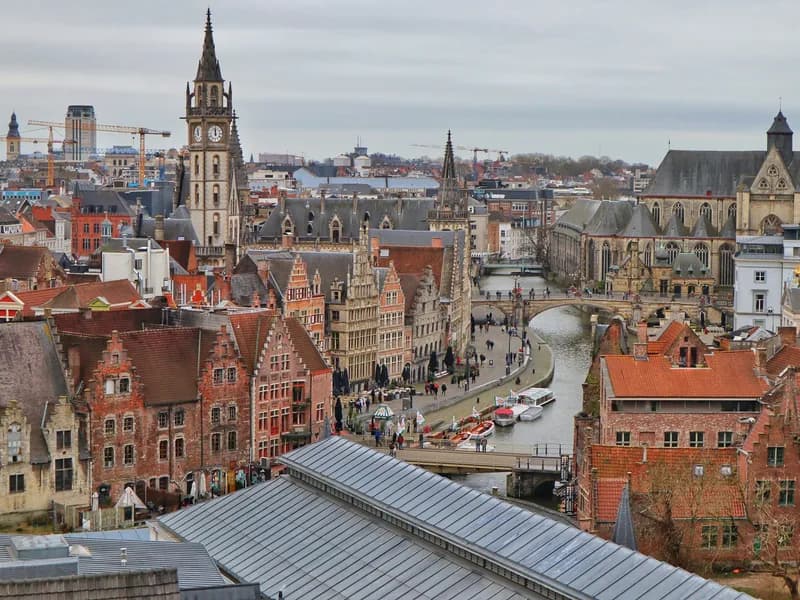
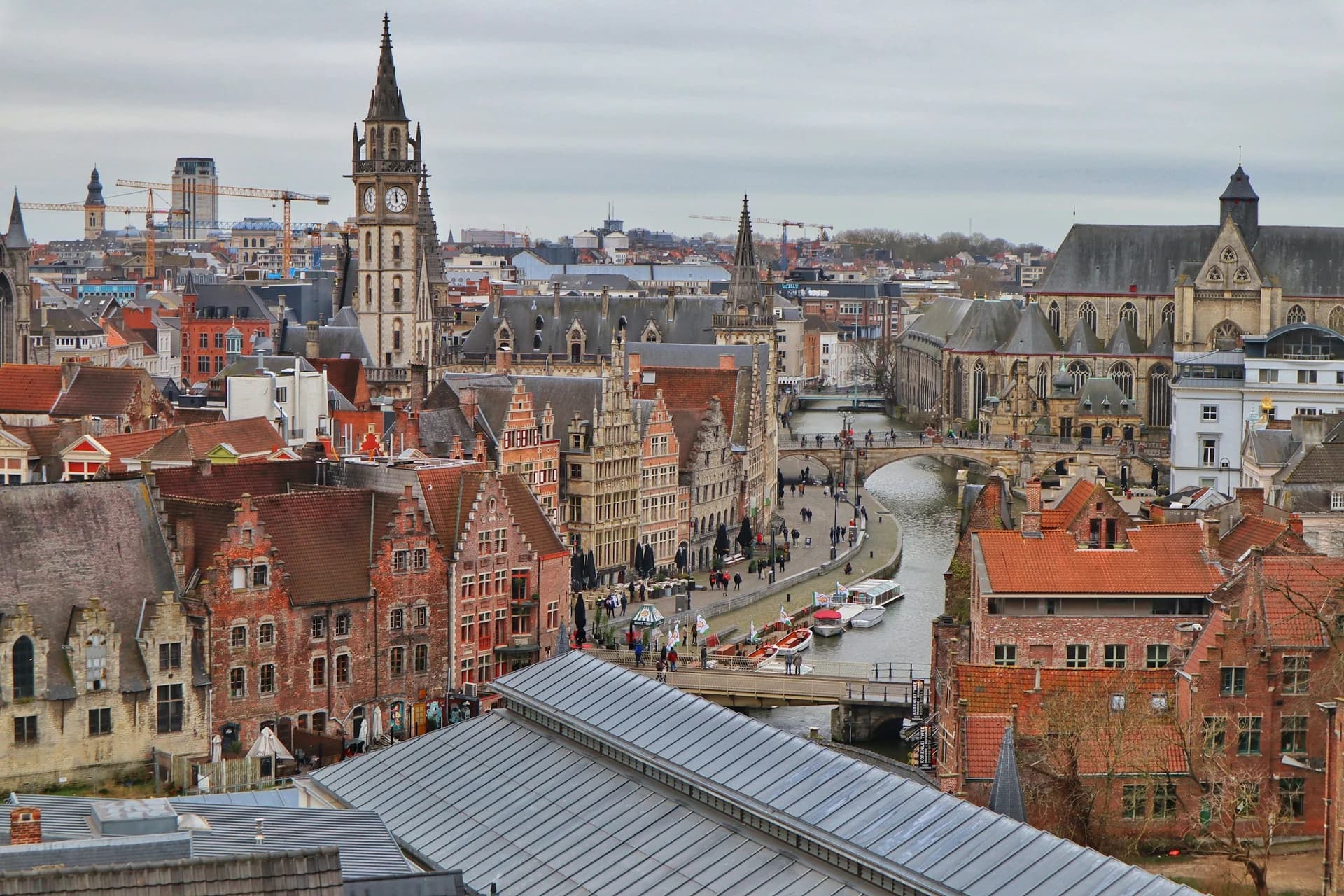
The old medieval harbor is the prettiest stretch of water in Flanders — smaller and far calmer than Amsterdam's crowded canals — and the two facing quays, Graslei and Korenlei, are lined with guild houses that once traded grain and beer. A 40-minute open-boat tour costs about €10 ($11) and leaves regularly from the Graslei docks; no need to pre-book off-season. The skippers point out which gabled house belonged to which guild, and you'll pass under low stone bridges you'd never notice from street level. Sit on the right side leaving the dock for the best angles.
4. Catch Golden Hour from St. Michael's Bridge
The single best free view in the city. Stand on St. Michael's Bridge and you get all three of Ghent's medieval towers lined up in one frame — St. Nicholas' Church, the Belfry, and St. Bavo's Cathedral — with the guild houses reflected in the canal below. Show up around sunset when the buildings are floodlit and the water goes gold. It's the shot everyone takes home, and for once the crowds are right.
5. Get Lost in the Patershol Quarter
Just behind the castle, Patershol is a knot of cobbled lanes barely wide enough for a car, packed with the best restaurants in town. This was the tanners' and craftsmen's district in the Middle Ages, and the street plan hasn't changed since. Come here for dinner rather than lunch — the little bistros light up at night, and reservations are smart on weekends. Wander without a map. Every wrong turn is photogenic.
6. Order a Bowl of Waterzooi
Ghent's signature dish is waterzooi, a creamy stew of chicken (traditionally fish) with leeks, carrots, and potatoes in a rich broth — exactly what you want after a damp Flemish afternoon. Order the real thing at a Patershol restaurant and expect to pay €22–€28 ($24–$30) for a generous bowl with bread. Pair it with a local blonde beer. Skip the tourist-menu versions near the cathedral; the smart move is to walk five minutes to where the locals eat.
7. Drink Where Ghent Actually Drinks
Two institutions. Dulle Griet on Vrijdagmarkt serves the towering Kwak beer in its signature curved glass — order one and you'll have to hand over a shoe as a deposit, hoisted up in a basket behind the bar until you return the glass. It's a 40-year-old tradition, not a gimmick for tourists. A short walk away, Het Waterhuis aan de Bierkant sits right on the canal with 150-plus Belgian beers and a waterside terrace. Grab a spot outside as the light drops.
8. Ride the Belfry Elevator for the Rooftop View
The 91-meter Belfort is a UNESCO World Heritage site and Ghent's medieval watchtower, topped by a gilded dragon weathervane. There's a glass elevator most of the way up (around €11 / $12), so you don't have to sweat the climb, and the top platform gives you a 360-degree sweep over the red rooftops. Time it for the top of the hour to hear the 54-bell carillon go off around you.
9. Hunt Down Street Art on Werregarenstraat
Locally known as Graffiti Street, this narrow alley between Hoogpoort and Onderstraat is a legal, ever-changing canvas where artists paint over each other's work daily. Every surface — walls, drainpipes, doorframes — is fair game. Come back tomorrow and it's a different street. It's a two-minute detour off the main tourist route and one of the most photographed spots in the city for good reason.
10. Buy Mustard the Way Ghent Has for 200 Years
At Tierenteyn-Verlent on Groentenmarkt, they've been ladling fresh mustard from a wooden barrel since 1790. The mustard is pumped up from the cellar, sharp enough to clear your sinuses, and sold in a stone crock that makes a far better souvenir than a fridge magnet. A jar runs a few euros. While you're on Groentenmarkt, hunt down a bag of cuberdons — the purple cone-shaped "Ghent noses," a raspberry-gum candy soft in the middle that you won't find outside Belgium.
11. Do Thursday the Ghent Way — Veggie Day
Ghent was the first city in the world to declare a weekly Veggie Day, back in 2009, and the meat-free culture stuck. If you're in town on a Thursday, you'll find restaurants leaning into it hard, from Michelin-adjacent kitchens to the falafel joints around the university. Even committed carnivores should lean in — the vegetarian food here is genuinely excellent, not an afterthought. Try Lekker GEC or one of the spots around Sint-Pietersnieuwstraat.
12. See the City's Story at STAM (or Modern Art at SMAK)
If the weather turns — and in Flanders it will — duck into a museum. STAM, the city museum, is built around a giant walkable aerial photo of Ghent on the floor that lets you trace how the city grew over a thousand years (entry about €12 / $13). Prefer contemporary art? S.M.A.K. and the fine-arts MSK sit side by side in Citadelpark, a 15-minute tram ride south. One ticket, a full afternoon, and no rain.
Pro Tip
Ghent is a walking city, so base yourself near the historic center between the Korenmarkt and Patershol and you'll reach almost everything on foot. If you land at Gent-Sint-Pieters station, hop tram 1 into the center rather than trudging the 30 minutes with luggage. Buy a day pass for De Lijn public transport if you plan to reach Citadelpark. And here's the real insider move: stay overnight instead of day-tripping from Brussels. When the tour buses leave around 5 PM, the floodlights come on, the canals empty out, and the city becomes something you'll want to keep to yourself.
Related Articles
 Travel Guides
10 Things to Do in the Maasai Mara That Aren't Just the River Crossing
 Travel Guides
12 Best Things to Do in Luxor: A Both-Banks Hit List for Ancient Thebes
 Travel Guides