The Side of the UAE Nobody Talks About: 48 Hours in Al Ain
The Side of the UAE Nobody Talks About: 48 Hours in Al Ain
The road from Dubai to Al Ain takes 90 minutes on the E66, and in that time the Emirates transforms completely. The glass towers shrink in the rearview mirror. The desert flattens. And then, improbably, you see green.
Al Ain is called the Garden City, and for once the nickname isn't marketing. A UNESCO World Heritage oasis with 147,000 date palms sits right in the center of town, irrigated by a falaj system that's been working for 3,000 years. Three thousand. The plumbing in my apartment in Brooklyn can't make it three months.
The Oasis at Dawn
I arrived at the Al Ain Oasis at 7:30 AM because the tip sheet said to avoid midday heat. Good advice — by noon it was 40°C. But at 7:30, the shaded walking paths beneath the palms were cool and quiet. The air smelled sweet, like dates drying in the sun, because that's exactly what was happening.
The eco-center at the entrance explains the falaj irrigation system — underground channels that gravity-feed water from the mountains to the oasis without any pumps or electricity. Engineers who visited in the 1970s said the system was more efficient than modern alternatives. It's still running. Free entry. Allow 1-2 hours.
This is the thing about Al Ain. While Dubai builds the future, Al Ain quietly preserves 5,000 years of the past. And it's not a museum — people still live here, still farm dates, still tend the falaj channels.
Jebel Hafeet: 60 Hairpin Turns to the Sky
The Jebel Hafeet mountain road is 12 km of pure driving adrenaline. Sixty hairpin turns climbing to 1,249 meters with panoramic views of the Al Ain valley spreading out below. It's free to drive, popular with cyclists at dawn, and absolutely spectacular at sunset when the limestone turns gold.
At the base, Green Mubazzarah park has natural hot springs — free warm-water pools fed by underground springs at a constant 38°C. On a Friday morning, local families come here for picnics and barbecues. It's one of the most authentically Emirati experiences you can have outside a private home.
Basic chalets are available through the Al Ain municipality for AED 200/night if you want to stay at the base of the mountain. Not luxury, but sleeping next to natural hot springs in the desert is its own kind of luxury.
Bronze Age Tombs and Camel Markets
Hili Archaeological Park contains Bronze Age tombs dating to 3000 BC — the most significant prehistoric site in the UAE and a UNESCO World Heritage Site. The Grand Tomb has carved figures of humans and oryx that are five millennia old. Free entry, open 24 hours. The museum section runs 9AM-5PM.
But the real time capsule is the Al Ain Camel Market. It's the last traditional livestock market in the UAE, and it operates like it has for centuries. Get there between 6AM and 10AM to see Bedouin traders negotiating prices for camels, goats, and sheep. The smells are intense, the sounds are unforgettable, and nobody is going to hand you a brochure.
Photography is generally fine but always ask before pointing your camera at people. This is a working market, not a tourist attraction.
The Fort Nobody Visits
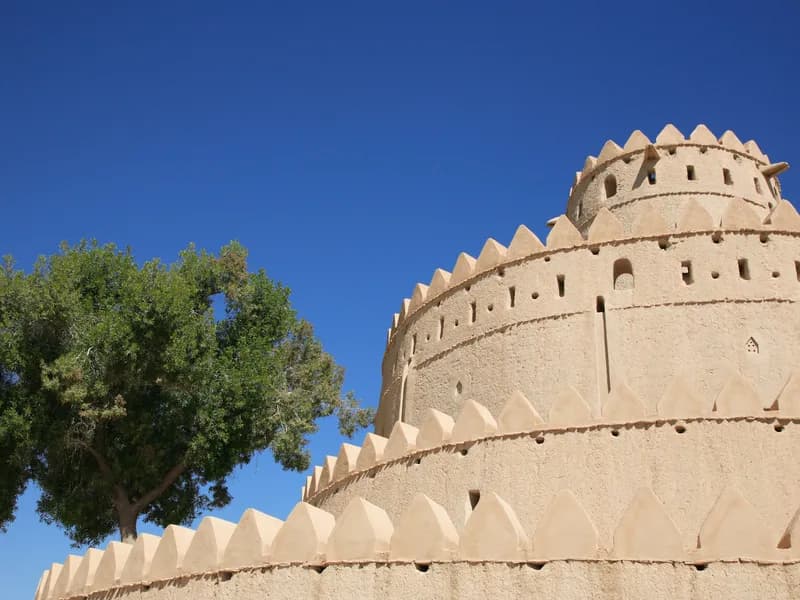
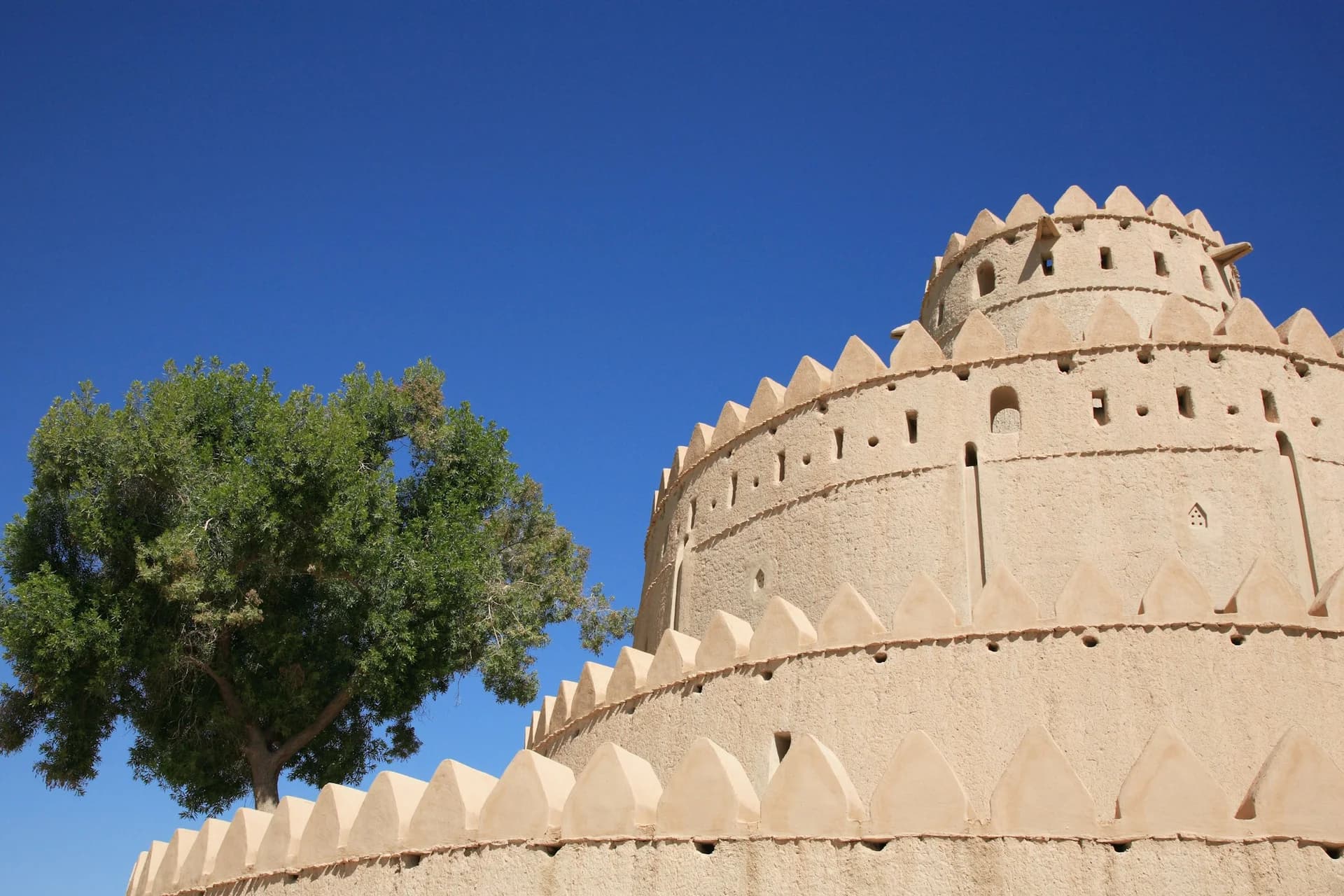
Al Jahili Fort, built in 1891, is one of the largest forts in the UAE and houses a permanent exhibition on Wilfred Thesiger's legendary crossings of the Empty Quarter. Thesiger's black-and-white photographs of Bedouin life are extraordinary. Free entry, air-conditioned galleries (which matters when it's 45°C outside). Open Tue-Sun 9AM-5PM.
I spent an hour here on a Tuesday afternoon and was the only visitor. In a country where Abu Dhabi builds billion-dollar museums that draw millions, there's something quietly wonderful about having a centuries-old fort to yourself.
The Al Ain Zoo
One of the largest zoos in the Middle East with 4,000+ animals including Arabian oryx, white tigers, and giraffes. Entry is AED 31 (~$8.50) for adults, AED 15 for children. The Sheikh Zayed Desert Learning Centre inside is genuinely educational — not a token exhibit. Safari experience available for AED 35 extra. Allow 3-4 hours. Open 9AM-8PM weekdays, until 9PM weekends.
Practical Notes
Al Ain is much cheaper than Dubai or Abu Dhabi. Hotels run AED 200-400/night ($55-110). Most major attractions are free. A meal at a local restaurant costs AED 20-40 ($5-11). The city is an excellent budget base for the eastern UAE.
You can walk across the border to the Omani town of Al Buraimi at the Hili border post. GCC residents need only an ID card. Other nationalities need an Omani visa. The Buraimi souk has cheaper goods and a different vibe.
Public transport is limited — rent a car from AED 80/day. The E22 from Abu Dhabi takes 90 minutes. From Dubai, take the E66.
And one more thing: Al Ain is more conservative than Dubai or Abu Dhabi. Cover shoulders and knees in public. Alcohol is only available in licensed hotel restaurants. During Ramadan, avoid eating, drinking, or smoking in public during daylight hours.
Al Ain isn't trying to compete with Dubai's skyline or Abu Dhabi's cultural district. It's doing something harder and rarer: being genuinely, unapologetically itself. That's worth 90 minutes on the highway.