12 Ladakh Stops That Earn Every Kilometre of the Drive
12 Ladakh Stops That Earn Every Kilometre of the Drive
Ladakh doesn't reward rushing. Distances are long, the roads climb like they've got something to prove, and the best sights sit in valleys hours apart. So the smart play is knowing which stops actually repay the drive — and exactly how to time each one.
Here are twelve, roughly in the order you'd thread them on a week-long loop out of Leh. Give yourself two or three days to acclimatise before you attempt the high passes. Your lungs will thank you.
1. Thiksey Monastery, at Dawn
Set the alarm. Morning prayers at Thiksey start around 6:30 AM, and beating the tour buses is the entire point. You'll climb the whitewashed tiers to the prayer hall while young monks blow the long dungchen horns and first light spills over the Indus valley. Entry runs about ₹50 (roughly $0.60). Skip the midday visit — it's the same building without the magic.
Thiksey sits 19 km southeast of Leh, an easy 40-minute drive. Do it on your acclimatisation days when you shouldn't be gaining altitude anyway.
2. Leh Old Town and Leh Palace
Back in town, the nine-storey Leh Palace looms over the old bazaar like a smaller cousin of the Potala. It's mostly empty inside — go for the rooftop, where the whole Leh basin and the Stok range open up. Entry is ₹40 for Indians, ₹300 (about $3.60) for foreign visitors. Wander down into the mud-brick lanes of the Old Town afterward; the restoration work here is quietly some of the best in the Himalaya.
3. Shanti Stupa at Sunset
The white dome above Changspa catches the last light better than anywhere in town. You can drive up, but the 500-odd steps from the road are the honest way to do it. Free entry, open until roughly 7 PM in summer. Time it for golden hour and the Stok Kangri massif turns pink across the valley.
4. Magnetic Hill and the Confluence
On the Leh–Kargil highway, about 30 km out, Magnetic Hill is the tourist stop everyone photographs — park in the marked box, take your foot off the brake, watch the car seem to roll uphill. It's an optical illusion, and it's fun for exactly ninety seconds. The real payoff is 5 km further: the confluence at Nimmu, where the jade-green Zanskar pours into the browner Indus. In spring the colours are startling. Both are roadside stops on the way to Alchi, so bundle them.
5. Alchi Monastery's 1,000-Year-Old Murals
Most Ladakhi gompas perch on cliffs. Alchi sits flat by the river, and that's a clue to its age — it predates the fortress-building era. Inside are wall paintings from the 11th and 12th centuries, Kashmiri in style, unlike anything else in the region. No photography allowed inside, which is the right call. Entry is around ₹50. It's a 70 km drive west of Leh; make it a day trip with Magnetic Hill on the way.
6. Khardung La, the Gateway North
The signboard brags 18,380 feet. GPS says closer to 17,582. Either way, Khardung La is thin, cold, and thrilling, and it's the pass you cross to reach Nubra. Don't linger up top — the smart move is a quick photo, a hot chai from the army-run canteen, and back in the car before the altitude headache sets in. You'll need an Inner Line Permit (about ₹500–600 including fees and the environmental levy); arrange it online or through any Leh travel agent a day ahead.
7. Nubra Valley and the Hunder Dunes
Over the pass, the land opens into wide river flats, and then — improbably — sand dunes. Hunder's dunes are home to double-humped Bactrian camels, descendants of Silk Road caravans. A short ride runs about ₹300–400. It's kitschy and you'll do it anyway. Stay the night in Hunder or nearby Diskit; the drive back over Khardung La in one day is a lot.
8. Diskit Monastery and the Giant Maitreya
Above Diskit village stands a 32-metre statue of the Maitreya (Future) Buddha, facing down the valley toward the border. The monastery behind it is Nubra's oldest and largest, and the view from its terrace — river, dunes, and snow peaks in one frame — is one of Ladakh's best. Entry is around ₹30.
9. Turtuk, the Village That Was Pakistan Until 1971
Push past Hunder toward the Line of Control and you reach Turtuk, a Balti village of apricot orchards and stone irrigation channels that only opened to tourists in 2010. The culture here is different — different language, different food, warmer welcomes than you'd expect this close to a contested border. Buy the apricots. Try the balay buckwheat pancakes. It's a long haul, but few places in Ladakh feel this untouched.
10. Pangong Tso, Beyond the Instagram Bend
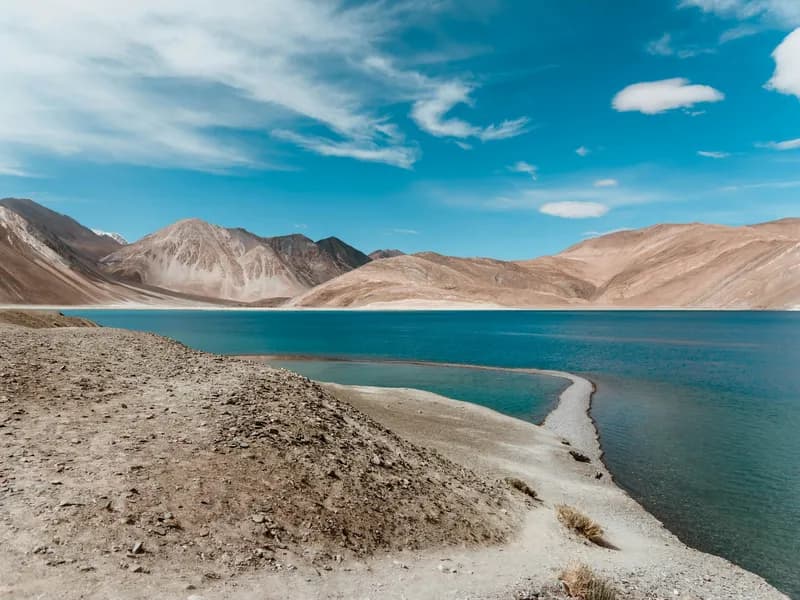
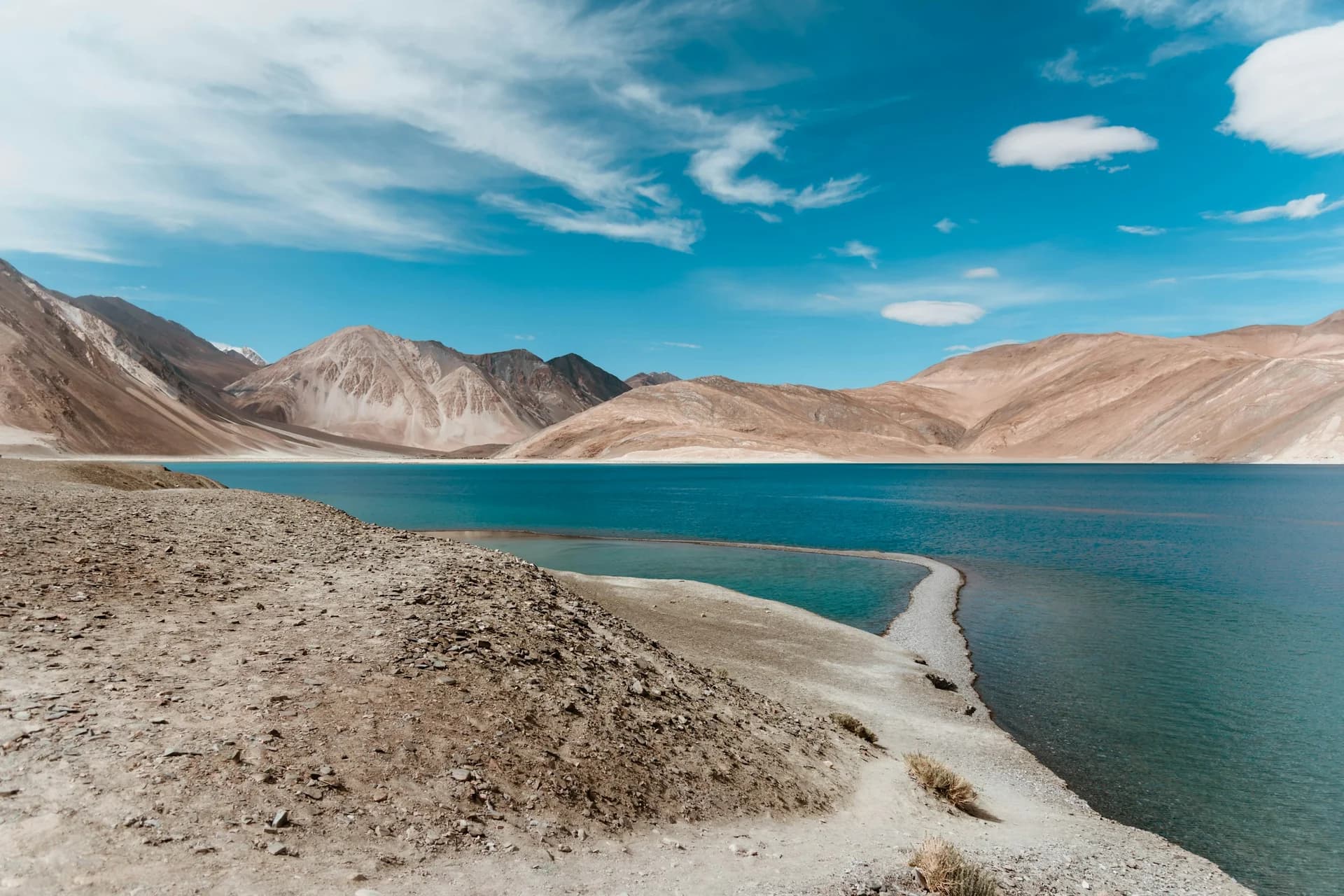
Yes, it's the lake from the movies. Yes, it's worth it. Pangong sits at about 14,270 feet and changes colour through the day from steel-blue to turquoise. The permit-and-drive from Leh takes five to six hours, so the real move is staying overnight at Spangmik or Lukung rather than turning around at the famous yellow-scooter photo spot. Dawn on the lake, before the day-trippers arrive, is when it earns the journey. Camp tents run ₹1,500–3,000 (about $18–36) a night with dinner.
11. Hemis, and the Festival Worth Planning Around
Hemis is the wealthiest and one of the largest monasteries in Ladakh, tucked into a side gorge 45 km southeast of Leh. Visit any time for the museum and the hushed courtyards — but if your dates are flexible, aim for the Hemis Festival (usually late June or early July), when masked cham dancers perform in the main courtyard for two days. Book your Leh accommodation weeks ahead if you're chasing the festival; the town fills up.
12. Lamayuru's Moonland
On the road toward Kargil, the hills around Lamayuru crumple into pale, eroded folds that locals call "moonland." The monastery here is among the oldest in Ladakh, and the setting — clay badlands under a hard blue sky — is genuinely otherworldly. It's a 125 km drive from Leh, so treat it as an overnight or fold it into a Srinagar-bound exit rather than a same-day round trip. Push on toward the plains from there and Amritsar, with its Golden Temple, makes a natural next stop.
Pro Tips Before You Go
- Permits first. The Inner Line Permit covers Nubra, Pangong, and Turtuk. Sort it a day ahead in Leh — carry printed copies, because checkpoints keep them and phone signal dies past the passes.
- Cash is king. ATMs exist only in Leh town, and they run dry. Draw more than you think you'll need before heading to the valleys.
- Download offline maps. Data drops off completely once you leave Leh. Postpaid SIMs work in town; prepaid ones often don't work in Ladakh at all.
- Altitude beats everyone eventually. Ascend slowly, hydrate hard, and keep Diamox on hand — ask your doctor before the trip. The dawn views up top are the reward for taking the first two days easy.
String these twelve together and you'll have covered monasteries a millennium old, the world's most photographed high-altitude lake, sand dunes at 10,000 feet, and a border village most travellers never reach. Tack a few days onto the plains and the marble of Agra makes an easy counterpoint to all that mountain rock. That's not a checklist. That's a reason to come back.