12 Things to Do in Coorg That Earn the Scotland-of-India Hype
12 Things to Do in Coorg That Earn the Scotland-of-India Hype
Coorg sells itself on mist and coffee, and both deliver. But Kodagu packs far more than plantation views into its folds of green — waterfalls you can stand under, elephant mornings on the river, a Tibetan settlement that feels transplanted from Lhasa, and a food culture built around pork curry no other corner of India makes the same way. Here's exactly where to go, what it costs, and when to show up, so you spend your days doing instead of Googling.
1. Chase Sunrise at Mandalpatti
Start here, and start early. Mandalpatti sits about 22 km from Madikeri, and the last stretch is a teeth-rattling track only 4WD jeeps can handle. Park at the Abbey Falls road junction, hire a shared jeep (roughly ₹1,800–2,000 / $22–24 round trip for up to six), and time your arrival for first light. On a clear post-monsoon morning, the valley fills with a flat white sea of cloud and the hilltops poke through like islands. Carry a jacket — it's genuinely cold up there at 6 AM.
2. Stand Under Abbey Falls
Eight kilometres from town, Abbey Falls crashes through a working coffee and spice estate, and the short walk in past pepper vines is half the fun. A hanging footbridge puts you face-on with the cascade, which turns thunderous from July through September. Entry is just ₹15–30 ($0.40). The smart move is arriving before 9 AM — by midday the viewing platform packs out with day-trippers and the photos stop being yours.
3. Meet the Elephants at Dubare
Dubare Elephant Camp sits on the Cauvery near Kushalnagar, and you reach it by crossing the river in a small boat or coracle. The morning interaction session (roughly 9–11 AM) lets you help scrub and feed the camp's elephants under the mahouts' watch. Entry runs about ₹110 ($1.30) plus the boat fee. Skip the afternoon slot — the elephants are off in the forest, and you'll have crossed the river for nothing.
4. Walk Into the Golden Temple at Bylakuppe
Half an hour from Kushalnagar, Bylakuppe is one of the largest Tibetan settlements outside Tibet, and its Namdroling Monastery — the Golden Temple — is the showpiece, a southern echo of the more famous Golden Temple in Amritsar. Three gilded Buddha statues tower nearly 40 feet inside the main hall, and if you time it right you'll catch young monks debating in the courtyard, all clapping hands and theatrical gestures. Entry is free; it's open roughly 9 AM to 6 PM. Dress modestly, and grab steaming momos from the stalls outside afterward.
5. Climb to the Source of the Cauvery at Talacauvery
About 48 km from Madikeri on the Brahmagiri slopes, Talacauvery marks the spring where the Cauvery river is born. A flight of 400-odd steps leads up to Brahmagiri peak, and the view back across the Western Ghats rewards every wheeze. On the way, stop at Bhagamandala's triveni sangama, where three rivers meet. If you can land here during Tula Sankramana in mid-October, you'll witness the moment pilgrims believe the goddess rises in the tank — chaotic, devout, unforgettable.
6. Watch the Valley Go Gold at Raja's Seat
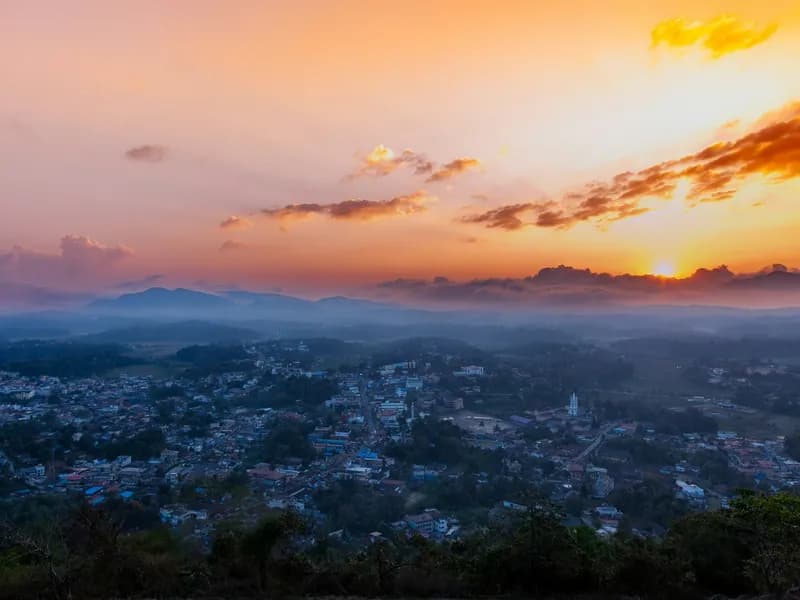
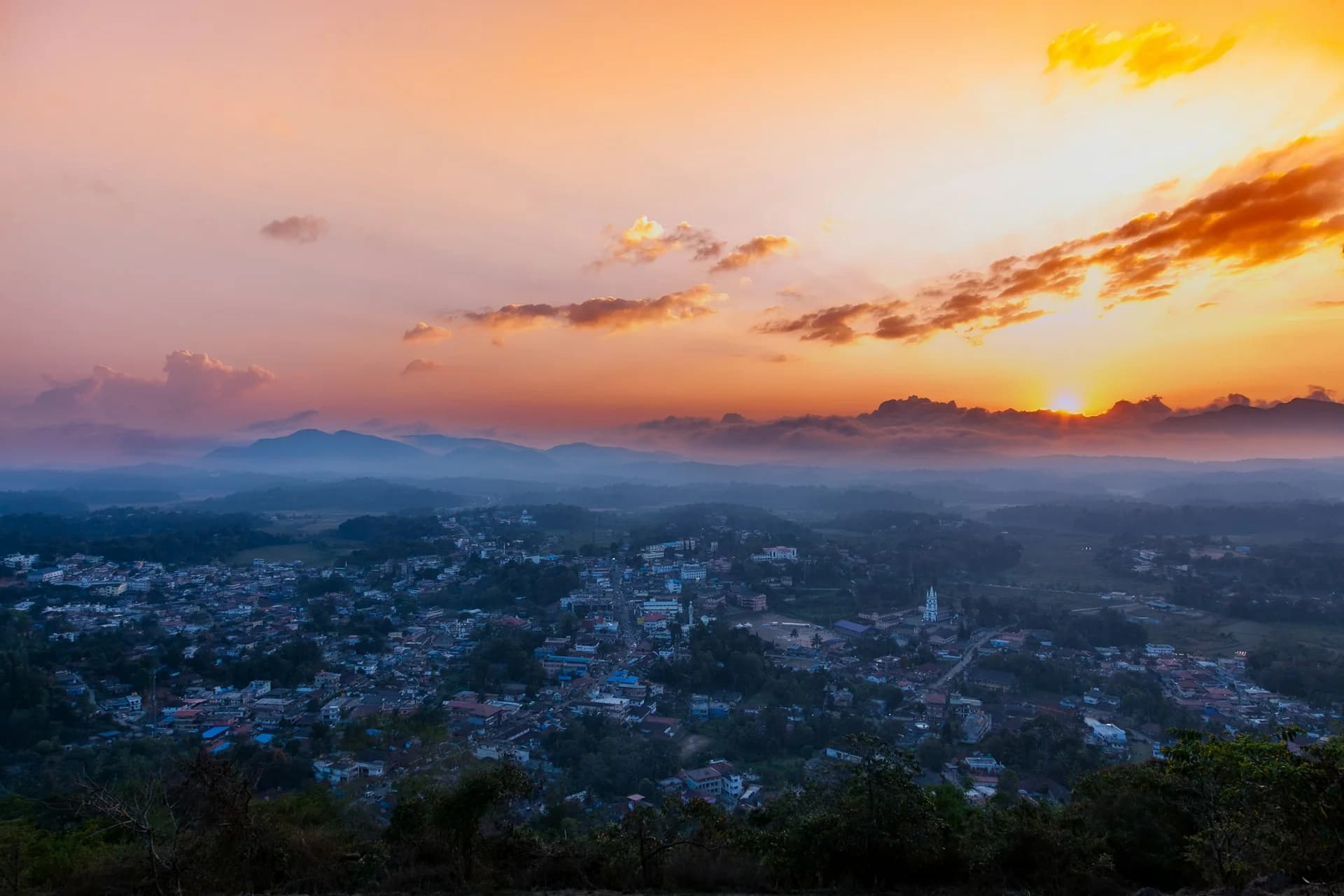
Yes, it's touristy. Go anyway. This little garden in Madikeri was where the Kodagu kings came to watch the sunset, and the layered ridgelines fading into pink still pull a crowd for good reason. Entry is ₹10, there's a musical fountain in the evening, and a toy train loops the grounds for kids. Arrive 45 minutes before sundown to claim a spot on the wall.
7. Trek Tadiandamol, Coorg's Highest Peak
For travelers whose legs are willing, Tadiandamol tops out at 1,748 m and delivers Coorg's best ridge walk. The trail starts near the old Nalknad Palace at Kakkabe and runs about 7 km one way through shola forest and open grassland. Hire a local guide (₹800–1,200 / $10–14) — the upper trail forks confusingly in mist. Start by 7 AM so you're up and back before the afternoon cloud rolls in and erases the view.
8. Learn the Difference Between Arabica and Robusta
Coorg grows a huge share of India's coffee, and a plantation walk turns the postcard into something you understand. Estates around Pollibetta, Suntikoppa, and Siddapur run guided tours for ₹300–500 ($4–6), showing you how pepper vines spiral up the silver oak shade trees and how the cherries are picked, dried, and graded. Most homestays will walk you through their own patch for free if you're staying the night. End with a tasting — Coorg robusta hits harder than you expect.
9. Reach Iruppu Falls and the Brahmagiri Edge
Near Srimangala in the south, Iruppu Falls tumbles down the Brahmagiri range beside a small Rama temple, and the spot doubles as the trailhead into Brahmagiri Wildlife Sanctuary. Entry is around ₹30. The falls peak in the monsoon; the trek into the sanctuary needs a forest permit and an early start. Pair it with a Nagarhole safari the same trip — they're on the same southern loop that, pushed a little further, drops into Kerala's backwater country around Alleppey.
10. Go on Safari in Nagarhole
The Rajiv Gandhi (Nagarhole) National Park, on Coorg's southern fringe, is tiger and leopard country, with big herds of elephant and gaur and the occasional pack of dhole. Book a morning or evening jeep safari through the Karnataka Forest Department (roughly ₹300 for the shared bus, more for a private jeep). The window from October to May is best — sightings drop off once the monsoon greens everything over and the animals scatter.
11. Raft the Barapole Rapids
When the rains come, the Barapole river near Bhagamandala turns into Coorg's adrenaline hit. Outfitters run roughly 4 km of grade II–IV rapids for ₹1,200–1,500 ($15–18) per person, life jacket and helmet included. The season is short — June through September, when the water's high — so this one's monsoon-only. Wear sandals you don't mind soaking.
12. Eat Like a Kodava
Don't leave without a proper Kodava meal. Pandi curry — pork slow-cooked with kachampuli, a dark, tangy local vinegar — is the dish the region is famous for, traditionally eaten with kadambuttu (steamed rice dumplings) or noolputtu (rice noodles). Add akki roti and a glass of homemade fruit wine and you've got the real thing. Coorg Cuisine and East End in Madikeri do solid versions, but a homestay kitchen beats any restaurant here. Vegetarian? Ask for the bamboo-shoot curry and akki roti — equally local.
Pro Tips Before You Go
- Base yourself smart. Madikeri is the hub for the north (Abbey Falls, Raja's Seat, Mandalpatti); Kushalnagar suits Dubare and Bylakuppe; the south near Kakkabe and Srimangala covers the treks and waterfalls. Two bases beat one long daily drive.
- Rent wheels. Public transport between sights is thin. A self-drive car or a hired cab with driver (₹2,500–3,500 / $30–42 a day) saves hours, and the plantation roads are an easy, gorgeous drive.
- Time the season. October to March is clear, cool, and ideal for sightseeing. June to September brings roaring waterfalls, full rivers, and rafting — but also leeches on the trails (carry salt) and washed-out viewpoints.
- Carry cash. Smaller estates, jeep operators, and homestays often run cash-only, and mobile signal disappears the moment you leave the main roads. Download your maps offline before you head into the hills.
Give Coorg three days and you'll do it justice. Give it five and you'll start plotting how to come back — or how to trade the mist for the beaches of the Andaman Islands.