12 Things to Do in Fukuoka That Aren't Just Eating Ramen
12 Things to Do in Fukuoka That Aren't Just Eating Ramen
Fukuoka gets typecast as a food town, and honestly, it earns it — tonkotsu ramen was born here, and the riverside yatai stalls are the stuff of travel legend. But spend your whole trip hunched over a noodle bowl and you'll miss the half of the city that locals actually love. This is a compact, walkable place where a mountaintop shrine, a swan-boat lake, and a beach sunset all fit inside one unhurried day.
Here's where to point yourself when you're not eating.
Grab a rechargeable Nimoca or Suica card the second you land — the airport subway runs straight into Hakata and Tenjin in under 12 minutes, and you'll tap through nearly everything from there. Download Google Maps offline for the wider region too; the day-trip trains and ferries aren't always signed in English on the platform — the same waterfront also runs a hydrofoil across to Busan in under four hours, if you fancy pairing Korea with your Kyushu week.
1. Climb to Dazaifu Tenmangu Shrine
Give this one a full morning. A 30-minute ride on the Nishitetsu line from Tenjin (about ¥410, roughly $2.70) drops you at the shrine dedicated to the god of learning, where students come to pray before exams and the approach path is lined with old tea houses.
Do two things here. Try the ume-ga-e mochi — a grilled red-bean cake stamped with a plum crest, about ¥130 each — hot off the griddle from the shops on the main street. Then detour to the Kengo Kuma–designed Starbucks near the entrance, a swooping lattice of wooden beams that's worth the photo even if you skip the coffee.
2. Rent a Swan Boat at Ohori Park
Ohori is the city's front garden — a wide lake ringed by a two-kilometer jogging loop that fills with locals at dusk. Rent a rowboat or a pedal-powered swan for about ¥1,100 per 30 minutes and drift past the stone bridges.
Right next door sits the Japanese Garden (¥250), a tidy pocket of raked gravel and maples that most tourists walk straight past. Go in the late afternoon when the light turns gold and the crowds thin out.
3. Catch Sunset at Fukuoka Tower and Momochi Beach
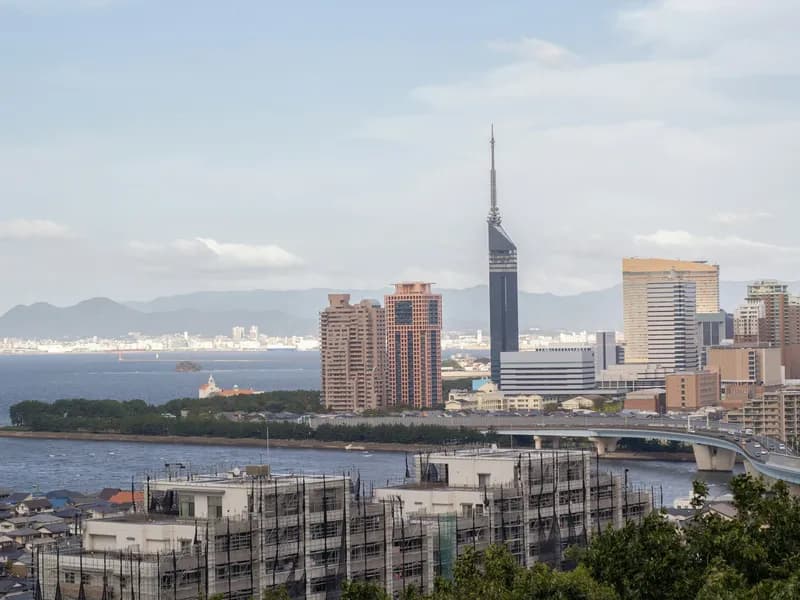
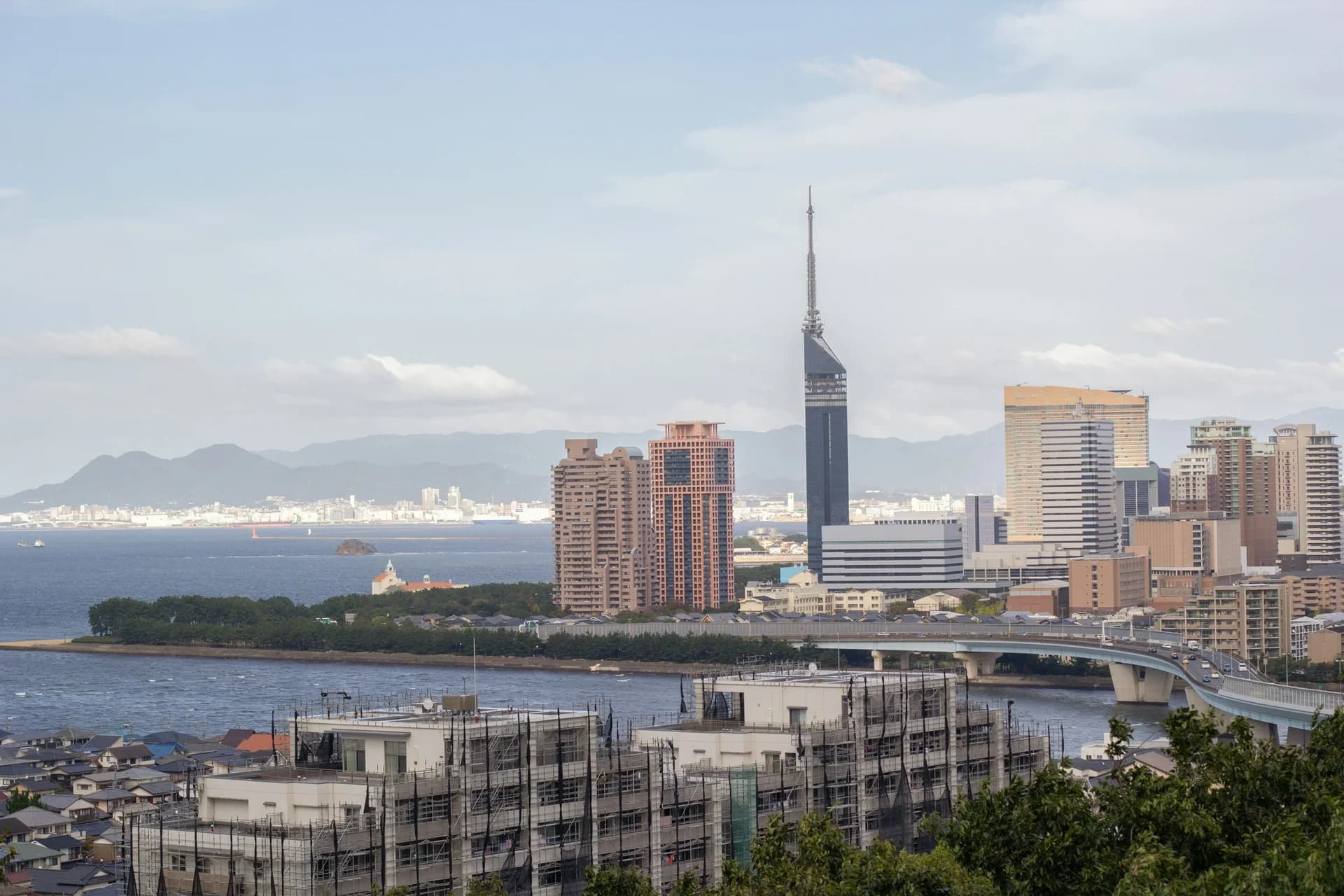
Fukuoka Tower is the tallest seaside tower in Japan, and the observation deck at 123 meters (¥800, about $5.30) faces west over the bay. Time your visit for sunset and watch the whole city switch its lights on beneath you.
Then walk five minutes down to Momochi Beach, an artificial stretch of sand with the wedding-chapel silhouette of Marizon jutting into the water. It's not a swimming beach so much as a sundown-stroll one — bring nothing, expect nothing, and let the sky do the work.
4. Watch the Fountain Show at Canal City Hakata
Canal City is a shopping-and-entertainment complex built around a curving artificial canal, and it's unapologetically futuristic — sweeping concrete in ochre and red, water running through the middle. Every half hour the central fountains erupt into a choreographed show, and after dark it turns into a projection-mapped light display that costs nothing to watch.
The smart move is to come for the architecture, not the shops — this is Jon Jerde's fever dream in concrete, and there's nothing else like it in Kyushu.
5. Walk Through the "Hell" Tunnel at Tocho-ji Temple
A short stroll from Hakata Station, Tocho-ji houses the largest seated wooden Buddha in Japan, carved from a single block and rising over ten meters. Entry is free.
Here's the part most visitors miss: behind the Buddha, a staircase leads down into a pitch-black corridor meant to represent hell. You feel your way along the wall in total darkness until you reach a faint ring of light symbolizing enlightenment. It takes two minutes and it's genuinely unforgettable.
6. Ferry Out to Nokonoshima Island
Ten minutes by ferry from Meinohama, Nokonoshima is a small island covered by a flower park that reblooms with the seasons — rapeseed in spring, cosmos in autumn, all of it framed against the blue of Hakata Bay. The ferry runs about ¥230 each way, with park entry around ¥1,200.
Pack a picnic or grab a rice ball at the harbor. Give yourself half a day here and you'll leave wondering why the place isn't overrun.
7. Time Your Trip to Kushida Shrine
Kushida is the spiritual heart of old Hakata and home base for the Hakata Gion Yamakasa festival every July, when teams haul one-ton decorated floats through the streets at a dead sprint. One of those towering kazariyama floats stands on display at the shrine year-round, so you get the spectacle even off-season.
It's a two-minute walk from Canal City, so fold it into that visit. The shrine opens early — arrive before 9AM and you'll have the place almost to yourself.
8. Shop Hakata's Kitchen at Yanagibashi Market
Locals call Yanagibashi Rengo Market "Hakata's kitchen" — a narrow covered arcade of roughly 50 stalls selling the mentaiko (spicy cod roe), fresh fish, and pickles that supply the city's restaurants. Most stalls open around 8AM and start winding down by early afternoon, so come in the morning.
Graze as you go: a few shops sell grilled skewers and rice bowls made from whatever came off the boat that day.
9. Find Calm at Sumiyoshi Shrine
Tucked between Hakata Station and the river, Sumiyoshi is one of the oldest shrines of its kind in the country, its vermilion halls set in a quiet grove of old trees. It's free, rarely crowded, and takes 20 minutes to see.
This is the antidote to a busy morning — a place to reset before you head back into the noise of the city.
10. Escape to Itoshima's Coast
Forty minutes west by train and bus, Itoshima is where Fukuoka goes on weekends: a coastline of surf beaches, seaside cafés, and a much-photographed pair of "wedded rocks" joined by a sacred rope. Rent a bike, or drive if you can swing it.
Stop at one of the beachfront cafés along Sunset Road, order a coffee, and watch the surfers. It's the closest thing Kyushu has to a California road trip.
11. Meet the Giant Reclining Buddha at Nanzoin
A 25-minute train ride to Kido-Nanzoin-mae station brings you to one of the largest bronze statues in the world — a reclining Buddha 41 meters long and heavier than the Statue of Liberty. Entry to the grounds is free.
Wander the forested temple complex around it, ring the bells, and take the shaded path back down. It's an easy half-day that feels a world away from the city.
12. Duck Underground at Tenjin Chikagai
When the weather turns — and in Fukuoka it will — dive into Tenjin Chikagai, a 600-meter underground shopping arcade built to mimic a 19th-century European street, with stained glass and cast-iron detailing. Close to 150 shops line the twelve avenues.
It connects straight to the subway, so you can shop, snack, and stay dry between department stores without surfacing once.
Pro Tip
Base yourself near Hakata or Tenjin Station and treat Fukuoka as a hub, not a checklist — its airport is also one of Japan's best-connected for cheap onward flights across Asia, so it's an easy first stop before you carry on to somewhere like Bangkok. Almost everything above sits within a 40-minute train ride, which means you can pair a temple morning with a beach evening and still make it back for yatai by 8PM. Buy the ¥640 day subway pass only if you're making three or more city hops — otherwise, tap-and-go with your IC card wins. And keep one afternoon completely unplanned. Fukuoka rewards the wander.
Related Articles
 Travel Guides
10 Things to Do in the Maasai Mara That Aren't Just the River Crossing
 Travel Guides
12 Best Things to Do in Luxor: A Both-Banks Hit List for Ancient Thebes
 Travel Guides