12 Unforgettable Things to Do in Jaisalmer, the Golden City
12 Unforgettable Things to Do in Jaisalmer, the Golden City
Some cities you simply visit. Jaisalmer you feel — in the grit of sandstone underfoot, in the amber wash of light at dusk, in the enormous silence of the Thar Desert once the sun drops. This fortress town on the far western edge of Rajasthan looks like something a storyteller dreamed up: honey-coloured walls, carved balconies, camel bells in the distance.
Most people give it a rushed day and a half. Don't. Here's exactly how to fill your time, roughly ordered by what you'll still be talking about long after the sand has shaken out of your shoes.
1. Ride a camel into the Sam Sand Dunes at golden hour
The Sam Sand Dunes sit about 40 km west of town, and the drive out is worth it for the moment the scrub gives way to actual rolling dunes. Book a sunset camel safari — expect to pay ₹500–1,500 (about $6–18) for an hour on the saddle, depending on how hard you haggle and whether it's peak season.
Here's the smart move: skip the crowded main dune area near the road. Ask your camel handler to take you 15 minutes further out, past the day-trippers, where it's just you, the animal's slow sway, and a horizon going pink then gold. Go on a weekday if you can. Weekends bring busloads.
2. Sleep under the stars at a desert camp
A day trip to the dunes is fine. An overnight is unforgettable. Desert camps around Sam and the quieter Khuri dunes range from basic tents at ₹1,500 to Swiss-tent luxury with proper beds and en-suite bathrooms for ₹4,000–8,000 ($48–96) a night, usually including dinner and a folk-music session around the fire.
The real reason to stay is the sky. With almost no light pollution out here, the Milky Way shows up like a smudge of spilled sugar. Bring a jacket even in warmer months — the desert drops cold fast after dark.
3. Get lost inside Sonar Quila, the living fort
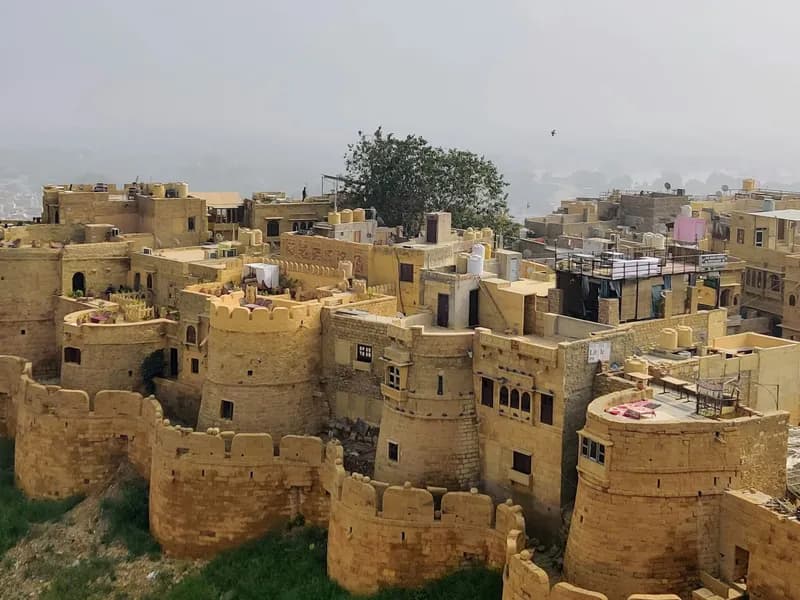
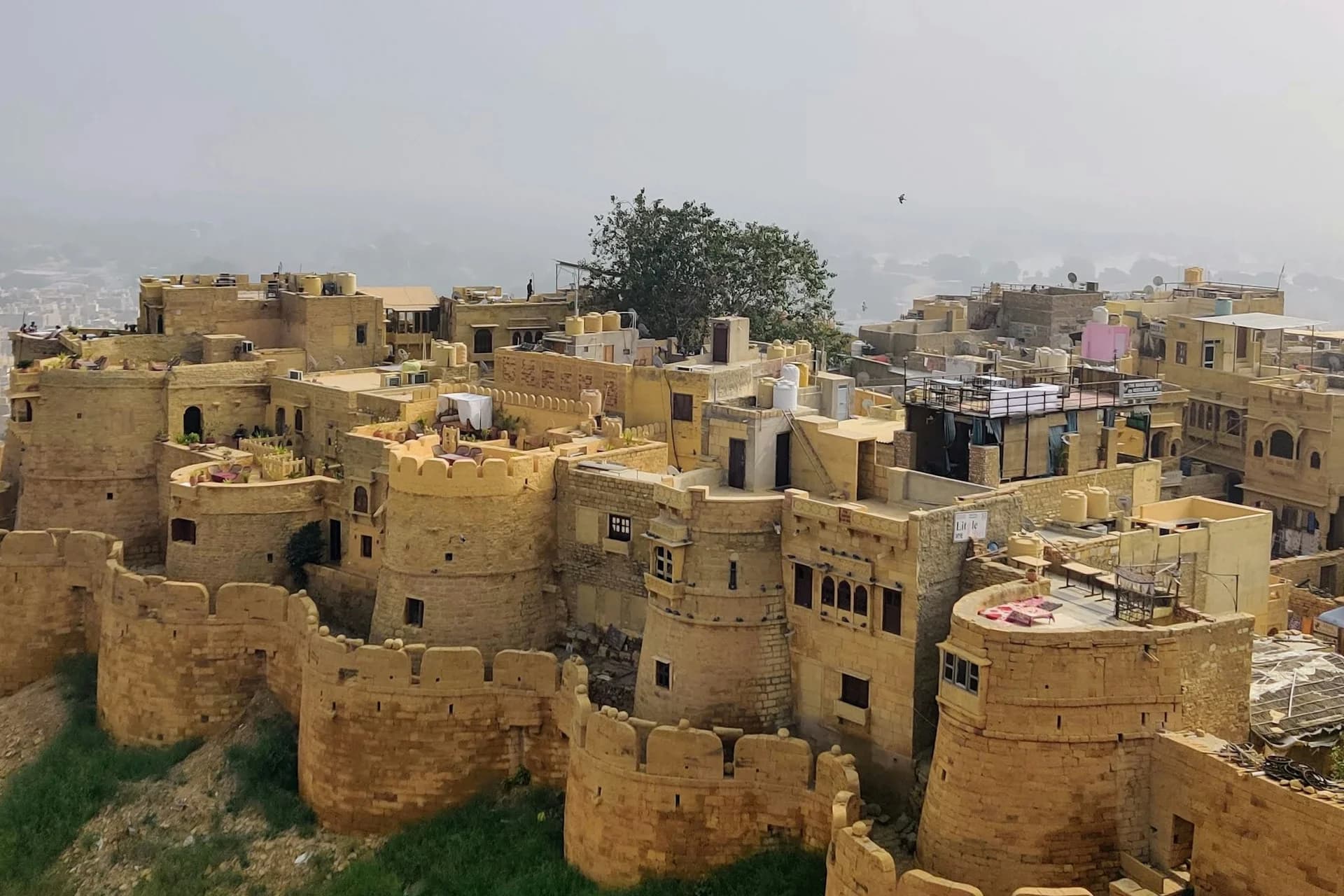
Jaisalmer Fort (Sonar Quila, the 'Golden Fort') isn't a museum you tour and leave. Around 3,000 people still live inside its walls — the last inhabited fort of its kind in the world. Entry to the fort itself is free; you just walk up through the massive gates and into a maze of lanes lined with shops, guesthouses, and rooftop cafes.
Give yourself a full morning to wander with no plan. Climb to a rooftop for chai, watch daily life unfold, and try to spot the old cannons on the ramparts. One gentle word: the fort's ancient drainage struggles with modern water use, so tread lightly and support the small family-run shops keeping it alive.
4. Marvel at Patwon Ki Haveli's five carved mansions
Of all the merchant havelis in town, Patwon Ki Haveli is the showstopper — a cluster of five ornate sandstone mansions built by a wealthy brocade-trading family in the early 1800s. Entry runs about ₹250 ($3) for foreign visitors, less for Indian nationals, and it opens roughly 9 AM to 6 PM.
Look up. The lattice-work balconies are so finely carved they look like lace frozen in stone, each one different — it's the same obsession with jali stonework you'll meet again in the marble screens of Agra. The upper floors give you a fantastic frame of the fort across the rooftops — one of the best photo angles in the city.
5. Watch the sunset from Gadisar Lake
Built in the 14th century as the town's rainwater reservoir, Gadisar Lake is where Jaisalmer slows down. Little chhatris (domed pavilions) dot the water, and you can rent a paddle boat for around ₹100–200 ($1.20–2.40) for a lazy loop.
Come at sunset. The light hits the golden ornamental gateway at the entrance and turns the whole scene the colour of warm toffee. Migratory birds drop in during winter, so pack a zoom lens if that's your thing.
6. Walk the ghost lanes of Kuldhara
About 18 km southwest of Jaisalmer lies Kuldhara, a village abandoned overnight in the early 1800s by its entire Paliwal Brahmin community. The reasons are half history, half legend — but the effect is undeniably eerie. Roofless stone homes line silent streets, and there's a restored house you can step inside.
Entry is a token ₹10–50 per person plus a small vehicle fee. Go mid-morning when the light is flat and the place feels genuinely otherworldly. It's a quick stop, but it sticks with you.
7. Find calm inside the fort's Jain Temples
Tucked within the fort walls is a cluster of seven interconnected Jain temples dating back to the 12th–15th centuries. The carving here rivals anything in the state — thousands of intricately sculpted figures covering every pillar and ceiling.
They open to visitors in the morning, usually 8 AM to noon, so plan around that window. There's a small camera fee of about ₹100–200. Dress modestly, remove your shoes and any leather items, and keep your voice low — these are active places of worship, not just photo stops.
8. Catch the cenotaphs at Bada Bagh
Just north of town, Bada Bagh is a hillside of royal cenotaphs (chhatris) built to honour Jaisalmer's rulers. Rows of domed sandstone memorials sit against open sky, and the whole site glows at either end of the day.
Entry is around ₹100 ($1.20) with a small camera charge. Come at sunset — you'll often have modern wind turbines spinning on the ridge behind the centuries-old domes, a striking clash of old and new.
9. Explore Salim Singh Ki Haveli's peacock arches
This 300-year-old haveli once belonged to a powerful (and famously ruthless) prime minister. Its top floor fans out in a distinctive arched shape often compared to a peacock, and the blue-tinged cupolas make it easy to spot.
Entry is modest, around ₹50–100. It's smaller than Patwon Ki Haveli, so pair the two in a single afternoon of haveli-hopping through the old town's tangle of lanes.
10. Eat your way through the old town
Jaisalmer's food is proper Rajasthani comfort cooking. Order dal baati churma — baked wheat balls drowned in ghee and lentils — and ker sangri, a tangy desert-bean dish you'll rarely find outside this region. Rooftop restaurants inside and around the fort serve it with a fort-lit view, usually ₹150–400 ($1.80–4.80) a plate.
For a sweet finish, hunt down a plate of ghotua ladoo from a bazaar sweet shop. And yes — the lassi here is thick enough to stand a spoon in.
11. Shop for mirrorwork and camel leather in Sadar Bazaar
The lanes below the fort are stuffed with embroidered textiles, mirror-worked bags, silver jewellery, and camel-leather goods. Sadar Bazaar and Bhatia Bazaar are the main hunting grounds.
Haggle — it's expected, and the first price is always inflated. A good rule: counter at roughly half and settle somewhere in the middle. For genuine handwork, look for slight irregularities; machine-perfect stitching usually means mass-produced.
12. Take a day trip toward the border at Tanot Mata
If you've got extra time and a sense of adventure, drive out toward the Tanot Mata temple, about 120 km from town near the Pakistan border. The route runs through raw, empty desert, past the Longewala war memorial from the 1971 conflict — worth a respectful pause for anyone interested in the region's history.
You'll need a hired car and most of a day. Check current access rules before you go, since this is a sensitive border zone.
When to go, and how long to stay
Jaisalmer is a desert, so timing matters more than anywhere else in Rajasthan — plan it as the western anchor of a wider loop, and you can chain it north to Amritsar and its Golden Temple. Aim for November to February, when days are warm and nights are cool enough for a proper campfire. Summer (April–June) can push past 45°C — brutal for dune walks and haveli climbs alike.
Base yourself for at least two nights: one inside or near the fort for the atmosphere, one out at a desert camp for the stars. Carry cash for the smaller sites and bazaars, keep a scarf handy for sun and blowing sand, and download your maps offline — signal thins out fast once you leave town. Do that, and the Golden City gives you everything it's got.