Beyond the Beach Shacks: A Slow Road Through Goa's Quiet Side
Beyond the Beach Shacks: A Slow Road Through Goa's Quiet Side
You arrive with the same picture everyone does. Trance music, a rented scooter, a beach bar in Baga that never quite closes. That's the Goa on the postcards, and North Goa will happily sell it to you at full volume. But the version worth crossing the country for is the one most visitors drive straight past — the old churches on empty river islands, the spice hills near Ponda, the slow south where the beaches still belong to the fishermen at dawn. Here's how the trip actually unfolds once you let it.
Landing, and the loudest room in the house
Two airports serve the state now. Dabolim (GOI) sits in the center near Vasco; Manohar International (GOX) opened up north near Mopa at the start of 2023 and drops you closer to Anjuna and Vagator. Either way, the first move is the same — skip the pre-paid taxi queue and rent a scooter. A Honda Activa runs about ₹350–500 a day (roughly $4–6), and cheaper by the week. Carry your international permit, wear the helmet the rental guy hands you, and download your Google Maps offline before you leave the terminal. Signal vanishes the second you turn off the highway.
The first day is the one that tests your patience. Base yourself in Calangute, Baga, or Candolim and the traffic is real, the crowds are shoulder-to-shoulder, and the "beach shack paradise" can feel like a food court with sand. This is the friction. Don't let it decide your opinion of the whole state. You've simply landed in the loudest room of a very big house, and every other room is quieter.
The turn inland
Point the scooter east toward Old Goa and the mood shifts within twenty minutes. The billboards thin out. Cashew trees close in over the road.
Start at the Basilica of Bom Jesus, the laterite-and-lime church in Old Goa that holds the relics of St. Francis Xavier. Entry is free, and the trick is timing — roll in by 9AM, before the tour coaches unload and the cool morning air inside the nave turns to a crush of selfie sticks. Walk across the lawn to the Sé Cathedral, one of the largest churches in Asia, and give yourself a moment with the scale of it. This was the capital of Portuguese India for two centuries, and it still feels like a city that forgot to stay famous.
Then do the thing almost no first-timer does: ride to the Old Goa jetty and take the flat-bottom ferry to Divar Island. It's free, it carries about a dozen scooters at a time across the Mandovi, and on the other side the lanes go silent. Whitewashed chapels, mango groves, one sleepy village square. You can lose a whole slow hour here and pass maybe three cars — the same drowsy, water-slow pace that drifts through the Kerala backwaters around Alleppey further down the same coast.
Spice country and the smell of the hills
From Divar, cut down toward Ponda, where the plantations are. Book a morning tour at Sahakari Spice Farm or the Tropical Spice Plantation — around ₹400–600 ($5–8) usually includes a guided walk and a banana-leaf lunch of Goan fish curry, rice, and something fried. A guide will crush a nutmeg husk under your nose, show you where black pepper actually comes from, and pour you a shot of feni, the fierce local cashew spirit that will make your eyes water in the best way. Buy a small bottle. You'll want the story more than the drink.
Panjim after dark, in a district that time skipped
Aim to be in Panaji (Panjim) by late afternoon and walk straight into Fontainhas, the old Latin Quarter. The houses here are painted in ochre, indigo, and deep green — a Portuguese by-law once required owners to repaint them every monsoon, and the habit stuck — the same slow, unscheduled calm that pulls travelers down south to Auroville. Wander 31st January Road until you find the tiny white Chapel of St. Sebastian, then let the light go golden on the balconies above you.
Eat at Viva Panjim, a family kitchen tucked down a side lane — the prawn xacuti and the pork sorpotel are the order, and a full plate lands around ₹300–450 ($4–6). For dessert, hunt down a slice of bebinca, the sixteen-layer coconut-and-egg cake that takes hours to bake and about ninety seconds to disappear. A slice runs ₹80–120 ($1–1.50). Skip the flashy riverfront casino boats blinking out on the Mandovi. The real evening is on foot, in these lanes, with no schedule at all.
The waterfall that makes you earn it
Give one full day to Dudhsagar Falls, the four-tier "sea of milk" that thunders down the Western Ghats near the Karnataka border. You can't drive to it. You ride to Collem (Kulem), park, and pile into a shared government jeep — around ₹400 ($5) per person plus entry, booked at the counter — for a bone-rattling 40-minute safari through the Bhagwan Mahaveer sanctuary. The falls run hardest just after the monsoon, roughly October into February, and thin out by late spring. It's loud, it's wet, and the road in is a mess. That's the point — the payoff is a wall of white water most of your fellow flight passengers will never bother to reach.
The quiet south, which is the whole reason
On your last stretch, drive south. Cross the Zuari, keep going past the airport turnoff, and don't stop until the road quiets into Canacona. This is where Goa keeps its calm.
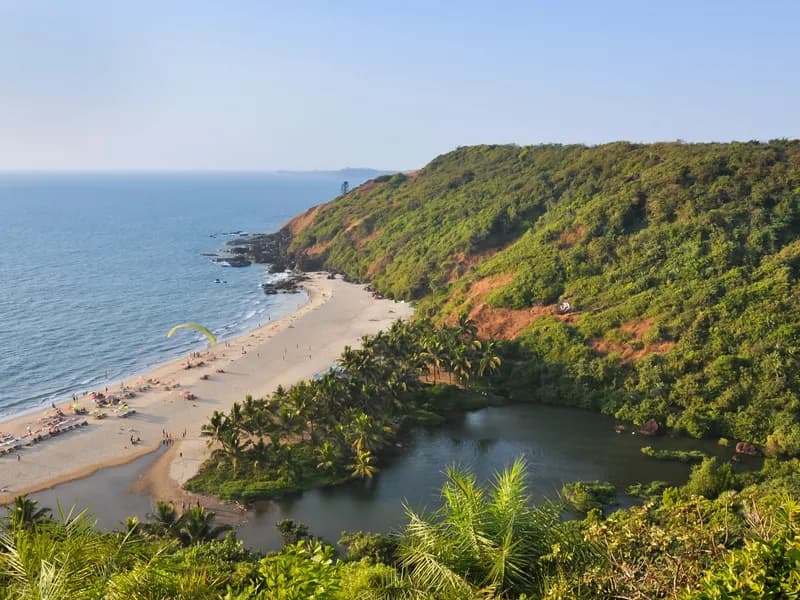
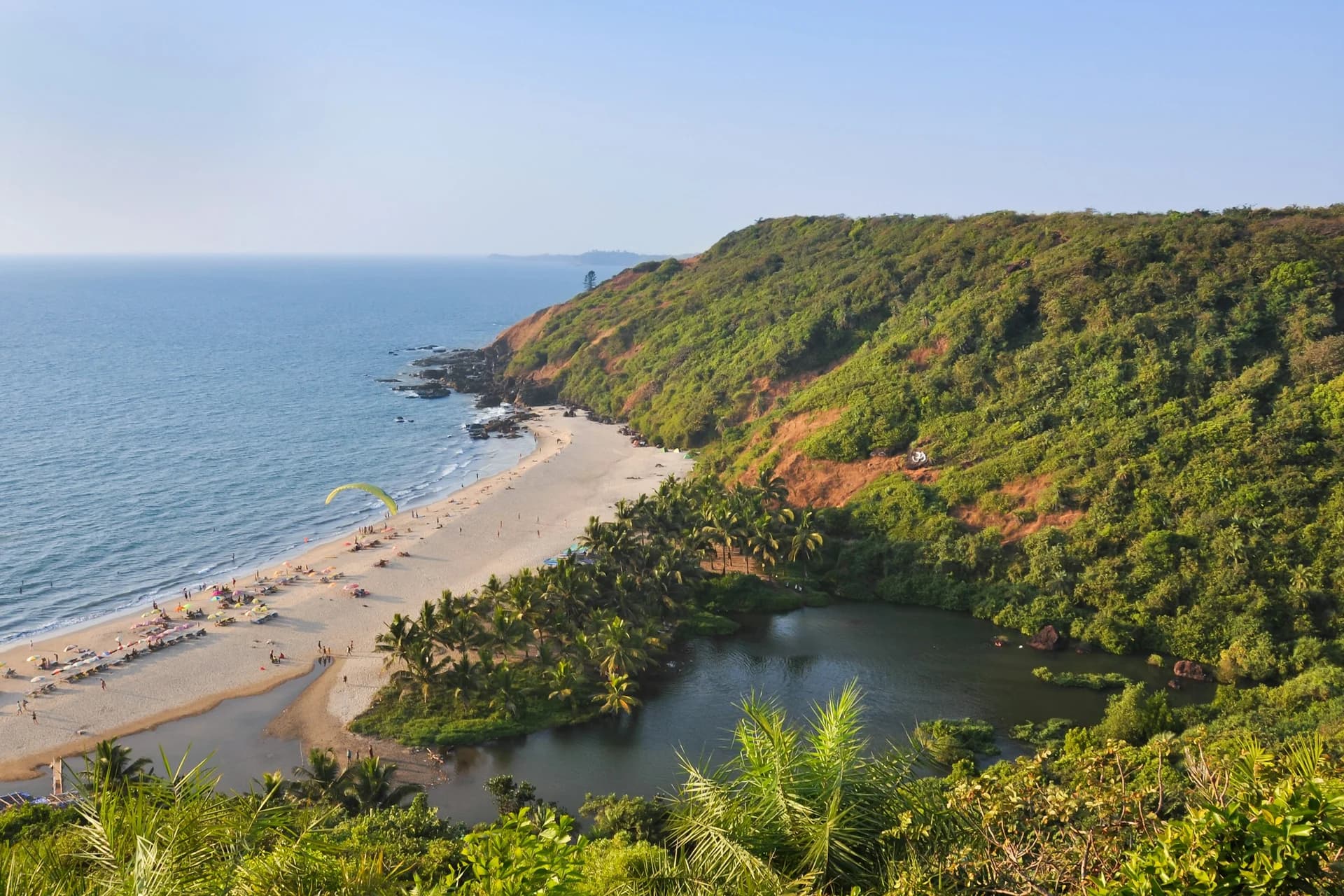
Palolem is the headline — a near-perfect crescent of sand backed by palms, where you can hire a kayak for a couple of hundred rupees or take a dawn boat out to look for dolphins — the same clear-water, palm-backed India you'll find even emptier out on the Andaman Islands. If even Palolem feels too busy for you, walk fifteen minutes over the rocks to Patnem, where the shacks are fewer and the hammocks outnumber the people. Order a fish thali — a steel plate of curry, rice, fried mackerel, and sol kadhi for ₹150–250 ($2–3) — and understand that you've been overpaying for Goan food your entire trip until this exact plate.
For one last view, ride out to Cabo de Rama Fort, a crumbling Portuguese rampart on a cliff with almost nobody around. Stand at the edge, watch the Arabian Sea go copper, and notice how far you've come from that first loud afternoon in Baga.
Why the long way wins
The payoff of Goa was never a single beach. It's the shape of the trip — the way the state opens up in exact proportion to how far you're willing to ride from the crowd. Give it five or six days, a scooter, and the willingness to keep driving past the obvious, and Goa quietly rearranges everything you thought it was. The postcard version is real. It's just the smallest part.
The smart move: base two nights up north for one big night out, then move your bag south and let the second half of the trip be slow. Nobody has ever regretted the quiet end of Goa.