Hawaii Bucket List: 11 Experiences Worth Building Your Whole Trip Around
Hawaii Bucket List: 11 Experiences Worth Building Your Whole Trip Around
Most Hawaii trips fall apart the same way. You land, you mean to "see everything," and you end up doing a little of nothing across four islands. Don't do that. Pick a handful of experiences that only happen here, book the ones that need permits early, and let the beach days fill in the gaps.
These eleven are the anchors. Some need a reservation two days out. One needs a headlamp. All of them are the kind of thing you'll still be describing to people a year later.
1. Catch Sunrise at the Summit of Haleakalā (Maui)
You're standing at 10,023 feet, above the clouds, watching the sun crack open a volcanic crater that looks more like Mars than Maui. It is genuinely that good. It is also genuinely freezing — think 30s to low 40s Fahrenheit at dawn, so bring the warmest layers you packed and then one more, layering like you would for a dawn in the Rockies near Aspen.
The catch: sunrise entry (3AM–7AM) needs a reservation booked on recreation.gov. It's $1 per vehicle to reserve, plus the $30 park entrance fee, and slots open 60 days ahead (with a small batch released 48 hours before). Book the moment your window opens — this one sells out fast. Give yourself a full 90-minute drive up from the coast in the dark — the same pre-dawn math you'd run for Jeju's sunrise crater.
2. Drive the Road to Hana — and Start at Dawn (Maui)
620 curves. 59 one-lane bridges. Waterfalls, black-sand beach at Waiʻānapanapa, banana bread stands run out of people's front yards. The Road to Hana is the drive — Hawaii's answer to a Big Sur coast run — and the smart move is leaving Pāʻia by 7AM so you're ahead of the convoy.
Download a guided audio app before you go — Shaka Guide or GyPSy run about $10–$13 and narrate every pullout with GPS, which matters because cell service vanishes. Fill the tank first. Bring cash for the fruit stands. And know that Hana itself is the excuse, not the point — the point is everything you stop for on the way.
3. Snorkel Molokini Before the Wind Turns (Maui)
Molokini is a crescent-shaped sunken volcanic crater floating off Maui's south coast, and on a calm morning you can see 100-plus feet down through the water. The rule here is simple: go early. Afternoon wind chops up the visibility, so the 7AM boats out of Māʻalaea Harbor are the ones worth taking.
Tours run roughly $130–$160 and usually pair Molokini with a second stop at Turtle Town, where green sea turtles cruise past like they own the place. Book a smaller boat if you can — the big cattle-boats dump 100 people onto the same patch of reef.
4. Hike Into the Na Pali Coast (Kauai)
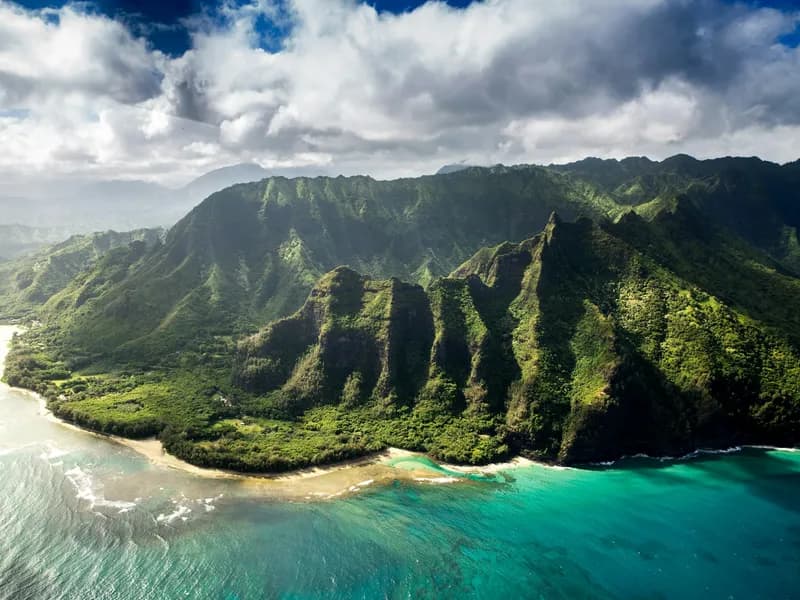
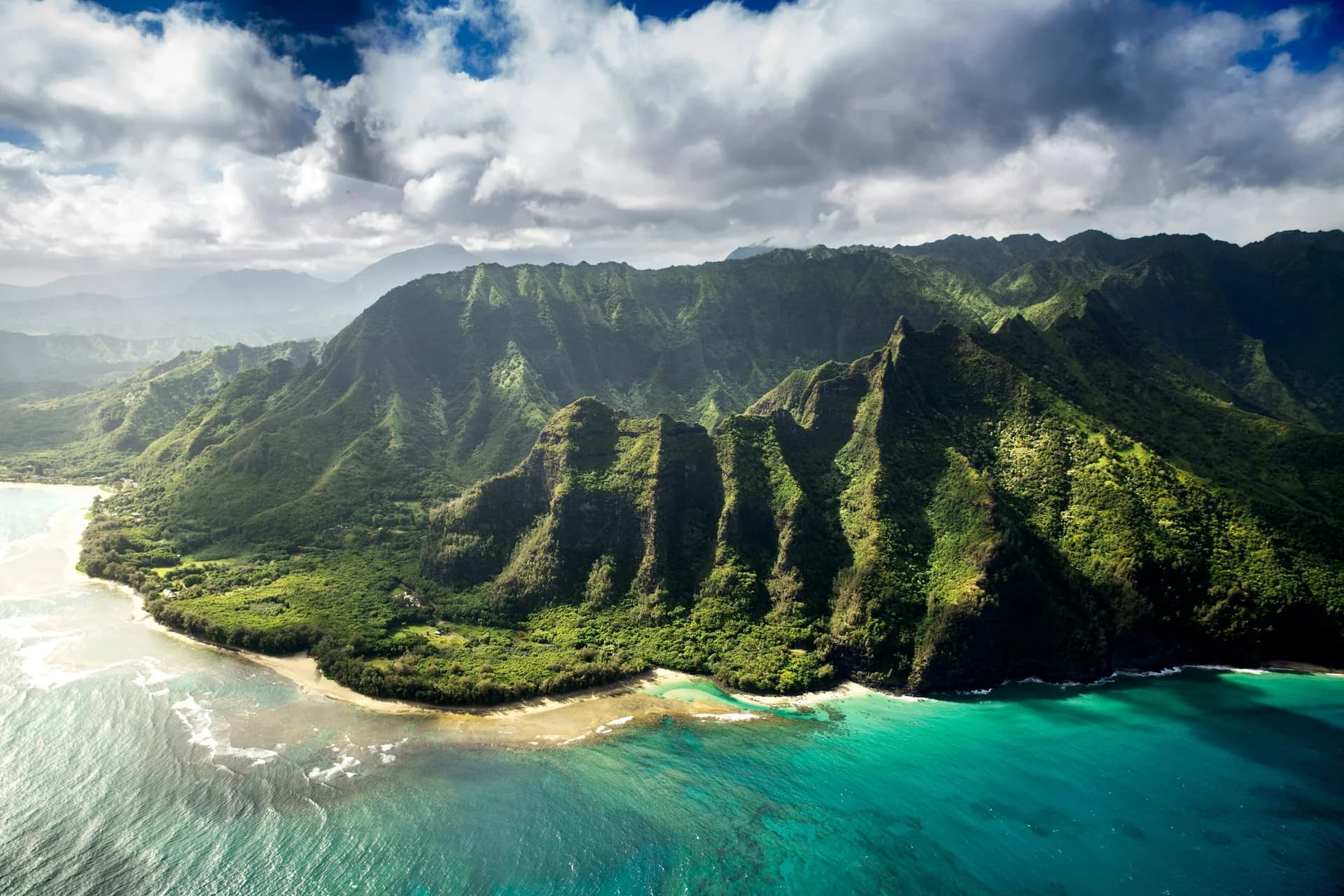
Those towering emerald cliffs you've seen on every Hawaii postcard? That's Na Pali, and you can't drive to it — you hike, boat, or fly. The most accessible taste is the Kalalau Trail's first two miles to Hanakāpīʻai Beach, a steep, muddy, jaw-dropping out-and-back that most reasonably fit people can handle in a morning.
Entry runs through Hāʻena State Park, and non-residents must reserve in advance at gohaena.com — it's about $5 per person plus $10 to park, and the lots fill days ahead. Wear real shoes, not slippers. The mud is not a rumor.
5. Stand at the Edge of an Active Volcano After Dark (Big Island)
Hawaiʻi Volcanoes National Park is home to Kīlauea, one of the most active volcanoes on earth, and the experience shifts completely depending on the light. By day you walk across steaming craters and through a lava tube. After dark — if there's active lava in the caldera — the sky over the crater glows a deep, restless orange.
Entry is $30 per vehicle, good for a week. Drive Crater Rim Drive, walk the Kīlauea Iki Trail across a hardened lava lake, then come back after sunset for the glow. Check the park's current eruption status before you build your day around it, because lava keeps its own schedule.
6. Do the Manta Ray Night Snorkel Off Kona (Big Island)
This one sounds gimmicky and then it isn't. After dark, boats off the Kona coast anchor over lit-up plankton, and giant manta rays — some with 12-foot wingspans — glide up out of the black to feed, barrel-rolling inches from your face. You float on the surface holding a lighted board and they do the rest.
Tours run about $110–$160 and last a couple of hours. Go with an operator that follows the local reef-safe guidelines. It is, hands down, one of the strangest and best nights you'll have in the water anywhere.
7. Snorkel Hanauma Bay — but Reserve at 7AM Sharp (Oahu)
Hanauma Bay is a protected marine preserve inside a volcanic cone, and the fish life right off the sand is absurd for how easy it is to reach. It's also strictly capacity-controlled, which is exactly why it's still worth it.
Non-resident entry is $25, it's closed Mondays and Tuesdays, and reservations open online two days ahead at 7AM Hawaii time and vanish within minutes. Set an alarm. Show up early in the day for the calmest water and easiest parking ($3). Watch the short conservation video, keep your fins off the coral, and you're set.
8. Hike Diamond Head for the Waikiki Payoff (Oahu)
It's a 1.6-mile round-trip up the inside of a 300,000-year-old crater, and the summit hands you the whole sweep of Waikiki and the Pacific. Not a hard hike — but there are switchbacks, a tunnel, and a set of stairs that'll get your heart going.
Non-residents need a reservation (about $5 per person, $10 to park) booked ahead at gostateparks.hawaii.gov. Go early — like, before-9AM early — to beat both the heat and the crowds. There's zero shade up top, so hat, water, sunscreen, no negotiating.
9. Sit Down for a Real Luau
Yes, luaus are touristy. They're also genuinely fun, and a good one is a proper window into Polynesian food, music, and hula. Skip the resort filler and book a standout: the Old Lahaina Luau on Maui (around $175) is widely considered the most authentic on the islands and sells out weeks ahead. On Oahu, Chief's Luau brings the fire-knife energy; on Kauai, the Smith Family Garden Luau is a mellower, family-run classic.
Eat the kālua pig — it's been roasting underground in an imu all day — and stay for the fire dancing at the end.
10. Learn to Surf Where Everyone Else Did (Oahu)
Waikiki's rolling, forgiving waves are the reason it's the best beginner surf spot in the state. Beach lessons run about $75–$100 for a group session, board included, and most people are standing up (wobbling, but standing) within the hour. The instructors here have taught thousands of first-timers, so leave the ego on the sand.
Even if you never surf again, catching one wave with Diamond Head in the background is a very specific kind of good.
11. Swim With Honu at a Black Sand Beach (Big Island / Oahu)
Green sea turtles — honu — are sacred in Hawaiian culture and protected by law, which means you look and never touch (stay at least 10 feet back). At Punaluʻu Black Sand Beach on the Big Island, they haul out onto jet-black volcanic sand to bask. On Oahu's North Shore, Laniākea Beach earns its "Turtle Beach" nickname most afternoons.
Bring a mask and you'll often see them grazing in the shallows. Give them space, keep your flash off, and let them be the ones who decide how close the encounter gets — the same etiquette that applies anywhere warm and shallow, Aruba included.
Pro Tips Before You Go
- Reserve everything reservable, immediately. Haleakalā sunrise, Hanauma Bay, Diamond Head, and Hāʻena all cap entry and sell out. Booking is 90% of the battle in Hawaii.
- Island-hop with intent. Don't try to do all of this in one week. Pick two islands, fly between them on Hawaiian or Southwest (~$50–$90 one-way), and go deep instead of wide — the same slow-travel payoff you get lingering in Carmel-by-the-Sea.
- Buy reef-safe sunscreen (non-nano zinc). Oxybenzone sunscreens are banned across Hawaii for a reason, and the reef you came to see depends on it.
- Rent the car on Maui, Kauai, and the Big Island; skip it on Oahu if you're staying in Waikiki, where rideshare and The Bus cover most of it.
- Respect the ʻāina. Don't stack rocks, don't chase wildlife, don't trespass for the photo. The islands stay this good because people treat them like they matter — because they do.
Build your trip around even five of these and you'll come home with the real thing, not a blurred highlight reel — we build our Costa Rica bucket list on the same logic. The beach days will take care of themselves.
Related Articles
 Travel Guides
10 Things to Do in the Maasai Mara That Aren't Just the River Crossing
 Travel Guides
12 Best Things to Do in Luxor: A Both-Banks Hit List for Ancient Thebes
 Travel Guides