
What Kawaguchiko Locals Know: Insider Truths About Visiting Mount Fuji's Lakeside
Spend enough time around Kawaguchiko and you notice the locals have a whole layer of knowledge that never makes it into the guidebooks. They know which morning the mountain will show. They know which "must-see" is a tour-bus trap and which quiet corner earns the detour. Here's what they'd tell you if you asked over a bowl of udon.
Locals will tell you Fuji is a morning mountain
The single most common mistake visitors make: expecting Fuji on demand, all day. It doesn't work that way. Mount Fuji is often shrouded in cloud, especially on warm summer afternoons. It's most reliably clear on crisp mornings in autumn and winter. Locals plan every important viewpoint for early morning and treat the afternoon as a bonus. Don't bank your whole trip on one cloudy afternoon — stay overnight so you get two or three dawn chances.
They'll tell you the best reflection is Oishi Park at dawn
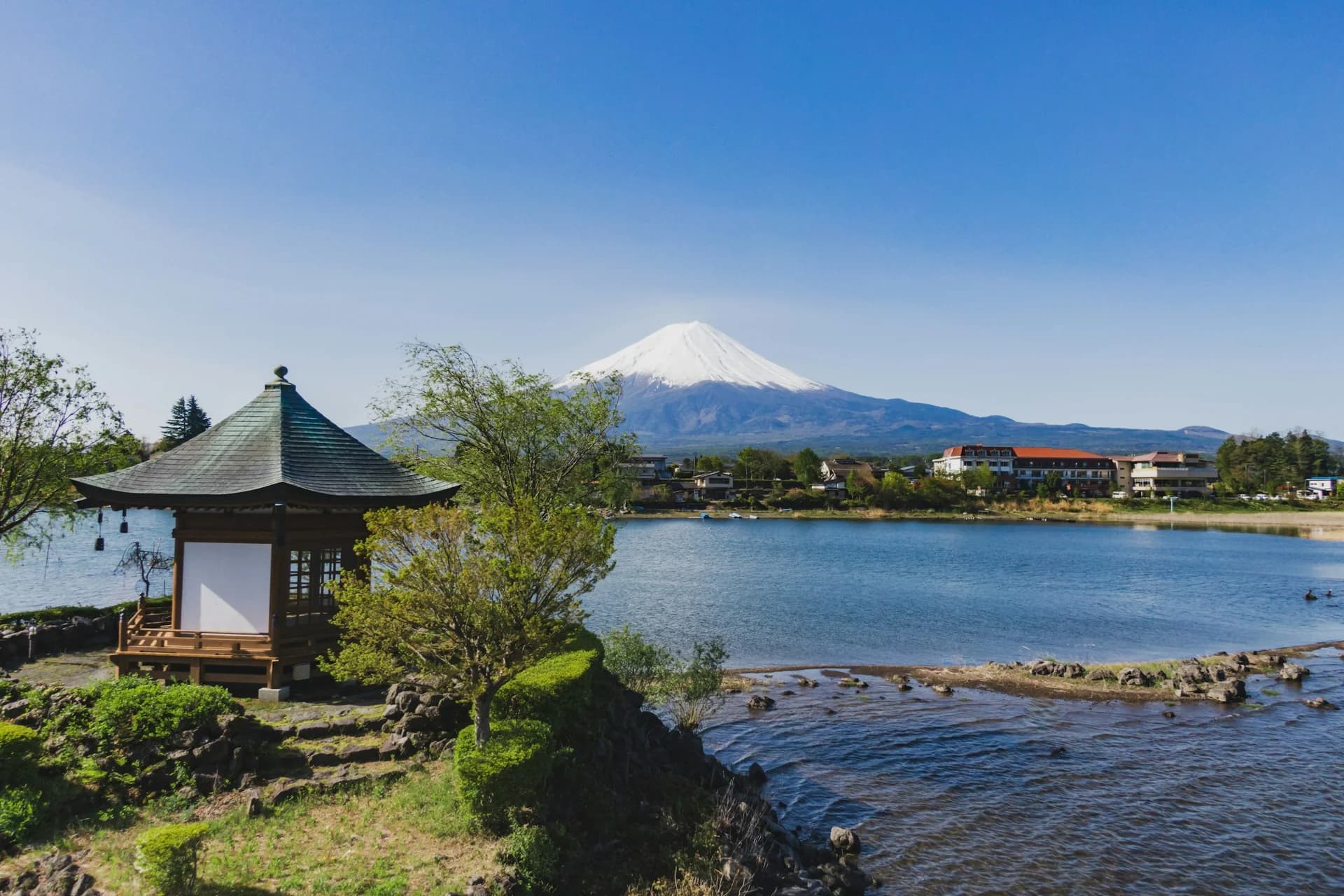
Everyone shoots Fuji. Locals shoot Fuji and its inverted twin. On a windless morning, the mountain mirrors perfectly on the lake — the Sakasa-Fuji, the upside-down Fuji — and the calmest, glassiest water is right around dawn near Oishi Park on the north shore. By mid-morning the wind ripples it away. That early alarm is the difference between a good photo and the photo.
They'll tell you to climb Chureito's steps at 6:30am
The red five-storied Chureito Pagoda at Arakura Sengen Shrine frames Fuji in the country's most iconic postcard view. It's free. It's also roughly 400 steps up, which is a genuine lung-burner. But here's the local move: the tour buses arrive around 9-10am, so climb at dawn. You'll get the pagoda-and-Fuji frame nearly alone, in the softest light. And bow at the shrine, keep your voice down, and don't block the path while you compose the shot — it's an active place of worship, not just a viewpoint.
They'll tell you Oshino Hakkai is magic before the buses come
Those eight crystal-clear spring ponds, fed by Fuji snowmelt and ringed by thatched houses, are genuinely beautiful — and genuinely mobbed by midday tour groups. Locals go early morning or late afternoon, when the water is calm, the reflections are clean, and you can actually hear the springs. It's free (small fee for one exhibit house). Same principle everywhere here: the sight isn't overrated, the timing is what people get wrong.
They'll tell you to eat the right noodles
Two regional bowls, and locals are opinionated about both. Yoshida udon from nearby Fujiyoshida is famously firm and chewy — order it (600-900 JPY / about $4-6) at a family shop on retro Honcho Street, where Fuji rises at the end of the road. And hoto, flat udon with pumpkin in a thick miso broth (~1,100 JPY at the landmark Hoto Fudo), is the cold-weather comfort dish. Skip the generic tourist restaurants near the station and eat where the noodles are the specialty.
They'll tell you which viewpoints are worth the effort
Beyond the famous three, locals rate the Mt. Kachi Kachi Ropeway (round trip ~900 JPY) up to the Tenjoyama deck at ~1,075 m for its sweeping lake-and-Fuji panorama, best on a clear day. And they'll point you to the Tenku-no-Torii at Fuji Omuro Sengen Shrine — a red torii gate perched on the hillside that frames Fuji dramatically. Go early there too; the photo queue builds fast.
They'll tell you to use the Retro Bus, not taxis
The attractions are spread around the lakes, and taxis add up quickly. The Kawaguchiko/Saiko Retro Bus 2-day pass (~1,500 JPY) runs red, green, and blue loop lines hitting Oishi Park, the ropeway, Oshino Hakkai, and the Saiko villages. Grab it at the station the moment you arrive. Locals consider paying for taxis around the lakes a rookie move.
They'll tell you to carry cash
This catches out card-reliant travelers constantly. Rural Fuji-area shops, buses, and small eateries often prefer cash, and some won't take foreign cards at all. Carry yen. Keep a Suica or PASMO IC card for transport and convenience stores, and top up at a 7-Eleven or Japan Post ATM — those reliably accept foreign cards when the mom-and-pop udon shop doesn't.
They'll tell you the onsen rules are not optional
At the hot springs, you bathe naked, and only after washing thoroughly at the shower stations first. Many onsen refuse guests with visible tattoos, so check the policy ahead or book a private/family bath. Getting this right isn't just etiquette — it's the difference between being welcomed and being turned away at the door.
They'll tell you not to climb Fuji out of season
Visitors see the mountain and assume they can just go up. They can't, safely. Mount Fuji's official climbing season is only about early July to early September. Outside it, the trails, huts, and public transport to the 5th Station are closed, and climbing is strongly discouraged and genuinely dangerous. The rest of the year, the local move is to admire it from the lakeshore — which, honestly, is the better view anyway.
They'll tell you to go west for quiet
When Kawaguchiko's shores feel crowded, locals slip west to the wilder lakes. Lake Saiko and its Saiko Iyashi-no-Sato Nenba thatched village (~500 JPY) are calmer and more cultural — its reconstructed thatched roofs echo the UNESCO-listed gassho-zukuri hamlets of Shirakawa-go up in the Japan Alps. Push further to Lake Motosuko, whose north shore gives the exact Fuji view printed on the 1,000-yen banknote — deep-blue water, few crowds, and the rawest scenery of the five lakes. Transport thins out here, so plan bus times.
And they'll tell you what most visitors get wrong
They rush it. They day-trip from Tokyo, arrive at noon under cloud, see nothing, and leave disappointed. The locals' quiet truth: stay one night lakeside, wake before the crowds, and let the mountain come to you at dawn. Do that, and Kawaguchiko delivers the Fuji you came for. Plan it that way with fairtravels.ai, and you'll be standing on the north shore at first light while the day-trippers are still on the highway.


