
Kawaguchiko
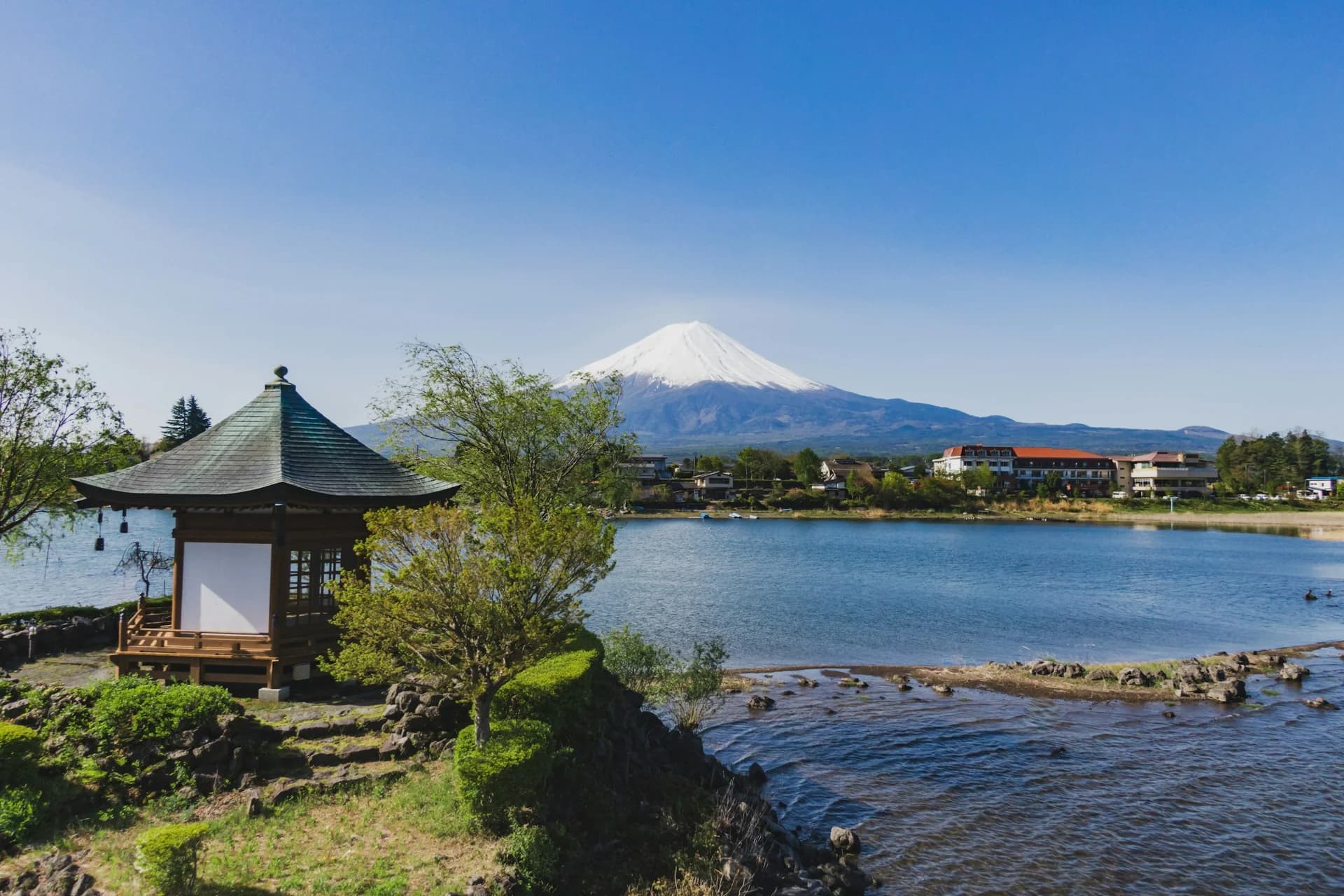
Photo: Susann Schuster / Unsplash
Key Facts
Best Time to Visit
October-November (autumn) and clear winter days for Fuji views; April cherry blossom
Language
Japanese (limited English; translation apps help)
Currency
Japanese Yen (JPY)
Time Zone
JST (UTC+9, no daylight saving)
Airport
Tokyo Haneda (HND) ~2 hrs; Narita (NRT) ~3 hrs by bus/train
Population
~25,000 (Fujikawaguchiko town proper)
Climate
Highland temperate (~830 m); cool summers ~25°C, cold snowy winters below freezing
Safety Rating
Generally Safe (Level 1)
Elevation
Lake surface ~833 m; Mount Fuji summit 3,776 m
Top Highlights

Chureito Pagoda (Arakura Sengen Shrine)
A five-storied red pagoda on a hillside that frames Mount Fuji in Japan's most iconic postcard view, especially with cherry blossoms or autumn leaves. Free; ~400 steps up, allow 1-1.5 hours. In nearby Fujiyoshida — arrive at dawn to beat crowds.

Oishi Park
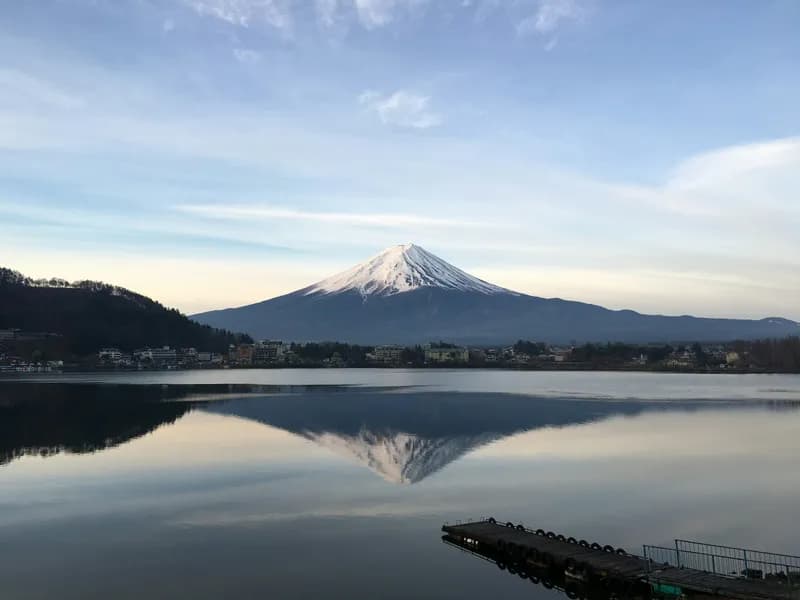
A lakeside park on Kawaguchiko's north shore with a flower-lined promenade and a clean, unobstructed Fuji view across the water. Free; allow 1 hour. Lavender blooms in July; kochia turns crimson in autumn. Great for reflections on calm mornings.
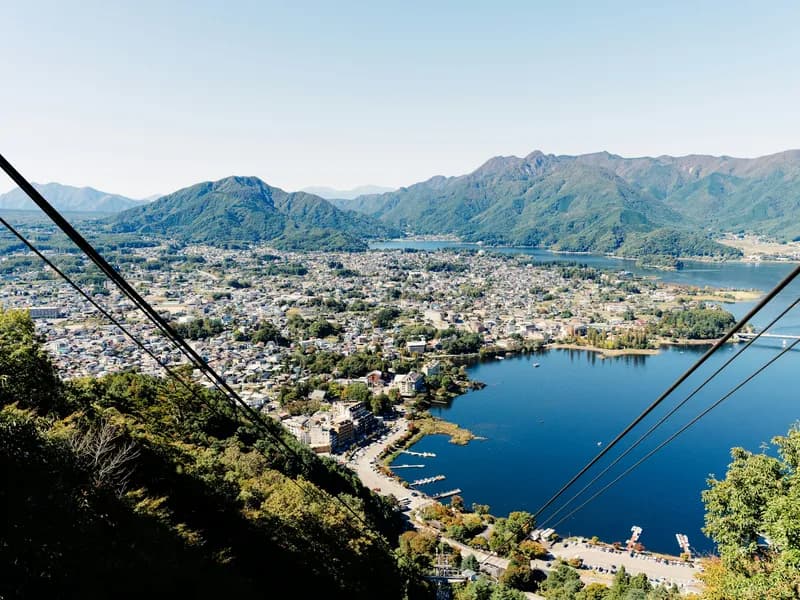
Mt. Kachi Kachi Ropeway
A cable car climbing to the Tenjoyama viewpoint (~1,075m) for a sweeping panorama of the lake and Fuji, themed around a folk tale. Round trip ~900 JPY; allow 1 hour. Combine with the observation-deck cafe on a clear day.
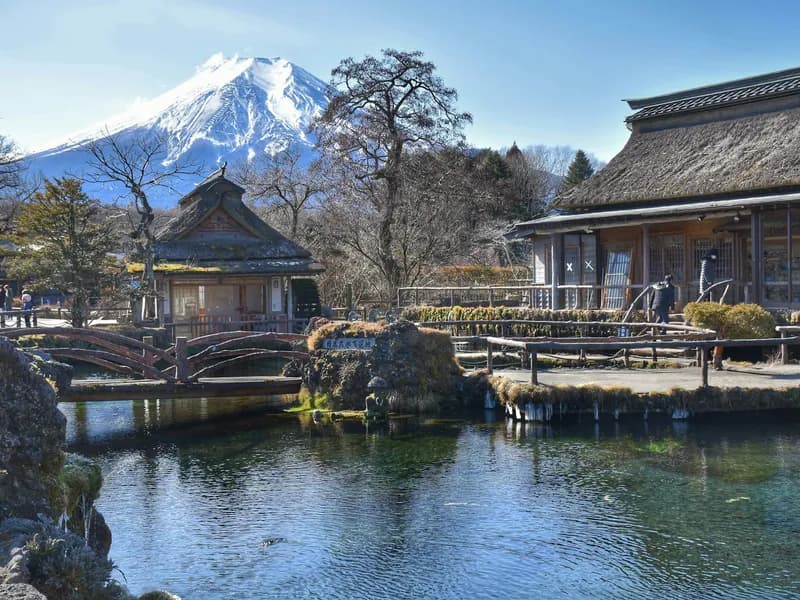
Oshino Hakkai
A preserved village of eight crystal-clear spring ponds fed by Fuji snowmelt, with thatched houses and Fuji rising behind. Free (small fee for one exhibit house); allow 1-1.5 hours. Very popular — visit early morning for calm reflections.

Lake Kawaguchi Cruise
A 20-minute 'Ensoleille' sightseeing boat across the lake for mid-water Fuji views and a breeze in summer. Tickets ~1,000 JPY; departs near the station area. A relaxed way to see Fuji mirrored on the water when the wind is low.
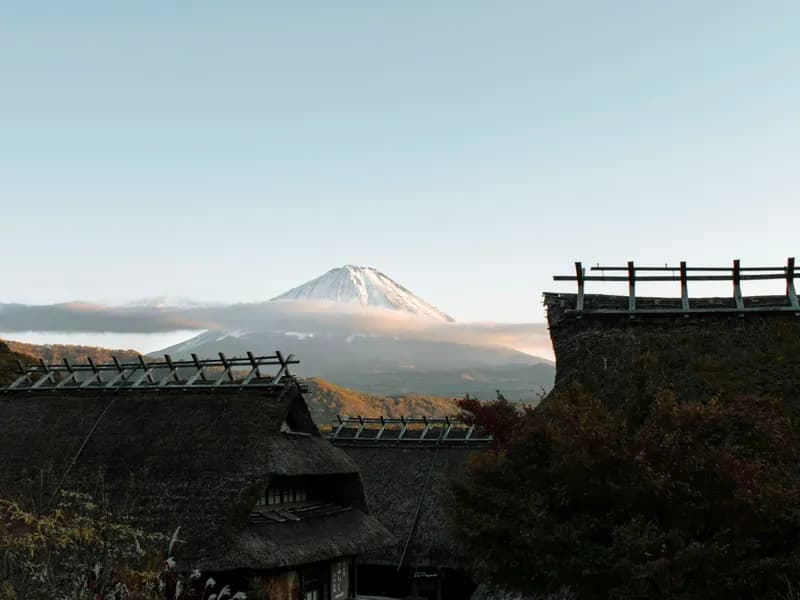
Saiko Iyashi-no-Sato Nenba
A reconstructed thatched-roof farming village at Lake Saiko with craft workshops, galleries, and a striking Fuji backdrop. Entry ~500 JPY; allow 1.5-2 hours. A quieter, cultural alternative reached via the sightseeing bus loop.
Kawaguchiko Onsen (Lakeside Hot Springs)
Several ryokan and day-use onsen along the lake let you soak in mineral hot springs with Fuji in view. Day-use baths ~800-1,500 JPY; allow 1-2 hours. Tattoos may be restricted — check ahead, and shower before entering the communal bath.
Planned Itinerary
7-Day Kawaguchiko Itinerary
Arrival from Tokyo & First Fuji Reflections at the Lake
Ride the direct highway bus from Shinjuku Busta to Kawaguchiko Station (~1h45m-2h, ~2,000 JPY; reserve online in advance as it sells out on weekends), then settle into a lakeside ryokan. Kawaguchiko sits at ~833 m in the Fuji Five Lakes, so evenings are cool even in summer. Ease into the pace with a first look at Mount Fuji across the water before a kaiseki dinner and onsen soak.
Highway bus from Shinjuku Busta to Kawaguchiko Station(~1h45m-2h)
Fujikyu/Keio direct bus, ~2,000 JPY one-way. The Fuji Excursion limited-express train from Shinjuku is faster but pricier. Buy an IC card (Suica/PASMO) and carry cash for rural shops.
Pick up the Retro Bus 2-day pass at Kawaguchiko Station(15 min)
~1,500 JPY covers the red, green, and blue loop lines to Oishi Park, the ropeway, Oshino Hakkai, and the Saiko villages over the next two days.
Check into a lakeside ryokan on the north or east shore(1 hour)
Choose a Fuji-facing room if possible. Staying overnight gives you two mornings to catch the mountain clear of cloud.
Sunset stroll along the Kawaguchiko lakeshore promenade(1 hour)
Walk the eastern shore near the station toward the Kawaguchi Ohashi bridge for your first Fuji view over the water.
Kaiseki dinner and evening onsen at the ryokan(2 hours)
Soak in a lakeside mineral bath. Wash thoroughly at the shower stations before entering; many onsen restrict visible tattoos, so check the policy or use a private bath.
Dawn at Chureito Pagoda & the Springs of Oshino Hakkai
An early start to beat the crowds and the midday cloud that hides Fuji. Take the local Fujikyu line two stops to Shimoyoshida for the iconic red pagoda, then spend the afternoon among the crystal spring ponds of Oshino Hakkai, reached on the Retro Bus. A classic first full day pairing the region's two most photographed sights.
Chureito Pagoda at Arakura Sengen Shrine (Fujiyoshida)(1.5 hours)
Free. Climb ~400 steps to the hillside pagoda that frames Fuji in Japan's most iconic postcard view. Arrive at dawn for clear skies and the fewest people; bow and keep quiet at the shrine.
Yoshida udon lunch on Honcho Street, Fujiyoshida(1 hour)
Try the chewy, firm local Yoshida udon (~600-900 JPY) at a family shop along the retro Honcho-dori, where Fuji rises at the end of the street.
Oshino Hakkai eight spring ponds(1.5 hours)
Free (small fee for the exhibit house). Eight crystal-clear ponds fed by Fuji snowmelt, framed by thatched houses with Fuji behind. Late afternoon is quieter than the tour-bus midday rush.
Return to Kawaguchiko for a lakeside onsen soak(1.5 hours)
Day-use baths run ~800-1,500 JPY. Unwind after a full day on your feet.
North Shore Loop: Oishi Park, Art & the Kachi Kachi Ropeway
Work the north and east shore on the Retro Bus red line, saving the highest viewpoint for a clear window. Mornings offer the calmest water for mirror reflections, so start at Oishi Park, then browse a lakeside art museum before riding the ropeway up Mt. Tenjo for the day's big panorama.
Oishi Park flower promenade (north shore)(1 hour)
Free. Unobstructed Fuji view across the water with a flower-lined path; lavender blooms in July, crimson kochia in autumn. Best on calm mornings for reflections.
Kubota Itchiku Art Museum(1 hour)
~1,300 JPY. A striking museum of kimono textile art in gardens near the north shore, a cultural change of pace with a fine Fuji backdrop.
Lunch: hoto noodles at Hoto Fudo(1 hour)
~1,100 JPY. The regional comfort dish: flat udon and pumpkin in a rich miso broth, served in a landmark curved-roof building near the lake.
Mt. Kachi Kachi Ropeway to Tenjoyama viewpoint(1 hour)
Round trip ~900 JPY to ~1,075 m for a sweeping panorama of the lake and Fuji. Enjoy the observation-deck cafe and folk-tale statues if skies are clear.
Rest Day: Slow Lakeside, Cruise & Onsen
A deliberate down day to recharge and give Fuji another chance to show itself. Keep it near the lake with a gentle boat ride, lakeside cafes, and a long onsen soak. No fixed schedule; adapt to the weather and chase the clearest Fuji window.
Lake Kawaguchi 'Ensoleille' sightseeing cruise(30 min)
~1,000 JPY. A relaxed 20-minute boat loop for mid-water Fuji views; go when the wind is low for reflections. Departs near the station area.
Lazy lakeside cafe morning(1.5 hours)
Linger over coffee and Fuji-view desserts at a shore cafe; nothing to rush to.
Optional lakeshore bike rental(1-2 hours)
Rent a bike (~1,500 JPY/day) near the station to spin the flat eastern shore at your own pace, or skip it entirely and rest.
Long afternoon onsen soak(2 hours)
Return to a day-use or ryokan onsen (~800-1,500 JPY) for a proper unwind before dinner.
Lake Saiko: Thatched Village & Quieter Shores
Ride the Retro Bus green line west to Lake Saiko, a wilder, less-developed lake than Kawaguchi. Spend the day at a reconstructed farming village trying crafts, then enjoy the calmer forested shoreline. A cultural, slower-paced day away from the busiest viewpoints.
Saiko Iyashi-no-Sato Nenba thatched-roof village(2 hours)
Entry ~500 JPY. Reconstructed thatched farmhouses with craft workshops, galleries, and a striking Fuji backdrop at Lake Saiko. Try a hands-on craft or don a traditional costume for photos.
Lunch at the village or a Saiko lakeside eatery(1 hour)
Sample local soba or grilled river fish near the water.
Saiko Bat Cave (Koumori Ana) or Aokigahara-edge nature walk(1 hour)
~350 JPY for the lava-tube bat cave. A short, easy volcanic-forest walk on the fringe of the Aokigahara woodland; stay on marked trails.
Return to Kawaguchiko for dinner(1 hour)
Retro Bus back to the ryokan; regroup for the evening meal.
Sky Torii, Fuji-View Hike & Farewell Evening
Head up to a hillside shrine gate that perfectly frames Fuji, then choose your own energy level: a light ridge hike for the last big view, or the thrills of Fuji-Q Highland. Close the trip with a special farewell dinner and a final onsen.
Tenku-no-Torii at Fuji Omuro Sengen Shrine (Kawaguchiko)(1.5 hours)
Free (short local bus + climb). A red torii gate perched on the hillside above the town that frames Fuji dramatically; go early for the light and to avoid the photo queue.
Choice: Mt. Mitsutoge foothills hike OR Fuji-Q Highland(3-4 hours)
Hikers can take the lower Mitsutoge trails for panoramic Fuji ridgelines; thrill-seekers can visit Fuji-Q Highland (entry free, ride passes/day pass ~6,000 JPY) beneath the mountain.
Late lunch of Yoshida udon or lakeside soba(1 hour)
Refuel on the region's chewy noodles before the afternoon.
Farewell kaiseki dinner and final onsen soak(2.5 hours)
A last multi-course dinner and a long soak; set an alarm for a final dawn Fuji check tomorrow.
Final Fuji View & Departure to Tokyo
Wake early for one last clear-morning look at Mount Fuji from the shore, grab a relaxed breakfast, then take the highway bus (or Fuji Excursion train) back to Shinjuku. Reserve your return seat the day before, as weekend buses fill up.
Dawn Fuji viewing from the Kawaguchiko lakeshore(45 min)
The clearest, calmest window of the day for a farewell photo over the water.
Last-minute souvenirs near Kawaguchiko Station(45 min)
Pick up Fuji-themed sweets, local wine, or crafts at the station shops.
Highway bus (or Fuji Excursion train) back to Shinjuku(~1h45m-2h)
~2,000 JPY by bus; reserve in advance. Connect onward to your Tokyo hotel or the airport.
14-Day Kawaguchiko Itinerary
Arrival from Tokyo & First Fuji Reflections at the Lake
Ride the direct highway bus from Shinjuku Busta to Kawaguchiko Station (~1h45m-2h, ~2,000 JPY; reserve online as it sells out on weekends), then settle into a lakeside ryokan. At ~833 m in the Fuji Five Lakes, evenings are cool. Ease in with a first look at Mount Fuji across the water, a kaiseki dinner, and an onsen soak.
Highway bus from Shinjuku Busta to Kawaguchiko Station(~1h45m-2h)
Fujikyu/Keio direct bus, ~2,000 JPY one-way. Buy an IC card (Suica/PASMO) and carry yen for rural shops and small eateries that may not take foreign cards.
Pick up the Retro Bus 2-day pass at Kawaguchiko Station(15 min)
~1,500 JPY covers the red, green, and blue loop lines around the lakes and villages.
Check into a lakeside ryokan(1 hour)
Request a Fuji-facing room; multiple nights give you repeated mornings to catch the mountain clear of cloud.
Sunset walk along the eastern lakeshore promenade(1 hour)
Stroll toward Kawaguchi Ohashi bridge for a first Fuji reflection over the water.
Kaiseki dinner and evening onsen(2 hours)
Soak in a lakeside mineral bath; wash first, and check tattoo policies before entering the communal bath.
Dawn at Chureito Pagoda & the Springs of Oshino Hakkai
An early start to beat crowds and the midday cloud that hides Fuji. Take the Fujikyu line to Shimoyoshida for the red pagoda, then spend the afternoon among the spring ponds of Oshino Hakkai on the Retro Bus. The region's two most photographed sights in one day.
Chureito Pagoda at Arakura Sengen Shrine (Fujiyoshida)(1.5 hours)
Free. Climb ~400 steps to the pagoda that frames Fuji in Japan's most iconic view. Dawn brings clear skies and few people.
Yoshida udon lunch on Honcho Street, Fujiyoshida(1 hour)
Chewy, firm local udon (~600-900 JPY) on the retro Honcho-dori, with Fuji rising at the end of the street.
Oshino Hakkai eight spring ponds(1.5 hours)
Free (small fee for the exhibit house). Crystal ponds fed by Fuji snowmelt among thatched houses; late afternoon is quieter.
Fujiyama Onsen soak(1.5 hours)
~1,500 JPY. A large hot-spring complex near Fuji-Q for a restorative evening bath.
North Shore Loop: Oishi Park, Art & the Kachi Kachi Ropeway
Work the north and east shore on the Retro Bus red line, saving the highest viewpoint for a clear window. Start at Oishi Park for calm-morning reflections, browse a lakeside art museum, then ride the ropeway up Mt. Tenjo for the big panorama.
Oishi Park flower promenade (north shore)(1 hour)
Free. Unobstructed Fuji view with a flower-lined path; lavender in July, crimson kochia in autumn.
Kubota Itchiku Art Museum(1 hour)
~1,300 JPY. Kimono textile art in gardens near the north shore, with a fine Fuji backdrop.
Lunch: hoto noodles at Hoto Fudo(1 hour)
~1,100 JPY. Flat udon and pumpkin in rich miso broth in a landmark curved-roof building.
Mt. Kachi Kachi Ropeway to Tenjoyama viewpoint(1 hour)
Round trip ~900 JPY to ~1,075 m for sweeping lake-and-Fuji views and a deck cafe.
Oshino Soba-Making & the Shores of Lake Yamanakako
A hands-on morning learning a local craft, then a shift east to Lake Yamanakako, the largest of the five lakes. Buses connect Oshino to Yamanakako in ~25 minutes. A gentler, more experiential day.
Soba-making workshop near Oshino(2 hours)
~3,000-4,000 JPY. Hand-roll and cut buckwheat noodles, then eat your own soba for lunch.
Bus to Lake Yamanakako(25-30 min)
Transfer east to the largest and highest of the Fuji Five Lakes.
Yamanakako lakeshore walk and swan boats(1.5 hours)
Flat shoreline paths with a wide Fuji view; rent a pedal swan boat (~1,000 JPY/30 min) on calm water.
Return to Kawaguchiko for onsen and dinner(1.5 hours)
Retro/local bus back; unwind with a soak before the evening meal.
Rest Day: Slow Lakeside, Cruise & Cafes
A deliberate down day near the lake to recharge and give Fuji another chance to appear. Keep it loose: a short cruise, lakeside cafes, and a long onsen soak. Adapt to the weather and chase the clearest Fuji window.
Lake Kawaguchi 'Ensoleille' sightseeing cruise(30 min)
~1,000 JPY. A relaxed 20-minute boat loop for mid-water Fuji views on a low-wind morning.
Lazy lakeside cafe time(2 hours)
Linger over coffee and Fuji-view desserts; nothing on the schedule.
Optional shore bike ride or reading by the water(1-2 hours)
Rent a bike (~1,500 JPY/day) for the flat eastern shore, or simply rest.
Long afternoon onsen soak(2 hours)
Return to a day-use or ryokan onsen (~800-1,500 JPY) for a proper unwind.
Lake Saiko, Narusawa Ice Cave & Aokigahara Forest Walk
Ride the Retro Bus green line west to the wilder lakes and lava country south of Saiko. Combine a thatched-village morning with an underground ice cave and a guided walk through the famous Aokigahara 'Sea of Trees'. Bring a light jacket for the caves.
Saiko Iyashi-no-Sato Nenba thatched-roof village(2 hours)
Entry ~500 JPY. Reconstructed farmhouses with craft workshops and a striking Fuji backdrop at Lake Saiko.
Narusawa Ice Cave (and nearby Fugaku Wind Cave)(1 hour)
~350 JPY each. Lava-tube caves that stay near freezing year-round, with ice pillars in the ice cave. Low ceilings and slippery steps; wear grippy shoes.
Guided walk in Aokigahara (Sea of Trees)(1.5 hours)
Join a licensed guide (~3,000 JPY) to walk mossy lava-forest trails safely. Stay on marked paths; the forest is dense and easy to lose bearings in.
Return to Kawaguchiko for dinner(1 hour)
Retro Bus back to the ryokan for the evening meal.
Sky Torii, Fuji-View Hike or Fuji-Q Highland
Head up to a hillside shrine gate that frames Fuji, then pick your energy level: a ridge hike for panoramic views, or thrills at Fuji-Q Highland right beneath the mountain. A flexible day that caps the trip's 'core week'.
Tenku-no-Torii at Fuji Omuro Sengen Shrine(1.5 hours)
Free (short local bus + climb). A red torii on the hillside framing Fuji; go early for light and short photo queues.
Choice: Mt. Mitsutoge foothills hike OR Fuji-Q Highland(3-4 hours)
Hikers take the lower Mitsutoge trails for panoramic Fuji ridgelines; thrill-seekers visit Fuji-Q Highland (entry free, day/ride pass ~6,000 JPY).
Yoshida udon or lakeside soba lunch(1 hour)
Refuel on chewy local noodles.
Kaiseki dinner and onsen(2 hours)
Multi-course dinner and a soak to close the week.
Lake Yamanakako Day: Flower Park & Lakeside Cycling
A fuller exploration of the eastern lake, higher and cooler than Kawaguchi, known for its wide-open Fuji views and flower fields. Cycle the shoreline cycling path and let the pace stay relaxed.
Yamanakako Hananomiyako flower park(1.5 hours)
~600 JPY (seasonal). Vast seasonal flower fields with Fuji behind — poppies and tulips in spring, sunflowers in summer, kochia in autumn.
Cycle the Yamanakako lakeside path(2 hours)
Rent a bike (~500-1,000 JPY/hr) to loop the ~14 km flat shoreline route with constant Fuji views.
Lakeside lunch of local trout or soba(1 hour)
Grilled river fish and soba near the Yamanakako shore.
Benten swan lookout or Nagaike-shinsui Park(1 hour)
One of the classic 'Diamond Fuji' viewpoints when the sun sets on the summit in winter.
Rest Day: Spa, Reflection Photography & Cafes
A second down day to recover and, for photographers, to chase the dawn 'Sakasa-Fuji' upside-down reflection when the water is glassy. Otherwise a slow, restorative day around the lake.
Optional dawn reflection photography from the north shore(1 hour)
On a windless morning the inverted 'Sakasa-Fuji' appears on the water near Oishi Park — worth the early alarm.
Slow breakfast and lakeside cafe morning(2 hours)
No agenda; linger and watch the mountain.
Half-day onsen and rest(2-3 hours)
Day-use bath (~800-1,500 JPY) and downtime to recharge for the second half of the trip.
Western Lakes: Motosuko '1,000-Yen View' & Shojiko
A drive/bus day to the quietest western lakes, Motosuko and Shojiko, where crowds thin and the scenery is rawest. Motosuko's north shore gives the exact Fuji view printed on the 1,000-yen note. Transport is sparser here, so plan bus times or consider a rental car/taxi.
Lake Motosuko north shore (1,000-yen note viewpoint)(1.5 hours)
Free. The Fuji-over-Motosuko view immortalized on Japan's 1,000-yen banknote; deep-blue water and few crowds.
Koyodai lookout viewpoint(1 hour)
A short climb to a panorama over the Aokigahara forest and Fuji, especially vivid in autumn.
Lake Shojiko, the smallest of the five lakes(1 hour)
A tiny, tranquil lake with a classic Fuji vista and little development.
Return to Kawaguchiko for onsen and dinner(1.5 hours)
Long transfer back; soak and dine at the ryokan.
Hakone Day Trip: Owakudani, Lake Ashi & Open-Air Art
A full day trip to neighboring Hakone, another famous onsen and Fuji-view region. Take the direct bus from Kawaguchiko toward Gotemba/Hakone (~1.5-2h) and loop the classic Hakone circuit. A long day, so start early.
Owakudani volcanic valley and ropeway(1.5 hours)
Sulfur vents and 'black eggs' boiled in the hot springs; the ropeway offers Fuji views on clear days.
Lake Ashi sightseeing 'pirate ship' cruise(45 min)
~1,200 JPY. Cross Lake Ashi with the Hakone Shrine's lakeside red torii and Fuji beyond.
Hakone Open-Air Museum(1.5 hours)
~1,600 JPY. Sculpture gardens with Picasso and Henry Moore works set against the mountains.
Return bus to Kawaguchiko(~1.5-2h)
Head back for a late dinner; reserve return seats where possible.
Local Flavors: Sake Brewery, Crafts & Slow Cycling
A culture-and-taste day close to base. Visit a Fuji-water sake or wine producer, try a local craft, and cycle the calm eastern shore. An unhurried day of small pleasures.
Ide Sake Brewery tour and tasting (Fujikawaguchiko)(1.5 hours)
~500-1,500 JPY. A local brewery using Fuji snowmelt water; tour the kura and taste flights of junmai sake.
Lunch at a lakeside noodle house(1 hour)
Hoto or Yoshida udon paired with the morning's tastings.
Traditional craft session (pottery or textile)(1.5 hours)
~2,500-3,500 JPY. A hands-on workshop in town or back at Saiko Iyashi-no-Sato if you skipped it earlier.
Late-afternoon cycle along the east shore(1.5 hours)
Bike rental ~1,500 JPY/day; end with Fuji glowing at golden hour over the water.
Rest & Free Day: Shopping or Quiet Lakeside
A final flexible day to fill as you like — outlet shopping toward Gotemba, one more onsen, or simply doing nothing by the lake. Keep the farewell dinner special.
Option: Gotemba Premium Outlets(3-4 hours)
~50 min by bus; a large outlet mall with a Fuji backdrop for last-minute shopping.
Option: quiet lakeside morning and onsen(flexible)
Skip the outlets for a slow shore day and a long day-use soak (~800-1,500 JPY).
Souvenir shopping near Kawaguchiko Station(1 hour)
Fuji-themed sweets, local wine and sake, and crafts.
Farewell kaiseki dinner and final onsen(2.5 hours)
A last multi-course meal; set a dawn alarm for a final Fuji check tomorrow.
Final Fuji View & Departure to Tokyo
Wake early for one last clear-morning look at Mount Fuji from the shore, then take the highway bus (or Fuji Excursion train) back to Shinjuku. Reserve your return seat the day before, as weekend buses fill up.
Dawn Fuji viewing from the lakeshore(45 min)
The calmest, clearest window for a farewell photo over the water.
Relaxed breakfast and final packing(1 hour)
No rush; enjoy the last ryokan meal.
Highway bus (or Fuji Excursion train) back to Shinjuku(~1h45m-2h)
~2,000 JPY by bus; reserve in advance. Connect onward to Tokyo or the airport (Haneda ~2h, Narita ~3h).
21-Day Kawaguchiko Itinerary
Arrival from Tokyo & First Fuji Reflections at the Lake
Ride the direct highway bus from Shinjuku Busta to Kawaguchiko Station (~1h45m-2h, ~2,000 JPY; reserve online as it sells out on weekends), then settle into a lakeside ryokan. At ~833 m in the Fuji Five Lakes, evenings are cool. Ease in with a first Fuji view over the water, a kaiseki dinner, and an onsen soak.
Highway bus from Shinjuku Busta to Kawaguchiko Station(~1h45m-2h)
Fujikyu/Keio direct bus, ~2,000 JPY. Buy an IC card (Suica/PASMO) and carry yen for rural shops that may not take foreign cards.
Pick up a multi-day Retro Bus pass at the station(15 min)
~1,500 JPY for the 2-day pass across the red, green, and blue loop lines around the lakes and villages.
Check into a lakeside ryokan(1 hour)
Request a Fuji-facing room; with three weeks you'll have many mornings to catch the mountain clear.
Sunset lakeshore walk(1 hour)
Stroll the eastern shore to Kawaguchi Ohashi bridge for a first Fuji reflection.
Kaiseki dinner and evening onsen(2 hours)
Soak in a lakeside mineral bath; wash first and check tattoo policies.
Dawn at Chureito Pagoda & the Springs of Oshino Hakkai
An early start to beat crowds and midday cloud. Take the Fujikyu line to Shimoyoshida for the red pagoda, then spend the afternoon among the spring ponds of Oshino Hakkai. The region's two most iconic sights in one day.
Chureito Pagoda at Arakura Sengen Shrine (Fujiyoshida)(1.5 hours)
Free. Climb ~400 steps to the pagoda that frames Fuji in Japan's most iconic view. Dawn brings clear skies and few people.
Yoshida udon lunch on Honcho Street(1 hour)
Chewy local udon (~600-900 JPY) on retro Honcho-dori, with Fuji at the end of the street.
Oshino Hakkai eight spring ponds(1.5 hours)
Free (small fee for the exhibit house). Crystal snowmelt ponds among thatched houses; late afternoon is calmer.
Fujiyama Onsen soak(1.5 hours)
~1,500 JPY. A large hot-spring complex near Fuji-Q for a restorative bath.
North Shore Loop: Oishi Park, Art & the Kachi Kachi Ropeway
Work the north and east shore on the Retro Bus red line, saving the ropeway for a clear window. Start at Oishi Park for calm-morning reflections, browse a lakeside art museum, then ride up Mt. Tenjo for the panorama.
Oishi Park flower promenade (north shore)(1 hour)
Free. Unobstructed Fuji view with a flower-lined path; lavender in July, crimson kochia in autumn.
Kubota Itchiku Art Museum(1 hour)
~1,300 JPY. Kimono textile art in gardens with a fine Fuji backdrop.
Lunch: hoto noodles at Hoto Fudo(1 hour)
~1,100 JPY. Flat udon and pumpkin in rich miso broth in a landmark curved-roof building.
Mt. Kachi Kachi Ropeway to Tenjoyama viewpoint(1 hour)
Round trip ~900 JPY to ~1,075 m for sweeping lake-and-Fuji views and a deck cafe.
Oshino Soba-Making & the Shores of Lake Yamanakako
A hands-on craft morning, then a shift east to Lake Yamanakako, the largest of the five lakes (~25 min by bus from Oshino). A gentler, experiential day.
Soba-making workshop near Oshino(2 hours)
~3,000-4,000 JPY. Hand-roll and cut buckwheat noodles, then eat your own soba for lunch.
Bus to Lake Yamanakako(25-30 min)
Transfer to the largest, highest Fuji Five Lake.
Yamanakako lakeshore walk and swan boats(1.5 hours)
Flat paths with a wide Fuji view; pedal-swan boats ~1,000 JPY/30 min on calm water.
Return to Kawaguchiko for onsen and dinner(1.5 hours)
Bus back; soak before the evening meal.
Rest Day: Slow Lakeside, Cruise & Cafes
A deliberate down day near the lake to recharge and give Fuji another chance. Keep it loose — a short cruise, cafes, and a long onsen soak — and chase the clearest Fuji window.
Lake Kawaguchi 'Ensoleille' sightseeing cruise(30 min)
~1,000 JPY. A relaxed 20-minute boat loop for mid-water Fuji views on a low-wind morning.
Lazy lakeside cafe time(2 hours)
Linger over coffee and Fuji-view desserts with no fixed schedule.
Optional shore bike ride or reading by the water(1-2 hours)
Bike rental ~1,500 JPY/day for the flat eastern shore, or simply rest.
Long afternoon onsen soak(2 hours)
Day-use or ryokan onsen (~800-1,500 JPY) for a proper unwind.
Lake Saiko, Narusawa Ice Cave & Aokigahara Forest Walk
Ride the Retro Bus green line west to the wilder lakes and lava country. Combine a thatched-village morning with an underground ice cave and a guided walk through the Aokigahara 'Sea of Trees'. Bring a light jacket for the caves.
Saiko Iyashi-no-Sato Nenba thatched-roof village(2 hours)
Entry ~500 JPY. Reconstructed farmhouses with craft workshops and a striking Fuji backdrop at Lake Saiko.
Narusawa Ice Cave and Fugaku Wind Cave(1 hour)
~350 JPY each. Lava tubes near freezing year-round with ice pillars; low ceilings and slippery steps, so wear grippy shoes.
Guided walk in Aokigahara (Sea of Trees)(1.5 hours)
Licensed guide ~3,000 JPY along mossy lava-forest trails. Stay on marked paths — the forest is dense and disorienting.
Return to Kawaguchiko for dinner(1 hour)
Retro Bus back to the ryokan.
Sky Torii, Fuji-View Hike or Fuji-Q Highland
Head to a hillside shrine gate framing Fuji, then choose your energy: a ridge hike for panoramic views or thrills at Fuji-Q Highland. A flexible cap to the trip's first week.
Tenku-no-Torii at Fuji Omuro Sengen Shrine(1.5 hours)
Free (short local bus + climb). A red torii on the hillside framing Fuji; go early for light and short queues.
Choice: Mt. Mitsutoge foothills hike OR Fuji-Q Highland(3-4 hours)
Hikers take the lower Mitsutoge trails for panoramic ridgelines; thrill-seekers visit Fuji-Q Highland (entry free, day/ride pass ~6,000 JPY).
Yoshida udon or lakeside soba lunch(1 hour)
Refuel on chewy local noodles.
Kaiseki dinner and onsen(2 hours)
Multi-course dinner and a soak.
Lake Yamanakako Day: Flower Park & Lakeside Cycling
A fuller day on the eastern lake, higher and cooler than Kawaguchi, with wide-open Fuji views and flower fields. Cycle the shoreline path at a relaxed pace.
Yamanakako Hananomiyako flower park(1.5 hours)
~600 JPY (seasonal). Vast flower fields with Fuji behind — poppies and tulips in spring, sunflowers in summer, kochia in autumn.
Cycle the Yamanakako lakeside path(2 hours)
Bike rental ~500-1,000 JPY/hr for the ~14 km flat shoreline loop with constant Fuji views.
Lakeside lunch of trout or soba(1 hour)
Grilled river fish and soba near the shore.
Nagaike-shinsui Park 'Diamond Fuji' lookout(1 hour)
A classic viewpoint where the winter sun sets on the summit.
Rest Day: Dawn Reflection Photography & Spa
A slow day to recover and, for photographers, chase the dawn 'Sakasa-Fuji' upside-down reflection on glassy water. Otherwise a restorative day around the lake.
Dawn reflection photography from the north shore(1 hour)
On a windless morning the inverted 'Sakasa-Fuji' appears on the water near Oishi Park.
Slow breakfast and lakeside cafe morning(2 hours)
No agenda; watch the mountain and rest.
Half-day onsen and downtime(2-3 hours)
Day-use bath (~800-1,500 JPY) to recharge for the weeks ahead.
Western Lakes: Motosuko '1,000-Yen View' & Shojiko
A bus/drive day to the quietest western lakes, Motosuko and Shojiko, where crowds thin and scenery is rawest. Motosuko's north shore holds the Fuji view on the 1,000-yen note. Transport is sparse — plan bus times or use a rental car/taxi.
Lake Motosuko north shore (1,000-yen note viewpoint)(1.5 hours)
Free. The Fuji-over-Motosuko view on Japan's 1,000-yen banknote; deep-blue water and few crowds.
Koyodai lookout viewpoint(1 hour)
A short climb to a panorama over the Aokigahara forest and Fuji, vivid in autumn.
Lake Shojiko, smallest of the five lakes(1 hour)
A tiny, tranquil lake with a classic Fuji vista and little development.
Return to Kawaguchiko for onsen and dinner(1.5 hours)
Long transfer back; soak and dine.
Side Trip to Hakone (Night 1): Open-Air Art & Onsen
Begin a two-night side trip to neighboring Hakone, a famous onsen and Fuji-view region. Take the direct bus from Kawaguchiko toward Gotemba/Hakone (~1.5-2h) and check into a Hakone onsen ryokan. Pack a light overnight bag; leave the main luggage at your Kawaguchiko base.
Bus from Kawaguchiko to Hakone(~1.5-2h)
Direct or via Gotemba; reserve seats where possible.
Hakone Open-Air Museum(1.5 hours)
~1,600 JPY. Sculpture gardens with Picasso and Henry Moore works set against the mountains.
Check into a Hakone onsen ryokan(1 hour)
Choose a room with a private or Fuji/valley-view bath for a deeper onsen experience.
Kaiseki dinner and rotenburo (open-air bath)(2.5 hours)
Soak outdoors under the stars after a multi-course meal.
Hakone (Night 2): Owakudani, Lake Ashi & the Loop
A full day riding the classic Hakone circuit — mountain railway, ropeway, and a lake cruise — before a second onsen night. An easy, scenic day with plenty of Fuji views on clear weather.
Owakudani volcanic valley and ropeway(1.5 hours)
Sulfur vents and 'black eggs' boiled in the springs; Fuji views from the ropeway on clear days.
Lake Ashi sightseeing 'pirate ship' cruise(45 min)
~1,200 JPY across Lake Ashi past the Hakone Shrine's lakeside red torii.
Hakone Shrine and the lakeside torii(1 hour)
A famous vermilion torii standing in the water; queues form for photos, so keep the path clear.
Second onsen night in Hakone(evening)
Another kaiseki dinner and soak; rest before returning to base tomorrow.
Return to Kawaguchiko & Recovery Day
Travel back from Hakone in the morning and take the rest of the day slow at the lake. A buffer day to reset after the side trip — and, if you're climbing Fuji next, to conserve energy.
Bus back from Hakone to Kawaguchiko(~1.5-2h)
Return to your lakeside base and unpack.
Quiet lakeside afternoon(2 hours)
Cafe time, a short shore walk, or simply resting with a Fuji view.
Onsen soak and early dinner(2 hours)
Day-use or ryokan bath (~800-1,500 JPY); eat early to rest up.
Local Flavors: Sake Brewery, Crafts & Slow Cycling
A culture-and-taste day close to base. Visit a Fuji-water sake producer, try a hands-on craft, and cycle the calm eastern shore. An unhurried day of small pleasures.
Ide Sake Brewery tour and tasting (Fujikawaguchiko)(1.5 hours)
~500-1,500 JPY. A local brewery using Fuji snowmelt water; tour the kura and taste junmai sake.
Lunch at a lakeside noodle house(1 hour)
Hoto or Yoshida udon paired with the morning's tastings.
Pottery or textile craft session(1.5 hours)
~2,500-3,500 JPY. A hands-on workshop in town or at Saiko Iyashi-no-Sato.
Golden-hour cycle along the east shore(1.5 hours)
Bike rental ~1,500 JPY/day; end with Fuji glowing over the water.
Fuji Summit Climb — Ascent to a Mountain Hut (In Season)
In the official climbing season (early July to early September) begin the two-day Mount Fuji ascent. Take the bus to the Subaru Line 5th Station (~2,300 m, ~1h from Kawaguchiko), acclimatize, then climb to a mountain hut around the 8th station to sleep before a pre-dawn summit push. OUTSIDE season the trails, huts, and 5th-station transport are closed and climbing is dangerous — substitute a slow lakeside day and dawn photography instead.
Bus to Fuji Subaru Line 5th Station(~1 hour)
~2,000 JPY round trip. Note the seasonal climbing entry fee/reservation now required on the Yoshida Trail; register in advance.
Acclimatize and gear check at the 5th Station(1-1.5 hours)
Rest to adjust to altitude; confirm headlamp, layers, water, cash for hut toilets (~200-300 JPY), and a Fuji climbing stick to brand at stations.
Climb the Yoshida Trail to an 8th-station hut(5-6 hours)
Steady switchbacks to ~3,100-3,400 m. Reserve the mountain hut in advance; go slow to avoid altitude sickness.
Early dinner and rest in the mountain hut(evening)
Sleep a few hours before a midnight wake-up for the sunrise push. Off-season alternative: relax at the lake instead.
Fuji Summit Sunrise (Goraiko) & Descent
Rise around midnight to summit for goraiko, the sacred sunrise from the 3,776 m crater rim, then descend the sand-switchback trail and bus back to Kawaguchiko to recover. If not climbing, spend today on a scenic 5th-station visit and easy nature trails.
Pre-dawn push to the summit crater rim(2-3 hours)
Head-lamp climb through the dark to reach the top before sunrise; dress for near-freezing, windy conditions even in summer.
Goraiko sunrise and crater walk (Ohachi-meguri)(1-1.5 hours)
Watch the sunrise from Japan's highest point, then optionally circle the crater rim past Kengamine peak.
Descend the Yoshida descending trail(3-4 hours)
Long sandy switchbacks back to the 5th Station; trekking poles save your knees.
Bus back to Kawaguchiko and onsen recovery(~1 hour + soak)
Return to base for a well-earned hot-spring soak and early night.
Rest & Recovery Day at the Lake
A full recovery day after the climb (or a continued slow stretch if you skipped it). Nothing scheduled beyond rest, gentle strolls, and a long soak — let the legs recover.
Sleep in and slow breakfast(2 hours)
No alarm; recover at your own pace.
Gentle lakeshore stroll or cafe time(1.5 hours)
Easy flat walking near the ryokan with Fuji views.
Long onsen soak and massage(2-3 hours)
A restorative bath (~800-1,500 JPY); book an in-town massage if legs are sore.
Side Trip to Matsumoto & the Northern Alps (Night 1)
Begin a two-night mountain side trip north. Travel from Kawaguchiko toward Matsumoto (bus/train via Otsuki, ~3-3.5h) to see one of Japan's finest original castles, then overnight in the castle town as a base for Kamikochi. Take an overnight bag and leave main luggage at base.
Travel Kawaguchiko to Matsumoto(~3-3.5h)
Fujikyu line to Otsuki, then JR limited express toward Matsumoto; scenic mountain valleys en route.
Matsumoto Castle (Karasu-jo, 'Crow Castle')(1.5 hours)
~700 JPY. A striking black original keep from the 1590s with Alps views; steep interior stairs to the top floors.
Nawate-dori and Nakamachi old streets(1 hour)
Frog-themed lane and white-walled merchant storehouses; browse crafts and sweets.
Check into a Matsumoto inn and local dinner(evening)
Try Shinshu soba and local wasabi; rest for an early start to Kamikochi.
Kamikochi Alpine Valley Day (Night 2 in Matsumoto)
A day hike in Kamikochi, the pristine highland valley in the Northern Japan Alps (open roughly mid-April to mid-November; private cars banned, so take the bus via Shin-Shimashima/Sawando). Easy riverside trails and dramatic peaks, then return to Matsumoto for a second night.
Bus to Kamikochi via Sawando(~1.5h each way)
Transfer to the shuttle bus at Sawando (private cars are not allowed into the valley).
Kappa Bridge and Azusa River walk(1.5 hours)
The iconic wooden bridge with the Hotaka peaks and Mt. Yake behind; crystal-clear river and easy flat paths.
Taisho Pond and Myojin Pond nature trail(2-3 hours)
Gentle boardwalk trails past a mirror pond of standing dead trees and a sacred shrine pond; watch for macaques.
Return bus to Matsumoto and dinner(~1.5h + evening)
Head back for a second Matsumoto night and a relaxed meal.
Return to Kawaguchiko & Farewell Lakeside Evening
Travel back to the lake in the morning, then keep the final full day gentle — forest bathing, a last Fuji viewpoint, and a farewell kaiseki dinner with onsen. A slow, reflective close to three weeks.
Travel Matsumoto back to Kawaguchiko(~3-3.5h)
Reverse route via Otsuki; settle back into your lakeside base.
Forest bathing (shinrin-yoku) session(1.5 hours)
A slow, mindful guided walk in the cool woodland near Saiko or the lakeshore to decompress.
Final Fuji viewpoint of choice(1 hour)
Revisit a favorite — Oishi Park, the ropeway deck, or Tenku-no-Torii — for a last look.
Farewell kaiseki dinner and long onsen soak(2.5 hours)
A last multi-course meal; set a dawn alarm for a final Fuji check tomorrow.
Final Fuji View & Departure to Tokyo
Wake early for one last clear-morning look at Mount Fuji from the shore, then take the highway bus (or Fuji Excursion train) back to Shinjuku. Reserve your return seat the day before, as weekend buses fill up.
Dawn Fuji viewing from the lakeshore(45 min)
The calmest, clearest window for a farewell photo over the water.
Relaxed breakfast and final souvenir run(1 hour)
Pick up Fuji-themed sweets, local wine, and sake near Kawaguchiko Station.
Highway bus (or Fuji Excursion train) back to Shinjuku(~1h45m-2h)
~2,000 JPY by bus; reserve in advance. Connect onward to Tokyo or the airport (Haneda ~2h, Narita ~3h).
Travel Tips
transport
Take the Direct Bus From Tokyo
The easiest route is the direct highway bus from Shinjuku Busta to Kawaguchiko Station (~1h45-2h, ~2,000 JPY) — reserve a seat online in advance, as it sells out on weekends. The Fuji Excursion limited express train is faster but pricier.
Buy the Sightseeing Bus Day Pass
Attractions are spread around the lakes, so grab the Kawaguchiko/Saiko Retro Bus two-day pass (~1,500 JPY) at the station. Its red, green, and blue loop lines hit Oishi Park, the ropeway, Oshino Hakkai, and the Saiko villages — far easier than taxis.
Safety
Gotcha: Fuji Hides Behind Clouds
Mount Fuji is often shrouded, especially on warm summer afternoons; it's most reliably clear on crisp mornings in autumn and winter. Plan Fuji viewpoints for early morning, stay overnight to get two chances, and don't bank your whole trip on one cloudy afternoon.
Local Customs
Onsen and Shrine Etiquette
At hot springs you bathe naked after washing thoroughly at the shower stations, and many onsen refuse guests with visible tattoos — check policies or use a private/family bath. At shrines like Arakura Sengen, bow, keep quiet, and don't block the path for photos.
Don't Climb Fuji Out of Season
Mount Fuji's official climbing season is only about early July to early September; outside it the trails, huts, and public transport to the 5th Station are closed and climbing is strongly discouraged and dangerous. In other seasons, admire it from the lakeshore instead.
Budget
Carry Cash and an IC Card
Rural Fuji-area shops, buses, and small eateries often prefer cash, and some don't take foreign cards, so carry yen. A Suica/PASMO IC card covers most transport and convenience stores. Convenience-store ATMs (7-Eleven, Japan Post) reliably accept foreign cards.
Related Articles
StoriesWhat Kawaguchiko Locals Know: Insider Truths About Visiting Mount Fuji's Lakeside
The people who live under Fuji have watched a decade of visitors make the same mistakes. Here's what they'd quietly tell you: where Fuji actually appears, which spots are worth it, what to skip, and the customs that matter.
Travel GuidesKawaguchiko vs Hakone: Which Is the Better Mount Fuji Base in 2026?
Both are famous onsen towns near Mount Fuji, both are easy from Tokyo, and both get recommended constantly. But they deliver very different trips. Here's an honest, category-by-category breakdown to help you choose.
SeasonalAutumn at Kawaguchiko: The Best Season to See Mount Fuji Framed in Red and Gold
Late October through mid-November is Kawaguchiko at its absolute peak. Crisp mornings, clear Fuji, and the Momiji Corridor blazing red. Here's how to time it, pack for it, and eat your way through it.