10 Things I Wish I'd Known Before My First Trip to Okinawa
10 Things to Know Before Your First Trip to Okinawa
Come to Okinawa expecting "Japan but with beaches" and you'll find something far more interesting — a former independent kingdom with its own language, cuisine, and worldview that happens to share a passport with Tokyo. Here's what's worth knowing before you land.
1. You Need a Car. Period.
Outside Naha (which has a monorail), Okinawa's main island has almost no useful public transport. Buses exist but are slow, infrequent, and confusing. The Churaumi Aquarium is 2 hours north. Cape Manzamo is 1 hour. The Blue Zone villages are 2 hours.
Rent a car at Naha Airport. 4,000-6,000 JPY/day for a compact. The expressway runs north-south — toll to the aquarium area is about 1,000 JPY. Drive on the left. International Driving Permit required.
Try the first day without a car and you'll learn the hard way: one bus to Chatan, a 45-minute wait for the next connection, and a rental car app downloaded from the bus stop. Skip that step and book the car up front.
2. Okinawan Food Is Not Mainland Japanese Food
Don't come expecting sushi and ramen. Okinawa's cuisine reflects its Ryukyu heritage and American military influence:
- Okinawa soba — wheat noodles (not buckwheat) in pork-bonito broth with spare ribs. Costs 600-900 JPY. It's the staple.
- Goya champuru — bitter melon stir-fry with tofu, egg, and pork (or Spam). The bitterness takes getting used to. Give it two tries.
- Taco rice — literally taco toppings on rice. Invented for American soldiers. Sounds weird. Works perfectly.
- Spam — Yes, Spam. The American military presence from 1945 onward created an Okinawan love for Spam that persists. It's in onigiri, champuru, and breakfast sets.
Stop hunting for mainland Japanese food, embrace the Okinawan menu, and the eating gets excellent fast.
3. The Kerama Islands Are the Real Draw
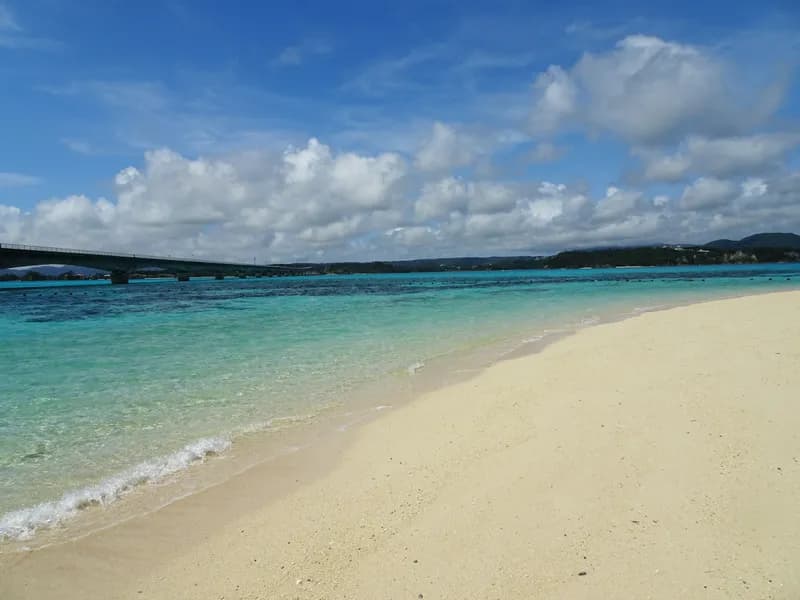
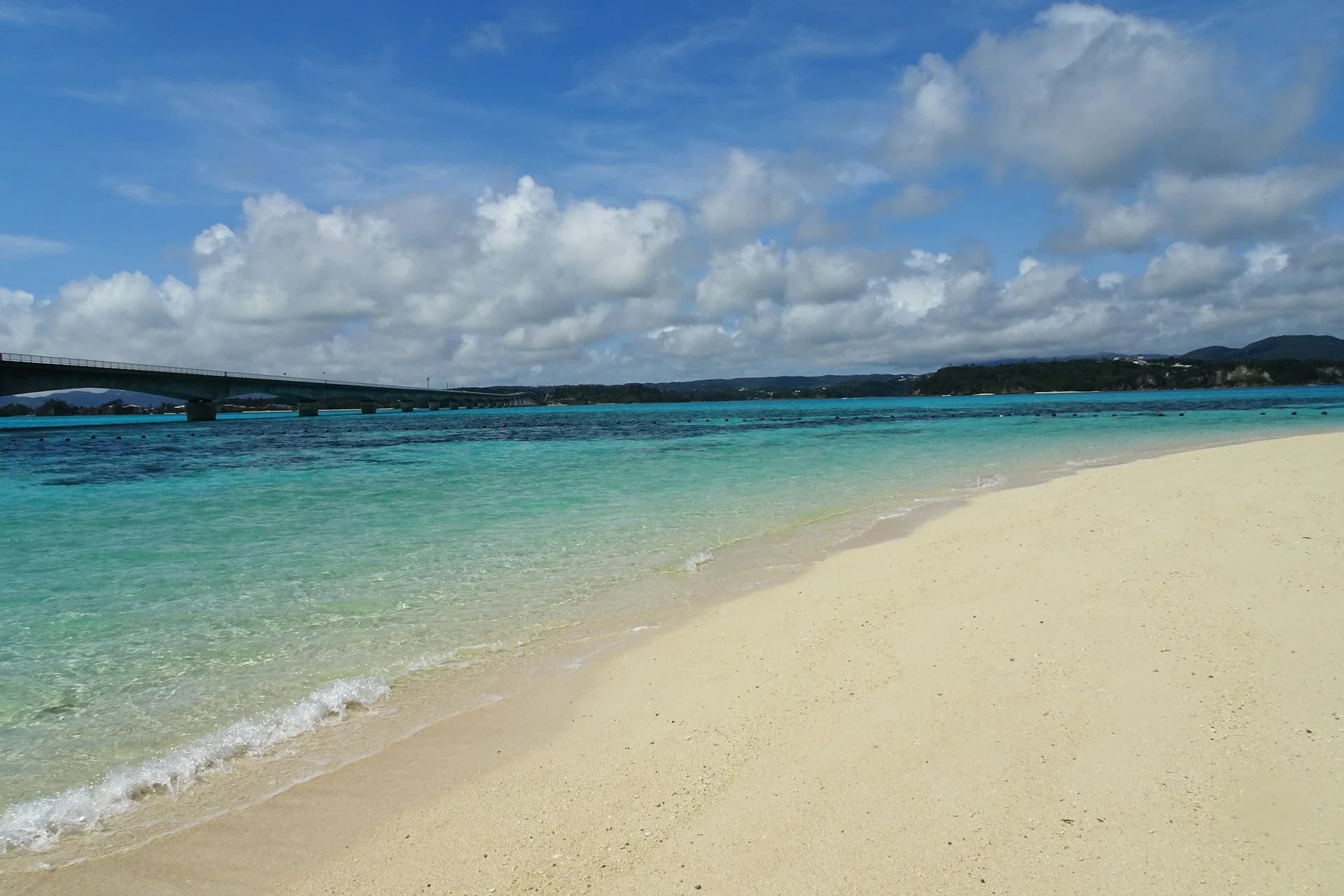
The main island's beaches are fine. The Kerama Islands, 30 minutes west by high-speed ferry from Naha, have the clearest water in Japan — 50m+ visibility. Sea turtles. Humpback whales (January-March). White sand that puts the main island to shame.
Zamami's Furuzamami Beach is consistently rated Japan's #1 beach. The high-speed ferry from Naha Tomari Port costs 3,200 JPY one-way (50 minutes). Book ahead — the boat fills up, especially on weekends.
An overnight on Zamami or Tokashiki is worth it. The sunsets from these islands, with the East China Sea going orange-to-purple, rank among the best in Asia.
4. Shuri Castle Is Under Reconstruction (But Still Worth Visiting)
The main hall burned in October 2019 — a significant loss for Okinawan cultural identity. Reconstruction is ongoing with a target completion around 2026. The grounds, gates, stone walls, and some ancillary buildings are open. Entry: 400 JPY.
Even without the main hall, the scale of the stone walls and the panoramic views over Naha are impressive. The Shureimon gate (the symbol of Okinawa, featured on the old 2,000 JPY note) is intact and photogenic.
5. Typhoon Season Is Serious but Manageable
July to October brings typhoons. When one's approaching, flights cancel 24+ hours ahead. Hotels are built to withstand them — you're safe indoors. The post-typhoon days often have the clearest skies and calmest water of the year.
Check forecasts at jma.go.jp. If a typhoon is coming, stock up on water and food, stay in your hotel, and enjoy the dramatic weather from a safe window. It usually passes in 24-36 hours.
6. Okinawa Is Significantly Cheaper Than Mainland Japan
Accommodation runs 30-40% less than Tokyo or Kyoto. A decent business hotel in Naha costs 5,000-8,000 JPY. Local set meals (teishoku) at family restaurants are 700-1,200 JPY. Okinawa soba is 600-900 JPY.
The aquarium is 2,180 JPY (or 1,510 JPY after 4PM). Shuri Castle is 400 JPY. Many beaches are free. A full day of sightseeing, food, and activities can easily come in under 5,000 JPY excluding accommodation and the car.
7. The Blue Zone Is Real and Fascinating
Ogimi Village, 2 hours north of Naha, has among the highest rates of centenarians on Earth. The Ogimi Longevity Museum (free) explains why: a diet heavy in sweet potatoes, tofu, seaweed, and goya (bitter melon); strong social networks called moai (mutual support groups); daily physical activity; and a sense of purpose (ikigai).
Nearby restaurants serve traditional longevity meals. The food isn't exciting in a restaurant-review sense — it's simple, plant-forward, and modest. But eating it while sitting in a village where people routinely live past 100 gives it a different resonance.
8. Okinawan Culture Is Distinct — And Locals Are Proud of It
Okinawa was the Ryukyu Kingdom until 1879. The culture, language, and identity are distinct from mainland Japan. Locals appreciate visitors who recognize this rather than treating Okinawa as "tropical Japan."
Learn a few words: "Mensore" (welcome), "Nifee debiru" (thank you), "Haisai/Haitai" (hello for men/women). Nobody expects fluency, but the effort is noticed.
The pace of life here is called "Okinawa Time" — slower, more relaxed, less punctual than the mainland. Don't fight it. Adapt.
9. The Aquarium Is Better in the Afternoon
Churaumi Aquarium gets packed from 9AM-2PM with tour groups. After 4PM, the crowds thin dramatically and tickets drop to 1,510 JPY (from 2,180 JPY). The whale shark feeding happens at 3PM and 5PM — time your visit accordingly.
The free areas of Ocean Expo Park surrounding the aquarium — including the Oceanic Culture Museum and the Native Okinawan Village — are worth an hour and most visitors skip them entirely.
10. Stay an Extra Day for an Outer Island
Most visitors stick to the main island. That's like visiting Hawaii and staying in Honolulu. The outer islands — Miyako-jima, Ishigaki, and the Yaeyama chain — are where Okinawa gets extraordinary.
Miyako-jima (45-minute flight from Naha, ~8,000 JPY) has beaches that rival the Maldives. Ishigaki (1 hour, ~10,000 JPY) is the gateway to the Yaeyama Islands, including Taketomi (traditional red-tile villages) and Iriomote (subtropical jungle with mangrove kayaking). If you're exploring the region, Tokyo offers a compelling comparison. For a different perspective, consider Hiroshima as well.
Book inter-island flights early on Peach, JTA, or RAC. They sell out during summer holidays.
Okinawa surprises visitors more than almost any other Japanese destination. Arrive expecting a beach break and you'll find a former kingdom, a Blue Zone, a food culture built on bitter melon and Spam, and some of the clearest water anywhere in the country. Three days isn't enough. Five is tight. A week lets you breathe at Okinawa Time and actually absorb what makes this place remarkable. If you're exploring the region, Bali offers a compelling comparison. For a different perspective, consider Kyoto as well.