My Pai Journal: A Week in Thailand's Hippie Mountain Town
Pai: A Week in Thailand's Hippie Mountain Town
Day 1: The 762 Curves
The 9AM minivan leaves Chiang Mai's Arcade Bus Station. THB 200. Three hours. 762 curves — and yes, the drivers count. Many tape the number to the dashboard with a smiley face beside it.
Motion sickness tends to hit somewhere around curve 300. The backpacker across the aisle will look green. The Thai grandmother behind you will somehow be fast asleep. How.
Then Pai appears suddenly — a green valley with a small town strung along a river. The air changes the moment you step out. Cooler. Thinner. Smelling of wood smoke and something floral you can't quite place.
Check into a bamboo bungalow on the edge of town. THB 500/night (~$14). Fan only, no AC — and you won't need it, since December nights in Pai drop to 12°C. The outdoor bathroom looks out over rice paddies.
First night-market dinner: pad thai (THB 50), mango sticky rice (THB 60), a Chang beer (THB 70). Total: THB 180 ($5.14). Eat it curbside while a guy with dreadlocks plays acoustic Bob Marley. Pai in one sentence.
Rating: 7/10. The road is rough but the landing is soft.
Day 2: Canyon Day
Rent a scooter. THB 200/day from a shop near Walking Street. The owner's safety briefing rarely varies: "Go slow on hills. Wear helmet. Don't drink and drive." He's given the speech a thousand times, and it shows.
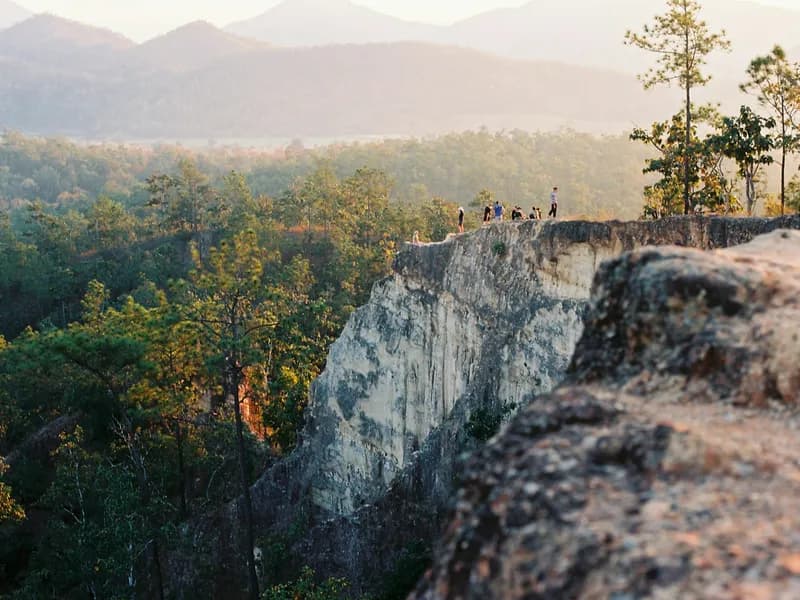
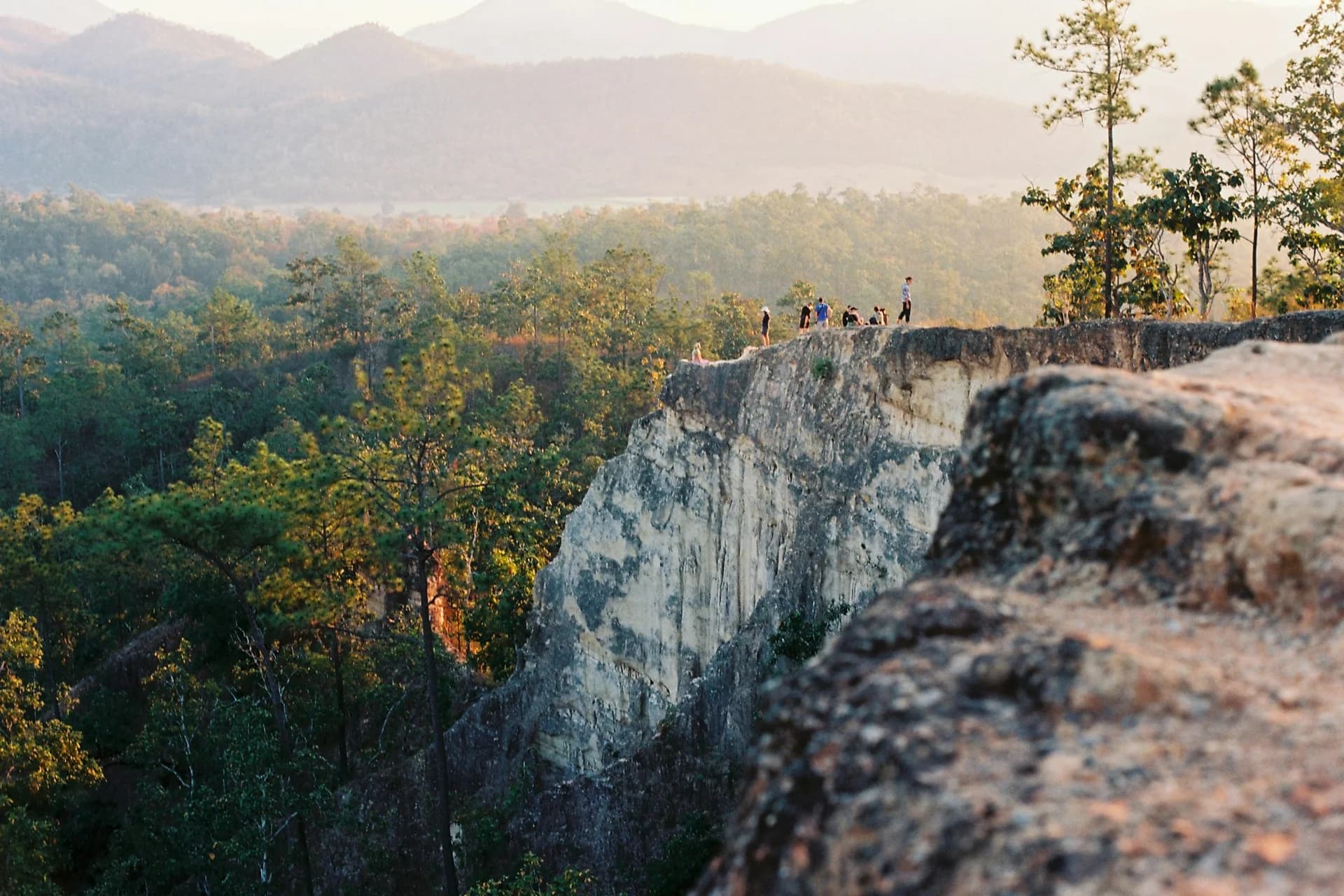
Pai Canyon sits 8km south. Park, then walk the narrow ridge trail — no railings on either side, with drops of 30+ meters in places. The red earth crumbles a little underfoot. Your heart rate climbs.
But the view. The entire valley spreads below, green and gold and hazy at the edges. Stay on the ridge until sunset turns everything amber.
Back in town: roti with banana and Nutella from a street cart (THB 60). Live music at a bar whose name nobody remembers — acoustic covers of Jack Johnson and John Mayer by a Thai guitarist who is, honestly, better than both.
Rating: 9/10. The canyon is the real thing.
Day 3: Hot Springs Morning
Wake at 6AM and ride to Tha Pai Hot Springs, 7km southeast. Arrive by 7:30, before the crowds. Entry: THB 300.
The springs cascade through a series of pools — scalding at the source, progressively cooler downstream. Find one that's bath-temperature and sink in. Jungle canopy above. Steam rising. Some bird you can't identify screaming somewhere in the trees.
Two hours pass easily. You could stay five.
Afternoon: climb the 353 steps to the White Buddha (Wat Phra That Mae Yen). Steep and sweaty. The view from the top — Pai valley spread below, mountains in every direction — is worth every bead of it.
Rating: 8/10. The hot springs at dawn are transcendent.
Day 4: Bamboo Bridge and Waterfalls
The bamboo bridge (Boon Ko Ku So) is 800 meters of narrow bamboo walkway across rice paddies to a small temple. It's rebuilt every year after the rains. In December, the paddies are green — the sweet spot.
Morning mist hangs over the fields. A monk walks ahead, orange robes against green rice. Take the photo. Everyone does. It's impossible not to.
Afternoon: Pam Bok Waterfall (8km, THB 20 entry). A swimming hole hidden in jungle. The water runs colder than expected — mountain-fed — but the pool is deep and the jungle stays quiet except for insects and falling water.
There's a rock about 3 meters high, made for jumping. Your form won't be graceful. Nobody's watching. It won't matter.
Rating: 8.5/10. The bamboo bridge in morning mist is a highlight of the whole trip.
Day 5: Rest Day (The Pai Way)
Do almost nothing. That's the point.
Breakfast at a cafe overlooking the river — eggs, toast, fresh juice, coffee. THB 150 ($4.30). Linger three hours over a novel pulled from a book exchange.
Afternoon: wander the town's side streets. Find a Thai massage place (THB 200/hour) and let a woman half your size and twice your strength unknot your shoulders.
Sunset from the Memorial Bridge area — the WWII-era bridge, with vintage VW vans parked nearby for photos. The strawberry fields (November–February) offer pick-your-own. Eat strawberries and watch the light change.
Evening: craft beer at Don't Cry bar. A flight of four local brews for THB 200. You'll end up chatting with a German couple on their honeymoon and a Canadian digital nomad who's been in Pai for "three weeks — or maybe four, I've lost track."
That's the Pai effect.
Rating: 7/10. Some days the best thing to do is nothing.
Day 6: The Big Loop
The Pai–Mae Hong Son loop is a legendary Thai motorcycle route. You don't have to ride all of it — even the first section, Pai to the Chinese Village and back, is stunning.
Hills and valleys. Tea plantations. Small villages where kids wave from the roadside. The road quality is mixed — smooth tarmac, then suddenly potholed gravel — but a scooter handles it.
The Chinese Village (Ban Santichon) is touristy but has excellent dumplings (THB 50) and tea (THB 30). The viewpoints along the road make every curve worth the motion-sickness risk.
Rating: 7.5/10. A good road day — though it means missing the canyon sunset.
Day 7: Departure
One last night-market dinner. Mango sticky rice x2 (the single best thing in Thai cuisine, THB 60 each). One final Chang beer on the curb.
The 10AM minivan back to Chiang Mai. 762 curves in reverse. Odds are the same green-faced backpacker from day one is on the van again — green again.
Ask anyone mid-grimace whether it was worth it, and the answer comes back the same: "So worth it." Hard to disagree.
Rating: 6/10. Leaving Pai always scores low.
For practical planning, see our 10 Reasons Pai Is Still Thailand's Best Mountain Escape in 2026.
For practical planning, see our Pai vs Chiang Mai: Which Northern Thailand Base Should You Choose?.
Would You Go Back?
Regulars come back again and again. Pai shifts slightly each time — new cafes open, old ones close, the bamboo bridge gets rebuilt in a slightly different shape — but the essence stays the same. This is still the place where Thailand slows down, the mountains press in close, and $5 buys you dinner and a show.
Total cost: ~THB 8,000 ($228) for 7 days including transport, accommodation, food, scooter rental, and activities. At $32/day for one of the most charming places in Southeast Asia, it's an absurd bargain.