
10 Things You'll Actually Want to Do in Gran Canaria
10 Things You'll Actually Want to Do in Gran Canaria
Gran Canaria earns its nickname — a "miniature continent" — because it genuinely packs a desert, a mountain range, pine forests, and Atlantic beaches onto one island you can drive across in an afternoon. The mistake is flying all the way here and never leaving the resort pool. Do that and you'll miss the best of it. The island splits into three worlds — the sun-baked south with its dunes and resorts, the green mountainous middle, and the cultured capital up north — and the best trips touch all three.
Here's what to actually do — ten experiences worth pulling yourself off the lounger for.
1. Walk the Maspalomas Dunes at Golden Hour
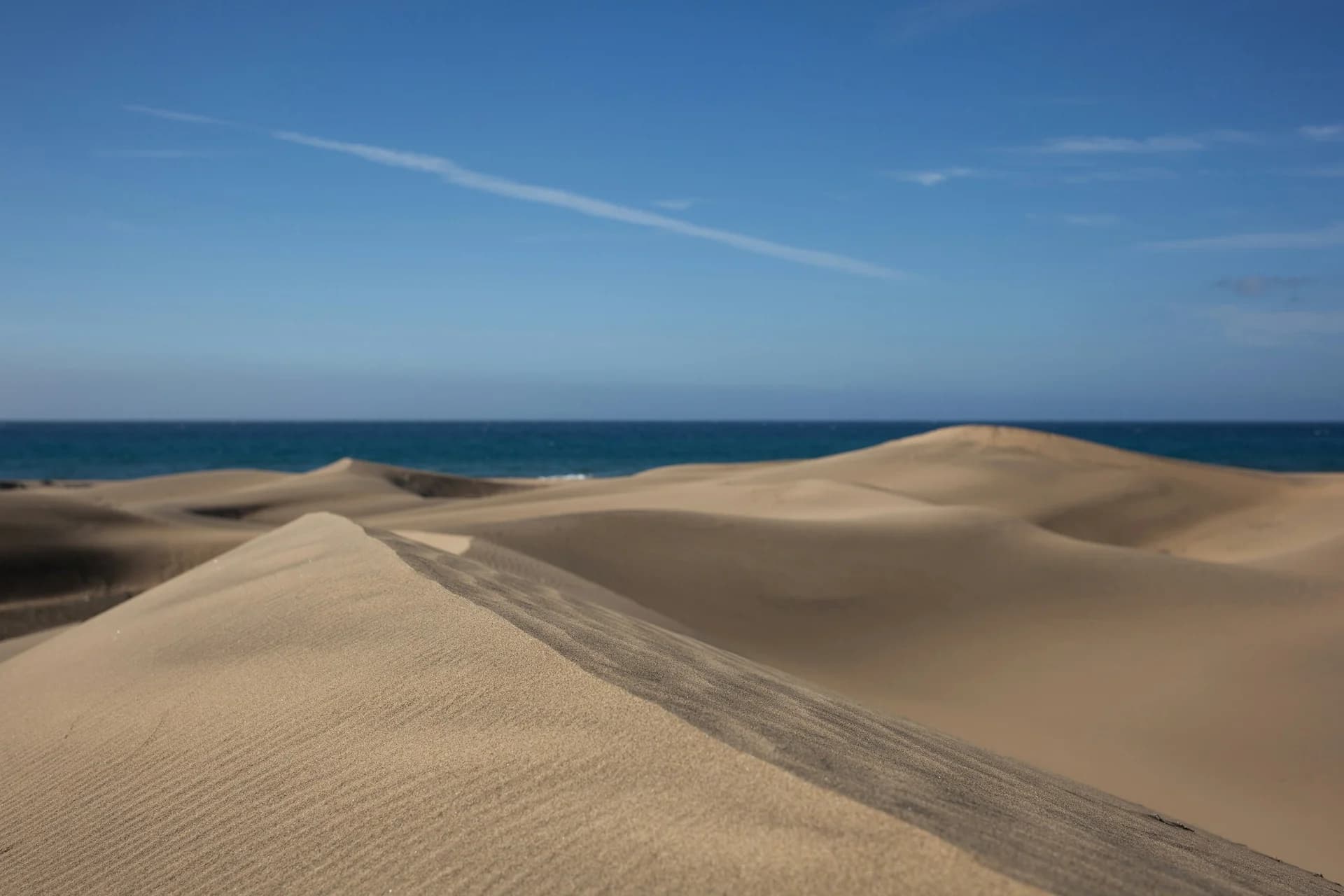
This is the island's signature image: 400 hectares of shifting golden dunes rolling straight into the Atlantic. Enter from Playa del Inglés and walk the roughly 3 km across the sand to the 1890 Maspalomas lighthouse. Go before 11AM or after 5PM — midday there's no shade and no mercy. It's free, and it feels like the Sahara wandered into Spain.
2. Climb to Roque Nublo
Head inland and up to the island's sacred rock: an 80-metre volcanic monolith standing at 1,813 m. The trail from the La Goleta car park is a moderate 1.5 km — about 45 minutes each way — to the base. The move is to arrive early, before the cloud rolls over the peaks by lunchtime and swallows the view. On a clear morning you can see Tenerife's Mount Teide floating on the horizon.
3. Lose an Afternoon in Puerto de Mogán
They call it "Little Venice" — a whitewashed fishing harbour laced with flower-filled canals and bougainvillea, about 90 km southwest of the capital. Wander the bridges, eat harbourside at the Cofradía de Pescadores fishermen's restaurant, and if it's Friday morning, hit the island's biggest market. It's the prettiest corner of the coast, and it knows it.
4. Swim at Las Canteras in Las Palmas
One of Europe's best city beaches, full stop. Three kilometres of golden sand curving through the capital, sheltered by a natural reef bar (La Barra) that keeps the water calm and snorkel-friendly. Backed by a promenade of cafes and seafood spots, it's the rare city beach where you'd happily spend a whole day. Free, and stay for sunset over the water.
5. Eat Your Way Through Tejeda
Voted one of Spain's prettiest villages, this whitewashed mountain settlement sits ringed by pine forest and almond groves. Come for lunch at Restaurante Cueva de la Tea, then buy bienmesabe — a rich almond dessert the village is famous for — from Dulcería Nublo. The drive up is winding, but the almond-blossom valleys are the payoff.
6. Peer Into the Caldera de Bandama
Ten kilometres from Las Palmas, this near-perfect volcanic crater measures 1,000 metres wide and 200 metres deep. The rim viewpoint (Pico de Bandama) is a five-minute walk from parking — free, and the easiest big view on the island. Feeling energetic? A trail drops all the way to the crater floor and back in about two hours.
7. Go Whale and Dolphin Watching from Puerto Rico
The calm southwest waters host resident dolphins and, in season, pilot whales — a winter visit lands you in peak whale season. Boat trips leave Puerto Rico marina for about €30-40 (US$32-43) per adult; book a morning slot when the sea is flattest. It's the kind of thing you'd skip as "too touristy" and then talk about for the rest of the trip.
8. Walk Columbus's Steps in Vegueta
Las Palmas's historic quarter is where Columbus reportedly stayed en route to the Americas. Visit the Casa de Colón (entry €4, US$4.30), climb the Santa Ana Cathedral rooftop for city views (€1.50, US$1.60), and graze the tapas bars along Calle Mendizábal — locals call it "Calle de los pinchos." Sunday brings a market to the Mercado de Vegueta.
9. Have a Family Beach Day at Amadores
If you're travelling with kids or just want water without waves, the man-made, horseshoe-shaped Playa de Amadores near Puerto Rico is your spot — calm, warm, and sheltered. It's also the perfect landing pad after a morning dolphin cruise. Loungers rent cheaply; the swimming is effortless.
10. Drive the Interior Just to Drive It
Gran Canaria's centre is a genuine mountain range, and the roads that thread it — past Roque Bentayga, up to the Pico de las Nieves lookout at 1,949 m — are half the reason to rent a car. Pack a jumper (it's cooler up top), take the curves slowly, and pull over often. This is the "continent" the nickname promises.
How to Fit It All In
You don't need to choose between beach and mountains — the island is small enough to do both in a week. Base in the sunny south for the dunes, beaches, and boat trips, then give up two full days to the interior and the capital: one for Roque Nublo, Tejeda, and the mountain roads, another for Las Palmas, Vegueta, and Las Canteras. A rental car unlocks numbers 2, 5, 6, and 10; the rest you can reach on the Global bus network. Five to seven days covers the lot without rushing — we walk through the rest of the logistics in our full Gran Canaria trip FAQ — and still leaves lazy afternoons free for the pool you flew here to ignore.
Pro Tips Before You Go
- Rent a car for the interior. Buses handle the coast fine (Las Palmas–Maspalomas is about €6/US$6.50), but the mountains need wheels.
- Sunscreen, always. The subtropical sun burns even on mild, cloudy-feeling days. SPF 50.
- Mind the flags. North and west beaches get strong Atlantic currents — green safe, yellow caution, red no swimming.
- Shop smart. The low 7% IGIC tax makes electronics, perfume, and dining cheaper than the mainland.
- Remember the clock. The Canaries are one hour behind mainland Spain (WET, UTC+0).
- Eat late. Dinner rarely starts before 8-9PM outside the resorts.
- Fill the tank before the mountains. Petrol stations thin out inland; top up in the resort towns before you climb.
- Time Puerto de Mogán for Friday. The island's biggest market takes over the harbour that morning.
Do even half this list and you'll leave understanding why so many visitors stop calling Gran Canaria a beach holiday and start calling it a proper island. The pool will still be there when you get back.
Related Articles
 Travel Guides
10 Things to Do in the Maasai Mara That Aren't Just the River Crossing
 Travel Guides
12 Best Things to Do in Luxor: A Both-Banks Hit List for Ancient Thebes
 Travel Guides