
Gran Canaria
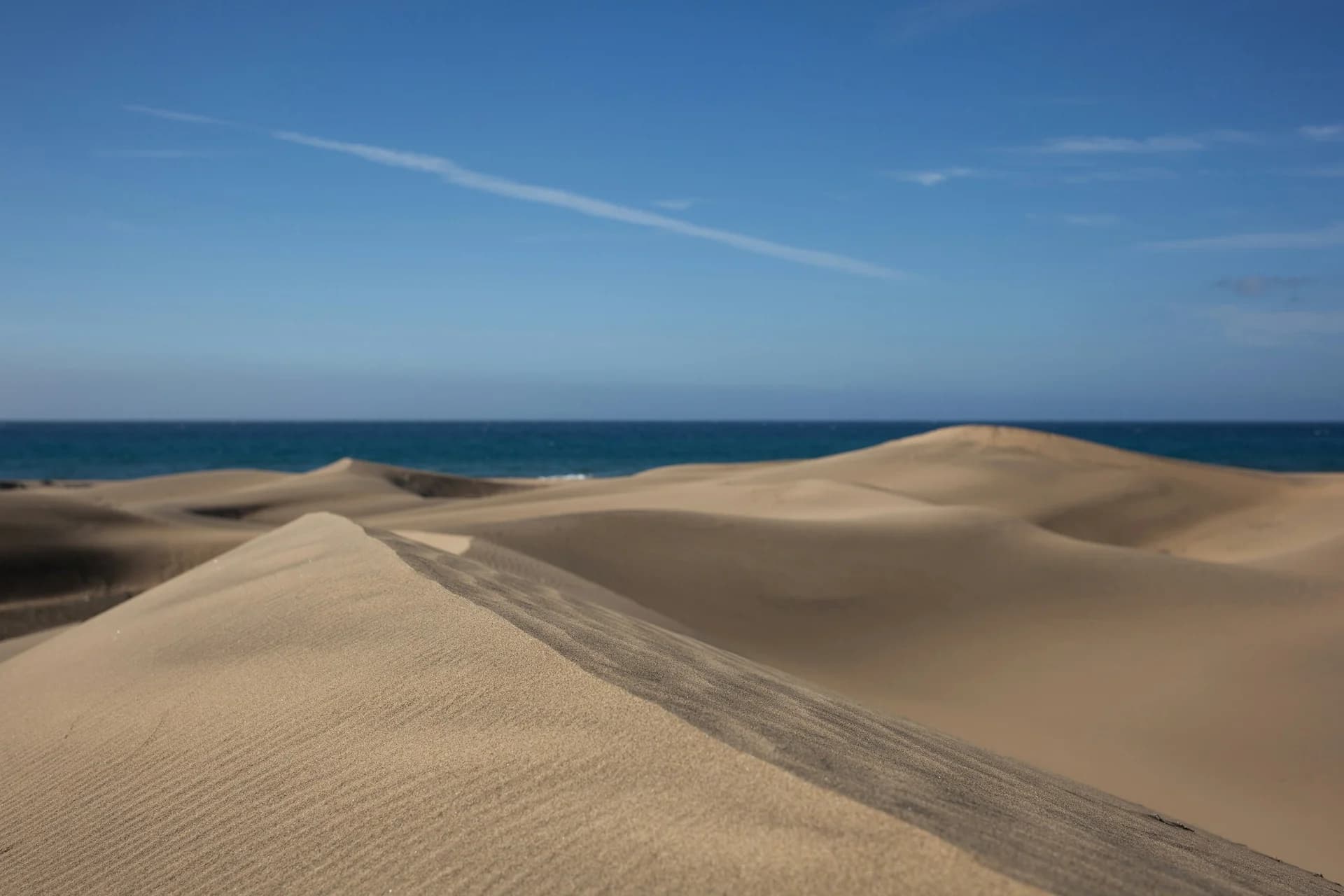
Photo: Visit Maspalomas / Unsplash
Key Facts
Best Time to Visit
Year-round; April-June and September-October for warm sea and fewer crowds
Language
Spanish (Castilian)
Currency
Euro (EUR)
Time Zone
WET (UTC+0), one hour behind mainland Spain
Airport
Gran Canaria Airport (LPA)
Population
~853,000 (island); ~378,000 in capital Las Palmas de Gran Canaria
Climate
Subtropical, avg 20-26°C year-round ('eternal spring')
Safety Rating
Very Safe (Level 1)
Region
Canary Islands, an autonomous community of Spain
Top Highlights

Maspalomas Dunes
A 400-hectare protected nature reserve of shifting golden dunes meeting the Atlantic, in the sunny south. Free access; allow 2-3 hours and bring water — there's no shade. Walk from Playa del Inglés to the Maspalomas lighthouse across the sand.

Roque Nublo
An 80-metre volcanic monolith standing at 1,813 m, the island's iconic sacred rock. A moderate 1.5 km trail (~45 min each way) from the car park leads to the base. Free; allow 2-3 hours with the drive. Go early to beat cloud and crowds.

Playa de Las Canteras
A 3 km golden-sand city beach in Las Palmas, sheltered by a natural reef bar that keeps the water calm and good for snorkeling. Free; allow a half day. Backed by a lively promenade of cafes and seafood restaurants.

Puerto de Mogán
A pretty fishing harbour of whitewashed houses laced with canals and bougainvillea, nicknamed 'Little Venice'. Free to wander; allow 2-3 hours. The Friday morning market is the biggest on the island. About 90 km southwest of Las Palmas.

Tejeda & Roque Bentayga
A whitewashed mountain village voted one of Spain's prettiest, surrounded by pine forest, almond groves and the sacred Roque Bentayga. Free to visit; allow 2-3 hours. Try local bienmesabe almond dessert. Roads are winding — drive carefully.

Vegueta Old Town, Las Palmas
The UNESCO-adjacent historic quarter where Columbus stayed en route to the Americas, home to Casa de Colón and the Santa Ana Cathedral. Casa de Colón entry ~€4; cathedral rooftop ~€1.50. Allow 2-3 hours; Sunday market at Mercado de Vegueta.

Caldera de Bandama
A 1,000-metre-wide, 200-metre-deep volcanic crater you can walk around the rim of, or hike down into the base. Free; the rim viewpoint is a 5-minute walk from parking, the descent takes ~2 hours round trip. Hidden gem 10 km from the capital.
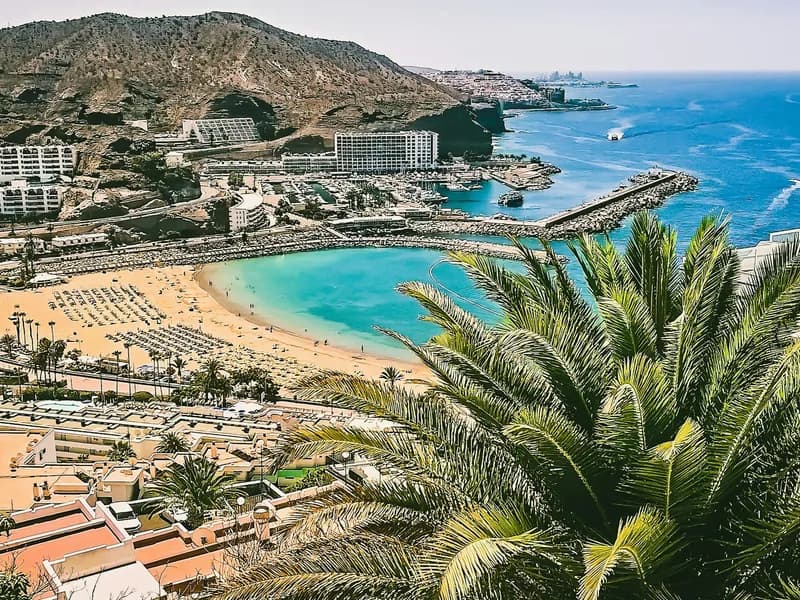
Puerto Rico & Amadores Beach
A sheltered southern resort bay and the man-made Playa de Amadores, both with calm, warm swimming water good for families. Free beach access; allow a half day. Departure point for dolphin and whale-watching boat trips (~€30-40 per adult).
Planned Itinerary
7-Day Gran Canaria Itinerary
Arrival & Maspalomas
Land at Gran Canaria Airport (LPA) and transfer ~25 km south to your base in Maspalomas / Playa del Inglés, the sunny resort heart of the island and the best launchpad for the dunes and the mountainous interior. Remember the Canaries run one hour behind mainland Spain (WET, UTC+0).
Airport transfer to Maspalomas(30 minutes)
Pre-book a transfer or take the GC-1 motorway south (~30 min). The Global bus line 66 also runs airport–Faro de Maspalomas for ~€5.20
Check in and lunch on the Meloneras promenade(1.5 hours)
Ease in with a seafront lunch along the Boulevard El Faro; try fresh grilled fish and papas arrugadas (wrinkled potatoes) with mojo
Sunset at the Maspalomas Lighthouse(1.5 hours)
Stroll the promenade to the 1890 Faro de Maspalomas where the dunes meet the sea — the classic first-evening view
Welcome dinner in Meloneras(1.5 hours)
Canarian dishes and a glass of local Listán wine; kitchens here rarely get busy before 8-9pm, in Spanish style
Maspalomas Dunes & Beach Day
A gentle first full day right on your doorstep — the island's signature Saharan-style dunes and its long southern beaches. No car needed today. Bring water and sunscreen: the dunes have no shade and the subtropical sun is intense year-round.
Walk across the Maspalomas Dunes(2.5 hours)
Enter the 400-hectare reserve from Playa del Inglés and walk the sand toward the lighthouse (~3 km). Go before 11am while it's cooler; free access
Beach time at Playa de Maspalomas(2 hours)
Settle on the wide golden beach below the dunes; loungers and parasols rent for ~€6-8 each
Lunch at a beach chiringuito(1.5 hours)
Casual seafood at a beachfront kiosk near the lighthouse
Free afternoon by the pool(3 hours)
An easy, unscheduled afternoon to recover from travel — pool, spa, or the calm Playa del Inglés promenade
Into the Mountains — Roque Nublo & Tejeda
Rent a car for a full day in the dramatic interior, the reason Gran Canaria is called a 'miniature continent'. Roads are steep and winding with cyclists — allow extra driving time and start early to beat the cloud that gathers on the peaks by midday.
Drive up to the Roque Nublo trailhead(1.5 hours)
Head inland via the GC-60; park at La Goleta car park (~1,750 m). The climb from the coast takes about 1-1.5 hours
Hike to Roque Nublo(2 hours)
A moderate 1.5 km trail (~45 min each way) leads to the base of the 80 m sacred monolith at 1,813 m. Go early — the summit clouds over by lunchtime
Lunch in Tejeda village(1.5 hours)
Voted one of Spain's prettiest villages. Eat at Restaurante Cueva de la Tea, then buy bienmesabe almond dessert at Dulcería Nublo
Roque Bentayga & Pico de las Nieves viewpoint(1.5 hours)
Stop at the sacred Roque Bentayga, then the Pico de las Nieves lookout (1,949 m) for island-wide views on the drive back
Puerto de Mogán & a Dolphin Boat Trip
A relaxed day on the sheltered southwest coast, mixing a whitewashed harbour town with a warm-water swimming beach and an optional boat trip. Calm swimming here suits families.
Drive to Puerto Rico for a boat trip(45 minutes)
Head ~30 km west along the GC-1 to Puerto Rico, the island's boat-trip hub
Dolphin & whale-watching cruise(2.5 hours)
Sail from Puerto Rico marina to spot resident dolphins and, in season, pilot whales (~€30-40 per adult). Morning seas are calmest
Swim at Playa de Amadores(1.5 hours)
The man-made, horseshoe Amadores beach has calm, warm water ideal for a post-cruise swim
Evening in Puerto de Mogán(2 hours)
Wander 'Little Venice' — whitewashed houses laced with flower-filled canals — and have dinner harbourside at the Cofradía de Pescadores fishermen's restaurant
Las Palmas — Vegueta Old Town & Las Canteras
Head north to the island capital for a change of pace: history, tapas and one of Europe's best city beaches. About an hour up the GC-1; you can also take Global bus line 30 or 50.
Drive or bus to Las Palmas(1 hour)
The GC-1 motorway runs the ~55 km north to the capital; park near Vegueta or the port
Vegueta historic quarter(2 hours)
Explore the cobbled old town where Columbus stayed: visit Casa de Colón (~€4) and climb the Santa Ana Cathedral rooftop (~€1.50) for city views
Tapas lunch in Vegueta(1.5 hours)
Graze the tapas bars along Calle Mendizábal ('Calle de los pinchos') — croquetas, jamón and a caña
Afternoon on Playa de Las Canteras(2.5 hours)
Relax on the 3 km city beach, sheltered by La Barra reef for calm swimming and snorkelling. Stroll the promenade and stay for sunset over the water
Caldera de Bandama & Free Afternoon
A lighter day pairing a hidden volcanic crater near the capital with a wholly free afternoon back at base. A good chance to slow down before departure.
Caldera de Bandama viewpoint(1 hour)
Drive to the rim of this 1,000 m-wide, 200 m-deep volcanic crater (10 km from Las Palmas); the Pico de Bandama lookout is a 5-minute walk from parking, free
Optional descent into the crater(2 hours)
For the energetic, a trail drops to the crater floor and back (~2 hours round trip) past an old farmstead. Skip it for an easier day
Lunch at a nearby bodega(1.5 hours)
The Monte Lentiscal area around Bandama is wine country — lunch at a local bodega with a glass of Gran Canaria red
Free afternoon back at base(3 hours)
Return south for an unstructured afternoon — beach, pool, spa, or last-minute shopping in Maspalomas
Departure
A relaxed final morning before your flight. Maspalomas to LPA airport is about 30 minutes on the GC-1 — build in a buffer for the return car drop-off.
Last swim and slow breakfast(1.5 hours)
A final dip at Playa del Inglés and a leisurely breakfast on the promenade
Souvenir shopping in Maspalomas(1 hour)
Pick up local mojo sauce, Gran Canaria coffee or aloe vera products — cheaper here thanks to the low 7% IGIC tax
Transfer to Gran Canaria Airport (LPA)(30 minutes)
Drive or transfer north on the GC-1; allow extra time to return a rental car
14-Day Gran Canaria Itinerary
Arrival & Maspalomas
Land at Gran Canaria Airport (LPA) and transfer ~25 km south to your base in Maspalomas / Playa del Inglés, the sunny resort heart of the island. Remember the Canaries run an hour behind mainland Spain (WET, UTC+0).
Airport transfer to Maspalomas(30 minutes)
Pre-booked transfer or the GC-1 motorway south; Global bus line 66 also runs airport–Faro de Maspalomas (~€5.20)
Lunch on the Meloneras promenade(1.5 hours)
Grilled fish and papas arrugadas with mojo along the Boulevard El Faro
Sunset at the Maspalomas Lighthouse(1.5 hours)
Walk to the 1890 Faro de Maspalomas where the dunes meet the sea
Welcome dinner in Meloneras(1.5 hours)
Canarian dishes and local Listán wine; kitchens fill up after 8-9pm
Maspalomas Dunes & Beach Day
A gentle first full day on your doorstep — the signature dunes and long southern beaches. No car needed. Bring water and sunscreen; the dunes have no shade.
Walk across the Maspalomas Dunes(2.5 hours)
Enter the 400-hectare reserve from Playa del Inglés and walk toward the lighthouse (~3 km); go before 11am, free access
Beach time at Playa de Maspalomas(2 hours)
The wide golden beach below the dunes; loungers ~€6-8
Lunch at a beach chiringuito(1.5 hours)
Casual seafood near the lighthouse
Free afternoon by the pool(3 hours)
Unscheduled time to shake off the travel — pool, spa, or the Playa del Inglés promenade
Into the Mountains — Roque Nublo & Tejeda
Rent a car for a full day in the dramatic interior. Roads are steep, winding and busy with cyclists — start early to beat the midday cloud on the peaks.
Drive to the Roque Nublo trailhead(1.5 hours)
Inland via the GC-60 to La Goleta car park (~1,750 m)
Hike to Roque Nublo(2 hours)
A moderate 1.5 km trail (~45 min each way) to the base of the 80 m monolith at 1,813 m; go early before it clouds over
Lunch in Tejeda village(1.5 hours)
Restaurante Cueva de la Tea, then bienmesabe almond dessert at Dulcería Nublo
Roque Bentayga & Pico de las Nieves(1.5 hours)
The sacred Roque Bentayga, then the Pico de las Nieves lookout (1,949 m) on the drive back
Puerto de Mogán & a Dolphin Boat Trip
A relaxed day on the sheltered southwest coast — a whitewashed harbour, a warm swimming beach and an optional boat trip.
Drive to Puerto Rico marina(45 minutes)
~30 km west along the GC-1 to the island's boat-trip hub
Dolphin & whale-watching cruise(2.5 hours)
Spot resident dolphins and, in season, pilot whales (~€30-40); morning seas are calmest
Swim at Playa de Amadores(1.5 hours)
The calm, man-made horseshoe beach — ideal after the cruise
Evening in Puerto de Mogán(2 hours)
Wander 'Little Venice' and dine harbourside at the Cofradía de Pescadores
Free Day — Fataga Valley or Rest
An easy day to slow down. Either do nothing at all by the pool, or take the short, scenic loop inland below. Your call — nothing today is mandatory.
Optional drive through the Fataga Valley(2 hours)
The GC-60 climbs the 'Valley of a Thousand Palms' to the whitewashed village of Fataga; stop at the Mirador de la Degollada de las Yeguas for the ravine view
Lunch in Fataga or San Bartolomé(1.5 hours)
A village restaurant with goat stew (carne de cabra) and local wine
Free afternoon(3.5 hours)
Back at base with no plan — beach, spa, or a long siesta
Relaxed dinner in Playa del Inglés(1.5 hours)
An unhurried evening close to your hotel
Caldera de Bandama & Wine Country
Combine a hidden volcanic crater with the island's wine country on the way north — today you'll shift base to Las Palmas at the end of the day.
Check out and drive north(1 hour)
Pack up and take the GC-1 toward the capital, detouring inland to Bandama
Caldera de Bandama viewpoint(1.5 hours)
The Pico de Bandama lookout over a 1,000 m-wide, 200 m-deep crater is a 5-minute walk from parking; optional trail to the crater floor (~2 hours)
Lunch and tasting at a Monte Lentiscal bodega(2 hours)
This area is Gran Canaria wine country — lunch at a bodega with a glass of local red
Check in to Las Palmas(1 hour)
Settle into your capital base near Las Canteras beach or Triana for the second week
Las Palmas — Vegueta & Las Canteras
A full day in the capital now that you're based here: history, tapas and one of Europe's best city beaches, all walkable or a short tram/bus apart.
Vegueta historic quarter(2 hours)
The old town where Columbus stayed: Casa de Colón (~€4) and the Santa Ana Cathedral rooftop (~€1.50) for city views
Tapas lunch on Calle Mendizábal(1.5 hours)
Graze the 'Calle de los pinchos' — croquetas, jamón and a caña
Triana shopping street & Pérez Galdós house(1.5 hours)
Stroll the pedestrian Calle Mayor de Triana's modernist facades and boutiques
Afternoon and sunset on Playa de Las Canteras(2.5 hours)
The 3 km city beach, sheltered by La Barra reef for calm swimming; stay for sunset over the water
Agaete Valley & Puerto de las Nieves
Explore the lush northwest: a fishing port, dramatic sea cliffs, and the only commercial coffee valley in Europe. About 35 km northwest of Las Palmas on the GC-2.
Coffee tasting in the Agaete Valley(1.5 hours)
Tour a working finca like Bodega Los Berrazales, where coffee grows alongside mango and citrus in a hidden green valley — Europe's only coffee production. Tastings by reservation
Puerto de las Nieves harbour(1.5 hours)
Wander the blue-and-white fishing village; look out to the Dedo de Dios ('God's Finger') sea stack
Fresh-fish lunch at the harbour(1.5 hours)
The Cofradía de Pescadores and nearby restaurants serve the day's catch by the water
Swim at the Agaete natural pools(1.5 hours)
Las Salinas, a set of volcanic-rock tidal pools beside the harbour, is a calmer alternative to the strong open Atlantic here
Heritage Villages — Teror, Arucas & Firgas
A loop through three of the north's prettiest inland towns: a pilgrimage basilica, a neo-Gothic 'cathedral', a rum distillery and Canary Islands crafts. Winding roads, so take it slowly.
Teror — Basílica del Pino & market(2 hours)
The island's spiritual heart, with wooden-balconied houses and the basilica of its patron saint. Buy the famous chorizo de Teror (a soft, spreadable sausage) and local sweets
Arucas — 'cathedral' & Arehucas rum(2 hours)
See the neo-Gothic Iglesia de San Juan Bautista, then tour the historic Destilería Arehucas rum distillery (tour + tasting ~€6) among its ageing barrels
Lunch in Arucas(1.5 hours)
A town-centre restaurant; try ropa vieja or a plate of local cheeses
Firgas — Paseo de Canarias(1 hour)
The small town famous for its waterfall street and mineral water; a quick, pretty stop on the way back
Guayadeque Caves & Agüimes
Head to the southeast for cave-dwelling culture and a striking slot canyon. A day of geology, history and a memorable cave lunch. Bring good shoes.
Barranco de las Vacas slot canyon(1 hour)
A short walk into a narrow, sculpted sandstone canyon near Agüimes (nicknamed the 'mini-Antelope Canyon'). Go early — it's small and gets busy
Agüimes old town(1.5 hours)
One of the island's best-preserved historic centres, around the Templo de San Sebastián; wander the sculpture-dotted streets
Cave lunch in the Guayadeque ravine(2 hours)
Eat inside the mountain at Restaurante Tagoror, a restaurant carved into cave dwellings; grilled meats and local wine
Explore the Guayadeque cave village(1.5 hours)
Visit the interpretation centre and the cave chapel; people still live in these caves, some inhabited since aboriginal times
Ancient Gran Canaria — Gáldar & the North Coast
Delve into the island's pre-Hispanic past on the north coast, capped by a quiet fishing-village beach. About 30 km northwest of Las Palmas.
Cueva Pintada Museum, Gáldar(2 hours)
An outstanding archaeological park built over a painted aboriginal cave with geometric murals and an excavated indigenous village (~€6). Book a timed guided visit ahead
Cenobio de Valerón(1 hour)
A honeycomb of ~350 pre-Hispanic grain silos carved into a cliff near Santa María de Guía (~€3)
Lunch in Santa María de Guía(1.5 hours)
Try the town's famous queso de flor cheese, curdled with wild artichoke flowers
Beach afternoon at Sardina del Norte(2 hours)
A sheltered cove and fishing harbour with clear water and seafront restaurants — a local favourite for a swim
Free Day — Las Canteras & the City
A rest day in the capital with no obligations. Beach, browse, or simply people-watch on the promenade. Optional ideas below.
Morning swim and snorkel at La Barra(2 hours)
The reef bar off Las Canteras shelters calm, clear water — some of the best easy snorkelling in a city anywhere
Long lunch on the Las Canteras promenade(1.5 hours)
A seafront table with grilled fish and a cold beer, no rush
Free afternoon(3 hours)
Nothing scheduled — the Poema del Mar aquarium, a spa, or a nap. Recharge before the last push
Sunset paseo along the promenade(1 hour)
Join the locals' evening stroll as the sun drops behind La Isleta
Canarian Culture — Market, Cooking & Botanic Garden
A slower, hands-on final full day — local flavours and green calm rather than driving. A fitting way to round off the trip.
Mercado del Puerto or Mercado de Vegueta(1.5 hours)
Browse a historic covered market for Canarian cheeses, mojo, gofio (toasted grain flour) and tropical fruit; graze the tapas stalls
Canarian cooking class(2.5 hours)
Learn to make papas arrugadas with red and green mojo, and a classic like ropa vieja, in a small-group class — then eat your work. Book ahead
Jardín Botánico Canario(1.5 hours)
Wander Spain's largest botanic garden on the edge of Las Palmas (free), showcasing the Canaries' unique endemic plants
Farewell dinner(1.5 hours)
A final Canarian meal — perhaps grilled local fish and a Gran Canaria wine to toast the trip
Departure
A calm final morning in the capital. Las Palmas to LPA airport is about 20-25 minutes south on the GC-1 — build in a buffer for a rental-car return.
Last morning on Las Canteras(1.5 hours)
A final beach walk and coffee on the promenade
Souvenir shopping in Triana(1 hour)
Local coffee, mojo, aloe products or rum — cheaper thanks to the low 7% IGIC tax
Transfer to Gran Canaria Airport (LPA)(25 minutes)
Drive or transfer south on the GC-1; allow extra time to return a rental car
21-Day Gran Canaria Itinerary
Arrival & Maspalomas
Land at Gran Canaria Airport (LPA) and transfer ~25 km south to your base in Maspalomas / Playa del Inglés. Remember the Canaries run an hour behind mainland Spain (WET, UTC+0).
Airport transfer to Maspalomas(30 minutes)
Pre-booked transfer or the GC-1 south; Global bus line 66 also runs airport–Faro de Maspalomas (~€5.20)
Lunch on the Meloneras promenade(1.5 hours)
Grilled fish and papas arrugadas with mojo along the Boulevard El Faro
Sunset at the Maspalomas Lighthouse(1.5 hours)
Walk to the 1890 Faro de Maspalomas where the dunes meet the sea
Welcome dinner in Meloneras(1.5 hours)
Canarian dishes and local Listán wine; kitchens fill after 8-9pm
Maspalomas Dunes & Beach Day
A gentle first full day on your doorstep — the signature dunes and long southern beaches. No car needed. Bring water and sunscreen; the dunes have no shade.
Walk across the Maspalomas Dunes(2.5 hours)
Enter the 400-hectare reserve from Playa del Inglés and walk toward the lighthouse (~3 km); go before 11am, free
Beach time at Playa de Maspalomas(2 hours)
The wide golden beach below the dunes; loungers ~€6-8
Lunch at a beach chiringuito(1.5 hours)
Casual seafood near the lighthouse
Free afternoon by the pool(3 hours)
Unscheduled time to shake off the travel
Into the Mountains — Roque Nublo & Tejeda
Rent a car for a full day in the dramatic interior. Roads are steep, winding and busy with cyclists — start early to beat the midday cloud.
Drive to the Roque Nublo trailhead(1.5 hours)
Inland via the GC-60 to La Goleta car park (~1,750 m)
Hike to Roque Nublo(2 hours)
A moderate 1.5 km trail (~45 min each way) to the base of the 80 m monolith at 1,813 m; go early
Lunch in Tejeda village(1.5 hours)
Restaurante Cueva de la Tea, then bienmesabe at Dulcería Nublo
Roque Bentayga & Pico de las Nieves(1.5 hours)
The sacred Roque Bentayga, then the Pico de las Nieves lookout (1,949 m) on the drive back
Puerto de Mogán & a Dolphin Boat Trip
A relaxed day on the sheltered southwest coast — a whitewashed harbour, a warm swimming beach and an optional boat trip.
Drive to Puerto Rico marina(45 minutes)
~30 km west along the GC-1 to the island's boat-trip hub
Dolphin & whale-watching cruise(2.5 hours)
Resident dolphins and, in season, pilot whales (~€30-40); morning seas are calmest
Swim at Playa de Amadores(1.5 hours)
The calm, man-made horseshoe beach
Evening in Puerto de Mogán(2 hours)
Wander 'Little Venice' and dine harbourside at the Cofradía de Pescadores
Free Day — Fataga Valley or Rest
An easy day to slow down. Do nothing by the pool, or take the short scenic loop inland below. Nothing today is mandatory.
Optional drive through the Fataga Valley(2 hours)
The GC-60 climbs the 'Valley of a Thousand Palms'; stop at the Mirador de la Degollada de las Yeguas
Lunch in Fataga or San Bartolomé(1.5 hours)
Village restaurant with carne de cabra and local wine
Free afternoon(3.5 hours)
Beach, spa, or a long siesta
Relaxed dinner in Playa del Inglés(1.5 hours)
An unhurried evening near your hotel
Southeast — Guayadeque Caves & Agüimes
An easy day trip from the south base into the island's cave-dwelling heartland, with a striking slot canyon and a cave lunch.
Barranco de las Vacas slot canyon(1 hour)
A short walk into a narrow sculpted sandstone canyon near Agüimes (the 'mini-Antelope Canyon'); go early, it's small
Agüimes old town(1.5 hours)
One of the island's best-preserved historic centres around the Templo de San Sebastián
Cave lunch in the Guayadeque ravine(2 hours)
Eat inside the mountain at Restaurante Tagoror, carved into cave dwellings
Guayadeque cave village & chapel(1.5 hours)
The interpretation centre and cave chapel; people still live in these caves today
Free Day — Mogán Slow Day & Kayak
A restful buffer before the Tenerife excursion. Return to the prettiest southwest corner at an unhurried pace, or stay by the pool. Optional plan below.
Late breakfast, no alarm(1.5 hours)
A slow start on the promenade
Optional sea kayak or paddleboard at Amadores(2 hours)
Rent a kayak from the calm Amadores or Puerto Rico bay and paddle the sheltered coves (~€15-20)
Harbourside lunch in Puerto de Mogán(1.5 hours)
A repeat visit to 'Little Venice' for its Friday market if timed right, or just a long lunch
Free afternoon and early night(3 hours)
Pack a small bag for tomorrow's ferry; rest up
Ferry to Tenerife — Santa Cruz & La Laguna
Begin a three-day side trip to neighbouring Tenerife to climb Spain's highest mountain. Take the fast ferry from Agaete; pack an overnight bag and leave the rest at your Gran Canaria hotel or a left-luggage. You'll need a rental car on Tenerife.
Fast ferry Agaete → Santa Cruz de Tenerife(1.5 hours)
Drive to Puerto de las Nieves (Agaete) and take the Fred Olsen fast ferry (~1 hour crossing, ~€40-55). Pick up a rental car in Santa Cruz
Santa Cruz de Tenerife highlights(2 hours)
See Calatrava's sail-like Auditorio de Tenerife and browse the Mercado Nuestra Señora de África
Lunch and explore La Laguna(2 hours)
Drive up to San Cristóbal de La Laguna, a UNESCO World Heritage old town of colourful mansions and student cafes
Check in near Teide(1.5 hours)
Drive up toward the national park; overnight in Vilaflor, La Orotava, or the Parador de las Cañadas del Teide for an early start
Teide National Park
A full day in a UNESCO volcanic wonderland around Spain's highest peak (3,715 m). The park sits above the clouds — bring warm layers even in summer, and note the very summit needs a free permit booked well ahead.
Teide cable car(2 hours)
Ride the Teleférico del Teide to 3,555 m (~€40 return); book online in advance. From La Rambleta, short trails give volcano and crater views
Roques de García loop(2 hours)
Walk the classic 3.5 km trail past surreal lava formations, including the iconic Roque Cinchado, with the peak as backdrop
Lunch at the Parador or Vilaflor(1.5 hours)
A mountain lunch in the caldera or in Vilaflor, the highest village in Spain
Sunset over the Cañadas(1.5 hours)
The high desert glows at golden hour; second night near the park (superb stargazing after dark)
La Orotava, Icod & Ferry Back
Descend the green north side of Tenerife before catching the ferry back and moving to your Las Palmas base for the second half of the trip.
La Orotava historic town(1.5 hours)
Wander steep cobbled streets of carved wooden balconies and the Casa de los Balcones
Drago Milenario, Icod de los Vinos(1 hour)
See the thousand-year-old dragon tree, a symbol of the Canaries
Ferry back to Agaete(1.5 hours)
Return the Tenerife rental car in Santa Cruz and take the fast ferry back to Gran Canaria
Transfer to Las Palmas base(1 hour)
Drive from Agaete to your capital base near Las Canteras; settle in for the northern half of the trip
Free Day — Recover in Las Palmas
A full rest day after the mountains and ferries. No plans — the beach and promenade are right there whenever you want them.
Slow morning and swim at La Barra(2.5 hours)
The Las Canteras reef bar shelters calm, clear snorkelling water; ease into the day
Long lunch on the promenade(1.5 hours)
A seafront table, no rush
Free afternoon(3 hours)
Spa, the Poema del Mar aquarium, or a nap
Sunset paseo(1 hour)
Join the locals' evening stroll as the sun sets behind La Isleta
Las Palmas — Vegueta, Triana & Las Canteras
A full day in the capital: history, tapas, boutiques and one of Europe's best city beaches, all close together.
Vegueta historic quarter(2 hours)
Casa de Colón (~€4) and the Santa Ana Cathedral rooftop (~€1.50) in the old town where Columbus stayed
Tapas lunch on Calle Mendizábal(1.5 hours)
Graze the 'Calle de los pinchos' — croquetas, jamón and a caña
Triana shopping street(1.5 hours)
Modernist facades and boutiques along the pedestrian Calle Mayor de Triana
Afternoon and sunset on Las Canteras(2.5 hours)
The 3 km city beach; stay for sunset over the water
Agaete Valley & Puerto de las Nieves
Explore the lush northwest: a fishing port, sea cliffs, and Europe's only commercial coffee valley. About 35 km northwest on the GC-2.
Coffee tasting in the Agaete Valley(1.5 hours)
Tour a finca like Bodega Los Berrazales where coffee grows with mango and citrus; tastings by reservation
Puerto de las Nieves harbour(1.5 hours)
The blue-and-white fishing village, with the Dedo de Dios sea stack offshore
Fresh-fish lunch at the harbour(1.5 hours)
The day's catch at the Cofradía de Pescadores
Swim at the Agaete natural pools(1.5 hours)
Las Salinas volcanic-rock tidal pools, calmer than the open Atlantic here
Heritage Villages — Teror, Arucas & Firgas
A loop through three of the north's prettiest inland towns: a pilgrimage basilica, a neo-Gothic 'cathedral', a rum distillery and crafts. Winding roads — go slowly.
Teror — Basílica del Pino & market(2 hours)
The island's spiritual heart; buy chorizo de Teror and local sweets among wooden-balconied houses
Arucas — 'cathedral' & Arehucas rum(2 hours)
The neo-Gothic San Juan Bautista church, then the Destilería Arehucas rum tour and tasting (~€6)
Lunch in Arucas(1.5 hours)
Ropa vieja or a plate of local cheeses
Firgas — Paseo de Canarias(1 hour)
The town's waterfall street and mineral water; a quick pretty stop
Ancient Gran Canaria — Gáldar & the North Coast
Delve into the island's pre-Hispanic past, capped by a fishing-village beach. About 30 km northwest of Las Palmas.
Cueva Pintada Museum, Gáldar(2 hours)
An archaeological park over a painted aboriginal cave and excavated village (~€6); book a timed guided visit
Cenobio de Valerón(1 hour)
A cliff honeycomb of ~350 pre-Hispanic grain silos (~€3)
Lunch in Santa María de Guía(1.5 hours)
Try the town's queso de flor cheese, curdled with wild artichoke flowers
Beach afternoon at Sardina del Norte(2 hours)
A sheltered cove and harbour with clear water and seafront restaurants
Free Day — Las Canteras & the City
A rest day in the capital with no obligations. Beach, browse, or people-watch. Optional ideas below.
Morning snorkel at La Barra(2 hours)
The reef bar shelters some of the best easy city snorkelling anywhere
Long lunch on the promenade(1.5 hours)
Seafront grilled fish, no rush
Free afternoon(3 hours)
Aquarium, spa, or a nap
Sunset stroll(1 hour)
The evening paseo behind La Isleta
Caldera de Bandama, Wine & Botanic Garden
A half-day of volcanic scenery and wine on the capital's doorstep, paired with Spain's largest botanic garden. Easy driving today.
Caldera de Bandama viewpoint(1.5 hours)
The Pico de Bandama lookout over a 1,000 m-wide crater; optional trail to the floor (~2 hours)
Wine tasting at a Monte Lentiscal bodega(2 hours)
Lunch and a tasting in Gran Canaria wine country beside the crater
Jardín Botánico Canario(1.5 hours)
Wander Spain's largest botanic garden (free), full of the Canaries' endemic plants
Free evening(2 hours)
An easy dinner back in the city
Artenara Cave Village & Tamadaba Pines
A quieter interior day away from the busy Roque Nublo route: the island's highest village, a cave church, a cave-restaurant lunch and a pine-forest walk on the northwest ridge. Winding mountain roads, so allow time.
Artenara — highest village on Gran Canaria(1.5 hours)
Explore the cave houses and the Ermita de la Virgen de la Cuevita, a chapel carved into rock; stop at the Mirador de Unamuno
Cave lunch with a view(1.5 hours)
Eat at a cliffside cave restaurant like Mirador de la Silla, reached through a tunnel to a terrace over the caldera toward Roque Bentayga
Walk in the Tamadaba pine forest(2 hours)
A gentle loop through the Tamadaba Natural Park's Canary pines on the northwest cliffs, with huge drops to the sea — one of the island's best forest walks
Scenic drive back(1.5 hours)
Return via the GC-21/GC-2 with coastal viewpoints; quiet dinner in the city
Canarian Culture — Market & Cooking Class
A slower, hands-on day of local flavours rather than driving. A fitting wind-down before the final stretch.
Mercado del Puerto or Mercado de Vegueta(1.5 hours)
Browse a historic covered market for cheeses, mojo, gofio and tropical fruit; graze the tapas stalls
Canarian cooking class(2.5 hours)
Make papas arrugadas with red and green mojo and a classic like ropa vieja, then eat your work; book ahead
Free afternoon(2.5 hours)
Beach, spa, or shopping in Triana
Relaxed dinner(1.5 hours)
A quiet evening near base
Free Day — Your Island, Your Way
A wide-open penultimate day. By now you know the corner you'd happily return to — go do that. Ideas below, but the day is yours.
Return to a favourite spot(3 hours)
The Maspalomas dunes at sunrise, Las Canteras, or the calm of Puerto de Mogán — whatever stuck with you
Long lunch, no rush(1.5 hours)
A final leisurely Canarian meal
Souvenir shopping and free afternoon(2.5 hours)
Local coffee, mojo, rum or aloe products — cheap thanks to the low 7% IGIC tax
Farewell dinner(1.5 hours)
Grilled local fish and a Gran Canaria wine to toast three weeks
Departure
A calm final morning in the capital. Las Palmas to LPA airport is about 20-25 minutes south on the GC-1 — build in a buffer for a rental-car return.
Last morning on Las Canteras(1.5 hours)
A final beach walk and coffee on the promenade
Last-minute shopping in Triana(1 hour)
Anything you meant to buy
Transfer to Gran Canaria Airport (LPA)(25 minutes)
Drive or transfer south on the GC-1; allow time to return a rental car
Travel Tips
Visa & Entry
Schengen Rules Apply — 90 Days Visa-Free for Many
As part of Spain, Gran Canaria sits in the Schengen Area. US, UK, Canadian, Australian and many other passport holders can visit visa-free for up to 90 days in any 180-day period. From 2026 the EU's ETIAS travel authorization (~€20) will also be required for visa-exempt travellers.
Budget
Local IGIC Tax Is Cheaper Than Mainland VAT
The Canary Islands charge a low IGIC sales tax (general rate 7%) instead of Spain's 21% VAT, so electronics, perfume, alcohol and dining can be noticeably cheaper. The currency is the Euro. Note this also means mainland-Spain VAT-refund tax-free shopping rules work differently here.
transport
Rent a Car to Explore the Mountainous Interior
Resorts and beaches are well linked by Global buses (a Las Palmas–Maspalomas ride costs ~€6), but the dramatic interior (Roque Nublo, Tejeda, Bandama) is hard to reach without a car. Roads are steep and winding — allow extra driving time and watch for cyclists.
Remember the Time Difference From Mainland Spain
The Canary Islands run on WET (UTC+0), one hour behind Madrid and mainland Europe — an easy thing to forget when booking flights, calls or ferry connections. It aligns the islands with the UK/Portugal instead.
Safety
The Atlantic Is Stronger Than It Looks
Beaches on the wilder north and west can have powerful waves and rip currents — always check the flag system (green safe, yellow caution, red no swimming). The subtropical sun is intense year-round even when it feels mild, so use high-factor sunscreen and stay hydrated.
Local Customs
Meals Run Late and Shops Take a Siesta
Spanish rhythms rule: lunch is around 2-3pm and dinner rarely before 8-9pm, so many kitchens sit idle mid-afternoon. Smaller shops and village businesses may close for a midday break. Don't expect the full dinner buzz before 9pm outside the tourist resorts.
Ready to explore Gran Canaria?
Get AI-powered recommendations for your trip
Plan a Trip to Gran CanariaRelated Articles
Travel Guides10 Things You'll Actually Want to Do in Gran Canaria
Beyond the resort pool — from a Saharan dune walk to a sacred volcanic monolith and Little Venice, here are the 10 experiences that make Gran Canaria worth the flight.
Travel GuidesGran Canaria, Answered: 18 Questions Before You Book
Do you need a car? Is the water warm enough to swim? Which resort suits you? Every question travelers ask before a Gran Canaria trip, answered straight.
SeasonalWhy Gran Canaria Is Europe's Best Winter Escape (and How to Do It Right)
While northern Europe freezes, Gran Canaria sits at a shorts-and-sunscreen 22°C. Here's why winter is the island's secret weapon — and exactly how to spend it.