
Normandy
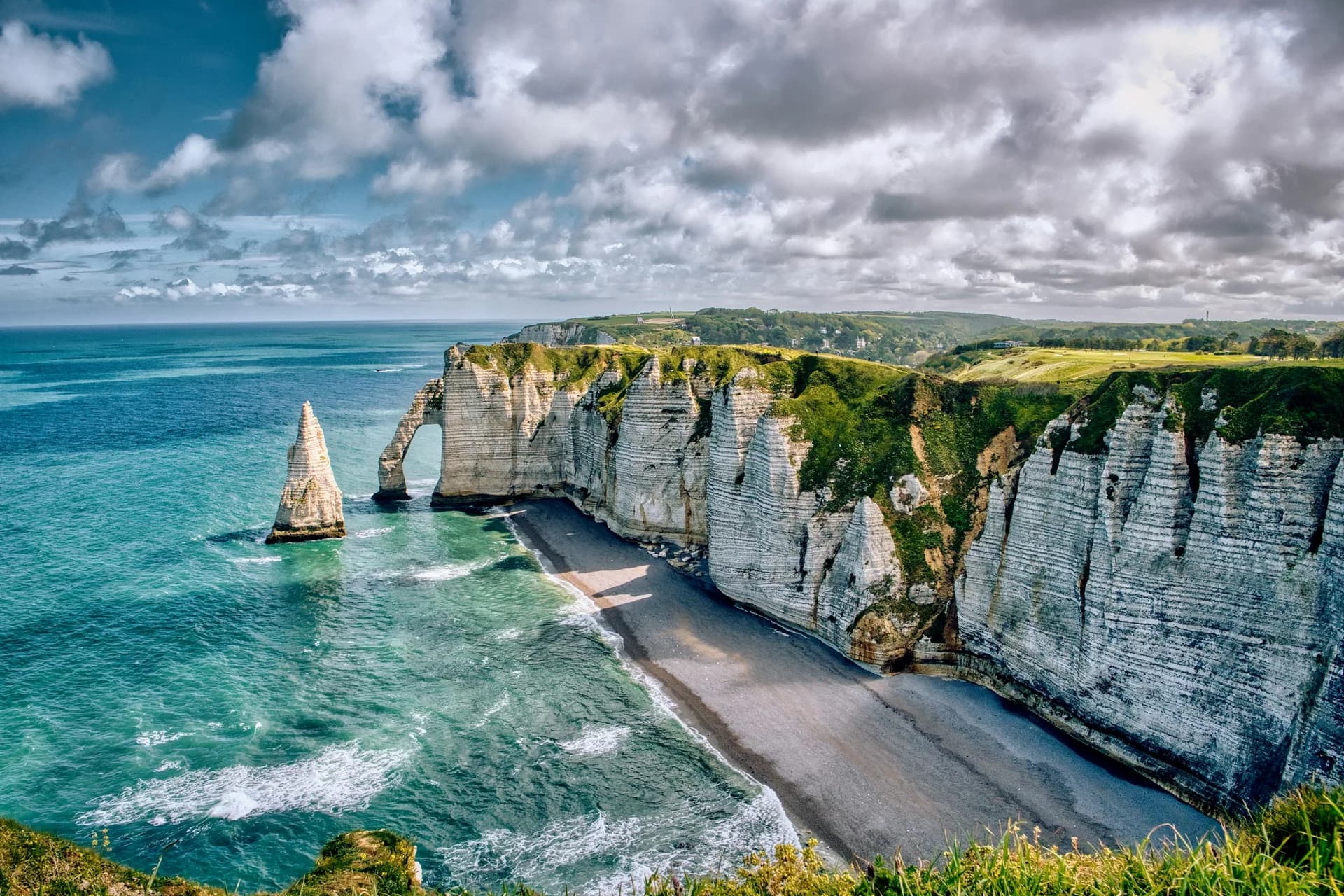
Photo: Allyson Beaucourt / Unsplash
Key Facts
Best Time to Visit
May to September; 6 June for the D-Day commemorations — book a year out for anniversary years
Language
French (English widely spoken around the D-Day sites)
Currency
Euro (EUR)
Time Zone
CET (UTC+1), CEST (UTC+2) in summer
Airport
Paris Charles de Gaulle (CDG), 200 km east; Caen-Carpiquet (CFR) and Deauville-Normandie (DOL) for regional flights
Population
3.3 million (region) — Rouen (~110,000) and Caen (~105,000) are the largest cities
Climate
Oceanic — mild damp summers (18-23°C), cool winters (3-8°C); rain possible in any month
Safety Rating
Very Safe (Level 1)
Region Note
Normandy is a region, not a city — the D-Day beaches alone span 80 km of coast, and a car is effectively essential
Top Highlights

Mont-Saint-Michel
The abbey-crowned tidal island, under construction since 708 and never taken by siege. Abbey entry ~€13, open daily. Parking sits 2.5 km back on the mainland; the Passeur shuttle is free, or walk 35 min. Allow a full day. Do not cross the sands alone — the bay has real quicksand and Europe's fastest tides.

Normandy American Cemetery, Colleville-sur-Mer
9,388 white marble graves on the bluff directly above Omaha Beach, on land granted to the United States in perpetuity. Free entry, open daily ~9AM-5PM. Allow 2h including the visitor centre. The path down to the beach itself is the part that lands hardest.
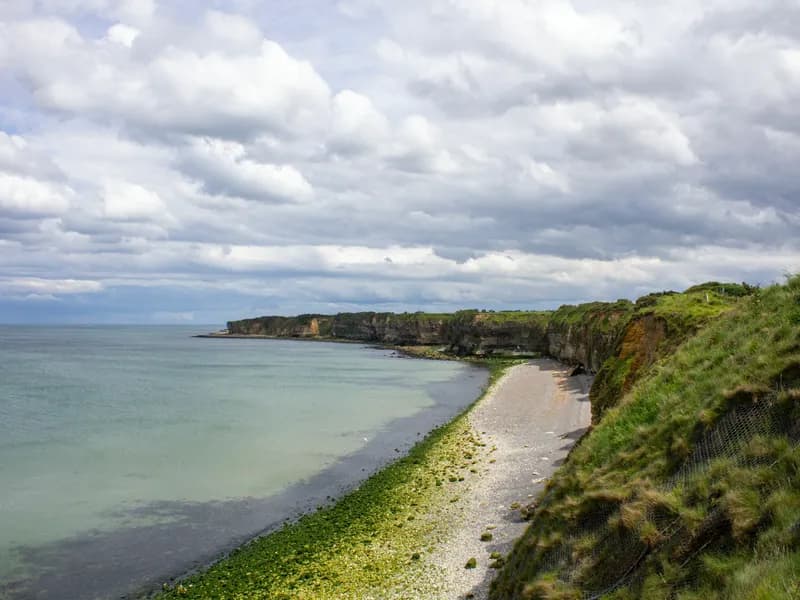
Pointe du Hoc
A clifftop German battery still torn open by naval shelling — the craters and bunkers are left exactly as they were in 1944. US Rangers scaled the 30m cliffs under fire to take it. Free, open daily, 12 km west of Omaha. Allow 1h. The most physically legible battlefield in Normandy.
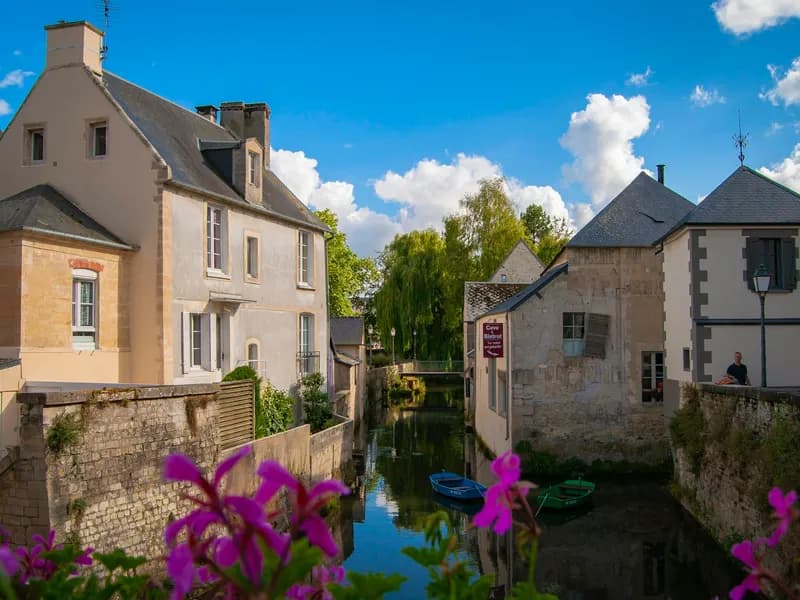
The Bayeux Tapestry
The 70m embroidered account of the 1066 Norman Conquest. CHECK STATUS BEFORE TRAVELLING: the Bayeux museum closed on 1 September 2025 for a €38m rebuild and is due to reopen around October 2027, and the tapestry itself is on loan to the British Museum in London from September 2026 to July 2027. It is not on view in Normandy in the meantime.

Étretat
Free chalk cliffs and natural arches on the Alabaster Coast that Monet painted more than 80 times. The Falaise d'Aval clifftop loop takes ~1h; parking ~€5. Check a tide table before walking the beach — the water reaches the cliff base and the arches cut off the way back.

Claude Monet's House & Gardens, Giverny
The water lily pond and Japanese bridge, restored to Monet's own planting plans. Entry ~€13, open April to early November only — shut all winter. Allow 2h. Arrive at the 9:30AM opening: the coaches from Paris land mid-morning and the bridge becomes a queue. 75 km southeast of Rouen.
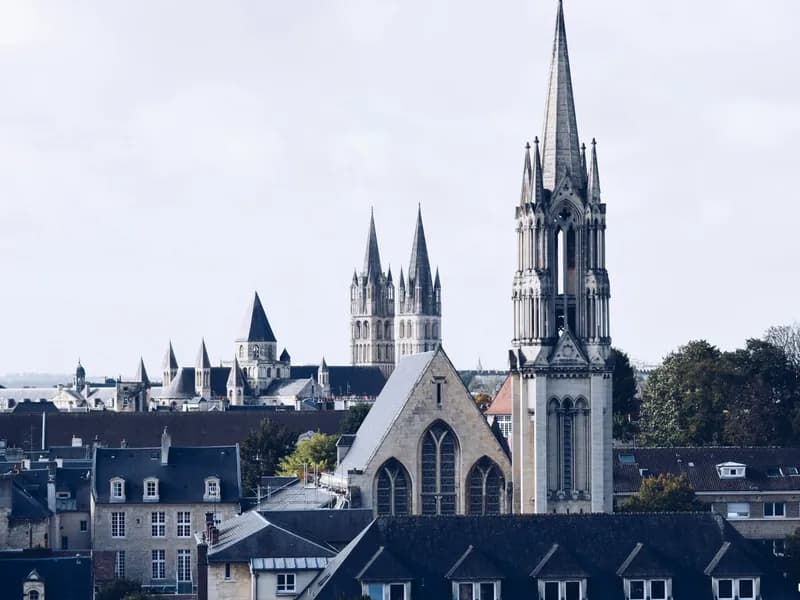
Caen Memorial Museum
The region's most complete WWII museum, running from the causes of the war through D-Day to the Cold War, built on a German command bunker. Entry ~€20. Allow 3h. Closed most of January. Do this before the beaches — it supplies the context the sites assume you already have.

Honfleur
A slate-fronted harbour at the Seine estuary where Boudin taught Monet to paint outdoors, and the Impressionists effectively began. Free to wander; the Vieux Bassin is the postcard. Allow half a day. Sainte-Catherine is France's largest timber church, built by shipwrights — the ceiling is a hull.
Planned Itinerary
7-Day Normandy Itinerary
Land at CDG, Monet's Water Garden at Giverny, Night in Rouen
Normandy is a region, not a city, so this trip is a driving route with four different beds in seven nights. Land at Charles de Gaulle, collect the car, and drive 1h30 west to Giverny — the gentlest possible first stop, a garden with no stairs and no queue by mid-afternoon. Then an easy hour on the A13 to Rouen, where you sleep for two nights.
Immigration at CDG under the EES(45 minutes)
Since 10 April 2026 the EU Entry/Exit System is live at every Schengen external border: expect a facial scan and fingerprints at a kiosk instead of a passport stamp on first entry. US, UK, Canadian and Australian passports still get 90 days in any 180 with no advance paperwork. ETIAS is NOT required yet — it launches Q4 2026 and only bites around April 2027, so any website selling you one today is a scam.
Collect the rental car, CDG Terminal 2 rental centre(45 minutes)
Take the free CDGVAL shuttle to the rental village. This is the single non-negotiable decision of the trip: the landing beaches span 80 km with almost no bus between them and none at all to Pointe du Hoc. Budget EUR 45-70/day. Ask for the smallest chassis they have — Norman villages were laid out for ox carts — and add the second driver at the desk, not later.
Drive CDG to Giverny(1 hour 30 minutes)
105 km on the A13, exit at Bonnieres-sur-Seine. Tolls run about EUR 9; French toll gates take contactless, but keep coins for the older barriers. Parking at Giverny is free and signposted off the D5.
Fondation Claude Monet, 84 rue Claude Monet(2 hours)
EUR 13, daily 9:30AM-6PM, open 1 April to 1 November and shut solid all winter. The Paris coaches own it from 10AM to 2PM; arriving at 3PM is the second-best trick after arriving at 9:30. Go through the tunnel under the road to the water garden FIRST, while you still have the patience to wait for a clear frame on the Japanese bridge, then double back to the Clos Normand and the pink house.
Monet's grave, Eglise Sainte-Radegonde(20 minutes)
Five minutes uphill from the gate, free, and almost always empty even when the garden is heaving. The family plot is against the church's north wall — a plain limestone slab for the man who spent thirty years proving the subject doesn't matter and the light does.
Drive to Rouen and check in(1 hour)
75 km on the A13. Sleep inside the medieval centre between Place du Vieux-Marche and rue Saint-Romain, and garage the car for two nights (Parking Vieux-Marche, about EUR 18/24h) — the old town is pedestrianised and you will not touch the car again until Day 3.
Dinner at La Couronne, Place du Vieux-Marche(2 hours)
Serving since 1345 and plausibly the oldest inn in France. In November 1948 Julia Child ate sole meuniere here on her first day on French soil and it rearranged the rest of her life. Order exactly that (around EUR 38). Yes it is touristy. It does not matter.
Rouen on Foot — Monet's Cathedral, Joan of Arc and the Bone Yard
A full day inside the medieval half of Rouen without touching the car. The city has some 2,000 timber-framed houses and the best Gothic ensemble in northern France, and the whole thing fits inside a 20-minute walk. Start at the cathedral before the light flattens out.
Cathedrale Notre-Dame de Rouen(1 hour)
Free, 9AM-7PM (from 2PM on Mondays). Monet rented a room in a linen shop on the south side of this square and painted the west front around thirty times in 1892-93, in every light he could wait for. Inside, a small casket holds Richard the Lionheart's heart, willed here separately from the rest of him. The cast-iron spire is the tallest in France at 151 m.
Rue du Gros-Horloge and the belfry climb(1 hour)
The 14th-century astronomical clock straddles the street on a Renaissance arch. Read it properly: one hand for the hours, the globe above tracking the moon's phases, and a panel at the base naming the day of the week with its Roman deity. The belfry is about EUR 7.50 with an audio guide and closed Mondays — worth it for the bell chamber and the roofline.
Place du Vieux-Marche and Eglise Sainte-Jeanne-d'Arc(45 minutes)
Joan was burned here on 30 May 1431 at nineteen; the spot is marked by a tall cross. Louis Arretche's 1979 church beside it is shaped like an upturned hull and a flame at the same time, and the 16th-century stained glass inside was pulled out of Saint-Vincent and hidden before the 1944 bombing — which is the only reason any of it exists.
Lunch at Dame Cakes, rue Saint-Romain(1 hour)
A neo-Gothic tea room built into the flank of the cathedral precinct. A savoury tart plus a slice of tarte normande runs about EUR 20. Ask for the back garden — it butts up against the archbishop's wall and nobody knows it's there.
Aitre Saint-Maclou(30 minutes)
Free, 9AM-6PM. A plague cemetery from 1348 that got rebuilt as an ossuary courtyard — look up at the timber galleries and the carvings are skulls, crossbones, gravediggers' shovels and a full danse macabre. Art students now have their studios in it, which is either grotesque or exactly right.
Musee des Beaux-Arts de Rouen(1 hour 30 minutes)
The permanent collection is free, which is a genuine anomaly in France. There is a canvas from Monet's Rouen Cathedral series hanging here alongside Sisley, Renoir and a strong Norman school — you can walk out of the Impressionist room and be standing in front of the real facade six minutes later, which is the whole argument of the series in one walk.
Dinner at L'Odas, Passage Maurice Lenfant(2 hours)
One Michelin star down a passage off the market square. Lunch menus start around EUR 55 and dinner climbs toward EUR 95. Book a week ahead — it is small and Rouen knows about it.
The Alabaster Coast — Etretat's Arches, Then South to Honfleur
Collect the car and head northwest to the chalk. Etretat's cliffs are free and best before the day-trippers land around 11AM; by evening you are 55 km south across the Seine estuary with your bag in a slate-fronted hotel in Honfleur. About 2h15 of driving spread across the whole day.
Drive Rouen to Etretat(1 hour 15 minutes)
90 km via the A150 and D925 across the Pays de Caux — flint farmhouses, beech windbreaks, no traffic. The village car parks fill by 10:30 in summer; the lot on the Aval side is about EUR 5 for the day.
Falaise d'Aval clifftop loop(1 hour 30 minutes)
Take the steps at the south end of the shingle beach. From the top you get the Porte d'Aval arch and the 70 m Aiguille needle from above, then a grass path along the edge of the golf course toward the bigger Manneporte arch. Check a tide table before you go anywhere near the beach underneath: the sea reaches the cliff base and the arches cut off your way back, which is precisely the trap it looks like.
Falaise d'Amont and the Nungesser-Coli monument(1 hour)
The north cliff, and the quiet one — most visitors never cross the beach to it. The chapel at the top is Notre-Dame-de-la-Garde; the white arrow monument marks the spot where L'Oiseau Blanc was last seen on 8 May 1927 heading for New York, and was never seen again. Les Jardins d'Etretat next door is EUR 14-17 of clipped topiary and contemporary sculpture — skip it unless gardens are your thing.
Lunch at Les Halles d'Etretat, Place Foch(1 hour)
The timber market hall on the square (a 1926 rebuild, and none the worse). Stalls do galettes, moules and cider by the bowl for EUR 12-18. If it is blowing sideways, Le Galion across the way sits inside a 14th-century half-timbered house that was dismantled in Lisieux and trucked here — about EUR 30 and worth it in bad weather.
Drive Etretat to Honfleur over the Pont de Normandie(1 hour)
55 km. The bridge is a 2,141 m cable-stayed span high above the Seine and the EUR 6.60 toll buys you one of the best ninety seconds of driving in France. Park at Parking Bassin in Honfleur (about EUR 10/24h) — the centre is closed to cars.
Dinner and the Vieux Bassin after dark(2 hours)
The Quai Sainte-Catherine terraces face the wrong way for sunset and charge for the privilege. Eat at Le Breard on rue du Puits instead (menus around EUR 45), then walk the harbour afterwards, when the tall slate-fronted houses have their lights on and the day boats have gone home.
A Slow Morning in Honfleur, Then Caen's Memorial and Into Bayeux
Your one unhurried start of the week: no alarm, a timber church and an Impressionist museum inside 400 m of each other. Then 1h down the A13 to Caen for the Memorial, which is the museum that makes the next two days legible, and 30 min on to Bayeux for three nights.
Free morning: Eglise Sainte-Catherine(1 hour 30 minutes)
Free, and the largest timber church in France. Honfleur's shipwrights threw it up after the Hundred Years' War because there was no money for stone and no masons left alive — so stand in the double nave and look up: they built two upturned hulls. The bell tower is a separate building across the square because they did not trust the roof to carry the weight. If it is Saturday, the market fills Place Sainte-Catherine around it until about 1PM.
Musee Eugene Boudin(1 hour)
EUR 8-12, closed Tuesdays. Boudin was a Honfleur framer's son who dragged a teenage Monet outdoors to paint from life and effectively started the whole thing. His beach scenes hang here with Jongkind, Dufy and early Monet, in rooms where you can look up from the canvas and see the same estuary out the window.
Walk up to the Cote de Grace(45 minutes)
15 min uphill from the harbour on foot, 5 by car. The Chapelle Notre-Dame-de-Grace is a sailors' chapel hung with model ships left as thanks for not drowning; the plateau behind it looks straight down the estuary to the Pont de Normandie. On the way up you pass Ferme Saint-Simeon, the cheap inn where Boudin, Jongkind, Courbet and Monet argued each other into Impressionism. It is a luxury hotel now, but the terrace will still sell you a coffee.
Drive Honfleur to Caen(1 hour)
65 km on the A13. Eat before you leave — the Memorial's cafeteria is exactly what you are picturing.
Memorial de Caen(3 hours)
Around EUR 20, opens 9AM, last entry about 5:15PM, closed most of January. It is built on top of General Wilhelm Richter's command bunker and you walk down into it. The narrative runs from the collapse of the 1918 peace through the occupation and the landings to the Cold War. Do this BEFORE the beaches — every site out there assumes you already know all of it, and not one of them explains it.
Drive to Bayeux, check in, dinner at Le Pommier(2 hours 30 minutes)
30 km on the N13. Bayeux is your base for three nights: it was the first French town liberated, on 7 June 1944, the Germans pulled out without a fight and not a bomb fell on it, so the medieval centre is entirely real. Le Pommier on rue des Cuisiniers does Norman classics for around EUR 30 and will actually seat you at 9PM, which in a town this size is not guaranteed.
D-Day: Pointe du Hoc, Omaha Beach and the American Cemetery
The central sector, west to east, in roughly the order it happened. This is 40 km of coast and a full emotional day — resist the urge to bolt on Utah or Sword, because attempting five beaches means three hours of driving and no time at any of them. Bring photo ID for the cemetery; it is US federal soil and the gate is serious about it.
Pointe du Hoc(1 hour 15 minutes)
Free, daily 9AM-6PM, 35 min from Bayeux — be here at 9AM. Rudder's 2nd Ranger Battalion scaled 30 m of cliff under fire on 6 June to take this battery; two days later about 90 of 225 were still fit to fight, and the guns had already been shifted inland, where a patrol found them parked in an orchard and destroyed them with thermite. The ground is still cratered exactly as the naval shelling left it and you can walk down into the bunkers. It is the one battlefield in Normandy your body understands without a caption.
Omaha Beach at Saint-Laurent and Vierville(1 hour)
Drive 12 km east and park at Saint-Laurent-sur-Mer beside Les Braves, Anilore Banon's steel sculpture standing out in the surf. Walk west along the sand toward the Vierville draw. At low tide it is 300 m from the waterline to the shingle, and that distance — with the bluffs you can see from here in enfilade above it — is the entire point of the day.
Lunch on the Omaha seafront(1 hour)
Options out here are thin by design. The bars along the Vierville and Saint-Laurent seafront do galettes, moules and cider for EUR 15-20. The better move is a picnic bought from the boulangeries on Bayeux's rue Saint-Jean before you leave and eaten at the Vierville draw, looking up at what the 29th Division had to climb.
Normandy American Cemetery, Colleville-sur-Mer(2 hours 30 minutes)
Free, 9AM-5PM (to 6PM from 15 April to 15 September), closed 25 December and 1 January. Photo ID at the gate, airport-grade security — this is land granted to the United States in perpetuity. Do the visitor centre first (45 min), then the graves: 9,388 of them, 307 unknown, set out so the rows run true from ten different angles at once. Preston and Robert Niland lie side by side in Plot F, the brothers behind Saving Private Ryan. Stay for the flag lowering and Taps at closing. Then take the path down to the beach — it is the thing that puts the two halves of the day together.
La Cambe German War Cemetery(45 minutes)
Free, 15 min west of Colleville, and virtually nobody stops. 21,222 graves under flat dark stone with crosses standing in groups of five, and a grass tumulus in the middle with 296 unknown beneath it. Read the ages: most of them are 17, 18, 19. It is the necessary second half of Colleville and it is extremely quiet.
Dinner at La Rapiere, Bayeux(2 hours)
A 13th-century stone dining room off rue Saint-Jean, menus around EUR 32, and the sort of place where a carafe of cidre brut and a slow plate of Norman pork is precisely the right register. You will not want to talk much and nobody here will mind.
Bayeux at Half Speed, Arromanches' Mulberry Harbour, On to Mont-Saint-Michel
A late, gentle start in Bayeux, then the Gold sector — Longues-sur-Mer and Arromanches — before a 1h40 drive southwest to Mont-Saint-Michel. The point of tonight is simple: be on the island when the last coach leaves at 6PM. That is the whole trick, and it is temporal, not financial.
Bayeux Cathedral and the crypt(1 hour)
Free, opens 8:30AM. Consecrated in 1077 with William the Conqueror standing in the nave, and this is where the Tapestry hung for its first seven centuries, paraded round the church once a year. Go down into the 11th-century crypt: the vault is painted with angels playing medieval instruments — bagpipes, a psaltery, a shawm — and there is never anyone down there.
The Bayeux Tapestry — check the status, do not plan around it(30 minutes)
Read this before you book anything. The Bayeux Museum closed on 1 September 2025 for a EUR 38m rebuild and is due back around October 2027, and the Tapestry itself is on loan to the British Museum in London from September 2026 to July 2027. It is not on view in Normandy in between. Check bayeuxmuseum.com before you travel. In the meantime: the MAHB in the old bishop's palace (about EUR 8) has Bayeux lace and porcelain, and the Conservatoire de la Dentelle in the Hotel du Doyen has lacemakers working bobbins by hand, free, Monday to Saturday.
Bayeux British War Cemetery(45 minutes)
Free, 4,648 graves, the largest Commonwealth cemetery in France, and — unlike Colleville — no ceremony, no crowds, and German graves in among the British ones. Cross the road and read the Latin on the memorial: NOS A GVLIELMO VICTI VICTORIS PATRIAM LIBERAVIMVS. We, once conquered by William, have now liberated the Conqueror's homeland. Nobody writes epitaphs like that anymore.
Longues-sur-Mer battery(45 minutes)
Free, 20 min from Bayeux, and the only German battery in Normandy with its original guns still sitting in their casemates. Walk out to the observation post on the cliff edge — it is the one from The Longest Day, and the view along Gold Beach explains the entire eastern sector in about ninety seconds.
Arromanches and the Mulberry harbour(1 hour 30 minutes)
Lunch on the seafront first, then the Musee du Debarquement (about EUR 12, rebuilt and reopened in 2023). Port Winston was towed across the Channel in pieces and assembled in twelve days; six concrete Phoenix caissons are still sitting out in the bay, and at low tide you can walk out to them across the sand. Then climb the path up the cliff east of town — that is where the scale finally lands.
Drive Arromanches to Mont-Saint-Michel(1 hour 40 minutes)
125 km. Park at the Beauvoir barrage car park, EUR 15.60/24h, 2.5 km back on the mainland — you cannot drive to the island, full stop. The Passeur shuttle is free and constant, or you walk the footbridge in 35 min. Sleep on the Mont itself (Auberge Saint-Pierre, Le Mouton Blanc, La Vieille Auberge) or in Beauvoir; rooms are small and overpriced and that is the price of the next two hours.
The Mont after the coaches leave(2 hours 30 minutes)
From about 6:30PM the Grande Rue empties out and the village becomes the medieval hill town it actually is. Walk the ramparts, find the little cemetery behind the parish church, look north to the Tombelaine islet. In summer the abbey's last entry is 6PM, so go straight up on arrival; outside summer, save it for tomorrow's 9:30 opening. For dinner: skip La Mere Poulard's EUR 40 omelette — it is whisked over an open fire for the theatre and it is still just an omelette — and order pre-sale lamb instead. The flock grazes the salt marsh below you and tastes of it.
Sunrise Over the Bay, the Abbey at Opening, and the Long Way Home
The Mont at 7AM, alone, is the reason you slept here. Take the abbey at opening, buy something that travels, then get east. Two routes home, and the smarter one involves a train.
Sunrise from the ramparts or the Barrage du Couesnon(1 hour)
Free. Check the tide coefficient at ot-montsaintmichel.com before bed: above 100 is a grande maree and the sea comes round the Mont for a couple of hours either side of high water, roughly twenty to thirty times a year — that is the morning it is an island again. The dam is where the postcard gets taken from. And whatever the sand looks like, do not walk out onto it: this bay has a 14 m range, some of the fastest tides in Europe and genuine quicksand, and it kills people who ignore that sentence. If you want to cross it, book a licensed guide.
The abbey at the 9:30AM opening(2 hours)
About EUR 13, 9:30AM-6PM with last entry an hour before (9AM-7PM in summer). Climb straight to the top and work DOWN — everyone else grinds upward, so you get ten minutes alone in the cloister. Find the great treadmill wheel, turned by prisoners hauling supplies up the cliff when this was a jail after the Revolution. It is a working monastery again; there is a midday Mass at 12:15 you are welcome to sit in on, and dress for that accordingly.
Last look at the Grande Rue(45 minutes)
Buy the caramels if you must, but the souvenir that earns its space is a bottle of poire (perry) or a Calvados Pays d'Auge from any of the caves on the Grande Rue — EUR 25-40, 40-42%, clears customs without a conversation. Remember the local rule: Normandy is too far north for wine, so it is cidre in a shallow bowl, poire, or Calvados, and the trou normand is the shot you take mid-meal to make room for the next course.
Checkout and transfer to the airport(4 hours)
Two ways out. Drive Mont-Saint-Michel to CDG: 360 km, 3h50, roughly EUR 30 of tolls — only workable for a flight after 4PM. Better: drive 65 km to Rennes (1h), drop the car at the Gare, and take the TGV to Paris Montparnasse in 1h27 (EUR 35-80 booked ahead), then RER B or a taxi across to CDG. Leave five hours of margin whichever you pick, and refuel before you return the car — airport fuel pricing is a form of theft.
14-Day Normandy Itinerary
Land at CDG, Monet's Water Garden at Giverny, Night in Rouen
Two weeks in Normandy is a driving route with seven different beds, not a holiday in a city — the region runs 30,000 km2 and the beaches alone span 80 km. Land at Charles de Gaulle, collect the car, and drive 1h30 west to Giverny for a garden and nothing more strenuous. Then an hour on the A13 into Rouen for two nights.
Immigration at CDG under the EES(45 minutes)
The EU Entry/Exit System has been live at every Schengen external border since 10 April 2026 — a facial scan and fingerprints at a kiosk on first entry instead of a stamp. US, UK, Canadian and Australian passports still get 90 days in any 180. ETIAS is not required yet (Q4 2026 launch, mandatory around April 2027, EUR 20), so anything selling you one today is a scam.
Collect the rental car, CDG Terminal 2 rental centre(45 minutes)
Free CDGVAL shuttle to the rental village. A car is not optional here: there is no public transport between the landing beaches and none at all to Pointe du Hoc. EUR 45-70/day; take the smallest chassis on offer and add the second driver at the desk — you will want to swap on the long legs.
Drive CDG to Giverny(1 hour 30 minutes)
105 km on the A13, exit Bonnieres-sur-Seine, about EUR 9 in tolls. Parking at Giverny is free and signposted off the D5.
Fondation Claude Monet, 84 rue Claude Monet(2 hours)
EUR 13, daily 9:30AM-6PM, 1 April to 1 November only — shut all winter. The coaches from Paris own it 10AM-2PM, so a 3PM arrival is the second-best trick after a 9:30 one. Take the tunnel under the road to the water garden first and save the Clos Normand for after: the Japanese bridge is the bottleneck and you want your patience intact when you reach it.
Monet's grave, Eglise Sainte-Radegonde(20 minutes)
Five minutes uphill, free, and empty even on the worst days. The family plot sits against the church's north wall under a plain limestone slab.
Drive to Rouen and check in(1 hour)
75 km on the A13. Stay inside the medieval centre near Place du Vieux-Marche and garage the car for two nights (Parking Vieux-Marche, about EUR 18/24h) — the old town is pedestrianised and you will not need it until Day 3.
Dinner at La Couronne, Place du Vieux-Marche(2 hours)
Trading since 1345 and plausibly the oldest inn in France. Julia Child ate sole meuniere here in November 1948 on her first day in the country and never got over it. Order the same (about EUR 38).
Rouen on Foot — Monet's Cathedral, Joan of Arc and the Bone Yard
A full day inside medieval Rouen with the car locked up. Some 2,000 timber-framed houses, the best Gothic ensemble in northern France, all of it inside a 20-minute walk. Cathedral first, before the light goes flat.
Cathedrale Notre-Dame de Rouen(1 hour)
Free, 9AM-7PM (from 2PM Mondays). Monet rented a room in a linen shop across this square and painted the west front around thirty times in 1892-93. Inside, a casket holds Richard the Lionheart's heart — willed here separately from the rest of him. The cast-iron spire is the tallest in France at 151 m.
Rue du Gros-Horloge and the belfry(1 hour)
The 14th-century astronomical clock spans the street on a Renaissance arch. One hand for the hours, a globe above tracking the moon, and a panel naming the day of the week by its Roman god. Belfry climb about EUR 7.50 with audio guide, closed Mondays.
Place du Vieux-Marche and Eglise Sainte-Jeanne-d'Arc(45 minutes)
Joan burned here on 30 May 1431, aged nineteen; a tall cross marks the spot. Arretche's 1979 church beside it reads as an upturned hull and a flame at once, and the 16th-century glass inside was stripped out of Saint-Vincent and hidden before the 1944 bombing, which is the only reason it exists.
Lunch at Dame Cakes, rue Saint-Romain(1 hour)
Neo-Gothic tea room built into the cathedral precinct wall. A savoury tart and a slice of tarte normande, about EUR 20. Ask for the back garden.
Aitre Saint-Maclou(30 minutes)
Free, 9AM-6PM. A 1348 plague cemetery rebuilt as an ossuary courtyard — look up at the timber galleries and every carving is a skull, a crossbone, a gravedigger's shovel, a danse macabre. Art students have their studios in it now.
Musee des Beaux-Arts de Rouen(1 hour 30 minutes)
Permanent collection free — a real anomaly in France. A canvas from Monet's Rouen Cathedral series hangs here with Sisley, Renoir and the Norman school. Six minutes on foot from the painting to the facade itself, which is the entire argument of the series.
Dinner at L'Odas, Passage Maurice Lenfant(2 hours)
One star, hidden down a passage off the market square. Around EUR 55 at lunch, EUR 95 at dinner. Book a week out.
The Alabaster Coast — Dieppe, Veules-les-Roses, Fecamp, Sleep in Etretat
North to the chalk and then a slow run west along the Cote d'Albatre, stopping at a scallop port, the smallest river in France and a Benedictine palace before you land in Etretat for two nights. About 2h30 of driving, all of it short hops.
Drive Rouen to Dieppe(1 hour)
65 km on the N27 through the Pays de Caux. Park at the quay by the fishing harbour.
Dieppe: the Grande Rue market and the quay(1 hour 30 minutes)
If it is Saturday, the Grande Rue market is one of the best in northern France, running 8AM to about 1PM — scallops, Neufchatel, andouille, cider. Dieppe is the number one scallop port in France and the season runs October to May; if you are here in it, order coquilles Saint-Jacques on the quay and do not overthink it.
Dieppe Canadian War Cemetery, Hautot-sur-Mer(45 minutes)
Free, 4 km inland, and almost nobody comes. Operation Jubilee on 19 August 1942 put 4,963 Canadians ashore at Dieppe; in nine hours 3,367 of them were killed, wounded or captured. The graves here are laid out back to back in German fashion because the Germans buried them. Every hard lesson at Omaha two years later was paid for on this beach first.
Varengeville-sur-Mer and Veules-les-Roses(1 hour 30 minutes)
Two short stops on the coast road. At Varengeville the sailors' church sits alone on the cliff edge with Georges Braque's grave in the yard and his Tree of Jesse window inside — free, and the setting does most of the work. Then Veules-les-Roses, which has the shortest river in France: the Veules runs 1,149 m from spring to sea and you can walk the whole thing in twenty minutes past watercress beds and watermills.
Palais Benedictine, Fecamp(1 hour 30 minutes)
About EUR 15. Alexandre Le Grand built this fantastically overwrought neo-Gothic palace in 1888 to house a liqueur he claimed to have reconstructed from a lost monastic recipe — 27 plants and spices, and the spice room on the tour still smells like the inside of a cathedral. It is part museum, part working distillery, part enormous flex. The tasting at the end is included.
Drive to Etretat and check in(25 minutes)
17 km along the cliff road. Two nights here. Domaine Saint Clair - Le Donjon sits on the cliff above town if you want the view; the village hotels are cheaper and you can walk to the arches in five minutes.
Etretat's Cliffs, Le Havre's Concrete, and Into Honfleur
The arches in the morning before the day-trippers land, then 30 min south to Le Havre — which people skip, and should not. Auguste Perret rebuilt the flattened city in reinforced concrete and UNESCO listed the result in 2005. Sleep in Honfleur, 25 min further on across the Pont de Normandie.
Falaise d'Aval clifftop loop(1 hour 30 minutes)
Free. Steps up from the south end of the shingle, then the Porte d'Aval arch and the 70 m Aiguille needle from above, and a grass path along the golf course toward the bigger Manneporte. Monet painted these more than eighty times. Check a tide table before setting foot on the beach below: the water reaches the cliff base and the arches cut off your way back.
Falaise d'Amont and the Nungesser-Coli monument(1 hour)
The north cliff, and the quiet one. Chapelle Notre-Dame-de-la-Garde at the top; the white arrow marks where L'Oiseau Blanc was last seen on 8 May 1927 heading for New York, never to be found. Coffee at the clifftop cafe, then down.
Drive to Le Havre and lunch(1 hour 30 minutes)
28 km. Eat at La Taverne Paillette on rue Georges Braque — an old-school brasserie doing choucroute and plateaux de fruits de mer for EUR 20-30, and the place the city actually eats.
Eglise Saint-Joseph and the Perret centre(1 hour)
Free. Le Havre was 80% destroyed in September 1944 and Auguste Perret rebuilt it on a 6.24 m module grid in reinforced concrete. Saint-Joseph's 107 m lantern tower is glazed with Marguerite Hure's coloured glass and works as a chimney of light — go at midday and stand directly under it. Then find the Appartement Temoin Perret, a period show flat preserved intact, guided visits only through the tourist office, about EUR 5, and genuinely one of the best hours in Normandy.
MuMa, Musee d'art moderne Andre Malraux(1 hour 30 minutes)
About EUR 10, closed Tuesdays. The biggest Impressionist collection in France outside Paris — Boudin, Monet, and a huge Dufy holding because he was born here. The building is glass on the harbour mouth so the light in the galleries is the same light in the paintings, which is not an accident.
Drive to Honfleur over the Pont de Normandie, check in(30 minutes)
25 km. A 2,141 m cable-stayed span high above the Seine; the EUR 6.60 toll is the best value in the region. Park at Parking Bassin (about EUR 10/24h) — the centre is car-free. Two nights. Dinner at Le Breard on rue du Puits, menus around EUR 45.
Rest Day: Honfleur, Where the Impressionists Started
No driving, no alarm, nothing that needs a ticket booked in advance. Honfleur is 400 m across and the whole day is on foot. This is the deliberate slow point of the first week — take it, because from Day 7 the trip gets heavy.
Slow morning on the Vieux Bassin(1 hour)
The tall narrow slate-fronted houses on the Quai Sainte-Catherine were built high and thin because harbour frontage was taxed by width. Get a coffee, watch the boats, and note that the terraces here face the wrong way for evening light — eat elsewhere later.
Eglise Sainte-Catherine and the Saturday market(1 hour 30 minutes)
Free, and the largest timber church in France. The shipwrights built it after the Hundred Years' War because there was no money for stone and no masons left — look up at the double nave and you are standing under two upturned hulls. The bell tower is a separate building across the square; they did not trust the roof with the weight. If it is Saturday the market wraps around it until 1PM.
Musee Eugene Boudin(1 hour 30 minutes)
EUR 8-12, closed Tuesdays. Boudin, a Honfleur framer's son, dragged a teenage Monet outdoors to paint from life and effectively started Impressionism by doing it. His beach scenes hang here with Jongkind, Dufy and early Monet — and the estuary out the window is the same one on the canvas.
Les Maisons Satie(1 hour)
About EUR 7, closed Tuesdays. Erik Satie was born in this house and the museum refuses to be a museum: you walk through it wearing headphones and rooms respond to you — a winged pear floats, a room of chairs starts pedalling. Deeply silly, completely committed, thirty minutes you will describe to people later.
Walk up to the Cote de Grace(1 hour 30 minutes)
15 min uphill. The Chapelle Notre-Dame-de-Grace is hung with model ships left by sailors who made it home; the plateau behind looks down the estuary to the Pont de Normandie. You pass Ferme Saint-Simeon on the way — the cheap inn where Boudin, Jongkind, Courbet and Monet argued each other into a movement. It is a five-star hotel now but the terrace sells coffee to anyone who walks up.
Dinner and cider by the bowl(2 hours)
Get the local rule right: Normandy is too far north for wine, so it is cidre — served in a shallow bowl, not a glass — or poire, or Calvados. The four AOC cheeses to look for on any board are Camembert, Livarot, Pont-l'Eveque and Neufchatel, the heart-shaped one. Order a bowl of brut, not doux, and a board of all four.
Trouville, Deauville and the Pays d'Auge Cider Route to Caen
Inland day. First the Cote Fleurie — a working fish market and a film-festival boardwalk 200 m apart — then the Route du Cidre, a signposted 40 km loop through orchard country where you can actually taste what you have been drinking. Sleep in Caen, two nights.
Trouville-sur-Mer fish market(1 hour)
16 km from Honfleur. The Marche aux Poissons on the quay is open daily and it is a real one — the stalls will shuck oysters and hand you a plateau to eat right there at a counter for EUR 12-20, standing up, at 10AM, which is the correct way to do it. Trouville is the working sister; Boudin painted these sands over and over.
Deauville and Les Planches(1 hour)
Cross the footbridge and the tone changes completely. Deauville is where Paris comes to be seen — the Hotel Normandy Barriere, the casino, and the boardwalk where each bathing cabana carries the name of an actor who came for the American Film Festival, which has run every September since 1975. Free to walk. Read the names; it is a strange and effective time machine.
Beuvron-en-Auge(1 hour 30 minutes)
30 min inland, and one of Les Plus Beaux Villages de France — a single square of half-timbered houses with geraniums in every window box and no through traffic. Lunch at Le Pave d'Auge in the old market hall (menus around EUR 45) or a galette and a bowl of cider from the creperie on the square for EUR 15.
Route du Cidre: Christian Drouin, Coudray-Rabut(1 hour)
Free tour and tasting. The Route du Cidre is a signposted 40 km loop and Drouin is the stop that explains it: Calvados Pays d'Auge must be double-distilled in a pot still, unlike the column-still stuff from the rest of the region, and they will walk you through the copper and the barrel cellar and then pour a 1980s vintage at you. A good bottle is EUR 35-60 and it is the souvenir worth the luggage weight.
Le Village Fromager Graindorge, Livarot(1 hour)
About EUR 5 including tasting, closed Sundays. Glass galleries run above the actual production line, so you watch Livarot being made under you — the one bound in five strips of reed, which is why it is nicknamed le colonel. The tasting at the end covers all four Norman AOC cheeses. Better than it sounds by a wide margin.
Drive to Caen and dinner in the Vaugueux(2 hours 30 minutes)
About 50 min. The Vaugueux is the cobbled quarter that survived the 1944 bombing that took most of the city. Eat at Le Bouchon du Vaugueux — a small chalkboard bistro, about EUR 30, book ahead. If you are feeling brave, tripes a la mode de Caen is the local dish and it is genuinely good; if you are not, nobody is watching.
Caen: The Memorial, William's Abbey, Matilda's Abbey
The one museum day of the trip, and the most important one. Do the Memorial before you go anywhere near a beach — every site out on the coast assumes the context this place supplies and none of them provides it. Afternoon on William the Conqueror's home turf.
Memorial de Caen(3 hours 30 minutes)
Around EUR 20, opens 9AM, closed most of January. Be there at opening. It is built on top of General Wilhelm Richter's command bunker and the route takes you down into it. The arc runs from the failure of the 1918 peace through the occupation, the landings, the Battle of Normandy and out into the Cold War. Allow more time than you think: the section on the occupation and the collaboration is the part that stays with people, and it is the part most visitors rush.
Lunch on the Place Saint-Sauveur(1 hour)
Back in the centre, this is the prettiest surviving square in Caen and the cafes around it are ordinary in the best way — a croque, a salad, a coffee, EUR 15, sitting outside while your head resets from the morning.
Abbaye aux Hommes(1 hour 15 minutes)
Guided tour about EUR 6. William the Conqueror founded it as penance for marrying Matilda against the Pope's wishes, and he is buried in the choir — or a thigh bone of him is, which is all that survived Huguenots in 1562 and revolutionaries in 1793 taking turns on the tomb. The abbey buildings are now Caen's town hall, so the mayor works in an 18th-century monastic cloister.
Abbaye aux Dames(45 minutes)
Free. Matilda's half of the same penance, at the other end of the city, and where she actually still lies under a black marble slab in the choir. It is a Norman Romanesque church of unusual severity and there is rarely anyone in it.
Chateau de Caen ramparts(45 minutes)
Free to walk. William built one of the largest castle enclosures in Europe here around 1060 and you can circuit the walls at sunset for nothing. The Musee de Normandie inside is worth an hour if you have one.
D-Day East: Pegasus Bridge, Sword, Juno and the British Memorial
The British and Canadian sectors, running west along the coast from Benouville to Ver-sur-Mer — about 35 km end to end, no backtracking. Pick two adjacent sectors a day and you get to think; try all five and you get three hours of driving. Sleep in Bayeux for the next four nights.
Pegasus Bridge and the Memorial Pegasus, Benouville(1 hour 30 minutes)
Museum about EUR 9-10, 15 min from Caen. At 00:16 on 6 June, before anything landed on any beach, three Horsa gliders came down here in the dark; Jim Wallwork's stopped 47 m from the bridge and the markers show you exactly where. The museum has the original bridge in its grounds. Then cross to Cafe Gondree — the first house liberated in France, still in the Gondree family, still serving coffee, and Arlette Gondree was a child in it that night.
Le Grand Bunker, Ouistreham (Sword Beach)(1 hour)
About EUR 9. A 17 m German fire-control tower with five floors restored exactly as they were — rangefinder, radio room, generator, dormitory. It held out until 9 June, four days after the beach around it was taken, because nobody could get in. Outside on the front is the Kieffer memorial: 177 Frenchmen of the 1er BFM under Philippe Kieffer landed here, the only French troops on the beaches on the day.
Lunch at Courseulles-sur-Mer(1 hour)
The harbour here does oysters from its own beds. Stalls and small restaurants along the quay, EUR 15-25, and a Sherman tank recovered from the sea sitting on the front as if it were street furniture.
Juno Beach Centre, Courseulles-sur-Mer(1 hour 30 minutes)
About EUR 8-12. The Canadian museum, and the only one that explains why 14,000 Canadians were on this beach at all — a country of 11 million that volunteered a million people. Take the guided bunker tour in the dunes behind (small extra fee, seasonal) with one of the young Canadian student guides; they are excellent.
British Normandy Memorial, Ver-sur-Mer(1 hour)
Free, opened on 6 June 2021 — 77 years late, because Britain never built one. Liam O'Connor's stone colonnade carries 22,442 names of everyone under British command who died in the Normandy campaign, ordered by the day they died, so you can read the campaign as a calendar. It stands on the ridge above Gold Beach with the sea below. It may be the single most affecting thing in Normandy and half the tour buses drive past it.
Drive to Bayeux and check in(1 hour)
20 min. Four nights here. Bayeux was the first French town liberated, on 7 June 1944 — the Germans left without a fight and not one bomb fell, so the medieval centre is entirely authentic. Villa Lara and the Churchill Hotel are the comfortable options; dinner at Le Pommier on rue des Cuisiniers, around EUR 30.
Gold Beach: Longues-sur-Mer, Arromanches and the Harbour They Built
A shorter, closer day — nothing today is more than 20 min from Bayeux. Longues, Arromanches and the scallop port at Port-en-Bessin, then back into town in the late afternoon for the cathedral. Good weather-hedge day: if it is pouring, flip this with tomorrow.
Longues-sur-Mer battery(1 hour)
Free, open daily, 20 min from Bayeux. The only German battery in Normandy that still has its original 150 mm naval guns sitting in their casemates — everything else was cut up for scrap. Walk out to the observation post on the cliff edge, the one used in The Longest Day. On 6 June it duelled with the cruiser Ajax offshore and lost.
Arromanches: Musee du Debarquement and Port Winston(2 hours)
About EUR 12, rebuilt and reopened in 2023. The Allies decided they could not capture a working port, so they built one in England, towed it across the Channel in pieces and assembled it here in twelve days — 600,000 tonnes of concrete. Six Phoenix caissons are still out in the bay; at low tide you can walk out and put a hand on one. Time this with the tide table and it becomes the best hour of the day.
The clifftop above Arromanches(45 minutes)
Free. Climb the path east out of town to the headland. From up here the whole ring of the Mulberry harbour is legible in the water — the outline of a port the size of Dover, still faintly there eighty years on. Down in the town you cannot see it at all.
Lunch at Port-en-Bessin(1 hour 30 minutes)
10 min west, and a real working port rather than a monument — the number one scallop harbour in France. The quayside restaurants serve whatever came in that morning for EUR 20-30, and the fish auction building is right there. Nobody on a D-Day tour stops here, which is why it is pleasant.
Bayeux Cathedral and the crypt(1 hour)
Free, opens 8:30AM. Consecrated in 1077 with William the Conqueror in the nave, and the Tapestry hung here for its first seven centuries, paraded round the church once a year. Go down into the 11th-century crypt — the vault is painted with angels playing bagpipes, a psaltery, a shawm, and there is never a soul down there.
The Bayeux Tapestry — check status before you travel(30 minutes)
Do not build a day around it. The Bayeux Museum closed on 1 September 2025 for a EUR 38m rebuild and is due back around October 2027, and the Tapestry goes on loan to the British Museum from September 2026 to July 2027. It is not on view in Normandy in between — check bayeuxmuseum.com. Meanwhile the Conservatoire de la Dentelle in the Hotel du Doyen is free and has lacemakers working bobbins by hand, Monday to Saturday, and the MAHB next to the cathedral (about EUR 8) holds the lace and porcelain collections.
D-Day Central: Pointe du Hoc, Omaha Beach, Colleville and La Cambe
The heaviest day of the fortnight, run west to east in roughly the order it happened. Forty kilometres of coast and nothing else on the schedule. Bring photo ID — the American Cemetery is US federal soil and the gate is airport-grade.
Pointe du Hoc(1 hour 30 minutes)
Free, daily 9AM-6PM, 35 min from Bayeux, and you want to be there at 9AM. Rudder's 2nd Ranger Battalion scaled 30 m of cliff under fire to take this battery; two days later about 90 of 225 were still fit to fight — and the guns had already been moved inland, where Sergeant Lomell found them sitting in an orchard and destroyed them with thermite grenades. The ground is still cratered exactly as the naval shelling left it. Go down into the bunkers. This is the one battlefield your body understands without a caption.
Omaha Beach: Vierville draw and Les Braves(1 hour 30 minutes)
12 km east. Park at Saint-Laurent-sur-Mer beside Les Braves, Anilore Banon's steel sculpture standing out in the water, and walk west toward the Vierville draw. At low tide it is 300 m of open sand from waterline to shingle, and the bluffs above you — which you can see perfectly well from down here — held it all in enfilade. The distance is the entire point and no museum can give it to you.
Picnic lunch on the seafront(45 minutes)
Buy it in Bayeux before you leave — the boulangeries on rue Saint-Jean open at 7AM and will build you a proper baguette sandwich for EUR 6. The bars along the Vierville and Saint-Laurent front do galettes and cider for EUR 15-20 if you would rather sit down, but they are thin on the ground out here by design.
Normandy American Cemetery, Colleville-sur-Mer(2 hours 30 minutes)
Free, 9AM-5PM (to 6PM 15 April-15 September), closed 25 December and 1 January. Photo ID required. Visitor centre first, 45 min, then out to the graves: 9,388 of them and 307 unknown, aligned so the rows run true from any angle you stand at. Preston and Robert Niland are side by side in Plot F — the brothers behind Saving Private Ryan. Stay for the flag lowering and Taps. Then walk the path down to the beach; it is what joins the two halves of this day together.
La Cambe German War Cemetery(45 minutes)
Free, 15 min west, and almost nobody stops. 21,222 graves under flat dark stone, crosses standing in groups of five, and a grass tumulus in the middle with 296 unknown men under it. Read the dates of birth: most were 17, 18, 19. It is the necessary second half of Colleville, and it is very quiet.
Dinner at La Rapiere, Bayeux(2 hours)
A 13th-century stone room off rue Saint-Jean, menus around EUR 32. Order the cidre brut in a bowl and take your time. You will not feel like talking much and nobody in this town has ever minded that.
Rest Day in Bayeux
Deliberately empty. You have done four museums and three cemeteries in four days and you need a day that asks nothing. No driving unless you feel like it, and one optional afternoon out if the weather is good.
Sleep in, then the market(2 hours)
Saturday on Place Saint-Patrice is the big one, Wednesday on rue Saint-Jean the small one, both 8AM to about 1PM. Buy Camembert de Normandie AOP (raw milk, moulded by hand in five ladlefuls — the label says au lait cru and moule a la louche, and it matters), a Neufchatel, a saucisson and a bottle of poire, and put together a picnic.
Conservatoire de la Dentelle de Bayeux(45 minutes)
Free, in the Hotel du Doyen, Monday to Saturday. A dozen lacemakers work bobbin lace by hand at pillows in a stone room — hundreds of bobbins per piece, a couple of centimetres a day. They will stop and explain it to you if you ask. It is the quietest room in Normandy.
Bayeux British War Cemetery(45 minutes)
Free, ten minutes on foot from the centre. 4,648 graves, the largest Commonwealth cemetery in France, with German graves in among the British ones. Read the Latin on the memorial across the road: NOS A GVLIELMO VICTI VICTORIS PATRIAM LIBERAVIMVS — we, once conquered by William, have now liberated the Conqueror's homeland. Nobody writes epitaphs like that anymore.
Long lunch and nothing else(2 hours 30 minutes)
Take the picnic to the river path along the Aure below the cathedral, or sit in the garden at L'Alchimie. Order the trou normand if it comes up — the shot of Calvados taken mid-meal to make room for the next course, which is a genuine local custom and not a tourist invention.
Optional: Chateau de Balleroy(2 hours)
Only if the weather is good and you are restless. 20 min south, about EUR 10 — a Mansart chateau from the 1630s that Malcolm Forbes bought in 1970 and filled with a hot-air balloon museum, which is exactly as odd as it sounds. The village street was built as one axis pointing at the front door.
D-Day West: Sainte-Mere-Eglise, Angoville, Utah, and Into the Cotentin
The airborne sector and the American right flank, then north up the Cotentin peninsula to sleep in an oyster port. This is where the region stops being about 1944 and starts being about the sea again. About 2h of driving across the day.
Sainte-Mere-Eglise and the Airborne Museum(2 hours)
50 min from Bayeux; museum about EUR 10-15. A dummy in a parachute still hangs from the church tower for John Steele, who caught his canopy on it and hung there feigning death while the fight went on below. Go inside the church: the stained glass shows the Virgin flanked by descending paratroopers, which is not a thing you see often. The museum holds a real C-47 and a Waco glider, and the Operation Neptune walk-through puts you inside the aircraft on the night.
La Fiere bridge and the Iron Mike statue(30 minutes)
Free, 5 min west of Sainte-Mere. A causeway across flooded marshland that the 82nd Airborne held for three days against armour, in what the division called the bloodiest small-unit action of the war. Stand on the bridge and look at the ground: the Germans flooded the Merderet deliberately and men drowned under their own kit here in the dark.
Angoville-au-Plain church(45 minutes)
Free, always open, and the best thing on this coast that nobody visits. Two medics of the 501st, Robert Wright and Kenneth Moore, took over this tiny church and treated around 80 wounded here over three days — Americans, Germans, one child — while the village changed hands twice. They told the Germans the rule was that everyone gets treated and weapons stay outside, and the Germans accepted it. The blood is still in the wood of the pews. Sit down for a minute.
Musee du Debarquement Utah Beach, Sainte-Marie-du-Mont(1 hour 30 minutes)
About EUR 9-11. Built into a German bunker on the beach itself, with a B-26 Marauder inside — one of very few left. Utah went almost right: the current pushed the landing 2 km south of the plan onto a lightly held stretch, Roosevelt Jr looked at it and said they would start the war from here, and casualties were a fraction of Omaha's. Standing on this sand after standing on Omaha's is the comparison that teaches you the most.
Drive north to Saint-Vaast-la-Hougue(1 hour)
About 55 km up the peninsula. Check in for one night. This is a working oyster port with two Vauban forts guarding it — La Hougue and Tatihou, both UNESCO-listed, both built after the French fleet was destroyed offshore here in 1692.
Oysters on the quay and Maison Gosselin(2 hours)
Huitres de Saint-Vaast are the local currency — a dozen with a glass of muscadet on the quay runs EUR 12-18. Then walk into Maison Gosselin on rue de Verrue, a grocery that has been trading since 1889 and looks it: dark wood, ladders on rails, Calvados and cheese and tinned sardines aged like wine. Buy the sardines. They are aged by vintage and they are absurd and wonderful.
Barfleur and Gatteville, Then Southwest to Mont-Saint-Michel
A slow Cotentin morning, then the long transfer — 2h30 southwest — to the thing you have been saving. Time it to arrive by early afternoon so the abbey happens today and tomorrow morning is pure. Sleep on the Mont itself; the whole point is being inside when the last coach leaves.
Barfleur(1 hour 15 minutes)
30 min north, one of Les Plus Beaux Villages, and a grey granite fishing harbour with almost nothing to do in it, which is the appeal. A plaque on the quay claims William's ship the Mora sailed from here for England in 1066. And it was off this harbour in 1120 that the White Ship went down with Henry I's only legitimate son aboard, which handed England nineteen years of civil war. Coffee on the quay; the village has about 600 people.
Gatteville lighthouse(45 minutes)
About EUR 4, 5 min from Barfleur. 75 m, the second-tallest lighthouse in France, and built as a calendar: 365 steps, 52 windows, 12 floors. Climb it. The view runs the whole Val de Saire and out over the reef that has been eating ships here for a thousand years.
Drive Barfleur to Mont-Saint-Michel(2 hours 30 minutes)
205 km down the spine of the Cotentin — the longest single leg of the trip, so fuel up and go. If you would rather trade this morning for a city, Cherbourg is 30 min west and the Cite de la Mer in its Art Deco transatlantic terminal (about EUR 20, 3h) holds Le Redoutable, the largest submarine open to the public; it was also Titanic's last European port of call on 10 April 1912. It is excellent, and it costs you the Mont's afternoon. Your call.
Park at the barrage and cross to the Mont(1 hour)
Park at Beauvoir, EUR 15.60/24h, 2.5 km back on the mainland — you cannot drive to the island, there is no exception and no drop-off. The free Passeur shuttle runs constantly, or walk the footbridge in 35 min. Sleep on the Mont (Auberge Saint-Pierre, Le Mouton Blanc, La Vieille Auberge) or in Beauvoir. The rooms are small and dear; the saving here is temporal, not financial.
The abbey(2 hours)
About EUR 13, 9:30AM-6PM with last entry an hour before, 9AM-7PM in summer. Under construction since 708 and never taken by siege. Climb straight to the top and work down, against everyone else. Find La Merveille's cloister hanging over the sea, the refectory with its trick windows, and the great treadmill wheel turned by prisoners hauling supplies when this was a jail after the Revolution. It is a working monastery again, so dress for that. In July and August the Chroniques Nocturnes night visits open the abbey after dark for about EUR 15 — take them.
The Mont after 6:30PM(2 hours)
The coaches go and the village becomes what it is: a medieval hill town of about 30 residents. Walk the ramparts, find the cemetery behind the parish church, look north to Tombelaine. For dinner, skip La Mere Poulard's EUR 40 omelette — whisked over an open fire for the show, and it remains an omelette — and eat pre-sale lamb. The flock grazes the salt marsh you are looking at and tastes of it.
Sunrise Over the Bay and the Long Way Home
One hour on the ramparts at first light, which is the reason you paid for the room, and then out. Two routes to CDG and the smarter one is a train.
Sunrise from the ramparts or the Barrage du Couesnon(1 hour 15 minutes)
Free. Check the tide coefficient at ot-montsaintmichel.com before bed: above 100 is a grande maree, and the sea comes round the Mont for a couple of hours either side of high water roughly twenty to thirty times a year — that is the morning it is an island again, and it is worth setting an alarm for. The dam is where the postcard is taken from. Do not walk out on the sand under any circumstances: 14 m of range, some of the fastest tides in Europe, and real quicksand. People die here. If you want to cross, book a licensed guide with Chemins de la Baie from Genets (EUR 10-20, 3-4h, book ahead).
Breakfast and the empty Grande Rue(1 hour)
At 8AM the street that was shoulder to shoulder yesterday has nobody on it. Walk it top to bottom before the 9:30 shuttle wave arrives. This is the last free thing the Mont gives you.
Last purchases(45 minutes)
Skip the fridge magnets. A bottle of poire or a Calvados Pays d'Auge from one of the Grande Rue caves is EUR 25-40 at 40-42% and clears customs without a conversation, and the salted caramels genuinely do survive the flight.
Drive out to CDG or Rennes(4 hours)
Two options. Direct to CDG is 360 km, 3h50 and about EUR 30 in tolls — only sane for a flight after 4PM. Better: drive 65 km to Rennes (1h), drop the car at the Gare, take the TGV to Paris Montparnasse in 1h27 (EUR 35-80 booked in advance), then RER B or a taxi to CDG. Either way leave five hours of margin, and refuel before you hand the car back.
21-Day Normandy Itinerary
Land at CDG, Monet's Water Garden at Giverny, Night in Rouen
Three weeks in Normandy is not a holiday in a city — it is a driving loop with twenty nights and a dozen different beds, because the region runs 30,000 km2 and the beaches alone span 80 km. Land at Charles de Gaulle, collect the car, and drive 1h30 west to Giverny for the gentlest possible first afternoon: a garden with no stairs and no queue by mid-afternoon. Then an hour on the A13 into Rouen, your base for the first three nights.
Immigration at CDG under the EES(45 minutes)
The EU Entry/Exit System has been live at every Schengen external border since 10 April 2026 — a facial scan and fingerprints at a kiosk on first entry instead of a passport stamp. US, UK, Canadian and Australian passports still get 90 days in any 180 with no advance paperwork. ETIAS is NOT required yet: it launches in Q4 2026 and only bites around April 2027 at EUR 20, so any website selling you one today is a scam.
Collect the rental car, CDG Terminal 2 rental centre(45 minutes)
Free CDGVAL shuttle to the rental village. This is the one non-negotiable decision of the trip: there is no bus between the landing beaches and none at all to Pointe du Hoc, and half of what follows is unreachable without wheels. Budget EUR 45-70/day, take the smallest chassis they offer — Norman villages were laid out for ox carts — and add the second driver at the desk, because there are several three-hour legs ahead.
Drive CDG to Giverny(1 hour 30 minutes)
105 km on the A13, exit at Bonnieres-sur-Seine. Tolls run about EUR 9; the gates take contactless but keep coins for the older barriers. Parking at Giverny is free and signposted off the D5.
Fondation Claude Monet, 84 rue Claude Monet(2 hours)
EUR 13, daily 9:30AM-6PM, open 1 April to 1 November and shut solid all winter. The Paris coaches own it 10AM-2PM, so a 3PM arrival is the second-best trick after a 9:30 one. Go through the tunnel under the road to the water garden FIRST, while your patience for waiting on a clear frame of the Japanese bridge is intact, then double back to the Clos Normand and the pink house.
Monet's grave, Eglise Sainte-Radegonde(20 minutes)
Five minutes uphill from the gate, free, and almost always empty even when the garden is heaving. The family plot sits against the church's north wall under a plain limestone slab — the man who spent thirty years proving the subject does not matter and the light does.
Drive to Rouen and check in(1 hour)
75 km on the A13. Sleep inside the medieval centre between Place du Vieux-Marche and rue Saint-Romain, and garage the car for three nights (Parking Vieux-Marche, about EUR 18/24h) — the old town is pedestrianised and you will not touch the car again until Day 4.
Dinner at La Couronne, Place du Vieux-Marche(2 hours)
Serving since 1345 and plausibly the oldest inn in France. In November 1948 Julia Child ate sole meuniere here on her first day on French soil and it rearranged the rest of her life. Order exactly that (around EUR 38). Yes, it is touristy. It does not matter on your first night.
Rouen on Foot — Monet's Cathedral, Joan of Arc and the Bone Yard
A full day inside medieval Rouen without touching the car. The city has some 2,000 timber-framed houses and the best Gothic ensemble in northern France, and the whole thing fits inside a 20-minute walk. Start at the cathedral before the light flattens out.
Cathedrale Notre-Dame de Rouen(1 hour)
Free, 9AM-7PM (from 2PM on Mondays). Monet rented a room in a linen shop on the south side of this square and painted the west front around thirty times in 1892-93, in every light he could wait for. Inside, a small casket holds Richard the Lionheart's heart, willed here separately from the rest of him. The cast-iron spire is the tallest in France at 151 m.
Rue du Gros-Horloge and the belfry climb(1 hour)
The 14th-century astronomical clock straddles the street on a Renaissance arch. Read it properly: one hand for the hours, the globe above tracking the moon's phases, a panel at the base naming the day of the week by its Roman deity. The belfry is about EUR 7.50 with an audio guide, closed Mondays — worth it for the bell chamber and the roofline of spires.
Place du Vieux-Marche and Eglise Sainte-Jeanne-d'Arc(45 minutes)
Joan was burned here on 30 May 1431 at nineteen; a tall cross marks the spot. Louis Arretche's 1979 church beside it reads as an upturned hull and a flame at once, and the 16th-century glass inside was pulled out of Saint-Vincent and hidden before the 1944 bombing, which is the only reason it survives. The Historial Jeanne d'Arc in the old archbishop's palace (about EUR 11) walks you through her trial in the very building where it was appealed.
Lunch at Dame Cakes, rue Saint-Romain(1 hour)
A neo-Gothic tea room built into the flank of the cathedral precinct. A savoury tart plus a slice of tarte normande runs about EUR 20. Ask for the back garden — it butts up against the archbishop's wall and nobody knows it is there.
Aitre Saint-Maclou(30 minutes)
Free, 9AM-6PM. A plague cemetery from 1348 rebuilt as an ossuary courtyard — look up at the timber galleries and every carving is a skull, a crossbone, a gravedigger's shovel, a full danse macabre. Art students now have their studios in it, which is either grotesque or exactly right.
Musee des Beaux-Arts de Rouen(1 hour 30 minutes)
The permanent collection is free, a genuine anomaly in France. A canvas from Monet's Rouen Cathedral series hangs here alongside Sisley, Renoir and a strong Norman school — you can walk out of the Impressionist room and be standing in front of the real facade six minutes later, which is the whole argument of the series in one short walk.
Dinner at L'Odas, Passage Maurice Lenfant(2 hours)
One Michelin star down a passage off the market square. Lunch menus start around EUR 55 and dinner climbs toward EUR 95. Book a week ahead — it is small and Rouen knows about it.
The Seine Loop — Chateau Gaillard, Lyons-la-Foret and the Beech Woods
A day trip east and north of Rouen that most fortnight visitors never make, because they are already running for the coast. Richard the Lionheart's cliff fortress above a Seine meander in the morning, one of the prettiest villages in France for lunch, and the great beech forest of Lyons in the afternoon. About 1h30 of easy driving spread across the day, and you sleep in Rouen again tonight.
Drive Rouen to Les Andelys(45 minutes)
40 km southeast on the D6015 down the Seine valley. Park in Le Petit Andely by the river and walk up, or drive most of the way to the fortress car park and take the last stretch on foot.
Chateau Gaillard(1 hour 30 minutes)
Free to walk the outer ward; the inner keep is about EUR 4 on a guided or seasonal visit. Richard the Lionheart threw this up in barely two years, 1196-98, to hold Normandy against the French king — 'my beautiful one-year-old daughter,' he called it. Philip Augustus took it anyway in 1204, after a six-month siege, when a party crawled in up the latrine chute of the chapel. The chalk spur above the double loop of the Seine is one of the great views in Normandy and it is essentially yours.
Lunch in Lyons-la-Foret(1 hour 30 minutes)
35 km north, and one of Les Plus Beaux Villages de France — a ring of ochre-and-timber houses around a 17th-century covered market hall of oak posts. Maurice Ravel rented a house on the square and orchestrated Le Tombeau de Couperin here; two film versions of Madame Bovary were shot in the streets. Eat under the halles or at a table on the square, a galette and a bowl of cider for EUR 15, and do nothing quickly.
Walk in the Foret de Lyons(1 hour)
Free. One of the finest beech forests in France wraps the village on every side — tall, straight, cathedral-grey trunks that were royal hunting ground for centuries. Take any of the marked sentiers from the edge of the village for a flat half-hour loop; the light through the canopy in late afternoon is the entire point, and you will pass almost no one.
Optional detour: Abbaye de Mortemer(1 hour)
About EUR 8, 5 min from Lyons. A ruined 12th-century Cistercian abbey in a wooded hollow with a duck pond, a small museum and — this being rural Normandy — an enthusiastically maintained ghost legend involving a walled-up monk and a white lady. Skip if you are tired; the forest already did the job.
Drive back to Rouen, dinner in the old town(1 hour)
45 km back on the D6015. Third and last night in Rouen — eat somewhere you walked past yesterday and liked the look of. La Rose des Vents or one of the bistros around Place du Lieutenant-Aubert does Norman classics for EUR 25-30 without a reservation, which after two nights of booking ahead is a small relief.
The Abbey Road Along the Seine, Then North to Dieppe
Collect the car and follow the D982 west down the Seine — the Route des Abbayes, a string of medieval monasteries in the river loops. A ruin, a working monastery that still sings, and then up to the coast at Dieppe, France's oldest seaside resort and its number one scallop port, for one night. About 2h of driving in short hops.
Abbaye de Jumieges(1 hour 30 minutes)
About EUR 7, 30 km west of Rouen on the D982. Victor Hugo called it the most beautiful ruin in France and he was not exaggerating: two white towers 46 m high stand over a roofless nave, open to the sky since the Revolution, when the abbey was sold off and quarried for its own stone. William the Conqueror attended the consecration in 1067. Walk it slowly — the missing roof is what makes it, and the grass floor of the nave is usually empty.
The Bac de Jumieges and Abbaye Saint-Wandrille(1 hour)
Take the little free car ferry (bac) across the Seine at Jumieges — a two-minute crossing that runs on demand — then 12 km to Saint-Wandrille-Rancon. This one is a living Benedictine monastery, founded in 649 and still full of monks. Time it for one of the sung offices (Mass around 9:45AM, Vespers late afternoon, both free) and you get Gregorian chant in a stone church as it was meant to sound. The shop sells the beer the monks brew on site, the first of its kind in France — buy a couple of bottles for later.
Drive to Dieppe and the harbour quay(1 hour)
65 km north on the N27 through the Pays de Caux — flint farmhouses, beech windbreaks, no traffic. Park along the quai Henri IV by the fishing harbour; the town wraps around three sides of the port.
Dieppe Canadian War Cemetery, Hautot-sur-Mer(45 minutes)
Free, 4 km inland, and almost nobody comes. Operation Jubilee on 19 August 1942 put 4,963 Canadians ashore here as a raid; in nine hours 3,367 of them were killed, wounded or captured. The graves are laid back to back in the German fashion because the Germans buried them. Almost every hard lesson later applied at Omaha was paid for on this beach first — this is where the D-Day story quietly begins, two years early.
Chateau-Musee de Dieppe and the ivory collection(1 hour)
About EUR 5, closed Tuesdays, up on the western cliff. Dieppe spent the 17th and 18th centuries as France's great ivory-carving town, importing tusks through the port and turning out fans, crucifixes and ship models of absurd delicacy — the museum holds the finest collection of it anywhere, plus a room of Georges Braque, who is buried up the coast at Varengeville.
Scallops on the quay(1 hour 30 minutes)
Dieppe is the number one scallop port in France and the coquille Saint-Jacques season runs October to May. If you are here in it, order them on the quai Henri IV and do not overthink it, EUR 20-30. The Saturday Grande Rue market — one of the best in northern France, 8AM to about 1PM — is worth reshuffling your morning for if tomorrow is a Saturday.
The Alabaster Coast — Braque's Church, the Shortest River, Fecamp's Palace, Into Etretat
West along the Cote d'Albatre, the chalk coast, in a series of short hops: a sailors' church on a cliff, a village with the shortest river in France, and a wildly over-the-top liqueur palace, before you land in Etretat for two nights. About 1h30 of driving all day, none of it more than 40 min at a stretch.
Varengeville-sur-Mer: the sailors' church and Manoir d'Ango(1 hour 30 minutes)
8 km west. The Eglise Saint-Valery sits alone on the cliff edge with Georges Braque's grave in the churchyard and his Tree of Jesse window inside — free, and the setting does most of the work. A short walk away the Manoir d'Ango (about EUR 8) is a Renaissance shipowner's manor built around a colossal circular dovecote of patterned brick, the finest colombier in Normandy.
Veules-les-Roses and the Veules(1 hour)
25 km on. The Veules runs 1,149 m from spring to sea — the shortest river in France — and you can walk its entire course in twenty minutes past watercress beds, restored watermills and oyster beds fed by the tide. Victor Hugo summered here. It is a genuinely charming half-hour that costs nothing.
Palais Benedictine, Fecamp(1 hour 30 minutes)
About EUR 15, 40 km west. Alexandre Le Grand built this fantastically overwrought neo-Gothic palace in 1888 to house a liqueur he claimed to have reconstructed from a lost monastic recipe — 27 plants and spices, and the spice room on the tour still smells like the inside of a cathedral. Part museum, part working distillery, part enormous flex, and the tasting at the end is included. Fecamp was also a great Terre-Neuvas cod port; the Musee des Pecheries on the quay tells that side if you have another hour.
Lunch on the Fecamp seafront(1 hour)
The restaurants along the quai Berigny and the front do the daily catch, moules and cider for EUR 15-25. Eat before you leave — Etretat's timber market hall gets crushed at midday in season and you want to arrive there this afternoon for the cliffs, not the lunch queue.
Drive to Etretat and check in(25 minutes)
17 km along the cliff road. Two nights here. Domaine Saint Clair - Le Donjon sits on the cliff above town with the view; the village hotels are cheaper and put you five minutes' walk from the arches. Park once and leave the car — everything tomorrow is on foot.
First look at the Falaise d'Aval in evening light(1 hour)
Free. Walk down to the shingle before dinner and up the first flight of steps at the south end for the Porte d'Aval arch and the 70 m Aiguille needle as the low sun hits the chalk — Monet painted these from more than eighty angles and the golden hour is when you understand why. Just check the tide table before you set foot on the beach itself: the water reaches the cliff base and the arches cut off your way back.
Rest Day: Etretat's Arches at Half Speed
No driving, no ticket booked in advance, no alarm you must obey. Etretat's cliffs are free and endlessly walkable, and the deliberate slow point of the first week is here, before the trip turns to war museums and cemeteries from Day 12. Walk one cliff in the morning, the other after lunch, and waste the middle of the day on purpose.
Falaise d'Aval clifftop loop(1 hour 30 minutes)
Take the steps at the south end of the shingle. From the top you get the Porte d'Aval arch and the Aiguille from above, then a grass path along the edge of the golf course toward the far bigger Manneporte arch — the one Monet painted as a great stone elephant putting its trunk in the sea. Go early, before the day-trippers land around 11AM.
Falaise d'Amont and the Nungesser-Coli monument(1 hour)
The north cliff, and the quiet one — most visitors never cross the beach to it. The chapel at the top is Notre-Dame-de-la-Garde; the white arrow monument marks where L'Oiseau Blanc was last seen on 8 May 1927 heading for New York, twelve days before Lindbergh, and was never found. The little museum below it tells the story.
Le Clos Lupin (Maison Maurice Leblanc)(1 hour)
About EUR 10. Maurice Leblanc, who invented the gentleman-thief Arsene Lupin, lived in this Etretat villa, and it is now a headphone-led walk-through where Lupin himself narrates his own house — a hollow needle, a hidden panel, the whole conceit. Deeply silly, well done, and a perfect wet-weather hour if the cliffs are blowing sideways.
Lunch at Les Halles d'Etretat, Place Foch(1 hour)
The timber market hall on the square (a 1926 rebuild, and none the worse). Stalls do galettes, moules and cider by the bowl for EUR 12-18. If the weather has turned, Le Galion across the way sits inside a 14th-century half-timbered house trucked here from Lisieux beam by beam — about EUR 30 and worth it under a grey sky.
Les Jardins d'Etretat or an afternoon of nothing(1 hour 30 minutes)
Les Jardins d'Etretat, the clipped topiary-and-sculpture garden on the Amont cliff, is EUR 14-17 and divides people sharply — go if avant-garde gardens are your thing, skip it and lie on the shingle with a book if they are not. This is a rest day; treat it as one and let the cliffs do the rest.
Le Havre's Concrete, Then Into Honfleur
Half an hour south of Etretat is the city people skip and should not: Le Havre, flattened in 1944 and rebuilt whole by Auguste Perret in reinforced concrete, now a UNESCO site. See it, then cross the Pont de Normandie to Honfleur, where the Impressionists effectively began, for two nights.
Drive Etretat to Le Havre and lunch(1 hour)
28 km. Eat at La Taverne Paillette on rue Georges Braque — an old-school brasserie doing choucroute and plateaux de fruits de mer for EUR 20-30, and the place the city actually eats. Park in the centre; the reconstructed grid is designed for cars in a way the rest of Normandy is not.
Eglise Saint-Joseph and the Perret centre(1 hour)
Free. Le Havre was 80% destroyed in September 1944 and Auguste Perret rebuilt it on a 6.24 m module grid in raw concrete. Saint-Joseph's 107 m lantern tower is glazed with Marguerite Hure's coloured glass and works as a chimney of light — go at midday and stand directly under it. Then find the Appartement Temoin Perret, a period show flat kept intact, guided visits only through the tourist office, about EUR 5, and one of the best small hours in Normandy.
MuMa, Musee d'art moderne Andre Malraux(1 hour 30 minutes)
About EUR 10, closed Tuesdays. The biggest Impressionist collection in France outside Paris — Boudin, Monet, and an enormous Dufy holding because he was born here. The building is glass on the harbour mouth, so the light in the galleries is the same light in the paintings, which is not an accident.
Drive to Honfleur over the Pont de Normandie(30 minutes)
25 km. The bridge is a 2,141 m cable-stayed span high above the Seine and the EUR 6.60 toll buys you one of the best ninety seconds of driving in France. Park at Parking Bassin in Honfleur (about EUR 10/24h) — the centre is closed to cars. Two nights here.
The Vieux Bassin after dark and dinner at Le Breard(2 hours 30 minutes)
The Quai Sainte-Catherine terraces face the wrong way for sunset and charge for the privilege, so eat at Le Breard on rue du Puits instead (menus around EUR 45), then walk the harbour afterwards, once the tall slate-fronted houses have their lights on and the day boats have gone home. The houses were built high and thin because harbour frontage was taxed by width.
Rest Day: Honfleur, and a Norman Kitchen
No driving and nothing that needs booking except one thing — a half-day cooking atelier, which you should reserve through the Honfleur tourist office a few days ahead. Otherwise the whole day is 400 m across and on foot: the timber church, two small museums, the pilgrims' chapel on the hill, and the room where Impressionism was argued into being.
Eglise Sainte-Catherine and the Saturday market(1 hour 30 minutes)
Free, and the largest timber church in France. Honfleur's shipwrights threw it up after the Hundred Years' War because there was no money for stone and no masons left alive — stand in the double nave and look up at two upturned hulls. The bell tower is a separate building across the square because they did not trust the roof to carry the weight. If it is Saturday the market fills Place Sainte-Catherine until about 1PM.
A Norman cooking atelier(3 hours)
Book a half-day class through the Honfleur tourist office (roughly EUR 70-110 with the meal). The dishes that actually come out of a Norman kitchen are teurgoule — a cinnamon-scented rice pudding baked in a deep dish for five or six hours until the skin goes mahogany — plus a proper tarte aux pommes and something cooked in cider and cream. You cook it, then you eat it with a bowl of cidre brut, which sorts lunch out too.
Musee Eugene Boudin(1 hour 30 minutes)
EUR 8-12, closed Tuesdays. Boudin, a Honfleur framer's son, dragged a teenage Monet outdoors to paint from life and effectively started the whole thing. His beach scenes hang here with Jongkind, Dufy and early Monet, in rooms where you can look up from the canvas and see the same estuary out the window.
Les Maisons Satie(1 hour)
About EUR 7, closed Tuesdays. Erik Satie was born in this house and the museum refuses to behave like one: you walk through wearing headphones and the rooms respond — a winged pear floats, a carousel of chairs starts pedalling. Completely committed, deeply strange, thirty minutes you will describe to people later.
Walk up to the Cote de Grace(1 hour 30 minutes)
15 min uphill on foot, 5 by car. The Chapelle Notre-Dame-de-Grace is hung with model ships left as thanks for not drowning; the plateau behind it looks straight down the estuary to the Pont de Normandie. On the way you pass Ferme Saint-Simeon, the cheap inn where Boudin, Jongkind, Courbet and Monet argued each other into Impressionism — a five-star hotel now, but the terrace will still sell you a coffee.
The Cote Fleurie and the Route du Cidre
West along the smart coast — a working fish market, a film-festival boardwalk and Proust's seaside — then a turn inland onto the signposted cider road through the orchards of the Pays d'Auge. About 1h of driving total, and you sleep in the orchard country tonight, near Cambremer.
Trouville-sur-Mer fish market(1 hour)
16 km from Honfleur. The Marche aux Poissons on the quay is open daily and it is a real one — the stalls shuck oysters and hand you a plateau to eat right there at a standing counter for EUR 12-20, at 10AM, which is the correct way to do it. Trouville is the working sister to Deauville; Boudin painted these sands over and over.
Deauville and Les Planches(1 hour)
Cross the footbridge and the tone changes completely. Deauville is where Paris comes to be seen — the Hotel Normandy Barriere, the casino, and the boardwalk where each bathing cabana carries the name of an actor who came for the American Film Festival, which has run every September since 1975. Free to walk; read the names, it is a strange and effective time machine.
Cabourg and Proust's Grand Hotel(1 hour)
20 km west along the coast. Cabourg is the model for Proust's Balbec, and he wrote much of A la recherche in the Grand Hotel that still stands on the front — the seafront promenade is now the Promenade Marcel Proust. Have a coffee in the hotel or on the digue, walk the beach the tide leaves flat and enormous, and note the Belle Epoque villas set back from the sand.
Beuvron-en-Auge(1 hour 30 minutes)
25 min inland, and one of Les Plus Beaux Villages de France — a single square of half-timbered houses with geraniums in every window box and no through traffic. Lunch at Le Pave d'Auge in the old market hall (menus around EUR 45), or a galette and a bowl of cider from the creperie on the square for EUR 15.
Route du Cidre: Manoir de Grandouet and Christian Drouin(1 hour 30 minutes)
The Route du Cidre is a signposted 40 km loop through Cambremer, Bonnebosq and Beuvron. Manoir de Grandouet at Cambremer is a working farm in a timber manor where the Grandval family will pour you cidre, pommeau and Calvados across a bench for a few euros. For the definitive tour, Christian Drouin at Coudray-Rabut runs free visits explaining why Calvados Pays d'Auge must be double-distilled in a pot still — a good bottle is EUR 35-60. Sleep in a chambre d'hotes among the orchards near Cambremer tonight.
Cheese, the Birthplace of Camembert, and the Versailles of Horses
A southbound day through the heart of the Pays d'Auge, tasting your way from Livarot to the village of Camembert itself, then on to a royal stud farm and, by evening, to Falaise, where William the Conqueror was born. About 1h45 of driving in total, all of it through cider-apple country.
Le Village Fromager Graindorge, Livarot(1 hour)
About EUR 5 including tasting, closed Sundays. Glass galleries run above the actual production line, so you watch Livarot being made under you — the cheese bound in five strips of reed, which is why it is nicknamed le colonel. The tasting at the end covers all four Norman AOC cheeses: Camembert, Livarot, Pont-l'Eveque and Neufchatel, the heart-shaped one. Better than it sounds by a wide margin.
The village of Camembert(1 hour 30 minutes)
15 km south. This is the actual place the cheese is named for — a hamlet of a few hundred people. The Maison du Camembert (about EUR 3) tells the story of Marie Harel, who was supposedly taught the recipe by a priest hiding from the Revolution in 1791, and the nearby Ferme President, a restored farm in the shape of an open Camembert box, runs a tasting. Buy the real thing: the label must read au lait cru and moule a la louche, moulded by hand in five separate ladlefuls, or it is not the same cheese.
Lunch in Vimoutiers(1 hour)
The market town below Camembert, with a statue of Marie Harel on the square and a small cheese museum. The cafes around the market do a plat du jour for EUR 15-18. Wednesday and Saturday mornings are market days, and the cheese and cider stalls are the real reason to time your arrival for one.
Haras National du Pin(1 hour 30 minutes)
About EUR 10-14, 35 km south near Le Pin-au-Haras. Colbert founded this national stud for Louis XIV and Robert de Cotte designed the buildings — a horseshoe of stone and a chateau, which is why it is called the Versailles of the horse. In summer the Jeudis du Pin dressage-and-carriage shows run on Thursday afternoons; the rest of the year you can still tour the courtyards, the stables and the working forge.
Drive to Falaise, dinner in town(1 hour)
30 km northwest. Sleep in Falaise tonight. Eat simply — the town was 80% destroyed in the fighting of August 1944 and rebuilt plainly, but the bistros around the castle square do Norman pork, tripes and cider for EUR 20-30. Tomorrow you climb the castle where the story of Norman England starts.
William's Castle, the Closing of the Pocket, and the Suisse Normande
A morning on the ground where the Conqueror was born and the last morning of the Battle of Normandy was fought, then an afternoon of gorges, cliffs and river in the Suisse Normande — the one stretch of the region that is about rock and water rather than history. A rest-and-recover day with an outdoor option, ending in Caen for two nights.
Chateau Guillaume-le-Conquerant, Falaise(1 hour 30 minutes)
About EUR 8.50, with a tablet that reconstructs the vanished rooms around you in augmented reality. William was born in this keep around 1027, the illegitimate son of Duke Robert and Herleve, a tanner's daughter he supposedly first saw washing linen below the walls. The great square donjon and the round Talbot tower survive; the equestrian statue of William in the square below points, of course, at England.
Memorial de Montormel, the Falaise Pocket(1 hour 15 minutes)
About EUR 6, 25 km east on the ridge of Mont-Ormel, and almost nobody goes. This is where the Battle of Normandy actually ended: in August 1944 the German 7th Army was trapped in a shrinking pocket, and Polish and Canadian troops closed the mouth of it here under desperate fire. From the terrace you look straight down the 'corridor of death' the survivors fled through. It is the epilogue to everything you will see on the beaches next week, and it explains why the campaign that began on 6 June did not end until 21 August.
Drive to the Suisse Normande and lunch at Clecy(1 hour)
About 40 km southwest to Clecy, the little capital of the Suisse Normande, where the Orne cuts a green gorge through granite. Lunch on the riverbank at one of the guinguettes by the Pont du Vey, EUR 15-25, watching the kayaks go under the arches. The Viaduc de Clecy strides across the valley above you.
Roche d'Oetre viewpoint or the Orne by kayak(2 hours)
Your choice of pace. The Roche d'Oetre, 20 min south, is the most dramatic natural viewpoint in western France — a 118 m cliff falling into the wooded gorge of the Rouvre, free, with a marked path along the edge (mind your footing, there are no railings on the wild side). Or stay in Clecy and take a canoe or the Via Ferrata de la Roche Percee on the cliff above the river (guided, roughly EUR 30-45) — the one genuinely active afternoon of the trip.
Drive to Caen and dinner in the Vaugueux(1 hour)
About 40 km, 40 min north to Caen for two nights. Eat in the Vaugueux, the cobbled quarter that survived the 1944 bombing that flattened most of the city — Le Bouchon du Vaugueux is a small chalkboard bistro, about EUR 30, book ahead. If you are feeling brave, tripes a la mode de Caen is the local dish and it is genuinely good.
Caen: The Memorial, William's Abbey, Matilda's Abbey
The pivot of the whole trip. Do the Memorial before you go anywhere near a beach — every site out on the coast assumes the context this museum supplies, and none of them provides it. The afternoon stays on William the Conqueror's home turf, which is where you have effectively been since Falaise.
Memorial de Caen(3 hours 30 minutes)
Around EUR 20, opens 9AM, last entry about 5:15PM, closed most of January. Be there at opening. It is built on top of General Wilhelm Richter's command bunker and the route takes you down into it. The narrative runs from the collapse of the 1918 peace through the occupation and collaboration to the landings, the Battle of Normandy and out into the Cold War. Allow more time than you think: the occupation section is the part that stays with people, and it is the part most visitors rush.
Lunch on the Place Saint-Sauveur(1 hour)
Back in the centre, the prettiest surviving square in Caen, ringed by cafes that are ordinary in the best way — a croque, a salad, a coffee, EUR 15, outside, while your head resets from the morning.
Abbaye aux Hommes(1 hour 15 minutes)
Guided tour about EUR 6. William founded it as penance for marrying Matilda against the Pope's wishes, and he is buried in the choir — or a single thigh bone of him is, which is all that survived Huguenots in 1562 and revolutionaries in 1793 taking turns on the tomb. The abbey buildings are now Caen's town hall, so the mayor works inside an 18th-century monastic cloister.
Abbaye aux Dames(45 minutes)
Free. Matilda's half of the same penance, at the other end of the city, and where she actually still lies under a black marble slab in the choir. A Norman Romanesque church of unusual severity, and there is rarely anyone in it.
Chateau de Caen ramparts at sunset(45 minutes)
Free to walk. William built one of the largest castle enclosures in Europe here around 1060, and you can circuit the walls at sunset for nothing. The Musee de Normandie inside is worth an hour if you have the appetite for one more; otherwise just walk the ramparts and let tomorrow be about the coast.
D-Day East: Pegasus Bridge, Sword, Juno and the British Memorial
The British and Canadian sectors, running west along the coast from Benouville to Ver-sur-Mer, about 35 km with no backtracking. The rule holds all week: pick two adjacent sectors a day and you get to think; attempt all five and you get three hours of driving. Sleep in Bayeux for the next three nights.
Pegasus Bridge and the Memorial Pegasus, Benouville(1 hour 30 minutes)
Museum about EUR 9-10, 15 min from Caen. At 00:16 on 6 June, before anything landed on any beach, three Horsa gliders came down here in the dark; Jim Wallwork's stopped 47 m from the bridge and the markers show you exactly where. The museum has the original bridge in its grounds. Then cross to Cafe Gondree — the first house liberated in France, still in the Gondree family, still serving coffee, and Arlette Gondree was a child in it that night.
Le Grand Bunker, Ouistreham (Sword Beach)(1 hour)
About EUR 9. A 17 m German fire-control tower with five floors restored exactly as they were — rangefinder, radio room, generator, dormitory. It held out until 9 June, four days after the beach around it fell, because nobody could get in. Outside on the front is the Kieffer memorial: 177 Frenchmen of the 1er BFM under Philippe Kieffer landed here, the only French troops on the beaches on the day.
Lunch at Courseulles-sur-Mer(1 hour)
The harbour here does oysters from its own beds. Stalls and small restaurants along the quay, EUR 15-25, and a Sherman tank recovered from the sea sitting on the front as if it were street furniture.
Juno Beach Centre, Courseulles-sur-Mer(1 hour 30 minutes)
About EUR 8-12. The Canadian museum, and the only one that explains why 14,000 Canadians were on this beach at all — a country of 11 million that volunteered a million people. Take the guided bunker tour in the dunes behind (small extra fee, seasonal) with one of the young Canadian student guides; they are excellent.
British Normandy Memorial, Ver-sur-Mer(1 hour)
Free, opened on 6 June 2021 — 77 years late, because Britain never built one. Liam O'Connor's stone colonnade carries 22,442 names of everyone under British command who died in the Normandy campaign, ordered by the day they died, so you read the campaign as a calendar. It stands on the ridge above Gold Beach with the sea below, and it may be the single most affecting thing in Normandy. Half the tour buses drive past it.
Drive to Bayeux and dinner at Le Pommier(1 hour)
20 min. Three nights in Bayeux: it was the first French town liberated, on 7 June 1944, the Germans pulled out without a fight and not a bomb fell, so the medieval centre is entirely real. Le Pommier on rue des Cuisiniers does Norman classics for around EUR 30 and will actually seat you at 9PM, which in a town this size is not guaranteed.
D-Day Central: Pointe du Hoc, Omaha Beach, Colleville and La Cambe
The heaviest day of the three weeks, run west to east in roughly the order it happened. Forty kilometres of coast and nothing else on the schedule. Bring photo ID — the American Cemetery is US federal soil and the gate is airport-grade.
Pointe du Hoc(1 hour 30 minutes)
Free, daily 9AM-6PM, 35 min from Bayeux, and you want to be there at 9AM. Rudder's 2nd Ranger Battalion scaled 30 m of cliff under fire to take this battery; two days later about 90 of 225 were still fit to fight — and the guns had already been moved inland, where Sergeant Lomell found them parked in an orchard and destroyed them with thermite grenades. The ground is still cratered exactly as the naval shelling left it. Go down into the bunkers. This is the one battlefield your body understands without a caption.
Omaha Beach: the Vierville draw and Les Braves(1 hour 30 minutes)
12 km east. Park at Saint-Laurent-sur-Mer beside Les Braves, Anilore Banon's steel sculpture standing out in the surf, and walk west toward the Vierville draw. At low tide it is 300 m of open sand from waterline to shingle, and the bluffs above you — which you can see perfectly well from down here — held it all in enfilade. The distance is the entire point, and no museum can give it to you.
Picnic lunch on the seafront(45 minutes)
Buy it in Bayeux before you leave — the boulangeries on rue Saint-Jean open at 7AM and will build you a proper baguette sandwich for EUR 6. The bars along the Vierville and Saint-Laurent front do galettes and cider for EUR 15-20 if you would rather sit down, but they are thin on the ground out here by design.
Normandy American Cemetery, Colleville-sur-Mer(2 hours 30 minutes)
Free, 9AM-5PM (to 6PM 15 April-15 September), closed 25 December and 1 January. Photo ID at the gate. Visitor centre first, 45 min, then out to the graves: 9,388 of them and 307 unknown, aligned so the rows run true from any angle you stand at. Preston and Robert Niland lie side by side in Plot F — the brothers behind Saving Private Ryan. Stay for the flag lowering and Taps at closing. Then walk the path down to the beach; it is what joins the two halves of this day together.
La Cambe German War Cemetery(45 minutes)
Free, 15 min west of Colleville, and almost nobody stops. 21,222 graves under flat dark stone, crosses standing in groups of five, and a grass tumulus in the middle with 296 unknown men beneath it. Read the dates of birth: most were 17, 18, 19. It is the necessary second half of Colleville, and it is very quiet.
Dinner at La Rapiere, Bayeux(2 hours)
A 13th-century stone dining room off rue Saint-Jean, menus around EUR 32. Order the cidre brut in a bowl and take your time. You will not feel like talking much, and nobody in this town has ever minded that.
Rest Day in Bayeux, with Gold Beach on a Loose Leash
A deliberately soft day after four museums and three cemeteries. Nothing today is more than 20 min from Bayeux, and none of it is compulsory — a battery and a harbour if you want them, the cathedral and the lacemakers if you would rather stay in town, and a long lunch either way. No booked tickets, no timings that matter.
Longues-sur-Mer battery(1 hour)
Free, 20 min from Bayeux. The only German battery in Normandy with its original 150 mm naval guns still sitting in their casemates — everything else was cut up for scrap. Walk out to the observation post on the cliff edge, the one used in The Longest Day; the view along Gold Beach explains the eastern sector in about ninety seconds. On 6 June it duelled with the cruiser Ajax offshore and lost.
Arromanches and Port Winston(1 hour 30 minutes)
About EUR 12 for the Musee du Debarquement, rebuilt and reopened in 2023. The Allies could not capture a working port, so they built one in England, towed it across the Channel in pieces and assembled it here in twelve days. Six concrete Phoenix caissons are still out in the bay; time it with the tide table and at low water you can walk out and put a hand on one. Then climb the path up the cliff east of town, where the whole ring of the harbour becomes legible in the water.
Bayeux Cathedral and the crypt(1 hour)
Free, opens 8:30AM. Consecrated in 1077 with William the Conqueror standing in the nave, and this is where the Tapestry hung for its first seven centuries, paraded round the church once a year. Go down into the 11th-century crypt: the vault is painted with angels playing medieval instruments — bagpipes, a psaltery, a shawm — and there is never anyone down there.
Conservatoire de la Dentelle de Bayeux(45 minutes)
Free, in the Hotel du Doyen, Monday to Saturday. A dozen lacemakers work bobbin lace by hand at pillows in a stone room — hundreds of bobbins per piece, a couple of centimetres a day. They will stop and explain it if you ask. And read this before you plan anything around the famous embroidery: the Bayeux Museum closed on 1 September 2025 for a EUR 38m rebuild and is due back around October 2027, while the Tapestry itself is on loan to the British Museum in London from September 2026 to July 2027. It is not on view in Normandy in between — check bayeuxmuseum.com.
Long lunch, the market, and nothing else(2 hours 30 minutes)
Saturday on Place Saint-Patrice is the big market, Wednesday on rue Saint-Jean the small one, both 8AM to about 1PM. Build a picnic — Camembert de Normandie AOP, a Neufchatel, a saucisson, a bottle of poire — and take it to the river path along the Aure below the cathedral, or sit in the garden at L'Alchimie. If the trou normand comes up, take it: the shot of Calvados mid-meal to make room for the next course is a real custom, not a tourist invention.
D-Day West: Sainte-Mere-Eglise, Angoville, Utah, and Into the Cotentin
The airborne sector and the American right flank, then north up the Cotentin peninsula to sleep in an oyster port. This is where the region stops being about 1944 and starts being about the sea again. About 2h of driving across the day.
Sainte-Mere-Eglise and the Airborne Museum(2 hours)
50 min from Bayeux; museum about EUR 10-15. A dummy in a parachute still hangs from the church tower for John Steele, who caught his canopy on it and hung there feigning death while the fight went on below. Go inside the church: the stained glass shows the Virgin flanked by descending paratroopers. The museum holds a real C-47 and a Waco glider, and the Operation Neptune walk-through puts you inside the aircraft on the night.
La Fiere bridge and the Iron Mike statue(30 minutes)
Free, 5 min west of Sainte-Mere. A causeway across flooded marshland the 82nd Airborne held for three days against armour, in what the division called the bloodiest small-unit action of the war. Stand on the bridge and look at the ground: the Germans flooded the Merderet deliberately, and men drowned under their own kit here in the dark.
Angoville-au-Plain church(45 minutes)
Free, always open, and the best thing on this coast that nobody visits. Two medics of the 501st, Robert Wright and Kenneth Moore, took over this tiny church and treated around 80 wounded over three days — Americans, Germans, one child — while the village changed hands twice. They told the Germans that everyone gets treated and weapons stay outside, and the Germans accepted it. The blood is still in the wood of the pews. Sit down for a minute.
Musee du Debarquement Utah Beach, Sainte-Marie-du-Mont(1 hour 30 minutes)
About EUR 9-11. Built into a German bunker on the beach itself, with a B-26 Marauder inside — one of very few left. Utah went almost right: the current pushed the landing 2 km south of the plan onto a lightly held stretch, Roosevelt Jr looked at it and said they would start the war from here, and casualties were a fraction of Omaha's. Standing on this sand after standing on Omaha's is the comparison that teaches you the most.
Drive north to Saint-Vaast-la-Hougue(1 hour)
About 55 km up the peninsula. Check in for one night. This is a working oyster port with two Vauban forts guarding it — La Hougue and Tatihou, both UNESCO-listed, both built after the French fleet was destroyed offshore here in 1692.
Oysters on the quay and Maison Gosselin(2 hours)
Huitres de Saint-Vaast are the local currency — a dozen with a glass of muscadet on the quay runs EUR 12-18. Then walk into Maison Gosselin on rue de Verrue, a grocery trading since 1889 and looking every year of it: dark wood, ladders on rails, Calvados and cheese and tinned sardines aged by vintage like wine. Buy the sardines. They are absurd and wonderful.
The Cotentin's Wild Tip — Barfleur, the Lighthouse, and Cherbourg
A slow day around the north-east corner of the peninsula, the wildest and least-visited coast in Normandy: a granite fishing village, France's second-tallest lighthouse, and the transatlantic port of Cherbourg. About 1h15 of driving, and you sleep in Cherbourg tonight.
An oyster-park tour at low tide(1 hour 30 minutes)
If the tide is out this morning, the Saint-Vaast oyster growers run tractor-and-trailer tours out onto the parks in the bay (roughly EUR 8-12, seasonal, book at the port the day before). You ride out among the tables, watch how the oysters are turned and graded, and taste one straight off the bed — the freshest it is physically possible to eat one. Tides rule the timing, so check before breakfast.
Barfleur(1 hour 15 minutes)
15 min north, one of Les Plus Beaux Villages, and a grey granite fishing harbour with almost nothing to do in it, which is the appeal. A plaque on the quay claims William's ship the Mora sailed from here for England in 1066. And it was off this harbour in 1120 that the White Ship went down with Henry I's only legitimate son aboard, which handed England nineteen years of civil war. Coffee on the quay; the village has about 600 people.
Gatteville lighthouse(45 minutes)
About EUR 4, 5 min from Barfleur. 75 m, the second-tallest lighthouse in France, and built as a calendar: 365 steps, 52 windows, 12 floors. Climb it. The view runs the whole Val de Saire and out over the reef that has been eating ships here for a thousand years.
Drive to Cherbourg and lunch(45 minutes)
About 30 km west. Cherbourg was where The Umbrellas of Cherbourg was filmed, and its umbrella-maker, Le Veritable Cherbourg, still hand-makes them near the theatre if you want the most Norman souvenir imaginable. Lunch on the quays around the Bassin du Commerce, fruits de mer for EUR 20-30.
La Cite de la Mer(3 hours)
About EUR 20, in the vast Art Deco transatlantic terminal on the harbour. You go aboard Le Redoutable, the largest submarine open to the public anywhere, and walk its full length. The Titanic gallery is here because this was her last European port of call, on 10 April 1912 — she anchored in the roadstead and tendered passengers out, and the terminal you are standing in is the descendant of the one that saw her off. Excellent, and a good three hours out of the wind.
Down the West Coast — La Hague, Coutances, and the Copper Town
The long, beautiful drive down the western Cotentin, ending in Granville on its rock. Wild cliffs at the tip, a Gothic cathedral, and the town that has cast church bells for six hundred years. About 2h30 of driving, so start reasonably early; you sleep in Granville tonight.
Cap de la Hague and the Nez de Jobourg(1 hour 30 minutes)
30 min west of Cherbourg, and the wildest corner of Normandy — the Nez de Jobourg is among the highest cliffs in mainland Europe, dropping into a race of tide the fishermen call the Raz Blanchard. Below the tip at Goury sits a round lifeboat station, and just along the coast is Port Racine, billed as the smallest port in France, big enough for a handful of boats. Walk a stretch of the sentier des douaniers coast path; the Alderney Race is churning white below you.
Coutances Cathedral(1 hour 30 minutes)
About 1h15 south. Notre-Dame de Coutances is one of the masterpieces of Norman Gothic — twin openwork spires and a lantern tower over the crossing that pulls daylight down into the nave in a way that made even the sceptical Vauban call it sublime. Free. The town's Jardin des Plantes below it is one of the oldest public gardens in France and worth the twenty minutes, and if you are here in late May the Jazz sous les Pommiers festival takes the whole place over.
Lunch in Coutances(1 hour)
The restaurants around the cathedral square do a plat du jour for EUR 15-20. This is real inland Manche — pork, tripe, cider, andouille if you are brave — and prices drop the moment you leave the coast.
Villedieu-les-Poeles and the Cornille-Havard bell foundry(1 hour 30 minutes)
30 min southeast. Villedieu has been a town of coppersmiths for eight hundred years — the sourdins still beat pans in workshops off the main street, and the Atelier du Cuivre and the Maison de la Poelerie show the trade. But the thing to see is the Fonderie de Cloches Cornille-Havard (about EUR 8), a working bell foundry since 1865 that cast bells for Notre-Dame de Paris and Mont-Saint-Michel. If a pour is scheduled you can watch molten bronze go into a clay mould in the floor; even cold, the workshop of half-finished bells is extraordinary.
Drive to Granville and the haute ville at dusk(45 minutes)
25 min southwest. Granville's walled upper town sits on a rocky promontory jutting into the Channel — they call it the Monaco of the North. Park below and walk up through the Grande Porte into the ramparts as the light goes; the Pointe du Roc at the tip has a lighthouse and a straight horizon toward the Chausey islands. Sleep in Granville tonight.
Dior's Granville, the Manuscripts of Avranches, and Onto the Mont
A morning in Granville — Christian Dior was born here and the sea is full of islands — then the short run to Avranches, where the Mont's medieval library survived the Revolution, and finally to Mont-Saint-Michel itself for two nights. The whole point of sleeping here is to be inside when the last coach leaves. About 1h15 of driving.
Musee Christian Dior, Villa Les Rhumbs(1 hour 30 minutes)
About EUR 12, open roughly May to early November. Christian Dior grew up in this pink-and-grey clifftop villa above Granville, and its rose garden — his mother's, which he never got over — fed the flower-heavy silhouettes of the New Look. The house is now the only museum in France dedicated to a couturier, with a themed exhibition of gowns each year and a garden terrace hanging over the sea. Even if fashion leaves you cold, the garden and the view earn the ticket.
Optional: the boat to the Iles Chausey(3 hours)
Only if you would rather have a slow island morning than a museum one. The vedette Jolie France runs from Granville harbour to Chausey (about EUR 30 return, 50 min each way, tide-dependent) — the largest archipelago in Europe, said to have 365 islets at low tide and 52 at high, and the granite quarried here is what the Mont is built from. There is one hamlet, a couple of restaurants and a lot of empty rock. Check the timetable and the tides the night before; the two boats can eat the whole day.
Le Scriptorial d'Avranches(1 hour 30 minutes)
About EUR 8, 30 min south. When the abbey's monks were driven out at the Revolution, their medieval library was carted to Avranches and it survived — some 200 illuminated manuscripts, the working books of Mont-Saint-Michel across a thousand years, and this museum is built to show them. On a clear day walk over to the Jardin des Plantes afterwards, free, for the classic view of the Mont floating across the bay — your first sight of where you are going.
Drive to the Mont and cross to the island(45 minutes)
20 min. Park at the Beauvoir barrage car park, EUR 15.60/24h, 2.5 km back on the mainland — you cannot drive to the island, there is no exception and no drop-off. The free Passeur shuttle runs constantly, or walk the footbridge in 35 min. Sleep on the Mont itself (Auberge Saint-Pierre, Le Mouton Blanc, La Vieille Auberge) or in Beauvoir; the rooms are small and dear, and the saving here is temporal, not financial.
The Mont after the coaches leave, and pre-sale lamb(2 hours 30 minutes)
From about 6:30PM the Grande Rue empties and the village becomes the medieval hill town of thirty-odd residents it actually is. Walk the ramparts, find the little cemetery behind the parish church, look north to the Tombelaine islet. For dinner, skip La Mere Poulard's EUR 40 omelette — whisked over an open fire for the theatre, and still just an omelette — and order agneau de pre-sale instead. The flock grazes the salt marsh below you and tastes of it.
Sunrise, the Bay on Foot, and the Abbey After Dark
The reason you paid for a room on the island: the Mont at first light with nobody on it, a guided walk across the bay itself in the middle of the day, and — in summer — the abbey opened up after dark. A slow, singular last full day, with the second night on or beside the Mont.
Sunrise from the ramparts or the Barrage du Couesnon(1 hour 15 minutes)
Free. Check the tide coefficient at ot-montsaintmichel.com before bed: above 100 is a grande maree, and the sea comes right round the Mont for a couple of hours either side of high water, roughly twenty to thirty times a year — that is the morning it is genuinely an island again, and it is worth the alarm. The dam is where the postcard is taken from. Whatever the sand looks like, do not walk out on it alone: 14 m of range, some of the fastest tides in Europe, and real quicksand. People die here.
The abbey at the 9:30 opening(2 hours)
About EUR 13, 9:30AM-6PM with last entry an hour before, 9AM-7PM in summer. Under construction since 708 and never taken by siege. Climb straight to the top and work DOWN, against everyone else, and you get ten minutes alone in La Merveille's cloister hanging over the sea. Find the refectory with its trick windows and the great treadmill wheel, turned by prisoners hauling supplies up the cliff when this was a jail after the Revolution. It is a working monastery again, so dress for the midday Mass you are welcome to sit in on.
The bay crossing on foot from Genets(3 hours)
The one way to walk out onto that sand and live: a licensed guide. Chemins de la Baie run barefoot crossings from Genets, on the far shore (about EUR 10-20, 3-4 hours, book ahead), following the old pilgrim route across the tidal flats to the Mont — through the quicksand the guide knows how to read, across the river channels, with the abbey growing in front of you the whole way. It is the definitive Mont experience and almost nobody who visits does it.
Last purchases on the Grande Rue(45 minutes)
Skip the fridge magnets. A bottle of poire or a Calvados Pays d'Auge from one of the caves on the Grande Rue is EUR 25-40 at 40-42% and clears customs without a conversation, and the salted caramels genuinely do survive a flight. Remember the local rule to the last: too far north for wine, so it is cidre in a shallow bowl, poire, or Calvados.
The abbey by night, or a last dinner(2 hours)
In July and August the Chroniques Nocturnes night visits open the abbey after dark, lit and scored, for about EUR 15 — take them if they are running; it is a different building at night. Outside the season, take a last slow dinner of pre-sale lamb and a bowl of cidre brut, and walk the empty ramparts one more time before bed. Tomorrow is a long drive.
Sunrise Over the Bay and the Long Way Home
One last hour on the ramparts at first light, the empty Grande Rue before the shuttle wave lands, and then out. Two routes to Charles de Gaulle from here, and the smarter one involves a train.
Breakfast and the empty Grande Rue(1 hour)
At 8AM the street that was shoulder to shoulder yesterday afternoon has nobody on it. Walk it top to bottom before the 9:30 shuttle wave arrives — the last free thing the Mont gives you, and the version of it almost no day-tripper ever sees.
Checkout and cross back to the car(45 minutes)
Take the free Passeur shuttle back to the Beauvoir barrage, or walk the footbridge one last time in 35 min for the going-away view over your shoulder. Settle the car park (EUR 15.60/24h) and load up.
Drive out to Rennes, or straight to CDG(4 hours)
Two options. Direct to CDG is 360 km, about 3h50 and roughly EUR 30 in tolls — only sane for a flight after 4PM. Better: drive 65 km to Rennes (1h), drop the car at the Gare, and take the TGV to Paris Montparnasse in 1h27 (EUR 35-80 booked ahead), then RER B or a taxi across to CDG. Either way, leave five hours of margin, and refuel before you hand the car back — airport fuel pricing is a form of theft.
A last note on the road you drove(20 minutes)
Three weeks and about 1,500 km: Giverny's water garden, Rouen's spires, the chalk of Etretat, the concrete of Le Havre, the cider road, William's castle, five beaches and their cemeteries, the wild tip of the Cotentin, and the abbey on the sand. A car was not optional and now you know why. If you have any Calvados or poire left, it is in the hold and it cleared customs without a conversation — which is the correct way to leave Normandy.
Travel Tips
Visa & Entry
Schengen Entry: EES Now, ETIAS Later
France is in the Schengen area — US, UK, Canadian and Australian passport holders get 90 days visa-free in any 180. The EU Entry/Exit System (EES) has been fully operational at all Schengen external borders since 10 April 2026: expect a facial scan and fingerprints on first entry instead of a passport stamp. ETIAS is NOT yet required — it launches in Q4 2026 and only becomes mandatory around April 2027, at EUR 20 (free under 18 and over 70). The official portal is not open yet, so any site selling you an ETIAS today is a scam.
transport
Rent a Car — This Is Not Optional
The D-Day beaches span 80 km with almost no public transport between them, and none at all to Pointe du Hoc. Trains from Paris Saint-Lazare reach Caen in 2h and Bayeux in 2h15; both have rental desks and make good bases. Without a car you are committed to a day tour, which is fine but fixes your pace.
Pick Two Beach Sectors, Not Five
The landing sites cluster geographically: Utah and Sainte-Mère-Église west, Omaha and Pointe du Hoc centre, Gold/Arromanches, Juno and Sword east. Attempting all five in one day means three hours of driving and no time at any of them. Choose two adjacent sectors per day.
Safety
Mont-Saint-Michel's Tides Are Not a Metaphor
The bay has among the fastest tides in Europe — a range up to 14m, water crossing the sand faster than you want to test, and genuine quicksand. People die here. Never walk out onto the bay without a licensed guide; stay on the causeway. The abbey is also a working monastery, so dress accordingly.
Local Customs
Apples, Not Grapes
Normandy is too far north for wine and makes cider instead. Order cidre (served in a shallow bowl, not a glass), poiré, or Calvados apple brandy — the 'trou normand' is a shot of it mid-meal to make room for the next course. The four AOC cheeses are Camembert, Livarot, Pont-l'Évêque and Neufchâtel, the heart-shaped one.
Budget
Mont-Saint-Michel: Sleep Late, Not Early
Parking runs ~€15/day and the shuttle is free. The real saving is temporal, not financial: day-trippers arrive 10AM-5PM and the island is unbearable. Stay on the Mont or in Beauvoir and see the abbey at opening or after the last coach leaves — the difference is total.
Related Articles
Travel GuidesBayeux vs Caen: Which Is the Better Base for the D-Day Beaches?
Two towns fight to be your D-Day base. Bayeux is closer and prettier; Caen has the essential museum. A category-by-category breakdown of which one your trip actually needs.
StoriesSix Days in Normandy: A Day-by-Day Route from Rouen to Mont-Saint-Michel
A six-day driving route through Normandy: Impressionist Rouen, Étretat's arches, the D-Day beaches, and Mont-Saint-Michel at dawn — with every drive, price and dinner mapped out for you.
Travel GuidesThe Complete Normandy Travel Guide: D-Day Beaches, Chalk Cliffs, and a Tidal Island Abbey
Normandy isn't a city — it's an 80-kilometre coast, a tidal island abbey, chalk cliffs Monet painted eighty times, and cheese with its own laws. Here's how to do the whole region right.