
Kawaguchiko vs Hakone: Which Is the Better Mount Fuji Base in 2026?
Two names dominate every "where do you see Mount Fuji" search: Kawaguchiko and Hakone. Both are onsen regions within a couple of hours of Tokyo. Both promise the mountain. Travelers often assume they're interchangeable — and then pick wrong for their trip.
They aren't interchangeable. One is built around Fuji itself. The other is a hot-spring-and-art circuit where Fuji is a bonus, not the main event. Here's how they actually compare, category by category, so you book the one that fits.
The core difference
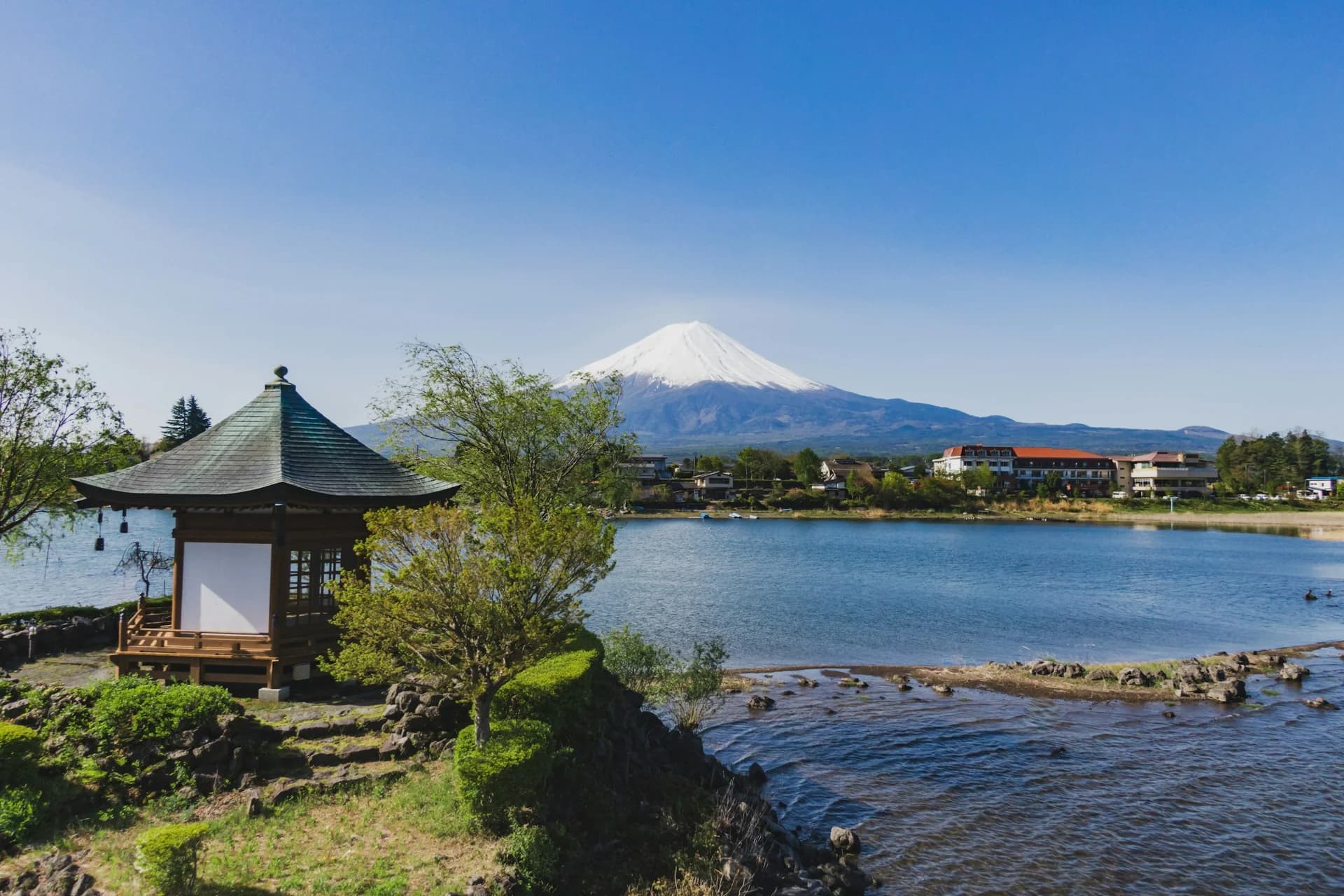
Kawaguchiko is the Fuji base. It's the most accessible of the Fuji Five Lakes, and nearly everything — the lakeshore, Oishi Park, Chureito Pagoda, the ropeway — is oriented toward putting the mountain front and center, reflected in the water.
Hakone is an onsen-and-art destination that happens to have Fuji views on clear days. The classic Hakone loop is about the Owakudani volcanic valley, the Lake Ashi pirate-ship cruise past the red lakeside torii, and the Open-Air Museum's Picasso and Henry Moore sculptures. Fuji shows up over Lake Ashi when the sky's kind — but it's not the whole show.
Fuji views
This one's not close. Kawaguchiko wins decisively for the mountain. You get unobstructed, water-mirrored Fuji from Oishi Park, the iconic pagoda-and-Fuji frame at Chureito, the dawn Sakasa-Fuji reflection on a windless morning, and a ropeway panorama from ~1,075 m. Hakone's Fuji views are real but intermittent and more distant, mostly from Lake Ashi and the Owakudani ropeway. If seeing Fuji is the whole reason for the trip, Kawaguchiko is the answer.
Getting there from Tokyo
Both are easy. Hakone has a slight edge in polish: the Odakyu "Romancecar" from Shinjuku runs frequently, and the Hakone Free Pass bundles the trains, cable car, ropeway, and boat into one ticket. Kawaguchiko is reached by the direct highway bus from Shinjuku Busta (~1h45m-2h, ~2,000 JPY / about $13.50) or the Fuji Excursion limited-express train — faster but pricier. The bus sells out on weekends, so reserve ahead. Call it a narrow win for Hakone on transport convenience.
Onsen
Both deliver excellent hot springs. Hakone has more of them, at more price points, and a longer bathing pedigree. Kawaguchiko's advantage is the view — several lakeside ryokan and day-use baths (~800-1,500 JPY / about $5.50-10) let you soak with Fuji in front of you. In both places: wash thoroughly at the shower stations before entering, and check tattoo policies in advance, since many onsen turn away visible tattoos (a private or family bath solves it).
Things to do beyond the view
Hakone is stronger for variety on a rainy day. The Open-Air Museum (~1,600 JPY), the Owakudani "black eggs" boiled in sulfur springs, and the Lake Ashi cruise (~1,200 JPY) form a tidy, well-connected loop. Kawaguchiko spreads its attractions around the lakes — Oshino Hakkai's spring ponds, the Saiko Iyashi-no-Sato Nenba thatched village (~500 JPY), the Kubota Itchiku Art Museum (~1,300 JPY), and thrill-ride giant Fuji-Q Highland (day pass ~6,000 JPY). You'll want the Retro Bus 2-day pass (~1,500 JPY) to link them, since they're not walkable from each other.
Crowds and pace
Both get busy. Hakone's compact loop can feel like a conveyor belt at peak times. Kawaguchiko's crowds concentrate at a few spots and a few hours — beatable by going early. Skip the midday tour-bus rush at Oshino Hakkai and Chureito; go at dawn or late afternoon and it's a different, calmer place.
Food
Kawaguchiko has the more distinctive local table. This is hoto country — flat udon and pumpkin in a thick miso broth (~1,100 JPY / about $7.50 at the landmark Hoto Fudo) — and the chewy Yoshida udon of nearby Fujiyoshida (600-900 JPY), slurped on retro Honcho Street with Fuji at the end of the road. Hakone leans on black eggs boiled in the Owakudani sulfur springs (eat one, they say it adds seven years to your life) and pricier ryokan kaiseki. For a memorable regional meal, Kawaguchiko edges it.
Cost
Roughly comparable. Hakone's Free Pass makes multi-transport days efficient; Kawaguchiko's Retro Bus pass (~1,500 JPY for two days) does the same at the lakes. Ryokan and onsen prices overlap heavily, and the highway bus from Shinjuku (~2,000 JPY) keeps Kawaguchiko's transport cheap if you skip the faster train. Neither region is meaningfully cheaper overall — pick on experience, not budget.
The comparison at a glance
| Category | Kawaguchiko | Hakone |
|---|---|---|
| Best Fuji views | Excellent, water-mirrored, up close | Good but intermittent, more distant |
| Getting from Tokyo | Highway bus / Fuji Excursion (~2 hrs) | Romancecar + Free Pass (very smooth) |
| Onsen | Fewer, but with Fuji views | More options, deeper tradition |
| Non-Fuji sights | Spread around the lakes (need bus pass) | Compact art-and-volcano loop |
| Rainy-day backup | Weaker (view-dependent) | Stronger (museums, cruise) |
| Crowd management | Beatable by going early | Loop can bottleneck |
| Best for | Fuji photography, lakeside calm | Art, onsen variety, easy logistics |
Which is right for you
Choose Kawaguchiko if the mountain is the point. Photographers, first-timers who want that Fuji shot, and anyone chasing the dawn reflection or the pagoda frame should base here. It's also the better call for a slow, lakeside, ryokan-and-onsen trip with the summit outside your window.
Choose Hakone if you want a well-oiled onsen-and-art circuit with Fuji as a happy bonus, or if you're worried about weather and want museums and a cruise to fall back on when clouds roll in. It's the more forgiving choice for a rainy forecast.
Do both if you have the days — they're different enough to justify it, and Kawaguchiko even runs a direct bus toward the Hakone/Gotemba side (~1.5-2 hrs) for a long day trip. In fact, one of the standard 14-day Fuji Five Lakes itineraries builds in a full Hakone day: Owakudani, the Lake Ashi cruise, and the Open-Air Museum, then back to the lake for dinner — and travelers with an extra few days often push further west to the temple-and-shrine circuit of Kyoto.
Still torn? The one-line rule: if you came for Fuji, sleep at Kawaguchiko; if you came for onsen and art, sleep at Hakone. Plan either — or both — with fairtravels.ai and you'll have the buses, passes, and dawn timings sorted before you land.


