17 Nara Tips That'll Save You Time, Money, and Deer-Related Embarrassment
17 Nara Tips That'll Save You Time, Money, and Deer-Related Embarrassment
Nara rewards the traveler who treats it as a destination, not a half-day errand squeezed between Kyoto temples. Keep your paper maps out of reach, give yourself a sunrise, and the old capital opens up in ways the tour buses never see.
Here's everything worth knowing before you go.
Getting There
1. Take the Kintetsu Line, Not JR
Two train lines connect Kyoto and Osaka to Nara. The JR Nara Line from Kyoto takes 45 minutes and is covered by the Japan Rail Pass. The Kintetsu Nara Line takes 35 minutes and drops you closer to the action.
Kintetsu Nara Station is a 5-minute walk from Nara Park. JR Nara Station is a 15-minute walk. That difference matters when you're carrying a day pack in July heat.
Kintetsu fare from Kyoto: 640 JPY ($4.29) for the limited express, 760 JPY ($5.09) for the tokkyū with reserved seat. From Osaka Namba: 680 JPY ($4.55).
If you have a JR Pass, use JR. If you don't, Kintetsu is worth the money.
2. Don't Day-Trip. Stay Overnight.
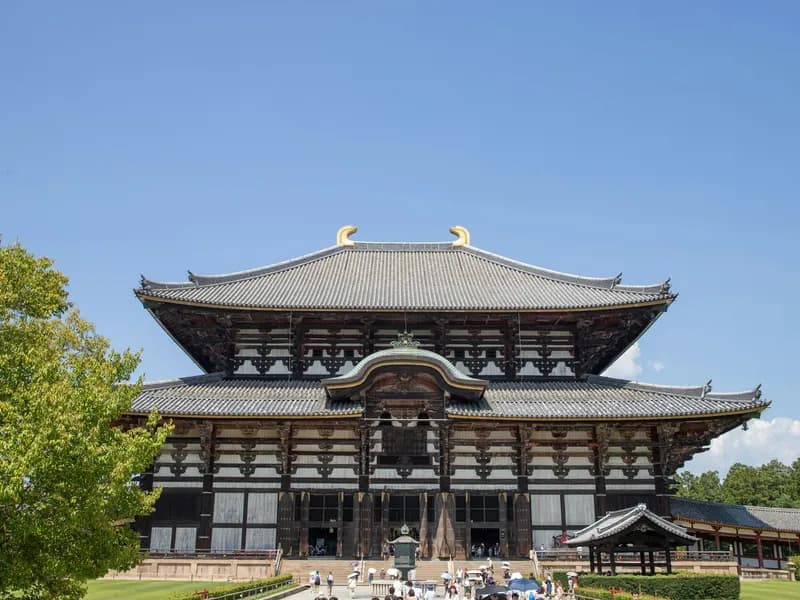
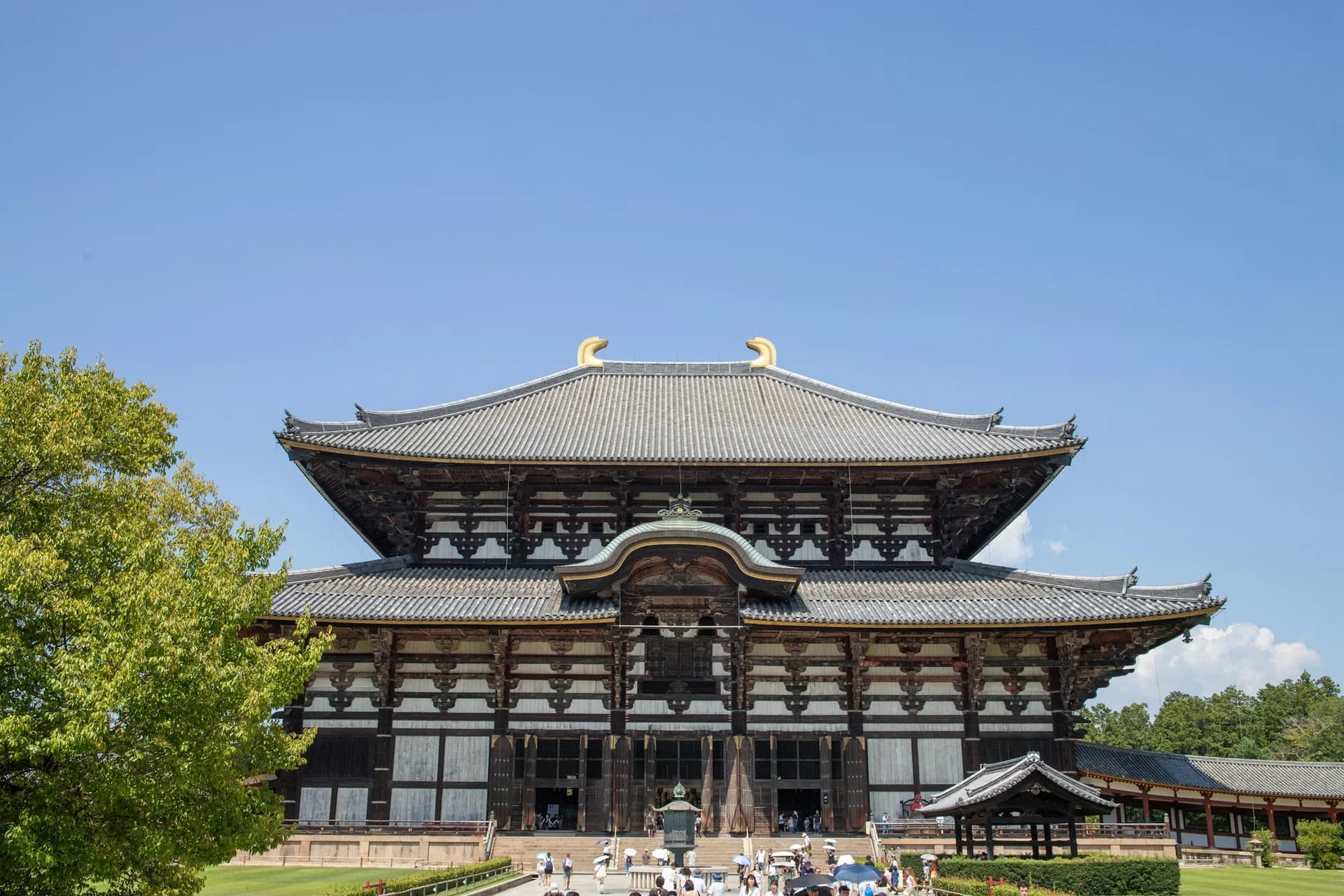
Yes, Kyoto has better nightlife, more hotel options, and feels like the "base" — as does Kobe, an easy hop away on the Kansai rail network. But Nara at 7AM, before the day-trippers arrive, is a completely different experience. The deer are calm. Todai-ji is nearly empty. Kasuga-taisha's forest paths are silent.
The day-trip crowd arrives between 10AM and 11AM and leaves by 4PM. Stay overnight and you get 7-10AM and 4-6PM to yourself. Those are the golden hours.
Budget accommodation on Sanjo-dori starts at 4,000 JPY ($26.80) per night. Nara Hotel, the grand dame built in 1909, occasionally has rooms from 15,000 JPY ($100.50).
3. Luggage Storage Is Easy
Coin lockers sit at both Kintetsu Nara and JR Nara stations. Small lockers: 300 JPY ($2.01). Large (fits a suitcase): 600 JPY ($4.02). They fill up on weekends by 10AM. Alternatively, Nara Visitor Center (on Sanjo-dori) stores bags for 500 JPY ($3.35) per piece.
The Deer
4. The Deer Will Eat Your Stuff
This isn't a cute warning. The deer eat paper — maps, guidebooks, receipts, tissues, train tickets. They will pull items from your back pockets. A JR Pass held loosely in an open hand is fair game, and travelers lose them every week.
Keep paper items in a closed bag. Use your phone for maps (Google Maps works perfectly in Nara). And for the love of all things sacred, don't leave your backpack unzipped on the ground.
5. Deer Cracker Distribution Strategy
Buy shika senbei (deer crackers, 200 JPY / $1.34 for a stack of 10) from any park vendor. The moment you hold them up, every deer within 30 meters locks on.
The strategy: break each cracker in half. Hold one piece high to keep the deer's attention, give them the other piece. Distribute quickly. Don't hold the stack openly — they'll mob you.
When you run out, hold your empty palms up and show them. Most deer understand this gesture and will wander off. The stubborn ones might headbutt you once for good measure.
6. Baby Deer Season Is June
Fawns are born in May-June. The Deer Protection Association moves pregnant does to an enclosure (Rokuen) near Kasuga-taisha, and you can visit the newborns for free. They're impossibly tiny and wobble when they walk.
During fawning season, mother deer are more protective and occasionally aggressive. Give nursing deer extra space.
7. The Deer Bow Is Real
The deer bow before receiving food. It's a learned behavior — reward-based training over generations. But here's the thing: bow first, and many deer will bow back. It's a genuine interaction, and it never gets old.
Some deer are better at bowing than others. The deer near Todai-ji are professionals. The ones in the southern park are less practiced. Japan's other famous free-roaming deer — on the shrine island of Miyajima — never learned the trick at all.
Temples & Sights
8. Todai-ji at 7:30AM Is a Different Temple
The Great Buddha Hall opens at 7:30AM (April-October) or 8AM (November-March). At opening, maybe 10-20 other people are there. By 10AM, it's hundreds. By noon, it's thousands — mostly school groups.
The early morning light through the eastern windows illuminates the Buddha's face from the side, creating shadows that emphasize the sculpture's three-dimensionality. Afternoon light is flatter and less dramatic. The same timing logic applies to Kamakura's Great Buddha, which sits in the open air and is even more at the mercy of the light.
Entry: 600 JPY ($4).
9. Kasuga-taisha's Lantern Festivals Are Worth Planning Around
Twice a year — Setsubun (February 2-4) and Obon (August 14-15) — all 3,000 of Kasuga-taisha's lanterns are lit at once. The stone lanterns along the paths and the bronze lanterns inside the shrine corridors glow simultaneously.
Setsubun evenings are better for photography (fewer people, cooler weather). The Mantoro ceremony starts at 6PM and the shrine stays open late.
Free to attend. Inner shrine entry during festivals: 500 JPY ($3.35).
10. Horyu-ji Is the Temple for Architecture Nerds
If you're interested in how buildings work — not just what they look like — Horyu-ji is your temple. The oldest wooden structures in the world, engineering principles that modern skyscrapers still use, and a museum collection that any major institution would envy — the same early Buddhist building tradition you can trace across the water in Gyeongju, Korea's own ancient capital.
The catch: it's 12km from central Nara. JR train to Horyuji Station (12 minutes, 220 JPY / $1.47), then a 20-minute walk. Allow 2-3 hours total. Most day-trippers skip it because of the distance. Their loss.
Entry: 1,500 JPY ($10.05).
11. Naramachi Is Better After the Temples
The old merchant district south of Sarusawa Pond is a grid of narrow streets with machiya (wooden townhouses) converted into shops, cafes, and small museums — if you've wandered the preserved merchant streets of Takayama up in the Japanese Alps, the layout will feel familiar. It's the place to decompress after temple-heavy mornings.
Naramachi Koshi no Ie (free) is a preserved townhouse open to the public — the layout shows how merchants lived in the Edo period, much as Jeonju's hanok quarter preserves the Korean equivalent. Gangoji Temple (500 JPY / $3.35) in the heart of Naramachi has roof tiles dating to the 6th century.
For food, try kuzu (arrowroot) products — a Naramachi specialty. Kuzu mochi, kuzu kiri (jelly noodles), kuzu soup. Yoshino Hon Kuzu on Naramachi street does a kuzu set for 700 JPY ($4.69).
Food & Budget
12. Nara Has a Signature Food — Kakinoha Sushi
Kakinoha sushi is pressed sushi wrapped in persimmon leaves. The leaves aren't eaten — they're antibacterial and were historically used to preserve the fish during transport from the coast. The result is a lightly seasoned, pressed rice block with salmon or mackerel. It's Nara's entry on Japan's map of regional signature dishes — as bound to the old capital as tonkotsu ramen is to the southern city of Fukuoka.
Tanaka (on Higashimuki shopping street) sells boxes of 8 pieces for 1,100 JPY ($7.37). Eat them on a park bench with the deer watching.
13. Budget Lunch: Convenience Store + Park Bench
It sounds boring. It isn't. A 7-Eleven onigiri (120-180 JPY / $0.80-1.21), a drink, and a bench in Nara Park — surrounded by deer, with Todai-ji visible through the trees — is a better lunch experience than most restaurants. Total cost: under 500 JPY ($3.35).
For a proper sit-down meal, Edogawa near Sarusawa Pond does unagi (eel) sets from 2,500 JPY ($16.75). It's excellent but pricey by Nara standards.
14. Nara Is Cheaper Than Kyoto
Temple entries average 500-1,000 JPY ($3.35-6.70) in Nara versus 500-2,000 JPY in Kyoto. Accommodation is 20-30% cheaper. Food is comparable. A full day in Nara — transport, temples, food — costs about 3,000-5,000 JPY ($20.10-33.50).
Logistics
15. Walking Is the Only Way
Nara Park and the temple district are pedestrian areas. No buses needed within the central area. Todai-ji to Kasuga-taisha: 15 minutes walking. Kasuga-taisha to Naramachi: 10 minutes. Kofuku-ji to Todai-ji: 10 minutes.
The only time you need transport is for Horyu-ji (train) and Toshodai-ji/Yakushi-ji (bus or bicycle from central Nara, about 4km west).
Rental bicycles are available near Kintetsu Nara Station: 800-1,000 JPY ($5.36-6.70) per day.
16. Autumn Foliage Peaks in Mid-November
Nara Park's maples turn brilliant red-orange in mid-to-late November. The combination of autumn foliage, deer, and ancient temples is probably the most photogenic scene in Japan outside of Kyoto's Arashiyama — though Nikko's shrine forests make a strong counterargument.
The best foliage spots: Yoshikien Garden (free for foreign passport holders), Todai-ji's approach path, and the wooded path between Nigatsu-do and Kasuga-taisha.
Cherry blossom season (late March to early April) is equally spectacular. The deer lying under falling cherry petals is a cliché for a reason.
17. The Nara National Museum Is World-Class
If you have any interest in Buddhist art, the Nara National Museum (520 JPY / $3.48) is one of the best collections in Asia. The Buddhist Sculpture Hall alone — a wing of bronze, wood, and lacquer Buddhas and Bodhisattvas from the 7th to 14th centuries — justifies the visit. And if your museum appetite runs to the contemporary rather than the sacred, the art islands of Naoshima are Japan's other essential pilgrimage for gallery-goers.
The annual Shosoin Exhibition (late October to mid-November) displays treasures from the Shosoin Repository — Emperor Shomu's 8th-century collection of art, instruments, and textiles from along the Silk Road, which ran east all the way to the Tang capital at Chang'an, modern Xi'an. It's open for only three weeks each year, and the queues can be 1-2 hours on weekends. Go on a weekday morning.
Allow 2 hours for the museum. It's air-conditioned — welcome relief in summer.